RSS Feeds
SpaceX rocket is about to crash into the moon at 5,400mph - here's what we know
Strait of Hormuz Deal With Iran Possible Soon, Bessent Says
Funeral held for 112 victims buried under rubble of Gaza flats for nearly three years
Ukraine hits more Wildberries sites as strike kills five in Moscow region
Video shows Russian drone chasing Ukrainian street vendor in 'human safari' attack
Analysis: Trump challenged by cold reality from top allies
Video shows Russian drone chasing Ukrainian street vendor in 'human safari' attack
Dodgers make waves with major trade deadline moves
Behind closed doors, Trump, White House aides hope Rep. Max Miller exits race
These stackable storage bins are 40% off for a limited time — they’re dorm room and small apartment ready
Can Hamas Really Be Disarmed? Inside the Gaza Peace Deal
Я написал мессенджер в одиночку. Поможете устроить ему краш‑тест?

Дисклеймер: Это статья-проверка на прочность. Проект работает на PHP + MySQL + Polling каждые 3 секунды. Если вы кликнули по ссылке, а сервер отдаёт 502 или упорно молчит — значит, поллинг взял своё под нагрузкой Хабра, а я прямо сейчас судорожно оптимизирую запросы и чиню базу!
Привет, Хабр!
Я в одиночку разработал web‑мессенджер Conlink Messenger. Его главная фича — полный отказ от привязки к номеру телефона: только email, пароль и никакого сбора персональных данных.
Я долго откладывал публикацию в ожидании «идеального кода», но понял, что этот момент никогда не наступит. Поэтому выкатываю MVP в том виде, какой он есть — с простой архитектурой, поллингом вместо WebSocket и кучей спорных решений.
Если после этой статьи окажется, что половину backend'а стоит переписать — значит, опубликовал не зря. Приглашаю устроить проекту честный краш‑тест!
Узнать, как устроен Conlink →Cat helps senior shelter dogs find their forever homes
Teen Drama Sterling Point Is the Best Kind of Lazy-Summer Throwback
Ever since Saved by the Bell bestowed upon Zack Morris a cellphone the size of a dumbbell, TV has been scrambling to keep up with young people’s tech habits. Clarissa Explains It All had DIY video games. Gossip Girl was the name of a blog as well as its author’s alias. Emily in Paris chronicles the birth of an influencer, regularly splashing Emily’s Instagram posts and growing follower count across the screen. When teens and 20-somethings became the earliest adopters of Snapchat and then TikTok, titles aimed at those demographics had to embrace them or risk being written off as irrelevant by a generation that is more inclined to watch YouTube anyway.
But what if young people immersed—so early in their lives, they can’t meaningfully consent—in a digital realm that stunts their growth outside it were no longer clamoring to see the constant barrage of text messages, push notifications, and social video they know so well represented on TV? What if, for a cohort whose approval of AI keeps declining and that made dumbphones cool again, the ultimate in escapist entertainment would be a show where tech was relegated to the margins, supplanted by face-to-face human connection in the natural world? In that case, the refreshingly old-school Prime Video teen drama Sterling Point might really hit the spot for Gen Z and their nostalgic elders.
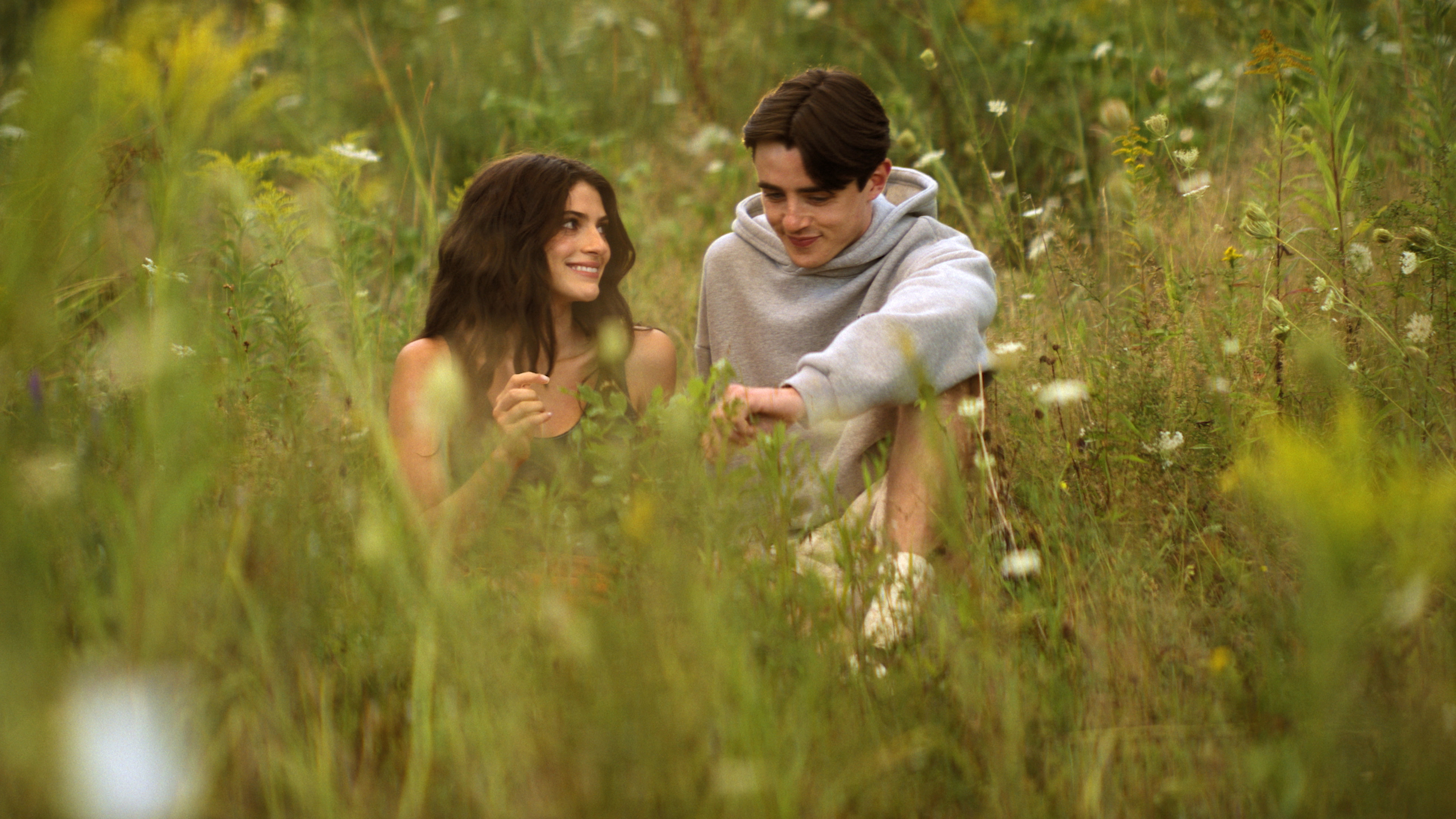
Premiering with all eight episodes on Aug. 5, the series has a tremendously appealing protagonist in Ella Rubin, who played Anne Hathaway’s daughter in The Idea of You and looks like she could be the result of splicing Hathaway’s and Julia Roberts’ genes to engineer the ideal rom-com star. Rubin’s Annie is an independent, hyperconnected, Type A New York City teen, all big ambitions and nervous energy, though her kindness prevents her from being a stereotype. Her first words when the automated curtains on her bay window part in the morning are: “Sound machine off!” She eats breakfast in front of a laptop flanked by her phone and tablet. But her neo-yuppie fantasy is punctured when she’s rejected from a business-school summer program. Now, the months leading up to her senior year of high school stretch out empty before Annie. Her maddeningly unserious twin brother, Connor (Keen Ruffalo), is jaunting off to Europe with his girlfriend du jour. Her single dad, Steven (Jay Duplass), seems kind of checked out. And she’s well aware that her longtime boyfriend (Luke Avoledo) is closeted, which is probably why he doesn’t seem so excited at the prospect of her tagging along on his summer trip to Thailand. She’s just considerate enough to let him come out to her in his own time.
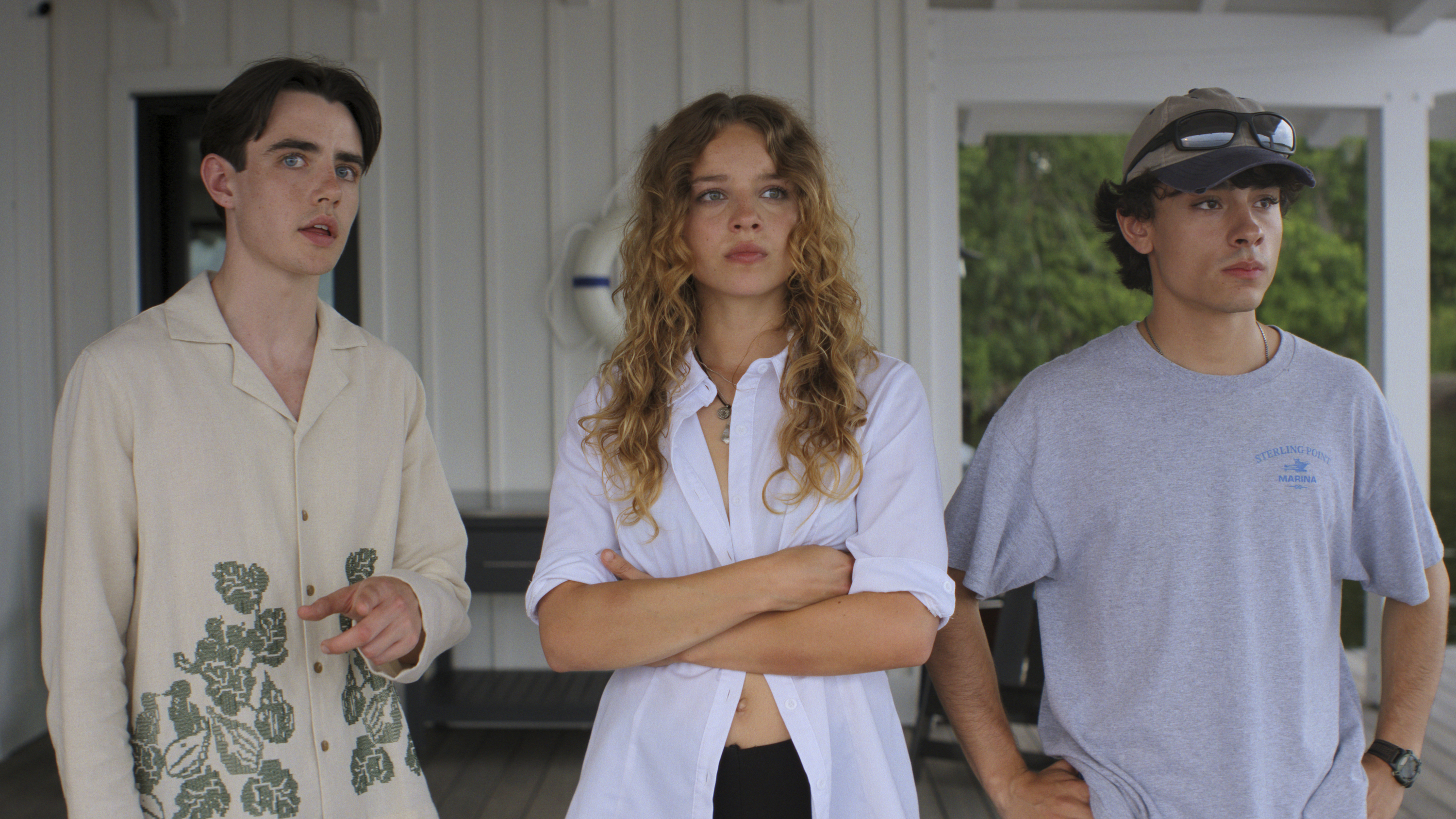
Annie gets a jolt in a new direction following the death of a grandparent she never met—Gordon, the father of her mom, who passed away when the twins were toddlers. Despite his estrangement from their family (according to Steven, he was a jerk), Gordon has left his grandchildren the island he owned in Canada’s beautiful Muskoka region, Sterling Point. A note enclosed with the will suggests that there are things Steven has been hiding from his children. So, self-sufficient Annie flies up to Ontario without telling her dad where she’s really going. A cascade of mysteries, revelations, and firsts, experienced under evergreen canopies and out on the rippling open water, her summer at Sterling Point changes her life.
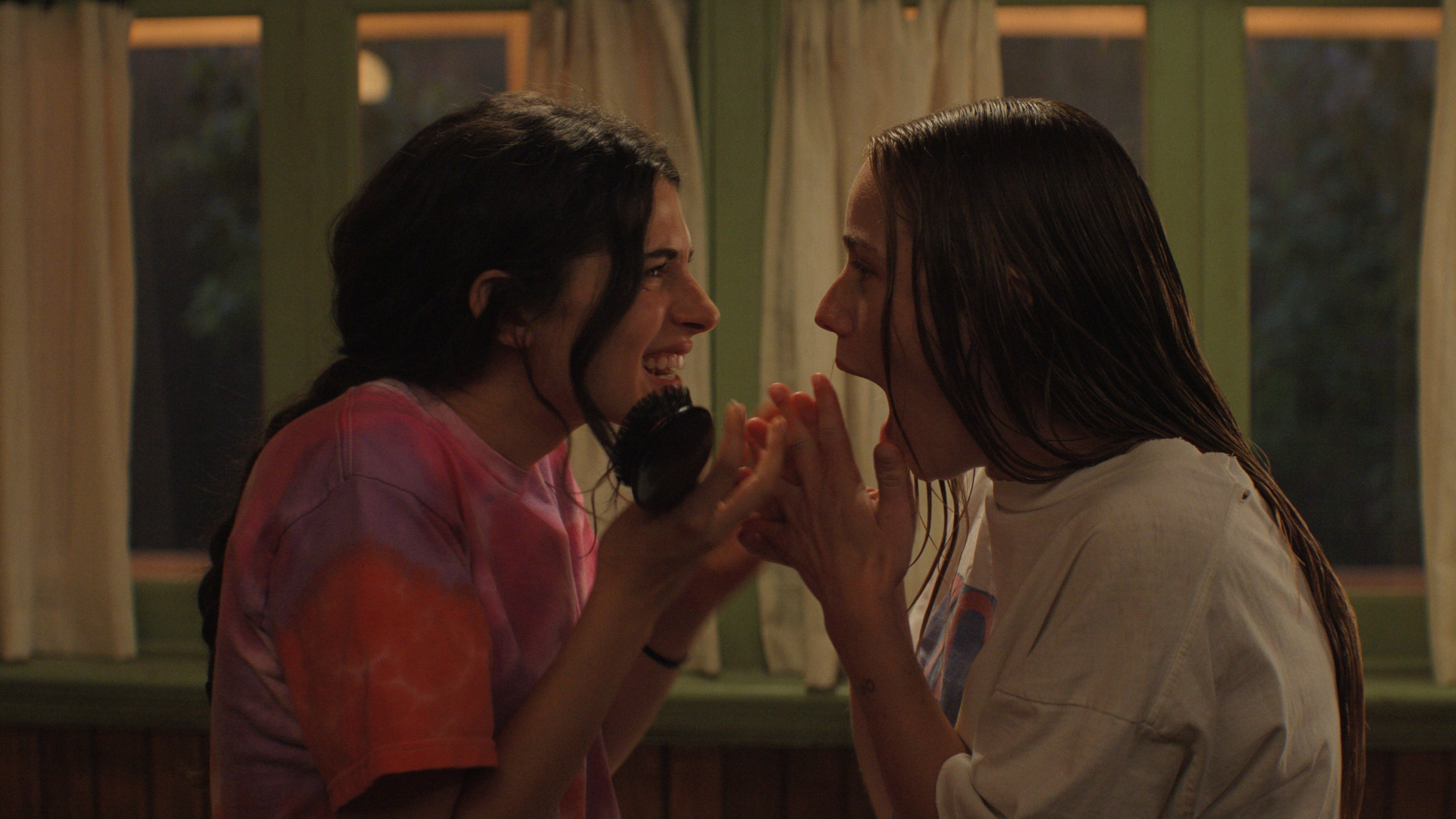
Plenty of classic teen-drama tropes come into play. Not only does Annie get caught in a love triangle, but her two suitors each represent opposing factions of the community: townies and summer people. Ellis (Jacob Whiteduck-Lavoie) is a hard-working, year-round resident, and Rory (Daniel Quinn Toye) a rich New York acquaintance whose family has a luxurious vacation home nearby. As also tends to be the case in stories aimed at teens, the young characters are remarkably autonomous. But creator and co-showrunner Megan Park, whose films The Fallout and My Old Ass displayed deep insight into the inner lives of young women, isn’t mindlessly mimicking the mini-adults of Euphoria and Gossip Girl. (Sterling Point shares co-showrunners with the latter series, in Josh Schwartz and Stephanie Savage, which goes to show how conscious a choice its divergence from its millennial predecessors must be.) Like Annie, most of these characters have been forced by their parents to fend for themselves, emotionally if not quite literally. One of the most charming performances in a show that has many of them comes from Bo Bragason as Oona, a bubbly lesbian flirt whose mom has jetted off to India, leaving her in charge of her little sister (Mabel Strachan) and their houseboat.
Park takes her time bringing the parents’ generation into the frame, gradually revealing how many shocking secrets they’ve kept from their children. Some storylines can be soapy. The dialogue is occasionally stilted. Yet richly developed characters keep clichés from lingering. As in My Old Ass, the regrets of adults who erred mightily in their youth are poignantly contrasted with the brashness of teens who don’t know what they don’t know. There’s patience and, for all its jarring disclosures, gentleness in the way this story unfolds that are rare to see these days, not just in teen TV, but in any twist-happy streaming drama.
Sterling Point isn’t anachronistic or retrograde. Smartphones exist in its world, though they don’t often get service on the island. Queerness is no big deal. Rather, the show is a throwback in the sense that the characters spend most of their time just hanging out together, on a boat or at an outdoor movie screening, the way teenagers used to before their summers filled up with precollege programs, internships, schemes to become TikTok famous, etc. Romance happens through eye contact and heart-to-heart conversations; friends cry in each other’s arms. There are hints of Gilmore Girls in the show’s quaint setting and generational role reversal, traces of Dawson’s Creek in its adolescent earnestness. As Ellis tells Annie when she frets about having to break the habit of checking her phone in bed: “Once you get used to it, it’s kinda the best.”
Family funeral held after suspected triple murder
ICE arrested 51K individuals in July, highest in a single month in DHS history
Mackerel festival should celebrate cabbage instead, say animal rights activists
Soldier kills four in gun rampage in Russian-occupied Crimea
'Rape list' part of misogyny girls face at school
Surgeon struck off after wrongly connecting organs
Family "forever grateful" after 10-year-old rescued from rip current by teen lifeguard
Программисты на Руси программируют на Си. RUSI: Концепт билингвального компилятора

Это статья про разновидность языка Си с русским и оригинальным английским синтаксисом, работающими одновременно. «Если» и «if» работают как синонимы. Это не интерпретатор. Это компилятор, который способен собрать себя сам. Это даже не транспилятор русского в английский - оба набора слов работают равноценно. Код можно посмотреть https://кодыч.рф/administrator/rusi.
Вот это повортOhio Republican Max Miller faces growing calls to resign over domestic abuse allegations
Miller calls women accusing him liars as Republican senator Bernie Moreno says former son-in-law unfit for Congress
Max Miller, the beleaguered US Republican representative from Ohio, has vowed to defy a rising groundswell of resignation calls from his own party over domestic abuse allegations after his ex-father-in-law, Bernie Moreno, a GOP senator, said he was unfit to serve in Congress.
In a combative interview with CNN’s Jake Tapper, Miller turned the tables by attacking Moreno, accused three women – including his ex-wife – of lying by saying he had been violent towards them, and invoked Donald Trump in insisting that he would not resign.
Continue reading...Refuse collectors help Italian woman recover binned €1m lottery ticket
Winner called waste management team after she realised stub showing she had hit the jackpot had been thrown away
A €1m lottery ticket has been recovered from the rubbish in Italy after the frantic winner called on refuse collectors to help her retrieve it, according to the waste management company.
The instant win ticket was “miraculously still in one piece” after garbage workers combed through mounds of rubbish on their truck, said Roberto Nicola Toscano, the administrator of the SANB company in Italy’s southern Puglia region.
Continue reading...Yes, the Show Has Drawn Raves. But Some of the Objects Are Not Real.
An Invasive Mosquito Is Spreading With Alarming Speed, Threatening Africa’s Cities
Stressed? Overwhelmed? Have You Tried Being Jack Johnson Instead?
Warsh Wanted ‘Regime Change.’ A Reset Might Need to Come First.
Как мы построили ИИ‑аналитику, которая не галлюцинирует

Мы решили поручить анализ данных ChatGPT. И быстро поняли, что проблема вовсе не в модели. Оказалось, что LLM может красиво объяснять, но не должна считать. Ошибка была не в промпте, а в архитектуре системы.
В статье рассказываю, почему мы разделили код и ИИ, как избавились от галлюцинаций в аналитике и почему теперь модель объясняет результаты, а не пытается их вычислять.
Читать далееMore adults are moving in with their parents as the U.S. affordability crisis deepens
Pirro brought box of evidence to show Trump what caused Reflecting Pool damage
Как агентные LLM встроили в операцию против госструктур: разбор кампании Hunt.io

Разбор отчёта Hunt.io о предполагаемой китайской кампании: открытый каталог, TencShell-инфраструктура, SQL-инъекции, фишинг и роль Claude Code с DeepSeek. Отделяем подтверждённые факты от атрибуционных гипотез и формулируем меры защиты.
Читать далееAnalysis: Trump challenged by cold reality from top allies
Man dies in ICE custody at Delaney Hall facility in New Jersey, DHS confirms
Spotify expands AI remix and covers project with Merlin partnership
Refuse collectors help Italian woman recover binned €1m lottery ticket
Winner called waste management team after she realised stub showing she had hit the jackpot had been thrown away
A €1m lottery ticket has been recovered from the rubbish in Italy after the frantic winner called on refuse collectors to help her retrieve it, according to the waste management company.
The instant win ticket was “miraculously still in one piece” after garbage workers combed through mounds of rubbish on their truck, said Roberto Nicola Toscano, the administrator of the SANB company in Italy’s southern Puglia region.
Continue reading...The Morning Light Habit Sleep Experts Swear By

You’ve probably heard that getting some morning light can help you feel more awake during the day and sleep better at night—from your doctor, your sleep app, and roughly 900 podcasts. But you might not realize just how much it matters. “Morning light is arguably more important than your coffee,” says Mariana Figueiro, director of the Light and Health Research Center at the Icahn School of Medicine at Mount Sinai.
Morning light shifts the body clock earlier, which can make it easier to feel sleepy at night and alert when it’s time to wake up. In a study of more than 400,000 adults, people who spent more time in outdoor light during the day reported fewer insomnia symptoms, less tiredness, and an easier time getting up in the morning.
What you may not have heard is exactly how to get it: where to position yourself, how early in the morning to start basking, and how long to take in the rays. Without that knowledge, the advice to “get more morning light” is surprisingly hard to put into practice.
Here’s what researchers say about how to get the right dose of morning light.
How morning light helps you wake up—and sleep at night
The amount of light reaching your eyes is measured in lux, and by that measure, most morning routines happen in near-darkness. A dimly lit bedroom might clock in at 30 to 40 lux. A brightly lit kitchen might reach 500. Step outside on an overcast morning, and you're standing in 5,000 to 10,000. "You're looking at orders of magnitude more light when you're outside," says Jamie Zeitzer, a circadian physiologist and professor of psychiatry and behavioral sciences at Stanford University.
Sitting directly beside a window and looking out might expose you to around 1,000 lux. That's a fraction of what's available outdoors, but, as Zeitzer puts it, "even by a window, it's much brighter than what you're going to get from most interior lighting sources."
Light can have an immediate effect, too. It’s “an alerting stimulus to the brain,” Figueiro says, which can help you feel more awake in the moment.
Its longer term effect comes down to a small structure in the brain called the suprachiasmatic nucleus, which serves as the body’s central circadian clock. When light reaches the retina, it sends a signal directly to that clock—and early in the morning, the signal helps nudge it forward. It needs that nudge: The average human clock runs about 24 hours and 11 minutes, which means it would naturally drift a little later each day without light and other signals keeping it synchronized with the outside world.
A well-synced clock does more than govern sleep. Its real job, Zeitzer says, "is allowing your body to anticipate things as opposed to responding to them"—preparing you to wake up, eat, exercise, and wind down instead of scrambling to adjust after the fact. Without that anticipation, your body still functions, of course; just a little less efficiently. "It's not like if you didn't have a clock, you drop dead," he says. "But it's all less well optimized."
Many people aren’t giving their clocks much natural light to work with. We tend to overestimate how much time we spend outside, Zeitzer says; for many of us, outdoor exposure amounts to little more than walking to and from the car.
How to get enough morning light
Try to get light within an hour of waking. “You want to have it as soon as you get up,” Figueiro says. What matters is how soon you get it after waking, not the particular time on the clock.
Going outside is best. But if you’re sitting near a window, position yourself close to the window and face it, rather than having it be beside or behind you. “You want to get it at the back of the eye, not at the back of the head,” Figueiro says. Light levels drop quickly as you move away from the glass: You might get around 1,000 lux right beside a window, compared with only a few hundred lux from several yards away. If you work from home, simply turning your desk toward the window can make a meaningful difference.
How long should you stay there? There’s no magic number, but both researchers agree that longer is better. Figueiro recommends at least 30 minutes and ideally an hour. Zeitzer considers 15 minutes a practical minimum. “Technically, with 5 minutes you can get a good effect, but that’s in a lab, and it’s probably not in the field,” he says.
If you want one simple target, aim for 30 minutes of morning light, Figueiro says. Sitting beside a window counts, but going for a half-hour walk after daybreak is even better. “That’s ideal,” she says. “You get your exercise, you get your light, you’re all set for the day.” And wear sunscreen as usual: It won’t blunt the circadian effect, which is driven by light reaching cells in the retina rather than the skin.
Try to get that light at roughly the same time every morning. “Your clock likes that regularity,” Figueiro says. She also leaves her sunglasses off during her morning commute when the light is comfortable, allowing her to take advantage of that exposure.
Give the habit some time to work. Your body clock will begin adjusting within a few days, Zeitzer says, but it might take a few weeks before you notice a difference in your sleep.
How to get morning light when the sun isn’t up
What if you wake up at 5 a.m., work in a windowless office, or look out at what Zeitzer describes as “a brick wall 15 feet across an alley”? You’ll need to create more light indoors.
The easiest place to start is with a brighter bulb. Bulb packages list brightness in lumens, a measure of how much light the bulb produces. A standard one typically produces about 800 to 1,000 lumens; Figueiro recommends looking for one that produces at least 3,000. Place the lamp no more than an arm’s length away, and make sure its shade is translucent, not opaque, so the light can reach your eyes. The bulb doesn’t need to give off cool or bluish light. If you prefer warm light, that’s fine, Figueiro says—the brightness is what matters most.
If a brighter lamp isn’t enough, or you don’t have access to a window, consider a light-therapy box. Zeitzer prefers natural light—“it’s much nicer looking out your window,” he says—but considers a light therapy box a reasonable alternative. Turn it on while you drink your coffee or eat breakfast so it becomes part of your usual routine.
And don’t assume an overcast morning is too dark to be useful. Most of us underestimate how much brighter it is outside: In one study, researchers found that even under cloudy or partly cloudy skies, outdoor light was dozens of times brighter than indoor light. If you can’t go out, sit close to the window and face it; turning on the room’s other lights can help, too.
Getting enough light in the morning is only part of the equation for better sleep. Figueiro also recommends dimming the lights about two hours before bedtime. Your body clock responds to the contrast between day and night, she says, so too much evening light can “in a way cancel out the benefits of the morning light.”
Think of the formula as brighter mornings and darker evenings. Tomorrow, you can start by turning your coffee—and yourself—toward the window.
BP's $5.7bn profit highest since 2022 as Iran war pushes up oil price
Bono, Eddie Vedder and Hozier among mourners at Glen Hansard's funeral
Как предсказывать долгосрочный эффект A/B теста раньше: прокси-метрики и ловушка регрессии

В продуктовых экспериментах нередко возникает следующая ситуация, когад бизнесу важна долгосрочная или малочувствительная метрика, но оценить эффект на такие метрики в рамках короткого A/B-теста сложно.
Как корректно находить прокси-метрики, почему наивная регрессия может обмануть и как отделить настоящую связь экспериментальных эффектов от статистического шума?
Читать далее'We are cool' - Szoboszlai plays down Liverpool row
Why Does The Government Keep Releasing Prisoners Early?
Типизация документов без OCR и нейросетей: 99.79% точности за 3 мс

Когда пользователь загружает документ в систему, сначала нужно понять, что именно он прислал. Паспорт? Договор? Полис? Заявление? От этого зависит весь дальнейший сценарий обработки: какие поля искать, какие проверки выполнять и какой OCR использовать. Ошибка на этом этапе делает бессмысленной всю дальнейшую обработку. Мы покажем, что тип документа можно определить, вообще не читая его содержимое. Для этого не нужны OCR, нейронные сети или анализ текста – достаточно использовать геометрию документа.
Читать далееTexas halts new data centers as governor calls for audits
EU commends Spain's 'swift response' to Ceuta migrant crisis
Как рождалась WAICO: инсайды делегации Беларуси, 29 мигалок и Казахстан сразу на двух ИИ-картах мира

Всемирная организация сотрудничества в сфере искусственного интеллекта, по-английски WAICO или полностью World Artificial Intelligence Cooperation Organization была создана 16 июля 2026 года в 20:00 в городе Шанхай в Китае.
Всё написанное ниже — личный взгляд участника процесса, а не официальная позиция какой-либо структуры.
Читать далее