RSS Feeds
Wildfires in France and Spain force more than 267,000 to flee
Trump takes swipes at press during White House Correspondents' Dinner
Laura Kuenssberg goes behind the scenes with Andy Burnham in his first week as PM
We’re beating heart disease

Last week, the Food and Drug Administration (FDA) approved a small pill called enlicitide. It is a tablet you swallow once a day on an empty stomach with a sip of black coffee, water, or tea. But it does something that until now took a needle and a specialist’s prescription: It lowers the most dangerous kind of cholesterol by nearly 60 percent, about as much as the strongest injectable drugs on the market.
If that sounds less innovative than some of the medical advances I sometimes cover here — there’s no AI or gene editing involved — you’re missing the story. Enlicitide is just the latest example of how medicine has been quietly making progress against the deadliest thing in the modern world.
That thing is heart disease. It has been the leading cause of death in the United States for essentially a century, and in 2025 it killed 694,708 Americans — about one in five deaths — more than every form of cancer combined. Around the world, cardiovascular disease kills roughly 20 million people a year, the biggest cause of death on the planet.
But today, our enemy is on the retreat. In the US, the age-adjusted death rate from cardiovascular disease has fallen about three-quarters since 1950. In plain terms: A 60-year-old today is roughly four times less likely to die of heart disease this year than a 60-year-old was when Harry Truman was president. As I wrote last year, deaths specifically from heart attacks are down 89 percent since 1970.
That progress comes down to a single number. Low-density lipoprotein, or LDL, aka the “bad” cholesterol your doctor always wants you to lower. Until recently, a high LDL score was all but inescapable, something you could nudge lower with a better diet and willpower but struggle to really fix. What has changed is that we can now lower LDL for nearly anyone who needs it — further, more easily, and earlier in life than before.
A lifesaving genetic mutation
It’s a story that goes back 20 years. In the early 2000s, two geneticists at University of Texas Southwestern, Helen Hobbs and Jonathan Cohen, wanted to solve a medical mystery: Why did some individuals have striking low cholesterol levels? They combed the Dallas Heart Study for an answer. They found a handful — many of them Black Americans — carrying a broken copy of a gene called PCSK9. Their bodies cleared LDL from the blood with unusual efficiency, and the payoff was staggering: carriers of the strongest variant had about 28 percent lower LDL and roughly 88 percent lower risk of heart disease than people who did not carry the mutation.
That finding proved lowering LDL prevents heart attacks, and it handed drugmakers a target: copy that gene. Every PCSK9 drug since — including the new enlicitide — imitates a mutation a few people in Dallas were simply born with.
Millions of Americans still take the old cholesterol-lowering workhorses, statins, and they’ve proven highly effective at reducing heart disease for most people. But not everyone: Some people can’t tolerate the muscle aches; others take them faithfully and still don’t get their LDL low enough. Enlicitide is built for exactly those people: a pill as cholesterol-lowering as an injection but without the needle, and a drug that spares them the statin muscle aches.
Closing the loop
If the pill is today, gene editing is tomorrow — and it may be the answer to a problem no pill can reliably solve: getting people to keep taking their medicine.
About half of patients on statins quit them within a year, and a daily pill, however potent, only helps the people who actually take it. So that demands a fix you can’t forget. A company called Verve Therapeutics, now owned by Eli Lilly, has been testing a treatment that makes a single-letter edit to the PCSK9 gene in the liver — one infusion, in theory for life. In its first human trial, published over the spring in the New England Journal of Medicine, a single dose cut LDL by as much as 62 percent, and held it there for more than a year. Instead of a pill mimicking the effects of the genetic mutation that protected those people in Dallas, gene editing just switches off the gene.
As important as it is, cholesterol isn’t the whole story when it comes to heart disease. There’s smoking, which declined from about 40 percent of US adults in the 1960s to under 15 percent today, sparing countless arteries. High blood pressure — the silent condition that killed President Franklin D. Roosevelt at 63 in 1945, when doctors had few effective ways to treat it — can now be caught early and treated with cheap generic pills.
And then there are the GLP-1s. More than one in 10 US adults say they are currently on an anti-obesity drug, and whatever else you may think of them, they’ll make a significant dent in heart disease. In one major trial semaglutide cut cardiovascular events by 20 percent.
The war continues
Still, the war on heart disease won’t be easy to win.
Just because a pill like enlicitide has been proven to lower a lab value does not mean it’s yet proven to lower deaths. They should — the injectable versions of these drugs cut heart attacks and strokes by about 20 percent in long trials. But enlicitide’s own outcomes study won’t conclude for years.
Precisely because the condition itself so widespread, treatments for heart disease will only be effective if they are equally widespread.
Heart disease is shifting, too. The same research showing heart-attack deaths down 89 percent found deaths from other heart conditions — heart failure, arrhythmias, hypertensive disease — up 81 percent since 1970, though because heart attacks were killing several times as many people, overall heart-disease deaths have still dropped by about two-thirds since 1970. Some of that shift is perversely the result of success: people who might have died of an initial heart attack now live long enough for the heart to wear out in other ways. And some of this is the reverse of progress: As smoking and cholesterol fell, obesity climbed to about 40 percent of US adults, pulling diabetes and high blood pressure with it.
And then there’s perhaps the biggest problem in medicine: access. A 60 percent drop in cholesterol helps only the people who can actually get the drug. Half of patients abandon cheap statins within a year. Enlicitide arrives at about $300 a month with uncertain insurance coverage. The gene edit, whenever it becomes available, will certainly cost far more, and at first will reach only the sickest.
More than 60 percent of US adults are projected to have some form of heart disease over the course of their life. Precisely because the condition itself so widespread, treatments for heart disease will only be effective if they are equally widespread.
Which brings us back to that unassuming little pill. It’s just a tablet, doing what a generation of scientists spent their careers trying to do: turning one of the deadliest numbers in medicine into one you can change. It’s the kind of progress that’s too easy to miss — until it saves your life.
A version of this story originally appeared in the Good News newsletter. Sign up here!
Ipswich sign Japan forward Maeda from Celtic
Kalpana wins King George VI and Queen Elizabeth Stakes at Ascot – as it happened
Kalpana, the runner-up behind Calandagan in last year’s King George VI & Queen Elizabeth Stakes, reversed the form to give Andrew Balding an emotional first success in Ascot’s midsummer showpiece
On the way to post for the Princess Margaret, Richard Hannon’s Dark Issue has emerged as a clear favourite at around 100-30, with Moonrise and Alta Regina next in at 5-1.
KING GEORGE CONTENDER: BENVENUTO CELLINI
Continue reading...‘Really inappropriate’: teachers decry plan for humanoid robot in New York high school
Robot from company that acquired sex doll maker to be introduced in school with large Native American population
A humanoid robot is being introduced as part of a pilot program, along with an AI teaching assistant, at Salamanca high school in Salamanca, New York, located on the Allegany territory of the Seneca nation.
Teachers have criticized the program, deeming it “inappropriate” and claiming it dehumanizes the profession with the introduction of human-like robots. Some local Native American residents have also criticized the pilot program, citing its implementation as “culturally tone deaf”.
Continue reading...Troy Jackson: the Maine lumberjack Democrats believe can beat Susan Collins
Jackson, set to replace Graham Platner, is prominent workers’ rights advocate and a leading progressive voice
As cinemagoers flock to The Odyssey, Democrats in Maine are hoping that their long and perilous quest for a political hero ends in Troy.
They are set to nominate lumberjack Troy Jackson this weekend as their candidate to challenge Susan Collins, a veteran Republican in the US Senate, after the implosion of the party’s original candidate left them scrambling for a replacement less than four months before the midterm elections.
Continue reading...Демон Лапласа как исполняемая модель: условная энтропия и шесть типов ограничений на предсказание

Можно ли построить демона — наблюдателя, который знает состояние системы настолько точно, что будущее для него так же очевидно, как прошлое?
Читать далееOpinion: New Jersey pizza, the fuel of world champions

What do World Cup champions crave after a win? Pizza from an Orange, N.J., bagel shop. BXJ made 46 pies for the Spanish team after their victory.
(Image credit: David Ramos/Getty Images)

COMIC: Temps are predicted to hit 106 in Egypt this week. How do people stay cool?

Back in the '90s, I learned the art of staying cool in Egypt. At that time, air conditioning was not common. In the extremely hot summer of 2026, how are people managing?

Track U.S., state and county gas prices
Grandfather with pancreatic cancer beats the odds with clinical trial
Postpartum psychosis or murder? Trial of mother who killed her kids spotlights mental health
Lindsay Clancy’s mental wellbeing will be a central question during her trial for strangling her three children to death
What was going through the mind of Lindsay Clancy when she sent her husband out for children’s medicine and to pick up takeout food then killed their three young children using exercise resistance bands?
Clancy – a 35-year-old former labor and delivery nurse at the Massachusetts general hospital (MGH) – then stabbed herself in the neck, slashed her wrists and jumped out a 20ft high window, paralyzing herself from the waist down.
Continue reading...Staff turnover is rampant under Trump 2.0 – with insidious results | Arwa Mahdawi
A new report shows more Senate-confirmed staffers have left their jobs this time around than in his first term
Donald Trump loves a construction project. He’s building a ballroom, revamping a reflecting pool, and overseeing the construction of a skyline-altering arch in Washington DC. For his next real estate scheme, may I suggest a giant revolving door in the White House? It would certainly get a lot of use: senior officials are leaving Trump’s second administration at record rates.
According to a new report called Quiet Chaos by the nonpartisan Partnership for Public Service, 27 Senate-confirmed officials have left their positions within cabinet departments to date. That’s nearly 150% higher than the 11 departures in the first 18 months of Trump’s first administration. Per the report, it is also “nearly two and a half times as many as Trump’s first administration (11) and over six times as many as the average between the George W Bush, Barack Obama and Joe Biden administrations (4.3)”.
Arwa Mahdawi is a Guardian columnist
Continue reading...Can Japan avoid a Liz Truss-style shock as its PM embarks on a giant spending spree?
Sanae Takaichi’s blueprint to inject £1.7tn and double economic growth leaves many investors fearful
International investors are asking where Japan’s prime minister will find the ¥370tn (£1.7tn) of extra cash that she wants to invest in 17 industrial sectors by 2040.
Such is the scale of spending by Sanae Takaichi’s coalition government that many in her own party fear she is about to blow up the Japanese economy, triggering a Liz Truss-style economic shock.
Continue reading...‘Really inappropriate’: teachers decry plan for humanoid robot in New York high school
Robot from company that acquired sex doll maker to be introduced in school with large Native American population
A humanoid robot is being introduced as part of a pilot program, along with an AI teaching assistant, at Salamanca high school in Salamanca, New York, located on the Allegany territory of the Seneca nation.
Teachers have criticized the program, deeming it “inappropriate” and claiming it dehumanizes the profession with the introduction of human-like robots. Some local Native American residents have also criticized the pilot program, citing its implementation as “culturally tone deaf”.
Continue reading...Understanding The Fraught Politics Of Powering AI

Sitting at the Environmental Protection Agency with a mix of CEOs and cabinet officials, President Trump announced this week that a group of more than 200 stakeholders including governors, utility companies, and data center developers had signed up for his Ratepayer Protection Pledge, vowing to protect consumers from the rising costs of electricity.
The announcement is an attempt to hold off the growing anxiety over electricity bills, which are on the rise in part because of the AI-driven infrastructure buildout. The anxiety has quickly become a liability for industry and politicians alike.
But there’s also little doubt that the pledge, which is voluntary with no enforcement mechanism, is just tinkering around the edges of the issue. And the slower policymakers are to take decisive, substantive action, the more likely it becomes that today’s targeted fixes give way to demands for wholesale restructuring.
Two days before Trump launched his updated pledge, I moderated a panel at the Aspen Ideas Climate summit in Chicago addressing issues of rising electricity costs and reliability issues on the grid. The most interesting exchange came over the needed scale of solutions.
Allison Clements, a former member of the Federal Energy Regulatory Commission, argued that states and utilities should move quickly to insulate customers from the cost of data centers, citing a range of regulatory tweaks. University of Chicago economist Michael Greenstone pushed back, suggesting that instead policymakers should use this moment to rethink the country’s fundamentally inefficient electricity system, reimagining how rates are designed to begin with and giving federal regulators greater authority to build transmission. “One should not waste a crisis,” he said.
In today’s political environment, Greenstone’s call for bold thinking can seem a bit out of touch. Congress can barely keep the government open. It’s hard to imagine the body taking on the extremely complex and politically fraught job of reforming the country’s power system. And yet there is a case for thinking bigger—or at the very least laying the groundwork for bigger thinking.
Right now, the affordability agenda is front of mind and elected officials are responding. In PJM, the Mid Atlantic part of the U.S. grid, officials have implemented a price cap when utilities bid for electricity, even as critics warn the move could discourage new investment. In Indiana, the governor removed the head of the state’s public utility commission after it approved a rate increase. Across the country the political incentive is to keep bills down today even if doing so complicates tomorrow’s reliability challenge.
The system is holding together now. But it’s easy to imagine extreme weather—whether a catastrophic heat wave or deep winter freeze—creating more demand than the system can handle. If demand outstrips supply, rolling blackouts would create a new wave of political anger.
“I can tell you with absolute certainty that if a grid operator has to choose on the hottest day of summer, whether to send power to a data center to run AI 24/7 or to a residential household that needs air conditioning, it's going to that data center,” says Neil Chatterjee, a former FERC commissioner. “And that's where the pitchforks come out.”
As alarming as pitchforks may be, they also create an opening for a big picture rethinking of how we produce and distribute electricity in the U.S. Indeed, major infrastructure reforms are more likely to happen because the status quo is intolerable than because someone diligently explained the benefits.
With that in mind, a crisis could unlock much-touted but still elusive permitting reform that makes it easier to build energy infrastructure. It could make the case for a muscular FERC. And I’ve even heard the suggestion that the present moment creates an opportunity to revise the bedrock federal laws that have created challenges in this moment, including the Federal Power Act, the century-old law that governs interstate power transmission.
The implications of such a move are dramatic. If done right, such reform could be a win for efforts to tackle climate change, given how much clean power has been hampered by a lack of transmission. (And climate advocates could end up being a powerful part of a reform coalition). It would also threaten the utility business model, long dependent on monopolies and state policy. It could be a boon for AI companies that want to move faster, though obviously not everyone would support that.
A true crisis may be coming soon. It’s unclear who is ready to use it.
To get this story in your inbox, sign up to TIME's Future Proof newsletter here.
Fact-checking Mullin's claim that foreign adversaries can access voting machines in U.S. elections
Как отменять задачи в asyncio без зависаний и незавершённой очистки

Отмена задачи кажется простой, пока сервис не зависает при остановке, таймаут не оставляет запрос работать в фоне, а CancelledError исчезает внутри обработчика исключений. Разберём, как устроена кооперативная отмена в asyncio, где ставить точки ожидания и как использовать TaskGroup, timeout и shield, чтобы задачи завершались предсказуемо.
Cancer rates are rising faster here than anywhere else. Are healthcare systems ready?

As Nigeria grapples with a rapid rise in cancer cases, patients say they often feel as if they are on their own.
(Image credit: Emmanuel Osodi/Anadolu)

Some women who can't afford water are often pressured to provide sex for it

Water is often a scarce commodity in Nairobi's largest slum. The only source may be a local cartel — and with that comes the risk of sexual threats and attacks.
(Image credit: Nick Parisse for NPR)

An 86-year-old Congress member explains why he won’t retire

The gerontocracy is real: The median senator is 64 years old, and 20 members of Congress are over 80. One legal scholar called it the “old-igarchy.” It seems the combination of President Donald Trump’s recent 80th birthday, the sudden death of Sen. Lindsey Graham, and the currently unknown health status of Sen. Mitch McConnell has called collective attention to the advanced age of our elected officials — and with good reason.
So this week, I talked with Rep. Jim Clyburn of South Carolina on his 86th birthday. And I wanted to (delicately) ask a question that’s been brewing in my head since the whole fiasco with then-President Joe Biden: Why don’t the oldheads want to retire?
Over a long interview, I asked the House Democratic leader about generational change, shifts in the electorate on corporate PAC money and artificial intelligence, and whether he thinks there are any lessons to learn from the 2024 election.
On the question of age, Clyburn told me, “I know people who are 66 years old with much less energy than I have, and none of the experience that I have.” Clyburn said he would also be open to a recently proposed law calling for members of Congress to take cognitive tests, though he dismissed the idea of term limits or an age cap.
Here’s what else I learned:
1. They aren’t giving up power because they don’t want to
That’s the whole thing. The reason the boomers (and Clyburn’s Silent Generation) won’t step aside isn’t that no one has asked. It’s that they don’t want to. And for Clyburn, I think the armor doubles as the blind spot. When I asked about younger generations being distrustful that older politicians can deliver, he invoked his grandparents, saying, “Don’t worry about what people call you. It’s what you answer to that’s the issue.”
And while that is wisdom, hardened over the decades, I don’t know if it works as well as a leadership philosophy. Stay the course and ignore the criticism can also be read as ignoring electoral feedback. “I don’t react to that stuff,” Clyburn said, when asked about calls for generational change.
2. Clyburn says what the establishment thinks: It’s the voters’ fault
Clyburn articulates the core view of establishment politics as cleanly as anyone: There is nothing much to change. He doesn’t believe the party made significant errors in 2024, and he doesn’t take the primary results in New York City, Colorado, and elsewhere to be anything other than a flash in the pan. Pushed on what political lesson he took from an administration built to stop Trump that ended with Trump back in office, he went to turnout: “When the white vote turned out 71 percent two years ago, and the Black vote turned out 59 percent, you tell me whose fault that is.” Asked directly whether the argument was that Black people let Kamala Harris down, he didn’t hesitate: “In many instances, absolutely.”
At its heart, this is a philosophy that blames the voters and insulates the party establishment from reflection.
But this is also why the next round of primaries is so important. It’s easy to file New York, Colorado, or Graham Platner’s rise in Maine as one-offs — local flukes, not an overwhelming trend. But the Michigan and Wisconsin primaries are coming, and those are the ones that decide whether this gets treated as a pattern. The temperature of the freakout is still yet to be set.
3. He defends the establishment’s alliance with the Congressional Black Caucus
The moderate wing of the Democratic Party is held up, at the grassroots, by Black voters — particularly in the South. Clyburn knows that, and he defended both the alliance and the corporate policies that tie them together.
Clyburn holds that taking corporate dollars is necessary for minority candidates who don’t come from family wealth — “I would challenge you to find me one single vote I have ever cast that pharma supported and my constituents didn’t.” He deferred to a pro-Israel colleague, Rep. Gregory Meeks, on questions of Israel: “I’m guided by Gregory Meeks.” He made no apology for backing Andrew Cuomo over Zohran Mamdani in this year’s New York mayor’s race — the same Cuomo he’d said should resign in 2021.
I asked him what Black communities have gotten in exchange for that loyalty. His answer was an agenda: “What did we get out of our support for Obama? What did we get out of our support for Biden?” And that’s a real answer. But I think there’s also another one underneath it.
I see Clyburn’s actions through the context of changing power within the Democratic Party, just as much as what’s going on outside of it. The Black political class, specifically, is invested in holding its own position against the party’s rising coalitions, immigrant communities in particular. That’s part of what’s at the heart of Clyburn’s endorsements of Cuomo and Haley Stevens in Michigan, and even the recent fight over which states should vote first in the Democratic presidential primary.
Find the full episode — including a bonus segment where Clyburn defends the party’s approach to Israel — wherever you get your podcasts.
Tourists tell BBC how their holiday turned into race to escape fires
Parents on how they get through the summer holidays on a budget
Could you lose your right to vote if you bet on an election?

Could you accidentally gamble away your right to vote?
If you live in Wisconsin, and you bought contracts on a prediction market like Kalshi about who would win elections there, you’ve done just that, according to state election officials. And they think that if you vote anyway, you could be prosecuted.
“We want voters to understand that they cannot legally make a bet on an election and cast a ballot in that same election,” Meagan Wolfe, administrator of the Wisconsin Elections Commission, said in a statement Tuesday, ahead of the state’s August 11 primaries.
The reason wasn’t a new law about online markets but a very old statute dating back to the year 1849 — just after Wisconsin became a state.
“No person shall be allowed to vote in any election in which the person has made or become interested, directly or indirectly, in any bet or wager depending upon the result of the election,” the statute reads.
The bipartisan commission also said those voters could be on the hook for felony exposure, if they know about the prohibition and vote anyway. Intentionally voting while not being qualified to do so is a felony, per state law. “It’s important for voters to understand the consequences if they bet on an election outcome,” Wolfe said.
Many other states have laws on the books against gambling on elections. Wisconsin is the first where officials are saying people are banned from voting if they do it through prediction markets.
And it may not be the last, since New York has a very similar provision in both its constitution and state law.
“In New York State, voting in an election in which an individual has placed any bet or wager on the result is prohibited,” Kathleen McGrath, director of public information for the New York State Board of Elections, told me.
The New York attorney general’s office has not yet issued a formal opinion on whether Kalshi and Polymarket election bettors are barred from voting in elections they’ve wagered on. But they’re currently locked in a court battle to try and get Kalshi regulated under state gambling laws.
All this makes for a potentially explosive situation in the upcoming midterms, given the rapid growth of the industry, which has rolled out massive advertising campaigns and sponsorship deals to attract customers this election cycle.
Prediction market companies have responded with fury. Benjamin Freeman of Kalshi posted on X that this was “insane,” blatantly unconstitutional,” “illegal,” “dishonest,” and “dystopian.” In an emailed statement, Kalshi said this was “incredibly dangerous to democracy.”
Bettors may be less perturbed. “The reaction I am party to is almost amused by how idiotic it is — how unenforceable, and backwards, and emblematic of government regulators,” said Alex Keeney, who founded Eventual, a prediction market podcast he co-hosts with traders.
But Wisconsin Elections Commission member Ann Jacobs, who flagged the issue earlier this year and helped create the new guidance, told me in an interview that the decision was not taken lightly.
“This has been the law for a long time,” she said. “And if you don’t like the law, go talk to your legislator.”
So, where did this old law come from? Could it actually be enforced? And would it hold up against court challenges?
America’s hidden history of degenerate election gambling
It may seem surprising that a state would have such an old law of this nature on the books.
But, it turns out, many early 19th century Americans were degenerate election gamblers — so many that this became a topic of national conversation and condemnation.
In a 2012 paper, economic historian Paul Rhode and economist Koleman Strumpf wrote that betting on elections was “commonplace” since the US’s earliest years as a nation, but that it became “especially intense during the partisan conflicts of the Jacksonian era.” Newspapers, which in those days were mainly partisan, championed the practice.
Concerns eventually rose that election betting encouraged election rigging, just as people complain today that prop bets are corrupting sports. After the 1844 election, Rhode and Strumpf wrote, Whig Party members complained that “gamblers favoring Polk had committed voting fraud using the winnings from election bets to defray their expenses.”
Then, in 1845, the governor of New York, Silas Wright, urged his state legislature to make “the extensive and rapidly increasing practice of betting on elections” illegal, due to the “corrupting tendencies which it exerts upon the election itself.” And, Rhode and Strumpf continue, evangelicals “preached long and hard against election betting” as part of the second Great Awakening movement.
The craze eventually faded, but it was peaking just around the time Wisconsin became a state in 1848. So its new state constitution specifically addressed the issue, saying “laws may be passed” excluding election bettors “from the right of suffrage.” Hence the 1849 law.
Why attention returned to this law in 2026

In recent years, in the rare occasions when the law has been noticed at all, it’s been treated as an amusing, antiquated curiosity.
But the rise of prediction markets like Kalshi and Polymarket — and the corresponding surge in election betting — made it relevant again.
In March, after Jacobs of the Wisconsin Elections Commission heard a radio story about Polymarket, she posted on X: “WI friends – I know it’s all the rage to bet on everything, but you cannot bet on an election in Wisconsin! If you do, your ballot can be challenged & thrown out.”
Kalshi has long taken the position that it doesn’t allow election “gambling,” but rather “financial products” called “event contracts.” But the commission’s legal staff studied the issue, and concluded earlier this month that it was “relatively clear” that a Wisconsinite “cannot, even indirectly” make a bet or wager on an election and then vote in that election.
The press release warning voters — and the backlash from Kalshi and Polymarket — soon followed.
How the law might (but probably wouldn’t) be enforced
So, what would happen, then, if an avid “event contract” trader decided to vote anyway?
Realistically, the answer is: probably nothing.
But if someone else had knowledge that this person was making election bets and voting, they could show up to try to get them disqualified.
“You would have to be there at the moment they showed up to vote — or when their absentee ballot is pulled out to be counted — and you’d say, ‘I’m challenging that voter,‘” Jeff Mandell, a Wisconsin election lawyer, told me. “But the chances that somebody is around with the right knowledge to block someone on one of these bases strikes me as pretty slender.”
The other theoretical risk is felony prosecution. Law enforcement officials could obtain information that people voted on elections they’d wagered on and, then, criminally charge them for voting illegally.
But Mandell pointed out that “that seems like a lot of work” for a prosecutor, adding, “I think that fears about enforcement, either civil or criminal, are probably overstated.”
Still, Jacobs argued, it’s possible. “This is the law,” Jacobs said. “It is a situation where, if people have placed a bet, they should consult with their own attorney and decide what to do.”
Would the law stand up to court challenge?
Since Wisconsin’s original state constitution specifically said the state could restrict election bettors from voting, the law would seem to be on firm ground.
There’s just one catch: That section of the constitution was repealed forty years ago.
That repeal was made as part of a broader overhaul of the document and doesn’t appear to have been specifically targeted at the election betting issue. But it does mean that the statute doesn’t necessarily have the firm state constitutional footing it once did.
“The current constitutional language only authorizes the legislature to disenfranchise voters on two grounds — a felony conviction or incompetency — which does suggest that disenfranchisement on other grounds is impermissible,” Robert Yablon, a University of Wisconsin-Madison law professor, said in an email.
The law could also be challenged in federal court. As written, the law appears to prohibit even someone making a $1 bet with their friend on an election outcome from voting. Challengers could argue that law isn’t narrowly tailored enough to justify depriving qualified citizens of their voting rights.
For now, though, the law is on the books, and it says what it says.
“As a policy, it makes sense,” Jacobs told Vox. “You want people to make their voting decisions based on who they think is best for the job — not who’s going to make them the most money.”
The New York question
Though the Wisconsin situation has made national headlines this week, it has largely escaped notice that New York has very similar provisions in both its constitution and in state law.
New York’s constitution says that no person who “shall make or become directly or indirectly interested in any bet or wager depending upon the result of any election, shall vote at such election.”
In fact, state law says that if a voter’s eligibility is challenged on these grounds, they must swear what is known as the “Bribery Oath,” swearing that they haven’t been paid to vote a certain way — and that they “have not made, or become directly or indirectly interested in any bet or wager depending upon the result of this election.”
When I inquired with New York state officials about whether these provisions about bets and wagers applied to Kalshi and Polymarket election event contracts, they declined to comment specifically on that.
But the New York attorney general’s office has repeatedly taken the position, both in their public rhetoric and in court, that prediction markets are “gambling platforms” that should be regulated by state gambling law. (Earlier this month, a judge gave the state a favorable ruling in a suit brought by Kalshi over this, though Kalshi is appealing.)
If New York reaches a similar interpretation as Wisconsin, Kalshi or Polymarket bettors on elections would not be legally permitted to vote in those elections. Of course, doing that comes with a risk of voter disenfranchisement, especially if this guidance isn’t well-publicized or is only belatedly clarified.
So, in both states, these very old laws have collided with a modern trend — and the result is a big mess.
Latest updates.
Royal Clima Pandora в Home Assistant: локальный MQTT-мост, TinyTuya и немного reverse engineering DPS
Royal Clima Pandora в Home Assistant: локальный MQTT-мост, TinyTuya и немного reverse engineering DPS
Читать далееIndia education minister resigns after weeks of "Cockroach" protests
European tourists found alive after speedboat sinks in Indonesia
Growing concerns before Defoe exit - Woking director
Could Mount be final piece in Man Utd midfield jigsaw?
Существует ли темная энергия: почему главная модель Вселенной дала трещину

Современная астрофизика столкнулась с крупнейшим кризисом за последние полвека: концепция, согласно которой темная энергия заставляет Вселенную расширяться с ускорением, может оказаться грандиозной иллюзией наблюдателей. Новые данные о несимметричности Космоса подрывают фундамент традиционной астрономии и заставляют ученых пересмотреть самые основы мироздания.
Читать далееТеги реакций и собираемый промпт: как удержать характер ИИ-персонажа по ходу диалога

Вектор диалога с LLM плывёт каждый ход, и к концу разговора персонаж уже не тот. Рассказываю, как я это чиню в своём движке: классификатор выбирает «тег реакции» через constrained decoding, числовые оси отношений двигаются по таблице, а медленные «стадии» задают тон. Всё объяснимо — каждый сдвиг привязан к числам, которые видно в логе.
Читать далееО флогистоне, физических костылях и самой лучшей научной традиции

Шалом, хатулим. Во все времена ученым приходится иметь дело с какой-то не слишком понятной херней, которую надо объяснить местным газетчикам в самых красивых терминах. В наши дни в этой роли выступает темная материя с подтанцовкой в виде упоротых квантовых теорий, но в период нового времени детекторов нейтрино не завезли и пришлось довольствоваться флюидами. В метафизическом понимании ученых далекого тогда, это некая гипотетическая жидкость, являющаяся причиной или переносчиком того или иного физического явления. Этакий удобный костыль для латания дыр в физической модели мира, не он первый, не он последний. Сегодня я кратенько пробегусь по флогистону, флюиду горения.
Читать далееСистема виновата всегда — даже когда она еще не включена

Когда начинаешь разговор о видеоаналитике, обычно он переходит в русло про точность моделей, архитектуру и алгоритмы. Но за последние три года работы с внедрением данной системы я понял одно — самая сложная часть проекта это не технология. Это люди. И самое неожиданно сильное сопротивление приходит не оттуда откуда ожидаешь.
Под катом — три рассказа о внедрении, три типовых истории из жизни.
Читать далееCMS Битрикс и сайты на российских серверах через Claude Code. Мой опыт, лайфхаки и подводные камни

Пробовали работать с Битриксом через AI-агента? Если ещё нет, то вам будет интересно узнать, как это :-)
Читать далееHorror injury overshadows gymnastics silver for England at Commonwealths
It's the cocktail taking young drinkers by storm - but the packaging is 'unrecyclable'
Long overdue, life-changing or frivolous: What you had to say about wedding rule changes
Missing a major football tournament? Fear not, Wafcon 2026 is about to start
The Women’s Africa Cup of Nations starts in Morocco on Sunday, with Cape Verde and Egypt looking to continue feelgood factor from the men’s World Cup and Nigeria going for an 11th title
The men’s World Cup may have finished but do not worry, the Women’s Africa Cup of Nations (Wafcon) is ready to pick up where Spain and Argentina left off. The 34-match event will take place between 26 July and 16 August, which sandwiches it between football’s global showpiece and the start of the league season in Europe. Here’s your guide to one of the most underrated but interesting events on the sporting calendar.
Continue reading...‘I’m over the moon’: New York’s small business owners rejoice as Mamdani cuts red tape
Initiatives including cutting permits just to serve ice-cream amount to a sweeping program of deregulation
Red Scare? The democratic socialist mayor of New York City spent this week talking about red tape.
On Tuesday, Zohran Mamdani – the politician at the center of a revived rightwing panic about socialists and purported communists winning elections across America - posted a video on X of himself putting a sheet of paper with the phrase “RED TAPE” into a paper shredder. Other pieces of paper, with phrases like “cumbersome fees and fines” and “a permit you need just to serve ice-cream”, were shredded too. The video, set to Wu Tang Clan’s If Time Is Money, shows Mamdani joining a handful of city officials and small business owners throwing the resulting paper shreds into the air like confetti.
Continue reading...Treasure as trinkets: Zendaya’s earrings renew debate on ownership of ancient artefacts
Jewellery made from BC Iran worn at Odyssey photocall throws spotlight on the trade of rare archeological finds
The Odyssey has stormed cinemas, but while its take on the Homeric epic has created ripples among western classicists, it is an actor’s earrings that have made waves further afield.
Zendaya, who portrays the goddess Athena in the movie, provoked outrage when she appeared at a London photocall wearing earrings that were allegedly made from Iranian artefacts dating back to the 1st millennium BC.
Continue reading...Cricut Explore 5 vs. Siser Romeo: Choosing the Right Smart Cutting Machine (2026)
План, опередивший дисциплину: ГОЭЛРО и управление программами до того, как это стало профессией
Москва, 22 декабря 1920 года. В городе перебои с хлебом и дровами, едва отгремела Гражданская. В выстуженном Большом театре – не опера: над сценой растянута огромная карта России, утыканная электрическими лампочками. Глеб Кржижановский, инженер и глава Государственной комиссии по электрификации, докладывает VIII Всероссийскому съезду Советов план ГОЭЛРО. Называет очередную будущую электростанцию – и на карте вспыхивает огонёк. По легенде, чтобы запитать эту иллюминацию, пришлось обесточить несколько московских кварталов: на карту будущего у настоящего не хватало энергии.
В октябре того же года в Кремле побывал Герберт Уэллс. Человек, придумавший машину времени и войну миров, послушал Ленина о всеобщей электрификации – и не поверил: назвал собеседника «кремлёвским мечтателем», а замысел счёл утопией, невообразимой в разорённой крестьянской стране. Фантасту не хватило фантазии. План был рассчитан на десять–пятнадцать лет; в основном его выполнили за десять.
Сто лет спустя ГОЭЛРО кочует по статьям и учебным презентациям уже в новой роли – как «основа современного проектного управления». Звучит красиво: пока Запад дозревал до своих стандартов, у нас уже была программа национального масштаба – с этапами, ресурсами и контролем исполнения. Одна беда: предъявите этот тезис историку менеджмента, и от него мало что останется. Диаграмма Ганта старше ГОЭЛРО, критический путь и PERT родятся в Америке конца пятидесятых, и ни одна школа проектного управления советский план своим предком не считает.
Читать далееWhat Octogenarian Pop Divas Show Us About a Life Well-Lived

On May 20, Cher turned 80 years old. Beyond a celebration of one spectacular career, her birthday is an occasion to consider what it means for a woman to maintain long-term relevance. It opens a larger question about endurance, public scrutiny, and what it takes to live a long, authentic life.
Cher, Dolly Parton, Barbra Streisand, and Dionne Warwick, all now in their 80s, were criticized for qualities that made them distinctive: being too country, too Jewish, too outspoken, too ambitious, too artificial, too stubborn. Rather than soften those edges, they built careers around them. The traits that once made them targets of ridicule eventually became their signatures.
In a culture that prizes constant reinvention, these octogenarian pop divas suggest another path: longevity through self-definition. They evolved, certainly, but without surrendering the core identities that made them recognizable in the first place. A life well-lived, they remind us, is not the life that pleased the most people, made the fewest demands, or aged into quiet respectability. A good life is one lived on its own terms, refusing every invitation to become smaller, softer, or less fully oneself.

Cher has spent more than six decades in the public eye, moving through music, television, film, fashion, tabloid culture, political commentary, heartbreak, reinvention, ridicule, camp, glamour, and triumph. She’s won a Grammy, an Emmy, an Academy Award, three Golden Globes, and is the only artist to have a number one single on a Billboard chart in seven consecutive decades.
She has been labeled too artificial, too outrageous, too sexual, too blunt, and too much. In the 1970s, her collaboration with Bob Mackie produced dresses that seemed designed to violate every rule of respectable female presentation: sheer, beaded, feathered, midriff-baring, unapologetically theatrical. In 1975, she appeared on the cover of TIME magazine in what was referred to as designer Bob Mackie’s “naked dress,”and in 1986, after being passed over for an Oscar nomination for the movie Mask despite winning Best Actress at Cannes, she arrived at the Academy Awards in a black Mackie ensemble with a towering feathered headdress, a bare midriff, and enough defiance to overwhelm the room.
The criticism intensified when Cher refused to separate glamour from sexuality as she aged. In 1989, the video for “If I Could Turn Back Time,” filmed aboard the USS Missouri, placed her in a sheer black bodysuit, fishnets, leather jacket, and little else, performing for a cheering crowd of sailors. MTV initially banned the video and later aired it only after 9 p.m. The Navy, which had expected something more conservative, was reportedly embarrassed by the result. What the controversy revealed was not merely discomfort with a costume, but discomfort with a woman in her forties presenting herself as erotic, funny, commanding, and entirely in control of the spectacle.
Through all of it, she never seemed remotely interested in becoming more palatable. At one point in the late 1980s, her body was so scrutinized that there was a debate as to whether or not she had several ribs removed. (She didn’t.) Cher has acknowledged some cosmetic surgery, denied the more lurid inventions, refused the premise that her body required public adjudication, and defiantly stated, “If I want to put my tits on my back, it is nobody’s business but my own.”
Cher’s dexterity shows up beyond how she survived being mocked for excess. It is revealed by how she transformed excess into architecture. Her costumes, wigs, cosmetic surgery, her public romances, the one-name fame: they constitute the visual and emotional vocabulary she has deftly controlled. Spectacle has never been a mask Cher has hid behind; it is the medium through which she insists on being seen.
This refusal has become Cher’s version of authorship. She has never disappeared into the trope expected of aging women. Instead, she made “too much” the unmistakable, driving force of her power.

Dolly Parton, also 80, spent years being deemed too country, too buxom, too rhinestoned, too blonde, too much of an exaggeration to be taken seriously. Late-night hosts and interviewers repeatedly treated her body as public property and her appearance as a punchline. Johnny Carson joked about her breasts on The Tonight Show; countless others followed the same overly trodden path.
Parton’s genius was that rather than avoiding the joke, she took control of it. She understood, earlier than almost anyone, that being underestimated could become its own form of power.
Long before she was appreciated as a national treasure, Parton knew who was really in control of the performance. When she joked that, “it costs a lot of money to look this cheap,” she playfully named the labor, money, intelligence, and craft inside the caricature. Her blonde hair, acrylic nails, high heels, rhinestones, waist-cinching silhouettes, and curves were not accidents of taste. They were the materials of a persona she built deliberately, then protected ferociously.
Parton turned exaggeration into authorship through repetition and scale. On album covers like Jolene, she presented mountain-girl glamour as a code. In the film 9 to 5, she transformed the image of the underestimated secretary into a working woman with wit, strategy, and rage. At Dollywood, which opened under her name in 1986 near the Tennessee mountains where she was raised, she converted her story into infrastructure: a theme park, a regional employer, a monument to Appalachian storytelling, craft, music, and belonging. What might have been dismissed as kitsch became an economic and cultural engine, directly employing approximately 4,000 people, creating more than 23,000 jobs in the region, and contributing $1.8 billion in annual economic impact to Tennessee.
In the process, Parton became one of the most accomplished songwriters, performers, philanthropists, and entrepreneurs in the world. She has written thousands of songs, including “Jolene,” “Coat of Many Colors,” “9 to 5,” and “I Will Always Love You,” the latter becoming a rare song that defined two different eras through two different women’s voices. Parton has been inducted into the Nashville Songwriters Hall of Fame, the Country Music Hall of Fame, the Songwriters Hall of Fame, and the Rock & Roll Hall of Fame. Her Imagination Library, founded in 1995 in honor of her father, who never learned to read or write, has now gifted more than 300 million books to children. The program began in her home county in Tennessee and has grown across multiple countries.
What makes Parton’s endurance so instructive is that she never abandoned the mountain-girl mythology from which she first emerged. She expanded it. She made it capacious enough to hold country music, film, children’s literacy, vaccine philanthropy, theme parks, baking mixes, fashion, and business. The rhinestones were never a distraction from the seriousness of her work. They were part of the strategy.
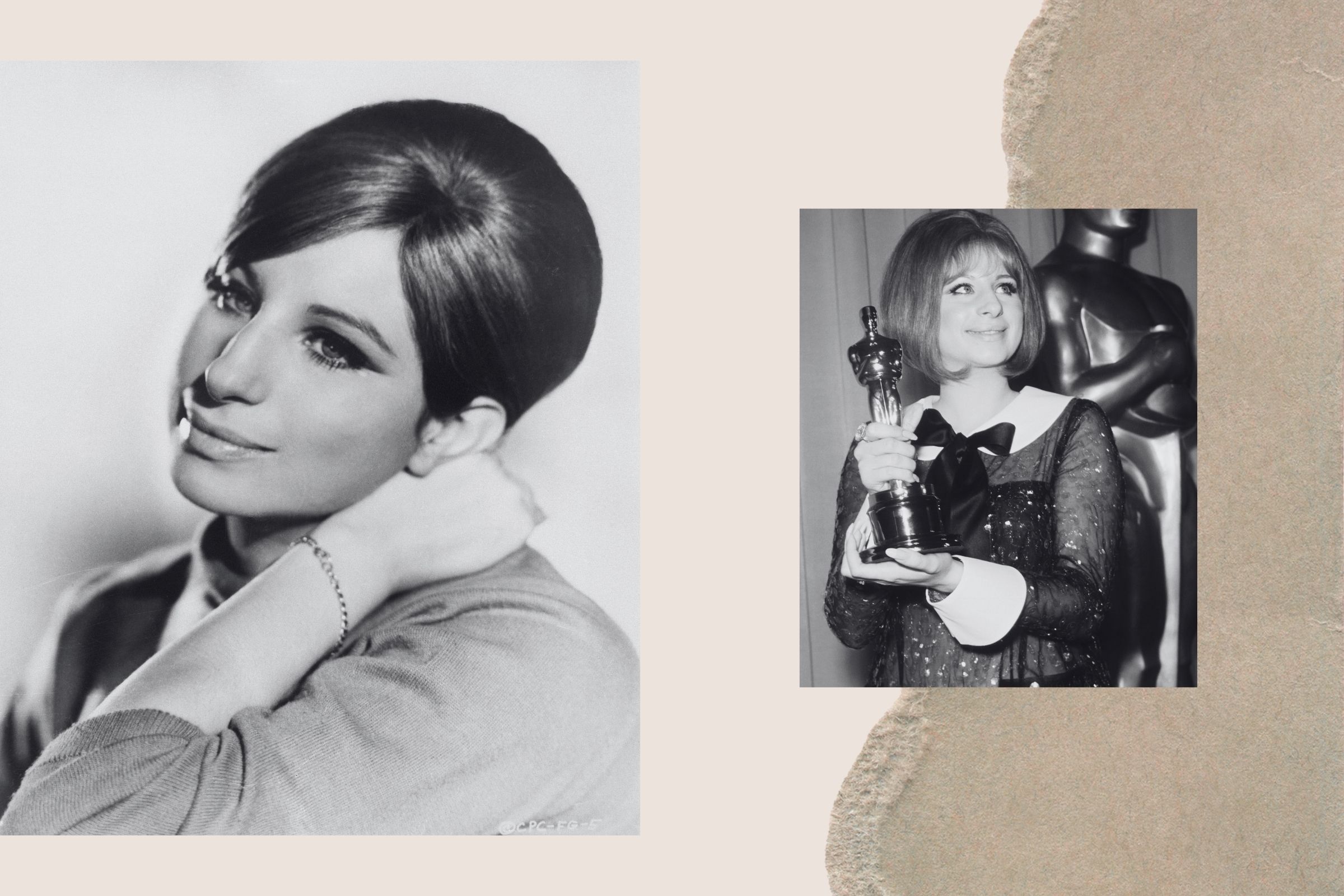
The starmaker machinery has long depended on a narrow definition of beauty and controlling the behavior of women. Barbra Streisand, now 84, was told early and often that the things that made her unmistakable were liabilities. She was too Jewish, too nasal, too Brooklyn, too ambitious, too controlling, too unwilling to be remade into someone else’s idea of a star.
From the start of her career, people told her to fix her nose. In 1964, even this magazine reported as much. In her memoir, she recalls being told by several people that she should get a nose job and have her teeth capped. But she feared that changing her nose might change her voice, and refused, certain that her talent should be enough.
It was enough, but not before the culture made her pay for it. When Streisand fought to make Yentl, the 1983 film she co-wrote, produced, directed, and starred in, she spent years trying to persuade Hollywood that she could direct it. The film itself is about a Jewish woman who refuses the limits imposed on her mind and disguises herself as a man in order to study, and the parallel was impossible to miss.
For that insistence, she was often described as “difficult,” a word that frequently means a woman has declined to pretend she has no standards. Streisand has spoken directly about that double standard: a man who asks for a shot to be changed is treated as committed; a woman who asks for the same thing is treated as obsessive. But the very qualities that made her controversial—precision, control, refusal, an almost forensic relationship to detail—also made her work possible.

Dionne Warwick, now 85, offers yet another version of endurance on her own terms. She has been criticized as too direct for those who prefer female softness, too dry for those who mistake composure for distance, and, at various points, judged through racial expectations that flattened the sophistication of her achievement. In 1963, the European record cover featured a white model on the cover of her album, An Empty Place. Her crossover success with Burt Bacharach and Hal David brought her an enormous white audience, but it also exposed her to criticism that her sound was too polished, too restrained, and not sufficiently aligned with what some listeners expected from a Black female singer.
Warwick’s first hit already contained a declaration of self-possession. In 1962, after learning that “Make It Easy on Yourself,” a song she had hoped would become her first single, had been given to Jerry Butler, she snapped at Bacharach and David, “Don’t make me over.” They turned the phrase into a song. It became Warwick’s first solo hit and, in retrospect, a thesis statement.
Her power has always resided in composure. In songs like “Walk On By,” “Anyone Who Had a Heart,” “I Say a Little Prayer,” and “A House Is Not a Home,” Warwick sang with elegance, intelligence, and restraint. “Walk On By,” released in 1964, is a devastating song precisely because she refuses to overperform devastation. The lyric asks an old lover to keep walking if they see her breaking down; Warwick sings it as though dignity itself is the last remaining shelter. In her performances, she commanded the room by withholding exactly enough.
In recent years, Warwick has also become beloved by younger generations for the directness that has defined her public persona. On Twitter (now X) she began asking questions with the kind of plainspoken authority that felt almost radical in a culture addicted to irony. Why, she asked Chance the Rapper, did he need to include “the Rapper” in his name if he was very obviously a rapper? She wondered publicly about The Weeknd’s spelling. The exchange with Chance the Rapper eventually led to a collaboration, but the larger revelation was that Warwick had not become newly direct. New audiences had simply discovered the clarity that had always been there.
She does not appear to be chasing relevance so much as allowing new audiences to catch up. That distinction matters: there is a difference between remaining visible because one is desperate to be relevant and remaining visible because one is confident in their own skin. Warwick’s authority comes from that confidence.
None of these superstars survived and thrived by becoming less themselves, and this is what makes their continued cultural relevance so instructive. They teach us that to age successfully and gracefully, we need not reinvent ourselves, but rather to know who we are and to evolve.
Make no mistake; these octogenarians have certainly evolved. Cher moved from folk-pop duo to television star to Oscar-winning actress to dance-floor futurist to Rock & Roll Hall of Fame inductee and memoirist. Parton moved from the Porter Wagoner Show to pop crossover to film to Dollywood to global philanthropy. Streisand moved from nightclub singer to Broadway phenomenon to film star to director, producer, and author. Warwick moved from the Scepter Records years to global pop elegance to activist, survivor, internet oracle, and elder stateswoman of direct address.
But for each of these women, adapting to new stages and industries has been conducted on their own terms, without compromising the essence of who they have always been. Their careers were built on deepening their commitments to themselves until the very qualities once deemed excessive became iconic.
Women are often instructed to age by diminishing. They are instructed, both explicitly and implicitly, to gracefully accept less attention, less power, less sexuality, less ambition, and less contradiction. They are praised for aging gracefully (which usually means aging quietly and out of sight). They are expected to become wiser but not louder, visible but not vain, accomplished but not demanding, and well-preserved but not provocative. Even admiration can become a form of containment, turning older women into monuments rather than allowing them to be monumental.
Cher, Parton, Streisand, and Warwick have resisted these strictures. They have not aged into neutrality. Pop divas in their 80s show us that conviction outlasts fashion. They made new work, took risks, changed formats, survived failures, and were undeterred. They did so without compromising the traits that made them singular.
At a moment when many people feel pressured to change themselves to meet the expectations of others, these octogenarian icons offer a different model of a life well-lived: one built not on perpetual reinvention, but on the courage to remain unmistakably oneself.
A life well-lived, they remind us, is not the life that pleased the most people, made the fewest demands, or aged into quiet respectability. A good life is one lived on its own terms, refusing every invitation to become smaller, softer, or less fully oneself.
The new Amazon Fire TV Stick HD is on sale for $20
3 Clever Things You Can Do With an Old Amazon Kindle
Во Франции эвакуируют целый полуостров — лесные пожары угрожают отрезать людям пути к спасению
I tried so hard to become a salad eater. Now cyclospora is sending me back to burgers | Dave Schilling
Between the companies pushing junk food and the bacteria threatening our produce, eating right feels basically impossible
While war and conflict seem to be raging across the planet, the greatest weapon of mass destruction afflicting the United States today is, apparently, a salad – in the sense that fresh produce is now waging battle with our stomachs thanks to the cyclospora parasite. Cyclospora has infested an unknown amount of our food, causing thousands to suffer bowel movements that would make Pompeii look like a gender-reveal party.
This is a tragedy for everyone except the fat cats at Big Toilet. Cyclospora may be spread through human feces getting into irrigation systems in the food supply due to poor worker hygiene. It can’t be killed through usual agricultural sanitation processes. The best we can do is throw all that cilantro away and start from scratch. The FDA is scrambling to find the source of the contamination as soon as possible, going as far as to finger the supplier Taylor Farms with a false positive test that they had to sloppily retract as fast as they declared it. I, for one, am trembling, and not because I’m seconds away from expelling parasitic eggs. I’m terrified because now I don’t know what to eat.
Dave Schilling is a Los Angeles-based writer and humorist
Continue reading...