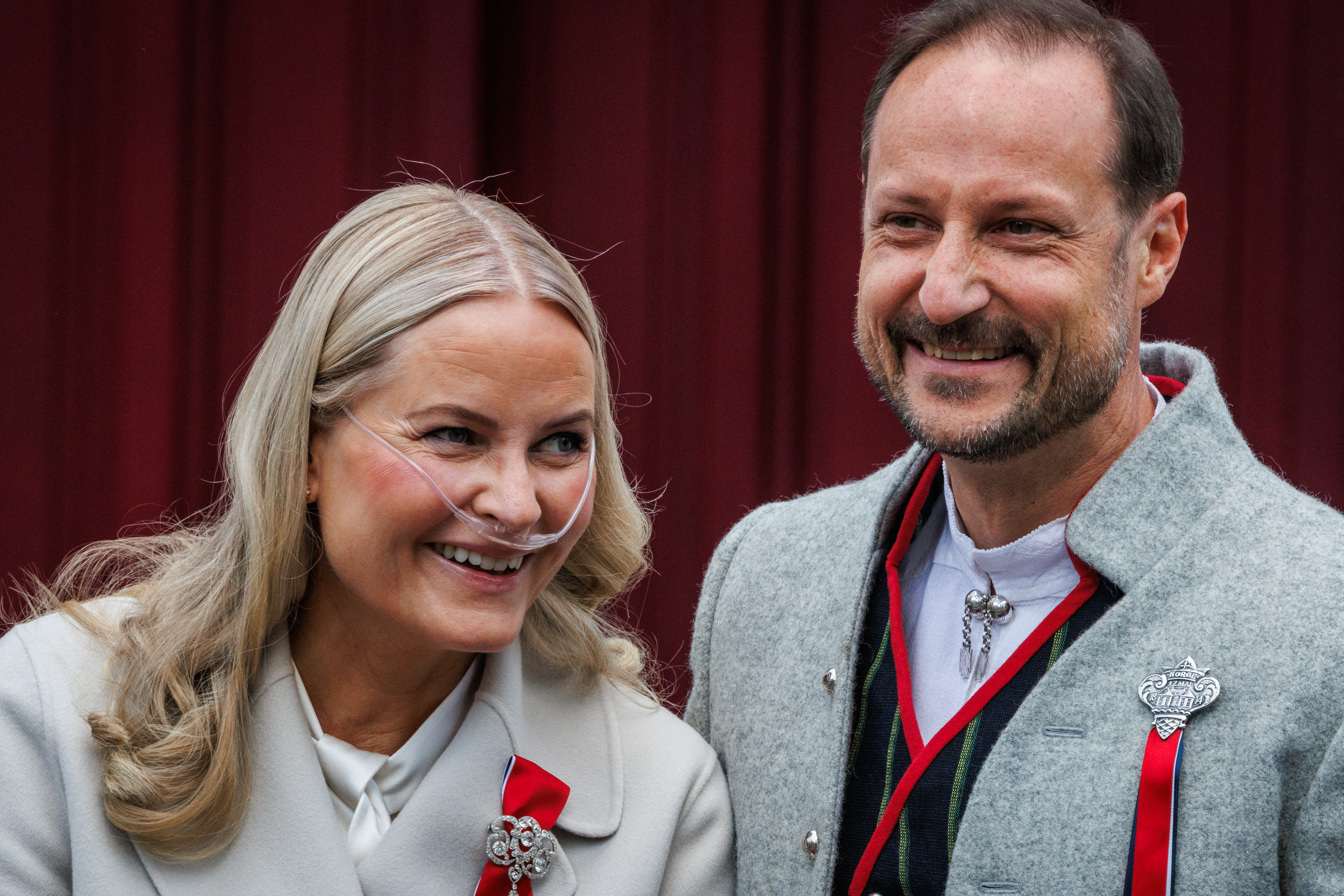
The new King and Queen of Norway, Mette-Marit and Haakon, are seen here at the Norwegian Constitution Day in Oslo on May 17, 2026. —Per Ole Hagen—Getty Images
King Harald V of Norway, a reformer and Europe’s oldest monarch, died Friday at the age of 89. His son, the newly-proclaimed King Haakon VIII, has inherited the Norwegian throne.
Harald passed away peacefully in his sleep at Oslo University Hospital Rikshospitalet at 6:35 a.m., local time, the Royal Palace of Norway said.
“A whole nation is in mourning and the people of Norway are left with a deep sense of gratitude for a long life in the service of Norway,” said Norwegian Prime Minister Jonas Gahr Støre. “For more than three decades as monarch, Harald V demonstrated an unwavering faith in the Norwegian people. He helped us to see the best in ourselves—and in one another.”
Harald had been admitted to the hospital on Aug. 17 and placed on sick leave after corticosteroid treatment for haemolytic anemia caused fluid retention that required hospital care, the palace revealed. His son, then-Crown Prince Haakon, 53, served as regent while his father was on leave.
In an update on Aug. 23, the palace announced the King’s condition had worsened and that he would remain in the hospital to receive antibiotics for a bacterial infection in his bloodstream. In recent days, Norwegians had begun to lay flowers in front of the palace in Oslo after the royal household said his condition had become “very serious.”
Harald has been described as a monarch who modernized the institution. His marriage broke with royal convention when he wed the non-royal Sonja Haraldsen in 1968 after a lengthy struggle for permission from his family.
In a widely noted 2016 Palace garden speech, Harald defined Norwegianness as encompassing immigrants, people of different religions, and members of the LGBTQ+ community.
While Norway is a constitutional monarchy, with the king serving as head of state similar to other royal houses in Europe, Norwegian monarchs have largely held symbolic roles, as legislative power rests with an elected parliament.
Stortinget, Norway’s parliament, said Friday that the King’s reign “was marked by closeness to the people” thanks to “the unifying way in which he has exercised his royal duties.”
Norway will observe a period of mourning, with flags at royal residences, government buildings, and military installations set to remain at half-mast.
Church bells rang out on Friday and thousands of people lined the streets as Harald V's coffin, accompanied by a motorcade of black cars, was transported to the Royal Palace in Oslo.
As Norway mourns its long-reigning monarch, thoughts are also turning to his successor, who has been tasked with carrying on his father's legacy.
Here’s what to know about what comes next and how King Harald is being remembered by his peers and European leaders.
What happens next—who has succeeded King Harald of Norway?
When a monarch in Norway passes away, the next person in the order of succession automatically becomes King or Queen, as the country cannot be without a head of state.
While succession was previously restricted to male heirs, since 1990 the Constitution was amended so female and male children would be included on an equal footing in the order of succession. However, for those born before the change, a male child retains precedence over an older female sibling. As such, although Princess Märtha Louise was Harald’s eldest child, the crown automatically passed down to his son, Haakon.
King Haakon VIII’s wife, Mette-Marit Tjessem Høiby, is the new Queen of Norway. The late King Harald's wife, Queen Sonja, will also retain her title. Haakon and Mette-Marit's daughter Ingrid Alexandra is now Crown Princess and heir apparent—the next person in line to the throne.
The Norwegian government convened for an extraordinary cabinet meeting at the palace on Friday at 11:30 a.m., local time, where ministers met the new King.
Haakon announced his royal motto, opting to keep the words used by his father, grandfather, and great-grandfather: "All for Norway."
There will be no formal coronation for Haakon as Norway’s parliament removed the constitutional requirement for coronations in 1908, deeming the ceremony to be undemocratic and outdated.
What to know about King Haakon VIII and his wife, Mette-Marit
As the only son of Harald and Sonja, Haakon somewhat broke with tradition in his younger years when he moved out of the country to attend the University of California, Berkeley, where he obtained a BA in political science in 1999.
Haakon wed Mette-Marit in 2001, a non-royal and single mother of Marius Borg Høiby.
The couple welcomed their first child together, Ingrid Alexandra, in 2004 and had their son, Sverre Magnus, a year later.
Marius Borg Høiby, Mette-Marit’s eldest child, was found guilty of two counts of rape and was sentenced to four years in prison in June.
In recent years, Mette-Marit has suffered with poor health, after being diagnosed with a chronic lung disease—what the palace referred to as an “unusual variant of fibrosis”—in 2018.
In July, Mette-Marit shared a statement upon being discharged from hospital after undergoing a lung transplant. “It has given me the gift of life, and words fall short when I try to describe how grateful and humble I am for this,” she said of the surgery.
Mette-Marit has come under scrutiny over her contact with the late convicted sex offender Jeffrey Epstein.
Files released by the Justice Department in January showed she had maintained correspondence with Epstein in the years after he pled guilty on two counts of soliciting prostitution from a minor in 2008.
“Jeffrey Epstein is personally responsible for his actions. I must take responsibility for not checking Epstein’s background more thoroughly and for not understanding quickly enough what kind of person he was,” Mette-Marit said in a statement on Jan. 30 2026. “I deeply regret that, and this is a responsibility I must take. I showed poor judgment and regret ever having had any contact with Epstein. It is simply embarrassing. I want to express my deep sympathy and solidarity with the victims of the abuses committed by Jeffrey Epstein.”
During a TV interviewin March, Mette-Marit, while sitting beside her husband Haakon, said she wished she had never met Epstein and again expressed regret over the contact.
Her Majesty Queen Sonja of Norway and His Majesty King Harald of Norway attend a Norwegian Constitution Day event at the Royal Palace in Oslo, Norway, on May 17, 2026. —Ole Hagen––Getty Images
How the world has reacted to King Harald’s death
Tributes have poured in from around the world to honor the late King and his legacy.
Britain’s King Charles III, who is a cousin of Harald, said he and his wife, Queen Camilla, had learned of the news with “the most profound sadness.”
“For thirty-five years, King Harald served his people with unwavering dedication, guiding Norway through times of great change with warmth and humility,” Charles said. “As Norway mourns the loss of so towering a figure, my whole family join in remembering a much-loved kinsman and friend whose kindness, compassion and deep sense of duty echoed from across the sea and across the decades.”
Spain’s monarchy said Harald was “an example of responsibility, dignity, simplicity, and tireless dedication to the service of Norway and its people, before and during his 35 years of reign.”
NATO Secretary General Mark Rutte described the late King as a “dedicated leader,” whose “military roots made him a champion of the Norwegian military and a long-time friend of NATO.” Harald's military roots go back to when he attended the Norwegian Military Academy in Oslo as a young royal and went on to be appointed general and admiral in 1977, as part of the royal tradition where the Crown Prince is appointed to the highest rank in the branches of defense at the age of 40.
Senior officials within the European Union also offered their condolences, with Norway serving as a close trading and security partner of the bloc.
E.U. foreign policy chief Kaja Kallas said Harald was “truly the people’s King, a lifelong defender of freedom and champion of an open Norwegian democracy and society.”
European Commission president Ursula von der Leyen said the late King had brought Norwegians together “in moments of joy and sorrow.”
German Chancellor Friedrich Merz lamented that Norway had lost “a great personality who stood for composure and unity,” while French President Emmanuel Macron said Harald had “worked tirelessly throughout his reign to strengthen the bonds uniting Norway and France.”
Norwegian soccer player Erling Haaland, who met with the late King in July after returning from the World Cup 2026, said: “Rest in peace, King Harald. Thank you for everything you meant to Norway. It was an honor to meet you."
Leading cardiovascular health groups reclassify overlooked causes and introduce sex-specific diagnostic thresholds
Doctors have agreed the world’s first universal definition of a heart attack, paving the way for millions of women to finally receive better treatment after decades of being “deprioritised”.
In one of the biggest procedural shake-ups in a generation, the world’s four leading cardiovascular health groups have signed off on new guidance for healthcare professionals when seeing suspected heart attack patients.
Moscow recruits an estimated 1,000 people a day but western officials say it cannot keep up with casualty level
Russia is losing about 6,000 more troops in Ukraine each month than it can recruit, western officials have said.
While Russia is still acquiring new battlefield recruits at speed, with an estimated rate of 1,000 a day, in the last two months even this has not been sufficient to replace those killed or injured.
Monarch who opened up the Norwegian royal family and its palaces to the public, and married a commoner despite his father’s opposition
King Harald V of Norway, who has died aged 89, Europe’s oldest serving monarch, was the country’s third king since it regained independence in 1905 following the dissolution of its union with Sweden. Although he ceased to be head of the Lutheran state church in 2012 and subsequently lost his constitutional status as “holy” six years later, he did exhibit the Scandinavian moderation, stoicism and genial approachability that led a newspaper to name him Norway’s person of the year in 2017.
The first Norwegian king to be born in the country since 1370, Harald was also related to both the Swedish and the British royal families. His parents were Crown Prince Olav, who was king as Olav V between 1957 and 1991, and his wife, Princess Märtha, a member of the Swedish royal dynasty. His grandparents were King Haakon VII, the first king of the independent country, who reigned for 52 years from 1905, and his wife, Queen Maud, daughter of Britain’s Edward VII. The family roots are Danish – from the Glücksburg dynasty – as were those of the Duke of Edinburgh and the former Greek royal family. The mixed heritage made him sympathetic to refugees: “It is not easy to say where we come from. Home is where the heart is,” he said.
Each year, the Guardian reaffirms its commitment to the environment – both in our reporting and how we operate as a business. From critical tipping points to war in Iran, this is how the last 12 months have looked
Today marks the end of the Guardian’s annual climate support campaign. Each year, during the campaign, we remind our audience about the Guardian’s role in covering the threats to our planet and the importance of independent journalism in telling that story. Our climate pledge is a reminder of the environmental values we place at the heart of our reporting and our organisation.
Since our 2025 climate pledge, the world has experienced extreme levels of heat as well as extreme forms of denial and abdication in the face of the climate crisis. But, across the world, there have also been inspiring efforts to tackle it.
We will be publishing our annual company emissions data in the autumn, explaining what drives our emissions and where they have risen and fallen.
We have started the process of estimating our emissions from generative AI usage. We hope to report on this next year.
We have undertaken our B Corp recertification in line with the new standards introduced by B Lab in 2026. We will find out our result later this year.
We have participated in advertising industry working groups that published a methodological framework that aims to capture the emissions impact of digital and print advertising.
We open ourselves up to scrutiny by independent third parties, such as the Science Based Targets initiative (SBTi) and B Corp, so they can assess the robustness of our targets and our internal policies.
Война в Украине: Зеленский предупредил, что российское небо становится полностью опасным из-за украинских дронов, Путин назвал беспилотники главным вызовом для России
Federal Reserve chair Kevin Warsh addressed the U.S. inflation, saying it still remains a concern despite measures taken to navigate higher prices. CBS News' Kelly O'Grady reports.
Alan Greer was investigated by police in 2002 and 2005 for making inappropriate phone calls to women, with one case resulting in a formal police caution.
A yard sign in front of an Altadena home that was burned in the Eaton Canyon fire. March 2025. | Kirby Lee via AP
A natural disaster can do in one day what decades of public zoning fights cannot: Erase entire neighborhoods and force thousands of decisions, all at once, about what will replace them.
That’s the question now — still— hanging over Altadena, the Pacific Palisades, and other Los Angeles-area communities that burned in the catastrophic January 2025 wildfires. More than a year and a half later, rebuilding remains painfullyslow. All this is unfolding in a region already desperately short of homes, with one of the most expensive housing markets in America.
Now, California’s legislature is set to vote on a law bowing to local anti-density pressure that could make that all the worse, and set an ominous precedent for housing affordability. This is, on one level, a regional story about a fire-traumatized community trying to get back on its feet and shape its future, but it reflects something much larger, too. It highlights the kind of zero-sum politics increasingly pervasive nationwide, that casts ordinary homebuilding as something sinister, and that elevates local control above all else. These instincts help explain why it’s become so hard for the US to build the things we need, and why the fight for affordable, abundant housing remains so fraught, in California and nationwide.
The roots of this dispute go back well before the fires. For the better part of a decade, California has been trying to solve one of the central contradictions driving our national housing shortage: Almost everyone agrees that the country needs more homes, yet almost everyone has a reason they should go somewhere else. The state has passed laws weakening exclusionary zoning, legalizing denser “missing middle” housing, and taking some housing decisions out of the hands of local governments that refuse to permit enough homes.
That push included, in 2021, a now-famous statewide law, Senate Bill 9, which overrode local zoning to enable homeowners statewide to build up to four housing units on their lots. Another pair of laws, SB 684 and a subsequent expansion, SB 1123, made it possible to subdivide vacant lots zoned for single-family houses and build up to 10 smaller homes on them.
The 2025 fires are now testing California’s pro-housing progress. In Altadena, an unincorporated suburb about 14 miles north of downtown LA, the Eaton Fire destroyed a huge share of homes. Many survivors are now rebuilding the single-family homes they lost in the disaster. Others, facing meager insurance payouts and massive construction costs, have sought to rebuild at higher densities to make doing so financially feasible, or sold their lots to developers and moved elsewhere.
Only a small share of rebuilding applications so far have relied on SB 9 or SB 1123, but a revolt has nevertheless ensued among opponents of denser developments. Lawmakers in Sacramento now want to stop the use of one of California’s pro-housing laws in the community. By August 31, the state legislature could pass yet a new law: SB 1090, which would suspend SB 1123 in Altadena until 2030, blocking the additional housing it would have allowed.
Altadena is by all accounts idyllic, lined with storybook bungalows bordering the San Gabriel Mountains. The impulse to want it to be built back as it was before is only human and understandable. Neil Tyler, a fire survivor who supports SB 1090 and is currently rebuilding his home, told me that many in the community are deeply anxious and angry that a developer could buy burned lots and transform them into clusters of 10 homes that would feel alien to the Altadena they’re trying to recover. It “exploded into the community’s fear and opposition and pretty much outrage over someone trying to profit off the backs of all of our pain and suffering,” he said.
I’ve writtenextensivelyon the national housing shortage and the local zoning laws that help cause it. Altadena offers an unusually sympathetic case for the desire to maintain hyper-local control — it’s terribly unfair for your community to burn down overnight. And it challenged me to think more deeply about what is owed to a community suffering such incredible loss.
Ultimately, the fight over SB 1090 clarified to me more strongly why the local level is the wrong one to make decisions about housing supply, and why it’s important for California’s hard-won housing laws, along with similar state laws elsewhere in the US, to withstand the very local resistance they were enacted to overcome. The metro LA area, including Altadena, is extraordinarily expensive in large part because local control has already caused it to underbuild housing for decades. SB 1090 would convert some fire survivors’ desire to preserve Altadena’s low-density form into restrictions on other people’s rights and choices, while blocking homes the region desperately needs.
The case for rebuilding…more
Debates over arcane laws with names like SB 9, SB 1123, and SB 1090 might sound abstract, impenetrable, and boring. But the principles are fairly straightforward, and they explain a lot about what feels so wrong with American life right now.
The economics of housing is not so different from that of any other good: When lots of people want a thing but we don’t make enough of it, it will become ever more expensive. This has happened in LA and many other parts of the US over the last century. Starting in the 1960s, LA used local zoning laws to sharply decrease allowed densities for new housing in the city. By 1990, the city’s theoretical population capacity had fallen from roughly 10 million to about 4 million, even as its economy and demand to live there grew. Sure enough, LA’s population today is just south of 4 million, and housing costs are predictably out of control.
Those numbers are just LA proper — but housing markets are regional, and LA’s suburbs have been just as responsible for the area’s chronic housing scarcity. One of the most pervasive drivers is single-family zoning, a form of “exclusionary zoning” that makes it illegal to build anything other than a single-family house on most residential land in the US.
Altadena, where the median home is valued at around $1.12 million, is zoned overwhelmingly for single-family dwellings — a policy California has sought to chip away at with state laws like SB 9 and 1123. The idea is that allowing more homes on a single lot will expand supply, which helps lower housing prices; in tandem, it allows physically smaller homes to be built instead of just large single-family houses, which also lowers housing prices.
Reforming exclusionary zoning in this manner also does something that can help fire survivors trying to rebuild their lives. It tends to raise land values, because a parcel that can support several homes is worth more than one where only one can legally be built.
Consider a hypothetical: An empty lot might sell to a builder for $500,000 if it’s only zoned to support a single-family house. The builder might then spend $1 million on construction and other development costs and sell the house for $1.8 million, making $300,000 in profit. If the plot could instead support six smaller homes under SB 1123, the builder could pay $800,000 for the land, spend $3 million on construction, and sell each home for $750,000, making $700,000 in profit. This is a simplified example, and real-world comparisons are much more complicated, but the underlying principle is basic land economics: Increasing a parcel’s development capacity increases what a developer can justify paying for it. Allowing greater densities can be positive-sum — the original homeowner can get a higher price for their sale, the new home buyers can get much less expensive houses, and the builder can make a greater profit.
“These small-scale density tools could in fact be a financial lifeline that allows some Altadena homeowners to fill what is often a six-figure gap in their financing in order to rebuild their home and provide some housing for some other folks,” said Azeen Khanmalek, executive director of Abundant Housing LA, one of several California pro-housing groups opposing SB 1090.
Caroline Paules, an Altadena resident who also opposes SB 1090, noted that rebuilding to modern fire-resistant standards is expensive; building densely can help mitigate that cost. Paules is a mechanical engineer and co-founder of a startup that builds small prefabricated cottages, and had hoped to use SB 1123 to build in Altadena, with seven cottages each on lots previously reserved for single-family homes. If SB 1090 passes, she said, she may not be able to. “I completely resonate with the desire for Altadena to be what it was, because it was beautiful and perfect,” she said. But “no matter how traumatizing and painful it is, I think we have to release trying to shove Altadena into what it was before the fire.”
How California’s pro-housing push swerved
Last year, after the fire destroyed between one-third and one-half of Altadena’s homes, the Los Angeles County planning department promoted SB 9 and 1123 as rebuilding options in a brochure for fire survivors. But earlier this year, as neighbors became increasingly concerned about rebuilding plans, LA County abruptly changed course and voided applications filed to build under SB 1123. The county now took the position that the Altadena lots didn’t qualify under SB 1123 because so many surrounding homes had burned that the parcels couldn’t be considered infill projects.
The reversal echoed what happened last summer, when Gov. Gavin Newsom and LA Mayor Karen Bass suspended SB 9 in the Palisades after residents had already begun submitting applications — a midstream rule change that made an already grueling rebuild harder. Most of Altadena wasn’t included in that order because much of it isn’t designated as a very-high-fire-hazard zone, so residents who oppose the higher-density developments have sought other routes to block it.
Much of the recent backlash has centered on plans to build under SB 1123 by Stone West Homes, a Southern California-based developer. Between summer 2025 and early 2026, the developer was involved in buying seven Altadena lots where homes had burned, planning to redevelop them into about 10 small houses each — 70 homes total. These were large lots, most of them between two to four times the size of a typical new single-family lot. The developer has said the lots were purchased for more than single-family development could have justified, but opponents have disputed that. (That is a complicated question to adjudicate, and not one I’ll pursue here.)
In March, LA County told the developer its application was being canceled. “They basically flipped a switch,” Chris Manasserian, a lawyer for the developer, told me; they then sued LA County for what they allege was an illegal reversal.
The fight soon moved to the state’s capital. By June, California state Sen. Sasha Renée Pérez, whose district includes Altadena, rewrote an existing bill, SB 1090, to include a moratorium on SB 9 and SB 1123 in the community, setting this whole episode into motion.
The LA County planning department did not respond to a request for comment. Pérez did not make herself available for an interview. LA County Supervisor Kathryn Barger, who represents Altadena and has vigorously promoted SB 1090, also didn’t respond to multiple requests for an interview.
The SB 9 suspension was eventually dropped from the bill, leaving only the moratorium on SB 1123, which would take effect only for applications submitted after October 1 of this year. To some residents, 1123 is much more threatening: It allows greater densities, and it’s more likely to be used by outside developers than pre-existing Altadena homeowners. Suspicion of developers has been central to the campaign for SB 1090. A website run by SB 1090 supporters portrays Stone West’s planned developments as “disaster capitalism” by “out-of-town speculators.”
I find this hard to compute. It feels of a piece with a broader, slopulist zero-sum turn in American politics that treats any transaction in which someone profits as evidence of an injustice. Developers, for all the suspicion attached to the word, are people who build things, including homes — if we want homes, we need them. “It seems like we’ve just been demonized for something that makes perfect sense to do,” Manasserian said. Developers can just as well buy Altadena lots to build large single-family homes, but I haven’t seen the same anti-developer sentiment leveled against that possibility.
I asked Neil Tyler what exactly makes the prospect of living near an SB 1123 development similar to what’s proposed by Stone West, with 10 houses on it instead of one, so threatening. He mentioned one cul-de-sac street where, he said, most homeowners had previously planned to rebuild, but many were now considering selling rather than living near an SB 1123 development. Summarizing their thinking, Tyler said: “I can’t pour my time and money and resources that are so stretched to now build my home back at this property, where all of a sudden right next to me could be a townhome that blocks my kind of way of life that I just want to recapture.” (The street that he’s referring to is lined with single-family homes on very large, low-density lots.)
As a result, he said, SB 1123 in Altadena “is very directly further displacing people that intended to come back.” He believes it’s wrong for an outside developer to take advantage of the law to abruptly alter neighborhoods while residents are still trying to make decisions about returning. But he emphasized that he and others who share his views don’t oppose all density increases or deny that there’s a housing shortage. He supports accessory dwelling units (ADUs), for example, which California has legalized statewide and which he and other fire survivors are now building on their properties. He also raised concerns about local infrastructure capacity and fire spread and evacuation, part of which I examine below, but worth noting here is that SB 1123 does not waive ordinary utility requirements. Infrastructure, particularly in a place like America’s second-largest metro area, can grow to accommodate more people; it’s not a fixed limit on density.
Local control clashes with regional needs
So far, only a very small share of the nearly 7,000 homes that burned in Altadena have been put up for 1123 redevelopment. Although the level of density they represent is higher than what’s typical on an Altadena residential street, they’re hardly high-density by metropolitan standards, especially in such a high-demand area. “We’re not talking about allowing six- or eight- or 10-story apartment buildings,” Khanmalek said.
As with other housing fights across the country, the development opponents are highly vocal, but it’s far from clear that their views are unanimous. “I have yet to see someone draw a connection between what developers are intending to do and it actively harming an Altadenan,” said Paules.
It may be true that some neighbors would not like to live near denser developments, and it understandably feels unfair for a wildfire to be the occasion that accelerates that change. But it’s also unfair to deprive fire survivors of property rights, and it’s unfair that communities in metro LA have long banned (and continue to ban) denser housing and fueled a housing shortage in the first place. Many residents want to protect the ability to occupy a very desirable part of the city at low density — the emotional impact of losing that can be very real, but it’s not something residents are owed in perpetuity.
Neighbors disliking the presence of new development is the universally cited reason for opposing building, and opponents can always find a reason that a particular time and place is the wrong one in which to build. The perceived costs of new housing are concentrated among nearby residents, while the costs of blocking it are borne by society as a whole. That asymmetry is why the right to build housing cannot depend on securing neighbors’ discretionary approval.
How does fire risk factor into this?
Altadena is self-evidently in a fire-prone area, a danger that climate change will likely continue to intensify. Might there be a legitimate argument for no longer building in places like it, or at least not concentrating more people there?
Two Southern California wildfire experts — Alexandra Syphard, senior research scientist at the Conservation Biology Institute, and Max Moritz, a wildfire specialist with University of California Cooperative Extension — told me that the question is very complicated. Density has a complex relationship with fire risk, and it can cut in opposite directions.
On a macro level, building more densely in already established communities (like Altadena) is preferable to pushing development even farther out into the wildland-urban interface. “Creating more residential units in existing suburban areas should be a goal,” according to a report from the UC Agriculture and Natural Resources division, co-authored by Moritz. Once a fire is already burning through a community, closely spaced buildings can accelerate structure-to-structure spread and expose more people. But lower-density lots with a lot of vegetation can also fuel a conflagration.
“I would be reluctant to assume that allowing subdivision [of lots under SB 1123] necessarily increases wildfire risk,” Syphard wrote in an email. She listed improved fire resistance in homes, vegetation mitigation, and close attention to evacuation routes as better ways to reduce risk “than a blanket restriction based on the number of units permitted on an already-developed parcel.”
SB 1123 already does not apply in very-high-fire-hazard areas, and the law allows local governments to reject a proposed development if it makes an evidence-based finding that it would pose a threat to public health or safety.
Nolan Gray, senior director of legislation and research for California YIMBY, told me that his organization suspects SB 1090’s supporters want the three-year moratorium to eventually be made permanent. Though the bill’s supporters maintain that their circumstances are extraordinary, Gray and Khanmalek both fear it would create a precedent for more communities to seek exemptions from SB 1123.
No growing, economically successful city can refuse to densify forever without ruinous implications for housing affordability that will eventually undermine its economy. California’s Gov. Newsom has generally stood firm against local governments seeking to defy state housing laws, but last year’s wildfires have tested that resolve. His office declined to comment on SB 1090, citing its general practice of not commenting on pending legislation. Should the bill reach his desk — which could happen as soon as next week if it passes the state legislature as many expect — the question will be whether he’s willing to supply the leadership that local officials have not.
Southern California is already one of America’s most beautiful, sought-after places to live, and freed from its chronic housing scarcity, it could be better still: less punishingly expensive, and more capable of welcoming all those drawn to it. The fires have already taken enough from the region; they ought not be allowed to scorch the housing reforms that had begun to open up a more abundant future.
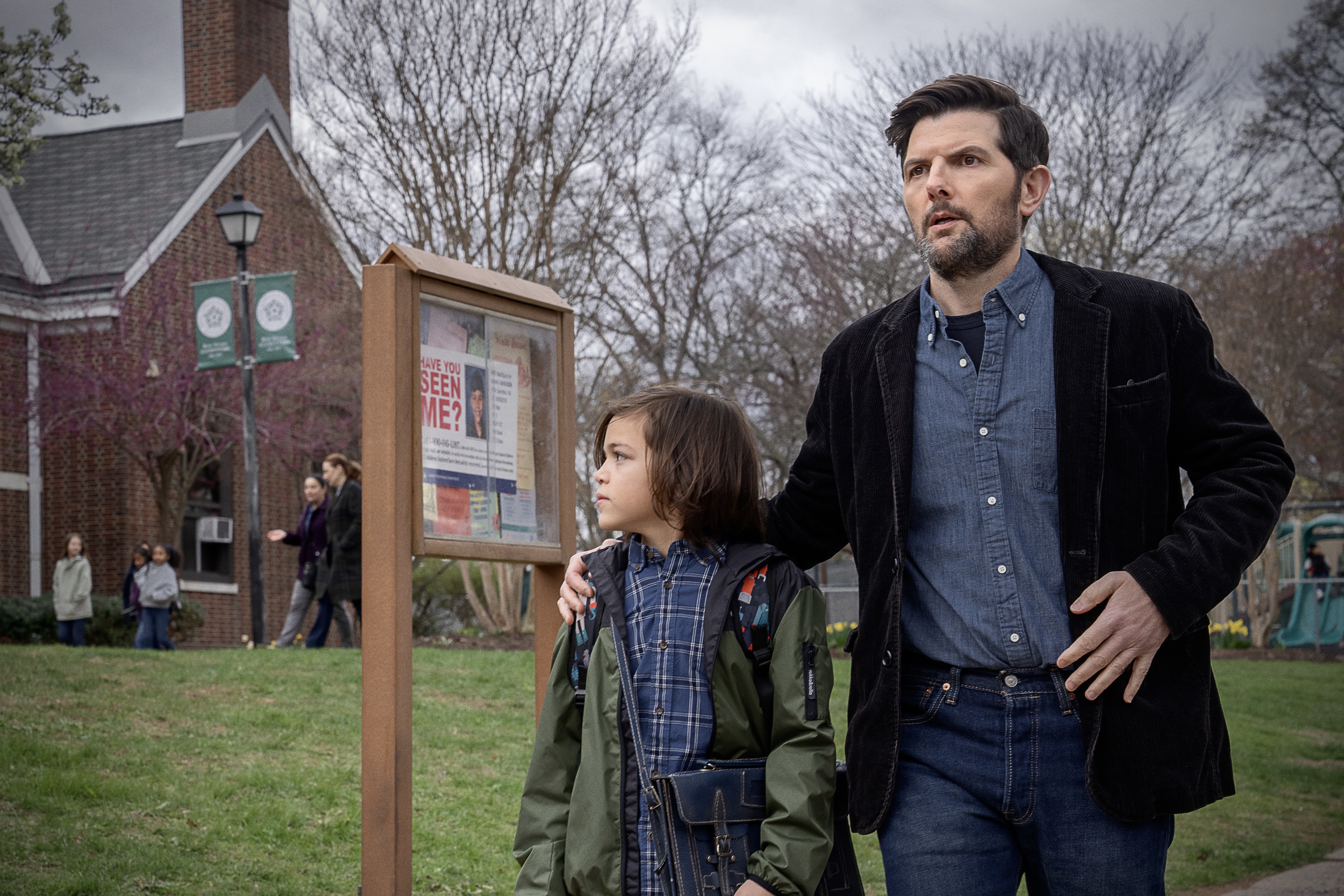
Netflix's 'The Whisper Man' stars Robert De Niro as detective Peter Willis, Adam Scott as novelist Tom Kennedy, Michelle Monaghan as detective Amanda Beck —David Lee—Netflix
Warning: Spoilers ahead for The Whisper Man
In The Whisper Man, a film out on Netflix Aug. 28, Adam Scott plays Tom Kennedy, a successful true crime novelist who becomes the victim of a crime when his son is abducted in their sleepy New Jersey town.
An adaptation of Alex North’s novel of the same name, the film is about the search to find the young boy (Acston Luca Porto) alive. Kennedy’s estranged father Pete Willis, a former detective played by Robert De Niro, comes out of retirement to search for the grandson he has never met. As the detective responsible for the conviction and imprisonment of a legendary murderer known as the “Whisper Man”—who targeted young boys—he’s trying to figure out who is doing his bidding.
Here’s what to know about the complicated family dynamics in the movie and its disturbing ending.
Where The Whisper Man gets its title
The original "Whisper Man" is Frank Carter (Michael Keaton), who is serving a life sentence in prison for killing five young boys after luring them from their homes in a whispery voice. According to North, he targeted especially vulnerable children, exploiting those who were neglected or had difficult relationships with their parents, and was known for “whispering outside the windows and drawing them away from their family in order to take them [as a] Pied Piper kind of figure.”
Twenty years later, Carter’s son Francis Jr. (Owen Teague) is the “Whisper Man” in the film, who lures Tom’s son Jake from his home. The movie suggests that he met his victims working as a child psychologist in a school.
The Whisper Man stars Robert De Niro (right) as a detective and the estranged father of crime novelist Tom Kennedy (Adam Scott), whose son has been abducted.
Complicated father and son relationships
The “Whisper Man” and his latest victim both come from families with sad father-and-son relationships.
Frank Carter arguably targeted young boys because he was sexually abused by his own father and wanted to do the same to other children as revenge. He would specifically go after children who lived in difficult family situations. His son, Francis Jr., is following in Frank’s footsteps, trying to be like a father he never got to know. “He’s looking for his father’s approval,” says North.
Tom and his son clash because they are mourning Tom’s wife and Jake’s mother—who died after a long illness—in different ways. For a fresh start, Tom moves the family to a new house and a new school in New Jersey. Jake, on the other hand, is slower to move on, carrying around what he calls a “packet of special things,” filled with doodads and pictures that belonged to his mother. Tom is also frustrated that Jake prefers to play with an imaginary girl in a blue sweater rather than make real human friends, and they get into disagreements in the movie over that.
When Jake is abducted, Tom reaches out to his own detective father Pete in an act of desperation, rather than for support. He’s always thought that his alcoholic father walked out on his family. During the search for Jake, Tom learns that his own childhood imaginary friend “Mr. Night” was actually his father reading him bedtime stories because bedtime was the only time his mother let his father visit him. Pete becomes a detective again, hoping he can finally have a relationship with his son and grandson.
In The Whisper Man,Adam Scott (right) plays a crime novelist who struggling to connect with his son Jake (Acston Luca Porto) —David Lee—Netflix
How the “Whisper Man” is caught
The lightbulb moment occurs after Pete visits Frank in prison. Frank tries to get a rise out of Pete by saying his son writes true crime novels so he can be like his father.
The comment irks Pete, but then he realizes that Frank is sort of projecting that maybe Frank’s son Francis Jr. is trying to be like his own father. Believing the “Whisper Man” who took Jake could be Frank’s son, he works with detective Amanda Beck and her colleagues to track down the young man, who doesn’t live far from Jake.
A bloody ambush follows at the house where Francis Jr. is holding Jake hostage. Francis Jr. stabs Amanda, but she survives, though her injuries lead to a permanent limp. Francis Jr. stabs Pete to death. Pete’s first and last interaction with his only grandson is telling him to run out of the house as fast as he can.
Tom ends the film with fonder feelings about his father, as the final scenes show him living in Pete’s house. In the film’s final scene, Tom is looking through some photographs of his late wife that his son Jake has been hanging on to. He stops at a photograph of a girl in a blue sweater, realizing that is who his son’s imaginary friend is.
Francis Jr. is sent to prison, where he gets ambushed in the end, by his own father, who strips naked and strangles his son.
“Francis Jr. is the final victim of the original 'Whisper Man,'” says director James Ashcroft. And he says it’s natural for viewers to feel “conflicted” after watching the ending: “It’s not a fist bump moment of good guys vanquished by bad guys. That happens to some extent, but it's also a tragic story.”
He adds: “I love the idea of people walking away from a film in a gray space rather than the black and white one…That's what makes you have a conversation after a film. That's when a film exists long after the credits roll.”
Campaigners say ‘seismic shift’ follows years of pressure to sever ties with oil and gas firm
The London Science Museum has ended its decades-long partnership with the oil and gas company BP in what has been described as a “seismic shift” for the museum.
The Science Museum Group academy, which was established in 2018 to provide training and resources, announced on Friday that it would be ending its partnership with BP. In a statement, the director and chief executive of the Science Museum Group, Sir Ian Blatchford, said the partnership had “drawn to a close at the end of the current contract term”.
Leading cardiovascular health groups reclassify overlooked causes and introduce sex-specific diagnostic thresholds
Doctors have agreed the world’s first universal definition of a heart attack, paving the way for millions of women to finally receive better treatment after decades of being “deprioritised”.
In one of the biggest procedural shake-ups in a generation, the world’s four leading cardiovascular health groups have signed off on new guidance for healthcare professionals when seeing suspected heart attack patients.
Campaigners say ‘seismic shift’ follows years of pressure to sever ties with oil and gas firm
The London Science Museum has ended its decades-long partnership with the oil and gas company BP in what has been described as a “seismic shift” for the museum.
The Science Museum Group academy, which was established in 2018 to provide training and resources, announced on Friday that it would be ending its partnership with BP. In a statement, the director and chief executive of the Science Museum Group, Sir Ian Blatchford, said the partnership had “drawn to a close at the end of the current contract term”.
Before becoming prime minister, Andy Burnham favoured a £500,000 donations cap. In office, he’s backing away. That is a mistake
On the campaign trail in Makerfield, Andy Burnham told a democracy activist that he favoured a political donations cap of around £500,000 and wanted it reduced over time. His government is now resisting amendments that would move in precisely that direction. Mr Burnham was right in May. He is wrong now. It is difficult to argue that restricting a single person to giving half a million pounds a year to a political party would damage democracy. Such a cap would only affect the mega-rich. Reducing the cap would force parties to wean themselves off the present regime that allows the rich too much say.
There are two contra arguments swilling around Labour. The first is that there should be room for wealthy, progressive donors – whose cash helps rebut claims that Labour is in the pocket of the trade unions. The second is the warning from unions that a cap could undermine their ability to contribute to the Labour party.
Do you have an opinion on the issues raised in this article? If you would like to submit a response of up to 300 words by email to be considered for publication in our letters section, please click here.
The British Museum’s landmark cultural exchange is a symbol of post-Brexit rapprochement between Britain and France
“Harold Rex interfectus est”: King Harold is killed. As every British schoolchild knows, the Bayeux tapestry depicts a turning point in the history of these islands: defeat at the Battle of Hastings in 1066, which would lead to the ascent of William the Conqueror to the English throne. Its return to the UK for the first time in nearly 1,000 years is being hailed as a hugely historic moment in its own right. The loan of the tapestry (technically an embroidery of wool on linen) to the British Museum in exchange for UK treasures from Sutton Hoo is the ultimate manifestation of soft power – a 70-metre symbol of post-Brexit Anglo-French rapprochement in comic-strip form.
Ticket sales for the exhibition, which opens on 10 September, were the biggest in a single day in the museum’s history, with online queues of 80,000. Radio 4 is devoting a day of special broadcasts to mark the arrival of the tapestry, including a new drama with verse from the poet laureate Simon Armitage. The museum’s videos explaining this tale of ambition, friendship, betrayal and revenge are fittingly narrated by Traitors presenter Claudia Winkleman. Norman-mania is here.
Do you have an opinion on the issues raised in this article? If you would like to submit a response of up to 300 words by email to be considered for publication in our letters section, please click here.
A federal judge has ruled in favor of artificial intelligence company Anthropic in its legal battle against the Pentagon after the government labeled the company as a supply chain risk earlier this year.
Под моей статьёй с разбором реестра российского ПО в комментариях спросили: интересно, а как регистрируют программы за рубежом. Вопрос меня саму заинтересовал, поэтому я разобрала, как устроена регистрация программ в США: только по официальным материалам Copyright Office, с цифрами из годовых отчётов и реальной регистрационной записью на VMware в качестве примера. Спойлер: исходный код там сдают в Библиотеку Конгресса, а сама регистрация нужна не для льгот, а для суда.
Experts say imported eggs served in cafes and restaurants may be behind hundreds of infections and one death
Salmonella cases in the UK are expected to rise until the common source is identified, something that is notoriously difficult to establish, experts have warned.
There have been 474 confirmed cases and one death linked to the current outbreak, according to the UK Health Security Agency (UKHSA), with the latest investigations suggesting it is associated with eating imported eggs in cafes and restaurants.
SOAP никуда не делся. Продаёте авиабилеты, значит ходите в Amadeus, Sabre и Travelport по SOAP. Интегрируетесь с банком, госпорталом, страховым бэкендом, биллингом оператора или почти любым корпоративным продуктом, купленным до 2015-го: там контракт это WSDL, а на проводе <soap:Envelope>. Подписи WS-Security, вложения MTOM, SOAP 1.1 рядом с 1.2, soap:Fault при ошибке: этот мир жив, он приносит деньги и не переезжает на REST по вашей вежливой просьбе.
В .NET вызывать его стало неудобно. WCF как полноценный фреймворк ушёл. CoreWCF есть, но во всех опубликованных версиях висит незакрытая крипто-уязвимость, так что затащить его значит поменять одну проблему на другую. dotnet-svcutil генерит клиент из WSDL на этапе сборки, но это кодогенерация, приклеенная сбоку, а не шаг интеграции. А хостинг SOAP-эндпоинта, WS-Security руками или проводка MTOM обычно заканчиваются кучей конфигурации System.ServiceModel, которую никто не хочет держать.
redb.Route.Soap идёт другим путём. SOAP становится обычным шагом пайплайна в вашем же .NET-процессе. Вызвал сервис, получил типизированный ответ. Поднял эндпоинт, отдал тело маршруту, вернул ответ. Всё in-box: HttpClient, общий Kestrel-хост и System.Security.Cryptography.Xml для WS-Security. Ни WCF, ни рантайма System.ServiceModel, ни уязвимой зависимости, ни отдельного шлюза. Разберём, как это используется и почему нативный коннектор внутри ESB бьёт codegen-клиента или отдельную коробку.
Critics call move to gain long-term access to country’s massive energy reserves ‘predatory’ and ‘unconstitutional’
Reports that the US is preparing to claim a big stake in Venezuela’s massive energy reserves have sparked an outcry, with critics describing the move as “predatory” and a “rapacious” land grab.
Several media outlets this week reported that the Trump administration – which abducted Venezuela’s authoritarian president, Nicolás Maduro, in January and has steered the South American country ever since – hopes to secure long-term access to its oil and gasfields.
Critics call move to gain long-term access to country’s massive energy reserves ‘predatory’ and ‘unconstitutional’
Reports that the US is preparing to claim a big stake in Venezuela’s massive energy reserves have sparked an outcry, with critics describing the move as “predatory” and a “rapacious” land grab.
Several media outlets this week reported that the Trump administration – which abducted Venezuela’s authoritarian president, Nicolás Maduro, in January and has steered the South American country ever since – hopes to secure long-term access to its oil and gasfields.
A leading Chinese A.I. start-up released its latest model and made the case that China’s embrace of open software is safer than Silicon Valley’s closed approach.
A House race in Arizona pits Jay Feely, a former Jets kicker, against Amish Shah, a former sideline doctor for the team. Jets fans in the district say it’s a welcome distraction from all the losing.
Festivalgoers brave rain and strong winds as ‘unsettled’ conditions expected to last over bank holiday weekend
Heavy rain is expected over the weekend, forecasters have said, with people heading to major music festivals warned of unseasonably strong winds.
That came after large parts of England braced for flooding on Friday. The Environment Agency (EA) issued flood alerts across the Midlands and into South Yorkshire, having earlier sent out a more-serious flood warning in the town of Nelson, Lancashire.
The North Face is offering up to 48 percent off rain jackets, fall jackets, hoodies and fleeces right now. Here are the best deals to shop before they sell out.
PLYMOUTH, Mass. — Lindsay Clancy was “scared” as the jury deliberated for a second day to determine whether she is guilty of killing her three children in 2023, her defense lawyer said Friday.