RSS Feeds
Beijing Rejects Trump’s Claim of Meddling, but Avoids a Fight
What a Times Reporter Saw in Iran, and Takeaways from Trump’s Speech on Election Security
‘My eyes were stinging’: New Yorkers navigate smoky air and soaring temperatures
Pollution levels in the city were elevated as smoke from Canadian wildfires drifted south across a huge swathe of the US
The sun shone feebly through the thick haze. The smell of burning wood hung thick in the air. Many New Yorkers donned masks as the air quality plummeted amid health warnings.
The National Weather Service issued an air-quality alert because pollution levels were elevated as smoke from raging Canadian wildfires drifted south across a huge swathe of the US, reaching all the way to New York City and even beyond out into the Atlantic.
Continue reading...Pro-Kremlin blogger who turned on Putin is arrested as Russia steps up crackdown
Venezuela Earthquakes Force a Grim Homecoming for Migrants
Is Venezuela a Colony Now? A Sovereign State? Modern Empires Rule in Ambiguity.
‘Suddenly, I Was Free’: A Chinese Pastor’s Journey From Jail to the U.S.
In One of Houston’s Oldest Latino Barrios, Mourning After ICE Shooting Mixed With Fear and Anger
The 20-Somethings Running Ukraine’s War Machine
Want More of the ‘Odyssey’? Read These Books Next
Christopher Nolan on ‘The Odyssey’ and IMAX Technical Challenges
As Blazes Spread Near Paris, Extreme Heat Is Changing How France Fights Fires
Dubai Migrant Worker Layoffs Reveal Costs of Middle East War
Trump Promised Proof of Election Tampering. His Document Release Fell Far Short.
What World Cup Hydration Breaks Tell Us About the Times We Live In

Everyone seems to have an opinion about the hydration breaks at this summer's World Cup. Many scoff at the need, suggesting they are another FIFA grab at an ad buy. Others question why they occur at every match, regardless of the local temperature or if the stadium has air conditioning. Those criticisms are fair, but they distract us from a more important story.
Whether or not FIFA has gotten this policy exactly right, the need for hydration breaks underscores a new reality: extreme heat is changing the way the world’s best athletes compete. Instead of debating whether elite players should break for water, we should be asking what a hotter climate means for all athletes, especially the millions of young athletes playing in scorching temperatures this summer.
Heat can be hard for people to take seriously because it doesn’t look like a disaster. Storms, wildfires, and floods come with dramatic imagery of destruction. But heat is often paired with images of kids running through sprinklers or people relaxing at the beach. Research has found those types of images make people less concerned about the dangers of heat. What those images don’t show is what happens in the body. As body temperature rises and humidity limits the body’s ability to cool itself, mild symptoms such as cramps and headaches can progress to shortness of breath, dizziness, confusion, nausea, and ultimately life-threatening heat stroke. In fact, heat stress is the leading cause of weather-related deaths globally and in the US.
Soccer is not the only sport that is being forced to confront the realities of extreme heat. Last summer, a Seattle Mariners pitcher almost collapsed on the mound during a game. Tennis saw Jannik Sinner struggle with the heat at the French Open, and Wimbledon recently activated its heat rule requiring additional breaks. The Tour de France shortened Stage 9, and a lead cyclist questioned whether a summer calendar even made sense anymore. Formula 1’s recent Austrian Grand Prix was officially designated a “heat hazard,” triggering mandatory cooling precautions for drivers. Across sports, elite competition is adapting because the playing environment itself has changed.
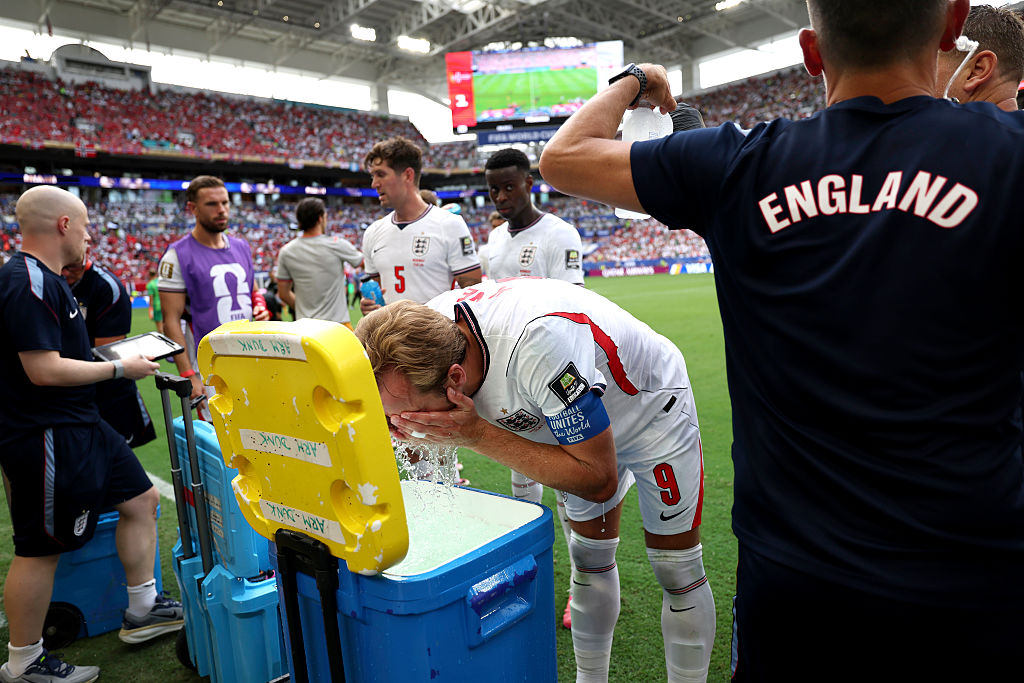
Yet for our children, fragmented youth sports and camp systems and an unrelenting culture to “just push through it” leave them vulnerable.
I’ve seen the consequences firsthand as a parent on the sidelines. Have you ever noticed the shimmering waves of heat rising off the turf? That’s a playing surface that could be 10 to 30 degrees hotter than the surrounding air. During an early-season heatwave this spring, my daughter’s lacrosse game went ahead, even though the school's softball game was canceled. The temperature was 93 degrees, not including additional heat from turf or the effects of humidity. The team had one sub, no shade, and no additional water breaks. Research shows heat hurts cognitive performance, including reaction time and decision-making. What unfolded wasn’t just a health risk; it was bad lacrosse: dropped passes, sloppy checks, and poor decisions. Playing in these conditions, without adapting to the heat, does little to make kids better players. It makes them less safe and less able to perform at their best.
Too often, adults’ knee-jerk response is to say, “It was hot when I was a kid, and I played in it.” We did have hot days, but our children are growing up in a different climate. April's record-breaking temperatures are different. June was the second-hottest on record behind only June 2024. Heat was a risk when we were kids, but today’s more frequent and intense heat waves make the risks to kids today much greater.
Others may say that athletes, young and old, just need to be tougher. But resilience shouldn’t require ignoring preventable health risks, especially when we know how to reduce them. We don’t ask people to prove they are tough by playing through a concussion or a thunderstorm.
Basic adjustments aren’t complicated: hydration breaks, shade, cold towels, misters, and objective standards to adjust schedules can all help. But they only work if athletes, coaches, and parents recognize the risks and understand the warning signs. We all must recognize the early signs of heat illness and remember three simple steps to take when our bodies tell us it’s time to stop: Speak up. Sit out. Cool down.
During the World Cup final game, there will undoubtedly be more debate about whether the hydration breaks are necessary. But the better conversation is what those breaks tell us. Adapting to the heat isn't about making sports easier; it’s about preserving the game and protecting athletes in a hotter world.
If our best athletes can show the world that adaptation is not only possible, but necessary, we should ensure the same for our kids.
30 Years Later: The 1996 Olympics Made Atlanta Bigger, But Not More Equitable
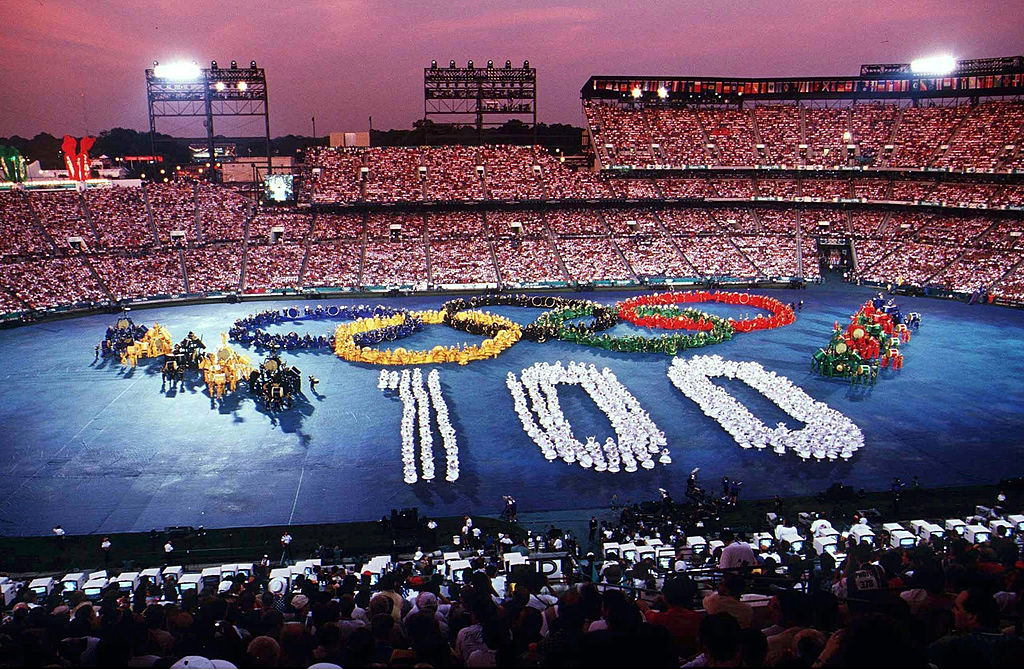
I remember watching Michael Johnson sprint around the track in Atlanta, his gold chain swinging with every stride and his gold shoes flashing under the stadium lights. To a young viewer, he seemed almost larger than life, gliding around the oval with a confidence that made the impossible look effortless. Like millions of Americans, I watched the 1996 Olympics believing I was witnessing not just extraordinary athletic achievement, but a defining moment for a city on the rise.
Thirty years later, I still remember Johnson’s race. What I understand differently is the city that surrounded it.
In the summer of 1996, Atlanta introduced itself to the world as the capital of the New South: modern, diverse, ambitious, and ready to compete with the world’s great cities. By many measures, the Olympics were exactly the success Atlanta’s leaders envisioned.
The Games accelerated investment in downtown, expanded infrastructure, attracted businesses, strengthened tourism, and elevated Atlanta’s international profile. In the decades that followed, the region became one of the fastest-growing metropolitan areas in America. It emerged as a center for film production, technology, logistics, higher education, and Black entrepreneurship. Atlanta solidified its reputation as the nation’s Black cultural capital, home to thriving historically Black colleges and universities, Fortune 500 companies, influential churches, artists, filmmakers, and political leaders.
The Olympics made Atlanta bigger. But they did not make it more equitable. That contradiction has become one of the defining stories of modern Atlanta.
Long before the opening ceremony, the city was transforming itself for a global audience. Entire neighborhoods were redeveloped. Public housing projects were demolished or fundamentally reshaped. Tens of thousands of residents were displaced in the years surrounding the Games, many of them poor and disproportionately Black. The city also intensified efforts to remove homelessness from public view, seeking to present visitors with an image of prosperity and order.
These decisions were not unique to Atlanta. Cities around the world have often used mega-events as catalysts for redevelopment. But in Atlanta, the costs fell heavily on communities that had already spent generations navigating segregation, urban renewal, highway construction, and discriminatory housing policies.
The Olympics did not create these inequalities. They accelerated them. The pattern that emerged has since become familiar across America. Public investment attracts private capital. Property values rise. New restaurants, apartments, offices, and entertainment districts follow. Longtime residents, many of whom endured years of neglect before redevelopment became profitable, suddenly find themselves priced out of the neighborhoods they helped sustain.
Atlanta became wealthier. Many Atlantans did not. Nowhere is this tension more apparent than in the city’s changing demographics. Neighborhoods that were once predominantly Black have experienced rapid gentrification. Some have gained grocery stores, parks, trails, and new investment. They have also lost many of the families who gave those communities their identity.
The question is not whether Atlanta improved. It clearly did. The question is: improved for whom?
That question deserves particular attention because Atlanta occupies a unique place in the American imagination.
For generations, it has represented possibility for Black Americans. It became the headquarters of the modern civil rights movement. It nurtured generations of Black political leadership. It offered opportunities unavailable in many other major cities. Its universities educated national leaders. Its churches shaped public life. Its businesses helped build one of the largest Black middle classes in the country.
That legacy remains real. So does another. The same city celebrated as a Black Mecca has also witnessed widening inequality, rising housing costs, and the displacement of many Black residents from neighborhoods their families called home for decades.
Both stories are true. One does not erase the other. Three decades since the Olympics, Atlanta offers an important lesson for cities preparing to host major international events or pursue large-scale redevelopment projects.
Growth, by itself, is not the same as shared prosperity. A city can become more famous without becoming more affordable.
It can attract billions of dollars in investment while longtime residents struggle to remain. It can build world-class stadiums, parks, and entertainment districts while leaving many of the people who built the city wondering whether there is still a place for them.
Let me be clear: Atlanta’s experience should not be viewed as a reason to reject growth. Cities need investment. Infrastructure matters. Economic development creates opportunities that benefit entire regions.
But growth should not be measured only by skylines, corporate headquarters, or international rankings. It should also be measured by whether teachers, nurses, sanitation workers, retirees, and families who have lived in a neighborhood for generations can still afford to call that neighborhood home.
Thirty years later, Atlanta stands as one of America’s great success stories. It is more globally connected than anyone could have imagined in 1996.
Yet the anniversary of the Olympic Games should invite more than celebration. It should also invite reflection. The greatest legacy of the Olympics was not simply the stadiums they left behind or the tourists they attracted. It was the model of urban transformation they accelerated.
As Los Angeles prepares to host the 2028 Olympics, and as cities across America compete for major events, technology campuses, sports franchises, and billion-dollar redevelopment projects, Atlanta reminds us that success should not be judged solely by what gets built. It should also be judged by who gets to stay.
The Olympics made Atlanta bigger. The next generation of civic leadership should make it more equitable.
San Francisco Demands Apple and Google Delete AI ‘Nudify’ Apps From App Stores
Армия высокого тестостерона. Пентагон распорядился проверять уровень гормона у тех, кому за 30
Америка «заставляет нервничать». Китай обогнал США в рейтингах восприятия
В преддверии промежуточных выборов в США Трамп обвинил Китай во вмешательстве и заявил об «уязвимостях» в системе голосования
Experts cast doubt on Trump and DHS chief’s claim 250,000 noncitizens are registered to vote in four US states – as it happened
This blog is now closed.
Trump also took to Truth Social today to claim that there were “great reviews” of his address to the nation on Thursday – where he repeated baseless claims undermining the electoral integrity of the 2020 election, and the safety of the election process at large in the US.
During his speech, Trump also tried to unveil new information – with scant evidence – that China’s interfered in the race that he lost to Joe Biden. This despite assessments from intelligence officials that no foreign actor, including China, attempted to alter any technical aspect of the 2020 voting process.
Continue reading...U.S. strikes bridges around key port in Iran, expanding campaign in battle over Hormuz
New photograph marks Queen's 79th birthday
Parts of England record longest spell without rain since mid-1990s
New photograph marks Queen's 79th birthday
Spain 2010 v Spain 2026: How do the two XIs compare?
The school holidays are here – let’s play ‘arguing over screen time’: the Stephen Collins cartoon
The Group Behind ‘2000 Mules’ Is Back With Another Election Conspiracy Film
For one father and son, Alaskan blanket toss is a family tradition
A father and son discuss an old Alaskan whaling tradition known as the blanket toss.

Trump Media to Sell Traders ‘the Fastest’ Access to Truth Social Posts
From announcements of U.S. military action to threats of tariffs on other nations, Donald Trump’s Truth Social has been a repository of market-moving statements—mostly from him—since the social media site’s launch in 2022. Now the U.S. President is courting more controversy by selling access to some of those posts in “milliseconds.”
Trump Media & Technology Group, the parent company of the microblogging platform, announced Thursday plans to launch “Truth API,” a data feed that provides what it calls the “fastest” real-time access to posts “from the highest-ranking Truth Social accounts.”
A company spokesperson told Reuters the paid-for, licensed data service will deliver posts from Truth Social’s 10 most influential accounts to customers significantly faster than the usual push notification. President Trump has 12.9 million followers on his Truth Social account and is the platform’s highest-profile user. The accounts of his sons, Donald Jr. and Eric, and the White House, similarly have millions of followers.
While the company has not publicly disclosed details about the service—including cost and exact posting latency—its revenues stand to benefit the Trump family, with the President himself owning about 41% of the publicly traded Trump Media through a revocable trust.
Companies and organizations generally offer application programming interfaces (APIs) for swift and reliable information transfer. Agencies across the U.S. government, like the Treasury Department and the Labor Department, share large financial and economic data through APIs.
But with Truth API, Wall Street trading firms and other institutions will have faster access to Truth Social posts, which could immediately influence how they trade and could maximize their profits.
Many of the President’s posts on the platform have upended markets. In April last year, hours before Trump announced that he would pause most of the tariffs he imposed for 90 days, the President posted on Truth Social a seeming message to traders saying it was a “GREAT TIME TO BUY.” And this year, his posts on the U.S.-Iran war have swung oil prices up and down.
“Markets already move on Truth Social posts,” Kevin McGurn, Trump Media’s interim CEO, said in a statement. “As adoption grows, we expect Truth API to become a meaningful, ongoing source of revenue for the company, creating lasting value for shareholders.”
TIME did not immediately hear back from Trump Media or the White House when contacted for comment on Truth API. But the company said that Truth API will be available to customers starting next month, with some having signed up ahead of its launch.
‘Corrupt profiteering’
Some Democratic politicians, however, condemned Trump Media’s offering and have alleged that it could even be illegal.
“Hard to keep pace with the President’s corrupt profiteering off the presidency, but here’s yet another scheme, this time to save his failing social media business,” Sen. Adam Schiff (D, Calif.) posted on social media.
While it debuted on the Nasdaq in March 2024, closing at $57.99 per share, Trump Media’s stock price has since tumbled into the single digits. Truth Social was Trump’s response to his then-Twitter lockout following the Jan. 6, 2021, Capitol riot, but the company has lost more than $1 billion in the past two years. Trump Media is now trying to increase its stock price by diversifying through other ventures like cryptocurrency and nuclear fusion.
Sen. Richard Blumenthal (D, Conn.) posted on social media that with how influential Truth Social posts are to global markets, selling “preferential access is yet another example of flagrant corruption, trading access to the White House for Trump’s self-enrichment.”
Rep. Jason Crow (D, Colo.) posted that Trump is making more off “insider trading.”
Gavin Newsom, the Democratic California Governor who’s among the potential candidates for the 2028 presidential election, posted: “It’s impossible to understate the criminality of Donald Trump’s grift. He is now LITERALLY selling early access to market-moving information. Where is the investigation? And how are spineless Republicans okay with this? Disgusting.”
Allegations of insider trading have proliferated under the second Trump Administration. Trump’s businesses—and his earnings—have also raised questions about potential conflicts of interest, including, most recently, his more than $1.4 billion in earnings from his family’s cryptocurrency ventures in 2025.
Under U.S. law, executive branch employees are prohibited from participating “personally and substantially” in a particular Government matter that will directly or predictably affect his own financial interests, as well as those of others with whom he has certain relationships, though Presidents and Vice Presidents are not subject to this code.
Trump has defended his family’s business dealings, including those of his kids.
“I tell my kids, stay away from as much as you can,” he told CNBC earlier this month. “But they also have a life. We were doing business long before I ever thought of—you knew me a long time before I thought of even running.”
Thousands of tickets still available for England v France
Young people in NI to be offered MenB vaccine from 31 July
The CDC Has a Cyclospora Lab. DOGE Downsized It Last Year
Helicopter waterbombs Cairngorms wildfire as it burns for a third day
Thousands of tickets still available for England v France
ICE arrests human rights lawyer who fled Chinese crackdown
Arrest in Pennsylvania of Wu Shaoping, who is awaiting asylum decision, raises fears of deportation and persecution
A Chinese human rights lawyer has been arrested by US Immigration and Customs Enforcement (ICE), raising concerns he could be deported to China where he would face persecution.
Wu Shaoping fled China at the end of 2019 amid a crackdown on human rights lawyers. He travelled to the US on a tourist visa and made an asylum claim in 2020, for which he is still awaiting a decision.
Continue reading...Trump Stirs China Tensions With Claims That It Meddled in U.S. Elections
I wouldn't marry him until he paid off his debt, now I'm in charge of our money
ICE arrests human rights lawyer who fled Chinese crackdown
Arrest in Pennsylvania of Wu Shaoping, who is awaiting asylum decision, raises fears of deportation and persecution
A Chinese human rights lawyer has been arrested by US Immigration and Customs Enforcement (ICE), raising concerns he could be deported to China where he would face persecution.
Wu Shaoping fled China at the end of 2019 amid a crackdown on human rights lawyers. He travelled to the US on a tourist visa and made an asylum claim in 2020, for which he is still awaiting a decision.
Continue reading...‘Adversarial clothing’: are garments designed to confuse facial recognition systems about to go mainstream?
Designers say that as well as offering a degree of protection from surveillance, their clothes make a powerful fashion statement about the importance of privacy
As facial recognition technology is rolled out across Britain’s public spaces, a new generation of designers say privacy could be the next big fashion trend.
Companies have started incorporating “adversarial patterns” in their garments – carefully designed arrangements of shapes, colours and repeated motifs said to exploit weaknesses in some computer vision systems.
Continue reading...Andrew Motion: ‘Wilfred Owen became a kind of sacred text for me’
The former poet laureate on growing up with Lawrence Durrell, rereading Henry James and getting to grips with the genius of Alexander Pope
My earliest reading memory
My parents were country people who thought that looking after or chasing animals was more fun than reading: my father used to say that he’d read half a book in his life (The Lonely Skier by Hammond Innes), and while my mother got through three or four novels a year, she didn’t expect me to do anything equivalent. But I do remember enjoying something my grandmother gave me – My Father’s Dragon by Ruth Stiles Gannett. I must have been seven or so, and thought it was amusing and ingenious.
The books that changed me as a teenager
At my first school, I somehow got my hands on White Eagles Over Serbia by Lawrence Durrell, which my parents thought was unsuitably violent. I never finished it, but enjoyed carrying it around as proof of how grown-up I was. Then, at my secondary school, my history teacher read us some Wilfred Owen (we were studying the first world war), and the poetry-lights in my mind immediately flickered on. When I subsequently bought Owen’s Collected Poems it became a kind of sacred text for me (it still is).
Weather tracker: Thunderstorms strike across Europe amid record heatwave
Storms are typical during intense heat but this week’s have been extreme. Plus, deadly monsoon rains in Bangladesh
Hailstones the size of golf balls have been seen in French villages as, on top of the exceptional European heatwave, thunderstorms have struck across parts of Europe.
While thunderstorms are typical during and after a period of extreme heat, the storms across countries such as France, Germany and Poland have been particularly severe, bringing flooding, strong winds and heavy showers with large balls of hail.
Continue reading...‘I don’t play around’: Nolan fans fly into London to see The Odyssey at BFI Imax
Film fanatics arrive from US, Switzerland and Ireland for midnight premiere of director’s critically acclaimed epic
Odysseus made his name by embarking on a perilous journey from Troy to Ithaca, plus a few unplanned diversions courtesy of the gods. But this is nothing on Christian Campbell, who last night travelled more than 4,000 miles to see the Greek king’s epic fable on the big screen.
The 22-year-old film graduate, who aspires to be an editor, made the journey from Atlanta to London to watch Christopher Nolan’s take on Homer’s epic poem, The Odyssey.
Continue reading...Japan revises law on royals, keeps blocking women from throne

A popular princess drives support for having a female Japanese Emperor. But the country's first female prime minister opposes it.
(Image credit: Tomohiro Ohsumi)

Federal Reserve looks for 'secret sauce' behind a successful Wisconsin toolmaker

Business is booming for Snap-on, a Wisconsin company that has made tools for professional mechanics for more than a century. It recently got a fact-finding visit from the head of the Chicago Federal Reserve Bank.
(Image credit: Scott Horsley)

Kalshi says it's not a sportsbook even as World Cup bets surge
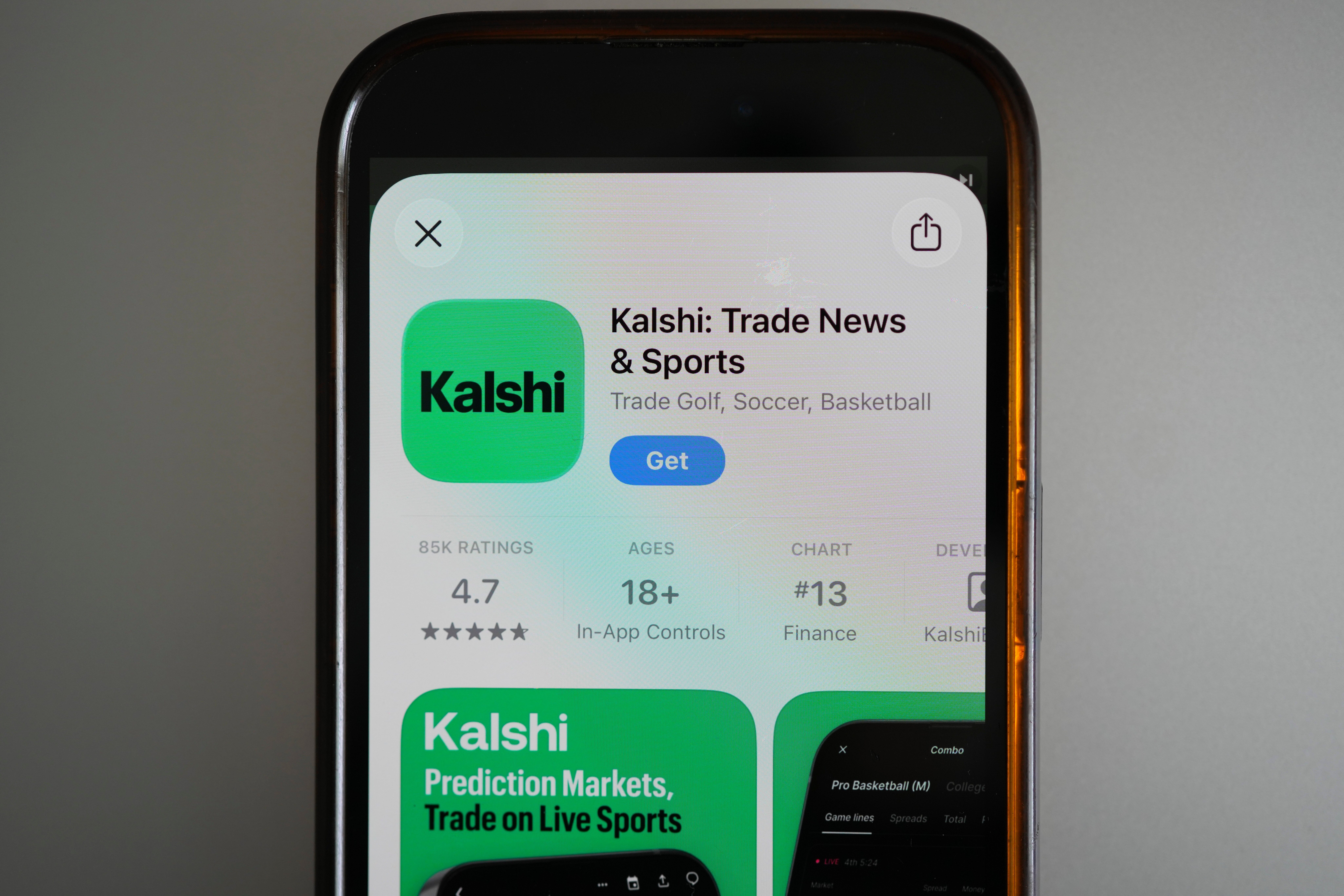
The betting site Kalshi emerged as a dominant sports betting platform during the World Cup. But the company avoids billions of dollars in taxes by insisting it is not a sports gambling operator.
(Image credit: Erin Hooley/AP Photo/Erin Hooley)

Republican campaigns see immigration as a winning issue for midterms

Republicans are spending more money and running more ads on immigration than Democrats are ahead of the November midterm elections, according to an NPR analysis of advertisement data.
(Image credit: Joseph Prezioso)

What will the Pentagon begin screening 'war fighters' for? The quiz knows

Plus: Jurassic Park, U.K. politics, conspiracy theories, Pete Hegseth and numismatics.

‘Adversarial clothing’: are garments designed to confuse facial recognition systems about to go mainstream?
Designers say that as well as offering a degree of protection from surveillance, their clothes make a powerful fashion statement about the importance of privacy
As facial recognition technology is rolled out across Britain’s public spaces, a new generation of designers say privacy could be the next big fashion trend.
Companies have started incorporating “adversarial patterns” in their garments – carefully designed arrangements of shapes, colours and repeated motifs said to exploit weaknesses in some computer vision systems.
Continue reading...