RSS Feeds
Scammers are using FaceTime to pose as banks and steal your money. Here's what to watch for.
‘It wasn’t a dream, it was a threat’: the film festival celebrating pan-Africanism’s rich and complex history
Project a Black Planet: Film, a new season of screenings at the Barbican in London exemplifies how the movement was an act of solidarity, resistance and fierce creativity
Algiers, 1969. What had, for seven years, been the metropolis of a newly independent country became, over the course of 12 days in July, the cosmopolitan centre of an entire continent. That summer, Algeria played host to the first Pan-African Cultural festival (Panaf) and the capital’s streets were transformed into a vista of energising performers, flanked by placards announcing each country’s delegation: Ethiopia, Liberia, Mali.
Picture an Olympics-style opening ceremony, then discard it, for the images captured in William Klein’s documentary of the event, The Pan-African Festival of Algiers, hint at the very dissolving of barriers between spectacle and spectator – an act that brings to life a quote, shown on screen, from Guinea’s first president Sékou Touré: “We must make this revolution with the people … and the songs will come.”
Continue reading...The Housing Crisis Is Also a Retirement Crisis
N.Y.C. Officials Inspecting Construction Sites After Building Buckles
New York Enacts Nation’s First Statewide Moratorium on Data Centers
U.S. citizens traveling in Congo must spend 21 days elsewhere before entering U.S.
Arsenal forward Trossard joins Besiktas for £15.3m
New York Gov. Kathy Hochul announces moratorium on data centers
The Battle for Hormuz: Trump Shifts Into Dangerous New Phase in Iran War
Joan Sebastian Guerrero's ICE shooting sparks demands for investigation
Бориса Надеждина обвинили в демонстрации «экстремистской символики» — фото Навального. Это еще один повод не допустить его до выборов в Госдуму
Telegram’s shortlink domain is back online after day-long suspension
Man in his 70s dies after being injured by cattle on Norfolk estate
Police investigate incident on parkland near 17th-century National Trust country house popular with walkers
A man in his 70s has died after being injured by cattle on a National Trust estate in Norfolk.
Police are investigating the death at Felbrigg Hall after paramedics were called to attend to the injured man shortly after midday on Monday. Despite the paramedics’ best efforts, the man succumbed to his injuries at the scene. Norfolk police said the victim’s next of kin had been informed.
Continue reading...Coalition and One Nation’s plan to ditch net zero would not lower power prices, CSIRO report finds
GenCost report contradicts parties’ claims about abandoning emissions target, and finds nuclear would be most expensive way to generate power
Get our breaking news email, free app or daily news podcast
Claims by the Coalition and One Nation that abandoning a net zero climate target would bring down power prices are contradicted in a new CSIRO report on the costs of generating electricity.
Generation costs will probably rise after 2030 regardless of Australia’s policy on net zero, according to the CSIRO’s annual GenCost report, but prices should then stabilise at levels below recent price spikes.
Continue reading...Politically engaged – but ‘very much’ worried about buying a home: study reveals young Australians’ anxieties
Growing Up in Australia report shows gen Z are more anxious about housing affordability than climate change or following a chosen career path
Get our breaking news email, free app or daily news podcast
Far more young people are worried about being able to buy a home than about climate change or finding a job in their chosen field, according to a study that also reveals gen Z’s deep distrust of politicians, political parties and the media.
The latest insights from a major longitudinal study show high levels of participation in the political debate, challenging stereotypes that younger Australians are disengaged from public life.
Continue reading...New report details Israel's apparent secret plan to cultivate Iran's Mahmoud Ahmadinejad
Spotify expands its AI push with a ChatGPT-like music assistant
California faces highest shark numbers in years as great whites head north
El Niño climate phenomenon heating waters off Mexico but incidents with humans remain a rarity
California is set to see one of its sharkiest summers in a decade, with large numbers of juvenile great whites already on a reverse vacation from the warm waters of Mexico to cooler pastures along the western United States.
The marine predator has become more common along the west coast in recent years, with stories of surfers seeing underwater behemoths closer to shore and scientists saying swimmers and ocean-lovers alike are probably already sharing their favorite beaches with great whites, whether they know it or not.
Continue reading...A winner and true friend - Bartoli on France boss Deschamps
Donald Trump has no good options for reopening the Strait of Hormuz
Superhuman’s new auto-draft feature almost makes me like AI replies
Apple files lawsuit against OpenAI over trade secrets apparently stolen
How AI is Shaping Childhood
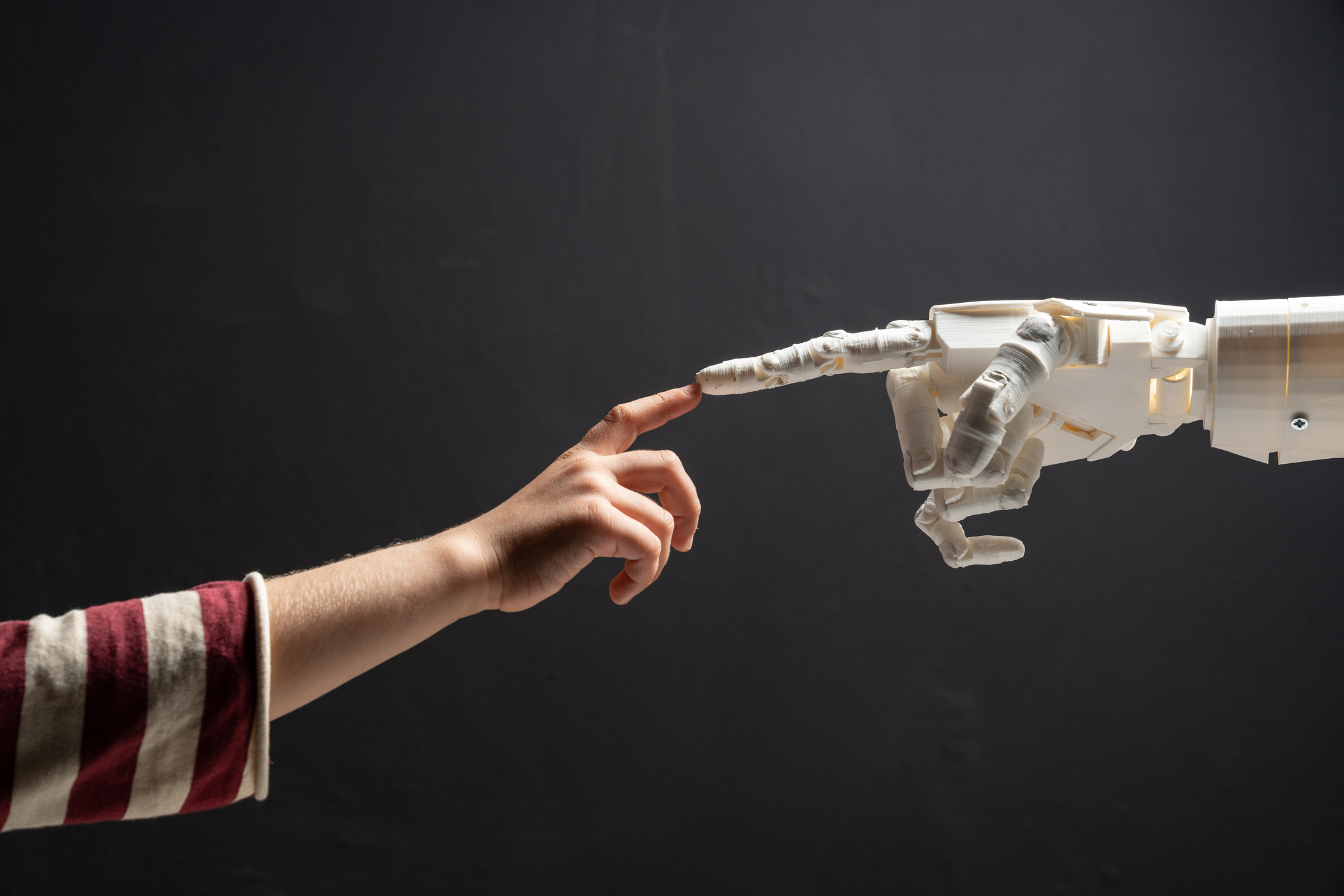
For years I dreamed of silence. Between a home with three young children and a pediatric clinic crowded with restless kids, the noise at times felt relentless. A family and a meaningful career were all I ever wanted, but sometimes I yearned for quiet. Just a moment of peace.
I don’t wish for that anymore.
In Rachel Carson’s Silent Spring, the revolutionary book that sparked the modern environmental movement, the birds that no longer sang weren’t the tragedy. They were the signal. A warning that something essential was dying. I hear a similar warning now in a different kind of silence: the eerie, algorithm‑induced quiet of children transfixed by technology.
We are social creatures. We chat and complain, debate and tell stories. We embrace, bump fists, communicate nuanced emotions wordlessly—an eye roll, a smile, a shrug. We call out to each other in stadium crowds, console crying babies on airplanes. This is what we do. And these lively, sometimes irritating, often messy, but always essential noises are the product of our species connecting and caring for one another.
The volume of this beautiful, chaotic music is slowly being turned down. Technologies that once lived squarely in the realm of science fiction are now entering nurseries, classrooms, and family life at extraordinary speed, capturing the attention of adults and children alike. Companies are developing versions of popular AI chatbots specifically for kids. Entertaining AI dolls and action figures are core to the strategic vision of major toy brands. Virtual AI tutors are being promoted as the future of education around the world.
AI has also moved into our lives in subtler ways. When you scroll social media or look for your next watch on Netflix, intelligent algorithms select or suggest the content for you. These AI‑powered recommendation engines are designed to predict what will hold your attention and keep you glued to the screen. If your little ones are watching YouTube, they too are under the sway of the technology as it works silently in the background to hold them close and shape their experience. The very content they consume might have been created by AI, including a flood of supposedly educational AI‑generated videos. These low‑quality, error‑filled abominations known as AI slop don’t just fail to teach. They actively misinform. They embed misspellings, peddle nonsense, and model unsafe behaviors for children too young to know the difference. And the companies developing these technologies are racing ahead of the rules as they’re being written.
Policymakers are struggling to understand what they are regulating. The rest of us are struggling to understand how our world is changing. Perhaps one day these gaps will close, but childhood will not wait.
I believe that the relationship between child development and artificial intelligence is one of the most critical and overlooked challenges of our time, one that has the potential to transform childhood, family structures, and ultimately nothing less than our future as a species. And it’s up to us as parents and caregivers to decide how these intelligent tools will shape our children’s lives. Not companies. Not governments. We are the ones who will take the lead on deciding what these technologies replace, what they enhance, and what they should never touch. And we are uniquely equipped to do so, as we possess something critical that machines are missing.
The helpless infant paradox
Nobel laureate Geoffrey Hinton, known as the Godfather of Artificial Intelligence for the pivotal role he played in creating the AI systems now remaking our world, left Google in 2023 to warn humanity about what he’d helped build. He spoke of existential risks, of systems that might one day surpass us. But when asked once what we might do to make artificial intelligence safe, he gave a surprising answer.
He suggested we embed maternal instincts in these systems.
Not better algorithms. Not more guardrails. Not elaborate structures of rules and constraints. Maternal instincts. The primal, inexplicable forces that make any parent—mothers and fathers—go to the ends of the earth to protect and care for their child without calculating the expected return.
I have spent years studying the evolutionary origins of these parental instincts and their profound importance in building children’s brains. Human babies are born powerless, weak, and extremely needy. Yet these tiny, vulnerable creatures somehow commandeer the lives of adults many times their size and strength. I call this the helpless infant paradox. There is no other example I can think of in nature of such complete power held by such powerless entities. Yet this is the very source of our success as a species. The instinct to nurture is wired so deeply into parents that it feels less like a choice than a biological imperative.
These past few decades, I’ve watched our culture focus on trying to make humans more like machines. More efficient, more optimized, more productive. We have quantified and data‑fied childhood, turned parenting into a performance metric, measured our worth in developmental milestones met and cognitive outputs achieved. And now one of the scientists at the very frontier of machine intelligence is asking the opposite question: How do we make machines more like humans?
The missing instinct
The biggest missing piece in all of artificial intelligence, roboticist Matthias Scheutz told me, is that “none of our machines care.”
But can we fix that? Is Hinton’s hope even possible? Can we code parental instinct? Can we engineer caring?
When I posed these questions to Scheutz, a philosopher turned roboticist who has spent decades thinking about human and machine minds, his answer cut to the heart of what separates us from even the most sophisticated AI. He pointed me to a philosophical concept: original intentionality. Our thoughts, he explained, don’t just process information—they reach toward what matters to us. Our cognition isn’t mere information processing. It’s grounded in something deeper. A scientist who devotes their life to understanding children’s brain development is driven by passion and concern.
Parental instincts, Scheutz mused, are subconscious, visceral. Love coming from biological intentionality. The product of millions of years of evolution rather than countless lines of code, refined by the brutal simplicity of survival. In short, children needed loving caregivers to live. The survivors then raised their own children with the same fierce attention. And so it continued, an unbroken chain of caring, until it reached you.
You have the quality the machines are missing. The love no code can copy.
What makes us human? Is it reason? Language? Creativity? Tool use? Artificial intelligence is eroding our supposed superiority in each area one by one. It produces outputs indistinguishable from reasoning. It generates language with fluency that surpasses most humans. AI turns out art, music, poetry, software. It uses existing tools and builds new ones.
But AI does not care.
No algorithm lies awake at night worrying about whether a struggling child finally learned to read. No chatbot feels the weight of unrealized human potential. No system, however sophisticated, has thoughts that are genuinely about your child, that one‑of‑a‑kind combination of genes and experiences. These technologies act on patterns shaped by everyone else’s data, targeted at producing responses that look like caring.
True caring—our capacity to have heartfelt thoughts about another being, rooted in concern for their flourishing, irrational in their intensity—is what makes us unique. It is the irreducible human core.
Excerpted from HUMAN RAISED: Nurturing Connection, Curiosity, & Lifelong Learning in the Age of AI with permission from Dutton, an imprint of Penguin Random House.
Spanish PM’s brother banned from public office after misconduct trial
Conviction over hiring by socialist-led council is one of a series of corruption claims facing Pedro Sánchez’s family
The brother of Spain’s prime minister has been banned from holding public office for nine years after being found guilty of administrative misconduct relating to his hiring by a socialist-led council in the south-western region of Extremadura nine years ago.
Corruption allegations involving Pedro Sánchez’s family, his government and his Spanish Socialist Workers’ party (PSOE) have triggered repeated opposition calls for a snap general election. All the accused have denied wrongdoing.
Continue reading...University investigates employee who hoped Ann Widdecombe had 'extremely painful death'
Woman charged with aggravated arson after reservoir fire
‘Fun, propulsive, full of queer joy’: readers’ favourite albums of 2026 so far, from Muna to Raye and J Cole
After the Guardian’s music critics chose their best of the half-year, we asked you for your picks – from Brian Jackson and Arlo Parks to Maya Hawke, Flea and more
• The best albums of 2026 so far
• ‘I saw it seven times in the cinema’: readers’ favourite films of 2026 so far
The album is a fun, punchy dance record that will definitely be the soundtrack of my summer. It’s propulsive, full of queer joy, cheeky lyricism, and relatable insecurities as they ruminate on “being past their prime” as pop stars in their early 30s. It will undoubtedly be an amazing live show and is a testament to the importance of artists taking breaks, going out and living and resting before coming back with new things to say and experiences to detail. Jane Tytla, New England, US
Continue reading...Spanish PM’s brother banned from public office after misconduct trial
Conviction over hiring by socialist-led council is one of a series of corruption claims facing Pedro Sánchez’s family
The brother of Spain’s prime minister has been banned from holding public office for nine years after being found guilty of administrative misconduct relating to his hiring by a socialist-led council in the south-western region of Extremadura nine years ago.
Corruption allegations involving Pedro Sánchez’s family, his government and his Spanish Socialist Workers’ party (PSOE) have triggered repeated opposition calls for a snap general election. All the accused have denied wrongdoing.
Continue reading...South East Water must pay £30.5m for supply failures
Diamond giant De Beers halts work at flagship South African mine as demand plummets
Israeli strike on police post in north Gaza kills seven, officials say
Judge's stunning rebuke of Trump, DOJ over IRS lawsuit: "Brought for an improper purpose"
Astronomers find sugar in space that is usually in raspberries and self-tanners
Witnesses describe moments after ICE officer fatally shot Joan Sebastian Guerrero
Wildfires are roaring near Paris, forcing evacuations
Maps show extreme heat and flood threats across U.S.
Bill to make daylight saving time permanent passes US House vote: ‘Americans are tired of the clock change’
Sunshine Protection Act has bipartisan support, including backing of Trump and some Democratic co-sponsors, and will head to the Senate next
The US House of Representatives on Tuesday voted overwhelmingly to approve a bill that would end the practice of changing clocks twice a year and make daylight saving time permanent.
The bid to end clock-changing, dubbed the Sunshine Protection Act, has bipartisan support, including the backing of Donald Trump and some Democratic co-sponsors. Following the 308-117 tally in the House, the bill next goes to the Senate.
Continue reading...ICE identifies Johan Sebastián Durán Guerrero as man agents fatally shot in Maine
An immigration officer shot and killed the 26-year-old Colombian man afte reportedly ramming into his car
The man killed by Immigration and Customs Enforcement (ICE) agents in Maine on Monday has been identified as Johan Sebastián Durán Guerrero, an ICE spokesperson said in a statement.
An immigration agent shot and killed the 26-year-old Colombian man on Monday morning in Biddeford, Maine, after reportedly ramming into his car.
Continue reading...US House committee advances bill to make daylight saving time permanent
Bid to end clock-changing has bipartisan support, including the backing of Trump and some Democratic co-sponsors
A bill to end the practice of changing clocks twice a year and make daylight saving time permanent passed a key committee in the US House of Representatives, setting it up for a potential full vote of the chamber.
The bid to end clock-changing, dubbed the Sunshine Protection Act, has bipartisan support, including the backing of Donald Trump and some Democratic co-sponsors.
Continue reading...Can mortgage rates fall without another Fed rate cut? Here's what experts think
China Purges Top Official Over Corruption and Sex Charges
Sen. John Thune gets emotional during speech honoring Lindsey Graham
British man, 86, injured during running of the bulls festival in Pamplona
Man from West Midlands taken to hospital after eight-day event in which 57 people were injured
An 86-year-old British man is among 57 people injured while taking part in the running of the bulls festival in the northern Spanish city of Pamplona.
The man, from Halesowen in the West Midlands, was taken to hospital on Tuesday – the last morning of the eight-day annual event – after suffering injuries to his right hand, left elbow and right eyebrow. A spokesperson for the festival said the man, who has not been named, was being assessed by doctors but not thought to be badly hurt.
Continue reading...UK to continue sending potential trafficking victims to France despite court ruling
Court ruled last week against policy to reduce protections for asylum seekers facing removal under one in, one out scheme
The Home Office is set to ignore a high court ruling and continue sending asylum seekers to France without looking into claims they have been trafficked, which last week was found to be unlawful.
On Friday Mr Justice Sheldon ruled against the home secretary’s policy to reduce protections for trafficking victims earmarked for forced removal to France. Home Office sources told the Guardian that operational activity could continue despite the ruling. Home Office removed certain protections for this group because they could delay removals to France by at least 30 days.
Continue reading...British man, 86, injured during running of the bulls festival in Pamplona
Man from West Midlands taken to hospital after eight-day event in which 57 people were injured
An 86-year-old British man is among 57 people injured while taking part in the running of the bulls festival in the northern Spanish city of Pamplona.
The man, from Halesowen in the West Midlands, was taken to hospital on Tuesday – the last morning of the eight-day annual event – after suffering injuries to his right hand, left elbow and right eyebrow. A spokesperson for the festival said the man, who has not been named, was being assessed by doctors but not thought to be badly hurt.
Continue reading...