—Photo-Illustration by TIME (Source Images: Maskot, Chunyip Wong—Getty Images)
Fresh off the heels of graduation from high school, many rising freshmen are choosing to step off of the treadmill for a year before matriculating in college. Gap years have become a viable option in the United States, where taking a leave of absence is as easy as clicking a button. At colleges like Harvard, between 3 and 4% of the student body step away for a leave of absence in any given year.
That leaves those of us who missed our chance to take a gap year sometimes jealous, or even indignant. The best time to plant a tree, they say, is 20 years ago. But the second best time is today. So it is with gap years.
In the process of writing my book on sabbatical-takers, people who intentionally take extended leave from their routine jobs, I found many parallels between the experience of taking a gap year and embarking on a midlife break from work. My conclusion: gap years are wasted on the young.
Here’s why a gap year, at any age, should be in your concrete plans instead of your bucket list.
First and foremost, breaks from the stress and toil of work are essential components of healing from burnout. Professionals who have taken sabbaticals from their careers describe it taking as long as eight weeks to feel healthy and like themselves again. Restoring our energy and disengaging from our work identities takes time, and cannot be magically found over a weekend.
Second, extended breaks from work—ideally more than two months, with four to six months as the ideal—are necessary to undergo a deeper journey of self-exploration. In this process, we can examine who we’ve become and actively choose how we’d like to live going forward.
For those who worry whether leaving your career could negatively impact your next steps, there is ample evidence for both the young and old that the opposite is true. Academic administrator Joe O’Shea studied gap years and found that gap year alumni return with greater confidence, self-awareness and readiness for their next steps. Former Middlebury College Dean Robert Clagett found gap year students were more likely to graduate on time and to occupy leadership positions on campus.
My research echoes these findings. Sabbatical takers return with more creativity and enhanced perspective on what matters. As we exit our teens and 20s, few obvious inflection points exist to catalyze taking stock, which usually means we stay on the same path, choosing inertia over evolution.
And these extended breaks from routine life are incredibly fun, fulfilling, and self-affirming. Brochures for gap year programs extol the “lifelong impact” had on alums, and sabbatical takers use similar language. We found that people describe their time off as a “peak life experience”—as important as the birth of a child or one’s wedding day. People describe “feeling human again,” and not being able to imagine living the rest of their lives without the lessons gleaned on sabbatical.
Of course, taking a mid-life gap year or sabbatical can be difficult to pull off. Here are some concrete steps to make it feasible:
First, find someone in your orbit who has taken an extended leave. Knowing someone who has already set out from routine life and successfully returned gives much-needed permission.
Second, use a longer-term lens for planning and motivation. Almost no one can afford to take a sabbatical immediately, but make a plan for five to seven years from now and begin to budget and strategize to make the logistics work. Think about the next decade of your life from a “eulogy” lens—what would you regret not doing with your life—instead of letting the inevitable short term inconveniences and excuses win the day.
Finally, allow yourself to dream about your ideal sabbatical. Write that dream down in specific detail. This helps make it real in your mind, like a life you could actually live, instead of an abstract concept.
If completely abandoning your career path feels too intimidating, look for a socially-acceptable gap year hidden-in-plain-sight. One year mid-career graduate degrees offer a chance to open the aperture on what’s possible in your life, and many universities are beginning to offer people in their “twilight career” a chance to audit classes alongside a cadre of pre-retirement seekers, such as the Inspired Leadership Initiative at Notre Dame. Or sign up for an age-agnostic volunteering or research opportunity like the Peace Corps or the Fulbright program. If you require neither permission or external motivation, perhaps a self-directed learning project, like how to upskill with AI, is more your speed.
In some ways, before college is the perfect time to take a gap year. It’s an unprecedented time in the life of most teenagers to quiet the noise about who they should be and look inwards to begin to map out an authentic path forward.
But later in life you have much more material to work with, and (hopefully) more resources to fund the expedition. Jungian psychologist and author James Hollis talks about the transition to mid-life as going from a “magical thinking” mindset where anything is possible to a more realistic perspective which takes into account your realized talents, interests, and constraints.
A gap year—at any age—gives you the chance to reflect, explore, and even wind back the clock to remind you that how you live your life is a choice. Stepping away from that life, even for a relatively small chunk in the grand scheme of things, isn’t an abdication of adulthood, but an investment in a life worth living.
The SFPD’s exposure of hours of videos from drone platform Skydio reveals how broadly it’s watching the city from above—and how the results can spill online.
“For the most part, the aircraft have their own souls,” said a pilot of the meteorological research planes, which are known as Kermit, Miss Piggy and Gonzo.
Justices Amy Coney Barrett and Elena Kagan are scheduled to make a rare appearance at the Capitol to testify about the court’s more than $200 million request.
As yellow-legged hornets spread through South Carolina’s Lowcountry region, threatening the local honey crop, a state team of bee defenders is racing to the rescue.
If a new effort to persuade voters to change New York City’s closed primary system gains steam, a potential showdown between its backers and the mayor awaits.
Local Democrats are warning the top Senate Democrat to keep away as they replace Graham Platner, and the candidates are giving his leadership in Washington low marks.
Mr. Graham, a long-serving senator from South Carolina, was known for his ability to maintain relationships even with his political foes. But the support of Black voters remained elusive.
The sharp-witted South Carolinian repaired relations with President Trump to advance his foreign policy goals, was willing to cut deals with Democrats and tried to insert himself into every legislative fight.
A biologist at the Alabama Aquatic Biodiversity Center picks up a handful of endangered pale lilliput mussels. | Benji Jones/Vox
BIRMINGHAM, Alabama — On a sweltering afternoon in June, I stood in what was essentially a roadside ditch. Sandwiched between a four-lane highway and the parking lot of a faith-based recreation center near Birmingham, the ditch was filled with cool, flowing water, a bit of trash, and, apparently, some highly endangered fish.
Jeffrey Drummond, a biologist at the US Fish and Wildlife Service, stretched out a sheet of netting held between two poles, while his colleague kicked water into it.
After a minute or so, we looked inside the netting. There were clumps of leaves and twigs, a few black salamanders, and a crayfish with its pincers held up, ready to fight. The biologists unceremoniously tossed them aside. They were more interested in a handful of fish that were wiggling around in the netting, each no larger than a pinky finger.
Chris Haynes, a state fisheries biologist, popped the small fish into a container of clear water, revealing their colors: bright reds and muted shades of orange, blue, and yellow.
“We got all three!” said Drummond, who had a beard and tattoos on his arms.
The fish were darters — slender, freshwater fish, known for their vibrant colors. And in that one go, the biologists had caught all three species that reside here: the watercress, rush, and vermilion darters. Each one is federally endangered, the strongest form of protection afforded to species in the US.
Alabama is well known for college football, Southern hospitality, and conservative politics. But as I learned over a recent week in June, it’s also an epic biodiversity hotspot, especially in the aquatic realm. Remarkably, Alabama — which has more than 130,000 miles of rivers and streams — is home to more species of turtles, freshwater fish, snails, crayfish, and freshwater mussels than any other state in the country.
It’s an unexpected epicenter of endangered species, too — those that are at risk of extinction and listed under the Endangered Species Act. According to a Vox analysis of government data, Alabama has more federally endangered and threatened animal species than any other state aside from California, which is three times larger by area. Endangered species are so common here that you can find them in a ditch on the side of the road.
This, of course, is an unwanted distinction. What makes it even more problematic, however, is that Alabama doesn’t have enough money to help these animals that are most at risk.
Alabama is an extreme example of a challenge facing many US states: Much of the funding available to protect wild animals is not based on how threatened those species are. Funding streams, instead, prioritize species that people hunt or fish, known as game, and those that live in the most populous and largest states.
This is an acute issue in places like Alabama that are not especially large or populous but full of imperiled species. And while those animals are vital to the state’s rivers and recreation industry, they also tend to be small, out of sight, and generally short on charisma — unlike, say, wolves, panthers, or whales. That makes projects to help them an even harder sell for limited environmental dollars.
That’s to say nothing of the state’s politics. Alabama is one of the country’s most conservative states, and Republicans have earned a reputation for opposing environmental protections. In 2022, the state’s Republican US congressional representatives all voted against a nonpartisan bill that would have likely quintupled funding for Alabama’s non-game species — like the endangered darters I saw in the roadside stream — had it not stalled out before passing the Senate. Some of the state’s congressional Republicans have also thrown support behind projects that may endanger even more species.
While a close look at Alabama reveals that wildlife support systems are biased against certain species and regions, it also highlights the immense power that a dedicated few human champions can have. During my trip, I met scientists who are working hard to help the state’s obscure endangered species, from mussels to snails, with whatever resources they can cobble together. They convinced me that these animals are, in fact, quite charismatic. And why, no matter our political tilts, we should rally to keep them here on Earth.
Get in touch
Got a tip or feedback on this story? Reach out to reporter Benji Jones at benji.jones@vox.com.
A good rule of thumb is that if you come across a refrigerator while visiting a biology lab, you should look inside of it. This rule served me well at the Alabama Aquatic Biodiversity Center (AABC), a state-run facility about an hour from Tuscaloosa. In two fridges I found plastic containers full of pregnant freshwater mussels.
AABC is primarily a nursery for endangered mussels. A collection of several old buildings just off a rural highway, the facility collects pregnant adults, raises their babies, and then releases them months later in streams to help restore their wild populations.
Mussels are essentially nature’s Brita filters. A single large mussel can filter as much as a liter of water an hour, removing bacteria, algae, and other potentially harmful particles, said Carla Atkinson, a mussel researcher at the University of Alabama. And a healthy stream can have 50 mussels in a single pillow-size patch, she said. Abundant mussel populations can save cities money on water filtration and make rivers more swimmable for people and more habitable for other species.
Alabama used to have more than 180 species of freshwater mussels, says Paul Johnson, a state biologist who runs AABC. Two dozen of them have already gone extinct, he said. Close to 70 of those that remain are federally endangered or threatened, largely as a result of dams and water pollution, and AABC is currently working to restore about 15 of them.
You might think raising animals that resemble rocks is easy, but it very much is not. And the reason why is best explained by what is, without question, the most exciting thing to know about these animals.
Mussels have a “foot” that helps them burrow, but they can’t easily travel. That makes it hard for them to colonize new habitats and, in turn, survive changing environmental conditions. But over millions of years, they evolved a hack: They hitch a ride on fish. Or rather, their babies do. Larval mussels, known as glochidia, spend their first few weeks of life attached to the gills of fish, before dropping off elsewhere in the riverbed to begin a largely sedentary lifestyle in a new place.
The real ingenuity is in how those glochidia get onto fish in the first place. Essentially, mussels pretend to be fish food to lure them in. Some females wave around a fleshy part of their body so it looks like a swimming minnow. Others release into the water packets of glochidia that have evolved to look like insect larvae. When fish go in for a bite, they get a face full of baby mussels that soon after attach to their gills, like real-life xenomorphs.
These lures are surprisingly convincing. One of the species found here, known as the Southern pocketbook mussel, for example, uses its fleshy mantle to mimic a bait fish.
Meanwhile, a federally threatened Alabama mussel, the orangenacre mucket, clumps its glochidia together in two fish-shaped masses, which it tethers to its body with a mucous strand. This creates the illusion of free swimming fish. When a fish bites the lure, the clump ruptures and the babies get sucked into the fish’s mouth and over its gills.
My favorite examples come from mussels in the genus Epioblasma, all of which are endangered. They leave their shells ajar, and produce a lure that mimics some kind of fish food, like crayfish eggs or larvae. When hungry fish poke their heads inside, the mussels snap shut like a Venus flytrap — and blast the fish in the face with babies. After this abrupt encounter, the fish are released to go on their way with their new stowaways.
Different kinds of mussels typically rely on different “host” fish. And that brings us back to one of the challenges of running a mussel nursery; not only do you need pregnant mussels, you also need lots of fish.
To rear these mussels in captivity, scientists first find and collect pregnant, or “gravid,” mussels from the wild and store them in refrigerators. The cold keeps the animals pregnant for longer. Then they extract the glochidia manually and add them to a container with the proper host fish. Those fish get “infected” in a matter of minutes, at which point the fish are moved into tanks in a nearby room. Weeks later, nearly invisible mussels drop off the fish and fall to the bottom of those tanks, where they’re collected by scientists. From there, the young mussels grow in plastic buckets indoors and, once they’re a bit bigger, in plastic buckets outdoors — in a nearby well-fed pond.
I visited the pond one sunny afternoon with Johnson, who wore a ball cap and glasses. Johnson is self-deprecating and often finishes his sentences with a bout of disarming, wheezy laughter. A Kentucky native with an accent to match, he’s been working with endangered species for more than 30 years.
A wooden dock fitted with pipes and tubes extended out onto the pond. Submerged in the clear water around it were about 80 weighted buckets full of mussels. The tubes, I learned, move air through the lids of the buckets and — thanks to some confusing physics — help cycle water through them, mimicking a stream. It looked and sounded like the water around the dock was boiling.
Johnson pulled one of the buckets onto the dock. Inside was what looked like hundreds of pumpkin seeds, golden and glossy as if they’d been dipped in caramel. These were baby pale lilliputs, a federally endangered mussel species, so named for its small size; they’re about an inch and a half long when fully grown.
Lilliputs are native to rivers of Alabama and Tennessee, but they nearly went extinct in the mid-1900s, as the US government turned rivers into channels, farmland spread, and cities and suburbs expanded. “There are more of these in this bucket than there are in museum collections around the world,” Johnson said, to emphasize how rare they are.
Michael Buntin, a state biologist at AABC, pulled up another bucket. This one was filled with hundreds of two slightly larger species: the Alabama rainbow and Coosa moccasinshell. “That is absolutely one of the rarest species in the United States,” Johnson said of the moccasinshell, which was pointy and brown. I had now seen more moccasinshell mussels than all but a handful of people in the world, Buntin told me.
You might imagine that a facility managing hundreds of some of the nation’s most endangered species would have state-of-the-art technology, a large team, advanced security, and a carefully orchestrated media presence. AABC has none of those things. Most of the technology is DIY — Tupperware containers in refrigerators, plastic buckets with holes cut into them. AABC has only four full-time employees. The buildings are old and falling apart. “It’s low budget,” Buntin said with a snicker.
“We have the most species and the fewest dollars.”
Paul Johnson
That’s partly out of choice, Johnson said. Simple, homemade systems are easier to fix if they break. But it’s also because the facility — like so many state conservation efforts across the country — is wildly underfunded for the number of species it is charged with bringing back from the brink of extinction.
“We have the most species and the fewest dollars,” Johnson said of Alabama, adding, sarcastically: “That makes a lot of sense.”
The headwinds facing efforts like this begin far upstream. Most funding for state wildlife agencies — which oversee the bulk of the country’s conservation, including endangered and threatened species — actually comes from selling hunting and fishing licenses, along with federal excise taxes on guns, ammo, and fishing gear.
This setup not only encourages states to promote gun use but also to spend those funds on managing animals that people like to hunt and fish. In fact, some of that money is legally restricted to programs that support birds, mammals, and sport fish. And that, of course, does not include many of the nation’s endangered species — including most of those in Alabama.
Just look at the roughly $450 million annual budget for the Alabama Department of Conservation and Natural Resources, which manages parks, hunting, and conservation. Of that, only about 1 percent goes toward helping non-game species, including mussels, crayfish, snails, and many endangered fish, according to Amy Silvano, who leads non-game efforts at the department. AABC is a key part of the agency’s non-game division and receives a total average annual budget of just $750,000, Silvano said.
While funding for non-game species is a challenge nationwide, Alabama is, in some ways, also uniquely ill-positioned.
Alabama has a human population of about 5 million, and it ranks in the bottom half of all US states by area. That matters, because much of the limited federal money that is madeavailable for at-risk animal species is allocated based on a state’s geographic size and human population — not on how many endangered or threatened species it has. Larger and more populous states like New York and Illinois receive more funding to protect endangered species than Alabama does. Even though they have far fewer of them.
“The states with the greatest biodiversity challenges aren’t necessarily the states receiving funding proportional to those challenges,” said Michelle Lute, executive director of the advocacy group Wildlife for All.
These problems are not unfixable. A few years ago, the US House voted on Recovering America’s Wildlife Act, which would have dispersed $1.3 billion across all US states to protect their imperiled species, including some $25 million for Alabama. Though Republicans from Alabama voted against it, the bill passed the House and was widely considered nonpartisan. It later stalled in the Senate and has yet to become law — because lawmakers couldn’t agree on how to pay for it.
The value of Alabama’s overlooked species
Mussels aren’t the only aquatic species that benefit the state’s waterways.
Snails are janitors of the river, eating algae and dead plants. They also provide food for a range of other species including fish, turtles, and birds. By burrowing, crayfish help aerate the soil, making space for plant roots, and create new homes for other species. Darters are sensitive to changes in water quality, so they serve as indicators of ecosystem health; they also provide food for fish like bass that people like to catch.
Alabama has actually had more success in boosting funding for threatened species at the state level. The Republican-dominated state legislature recently approved $2 million for the state’s threatened species from its general fund. Some of that money is going toward fixing up aging infrastructure at AABC.
Chris Oberholster helped lobby for those state funds while he was working in external affairs for The Nature Conservancy, a large environmental nonprofit. Oberholster, now director of philanthropy at another green group, said one key to garnering support for conservation in Alabama has been framing it as a boon for outdoor recreation, such as by maintaining the natural beauty of lakes and streams through restoring mussels.
Preserving the state’s unique ecological heritage has also been a selling point for conservation, he said — many of these aquatic species are found only in Alabama, and that makes people want to help save them.
If there’s a lesson here, it is perhaps an obvious one: You can find support, and even cash, for wildlife conservation everywhere, as long as you connect the benefits of that work to the values of people in the local community.
On another muggy afternoon, I joined Atkinson, the University of Alabama researcher, in a shallow stream east of Tuscaloosa. She shuffled around, careful with each step, holding in her hands what looked like a metal detector — a pole connected to a ring-shaped base, which she kept submerged underwater.
Atkinson wasn’t searching for metallic treasures but biological ones. She was looking for very rare mussels.
A mussel evangelist who often works with AABC, Atkinson was searching with Johnson for Coosa moccasinshells that had been released here in recent years. Scientists “chipped” several of them before releasing them in the river, which means the mussels were fitted with a microchip, not unlike a pet dog or cat. The device that Atkinson was carrying, known as a PIT-tag reader, helps locate those chips, making it easier for researchers to monitor rare mussel populations.
Despite its resource constraints, AABC has released roughly 300,000 mussels across more than a dozen species in Alabama’s rivers over the last 15 years. Some reintroduced populations are now breeding on their own, Johnson said. In fact, AABC has been successful enough in raising and releasing one particular species — the pale lilliput, the ones that look like golden pumpkin seeds — that it may soon be eligible for delisting under the Endangered Species Act, meaning it would no longer be considered endangered.
Two other species are on their way to getting off the list, too, Johnson said, largely owing to AABC’s restoration work. With more resources the center could do more, said Johnson, who suggested they would likely restore more mussels and other aquatic species too, including fish and crayfish. “We can expand what we’re doing pretty easily,” Johnson said.
After several minutes canvassing the streambed with the PIT-tag reader, Atkinson got a ping. A Coosa moccasinshell was, apparently, right by her feet.
I thought she’d simply reach into the water and grab the thing. She had no such luck. Not only do mussels look like every other rock on the bottom, but they can also burrow into the riverbed, making them hard to find, even with a literal mussel detector.
Atkinson threw on a mask and snorkel and plunged her head underwater. A few minutes later, she popped up, smiling, with a shiny brown lump in her hand.
“It’s gratifying to see that they’re still persisting and that we chose the right habitat,” said Johnson, who had been busy collecting pea-size snails to show me.
I’ll be the first to admit that this creature, as it appeared before me, was not so thrilling to look at. It was not cute or colorful. And aside from an almost imperceptible movement of its shell, it offered little proof of life.
Then I thought about what this one animal does. How it thoughtlessly filters the water just by existing, making it livable for everything else, at no cost to us. How it mimics fish food, despite having no brain or true eyes, a trick forged by millions of years of evolution. How it can help stabilize the riverbed and minimize erosion by anchoring itself to the bottom.
The abundant wildlife in Alabama might not be charismatic in a traditional sense, but there’s an understated impressiveness to it. The fish in the ditch by the highway evolved to live in isolated springs and are still persisting, if barely, in the middle of a sprawling city that sprung up around them. Some crayfish — there are about 100 species in Alabama, many of which are imperiled — appear to engineer ventilation systems that bring fresh air into their underground burrows.
Before leaving Alabama, I drove south to a bog about 45 minutes from Mobile. It was spectacular. The ground was blanketed by carnivorous pitcher plants and crayfish burrows. The crayfish here are “primary burrowers,” Brian Helms, a researcher who studies these animals at Alabama’s Troy University, told me, as we walked through the bog. Although they breathe with gills, like fish, they live on land, he said. They just dig down deep enough to reach the water table.
It’s spots like this that represent the unique environmental heritage that Oberholster was talking about. Though often hidden, they have real value. And if more people, and especially lawmakers, don’t see that, the animals within them may not be around for much longer.
The yearslong effort to groom the former Iranian president as an intelligence asset culminated in a dramatic effort to take him to an Israeli safe house in the early days of the war. But the plan fell apart.
Midfielder faced Villa in Europa League final in May
U-turn another summer transfer blow for Newcastle
Aston Villa have hijacked Newcastle’s pursuit of Johan Manzambi, and are close to completing a £49m deal with Freiburg for the Switzerland midfielder.
Manzambi’s arrival will boost Villa before a season in which they return to the Champions League, and his move represents a considerable blow for Newcastle.
A grandfather out on a walk with his grandson was attacked by a charging bison and thrown at least eight feet into the air in Yellowstone National Park.
45th over: England 139-7 ( Ecclestone 8, Wong 0) Wong gets her first examination of the innings from Rana – prods gently forwards to every ball. A maiden.
44th over: England 139-7 ( Ecclestone 8, Wong 0) A handsome drive from Ecclestone gives a little pick-me-up to England fans.
The Queensland government broke the law and violated the human rights of three children by detaining them in an adult-only watch house without private toilet access or clean clothes, according to a tribunal judgment.
The case was brought by three teenagers separately detained in the Cairns watch house between June 2021 and 2022. They were then aged between 13 and 17.
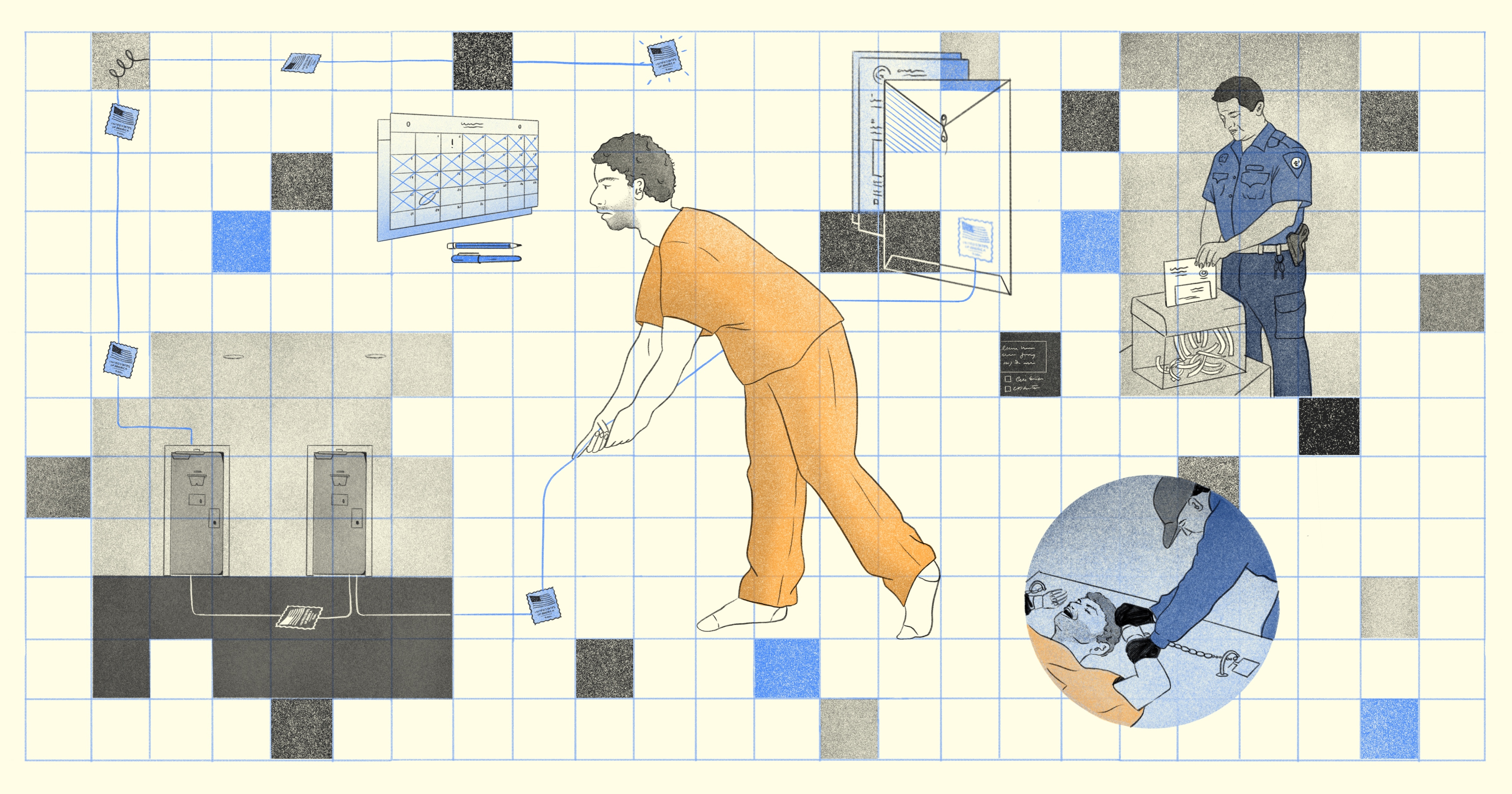
Prisoners are allowed to file complaints about mistreatment — but doing so often comes with retaliation. That's according to an investigation by NPR and The Marshall Project.
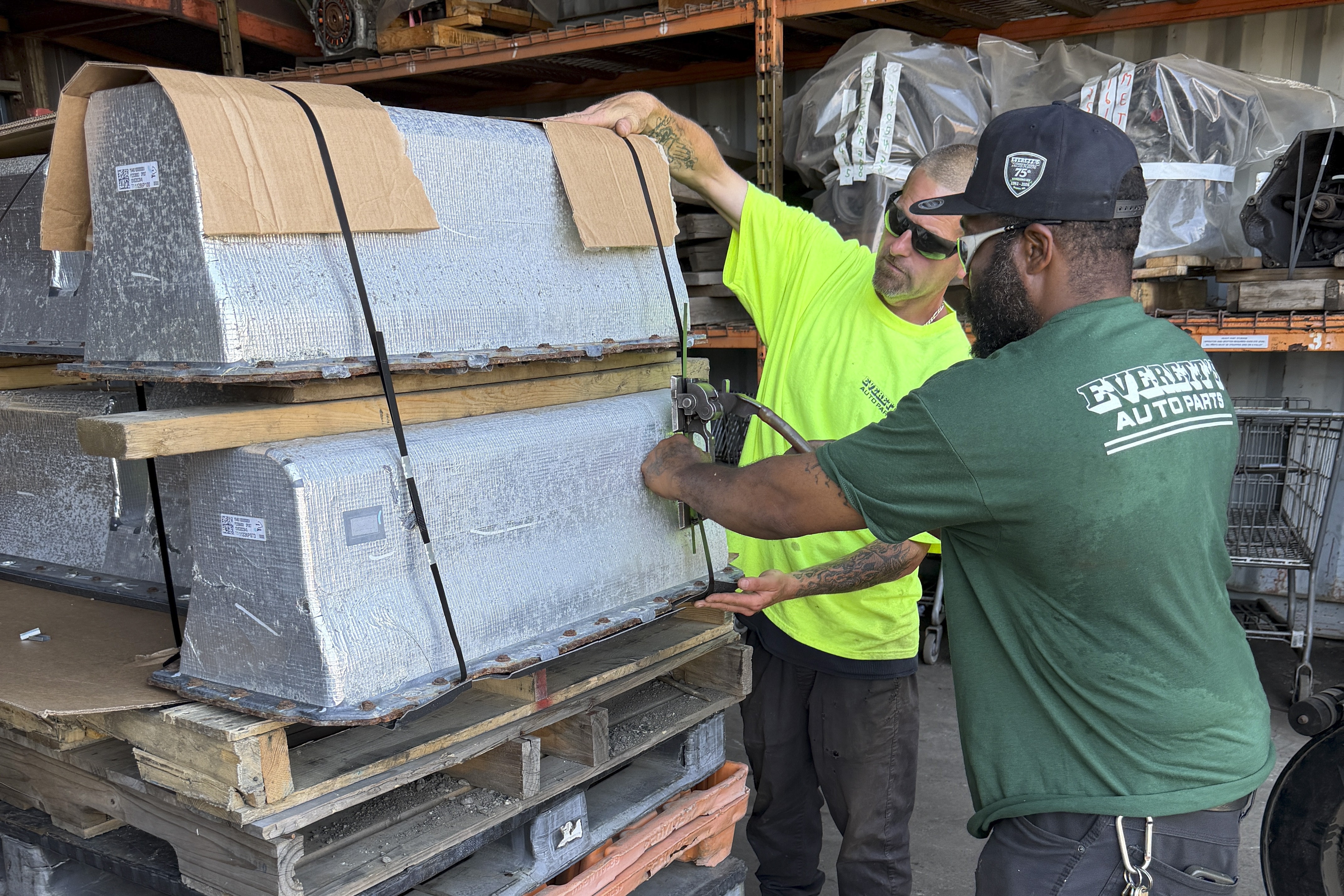
For some electric vehicle batteries, it costs more to recycle them than they're worth. That creates all kinds of problems, which a new Colorado law aims to solve.
Joan Rivet drank water she managed to splash up to her face by turning faucet on with her foot
An 82-year-old North Carolina woman says she survived falling in her bathtub and being trapped there for nine days by turning the faucet on with her foot and drinking water that she managed to splash up to her face – all while drifting in and out of consciousness.
Joan Rivet recently shared her remarkable survival story with North Carolina’s The Mountaineer newspaper, providing an extreme example of the kinds of emergencies that can face the millions of older Americans who fall by accident annually, according to Centers for Disease Control and Prevention (CDC) estimates.
Jonah Neal, 25, was struck by a Homeland Security Investigations agent in May. There have been at least four deadly shootings related to the task force.
From harvests dampened by El Niño to wage and tax rises, getting coffee beans from crop to cup costs more than ever
Drinkers across the UK were shocked when a pint in some London bars hit £10, and now a cup of coffee is facing a similar inflationary rate. Some baristas are now charging £6.50 for a flat white.
Higher energy bills, inflated by the war in the Middle East, as well as government policies which have increased tax and wages, are filtering through into coffee prices, experts said.
From harvests dampened by El Niño to wage and tax rises, getting coffee beans from crop to cup costs more than ever
Drinkers across the UK were shocked when a pint in some London bars hit £10, and now a cup of coffee is facing a similar inflationary rate. Some baristas are now charging £6.50 for a flat white.
Higher energy bills, inflated by the war in the Middle East, as well as government policies which have increased tax and wages, are filtering through into coffee prices, experts said.
The latest in our ongoing series of writers paying tribute to their favourite rewatches is a journey back to the 1986 cult fantasy
The 1980s were the golden age for the annoying little brother. Before the dawn of those mischief-dulling devices – the smartphone and tablet – a pesky sibling with a flair for invention could really make life hell for an aloof older sister. For me, mimicry and tickle torture were just the basics. My finest hour? Removing the slats in my sister’s top bunk-bed, so she hopped on to the mattress to come crashing down like Wile E Coyote.
In December 1986, our one sliver of common ground was that we both wanted to see Labyrinth. Me, because I was a hardcore Muppets fan, and Jim Henson’s fantasy flick was generating serious playground buzz (pre-internet, we had no inkling it had tanked at the US box office over the summer, breaking Henson’s heart). And her, because it was about a teenage girl who summons goblins to kidnap her baby brother (I suspect she went along just to learn the incantations).
The warm, gentle conditions I was hoping for turned out to be ferociously windy. The anchor couldn’t hold our boat in place. And then my mum got trapped in the cabin …
It started so well. A catamaran full of loved ones floating into the azure, taking pics, feeling glam, anticipating the sun sinking over the yardarm. I’d been reunited with my sister and family, who live in Australia, for the first time in three years, after Covid. Her husband, a fearless Australian giant, had got into sailing and offered to take me and my then 77-year-old mum, along with their three teens, out in the south of France for my sister’s 50th birthday. I knew sailing could get rough – my dad capsized us at the mouth of the River Dart when I was little – but it’s not every day you get such a generous invitation. How could I resist?
It was October. I was manifesting warm, gentle conditions, but instead the wind blew ferociously and stubbornly the wrong way. Before we knew it, we were charging up mountainous waves, then crashing into the void beyond. Our captain calmly steered while I sat below, feeling as if I was in a disaster movie, at which point I realised I hadn’t even located the lifejackets.
US military says latest strikes will ‘continue imposing a heavy cost on Iranian forces and degrade their ability to attack innocent civilians and commercial shipping’ in strait of Hormuz
Bahrain’s military has accused Iran of targeting civilians with its latest attacks on the country, after Tehran said it had struck US military facilities and infrastructure there earlier.
“Iran continues its systematic hostile approach through its heinous attacks with missiles and drones that target civilians in the Kingdom of Bahrain,” the general command of Bahrain’s military said, adding that air defences “intercepted and destroyed a number of Iranian aerial attacks” this morning.
Five years after the ultra-conservative Islamists retook Afghanistan, students describe male pupils being beaten for minor rule breaches and inexperienced teachers struggling to deliver lessons
Before he leaves for Kabul University each morning, Hashmat* checks his face for the beard he has been ordered to grow. Male students are required to grow their facial hair and wear traditional Afghan clothes and those who fall short are punished. Hashmat says he recently saw a classmate beaten for wearing trousers.
“They look at you before they listen to you. If your appearance is wrong, you are already in trouble before the class begins,” he says.
Since Queen Victoria made it her official residence in 1837, every British sovereign has lived there. King Charles III, born at the palace, is the first to opt out.
К югу от французской столицы бушует крупный лесной пожар, который власти охарактеризовали как «опасный» и «исключительного масштаба». На тушение пожара в лесу Фонтенбло срочно отправлены два пожарных самолета.
Сборная Англии по футболу обыграла Норвегию со счетом 2:1 в четвертьфинале чемпионата мира, который проходил в Майами. Хотя о противостоянии норвежцев и англичан писали как о дуэли звездных нападающих двух сборных — Гарри Кейна и Эрлинга Холанда, во время этого матча не отличился ни один из них.
The government has announced that it is in effect proscribing the Islamic Revolutionary Guard Corps (IRGC). It is doing so using new powers under the National Security (State Threats) Act 2026.
Ministers have been under pressure for years to proscribe the IRGC, which backs terrorist activity outside Iran. But the last Conservative government, and Labour when it took power, argued that it would be difficult to use laws intended to target terrorist organisations against a state-run organisation.
Designation introduces new criminal offences relating to supporting, assisting, or obtaining material benefit from a designated body. Where an individual engages in espionage, sabotage or foreign interference for, on behalf of or with the intention to benefit the designated body, they may also be charged under the National Security Act 2023. The maximum penalty for these offences reaches life imprisonment.
For a body to be designated, the home secretary must reasonably believe that it is, or has been, involved in foreign power threat activity and must consider that designation is necessary to protect the safety or interests of the United Kingdom.
The United Kingdom has identified activity linked to the IRGC involving threats to life and intimidation on UK soil. In January 2024, the UK announced sanctions targeting Iranian officials responsible for threats to kill on UK soil and criminal gangs who do the regime’s bidding overseas. The Iranian officials designated under these sanctions were members of IRGC Unit 840, which was exposed in relation to plots to assassinate two Iran International TV journalists in the UK.
In 2022, the National Cyber Security Centre issued an advisory alongside international partners exposing malicious activity. The advisory highlighted the threat from cyber proxy actors affiliated with the IRGC targeting a broad range of entities, including entities across multiple US critical infrastructure sectors as well as Australian, Canadian and UK organisations.
Between March and May 2026, there were a series of attacks and attempted attacks targeting Jewish communities, journalists and Israeli interests in the United Kingdom and across Europe. These incidents — including acts of arson and intimidation — have caused real fear and distress, and have had a profound impact on those communities affected.
The Islamic Movement of Companions of the Right (IMCR), otherwise known as Harakat Ashab al-Yamin al-Islamiyah, have publicly claimed seven attacks at UK locations linked to Jewish and Israeli communities, and Persian-language media, including the antisemitic arson attack on four Hatzola ambulances in Golders Green on 23 March.
It will be hard to wrestle a head-turning policy announcement from structural reforms to the state, though his allies are discussing a potential big bang early on.
One ally of Burnham recalled Gordon Brown’s announcement that the Bank of England would be made independent, four days after he became Labour’s finance minister in 1997. The person said: “He wants a Bank of England moment.”
It’s about “forcing the civil service to understand this is not just data on a graph,” said one Labour MP allied to Burnham. “Once you have a base where you can’t get free affordable integrated transport that gets you somewhere within 20 minutes easily, it changes perspectives pretty much overnight.”
Civil servants and Burnham’s allies are unanimous that No. 10 North will only be more than a gimmick if people with real power (including Burnham) spend serious time in Manchester — forcing Westminster’s lobbyist and journalist ecosystem to move with them. [Lucy] Powell predicted “big chunks” of Whitehall power will leave the capital. [Steve] Rotheram said: “You can’t have a No. 10 and then just have a load of junior officials there.”
The senior civil servant quoted above said a key test will be whether the No. 10 policy unit ends up based permanently in the northern version of Downing Street.
The U.S. strikes Iran for a third weekend as Iran retaliates by hitting Gulf nations, Sen. Lindsey Graham died Saturday at the age of 71, Congress returns from recess this week.
As the U.S. restarts its Iran blockade and carries out more strikes, President Trump has called off a planned 20% fee on shipping through the Strait of Hormuz.