I had always longed for adventure, so when ‘the Captain’ invited me on a 4,000-mile sailing trip, I took the plunge. Then coronavirus hit, and I found myself stuck in a relationship as choppy as the sea we were navigating. Who exactly was the man I’d followed onboard?
I sat on the stern bench, the sun shining down on me. The bright orange wheel spun gently on autopilot, keeping us on course to the Marquesas Islands. We were a week out of Panama, and it had been a smooth passage so far, with everyonesettling into their rhythm and responsibilities as we worked as a team to sail the 4,000 nautical miles. Then, the email from the Pacific Crossing network we were part of arrived.
Coronavirus had become a worldwide pandemic – borders were closing fast. There was nowhere to land. I was on a 47ft (14-metre) sailboat with my on-again, off-again boyfriend (the Captain), three strangers and a dog – the safest place on Earth, and the most stuck I had ever been in my life.
As Nigeria braces for another season of devastating rains, people affected describe the mental toll of repeatedly rebuilding their lives
Murky water first tore down a perimeter fence, then bubbled into the yard before spilling into every room. Within minutes, electronics, kitchen appliances, furniture, documents and academic certificates lay submerged.
With the water rising rapidly, Daniel Ebiesua evacuated his home in the Shogunle area of Lagos, with his wife, their two-week-old baby, four-year-old son and his mother-in-law to a neighbour’s upstairs apartment. There they stayed trapped for four hours, helplessly watching the flood swallow the streets below.
Microsoft, Amazon and Google say they still aim to achieve net zero output despite construction boom
Microsoft, Amazon and Google’s collective carbon emissions have increased by nearly a fifth in the past year, driven largely by datacentre construction.
In the financial year ending March 2026, the three tech companies emitted 119m mTCO₂e (metric tonnes of carbon dioxide equivalent), or about a third of those of France.
Exclusive: Alarming shortfall of specialists stops about 4,000 procedures a day, many for patients in urgent need of surgery
The NHS is unable to perform 1.5m operations a year because of a drastic shortage of anaesthetists, a report reveals.
More than 8 million patients are on waiting lists across England, Scotland, Wales and Northern Ireland. Many are in urgent need of a surgical procedure.
Exclusive: CCRC will test serial killer as part of inquiry into whether Michael Stone was wrongly convicted of 1996 murders
The serial killer Levi Bellfield will have his DNA taken in an attempt to establish if he murdered Lin and Megan Russell in 1996.
Michael Stone has protested his innocence since his conviction in 1998 for the killing of Lin, 45, and her daughter, six-year-old Megan, as well as a vicious attack on Megan’s sister Josie, nine, who survived.
The Skylight has become the informational and organizational hub of my household. My touchscreen-native kids have also gained more agency over our family activities.
The AquaSense X brings self-cleaning technology to pool robots for the first time, but is it worth nearly twice the price of Beatbot’s flagship cleaner?
Aaron Grandidier Nkanang scores two tries on his debut as France fight back to beat Australia in Brisbane and condemn Joe Schmidt's side to a sixth successive defeat.
This weekend, Linda Nosková will face Karolína Muchová and Jannik Sinner will play against Alexander Zverev in the much anticipated Wimbledon finals. The world will be watching.
Wimbledon endures not because it’s the most prestigious tournament, but because it’s the one that most feels like it belongs to everyone—from royals to regular fans. The groundskeepers tend it like family. And generation after generation of fans gets to inherit it like one.
Every spring, months before a single ball is struck, the groundskeepers of the All England Lawn Tennis Club begin their most important work of the year. In May 2023, I was invited to spend time with the staff during their preparation for Wimbledon. I hopped on the first flight, arriving at the club outside London in a dewy morning fog.
For a lifelong tennis player and fan, it was a kind of pilgrimage. I bent down to touch the grass and hoped a few shards of green would rub off on my palm so I could tuck them into a vial. Will Brierley, Lead Groundsperson at the All England Lawn Tennis Club, showed me how they mow, trim, massage, roll, and paint some of the world’s most famous tennis courts.
As I sat in their clubhouse, a well-worn break room filled with whiteboards containing the day’s assignments, black-and-white photos of past groundskeepers, and books from James Patterson thrillers to a Scrabble dictionary, what struck me most was the dynamic among the groundskeepers and the shared language between them. It’s a unique form of family that gathers here before the Grand Slam begins.
The groundskeepers, who don’t really follow tennis, spoke about each court as if it were a sibling or cousin—some demanding and temperamental, others easy to maintain. Some, they joke, they can tend with their eyes closed. They’re exhausted by the time the tournament starts, especially if it’s been raining. They know these courts as family.
When the players arrive, something similar happens in the stands. Wimbledon is the one Grand Slam that, in my view, consistently draws not just fans but families, by blood or chosen.
Unlike any other major sporting event, Wimbledon still allows fans to queue for a chance to buy same-day show-court seats at face value, or enter the grounds for as little as £33. This creates an atmosphere in which families can afford to attend and celebrate in community.
Last year, even though I had a media pass, I spent a morning in the queue to experience that particular camaraderie. Every other group I spotted in line was playing a board game, a card game, soccer, or participating in some other analog communal engagement as they waited, sometimes with champagne at 9 a.m. Some people spoke English, others in German, French, and Japanese. Everyone was excited.
I saw multi-generational groups, or groups of 60-something gals in hand-embroidered hats who’ve been coming for decades to queue together, picnic on Henman Hill together, and treat the fortnight as an annual retreat.
Wimbledon’s roots were not quite of the people, at least not at first. The tournament started in 1877, an outgrowth of the exclusive Victorian croquet club, as lawn tennis rose in prominence in the UK. Some 200 people attended the first final, crowded among three stands. The All England Club introduced the queue in 1922 once the venue changed from a small meadow to larger grounds on Church Road, still in the famed SW19 postal code area. Every-day fans could buy tickets on the day of play.
Over the years, the queue and the tournament became the most sought-after events in the sport’s annual calendar. Fans would give anything to witness the world’s oldest tennis tournament and Centre Court, where greats from Arthur Ashe to Serena Williams to Roger Federer became legends. For the lucky fans attending this year, they’ll witness legends anew as Serena and Venus Williams play doubles together for the first time since 2022—yet another family reunion at Wimbledon.
The more I spent time with Wimbledon’s groundskeepers—before the tournament, during it, and while on breaks—the more I realized that Wimbledon is a family reunion. There are, in fact, literal family members on the grounds staff, including two sets of brothers among the team.
Most of the groundskeepers don’t particularly follow tennis. They align themselves, first and foremost, with Premier League teams: Liverpool, Arsenal, or Chelsea. They have little investment in who wins the tennis matches. Their only real chatter revolves around which players’ movement styles damage or preserve the grass.
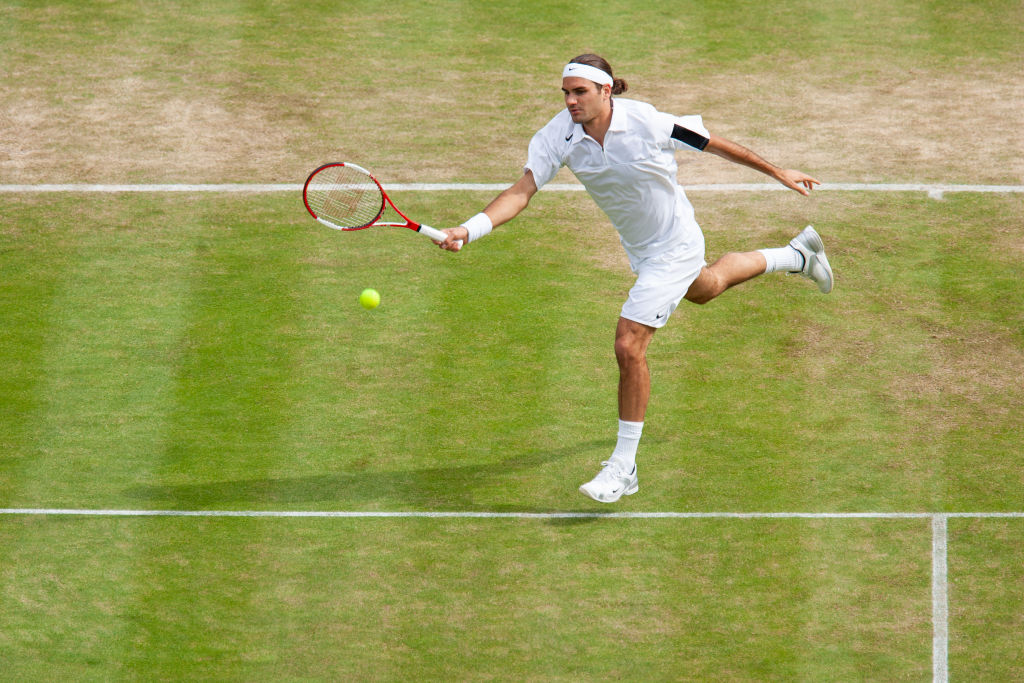
A player who drags their back foot up to meet their front foot when serving kills the grass, which is why you see sharp brown lines form behind the baseline in the first week of the tournament. “Footdraggers!” the groundskeepers grumble. Players who move balletically, though—the groundskeepers love them. They care for the grass through the way they play. No surprise: Roger Federer was good for the grass.
Roger Federer playes at Wimbledon on June 28, 2004 in London, England. —Simon Bruty—Anychance/Getty Images
When I asked Brierley and the team to tell me about the differences between the courts, he pointed at a map on the wall in the clubhouse. They also keep photographs of the courts from past years, records of perfection or near-perfection, as a kind of institutional memory.
“Some of these ones are much more difficult to get ready or keep ready than ones even right next to them,” he said, pointing around the map. “Obviously, everyone cares the most about…” he trailed off, pointing to Centre Court, the center of Wimbledon’s beating heart.
Court 2 puts them through the most, and they love it for that. The court sits below ground level, beneath the water table, which means its soil stays wet longer. But it also dries and heats faster than its neighbors, owing to the angles of light.
The mind of a groundskeeper works on sundial terms, always aware of how grass courts play differently in the morning and evening, and the angles of shade affect the texture and firmness of the plot hour by hour. The team works toward a reading of around 200 gravities for the start of the tournament, and 300 for wheelchair tennis: the ideal resistance for bounce on a grass court. Every day, as the team assembles, Court 2 requires checking on: rolling, measuring, watering, redirecting. It is the difficult cousin. By contrast, Courts 5 and 6, two among the eight sibling courts just south of Centre Court called “The Octuple,” have optimal growing conditions and no shade issues.
Wimbledon’s irrigation system runs on a fully computerized grid with laser precision. At night, guard dogs and surveillance teams monitor the grounds year-round, because catastrophe at Wimbledon comes in the form of a two-foot-long fox slinking onto a court and marking its territory. Rufus the hawk handles deterring the pigeons from disrupting play by eating grass seed.
And none of this would be sufficient if the tennis going on inside the gates at the All England Club weren’t so wonderfully, maddeningly unpredictable.
Most tennis players count Wimbledon as their most prized Slam title. It is the “most beautiful tournament, most beautiful court, most beautiful trophy,” as Carlos Alcaraz said after winning in 2024. Three-time Wimbledon men’s singles finalist Andy Roddick has likened the grounds to another world entirely: “I love it. I can’t talk about it in a rational way.”
But this is also the quirkiest, most unforgiving surface in the sport. Grass courts hardly exist outside of these two weeks. Most players don’t grow up playing tennis on grass. The bounce is low and fast and strange. Footwork and sliding are risky business.
That’s why we love tennis: the possibility of the erratic and unexpected. It reveals something like an inner-child curiosity in all of us, what happens when expected order gives way to wonder.
Wimbledon is where we feel that wonder most acutely, because the stakes are high and the surface is unforgiving and the whole thing feels, somehow, like it’s been handed down—by a groundskeeper who has been working at Wimbledon for decades, or Vicky and Nigel Broad who have been at the front of the queue since John McEnroe was competing in the early 1980s.
The tennis courts themselves are alive. As is everything around them.
Hours after a meeting between the foreign ministers of Iran and Oman, Iran announced it had fired a warning shot on a vessel taking an “unapproved route.”
Founder and president of Barstool Sports, Dave Portnoy, sat down with "CBS Saturday Morning" co-host Kelly O'Grady to discuss his new book, "Cancel Me If You Can." He describes how he is understood, or misunderstood, in the public eye, what his motivations are and more.
(про трубу в заголовке я немного зря - CF всегда были средством доставки, но любили их и за защиту; другими словами, надо бы писать про "трубу с ситечком", но в заголовок такое не ложится)
Сама новость: Cloudflare, всем нам хорошо знакомый провайдер CDN и WAF, теперь будет не просто выделять в статистике посещений ИИ-ботов, но и разделять их по категориям, разрешая одним то, что запрещено другим. Ну и да, прямо замаячила тема оплаты за доступ. Brave new world, как по мне!
Cloudflare разделила ИИ-ботов на три категории: Search, Agent и Training. Владельцы сайтов теперь могут независимо разрешать или блокировать поисковую индексацию, обращения агентов от имени пользователей и сбор данных для обучения моделей. Для каждой категории доступны три режима: разрешить, заблокировать везде или заблокировать только на страницах с рекламой.
В результате Cloudflare уже не только пропускает трафик и отфильтровывает мусор. Она начинает решать, кто и зачем может читать сайт, а следом собирается брать оплату за проход.
Contestants on season 8 of Love Island USA. | Ben Symons/Peacock via Getty Images
This weekend marks the season finale of Love Island USA. The show is more popular than ever: Its eighth season generated 2.3 billion viewing minutes in its first two weeks and ranked as the No. 1 streaming series in the United States, according to preliminary Nielsen data.
The premise of Love Island is straightforward(-ish): The show brings together 12 attractive 20-somethings — six men and six women — in a villa in Fiji. They compete in risqué challenges, form romantic couples, and try to win over viewers at home, all for a chance to split a $100,000 prize. Along the way, new contestants, also known as “bombshells” in the show’s parlance, come in to try to break up existing couples. Viewers at home get to vote on which couples make it to the end.
But some longtime viewers say that the show has changed. What was once a slow burn built around flirtation and romantic tension has become increasingly vulgar, filled with hypersexualized challenges.
To help us sort through the drama and explain how the show has evolved over its eight-season run, Today Explained guest host Jonquilyn Hill spoke with Brooke LaMantia, a staff writer at The Cut. LaMantia recently asked: Is this the least sexy season of Love Island ever?
Below is an excerpt of the conversation, edited for length and clarity. There’s much more in the full podcast, so listen to Today, Explained wherever you get podcasts, including Apple Podcasts, Pandora, and Spotify.
For those who have never taken a trip to the villa, what is Love Island?
Love Island is a reality TV show that started in the UK around 2015. It came to the US in 2019. And it’s basically a dating show where a bunch of hot young people go to a villa. They’re cut off from the world. It’s as live as you can get, so they’re there right now. These people that we’re watching are in Fiji as we’re speaking and they try to find love.
What makes this show work as real and “I’m here to find love,” versus some of the other dating reality shows we have out there?
In the past, it actually has been quite genuine because it’s a lot of people coming into one space, and all you’re thinking about is like, do I like my connection? Do I like this person? And so you can talk to everyone. The Bachelor, for example, it’s one boy and 30 girls. That’s crazy. That’s never going to work.
Love Island is equal to boys and girls. You’re thinking about who you’re attracted to and then who you have good conversations with and who you want to share a bed with. There are all these different layers that make it more real when it comes to dating, as real as you can get. And I think that has led to success. There are people who are married and have babies and that’s pretty good to me.
What changed this season?
Everyone’s still in bikinis. Everyone’s still hot. That hasn’t changed. But I think the way that they’ve engaged with sex and with kissing and with anything physical has really, really changed from old seasons. And it’s not as fun to watch.
It’s often actually kind of gross to watch and it’s like, I don’t need to see everyone kiss every single day because they’re being forced to in a challenge. There’s no genuine and natural romantic and sexual tension left in the villa. And that is where I think it’s lost the plot and it’s not as sexy as it has been.
For those who don’t know, “challenges” are what they call, essentially, games that they have the Islanders play. Usually they are set up like a competition with boys against girls or the couples against each other. Can you say a bit more about how the challenges were different this season?
The show has always been very couple-forward. You couple up with a partner, you guys share a bed. And so it’s always very, like, what’s going to happen in bed? Are we going to cuddle? And there’s a very clear thing that the couples will put the covers up over their heads and that means they’re kissing and doing stuff.
But more and more, and especially this season, they have all involved extremely heavy making out right away. Imagine you enter a villa, you’re half naked, you don’t know these people. And then you’re like, I’m just going to stick my tongue down everyone’s throat and see what happens. It’s strange. It’s not a normal way to say hello.
It used to be every challenge would be like, okay, maybe kiss an Islander that you’re interested in. And it would be like a cheeky little, let me do a slight little peck of this different Islander that’s not my couple that maybe I’m intrigued by. And it was sexy and low-key and kind of flirty, but not like ass-grabbing, tongues everywhere, porno vibes. And yeah, it commodifies everyone’s bodies in a weird way that makes it uncomfortable to watch and not as fun.
I think it’s so interesting because on one hand, the show is a little more sexed up than it has been in past seasons, but Gen Z, which is the generation that’s primarily on the show, is having less sex than ever. I wonder how you square those two things.
I think that’s always a sentiment that’s interesting to me, because I’m technically Gen Z. We get this rep that we are not having sex, but I think it’s because then we get on shows and we do stuff like this and it’s like you grab an ass like you’ve never even seen an ass before. And it’s like, have you seen an ass before? We need to think about these things. It’s not a shame.
I will say, I think it’s hard criticizing this show because there’s a world where it was really like, women weren’t allowed to be sluts, men weren’t allowed to be sluts. And I think it’s really great that people are embracing sexiness and sluttiness and it feels like you can kind of do what you want. I think that’s amazing and I think people should live their truth in that way. But it’s like performance art in a way.
I think of myself at 22, yikes.
Also, it’s like, if I was in the show and producers were like, okay, now make out with everyone — I’m going to do that. But it’s like, I’m 21 years old. Give me some more time to think about how I want to show up in this world. Because everyone’s watching. They’re going to have a lot of influence, and it does impact young people and how they see dating.
You’re watching your peers. And so it’s almost like you’re seeing how my friends would respond. And I would hope that people would watch this show and be like, “Okay, Love Island is a reality show and maybe this is not how I should act,” but you never know. And I think having the show lack official and verbal consent, especially when it comes to all the sexual things happening, is a little bit jarring and a little scary for our future.
We need to realize that that is not how the world actually works. And I think because we’re so invested and because we feel so parasocial, this feels like an extension of our world. But there needs to be very clear boundaries between what is TV, what is entertainment, and what is real life and real dating.
Representative Ro Khanna was barred from leaving for 90 minutes. Where past U.S. leaders toured the region to show support for Israel, today’s Democratic presidential aspirants are going to bolster their credentials as critics.
Former Vice President Kamala Harris and her husband, former second gentleman Doug Emhoff, left, along with Sen. Dick Durbin (D-IL) stand for the national anthem during the Obama Presidential Center dedication ceremony on June 18, 2026, in Chicago. | Brian Cassella/Chicago Tribune/Tribune News Service via Getty Images
Two years after her whirlwind ascension to Democratic presidential nominee, former Vice President Kamala Harris is thinking about…running for president again. Not doing it — yet — but laying the groundwork in case she does.
She’s done the book tour through the early states. She’s taken the meeting with New York City Mayor Zohran Mamdani and dialed up pro-Palestinian organizers to feel out the room. And she’s leading many 2028 polls — ahead of California Gov. Gavin Newsom, ahead of former Transportation Secretary Pete Buttigieg or Rep. Alexandria Ocasio-Cortez, ahead of the field. But she remains noncommittal to the prospect about running in 2028 and is yet to weigh in on the Democratic party’s most pressing ideological fights.
It’s an odd situation: The candidate is unclear if she wants to run — and the party seems unclear if they want her to.
So last week, I talked with Democratic Party officials, donors, and South Carolina voters for our last episode of America, Actually to figure out whether Harris has a lane for another presidential bid — and whether it’s one she actually wants.
Here’s what I learned:
The Harris camp treats 2024 as an anomaly
The case from her inner circle is that the 2024 presidential election against President Donald Trump simply doesn’t count. To start, President Joe Biden dropped out in July — under pressure from virtually the entire Democratic Party — and left her just 107 days to mount a campaign.
And, then, there were the multiple assassination attempts against Trump, including one that resulted in an indelible image of the bloodied candidate pumping his fist in a knot of Secret Service agents. As one Harris surrogate put it to me: “I think Jesus Christ would’ve lost in 2024 after the assassination attempt.”
It’s a real argument, but it’s also exactly the argument a team makes once it has decided the loss wasn’t about the candidate. I’m not sure the rest of the party agree. (Also, she did run for the nomination in 2020 and dropped out in late 2019, before the first primary contest.)
The donor class may be ready to turn the page
I called John Morgan, a Florida mega-donor who’s raised tens of millions for Democrats going back to the Clinton years. He doesn’t want Harris to run, but, even more, he said that he thinks the money won’t materialize and that she and Newsom would be cannibalizing the same California checkbooks. He also raised her ties to the Biden administration. According to Morgan, the entire Biden era needs what he called — and I’m quoting the man — a “Bye Bye Biden” sendoff.
Morgan also added plenty of donors feel this way, and almost none will say it out loud, because “people think to say no to her, they could be labeled racist, and they don’t want that, ’cause they’re Democrats,” he said.
Oof.
Nobody has actually replaced her — and that’s the real story
Here’s one where the Harris team has a point. No one has yet supplanted her with the two groups that anchor the Democratic base: Black voters and women. To this moment, that bond holds. I felt it at a Juneteenth picnic in North Charleston, where “Yes, she should run” won our little yes-bucket, no-bucket poll. A few other responses we got: “Third time’s a charm.” “We need women.” “It was stolen from her the first time.”
But the fuller conversations were more nuanced than any topline number. There’s a generational split — younger voters are raising her prosecutor record and her posture on Gaza, with one telling me she “was locking us up until she needed our vote.” There’s a gender split — men at the picnic were ready to run back “a competent white man” before another woman, and women insisted that the door just needs one more good push.
Beneath nearly all of it, one word kept surfacing, from the yeses and the nos alike: fresh. People want a fresh face. Some want a fresher Harris. Some just want somebody new.
The Black vote — particularly in the South — has been the great consolidating force in modern Democratic primaries: the firewall that lined up behind Hillary Clinton in 2016, that rescued Joe Biden in South Carolina in 2020, that ultimately made Obama.
Democrats run orderly primaries when that group decides early and moves together. A Black electorate that’s split by age, split by gender, and openly shopping for a new face isn’t just a headache for Harris; it’s a break from decades of how this party has chosen a nominee. That’s not really a story about Kamala Harris. It’s a story about a party that doesn’t know what it wants — and a 2028 presidential cycle that’s going to be a good deal messier than the polling makes it look.
На поделке из предыдущей статьи вдохновение не закончилось, решил написать VPN. Был опыт разработки shadowsocks сервера, что не понравилось: под каждое TCP соединение, открываемое каким-нибудь браузеров, VPN клиент открывает отдельное TCP cоединение к серверу, а тот в свою очередь столько же до конечной точки + пришлось руками шифровать/дешифровать payload. Захотелось сделать что-то более простое + самим написать и клиент.
The last person in the stadium who truly believed was Fery himself, outclassed but never outfought, a 5ft 9in battery pack in a world of power plants
Well, we were beginning to run out of ferry puns anyway. Arthur Fery’s run to the semi-finals of Wimbledon always had a kind of glazed and surreal quality to it, a shaggy-dog story that kept adding more and more unbelievable layers: the fling that ended in marriage, the picnic that turned into an all-night rave, Super Hans accidentally running to Windsor.
When reality finally bit, it bit slowly and then all at once. It was when Sascha Zverev broke serve early in the second set that people first started to leave their seats: not many, but certainly enough to notice. Perhaps this was the moment a little of the air, a little of the belief, first began to leak out of Fery’s fantastical fever dream, a marvellous journey that – if we’re being brutally honest with ourselves – was probably always going to end like this.
Tim Merlier again proved he is the fastest sprinter in the race after a heroic effort by Liam Slock was foiled at the last
On the telly, they’re discussing the dynamics of the sprint finishes: we’ve had two bunch kicks and two different winners, Olav Kooij and Tim Merlier. I fancy we’ll see a different winner today, and the pressure is on Philipsen to deliver, likewise Biniam Girmay.
Plus: The Pentagon is training amateurs to become part of its hacker army, a Flock license plate reader error led to cops surrounding a car reviewer, and more.
Пару лет назад я презентовал на Хабре первую концепцию полнофункциональной текстовой разметки Маркван. Которая позволяет создавать достаточно сложные художественные и технические тексты, а заодно и генерировать статические сайты.
За это время накопилось несколько замечаний, которые необходимо было быстренько поправить. Изначально я планировал уделить проекту всего пару недель. Но, как это часто бывает в разработке, незаметно испарились три месяца. Много времени ушло на перепродумывание самой спецификации и на реализацию нового конвертера. Зато теперь Маркван превратился в строгую, логичную и предсказуемую экосистему.
У Apple Studio Display есть особенность, о которой не пишут в рекламе: за две тысячи долларов ты получаешь шикарный 5K-монитор без единого видеовхода. Ни HDMI, ни DisplayPort — только Thunderbolt. А у меня три консоли (Switch, Steam Deck и Xbox), которые очень хотели на этот экран.
Казалось бы, задача решается картой захвата и OBS. На практике задержка такая, будто играешь по удалённому рабочему столу, а картинка на 5K — мыльная.
Мне стало интересно, куда деваются миллисекунды, если убрать из цепочки всё лишнее. Так появился GameMonitor — нативное macOS-приложение на Swift (AVFoundation + Metal), которое кладёт кадр с карты на Studio Display с минимальной задержкой. Писал под один Switch, а получил монитор для чего угодно с HDMI.
В статье — почему готовые решения не устроили, как устроен захват видео в macOS, зачем понадобился свой рендерер на Metal (спойлер: MetalFX и апскейл до 5K) и какие неожиданные баги вылезли по дороге (включая полностью зелёный экран).
Что такое электронная таблица, объяснять не надо. Все знают Excel, и многие хоть раз им пользовались. История создания электронных таблиц тоже, на первый взгляд, незамысловатая и сравнительно недолгая: как только появились первые ПК, сразу началась разработка ПО для выведения на экран их монитора интерактивной таблицы, которая сильно облегчила бы работу бухгалтеров и менеджеров. IT-инженеры уложились в 15 лет, с конца 60-х до середины 80-х, чтобы создать электронную таблицу от начала и до конца – от разработки самого принципа ее программирования до появления первых электронных таблиц (от VisiCalc до Excel) на экране ПК, сильно порадовав тем самым белых воротничков (и не только их). Дальше шло лишь усовершенствование электронных таблиц.
С чего вдруг IT-инженеры и изобретатели озаботились бухгалтерскими проблемами, тоже понятно. Люди старшего поколения помнят, что можно было делать на первых ПК 70-х и 80-х годов, еще до эпохи интернета. Если оставить в стороне возможность самостоятельно заняться программированием и обмениваться файлами с такими же энтузиастами, что сейчас часто ставят в заслугу первым ПК (для этого все-таки надо было в душе быть айтишником), то на этих ПК можно было играть в интерактивные игры (правда, на игровых приставках к телевизору это обходилось дешевле) и можно было использовать ПК как пишущую машинку, при пользовании которой не надо было замазывать белилами ошибки и ждать, когда те высохнут, чтобы напечатать поверх правильную букву. Сказать, что это сильно порадовало писателей и редакторов бумажных СМИ значит ничего не сказать, это была настоящая революция в писательском и издательском деле, сравнимая разве что с изобретением печатного станка Гутенбергом в XV веке. А когда к этому добавились еще электронные таблицы для сведения дебета с кредетом в интерактивном режиме, это была еще одна революция в бухгалтерии того же масштаба, если не большего.
The photographer was looking for inspiration near his home in West Bengal when he spotted a girl lying near a tangle of fishing nets
In the Hooghly district of West Bengal, just a short walk from his home, photographer Soumayan Biswas found himself circling the edges of a large village pond, searching – as he often does – for “stories”. He remembers that the weather was “cloudy that day, and the wind was light”. It was the kind of muted afternoon when your attention is sharpened.
The story appeared in the form of Sabana, a 12-year-old student lying beside a tangle of fishing nets. Biswas had never met her before and, while spending some time around her, was struck by how absorbed she was in her phone.
Australia soundly beaten after leading at half-time in Brisbane
Second-half blitz sees Les Bleus run out 42-26 winners
The Wallabies crashed to defeat to France in Brisbane to extend their losing streak to six – their worst losing run in a decade – and continue their winless start to the Nations Championship. As they had last week against Ireland, Australia squandered a half-time lead to be blown away by a scintillating France, leaving Joe Schmidt facing a terrible fade to black for his final Test next week as national coach.
Both teams were stinging from narrow losses last week and their desperation told in a frantic early tempo. Despite an early jackal and what appeared to be a 50-22 kick from Joseph-Aukuso Suaalii, the referee scrubbed it all for a high tackle. France took the gift, kicking deep and rolling into Australia’s red zone before unleashing the 145kg Brisbane-born wrecking ball Emmanuel Meafou from point blank. France 7-0.
Minnesota Gov. Tim Walz is pulling his National Guard early from Washington, D.C. as the chorus against Democratic governors sending troops to the city amid President Trump's ongoing deployment grows louder.
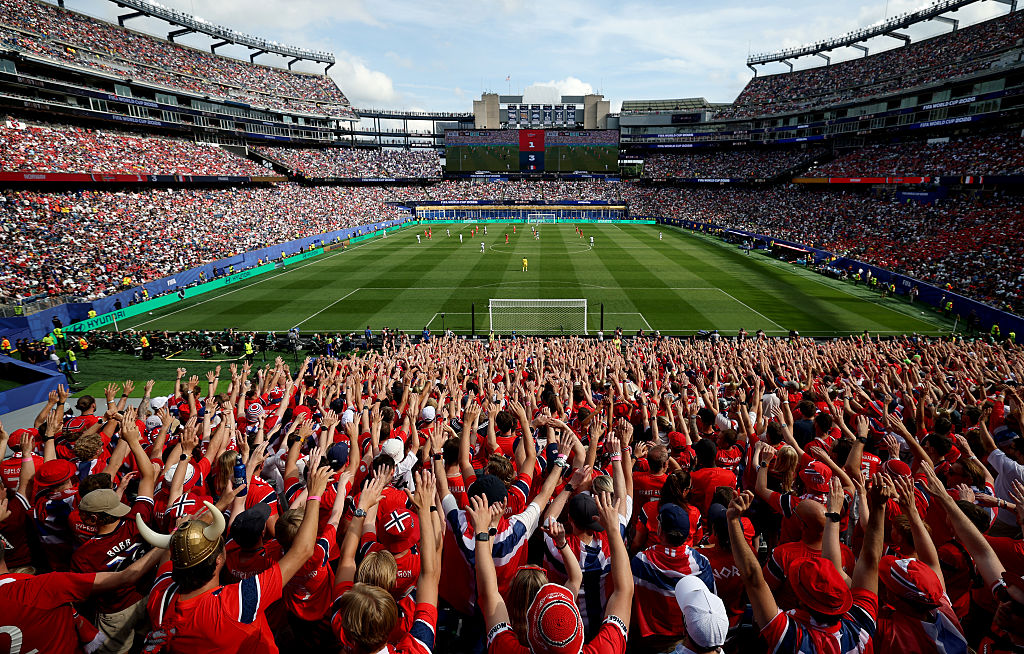
Norway fans cheer in the stands during the FIFA World Cup 2026 Group I match between Norway and France at Boston Stadium on June 26, 2026 in Foxborough, Massachusetts. —Steph Chambers—FIFA/Getty Images
This World Cup, soccer fans are making a scene—and bringing people together, in the process.
At Boston's South Station in mid-June, a group of Norwegian football fans created what could have been an awkward moment. The fans sat one behind another on an escalator, leaned forward and back in synchrony, "rowing" through the station as if the moving metal stairs were ferrying them across the North Sea.
Train stations are not forgiving stages. They are places of delay, impatience, platform changes, garbled announcements, and people trying very hard not to make eye contact. Escalators are even narrower social spaces, governed by a universal public etiquette: face forward, keep moving, and avoid becoming the reason anyone else has to stop.
By every ordinary rule of public life, the South Station scene should have induced annoyance or caused embarrassment. Instead, commuters stopped. Phones came out. Some locals took up an imaginary oar and joined in. The fans were performing the "Viking Row," a ritual that has followed Norway through the World Cup. It carries the theatrical shape of something ancient, but its social force is contemporary. Its power comes from participation itself: people finding one another in public, copying a gesture, repeating it, teaching it, altering it, and making it feel like their own.
Unusual fan rituals like these show us how to actually create a sense of belonging. With communities across the country facing a “loneliness epidemic,” this lesson could not have come at a better time.
To be sure, the Norwegians are not alone in broadcasting their rituals during this FIFA World Cup. In Houston, thousands of Dutch supporters marched through the heat in a river of orange on the Oranje Fanwalk, joined by almost anyone willing to enter the procession. After matches, Japanese fans once again stayed behind to collect trash from the stadium rows, continuing a practice that has become one of the most recognizable rituals in global sport.
None of these practices was invented by FIFA. No central committee designed it. No consultant mapped the emotional journey. No brand strategist decided when Norwegian supporters should row through a train station, which city streets Dutch fans dressed in orange, or that Japanese fans should answer both victory and defeat with identical displays of respect and care.
These moments captivate us because they show shared identity becoming visible through behavior. At a time when the lack of belonging has become one of the dominant anxieties of public life, shared rituals are more than merely charming. Workplaces measure belonging. Schools design programs around it. Politicians invoke it. Digital platforms promise it while often leaving people lonelier. Across institutions, there is now broad recognition that people are hungry for connection, but far less understanding of how humans build connection.
The usual institutional instinct is to treat belonging as a product that can be created for people and delivered to them. Leaders design the program, issue the invitation, announce the values, decorate the room, and expect the feeling to follow. The World Cup suggests a different model. Our attitude to belonging, it suggests, works much more like our relationship to change. It invites a person to move from "this is happening around me" to "this is something I have chosen to be part of."
In 1912, French sociologist Émile Durkheim gave us a language to understand why these moments have such force. Writing more than a century ago about religious life, he described the phenomenon "collective effervescence": the emotional intensity that emerges when people gather, synchronize their bodies and attention, and experience themselves as part of a larger whole. Of course, Durkheim was not writing about soccer supporters in train stations, but the concept applies here as well.
Anyone who has stood inside a packed stadium appreciates how rituals produce collective effervescence before knowing the term. A song begins in one corner and spreads. A crowd breathes and holds its breath, together. People who arrive as strangers find themselves in a community, even temporarily. A 2022 meta-analytic review in Frontiers in Psychology found that collective rituals are associated with a stronger sense of "we-ness" that can persist after the gathering ends. The ritual itself does not need to be elaborate. A clap, a march, a chant, or a cleanup after the final whistle can carry meaning when people perform it together and understand it as theirs.
Magic, however, cannot be manufactured. Anyone who has sat through a mandatory team-building exercise knows the difference between a ritual that binds and a program that irritates. The missing ingredient is ownership.
Michael Norton of Harvard Business School, with Daniel Mochon and Dan Ariely, captured this in their work on what they called the “IKEA effect.” In one experiment, participants who assembled furniture themselves were willing to pay 63% more for it than participants who received the same item preassembled. In another, people who folded origami valued their own imperfect work nearly as highly as professionally folded origami.
Why? People value what they have had a hand in making.
The importance of co-creation is on vivid display in the most successful fan rituals. A chant that is borrowed, practiced, altered, and taught to others is not a finished product. It is a poem still being written. People do not simply consume it. They carry it, improve it, and invite others into it.
Organizations spend enormous resources trying to create a sense of belonging from the center through onboarding experiences, engagement surveys, retreats, values statements, and culture programs. Some of this work has value, but much of it begins from the wrong premise. It assumes belonging can be delivered fully formed to a recipient.
Sociologists Jean Lave and Etienne Wenger described "legitimate peripheral participation" as the way newcomers enter communities. People rarely begin at the center. They watch first. They imitate. They try a small version of the behavior. They learn what is admired, what is expected, and what is forgiven. Over time and with practice, participation becomes part of their identity.
What the World Cup leaves behind is mostly familiar: flags, painted faces, a month of national feeling. What's worth keeping is smaller and stranger. On a Boston escalator, a few people pull imaginary oars, and the commuters around them reach for an oar of their own.
That reflex runs far beyond sport. Every company, school, and city trying to hold people together in a lonely, fractured age is hungering for the same thing, and most go about it backward, designing belonging at the top and handing it down, perfectly complete. The rowers point to another approach. A ritual becomes yours only after you have practiced it, changed it, and taught it to the person beside you.
No one handed the Norwegians a way to belong. They made one together, oar by oar, and left it open for the rest of us. We belong most deeply to what we help make.
During the war, Israel attacked Iran’s steel plants, saying they provided forces with revenue and the means to make weapons, but it also hurt the civilian economy.
Frustrated by the appointed court’s support of abortion rights, which has been affirmed resoundingly by voters, Republicans are pushing an Aug. 4 referendum to elect Kansas justices.
Two senior editors discuss the difficult effort to track down allegations against the leading Democrat for Senate in Maine and the questions that soon followed.
The collapse of Graham Platner’s Senate bid in Maine after a rape allegation renewed attention to a movement built by Senator Bernie Sanders that some say is too forgiving of male misconduct.
The secretary of state effectively controls Venezuela’s finances, the distribution of its natural resources and its government. His grip on the country is a vivid manifestation of American power in the Trump era.
This week’s return to fighting in the Middle East made clear that the US-Iran conflict is now primarily a fight over Iran’s ability to control shipping through the Strait of Hormuz, the world’s most important energy chokepoint.
Iranians believe control of the Strait is both a deterrent against future attacks and a potential source of revenue. But there are signs it may be overplaying its hand.
Ultimately, the longer the situation in the Strait stays chaotic, the more Iran’s rivals are likely to lose patience, either looking for workarounds or returning to war.
At this point, however, it’s now clear that it’s about something entirely different, and something that wasn’t even an issue until this conflict began more than four months ago: Iran’s ability to control shipping through the Strait of Hormuz.
Iran’s ability to use cheap drones and missiles to throttle ship traffic through the crucial waterway, through which around a fifth of the world’s oil and gas normally transits, became, during the war, its primary source of leverage against the US. Iran’s new leaders now view de facto control of the Strait as their primary deterrent against future attacks by their enemies — an arguably more effective and flexible deterrent than their nuclear program ever was — as well as a potential source of revenue via tolls and fees. Iranian officials have in recent days variously described the Strait as a “golden weapon” and a “divine blessing.” US Secretary of State Marco Rubio has called it Iran’s “economic nuclear weapon.”
This week, however, as violence flared again in the region, there were some indications that Iran might be overestimating the power of that weapon and its ability to coerce and deter its enemies.
A return to war in the Gulf
This week, Iranian leaders showed how far they’re willing to go to protect their “divine blessing,” attacking three ships transiting the Strait with missiles. The ships were traveling through a corridor close to the coast of Oman, under recommendation from the UN’s International Maritime Organization, and had not coordinated with Iranian authorities. This led to the biggest exchange of fire between the two countries since an interim ceasefire agreement in June, with the US bombing more than 80 targets in Iran and the Iranians launching missiles at US targets in Kuwait and Bahrain. The US also reimposed sanctions on Iranian oil sales, while President Donald Trump declared the ceasefire between the two countries to be over.
The letter of the dispute comes down to a vaguely worded clause in the Memorandum of Understanding (MOU) between the two countries on June 17. The MOU commits Iran to take steps to restore shipping through the Strait and work with Oman, with which it shares the Strait, to determine future arrangements for administering it. US officials interpreted this as restoring the free navigation through the strait that existed before the war. The Iranians, however, interpret it as giving them control over which ships can cross. This rather wide ambiguity over the control of a very narrow body of water made it easier for both sides to sign the deal, but it’s now led to a new phase of the conflict.
After the deal was completed, oil shipments through the Strait returned to around half of their prewar levels, but much of it was on ships traveling at night with their identification systems turned off, escorted by the US Navy.
That was an unacceptable situation for Iran, whose leaders have signaled they believe they have created a new status quo that gives them a say over who comes and goes in the Strait. The increasing number of ships traveling the Oman route under US protection was a threat to that status quo. Add in the fact that Tehran appears to believe that Trump is reluctant to return to full-scale war, and they calculated that this week’s attacks were a risk worth taking.
“Because they believe that the US is deterred from resuming full-scale hostilities, there is scope for pushing the envelope, for pushing their luck and seeing how much they can extract in the Strait,” said Gregory Brew, an Iran and energy analyst at Eurasia Group.
This may be a miscalculation.
A weapon, but not an all-powerful one
Iran’s Hormuz deterrent might be more effective against a more normal politician than Donald Trump. The Iran war is deeply unpopular, and Trump’s Republicans can ill afford high gas prices heading into this year’s midterm elections. But Trump, generally speaking, appears to value his own idiosyncratic political projects — including the conflict with Iran — more than his party’s political prospects.
But Trump aside, the ability to close Hormuz may also simply not be as powerful a weapon of mass disruption as many thought it would be. Crude oil prices went as high as $126 per barrel during the war, but usually hovered closer to $100 — well short of the $200 many experts were predicting at the outset of the war.
That’s due to a number of factors, including non-Mideast producers like the US increasing production and the fact that the world’s largest importer, China, proved able to suddenly slash those imports far more than anyone realized was possible, leaving more oil for everyone else. And thanks to the wider adoption of electric vehicles and renewable energy sources, oil is simply not as central to the global economy as it once was.
This isn’t to say that the crisis isn’t having an economic impact — it’s driving a slow-moving food crisis throughout much of the developing world — but it’s not creating 1970s-type gas lines or even COVID-type supply chain disruptions.
“The closure of the Strait of Hormuz was always understood to be this massively destabilizing black swan event,” Brew said. “And it turns out to have been more manageable.”
While continued flare-ups in the fighting have driven spikes in oil prices throughout the crisis — including this week — markets have also been quick to settle in the periods of calm that followed. One week after the signing of the MOU, prices were back at pre-war levels. Even during this week’s fighting, oil jumped to only around $80 before receding as the fighting died down. Energy markets appear to be pricing in the expectation that any return to war won’t last long.
Iran’s leaders can probably be confident that Trump isn’t inclined to risk large numbers of US casualties by committing ground troops, embarking on a costly regime-change operation, or even returning to the level of airstrikes that we saw at the height of Operation Epic Fury. But they may on the other hand, the cost to the United States of periodic “mowing the grass” strikes is relatively low. The US has also been striking Iranian bridges for the first time since April. This attack on civilian infrastructure rather than military targets suggests Trump’s tolerance for escalation may be higher than the Iranians anticipated.
Has Iran bought a diminishing asset?
Iran’s moment of maximum leverage may be right now. Oil producers in the region are heavily investing in new pipelines and alternative routes to allow them to eventually bypass the Strait. The more Iran attacks the ships used by its Gulf neighbors, the more it will encourage those investments. The crisis is also driving a surge in demand for electric vehicles in many countries. The more dangerous it stays in the Strait, the more consumers and producers will be incentivized to lessen their dependence on it.
In a recent article for Foreign Affairs, the Atlantic Council analyst Nate Swanson argued that there may also be a contradiction between Iran’s twin goals with the Strait: creating a deterrent to future attacks while also extracting maximum economic value from its control of the waterway. Iran has already shown it can shut down shipping at will, as well as attack the energy infrastructure of its neighbors. (It’s worth remembering that any new bypass pipelines built by Saudi Arabia or the United Arab Emirates will still be within range of Iranian missiles and drones.)
But the more Tehran tries to squeeze the region economically through tolls, and the more chaos it creates by actually launching attacks on both shipping through the strait and Gulf countries, the more it will seem worth the cost to both the US and countries in the region to go back to war.
Some in Tehran may consider this a price worth paying. The recent mass funeral for the late supreme leader Ayatollah Ali Khamenei doubled as a rally and coming-out party for what Iranian leaders hope will be a new regional order that they will help to shape, and control of Hormuz is part of that. But drawing a hard line on this issue will also push back any return to normalcy for a population exhausted by war and economic crisis. Iran has also not yet received the frozen assets held in banks in the Middle East as promised in the deal, and that seems unlikely as long as tankers in the Strait are taking incoming fire.
The US and Israel launched this war with what proved to be massive overconfidence in their ability to force a weaker country to bend to their will through sheer dominance in firepower. In this new lower-intensity phase of the conflict, Iran may have similar overconfidence in its ability to coerce its rivals through an advantage in geography.
Iranians leaders once believed that their missile forces and regional proxies like Hezbollah could deter foreign attacks and that their nascent nuclear program gave them bargaining leverage with their rivals. Ultimately, that deterrent failed, and Khamenei and many other top Iranian leaders paid with their lives. Their successors believe they’ve now found a more effective deterrent and bargaining chip. If it fails, they can’t say they weren’t warned.
Kranti Gaud becomes first female Test cricketer to see her name on the Lord’s honours board after taking 5-37 with the ball for India
15th over: England 38-3 (Sciver-Brunt 1, Capsey 5 ) AliceCapsey joins Sciver-Brunt in the middle with a rebuild job needed. Her first ball jags bag at the pads and she is fortunate to get an inside edge on it to tickle away for four runs. India have been on the money this morning, much more accurate than England’s seamers in the first 10-15 overs yesterday and they are reaping the rewards.
Huge wicket! Knight is done by one that moves up the hill and the umpire raises the finger! Knight reviews but she looks like she already knows her fate. Sure enough it is Umpires Call on the DRS and Knight has to go. England in strife!