RSS Feeds
Opinion | Britain’s Exploding Disability Dole
New dinosaur species as long as cricket pitch discovered in Thailand
Nolan Wells' family demands answers after he was found dead following a boat trip with friends
Astrophysicist Avi Loeb on Pentagon's 4th UFO files release
ICE agents weren't wearing body cameras when Mexican man was fatally shot, agency says
Watch: Pentagon releases 19 new UFO videos
Apple sues OpenAI, accusing ChatGPT maker of stealing trade secrets
Strait of Hormuz Will Soon Be Declared Open to All Traffic, U.S. Officials Say
Pugnacious, charismatic and she always answered the question - Chris Mason on Ann Widdecombe
Merino pounces on Lammens' mistake to score late winner for Spain
Merino puts Spain into World Cup semi-finals as Belgium rue costly Courtois injury
Mikel Merino’s amazing moment arrived once more, an entire country circling the corner flag with him as football, which somehow always finds a way, provided another absurdly tall tale. The man who came on to score the late, late goals that took Spain into a European championship semi-final two years ago and a World Cup quarter-final four days ago, only went and did it again. And this time it was even better, his two-month old son Marco, who he has hardly seen, in attendance here. “As he wasn’t there for the quarter-finals, I had to do it in the semi-final too so he could experience it as well,” Merino said.
It is some experience, some hat-trick, some story. What Merino did doesn’t make any sense. For this to happen once is dramatic enough, for it to happen twice messes with your mind, for it to happen a third blows it to bits; what is this sorcery? It was 1-1, the seconds were slipping from them and Spain were desperately seeking a way through when he was introduced as a sub again.
Continue reading...Apple Sues OpenAI, Accusing It of Stealing Company Secrets
Graham Platner makes it official in Maine, submitting paperwork to leave Senate race

In his withdrawal notice, Platner said "people are desperate for change" and that's why they made him the Democratic nominee. Now, Maine Democrats have to pick someone to replace him by July 27.
(Image credit: CJ Gunther)

Trump administration to support heavy tariffs on Russian oil in bid to end Ukraine war, sources say
John Fetterman joins forces with Republican counterpart in Senate for fundraising committee
Venture between two Pennsylvania senators stokes speculation about Fetterman’s future in Democratic party
The Democratic senator John Fetterman, who has faced mounting political challenges, is joining forces with the Republican senator Dave McCormick to launch a new joint fundraising committee, a move that is likely to fuel additional questions about Fetterman’s increasingly rightward lurch.
Pennsylvania’s two US senators have established a shared fundraising committee that will collect donations benefiting both of their campaigns in an unusual bipartisan arrangement.
Continue reading...Rapper Pitbull and fans set ‘bald cap’ Guinness World Record at London show
Crowd of more than 22,000 people – and the musician himself – filled Hyde Park with the ‘largest gathering of people wearing bald caps’
A tight plastic cap is not an attractive option for protective headwear in 30C (86F) heat. Yet 22,141 people opted for just that – along with a white shirt, black tie and aviator sunglasses – in Hyde Park, London, on Friday afternoon. It was both a homage to the rapper Pitbull, the night’s headliner at the BST festival, and part of setting a Guinness World Record for the “largest gathering of people wearing bald caps”.
“I’m speechless. Who would have thought a first-generation Cuban would be record-breaking and record-making?” said the rapper, accepting the award in an all-black suit.
Continue reading...Gol de Mikel Merino y España vuelve a tomar la ventaja frente a Bélgica
'Good but not good enough' for 'blessed and cursed' Djokovic
This Should Have Been the Grant Wahl World Cup
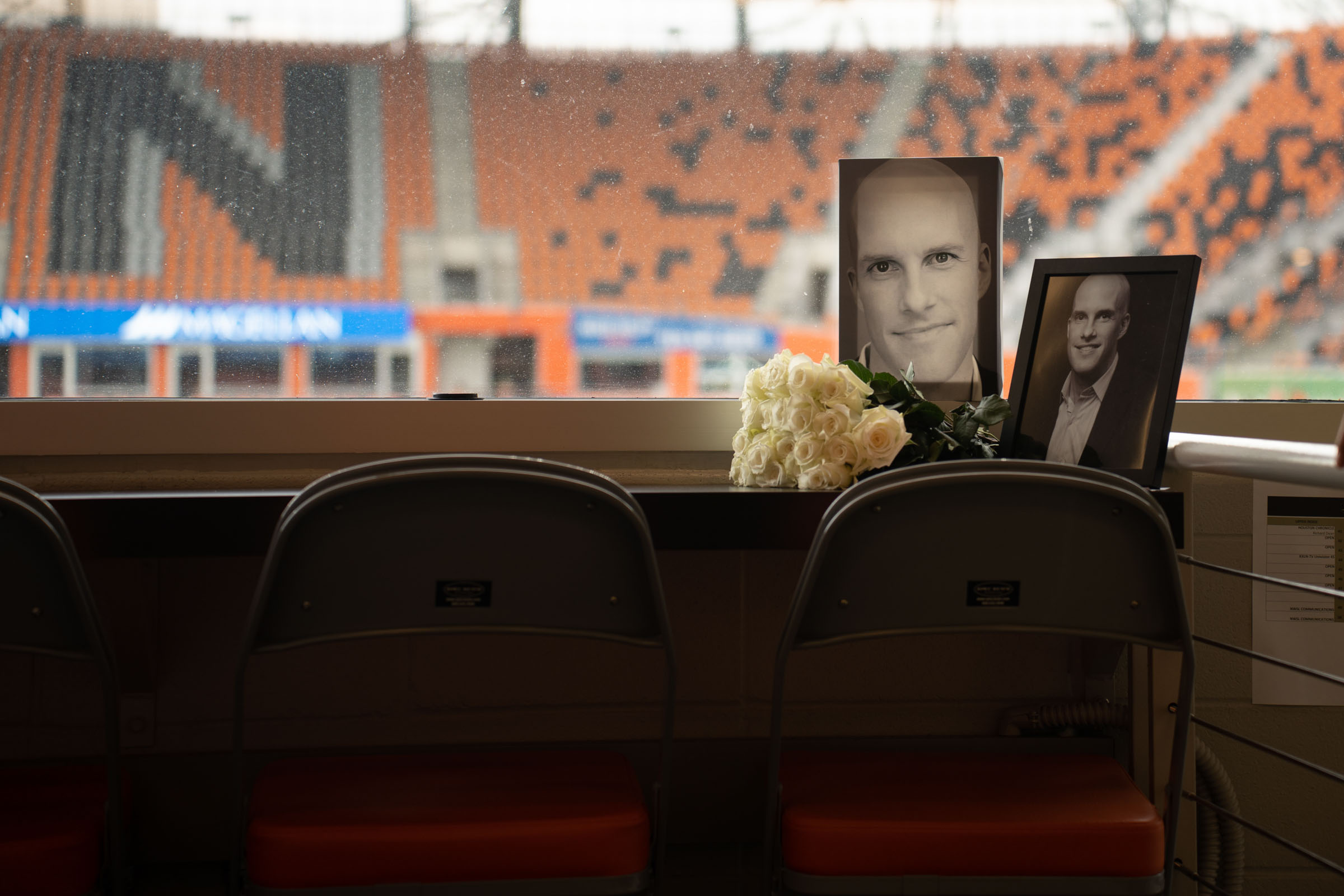
For Dr. Céline Gounder, clinical associate professor of medicine and infectious diseases at NYU medical school and a medical correspondent at CBS News, this World Cup has hit hard. Her late husband Grant Wahl, for decades the preeminent soccer journalist in the United States, died at the Qatar World Cup in 2022, after collapsing while covering a quarterfinal match between Argentina and the Netherlands. The cause of death was an undetected ascending aortic aneurysm. Wahl was 49.
Gounder, who lives in New York City, knows Wahl would be writing, podcasting, and doing videos, with great joy, about the sterling performances from the likes of Kylian Mbappé, Lionel Messi, and Erling Haaland. Wahl would appreciate the packed stadiums and the cultural commingling at this World Cup: phenomena like Scotland’s Tartan Army and Japanese visitors trying Texas BBQ for the first time speak to everything Wahl loved about the planet’s most popular sport. At the same time, Wahl would have turned his critical eye toward those in power, especially after FIFA reversed a suspension earlier this week of American striker Folarin Balogun, following a phone call between FIFA president Gianni Infantino and U.S. President Donald Trump.
“It feels like there is a Grant-sized hole in the world right now,” says Gounder. “Because I know he would be going apesh-t on this.”
The Somali referee denied a visa into the U.S. The controversial treatment of the Iranian team during their World Cup stay. European officials and others crying foul over the perceived coziness between Trump and Infantino, who bestowed upon Trump an out-of-thin-air peace prize at the World Cup draw in Washington, D.C., in December: Wahl would have been all over these stories of geopolitical intrigue, while still expertly writing about the action on the pitch. Throughout his career, Wahl toed a fine journalistic line. He cheered the beauty and growth of soccer, especially in the United States, while in no way acting like a cheerleader.
“Part of his hating ‘stick to sports’ was when you say ‘stick to sports,’ you're also implying sports is somehow lesser than,” says Gounder, who married Wahl in 2001. “To him sports was just as serious as any other journalistic beat.”
This was supposed to be Wahl’s World Cup, a career capstone in the country in which his coverage, of both men’s and women’s soccer, helped fuel the growth of the sport. At Wahl’s first World Cup as a journalist, in France in 1998, soccer was such an afterthought that two other Sports Illustrated writers returned home before the final: Wahl covered the France-Brazil game, at 24, for the preeminent sports publication in the United States and took ownership of a beat that so many of his peers overlooked. Wahl embraced the upstart digital-media space, bringing an insider’s knowledge to his substantial online following, while still writing long-form soccer features that delivered depth and insight about the game’s most prominent players.
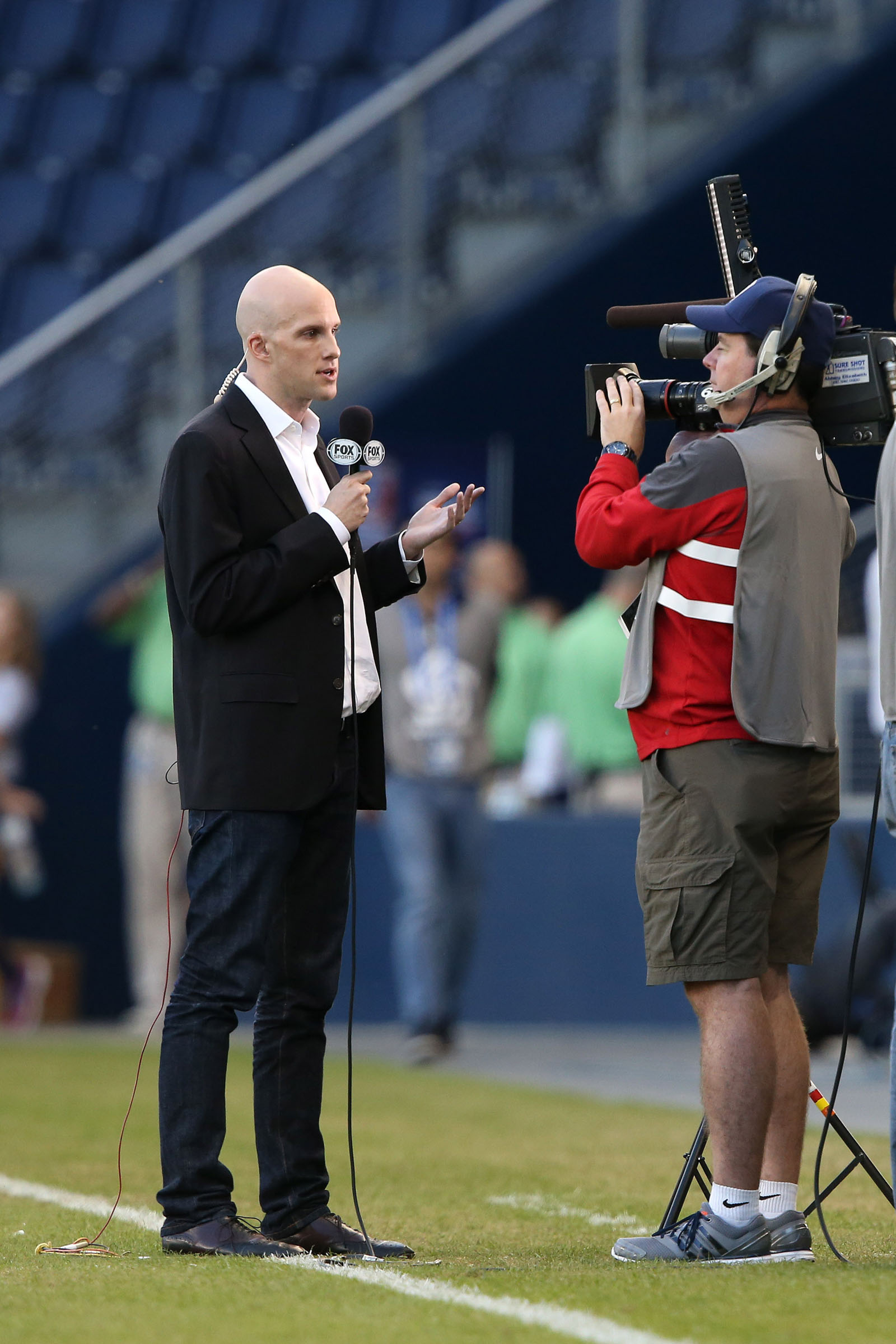
A number of factors delivered the United States its first World Cup hosting gig since 1994: the size and buying power of the U.S. market; technological delivery of top-flight European pro games to U.S. homes and phones, driving soccer engagement in the country; high levels of youth participation. But Wahl’s passionate coverage surely contributed to the World Cup’s return to North America. And the robust media attention to this summer’s event—for example, a single story in The Athletic, on penalty shoot-outs, carried a dozen bylines—can be traced to Wahl’s influence. He mentored many younger journalists and set the standard for covering the game.
“More than anything, he saw the soccer explosion coming,” says Seth Davis, Wahl’s former Sports Illustrated colleague on the college-basketball beat, which Wahl also worked until turning to soccer full-time before the 2010 World Cup in South Africa.
The Balogun controversy was ripe for Wahl’s reporting. Balogun, who received a questionable red card against Bosnia and Herzegovina in the Round of 32 on July 1, was supposed to, by rule, sit out the next game. FIFA’s intervention the day before the Belgium game sparked outrage. Belgium beat the U.S. regardless on Monday, 4-1, in the round of 16.
“I wish that Grant could have written about it, so I would know what to think,” says Davis, longtime contributor to CBS Sports’ March Madness coverage and editor-in-chief of Hoops HQ, a college-basketball site. “Grant would have been the guy who I would have read his opinion, and then an hour later I would be in a sports bar, talking to my buddies, giving that opinion as if it was my own.”
Wahl’s older brother, Eric, a writer and marketer based in Kansas City, Mo., called for Balogun to sit out the game on his own. “I think Grant would have disagreed with me on that count,” says Eric, 56. “Grant would have said the coach who was selected for this job is the final arbiter of how this plays out.” Balogun played most of the Belgium game. Eric thinks Grant would have probably written a longer piece looking at whether there was “shared corruption, for lack of a better phrase, between FIFA and the Trump Administration.”
“He would have been burning up the phones before the game, working his sources,” says Mark Mravic, Wahl’s longtime editor at both Sports Illustrated and the Substack, Fútbol with Grant Wahl, he had started before his passing. “He had sources in the U.S. government, in addition to those within U.S. Soccer and FIFA. He would be probably working two or three different stories at the same time, and just juggling them, and filing. He'd be working social media. At this point he'd probably be very heavily involved in video. He would have been super busy.”
But once game time kicked off, Wahl would have made a point of paying close attention to the action unfolding, to prepare his piece on the game. Wahl would have been disappointed in the Belgium result, says Mravic, “but he would have compartmentalized his journalistic mind to say, ‘Here's what went wrong and here's why it went wrong.’ The big question always at the end of the World Cup for the U.S. is, ‘Where do we go from here?’ He would certainly have had strong thoughts on where this team and these particular players are headed. And drawing even farther back, what has this World Cup meant for soccer in America?”
Wahl would have objected, Eric says, to an Athletic hot take that followed the U.S. loss, a commentary headlined “Let’s admit it: The United States is never going to win a men’s World Cup.” “That is crap that Grant would have never stood for,” says Eric. “We absolutely will.”
Growing up in the Kansas City suburb of Mission, Kan., Wahl played some youth soccer. “I think he liked it mainly because he got giant orange slices he could slide into his mouth and pretend that he was a linebacker,” says Eric. Wahl, a politics major at Princeton, spent the summer before his senior year in Argentina, researching his thesis, "Playing the Political Game: Soccer Clubs in Argentine Civil Society." (Wahl was bilingual, and interviewed Lionel Messi in Spanish for a Sports Illustrated cover.) He joined Sports Illustrated soon after graduating college in 1996, and left in 2020, before starting his Substack.
He relished the editorial freedom that working for himself provided. Before the 2022 World Cup, Wahl made several reporting trips to Qatar to talk to migrant workers about their mistreatment while building stadiums and other infrastructure for the event. In Qatar, he wore a rainbow shirt to a game he was covering: same-sex relationships are criminalized in that country. “At the time, I had suggested that maybe he not do that, because Grant's big thing was never be the story yourself,” says Eric, who is gay. “But I think, at least in my conversations with Grant before he did it, he was doing it not just for me, which I appreciated, but to try to draw attention to what he felt was the hypocrisy of FIFA and specifically the Qatar World Cup committee. He wanted to know a bit about what it felt like to be a person who couldn't hide who they were. He wanted to feel some of that negative feedback. To get an idea of what people go through. I don't know too many people who were like that.” Security guards detained Wahl for some 25 minutes: they initially demanded he remove his shirt and confiscated his phone. Wahl was eventually released and covered the USA-Wales game. A FIFA rep apologized.
On a podcast the day before his passing, Wahl said he wasn’t sleeping much, had a case of bronchitis, and visited the media-center medical clinic twice. So when Gounder texted Eric on Dec. 9, informing him that Grant had collapsed in the press box, Eric didn’t think too much of it. “I wasn’t surprised,” says Eric. “‘Well, that big dummy.’ We were used to Grant working himself into sickness. He was the absolute definition of a workaholic.” The messages from Gounder got more grave.
“They just don’t care,” read the lede of Wahl’s penultimate piece; the story detailed the crass indifference of the Qatari World Cup CEO, when asked about the death of a Filipino migrant worker, in an accident at Saudi Arabia’s training resort during the group stage. (“This is something that you want to talk about right now?” the official responded when a reporter asked about the worker’s death. “I mean, death is a natural part of life.”) To the very end, Wahl called it like he saw it.
Eric discovered through genetic testing that he carries the same genetic mutation as Grant that disposes him to aortic ruptures. He partners with the John Ritter Foundation for Aortic Health to advocate for early detection and family screening. “It would have been important to Grant to know that
we wanted to take as much of our pain as possible and try to put it toward some kind of positive action,” says Eric.
A collection of Wahl’s pieces, World Class: Purpose, Passion, and the Pursuit of Greatness On and Off the Field, curated by Mravic and Alexander Wolff, another Sports Illustrated friend and colleague, was released as a book in 2024. Eric narrated “they just don’t care” for the audio version. “I had to go home after that, because I just couldn't finish the rest of the day,” he says.
This summer the American Outlaws, the U.S. soccer team fan group, carried a picture of Wahl on their pregame march to the World Cup stadiums. Gounder now wonders if Wahl would have revived his attempt, from 15 years ago, to run for FIFA president. His radical-transparency platform reads especially prescient today. The Library of Congress has reached out to Gounder and is in the process of collecting Wahl’s papers. “Though his career was cut short, we want to preserve Mr. Wahl’s contributions to the intersection of writing, sports, and human rights as part of our national collections that document the full scope of American history and culture," Sherri Sheu, a modern American historian at the Library of Congress, writes in an email. Wahl’s papers will be part of its collections that also include the likes of Jackie Robinson, Katharine Graham, and legendary New York Times reporter Neil Sheehan.
Gounder has watched one World Cup game, the Uruguay-Spain group-stage matchup on June 26. A friend, wanting to help her during this tough time, joined her at Wahl’s favorite soccer bar near their New York City home. Gounder wore a Grant Wahl memorial jersey: a bunch of people recognized it and offered her well-wishes.
On Monday night, however, Gounder spent a few hours breaking down in tears. “I miss him now more than ever,” she says. “And I know I'm not the only one.”
Correction, July 10
The original version of this story misspelled the last name of a modern American historian at the Library of Congress. It is Sheu, not Seau.
Graham Platner formally drops out of Maine Senate race
Opinion | Too Little, Too Late, a Putin Oligarch Speaks Up
Graham Platner Files Paperwork to Withdraw From Maine Senate Race
Trump maintains ceasefire is over, says Iran asked U.S. to continue talks
Iran admits to Trump advisers "they made a mistake" in shooting at ships in strait
Top Boy actor Micheal Ward found not guilty of rape
Pitbull fans set Guinness World Record at BST Hyde Park show
Graham Platner officially withdraws from the Maine Senate race
Trump purges an election agency

This story appeared in The Logoff, a daily newsletter that helps you stay informed about the Trump administration without letting political news take over your life. Subscribe here.
Welcome to The Logoff: President Donald Trump is purging a federal elections commission.
What’s happening? This is not the Federal Election Commission being purged, but rather the Election Assistance Commission, a bipartisan agency designed to make elections run more smoothly. The four-member commission was already down to three members before yesterday; then, Trump removed its two Democratic members while the remaining Republican member resigned.
What does the EAC do? In the EAC’s own words, its goal is to “help election officials improve the administration of elections and help Americans participate in the voting process.” Broadly speaking, that means things like certifying voting systems, providing information to state election administrators, and disbursing election security grants.
As Just Security explains, the EAC can still follow through on most of its tasks without Senate-confirmed commissioners in place — but it can’t adopt new policies or update existing ones to respond to new needs.
What’s the context? The dismantling of EAC leadership is a direct consequence of the Supreme Court’s recent decision in Trump v. Slaughter, where it ruled that the president has the power to remove appointees at ostensibly independent federal agencies on a whim (with one big Federal Reserve-shaped exception).
As my colleagues Zack Beauchamp and Ian Millhiser wrote at the time, the decision was a big boost to Trump’s power and created a serious threat of politicization of government.
What’s the big picture? US elections are administered at the state level, which limits how much Trump can interfere ahead of the midterms (especially with Congress rebuffing his entreaties to pass the SAVE America Act, which would create new ID restrictions on voting). Removing the EAC’s leadership won’t cause an immediate crisis — but it does remove one more support for state election workers already suffering from burnout, threats, and harassment.
And with that, it’s time to log off…
Hi readers, a quick note from me before we log off today: I’ll be out for the next two weeks on vacation, leaving the Logoff in the extremely capable hands of my Vox colleagues. I hope you enjoy the change of pace, and I’ll see you on July 27.
Now, before I go: A fun just-trust-me link from the journalist Hamilton Nolan about exploring the unknown.
Plus, a World Cup thing: Norway and England play tomorrow for a spot in the World Cup semifinal. Here’s a great bit of pre-match reading about Erling Haaland, Norway’s star striker.
Thanks for reading and have a great weekend!
Hegseth again intervenes in disciplinary action taken for Apache helicopter flyover
Former NTSB chair on what could've caused Ryanair plane window to break during flight
Household staff can earn up to $300,000 working for America's rich
‘Death sentence’: Trump’s EPA to open habitats of endangered species to logging and mining
Habitat destruction strongest driver of species loss, with legislation keeping 99% of listed species from going extinct
The Trump administration repealed a crucial part of the Endangered Species Act (ESA) on Friday, finalizing a new rule that will open habitats of imperiled wildlife to development, logging, mining and other uses.
For the last 50 years, the landmark environmental law included a broader understanding of the word “harm”, which ensured that not just the plants and animals themselves were protected but also the places that are critical to their survival. The inclusion of habitat in the “harm” definition was upheld by the supreme court in 1995, which ruled in support of old-growth forest protections relied on by endangered spotted owls.
Continue reading...Rapper Pitbull and fans set ‘bald cap’ Guinness World Record at London show
Crowd of more than 22,000 people – and the musician himself – filled Hyde Park with the ‘largest gathering of people wearing bald caps’
A tight plastic cap is not an attractive option for protective headwear in 30C (86F) heat. Yet 22,141 people opted for just that – along with a white shirt, black tie and aviator sunglasses – in Hyde Park, London, on Friday afternoon. It was both a homage to the rapper Pitbull, the night’s headliner at the BST festival, and part of setting a Guinness World Record for the “largest gathering of people wearing bald caps”.
“I’m speechless. Who would have thought a first-generation Cuban would be record-breaking and record-making?” said the rapper, accepting the award in an all-black suit.
Continue reading...Man partly sucked out of broken window on flight from Greece was pulled back by passengers
Opinion | Notable & Quotable: Mamdani and Iran
Apple Is Suing OpenAI for Allegedly Stealing Hardware Secrets
King meets with Harry, Meghan and grandchildren for first time in years
Former Afghan general charged with drug and firearm offenses in U.S.
‘He’s pretty proud’: Cruz Hewitt – son of Lleyton – reaches boys’ Wimbledon final
Seventeen-year-old becomes first Australian to reach boys’ final since Alex de Minaur 10 years ago – and he’s done it without dropping a set
One of the perks of being a successful junior at the business end of a grand slam event is that you often get to practise with some of the men who are deep in the main draw. For Cruz Hewitt at Wimbledon, that meant Arthur Fery.
The 17-year-old Australian jumped at the chance to practise with Fery, the British wildcard who was playing in the semi-finals here on Friday, this week and repeated the trick just before his last-four match in the boys’ event. It worked wonders for Hewitt, whose increasingly impressive all-round game was in tune as he knocked off Thijs Boogaard of the Netherlands, one of the brightest junior prospects. His 6-4, 6-4 win sent him through to the final.
Continue reading...