RSS Feeds
Don't use charcoal toothpaste and other brushing facts
Hannah Graham:Stalked by Evil
I Built a Self-Improving AI, and So Can You
Microsoft’s gaming strategy has misfired badly
How to Cook With Flowers: 3 Recipes With Edible Blossoms
Autonomous drone delivery startup Manna plots major US expansion
White House’s World Cup head defends Trump lobbying Fifa over red card
Andrew Giuliani claims actions of referee Raphael Claus over US player Folarin Balogun ‘very, very highly suspicious’
Andrew Giuliani, head of the White House’s World Cup taskforce, has defended Donald Trump’s lobbying of Fifa to lift the suspension of US player Folarin Balogun for Monday’s game against Belgium.
The US president claimed that Brazilian referee Raphael Claus, who showed Balogun a red card in the match against Bosnia and Herzegovina, was “a little bit suspect, if you check his past”. This was apparently a reference to a match-fixing investigation by Brazil’s senate in 2024 that examined how referees were assigned to games but did not accuse Claus of wrongdoing.
Continue reading...Fourth person killed by agents from Trump’s Memphis anticrime taskforce
Shooting death at an extended-stay motel is fourth officer-involved death since initiative began in September
Federal agents killed a man at a Memphis motel on Wednesday morning in a Drug Enforcement Administration operation with the Memphis Safe Task Force, the fourth officer-involved death since the anticrime initiative began in September.
Donald Trump established the federal taskforce by executive order last year, amid a surge of troops and federal law enforcement agents to Democratic-run cities that he claimed were overrun with crime. All four of the deaths have occurred in the last two months.
Continue reading...Mahmood to close loophole blocking deportation of Rochdale grooming gang ringleader
Home secretary expected to amend Immigration Act but hurdles remain if Pakistan continues to refuse to take Shabir Ahmed back
Shabana Mahmood is planning to change the law so the government can move towards deporting the ringleader of the Rochdale grooming gang.
The home secretary is expected to amend the 1971 Immigration Act, which prevents Shabir Ahmed from being removed from Britain.
Continue reading...How social media is changing Wimbledon from eminent tournament to ‘bucket list’ event
From high-profile influencers to live ticket-queue tracking, some fear aggressive marketing is ruining championships
From photos of influencers in crisp white linen dresses posing in front of floral displays at Centre Court to videos promising hacks to beat the queues and secure tickets, the hype around Wimbledon has never been bigger on Instagram and TikTok.
The social media frenzy has caused concerns that Wimbledon is increasingly becoming a tourist event rather than a tennis tournament, overrun with influencers using the championship’s iconic aesthetic to build their profiles and attracting attenders more interested in dressing up and taking photos than watching the games.
Continue reading...Wimbledon thought it had seen everything - then Fery arrived
Kentucky Gov. Andy Beshear Demands Health Update on Mitch McConnell
As Progressives Rack Up Wins, Hakeem Jeffries Shrugs Off Possible Challenges
Don't Buy a House Together Until You Hear This | Money Moves with Jill Schlesinger
Женщина, подозреваемая в покушении на бизнесмена Ермолаева в Монако, найдена застреленной в Украине
Саммит смешанных чувств. Чем закончилась встреча лидеров НАТО в Анкаре
Peter Thiel’s Husband Sued a Flight Attendant Who Says He Assaulted Her on a Private Jet
Hannah Graham: Deadly Connections
A Key Deadline for COVID-Era Tax Refunds Is Approaching. How to Know If You Qualify, and How to Make a Claim

Tens of millions of Americans could receive refunds from the Internal Revenue Service (IRS) for COVID-era interest charges and penalties on late filings or missed payments—if they submit claims by Friday.
A federal judge ruled in November in the case Kwong v. United States that tax filing and payment deadlines should have been postponed for the duration of the COVID-19 disaster declaration plus an added sixty days, a roughly 3.5-year period spanning from Jan. 20, 2020, through July 10, 2023. That could mean taxpayers are entitled to refunds for penalty charges or interest they incurred during that time.
Importantly, it’s not yet certain if those refunds will ever come, or when; the government is currently appealing the judge’s ruling. Assistant Secretary of the Treasury Department Ken Kies said in a May statement to The Associated Press, which reported that the IRS assessed over 120 million penalties during the pandemic timeframe, that the Trump Administration opposed the decision and believed it “was wrongly decided because it is a misreading of the plain language of the statute.”
But despite the ongoing litigation, taxpayers must act now to preserve their eligibility to receive relief if the decision stands. Since the IRS typically requires taxpayers to file a refund claim within three years of submitting a return, Americans have until Friday—three years after July 10, 2023—to make claims for potential refunds on those COVID-era charges.
Here’s what to know about the impending deadline, and how to file a claim—including with a new option the IRS rolled out last week.
Who could be eligible for the refunds?
Anyone who was penalized for not paying their taxes or for filing late tax returns during the disaster declaration period plus 60 days may be eligible for potential refunds or abatements if the judge’s ruling holds. The same is true for those who incurred penalties for filing late foreign information tax forms, such as for international assets, gifts, or trusts.
Taxpayers who were charged interest that began accruing during that period may also be entitled to refunds, in addition to people who overpaid on interest in that timeframe.
All told, that means tens of millions of individual taxpayers, small businesses, large corporations, estates, and trusts could qualify for refund payments.
To check their eligibility, taxpayers can review their federal income transcripts, which include tax payments, penalties, and interest charges.
Those transcripts can be accessed on the IRS website; individual or business accounts can be made using the agency’s ID.me service. You can also request your transcripts via mail, though they could take five to 10 days to arrive—meaning they could come after the deadline to make a claim has already passed.
How to file a claim
If you believe you qualify for a potential refund, you can use what’s known as Form 843, “Claim for Refund and Request for Abatement,” to preserve your eligibility.
The IRS just recently expanded the methods for submitting their COVID-era refund claims on July 1. Now, taxpayers can also submit the form electronically, instead of exclusively on paper.
Form 843 can be accessed through the IRS’s “mobile-friendly forms” web page after logging in through the agency’s ID.me service. After filling it out, taxpayers will have the option to submit it online or print it out for the purpose of filing it through the mail. The current paper version of the form can also be accessed here.
The agency explained that “at this time, only claims on Form 843 related to fully paid interest and penalties that cite to Kwong v. United States are being accepted electronically.” Those who submit their form by paper must also note that the submission is related to the Kwong case at the top of the form, the agency wrote.
National Taxpayer Advocate Erin M. Collins additionally advised in blog posts earlier this year that taxpayers submitting claims to the potential COVID-era refunds should specify that they are filing a “protective claim,” which she explained are used in cases when litigation is pending.
“The claim should clearly state that your claim is based on the COVID-19 disaster relief period and the legal reasoning reflected in Kwong,” Collins wrote. “It should also identify the specific penalties and interest, tax period, and dates at issue.”
You might have to fill out multiple forms to make your claim. Collins added that a form must be filled out for “each tax period and each type of tax” unless otherwise stated in the Form 843 instructions.
If you submit your form—or forms—on paper, Collins suggested doing so by certified mail, which gives proof of mail and delivery, since the IRS does not confirm receipt.
Police investigate £37,500 donation to Jenrick leadership campaign
Met confirms inquiry after elections watchdog referred allegations that donations in 2024 were from foreign source
Police have launched an investigation into £37,500 of donations to Robert Jenrick’s campaign to become Conservative leader in 2024 after a referral from the elections watchdog.
The Metropolitan police confirmed on Wednesday they were undertaking an inquiry after the Guardian revealed in April that they were assessing the evidence about donations to Jenrick, who has since joined Reform UK.
Continue reading...Opinion | Ukraine Brings the War to My First Russian Home
Wimbledon thought it had seen everything - then Fery arrived
After Insulting Allies at NATO Summit, Trump Says They Love Him
License to Make Patriot Missiles Could Help Ukraine Defend Against Russia
Sons of man killed by ICE officer in Houston demand independent probe
От JIRA к «ИнфраМенеджер»: почему трекер задач не справляется с ролью CMDB-платформы?
В среде ИТ-специалистов сложился устойчивый миф: «Если нужна система управления ИТ-процессами — бери JIRA, она всё потянет». Давайте посмотрим правде в глаза: JIRA — действительно отличный трекер задач. Но только до тех пор, пока вы не пытаетесь построить на её основе CMDB-систему. Здесь и далее под JIRA, с одной стороны, мы понимаем конкретный продукт, а, с другой, объединяем класс подобных развитых ITSM-систем, которые выпустили модули ITAM и на хайпе пытаются автоматизировать процессы управления конфигурациями как в сервис деске.
Под CMDB мы понимаем не просто набор форм и полей, которые администраторы заполняют вручную (если не забудут) или импортируются из других источников, а полноценную CMDB, где каждая конфигурационная единица (CI) имеет актуальные атрибуты, корректные связи и понятное место в ресурсно-сервисной модели. Речь идёт об управлении конфигурациями с правилами поведения объектов — прямыми и косвенными зависимостями, которые система должна отслеживать автоматически. И, наконец, о приоритизации инцидентов, когда сообщение системы мониторинга превращается не в ещё один тикет, а в точное указание: где, что и как сломано и насколько это критично для бизнеса. Перед таким набором требований JIRA как трекер задач пасует: она не просто показывает низкую эффективность — она принципиально не предназначена для этого.
Как только ваш ИТ-ландшафт перешагивает определённую планку сложности, повышаются требования к работе ИТ-специалистов, обеспечивающих оперативное управление ИТ-сервисами, специалистов, которые выполняют задачи администрирования и развития информационных систем. Их деятельность начинает измеряться в количестве изменений, которые они способы реализовать, сроках и качестве таких изменений, скорости реакции и устранения аварий, переход на мероприятия по проактивному предотвращению аварий. И все эти показатели напрямую завязаны на CMDB. Формальное наличие списка серверов никого не устроит. JIRA загрузила из zVirt список виртуалок — это хорошо, осталось понять, что из этого прод и тест, что к какой системе относится и какие сервисы там крутятся. Без этой информации — это просто список виртуалок.
Читать далееNATO Sets a Lower Bar for Success: Keeping Trump Happy
Trump Tells Zelensky Ukraine Will Be Allowed to Manufacture Patriot Missile Interceptors
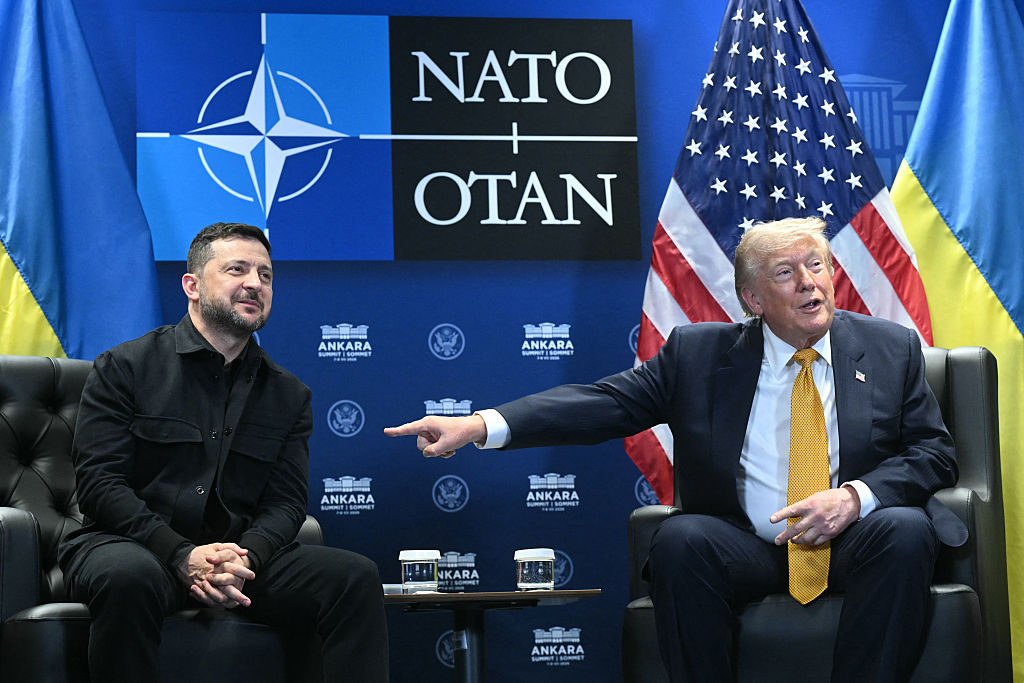
President Donald Trump told Ukrainian President Volodymyr Zelensky that the U.S. would extend Ukraine a license to manufacture Patriot missile interceptors as the country continues to defend itself against Russia.
“We'll give them the right to make Patriots. We'll show them how to do it,” Trump said on day two of the NATO summit in Ankara, Turkey. “It's very complex, actually, but you'll figure out the complexity quickly.”
"It's a defensive weapon, which I like better than an offensive weapon," he added.
The verbal assurance of a license commitment was vague, with several key details left unaddressed.
Trump said he had not yet informed defense manufacturers of his decision, but expressed hope “that'll work out alright.”
Asked whether the United States would immediately provide the air defense systems, Trump said “some” could be sent swiftly, yet emphasized “we have Patriots, but we don't have that many. We need them for ourselves, too.”
Insisting that Ukraine will soon be able to produce its own, he added: “Once we explain it, we'll bring the company here. [Ukraine] will work with the company. They have a great ability to produce weapons, pretty complex weapons.”
It’s unclear if the missiles would be manufactured in Ukraine or another country.
Following his bilateral meeting with Trump, Zelensky said he was “grateful for the strong emphasis placed on strengthening Ukraine’s air defense to better protect people’s lives."
In his opening address at the summit Tuesday, Zelensky had called for allies to deliver air defense systems, insisting Ukraine needs U.S.-made interceptors to defend itself against Russia’s ballistic missiles.
His public appeal came after Russia bombarded Kyiv with drones and missiles in another deadly attack at the start of the week. Ukrainian officials reported another overnight assault Wednesday morning.
Zelensky also used his platform to again push for Ukraine to be granted NATO membership.
In a summit declaration published Wednesday, NATO said for 2026, “allies pledge €70 billion in military equipment, assistance, and training for Ukraine and affirm their sovereign commitments to sustaining at least equivalent levels in 2027.”
“Allies stand united in our unwavering support for Ukraine in defending its freedom, sovereignty, and territorial integrity,” the statement read.
Trump also signaled openness to expanding defense cooperation with Kyiv through a possible deal on buying Ukrainian drones, but he didn’t fully commit to a plan.
“Well, we would buy their drones, and we make drones, we make great drones, but they [Ukraine] have an ability to make a lot of them,” he said.
During the two-day summit Zelensky signed “drone deals” with the Netherlands, Denmark, and Estonia.
David Blagden, an associate professor of international security and strategy at the University of Exeter, tells TIME the summit was undoubtedly a “win for the Ukrainian government.”
“Ukraine was suffering from critical shortages of air defenses, so to be able to build some of the best air defenses under license will potentially be a huge advantage in terms of trying to blunt those Russian ballistic missile attacks,” he says.
Although Trump’s relationship with several NATO allies has become fractured, he acknowledged his rapport with Zelensky has strengthened since their contentious Oval Office showdown last year.
“We've actually developed a good relationship, it's hard to believe, right from the Oval Office to now,” Trump mused.
“To be on sufficiently good terms with the Americans again is a huge diplomatic coup for Ukraine,” Blagden tells TIME. “The position on Ukraine has been one of the sticking points within U.S.-European relations within NATO, so to have Trump laughing and joking with [Zelensky] again is a huge step forward.”
Prior to the summit, Trump spoke separately with Zelensky and Russian President Vladimir Putin. At the NATO summit, he expressed optimism that both leaders wanted to end the war.
How much interest can an $18,000 high-yield savings account earn this year?
Watch: JD Vance takes questions on Iran, 2020 election, more
Bijou Phillips finds a kidney match, receives transplant after public plea for donor
The future of chipmaking looks more like Manhattan than Silicon Valley
Did We Make the Wrong Bet on Big A.I.?
A statistician’s guide to Wimbledon
How to hide from killer drones
Reece James remains injury doubt as England’s World Cup right-back woes go on
Defender unable to train with squad on Wednesday
Morgan Rogers says training base ‘feels like home’
Reece James is a doubt for England’s World Cup quarter-final against Norway in Miami on Saturday after he was once again unable to train with the squad on Wednesday.
The right-back has been unavailable since he injured a hamstring in England’s second group game, the 0-0 draw against Ghana in Boston. Thomas Tuchel knew he would be without him for at least two games – and most likely a potential last‑16 match, as well, which is what happened. James played no part in the epic victory against Mexico at the Estadio Azteca on Sunday.
Continue reading...How the biggest trees survive droughts
Egyptian FA questions ‘fairness’ of loss to Argentina amid refereeing furore
Statement says decisions ‘raised serious concerns’
Association rues ‘controversial and influential incidents’
The Egyptian Football Association has questioned the “fairness” of the national team’s 3-2 defeat against Argentina in their World Cup last‑16 match on Tuesday.
Having gone 1-0 up through Yasser Ibrahim early on, Egypt thought they had doubled their lead in the second half when Mostafa Ziko scored at the end of an excellent move. The goal was disallowed after a review the referee, François Letexier, adjudged Marwan Attia to have committed a foul in the buildup.
Continue reading...US and Iran threaten return to war after fiercest exchange of fire since truce
Ceasefire appears close to collapse as two militaries target each other after after Iran strikes three commercial vessels
Iran and the US have threatened to reignite their conflict after the most extensive exchange of fire since an interim deal was signed last month.
On a chaotic day at the Nato summit in Ankara, Donald Trump said the US would probably hit the country again on Wednesday night and renewed his threat to take control of the strategic Kharg Island in the strait of Hormuz - a move that could provoke Iran to hit energy installations across the Gulf states.
Continue reading...Trial for alleged Jan. 6 pipe bomber set for February
How much interest can you earn with a 4.20% CD account now?
Which Country Has the Best-Dressed World Cup Fans?
SpaceXAI releases Grok 4.5, which Elon describes as an ‘Opus-class model’
A Mexican father was shot and killed by an ICE officer. His son is demanding an independent probe
2026 Emmy nominations announced, Mariska Hargitay to host awards show
‘Slow-cial’ app Roost forces you to slow down to the speed of a carrier pigeon
How social media is changing Wimbledon from eminent tournament to ‘bucket list’ event
From high-profile influencers to live ticket-queue tracking, some fear aggressive marketing is ruining championships
From photos of influencers in crisp white linen dresses posing in front of floral displays at Centre Court to videos promising hacks to beat the queues and secure tickets, the hype around Wimbledon has never been bigger on Instagram and TikTok.
The social media frenzy has caused concerns that Wimbledon is increasingly becoming a tourist event rather than a tennis tournament, overrun with influencers using the championship’s iconic aesthetic to build their profiles and attracting attenders more interested in dressing up and taking photos than watching the games.
Continue reading...Atmosphere in Iran remains highly charged after Ayatollah’s funeral and escalation of grievances with US
World is witnessing a turning point, says ministry spokesperson, as Iran seeks to assert independence amid rising tensions
Before a foreign ministry press briefing at the Grand Hotel Tehran, the assembled reporters were asked to stand for the national anthem that duly blared from fuzzy speakers.
At the podium, the ministry spokesperson, Esmail Baghaei, claimed the world was witnessing a turning point in the history of Shia Islam. A century from now, he claimed, the assassinated Ayatollah Ali Khamenei would be revered as a second Imam Hussain, the martyred grandson of the prophet Muhammad. Donald Trump, meanwhile, would be seen as a latterday Yazid, the tyrannical 7th century caliph.
Continue reading...The rise of the “loneliness influencer”

There’s a new kind of influencer making the rounds on TikTok and Instagram: the loneliness influencer. Most of these influencers are young women, and “loneliness” might be a slight misnomer. They claim they aren’t lonely, simply alone — no friends, no family, no kids. And they prefer it that way.
“I really wanted to convey a normal life of somebody that doesn’t have this big, great, fun social life,” one influencer, Lana Isa, told Vox. “Like, what does a life look like as someone that doesn’t really have this great big social life, is not really interested in dating and generally prefers nights in? If you were to watch a Friday night in my life, you’d essentially just watch a girl enjoying her peace.”
Isa, and influencers like her, are just one representation of a larger trend, though. The Atlantic’s Faith Hill, who recently wrote a story titled “The Strange Appeal of the Solitude Influencer,” told Today, Explained co-host Noel King that, even though you mostly hear about young men facing a loneliness epidemic, women are having a hard time, too.
“If you actually look at some of these statistics, young women are struggling a lot on a lot of these measures, and, in some cases, more than young men,” Hill said.
Hill spoke with Noel about what’s going on with young women, how their crisis looks different from men’s, and why they’re covered differently.
Below is an excerpt of their conversation, edited for length and clarity. There’s much more in the full podcast, so listen to Today, Explained wherever you get your podcasts, including Apple Podcasts, Pandora, and Spotify.
In the first half of the show, we talked to a young woman who has made a name for herself as a loneliness influencer. What do you think is going on here?
My first impulse when I heard about this genre of video that people are watching is that there’s a lot of people spending a ton of time alone.
We’ve heard a lot of people talk about the loneliness epidemic, so I thought people were getting social connection through these videos from a safe distance, rather than spending time in person with people. Maybe there’s some of that going on. But, I also realized, as I was looking through these videos and reading all the comments, that a lot of the people commenting seemed to have a lot going on in their lives socially, so much so that they were busy, and exhausted, and burned out.
For some people, the appeal was actually in the fantasy of it, in the way that some people would look at influencers posting about these fabulous, exotic vacations they can’t afford to take. People have a very complicated relationship to solitude. People are working long hours. A lot of people [are] taking care of family members without much help. Many people are sort of torn between these needs for social connection and solitude.
Does that mean that this is, perhaps, not as sad as it appears on its face?
I don’t think it’s all sad. My heart goes out to people who are needing more solitude, as well as more social connection. Most people probably don’t have the perfect balance, and I can relate to that myself. I feel like I either have too many plans or not enough.
It’s not necessarily all happy, but it doesn’t mean that there are just so many people out there who are only getting social connection through these videos. I think there’s something a little more complicated going on.
We’ve all heard about the male loneliness crisis. You wrote a very interesting piece that basically said, actually, women are in crisis, as well.
I’ve just been hearing so much about men, and especially young men, being in crisis. I think there’s a lot of reasons we should take that seriously, and I do. But I felt like in those conversations, young women were kind of being flattened into a comparison point where, instead of people talking about how on some measures young men are struggling more than they used to, it got twisted into “young men are struggling more than women.”
There’s this image of the thriving girlboss, the one who is going to college, graduating college, entering the workforce on these conventional measures of success, doing so well. But if you actually look at some of these statistics, young women are struggling a lot on a lot of these measures, and in some cases, more than young men. And so, I don’t think it needs to be a suffering competition, but I did think part of the story was not coming through.
In what ways are women struggling?
Women have, for a long time, reported depression and anxiety at higher rates than men. That is getting worse. It seems like mental health on a lot of different measures — different kinds of stress and distress and suicidality — young women are reporting that at higher and higher rates. It turns out that women actually attempt suicide at higher rates than men do, on average. And the reason that more men die of suicide is that they’re more likely to use lethal means such as firearms.
A lot of times this conversation really revolves around college attendance rates, and women are attending and graduating college at higher rates than men. But a woman with a bachelor’s degree still makes less than a man with a bachelor’s degree on average, even within the same field of study.
When I talk to people for this story, researchers and therapists, I heard that a lot of young women are in for a rude awakening when they graduate from school. They’ve been in this bubble where they did feel like they could grow and thrive and they were taken seriously. And then, you go out into the real world, where sexism is still very real, and a lot of women are working in workplaces where they realize they’re not taken as seriously, or the people around them who are in positions of power are all men. That’s a difficult realization.
Why, if women and men are both in crisis, did men pull focus?
Women, as an overall population, tend to be a fairly high-functioning one in this narrative. I talked to someone who had trained as a medical sociologist, and she told me a saying that they used to use in this field was, ‘Men die quicker, but women are sicker.’
Women are more likely to endure a lot of chronic illnesses and to sort of soldier on with their pain unnoticed. And we might not be taking that as seriously, because the idea that women are struggling isn’t necessarily a new one or a super surprising one to a lot of people. I think men having a hard time is more of a news story, and we have become, perhaps, kind of inert to women’s distress in this way.
I wonder, as you found yourself covering this, where do you find the hope here?
I am heartened that we’re talking about [young adults] a lot. There’s been a lot of concern lately about Gen Z, and a lot of what we’re talking about when we talk about young men struggling also applies to young women, so we’re onto some of the right things.
I wrote another piece about young adulthood a while back that was really about the idea that young adulthood actually is a really hard developmental phase. And when I published that article, I think for a lot of readers, it seemed to be somewhat of a surprise that young adults are struggling, too. Even just since I’ve written that, people have talked more about young adults struggling. So I do think people are starting to take that seriously and understand that this is an age group that might need help.