Alliance leaders, who had feared the worst, will hail US president’s renewed support for article 5 as key victory
An erratic and at times irascible Donald Trump has said he felt a “tremendous love” from western leaders at the Nato summit, only hours after lambasting them over their defence spending and not helping the US in attacking Iran.
The US president’s mixed messaging dominated the final hours of the two-day gathering in Ankara, Turkey, beginning with him publicly calling Iran’s leadership scum and renewing his demand for control of Greenland.
По определению ВОЗ, выгорание - накопление стресса, которое сопровождается усталостью, раздражительностью и цинизмом. Уже здесь термин вводит в заблуждение и прямо противоречит сути проблемы. Выгорание предполагает отсутствие чего-то, пустоту: «выгорело, кончилось». Тогда как расшифровка ВОЗ указывает на накопленное напряжение. Стресс в переводе с английского - это и есть напряжение. Не дефицит. Переизбыток.
В психике вообще гораздо больше физики, механики и математики, чем абстрактных разговоров про маму, типы привязанности и психологические травмы с абьюзерами. То как думают и транслируют в массы «инстаграм-психологи».
Грубо говоря, работа психики - это два встречных процесса переработки опыта. Вместе они образуют то, что называют снижением ошибки предсказания (больше можно почитать здесь https://habr.com/ru/articles/1042286/). Первый процесс - информационный метаболизм, описанный польским психиатром Антонием Кемпинским ещё в семидесятых: переработка поступившей информации о мире. Другой, встречный процесс, переработка возбуждения в широком смысле. Обработка моего уникального, специфического отношения, то есть тех чувств, которые возникли в организме в ответ на полученную информацию. Если ошибка предсказания огромна и возбуждение слишком сильное это психологическая травма. Резкое превышение ассимилятивной ёмкости, временный коллапс системы. Скачок напряжения, который сжёг предохранители. Выгорание похоже по сути. Это медленное накопление непереработанного возбуждения. Условные зомби-процессы, которые не делают ничего полезного, но греют процессор. Депрессия - огромное количество накопленного возбуждения, которое не было переработано. (Я не говорю об эндогенных или первично биологических депрессиях).
Alliance leaders, who had feared the worst, will hail US president’s renewed support for article 5 as key victory
An erratic and at times irascible Donald Trump has said he felt a “tremendous love” from western leaders at the Nato summit, only hours after lambasting them over their defence spending and not helping the US in attacking Iran.
The US president’s mixed messaging dominated the final hours of the two-day gathering in Ankara, Turkey, beginning with him publicly calling Iran’s leadership scum and renewing his demand for control of Greenland.
Many of them have been shot in their cars. Five have died, including three U.S. citizens. Here are their names and what we know about the circumstances.
Конституционный суд Казахстана решил, что принятие новой конституции страны обнуляет число сроков президента Касым-Жомарта Токаева и других должностных лиц. Это означает, что теперь 73-летний Токаев снова может баллотироваться на пост президента.
Переговорный процесс висит на волоске, а последние удары США по Ирану показывают, насколько трудно будет достичь мира, — пишет международный редактор Би-би-си Джереми Боуэн.
An investigation is underway after an ICE agent shot and killed a man during a targeted enforcement operation in Houston, Texas. CBS News' Shawna Mizelle reports.
President Trump said Wednesday that the U.S. will grant Ukraine's request for a production license to build Patriot missile interceptors for defense. CBS News national security analyst Aaron MacLean has more.
US president veers from praising the alliance to threatening Iran and confusing world leaders’ names
Having arrived at Nato’s annual summit under a familiar cloud of resentment and grievance, Donald Trump’s farewell message on Wednesday was an unlikely tale of love and darkness.
Addressing journalists in the presence of his Ukrainian counterpart, Volodymyr Zelenskyy, the US president surprised everyone by directing his affections at an alliance he spent much of the previous day spewing bile over, citing the now well-worn gripe about Greenland, among others.
MPs demand publication of full report that outlines catastrophic consequences amid concerns for food security
Members of parliament have demanded full publication of an explosive report by the UK’s spy leaders that found the collapse of ecosystems overseas would have catastrophic consequences for the UK’s national security, warning that the UK has “no future” if the findings are not urgently acted on.
Despite growing concerns for the UK’s food security, likely to be worsened by the third heatwave this summer currently afflicting the UK and swathes of the northern hemisphere, the government has refused to publish the full report, which has circulated among defence officials for more than a year.
The French far-right leader’s presidential campaign is clouded in uncertainty under the shadow of an embezzlement conviction
Marine Le Pen’s decision to run for French president in 2027, despite her legal woes, has drawn comparisons from her opponents to Donald Trump.
Just as the US president felt his voter base cared little about legal investigations against him, the French far-right leader shrugged off the leftwing protesters who shouted “criminal!” as she launched her presidential campaign at a market walkabout in western France on Wednesday. The previous day, an appeal court had upheld her conviction for the embezzlement of European parliament funds.
‘Perhaps it’s all a fever dream,’ suggests parody candidate, expected to be Reform leader’s only challenger for seat
Count Binface had been looking forward to a relaxing journey back to his home planet of Sigma IX when Nigel Farage dropped a political bombshell on Tuesday.
Instead, Britain’s hottest new political property said he was left with no choice but to perform a swift intergalactic handbrake turn when news broke that Farage had resigned as MP for Clacton, triggering the possibility of a byelection in the English coastal constituency he has represented since 2024.
President Donald Trump, sitting next to Syrian President Ahmed al-Sharaa, said Wednesday he'll remove Syria from the State Department's State Sponsors of Terrorism list.
Arthur Fery makes history at Wimbledon by defeating Italy's Flavio Cobolli in straight sets to become the first British wildcard and only the second in tournament history, to reach the semi-finals.
X plans to send users direct messages when posts they’ve liked, replied to, or reposted receive Community Notes, an update aimed at addressing criticism that the platform’s crowdsourced fact-checking system often arrives too late to curb misinformation.
The president appears to be confronting the consequences of a cease-fire deal cobbled together in haste, with little movement toward resolving the key issues driving the conflict.
Crude oil prices jumped and stock prices fell after President Trump declared an end to the ceasefire with Iran, adding fresh uncertainty to an already shaky outlook for the global economy.
US president unexpectedly changed plans for flight to England after using Qatari-gifted aircraft to travel to Turkey
Donald Trump flew from Turkey to England onboard the older Air Force One on Wednesday, rather than the new, Qatari-gifted aircraft he used to travel to the Nato summit in Ankara, an unexpected change in plans that prompted questions about security fears.
Trump later boarded the new plane at Mildenhall air force base in the United Kingdom for the trip back to Washington.
The feature can do things like apply cinematic relighting to brighten up a dark clip, swap out a plain background for something fun, or add artistic styles to videos.
Stephen Miller said that Haiti is safe for Haitian deportees. Our White House correspondent Zolan Kanno-Youngs analyzed federal reports that say otherwise.
DOGE, the government agency once led by Elon Musk which canceled billions in public contracts and sent scores of federal employees packing, is shutting down. CBS News Mornings anchor Michael George reports.
Climate crisis prompts calls for workplace temperature limits and rights to heat breaks and adjusted working hours
As Europe’s sweltering summer continues, trades unions are mounting a push for new laws to counter deadly heat stress that is linked to an estimated 230 workplace deaths a year.
A dispute over public access to a recorded statement that the former roommate of Tyler James Robinson, the 23-year-old accused of murdering Charlie Kirk, gave investigators took center stage on the third day of a hearing to determine whether there is probable cause for the case to move to trial.
The statement from Lance Twiggs, whom authorities say was also Robinson’s romantic partner, has been the source of public intrigue. Robinson allegedly left a handwritten note for Twiggs where he wrote he had an “opportunity to take out” the conservative commentator and was “going to take it”.
Graham Platner, the embattled Democratic nominee for US Senate in Maine, has been accused of trying to influence the process of picking his replacement amid a chorus of calls for him to withdraw from the race.
Platner has publicly said he is “taking the time to reflect on the best path forward” after an allegation of sexual assault, which he denied, was published on Monday.
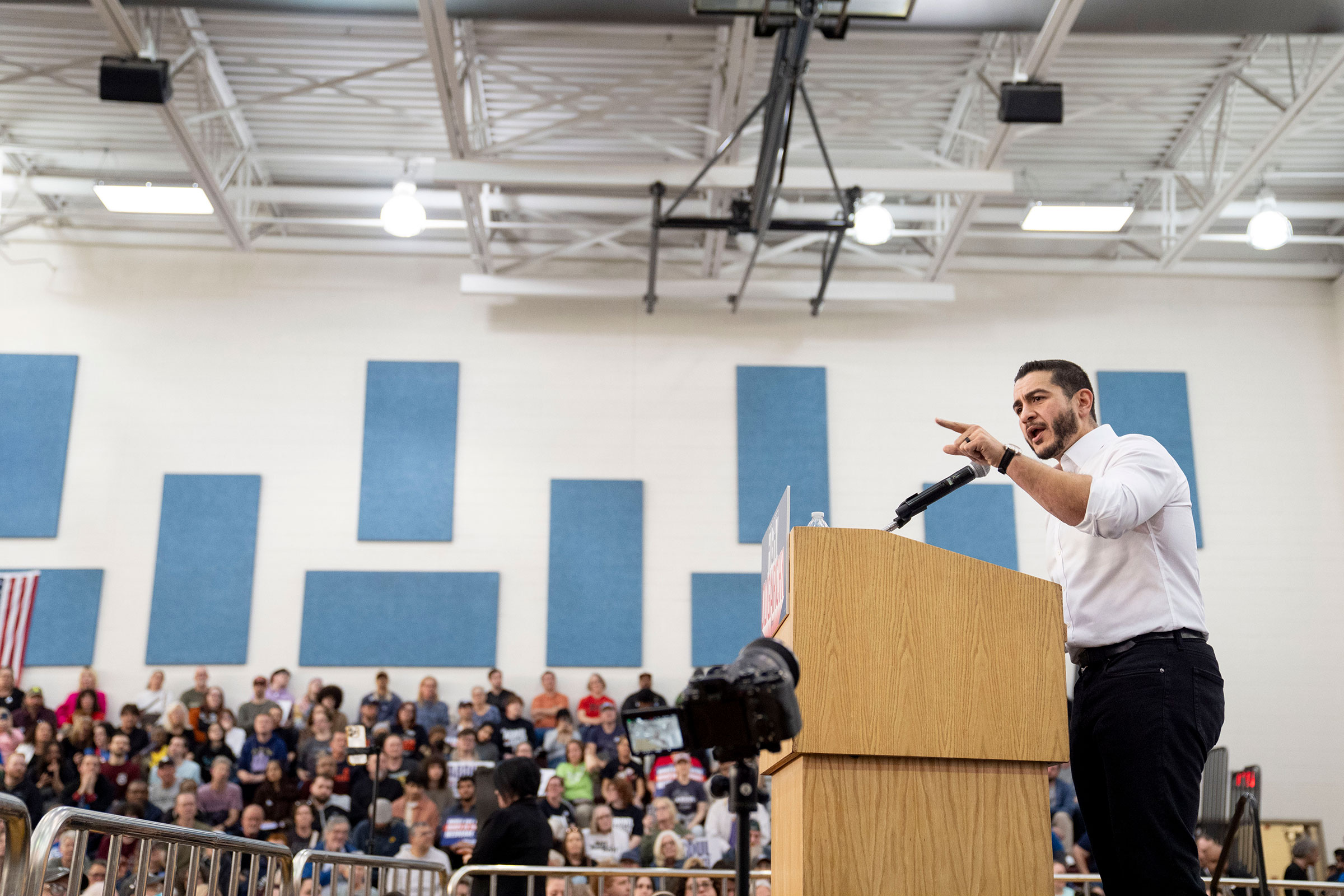
El-Sayed speaks at a campaign event at Mumford High School in Detroit on May 3 —Sarah Rice—Getty Images
Abdul El-Sayed looks like he would rather be anywhere else.
The Michigan Senate candidate makes no effort to greet the corporate executives, lobbyists, and consultants drifting around him on Mackinac Island, where the state’s political establishment convenes every spring for a gathering of power brokers and deal-makers. Ferries shuttle attendees onto the car-free island, where horse-drawn carriages move at a leisurely pace and the sprawling Grand Hotel overlooking Lake Huron becomes a hot spot for the local elite.
It is precisely the sort of place that El-Sayed, a former local public-health director and podcaster, denounces as the problem with American politics. “I’ve been to that conference way too many times,” he tells me wryly the next day over fried whitefish and key lime pie from a roadside trolley just off the island in St. Ignace. “It’s always weird.”
This year, he found himself onstage at the conference’s hottest event: a televised debate in Michigan’s contentious Senate primary. Beside him were the two Democrats who had, until recently, been regarded as the front runners: U.S. Representative Haley Stevens, the preferred candidate of Senate minority leader Chuck Schumer, and state senator Mallory McMorrow, who later suspended her campaign. Both spent the debate speaking the familiar language of consensus favored by the Mackinac crowd—calling for bipartisan legislation that benefits Michigan’s auto and manufacturing industries, and touting their own records and electability.
El-Sayed, 41, offered something different. He pushed for taxing billionaires at 7% of their wealth, passing Medicare for All, and enforcing antitrust laws to stop corporations from colluding to raise prices. At one moment, he called out the state’s largest health insurer, Blue Cross Blue Shield of Michigan, which happened to be a debate -sponsor. “Let’s play a game. If you’re on this stage and you’ve never taken a check from Blue Cross Blue Shield, raise your hand,” El-Sayed urged. He alone put his hand in the air, to laughs and cheers.
When he jumped into the Senate contest in April 2025, many in Michigan expected El-Sayed to be a footnote in the race. In 2018, he ran for governor on a similarly progressive platform and was trounced in the Democratic primary by 22 points. Instead, El-Sayed is leading narrowly in most polls ahead of the Aug. 4 primary. His surprising strength helped push McMorrow from the race. By tapping into anti-establishment frustrations that have only deepened since Donald Trump’s return to office, he has won the endorsement of the United Auto Workers, Senator Bernie Sanders, and U.S. Rep. Alexandria Ocasio-Cortez.
El-Sayed’s rise comes at a moment when Democrats are deeply divided about how to respond to the second Trump era. One faction argues that battle-ground states are won by re-assuring swing voters and projecting moderation. Another believes the party’s caution has become its own liability—that voters are hungry for candidates willing to confront entrenched power. El-Sayed’s campaign is built on the premise that what party leaders dismiss as unelectable may be what voters crave. Across the country, insurgent candidates-—-perhaps most notably Zohran Mamdani in New York City—have found traction by presenting themselves as unapologetic fighters willing to challenge both Republicans and their own party’s leadership. In Michigan as elsewhere, the key fault line has become the U.S. alliance with Israel, pitting the pro-Israel Stevens against El-Sayed, who says the country is committing genocide in Gaza.
Democratic leaders worry that what works in the primary may not in November. The party’s path to reclaiming the Senate becomes much harder if they lose Michigan. Trump twice won this pivotal swing state, where party officials tend to emphasize centrism. “There’s no denying that there is a sizable progressive base in Michigan,” says former Michigan Democratic Party chairman Lon Johnson, who has endorsed Stevens. “But that’s not enough to win.”
El-Sayed views such warnings as evidence that Democrats have learned the wrong lessons from recent elections. Michigan backed Sanders in the 2016 Democratic primary. It voted for Trump later that year, then Joe Biden in 2020, and Trump again in 2024. El-Sayed says those results suggest voters aren’t demanding carefully calibrated centrism, but rather someone to effectively shake up the status quo. “I would argue that to win in Michigan,” he says, “you have to actually be willing to buck tradition.”
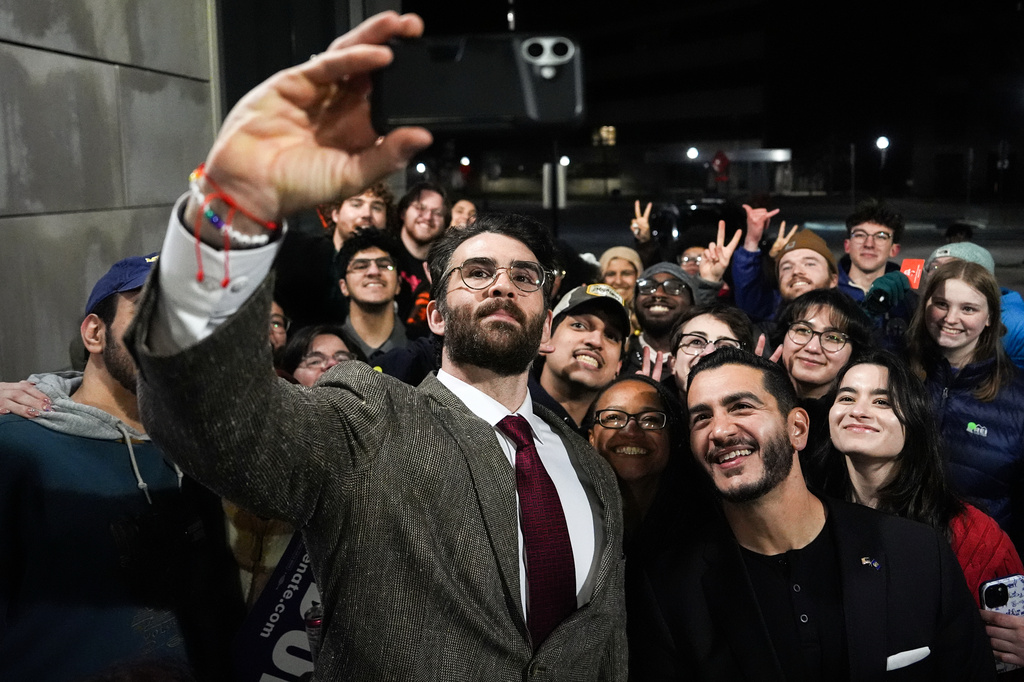
Piker and El-Sayed in Ann Arbor on April 7 —Julia Demaree Nikhinson—AP
At his favorite diner in Sault Ste. Marie, overlooking the Canadian border, I ask El-Sayed why he thinks his campaign has caught on. He first points to the backlash over the Iran War, which coincided with his rise in the polls. El-Sayed says it reinforced his campaign’s argument that entrenched interest groups are distorting U.S. policy and politics. “It didn’t shift our message,” he says. “It validated it.”
Then El-Sayed turns to what his challengers view as one of his greatest vulnerabilities: the left-wing Twitch streamer Hasan Piker. For eight years, Piker has been an influential voice among young progressive voters. His positions on everything from Israeli treatment of Palestinians to the Chinese Communist Party have made him one of the most polarizing figures in Democratic politics. Piker has been criticized for saying that “America deserved 9/11” and that he would “vote for Hamas over Israel every single time.” None of this has alienated his audience of more than 8 million followers across social media.
El-Sayed has enthusiastically campaigned with Piker at Michigan colleges, and has repeatedly declined opportunities to denounce the streamer’s past remarks, including those widely condemned as antisemitic or extremist. “The establishment doesn’t quite understand how unpopular it is,” to attack his ties to Piker, El-Sayed tells me. “If you’re the person who’s out there saying, ‘I stand on my principles, and I don’t back down to anybody,’ a lot of folks are going to look at that and say, that’s a Democrat who doesn’t pretend.”
The likely Republican Senate nominee, former Representative Mike Rogers, argues El-Sayed’s ties to Piker reflect how far left Democrats have veered. Yet El-Sayed speaks about the controversy with something approaching amusement. At a campaign stop in St. Ignace, he brings up Piker before anyone in the crowd asks him about it. “I took a lot of heat for campaigning with a guy named Hasan Piker,” he says. “The Democratic establishment, the Republican establishment—they can’t agree on everything, but they can agree that one shall not campaign with Hasan Piker.” The audience laughs. “Because that’s the most important issue happening in America right now.”
His alliance with Piker does in fact reflect one of the most salient developments in American politics: the left’s growing sympathy for Palestinians and a willingness to challenge long-standing orthodoxies around support for Israel. Stevens has drawn substantial financial backing from the American Israel Public Affairs Committee, and supports continued sales of American weapons to Israel’s military. (Before dropping out, McMorrow had sought to position herself somewhere between Stevens and El-Sayed. Late last year, she shifted her stance on the situation in Gaza, calling it a genocide.)
Israel, El-Sayed tells me, has evolved into a kind of moral Rorschach test for American politicians. “If you can’t call it what it is,” he says, “which is a genocide, then how are you going to stand up to Donald Trump? How are you going to stand up to pharma CEOs?” Several international human-rights groups have argued that Israel’s actions in Gaza amount to genocide. Israel rejects the accusation, as has the U.S. government, under both the Biden and Trump administrations, and other G-7 nations.
The issue carries particular resonance in Michigan, home to the country’s largest concentration of Arabs and Muslims. If elected, El-Sayed would be the country’s first Muslim U.S. Senator. The anger toward the Biden -Administration that swept through many Arab American communities over the Israel-Hamas war helped fracture the Democratic coalition. Some voters stayed home in 2024. Others shifted toward Trump. El-Sayed believes many of those voters are winnable again if his party reckons with what drove them away in the first place.
A lot of Democrats are weak and cowardly
—Abdul El-Sayed
On Tuesday, in their first debate since McMorrow dropped out, Stevens pushed back on El-Sayed’s attacks over her ties to the pro-Israel lobby, pointing to her recent criticism of Israeli Prime Minister Benjamin Netanyahu as having made Jewish people less safe. "She's trying to probably excuse antisemitism,” Netanyahu said hours before that debate when told of her comments by CNN.
Stevens used Netanyahu’s criticism to underscore how her position on Israel is more nuanced than El-Sayed alleges. “I am not afraid of bullies. I am not afraid to stand up,” she said at the debate. “And I continue to stand up for humanitarian aid, for the U.S. to work with the countries in the region and get aid into Gaza.” El-Sayed suggested that Netanyahu’s attack was intended to boost Stevens politically. “I don’t think Benjamin Netanyahu is attacking her to actually attack her,” he said. “I think he’s attacking her to try and steer away the stink of how staunchly she stands for their policy.”
Long before El-Sayed imagined himself disrupting the Democratic Party, Bill Clinton saw a future in politics for him. El-Sayed had just delivered the 2007 student commencement address at the University of Michigan, where the former President had also spoken. Clinton, impressed by the valedictorian’s ease behind a podium, suggested he might consider public office. El-Sayed remembers laughing. “I don’t know if you saw my name,” he recalls telling Clinton. “It’s not going to work out for me.”
The son of Egyptian immigrants, El-Sayed spent his childhood moving between identities and cultures. Raised in Bloomfield Hills, an affluent suburb just north of Detroit, in part by his white stepmother, and spending summers in Egypt with relatives, he often found himself navigating difficult spaces. “I never quite fit into any room I walked into,” he tells me.
El-Sayed remembers attending pro-Palestinian demonstrations with his parents as a child, though he was too young to fully grasp what he saw. What he realized later, he says, was that questions of identity and justice were not -abstractions but forces that shaped how people understood themselves and how they were treated by others. As a teenager, he immersed himself in the writings of Malcolm X, James Baldwin, and W.E.B. Du Bois. He says he was trying to understand what it meant to be a person of color in America and how to reconcile the promise of the country with the inequalities embedded within it.
Then came Sept. 11. Overnight, he says, the assumptions people made about him changed: “I went from being a brown kid with a funny name to a very particular kind of brown kid with a very particular kind of funny name.”
Barack Obama emerged on the national stage around the time El-Sayed graduated from college. He says it was the first time he ever saw himself in a politician. Like Obama, El-Sayed sports an elite résumé—medical degree from Columbia, doctorate in public health from Oxford, Rhodes Scholar—and a talent for public speaking. More recently, he has drawn comparisons to Mamdani, whose upset victory in New York City electrified the left. When Mamdani launched his own insurgent campaign, he sought advice from El-Sayed, who had run a progressive campaign for Michigan governor in 2018. The New Yorker’s November victory transformed El-Sayed’s Senate campaign overnight by validating the idea that victory was plausible, he says.
El-Sayed finds the comparisons flattering but incomplete. Obama, he argues, came to politics with greater faith in institutions. As for Mamdani, the difference is even more straightforward. “I’m not a socialist,” he says flatly, even though many of his signature policies overlap substantially with the agenda championed by his democratic socialist backers, including Sanders. The distinction matters to him. He is less interested in replacing capitalism than in constraining concentrations of power that he believes have distorted it. “I actually think that at the small and local scale, capitalism is a great way to allocate resources, as long as everybody has access to it,” he says.
After training in medicine and public health, El-Sayed entered city government, becoming Detroit’s health director as the city emerged from bankruptcy. During his tenure, he expanded staff, launched lead-testing programs, and created initiatives that provided free eyeglasses to children. “Loved the work, saw what government could do,” he says. “Also saw the politics that was getting in the way of what government could do.”
In response to Trump’s election in 2016, El-Sayed decided to run for higher office. He resigned as health director to launch an unsuccessful campaign for governor that lifted his profile and honed his political identity. After the loss he launched a health podcast called American Dissected at Crooked Media before moving it to his own production company, Incision Media. He also spent two years as Wayne County’s health director, in which he helped oversee an effort that is set to erase hundreds of millions of dollars in medical debt.
In early 2025, progressive Michigan Representative Rashida Tlaib texted him that Democratic Senator Gary Peters of Michigan wasn’t seeking another term. “Habibi, this one looks like yours,” Tlaib said. He called his wife Sarah, a psychiatrist, and asked what she thought. “It’s definitely winnable,” she told him.
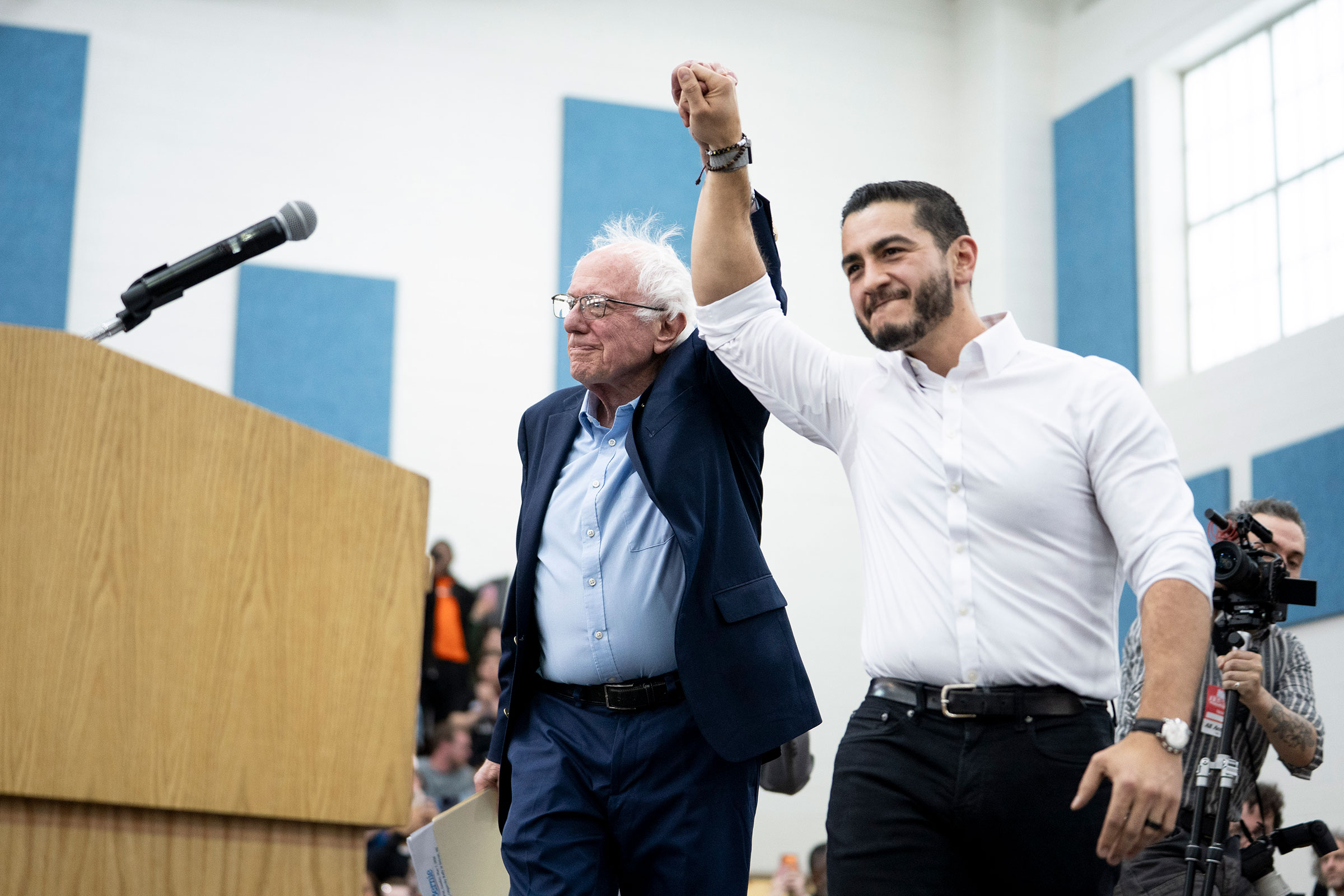
Sanders and El-Sayed campaign together —Sarah Rice—Getty Images
El-Sayed predicts that he will defeat Rogers by 7 points in November. “It’s gonna be embarrassing for them when I wipe the floor with their candidate,” El-Sayed tells me. The confidence is striking given the warnings from many within his own party. But to El-Sayed, Rogers represents a familiar archetype. “If you had to draw a caricature of the average politician from the late ’90s, it would be Mike Rogers,” he says. “There’s nothing new about him or his ideas.”
More than a month before the August primary, Rogers had already posted a steady stream of videos attacking El-Sayed online, labeling him an extremist, accusing him of dishonesty, and highlighting positions that Republicans believe will alienate swing voters. Rogers has devoted far less attention to Stevens or McMorrow, a sign that Republicans increasingly view El-Sayed as the more plausible general-election opponent.
“Abdul El-Sayed wants to export New York’s ‘commie corridor’ to Michigan,” says Bernadette Breslin, a National Republican Senatorial Committee spokesperson. “Michiganders want tax relief and common sense—not El-Sayed’s crippling tax hikes and radical agenda.”
For many Democrats, the attacks confirm their fears: that El-Sayed’s political baggage will be easy for Republicans to exploit. El-Sayed sees something else entirely. “I think they’ve wholly misunderstood why their party has had any success,” he says. “They’re gonna say all kinds of things about me. All they’re gonna do is raise my attention, valence, and all I’m gonna do is point back to what I want to do, which is get money out of politics, put money in your pocket, and pass Medicare for All.”
El-Sayed doesn’t seem to think much more highly of his own party. He says Democratic leaders remain too focused on protecting existing power structures rather than confronting them. Asked about Schumer, who is backing Stevens, he says, “When I win this primary, I’m sure we’ll have to meet. I frankly have very little interest in that meeting.”
The same refusal to soften extends to issues where many Democrats have moderated their rhetoric. When I point out that many Democrats have abandoned calls to abolish ICE, El-Sayed responds without hesitation: “A lot of Democrats are weak and cowardly.”
Yet over our two days together in Michigan’s Upper Peninsula, El-Sayed rarely comes across as angry. Between campaign stops, he goes kayaking for a social media video and jumps into the St. Mary’s River, debates the best tasting fish of the Great Lakes, and talks about politics with the enthusiasm of someone who still finds the whole enterprise exciting. He insists that running for Senate is hardly the easiest choice for his family or himself. “Honestly,” he tells me at one point, “my life is easier if I don't win.” But he wants the job anyway. “A lot of people are going to tell us that that is a pipe dream, we're never going to get there,” he says. “Okay, we might never get there, but shouldn't we try?”
Pressure continues to mount for Maine Senate candidate Graham Platner to end his campaign after a former girlfriend accused him of sexual assault. Now, the Maine Democratic Party is accusing Platner's camp of interfering with the process to select a new nominee if he does drop out. Fin Gómez reports.
Arthur Fery is through to his first Wimbledon semi-final after an "incredible" victory over Italy's Flavio Cobolli on Centre Court. The British wildcard revealed he was always confident of pulling off a quarter-final win over Cobolli, having already defeated the Italian at the Australian Open earlier this year.
Amazon has the Clarks Women’s Breeze Reyna Cloudsteppers Flip-Flops on sale for up to 40% off, depending on color. Here’s why they’re great for summer walking.
President Trump is threatening more strikes against Iran after saying the ceasefire is over. Robert B. Murrett, retired vice admiral in the U.S. Navy, joins CBS News to discuss.
Iran has targeted American military sites in the gulf after the U.S. launched strikes on several places in Iran and reinstated sanctions on its oil sales.
This year’s nominations saw a huge showing for Apple breakout Widow’s Bay but Richard Gadd’s Baby Reindeer follow-up and the final Stranger Things season struggled
This year’s Emmy nominations have just been revealed in a colossal 118-category megadump. So with this in mind, let me be the first to say that Survivor was absolutely robbed blind for outstanding sound mixing for a reality program. Its lack of a nomination deserves nothing but scorn, and the 26,000 members of the television academy deserve to hang their heads in shame.
But, on the slim off-chance that you didn’t come here for an explosive 800-word screed about the injustice of failing to recognise a 26-year-old television programme in a category I didn’t know existed until about 15 minutes ago, the Emmys fortunately managed to ignore a wealth of bigger shows, too. Chiefly I’m talking about Stranger Things here.
The second season of the hit hospital drama The Pitt and the final season of Hacks dominate this year’s Emmy nominations, announced on Wednesday.
The Pitt leads with 25 nominations while Hacks has 24, both scoring a big win for HBO, the latter series also breaking an Emmy record for most nods ever received by a comedy in a single year.
Italian designer brings sculptural silhouettes and playful palettes to storied house, while it is hats off to Giorgio’s niece at her second Armani Privé show
The house of Balenciaga takes haute couture very seriously indeed. Cristóbal Balenciaga was so horrified by the rise of mass-produced clothes that in 1968 he abruptly shuttered his brand and retired to his native Spain, announcing that “high fashion is mortally wounded”.
So Pierpaolo Piccioli, who now helms the house, approached the brief of his first Balenciaga couture collection conscientiously, despite having 25 years of experience at Valentino. At a preview, the haute couture war room where he worked on the show for nine months was plastered with images that ranged from a 1961 Balenciaga dress to Spanish golden age art – Zurbarán’s chic saints, Velázquez’s doll-like infantas – and a monumental Hepworth pierced megalith.