RSS Feeds

How to Make AI Data Centers More Sustainable
Published: 2026-07-03 10:00:03 | Created: 2026-07-04 08:48:38
—Jason Marz—Getty Images

As an AI researcher studying the environmental impacts of this technology, every time I tell someone what I do for a living, I wince a little, expecting to hear a strong opinion about AI’s rapid expansion. Increasingly, the crux of the debate around AI’s sustainability has been focused on data centers, which make the nebulous concept of AI very concrete with their massive, humming warehouses full of servers and huge energy requirements

In the public discourse, data centers have largely been cast as the villains of the AI boom—voracious consumers of natural resources that power our chatbots but threaten our climate progress. But in fact, there are clear, actionable ways we can design, build, and operate data centers that align with both our climate goals and societal values.

Thinking local

The benefits of data centers are global. Once a data center comes online, anyone with an Internet connection and enough money to burn can connect to it. But their impacts are very local, since the energy and water that is consumed and the emissions generated all take place in the municipality where the data center is located.

Currently, data centers are highly concentrated in a handful of regions: Virginia, Ireland, Texas, Singapore. This geographic clustering puts severe strain on already fragile energy grids and aquifers. 

The current build out of data centers needs so much energy on such a short time scale (think 100,000 houses popping up in the span of a year) that the solution that many developers are turning to is “behind the meter” energy generation—turbines and generators that are powered by fossil fuels (and are intensely polluting). In the meantime, grid operators scramble to upgrade their infrastructure and make existing customers foot the bill. 

Instead of these kinds of knee-jerk solutions (which inexorably provoke valid community pushback), we need to design data centers with smarter strategies that account for local constraints. For instance, we need to look beyond the usual suspects in terms of regions and spread data centers across new, diverse geographies, powered by novel combinations of electricity sources.

And there are many ways in which data centers can be powered: in Nevada, Google is developing a geothermal power project that is set to provide its data centers with 24/7 renewable energy. Regulatory frameworks can accelerate this. Ireland, for instance, has instituted a mandate requiring 80% new renewable energy for new data centers. Given the fast pace of data center buildout, we will need a mix of regulatory approaches and corporate commitments to make it as green as possible. 

Conscientious construction

But we should also be tracking and reducing the environmental impacts of data centers all across their lifecycle – for instance, during their design and construction, by choosing more sustainable materials, like timber and low-carbon concrete to reduce overall emissions. And instead of clearing land for new facilities, we should prioritize reusing old factories and industrial buildings that stand vacant. Many of these sites are connected to energy grids and water infrastructure, and already have zoning statuses that make permitting faster, without the need to clear or reclaim land. 

We can push the envelope further by recycling the massive amounts of heat generated by data centers and using it to heat buildings. This is already the case in West London, where the Old Oak and Park Royal Development Corporation is recovering 17 megawatts of waste heat generated by local data centers to warm up to 10,000 homes and businesses; in Norway, they’re using it to heat a trout farm. By thinking more holistically about how data centers are built and operated, we can also make them more beneficial to the communities that host them and to the planet as a whole.

Emphasizing sustainability

But in order to truly improve the sustainability of data centers, we need to focus on what’s driving their breakneck growth: AI itself. Instead of adopting the “bigger is better” philosophy, we should be doing more with what we already have. 

This means developing smaller, more efficient AI models through techniques like model distillation (training smaller models to mimic larger ones) and quantization (reducing the precision of the numbers used in computation). My recent research showed that choosing the right-size models for specific tasks—instead of the biggest, most generic models out there—can reduce the quantity of energy needed by a factor of 33.

Transparency will play a huge role in catalyzing this change. Individuals and companies want to choose AI models with sustainability in mind, but currently lack the numbers they need. Imagine a little counter that tells you how much energy each one of your ChatGPT queries uses and how much carbon it emits. That could help users and companies take this into account in their everyday AI usage. 

Developers need to start exposing energy and carbon footprint data directly in AI model interfaces and APIs, empowering both users and developers to make ecologically-informed choices about the AI they build and use. Code Carbon, a software package I helped develop, enables measuring energy and carbon for open-source models, but we still need buy-in from technology companies to integrate these measurements into widely-used AI tools. 

The path forward

AI is a profoundly important, transformative technology; because of this immense potential, it is absolutely critical that we get it right. As a society, we cannot simply throw our hands up and accept skyrocketing carbon emissions and surging energy prices as the unavoidable price of technological progress. Nor should we blanket reject data centers or AI as inherently unsustainable.

By centering the conversation around data centers on sustainability, we can also make it more nuanced. By thinking locally, building conscientiously, and operationalizing sustainability in our deployment choices, AI users, companies, and developers can also help ensure that the infrastructure powering our future doesn’t cost us the earth.
show more
Healing America Means Rethinking Patriotism
Published: 2026-07-03 10:00:04 | Created: 2026-07-04 08:48:38
—Mark Edward Harris—ZUMA Press Wire/Reuters

America, the world’s oldest, continuous, modern democracy, will soon celebrate its 250th birthday—mired in conflict and piloted by a belligerent and mercurial nationalist. James Madison designed a system in which power would be balanced by power, like a delicately poised planetarium, but in a Donald Trump presidency, these powers have collapsed. One man’s whim is another nation’s tariff—or another nation’s war.

One response to the chaos of the Trump era has been to fight nationalism with patriotism, and recover “the soul of America” from what is held to be a temporary aberration. Leading historians have advocated this approach, and this was the substance of Joe Biden’s 2020 presidential campaign

But as well-intentioned and alluring as this narrative that patriotism will heal America may be, it is a mistake. Unless patriotism can be conceived as something very different from the orthodox narrative of American exceptionalism, our enduring maladies of racism and militarism will persist. To heal America, we must reimagine what it means to be patriotic.

The limits of, and issues with, patriotism

Contrary to a widespread belief, patriotism tends to inhibit bold solutions to these problems by convincing Americans that they already live in the greatest and freest land in the world. It is patriotism that whispers the idea that Trump is an anomaly and that a healthy turnout in the next election will restore order. It was patriotism, packaged as national security, that signed away constitutional safeguards against executive overreach after 9/11. And when moderates told Dr. Martin Luther King Jr. to slow down and stay in his lane in the 1960s, caution was invariably framed as patriotism. This notion that Americans are fundamentally good—the best and healthiest of nations—King once said, “is the illusion of the damned.”

The irony, he wrote in Playboy, was that those who “have given up on America are doing more to improve it than are its professional patriots.”

The patriotism-to-cure-nationalism idea can be traced back to a classic essay by George Orwell, in which the writer characterized nationalism as a disease that grows on the ruins of religious faith and kinder, humbler forms of patriotism. According to Orwell, nationalism is egoism, aggression, a “desire for power.” The nationalist not only tolerates crimes committed by his own people, observed Orwell, he doesn’t even notice them. Disagreeable facts “bounce off” his consciousness like rain hitting a windshield. Patriotism,” he ventured, could serve as “an inoculation against nationalism. 

But if nationalism is a hunger for prestige and preeminence, America’s self-image as the City on a Hill is nationalism in embryo. If patriotism contains the belief that America is exceptional, and uniquely positioned to lead the world in the ways of freedom, it is already nationalist—because “indispensable” nations are not given to dialogue or restraint. All men are created equal, but not all nations, it seems.

President Biden’s answer to a question about military engagement, in October 2023, was a perfect illustration of Orwell’s point about knee-jerk nationalist responses. Asked by 60 Minutes whether the U.S. is capable of sustaining conflicts in Ukraine and Gaza at the same time, Biden shot back: “We’re the United States of America, for God’s sake! The most powerful nation in the history of the world.” Of course, we can “take care” of our allies and still maintain our supremacy. 

And when NBC’s Meet the Press recently asked Trump about his campaign promises not to start new wars, he denied facts. “I didn’t guarantee no war. Why would I have built the strongest military in the world?” Trump quipped. When challenged about his false claims about the Jan. 6, 2021, attack on the U.S. Capitol, he stormed out. 

It is not just the military question that is swallowed in the boast: it’s the morality. For the nationalist, the ethics of war are as straightforward as the logistics. This is not an alternative to America First. It’s another version. 

How to heal patriotism

Watching the United States throw its weight behind wave after wave of strikes on Gaza posed two urgent questions for me as a newly minted U.S. citizen. Could I ever be at home in a nation so unapologetically wedded to war? Are there ways to be patriotic that don’t bow before the idol of exceptionalism? I began to look for other forms of patriotism, other ways to belong, and the findings brought me closer to Orwell’s remedy than I expected.

In the early days of the republic, there were many radicals and reformers who shared my suspicion that patriotism was an evasion, substituting songs and speeches about liberty for the reality. Abolitionists like Frederick Douglass and William Lloyd Garrison exposed the intimate relationship between the narrative of America as a chosen nation and the original sin of slavery. To say that the Union was sacred and the touchstone of democracy was to strengthen slavery by sanctifying the state that protected it. Patriotism was more than a glaze on a flawed structure: it was the mortar, they argued. It bound the building blocks of democracy to the rotten timber of a slave empire. 

The Declaration of Independence said that all humans were created equal. The Constitution—with its “three-fifths” and fugitive slave clauses—declared the opposite. Patriotism was the force holding the nation back from its creed. For Garrison, the flag was a symbol of failure. Every speech on American greatness and the indivisibility of the Union, he raged, was a blank check to the slave power.

Douglass agreed. For him, the orthodox view of America as the “last hope” of a fallen world was more than an unfortunate case of narcissism. It was a rivet on the chains of four million enslaved people. It was the divine right of kings, transferred not destroyed. Douglass ridiculed the cult of the founders as a case of arrested development, suggesting that men only worship their ancestors when they have something to hide. “Who were your daddies?” anyway, joked Douglass. Men, not gods..

In the Civil War, patriotism once again took precedence over racial justice, lamented Garrison—a war that “saved the Union” before dropping the African American like a stone. Black codes in the “New South” were expertly engineered under a beaming discourse of national unity. America-the-nation-state trumped America-the-idea. 

Reformers of the Progressive era shared many of these anxieties, yet their instinct was to revise rather than reject the patriotic impulse. Jane Addams felt that Americans could take pride in the antimilitarism of the founders and their vision of America as an alternative to the highly militarized, garrison states of Europe. More importantly, she believed Americans should embrace the kaleidoscope of cultures within their shores and weave that energy into their national identity. Who wants to live in a melting pot, after all? she protested. Rather than lecturing immigrants, or melting them into a drab conformity, we should learn from them. In the “cosmopolitan humanitarianism” of a community like Hull House, her settlement in the west side of Chicago, Addams found a model for presidents and a template for world peace. “When this newer patriotism becomes large enough,” she wrote, “it will overcome arbitrary boundaries and soak up the notion of nationalism. We may then give up war, because we shall find it as difficult to make war upon a nation at the other side of the globe as upon our next-door neighbor.”

The journalists Crystal Eastman and Randolph Bourne argued similarly amid the nativism and nationalism of the First World War, a time not unlike our own. Militarism and nativism were two sides of the same coin, observed Eastman. The answer was not to fight the storm so much as transcend it with a more inspiring vision of America as “a nation of nations.” Step onto the campus of a “vivid American university,” urged Bourne, and you will feel this new America—a place where internationalism is implicit and friendships span the globe. Here, or in any of the nation’s great cities, were the ingredients of a richer and grander patriotism. But we have to move on from the old conceits, demanded Bourne: “We must perpetrate the paradox that our American cultural tradition lies in the future.” 

This is a more enticing response to the misery of the Trump years than the liberal bromide “this is not who we are.” Addams and Bourne anticipate the dynamic patriotism of the civil rights movement and the quest to redeem (rather than merely recover) the soul of America. 

I can still hear Garrison, thundering against hero worship and the crimes of the founders. But patriotism is a movable feast, and the likes of Eastman and Addams are no less the anchors of my American identity than Jefferson or Madison. Reclaiming patriotism does not mean reclaiming the flag. It means rediscovering the people who refused to give up on democracy, even when they were called un-American for doing so.

show more
OpenAI Woos Trump Administration as Investor
Published: 2026-07-03 10:07:59 | Created: 2026-07-04 08:48:38
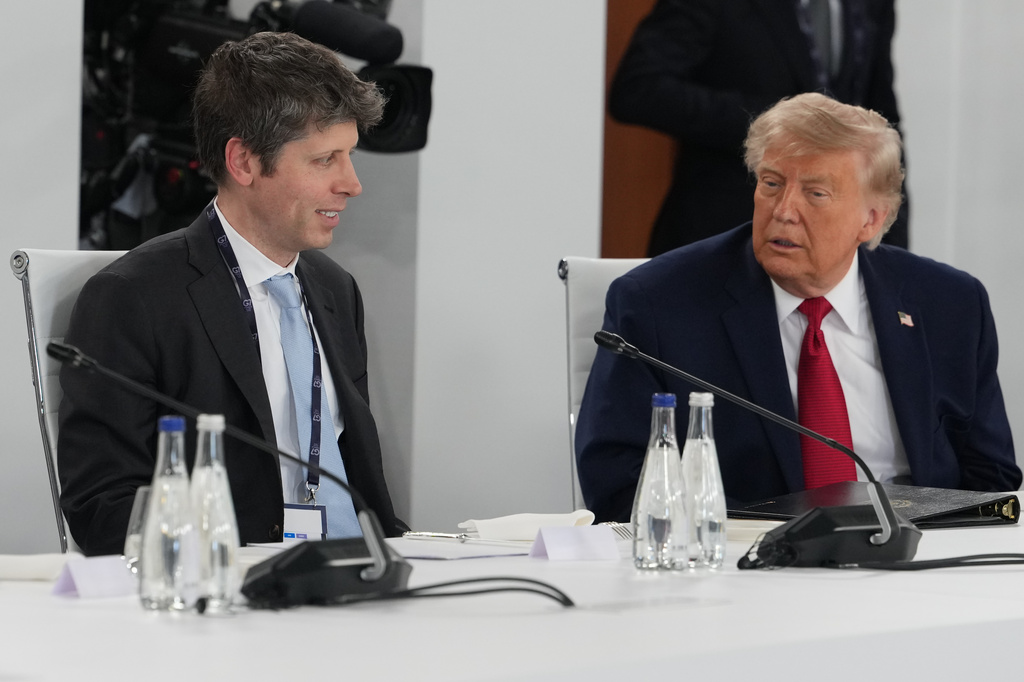
U.S. President Donald Trump talks to OpenAI CEO Sam Altman as they participate in a meeting with leaders during the G7 summit in Evian-les-Bains, France, on June 17, 2026. —Julia Demaree Nikhinson—Pool/AP Photo

ChatGPT creator OpenAI is reportedly discussing giving the U.S. government a 5% stake in the company, in an apparent attempt to improve relations with President Donald Trump’s Administration amid political pressures on American artificial intelligence companies.

The Financial Times reported Thursday, citing two unnamed sources familiar with the talks, that CEO Sam Altman argued that giving the public a financial stake in the firm is the best way to share the upside of AI. An unnamed person familiar with the matter told Axios the proposal is in its very early stages. 

The arrangement, according to the FT, would also involve other U.S. AI firms. Altman and other OpenAI executives reportedly suggested that these developers allot 5% of their equity to a sovereign wealth fund-like system, though it’s unclear if any of them would agree with OpenAI's proposal. 

An unnamed source speaking to Reuters said the Trump Administration and Anthropic have not discussed the government taking stakes in the firm. TIME did not immediately hear back from Google and Meta when sought for comment.

Altman had shared the idea with senior Administration officials since the start of Trump’s second term and has reportedly ramped up conversations with them in recent weeks. The FT said among those Altman was in active talks with about public ownership were Trump himself, Treasury Secretary Scott Bessent, and Commerce Secretary Howard Lutnick.

OpenAI did not immediately respond to a request for comment on the FT report.

The second Trump Administration has previously taken stakes in private companies. In August last year, the government obtained a 10% stake in Intel Corp. after investing $8.9 billion in the American chipmaker’s stock. It also took an equity stake in IBM and other quantum-computing companies.

How such a stake could benefit the public

The White House also did not immediately respond to TIME’s request for comment on the OpenAI proposal, though Trump has previously toyed with the idea of the U.S. government owning a stake in AI firms: “There’s something very interesting about it where it almost becomes a partnership with the American public.” 

Independent Vermont Sen. Bernie Sanders has also proposed legislation that would give the public a direct ownership stake in major U.S. AI firms through a one-time 50% tax on these companies' stock. This stock would be deposited into a sovereign wealth fund.

In an April policy paper, OpenAI floated the concept of a “Public Wealth Fund” that “provides every citizen—including those not invested in financial markets—with a stake in AI-driven economic growth.” Returns from the fund, the company said, could be distributed directly to citizens.

Anthropic also expressed support for a similar policy in a paper released last month: “We should give every American a direct financial stake in the economy at the moment when AI is fueling growth.” It called for “universal pre-distributive capital accounts,” with “initial priority given” to those affected by AI-related job disruptions.

Pressure from Washington

Any deal with AI firms would likely require an act of Congress, the unnamed sources told the FT. 

While the Trump Administration has largely favored AI deregulation, these companies are facing pressure from Washington, as Americans have flagged concerns about artificial intelligence’s impact on jobs and cybersecurity. Data centers that power AI products have also been under scrutiny, as they threaten natural resources and drive up costs of living.

In June, the U.S. Commerce Department blocked foreign nationals from using versions of Anthropic’s Claude AI models amid national security concerns. The government has since lifted that block this week, though Anthropic said in a blog post that one of the models, Mythos 5, was only made available to a set of U.S. organizations.

OpenAI also announced last month it was restricting the release of its new AI model, GPT 5.6, at the Administration’s request. The company said: “We don’t believe this kind of government access process should become the long-term default. It keeps the best tools from users, developers, enterprises, cyber defenders, and global partners who need them.” 

Earlier that month, Trump signed an Executive Order establishing a framework for the federal government to assess the national security risks of AI systems for up to 30 days before their release.

Strict government oversight complicates OpenAI's and Anthropic's attempts to go public. Critics also point out that increased oversight may slow the U.S.’s technological advancements and give its competitors, such as China, an edge. 

show more
Breaking Down Every Movie Reference in Minions & Monsters
Published: 2026-07-03 12:00:03 | Created: 2026-07-04 08:48:38
—Courtesy of Illumination and Universal Pictures

Something you’d expect from Minions & Monsters, the latest film featuring everyone’s favorite yellow creatures: it’s funny and pitch-perfect family entertainment. Something you might not expect: it’s an ode to Classic Hollywood.

The latest movie from Illumination Studios and the Despicable Me franchise takes place in 1927, and follows the Minions as they stumble upon Hollywood and become major film stars. Yes, really! Their journey to the top of tinseltown is a pure delight, and its rapid pacing and joke-a-minute structure is in the vein of the classic silent comedies that provided the very foundation of cinema. It's also jam packed with delightful nods to film history.

Here, we break down every movie reference in Minions & Monsters.

Starting with the silent film era

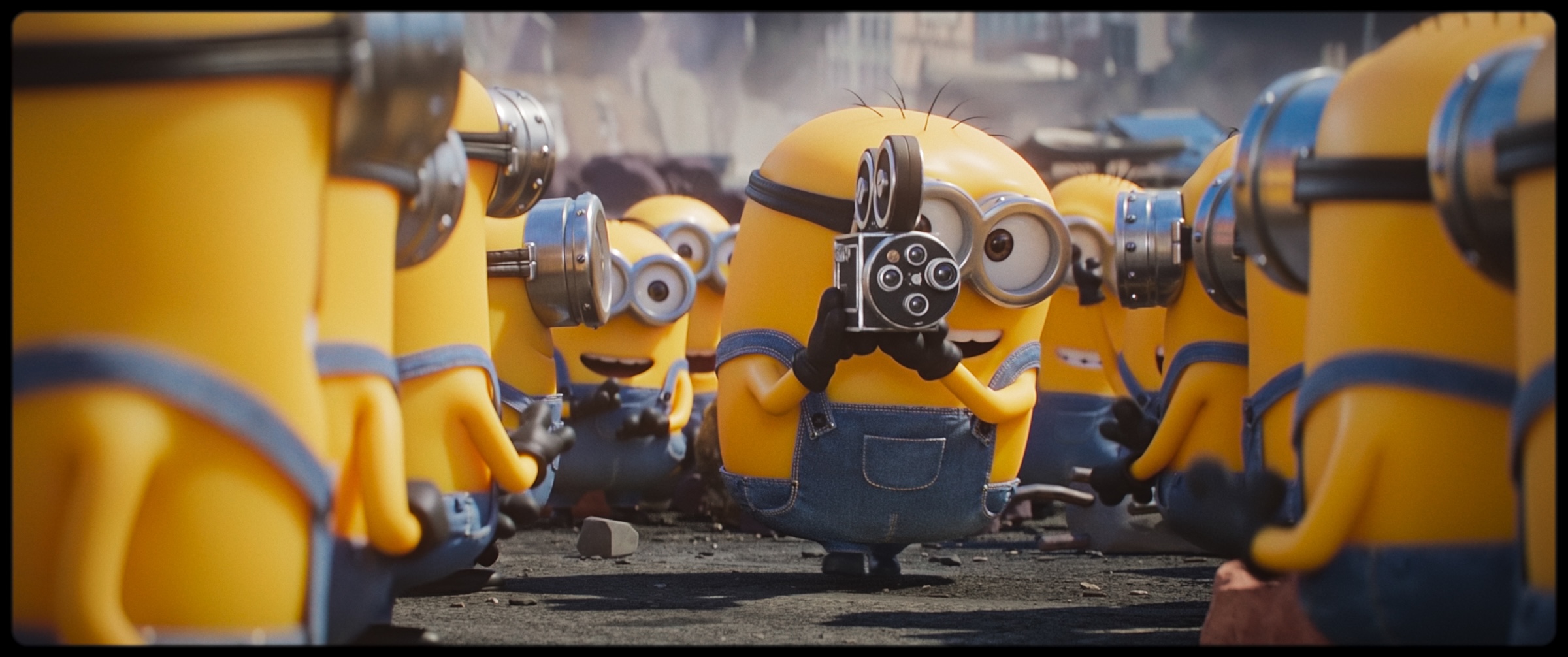
From the jump, Minions & Monsters shows it is firmly rooted in film history, as the opening titles are a montage of minions interacting with classic early silent films, including the work of Eadweard Muybridge, George Méliès and the Lumière brothers. The Minions gallop on a horse in The Horse in Motion (1878) or run alongside a dog in Dog Running (1887). They also trick a gardner in L’Arroseur Arrosé (1895), and leave a long day of work in Workers Leaving the Lumière Factory (1895). That’s not all: the minions are at the train station for Train Pulling Into a Station (1896), and in perhaps the most famous silent movie, A Trip to the Moon (1902), one of the minions becomes the moon, and the shuttle lands right in his eye, just as Méliès intended.

E.T., Kirk Douglas, and the rest of a movie museum 

After the montage, the references come thick and fast as the film beings in a movie museum. A tour guide (voiced by Allison Janney) takes a group through the exhibits, which include displays of Neo in The Matrix (1999), Elliot and E.T. from E.T. The Extra Terrestrial (1982), Kirk Douglas in 20,000 Leagues Under the Sea (1954), and Rick Blaine in Casablanca (1942). There’s also the robot from Fritz Lang’s Metropolis (1927), the titular Mummy from The Mummy (1932) and even The Creature from the Black Lagoon (1953). There’s also an inflatable globe, a witty reference to Charlie Chaplin’s The Great Dictator (1940).

That’s not all you can find in the museum: it also has statues of Orson Welles, Bruce Lee, and Alfred Hitchcock, the latter surrounded by birds in a nod to The Birds (1963). There’s even a living, talking George Lucas, standing in a display case (voiced by Lucas himself).

—Courtesy of Illumination and Universal Pictures

A journey to the Island

The Minions continue their tradition of searching for a big bad to lead them in Minions & Monsters. They row to (and from) a cyclops island, in an homage to Ben-Hur (1959). The cyclops feels like a reference to Clash of the Titans (1981).

A familiar sorcerer

During their journey to find a new leader, they come across a familiar looking sorcerer, whose beard, outfit, and even home will be familiar to fans of Disney’s Fantasia (1940).

An epic chase 

The Minions make their way to Hollywood, but not before getting inadvertently involved in a high-stakes train heist that pays tribute to both The Great Train Robbery (1903) and The Story of the Kelly Gang (1906). The train leads them straight to the city, where they run under a building that has a man hanging for his life on a clock, just as Harold Lloyd did in Safety Last! (1923). As a result of the chase, they prove themselves in an audition with a fight against vikings, referencing The Viking (1928).

Buster Keaton x2

The Minions wind up on the front of the train as they careen from one street to the next, referencing Buster Keaton’s The General (1927). There’s another Keaton movie reference just moments later, when the minions pass a man whose house falls on him—though he escapes intact, just like Keaton did in his film Steamboat Bill, Jr. (1928).

Singin’ in the Rain

The film borrows generously from the classic musical Singin’ in the Rain (1952), from its story beats about the transition from the silent to sound eras, to a scene where they explore a film studio lot, which also has nods to Cleopatra (1934) and the first best picture winner Wings (1927)

—Courtesy of Illumination and Universal Pictures

Play it Again

Though Orson Welles and Casablanca were referenced in the museum, they get a second dose later in the film. For Casablanca, a movie studio executive asks Sam, a piano player, to “play it again,” and he starts playing the theme from Casablanca, in a nod to one of the film’s most famous scenes. And Welles gets a second reference when the opening scene of his film Citizen Kane (1941) gets a very funny shot-for-shot remake in Minions and Monsters.

A cog in the machine

In one chase, the Minions run through a factory, knocking a man who looks like Charlie Chaplin into a machine, in reference to Chaplin’s Modern Times (1936). In an extra fun beat, dozens of minions jump into the machine, too, clogging it with yellow-y goodness.

A party with elephants

The Minions go to an exceptionally elaborate Hollywood party featuring loud music, frantic dancing—and a pair of elephants, referencing the Damien Chazelle movie Babylon (2022), the newest and perhaps the most surprising movie that Minions and Monsters references.

Noir gets a spotlight

There’s also a tribute to the Noir genre, and particularly The Maltese Falcon (1941). The woman in the black-and-white movie scene is named Mary (Mary Astor starred in the ‘41 classic), who addresses the man (well, a minion) as Humphrey (aka Humphrey Bogart, who co-starred), and he wears Sam Spade’s familiar trenchcoat.

Posters galore

There are lots of film posters throughout Hollywood in Minions & Monsters. While some are fake movies, some are clear tributes to movies like The Good, The Bad, and the Ugly (1966) and It Came From Outer Space (1953).

Getting hungry?

While on a boat, the minions encounter a shark, referencing Jaws (1975), made extra obvious by a music cue channeling John Williams' memorable score.

—Courtesy of Illumination and Universal Pictures

A robot with meaning

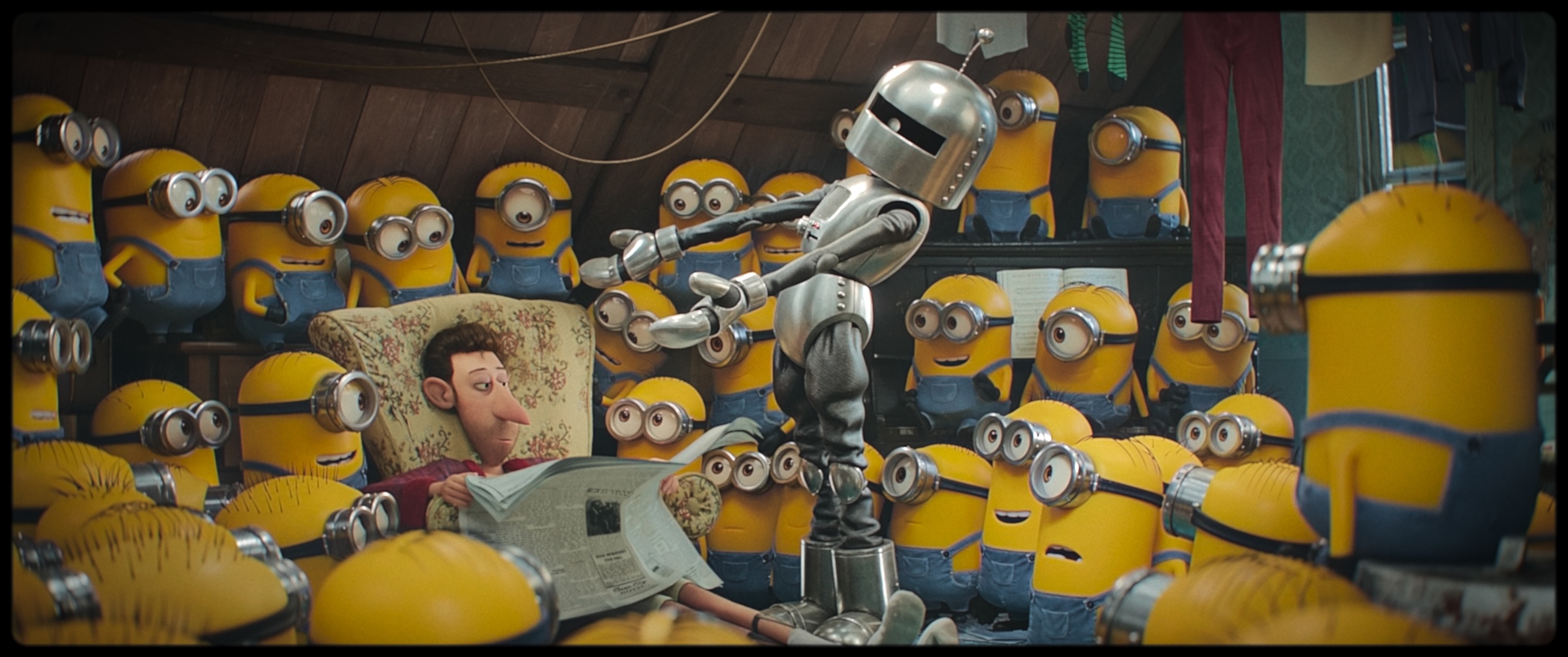
A potential leader for the minions is Dort (Jesse Eisenberg), a friendly and surprisingly strong robot. The name probably sounds familiar, as the humanoid in The Day the Earth Stood Still (1951) is named Gort. 

A final battle 

The film’s climax is chock-full of clever references. We won’t spoil it all, but the ultimate monster is clearly inspired by The Blob (1958). In the chaos, the minions eat some spaghetti just like in Lady and the Tramp (1955). A pivotal battle features plenty of fighter jets that serve as a nod to Star Wars (1977)

It’s in the music

While the film has a great original score from John Powell, Minions & Monsters also includes several musical references, including a song from The Purple Rose of Cairo (1985), another film about a love of cinema. There’s the instrumental from “Hooray for Hollywood,” from Hollywood Hotel (1937)—and not Guys and Dolls (1955), like The Simpsons would have you believe. And there’s the song “The Gold Diggers’ Song (We’re in the Money)” from the musical Gold Diggers of 1933 (1933).  

show more
Human Vapor Reboots a Classic Japanese Movie With an Anti-Authority Edge
Published: 2026-07-03 13:00:03 | Created: 2026-07-04 08:48:38
—Courtesy of Netflix

In the opening scene of Human Vapor, the first collaboration between Netflix and historic Japanese company Toho, Korean showrunner Yeon Sang-ho and Japanese director Shinzo Katayama deftly establish how science-fiction has scaled up since 1960, the release year of the original The Human Vapor film. 

We meet harried but dedicated reporter Kyoko Kono (Yû Aoi) interviewing a scientist about his new method of biomass power on live Japanese television when a strange and self-directing vapor infiltrates the studio, slipping under the scientist’s clothes and into his airways. All hell breaks loose: the autonomous, aggressive vapor floods his body, suspending him high in the air. His clothes stretch and his legs twitch as the vapor forces itself down his throat—before he explodes, blood and viscera raining down on the studio.

Rendered with vivid, pulsating CG effects, this is an explicit and attention-grabbing moment of body-horror, and viewers who only know the simplest contextual details about the series before they hit play—that it’s based on an old Japanese sci-fi film—will realize this reboot is not beholden to the style and restraint of a ‘60s monster movie. (The fact that the vapor-triggered combustion is broadcast live itself feels like a comment on the type of extreme material that you see on television nowadays.) This happens before we even meet the titular Human Vapor, a sinister suited man who can shift between physical and gaseous form responsible for a mysterious killing spree. But how does the Netflix series expand the scope of the original film by the original Godzilla director Ishirō Honda and special effects pioneer Eiji Tsuburaya, and how faithful is the show to its beguiling murderous villain?

—Courtesy of Netflix

What’s the story of The Human Vapor?

The Human Vapor is a tokusatsu film, which literally translates as “special photography” and refers to Japanese film and television that makes prominent use of practical special effects. Think monster suits, miniature battlefields and cityscapes, masked superheroes and giant mechas. (Famously, Mighty Morphin’ Power Rangers was created by localizing footage from tokusatsu series Super Sentai into new stories for Western audiences.)

Ishirō Honda is most famous in the West for establishing the kaiju genre and directing Godzilla and seven of its sequels. But special effects director Tsuburaya is sometimes credited as “the father of tokusatsu”, and his fascination with how Western special effects were developing in the 1920s and 30s drove him to push SFX boundaries while working for Toho, first in war movies and then in kaiju monster movies like Godzilla. His kokusatsu work goes beyond film into television, where he created the original Ultraman series.

The Human Vapor belongs to a niche category under the tokusatsu umbrella—Toho’s “Transforming Human Series”, three films where scientifically altered humans, made amoral or downright villainous through their transformation, use their new supernatural powers to steal and kill, forging a new ethical code and escaping the authorities. In The Human Vapor, Mizuno (Yoshio Tsuchiya) is a librarian who, after being discharged from the air force for health concerns, takes part in a scientist’s astronautical experiment that goes awry. (Think The Invisible Man for Japan’s nuclear age.) The doctor becomes Mizano’s first victim; let loose with no father figure to guide his powerful new existence, the gaseous man pulls off a series of bank robberies to fund performances for his beloved Fujichiyo (Kaoru Yachigusa), a Noh and Kabuki-trained dancer in dire need of a comeback.

What made The Human Vapor unique?

Honda and Tsuburaya delay the first sight of a man turning into vapor, but they come thick and fast in the film’s second half, using several different techniques like dry ice, optical compositing, and wire workin a single sequence to sell the Human Vapor effect. The mystery plot is basic, but effective at immersing us in the key relationships – primarily between gruff, disciplined detective Okamoto (Tatsuya Mihashi) and his sparky reporter girlfriend Kyoko Kono (Keiko Sata), who try to solve the bank robbery independently and act act as a mirror to the doomed devotion shared by Mizuno and Fujichiyo.

The Human Vapor is built around Mizuno, and Yoshio Tsuchiya’s controlled, intense charisma ably conveys the calm, arrogant ambition the character now possesses. He turns himself in to the police, only to demonstrate how easily he can escape; later, he sits down with the press to explain his entire elaborate backstory, eager to explain his new ideology. The film is notable for smuggling in a socio-political angle: the atomic powers that gave Mizuno his powers also gave him a new morality, and his superiority over society feels just as chilling to the authorities as his supernatural powers. “I am no longer a human being,” he says. “Therefore I am no longer subject to human law.”

In their biography Ishiro Honda: A Life in Film, from Godzilla to Kurosawa, writers Steve Ryfle and Ed Godziszewski argue that the script directly reflects a moment of crisis and change in Japan – the main romance is between a lowly librarian and a bankrupted upper-class woman whose fortunes have flipped, and the dynamic between the anti-authority Human Vapor and the incompetent police reflected Japan’s recent year of unrest with mass protests and strikes. This human edge is likely what made The Human Vapor appealing to Japanese critics; Ryfle and Godziszewski note that major Japanese publications ran glowing reviews, leading to a cult following in the years since.

—Courtesy of Netflix

How similar is Human Vapor to the original film?

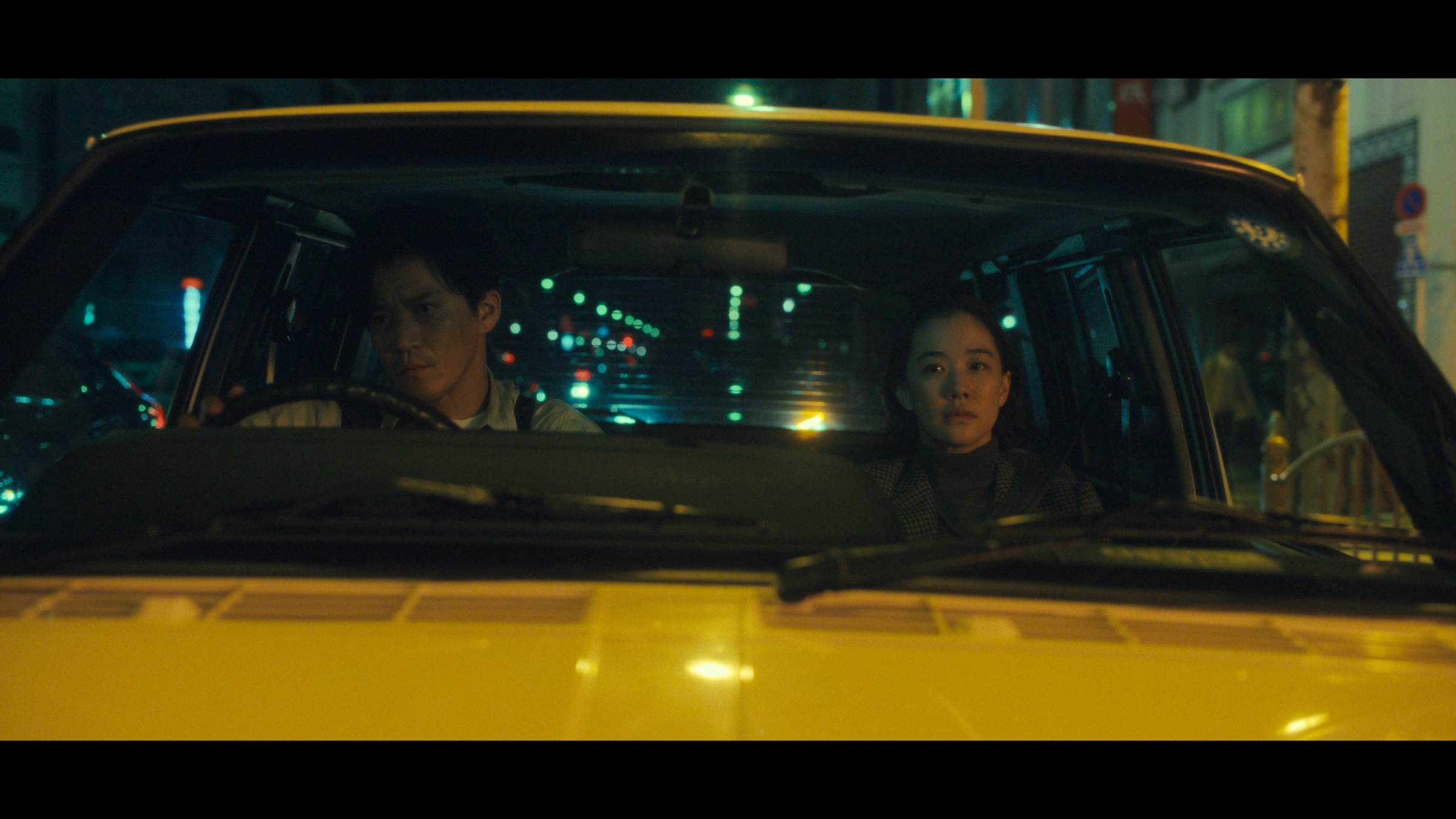
There is no bank robbery in Human Vapor; the eight-episode story is entirely original, turning its focus to idols and yakuza whenever it chooses. But in homage to Honda’s film, Netflix’s Human Vapor carries over several elements. The leads are named Detective Kenji Okamoto (Shun Ogori) and Kyoko Kono, but they are not romantic partners – at least, not anymore. They met on a case, but when Kenji was ready to propose, Kyoko ruined one of his investigations with an ill-timed prime suspect interview, resulting in Kenj’s suspension.

Like in the original film, Kyoko is often a couple steps ahead of the police, recording an initial interview with the Human Vapor (played by model UTA) before the cops arrive to arrest him. A key difference is that the Human Vapor’s mission is now explicitly political. In his oversized blue suit and deadpan voice, he calls for everyone involved in “White Center” to pay for their historic crimes, lighting a fuse on a conspiracy that connects politicians, corporate officials, and crooked cops. 

Still, the character is rendered in a completely different fashion. Mizuno the Human Vapor was eloquent and rational, a flesh-and-blood man believably warped by power, still in touch with human emotions. The series version of the Human Vapor is heavy on menace, but not very talkative; when he does speak, it’s in a low, slow voice and his stare is piercing in its vacantness. Compared to Mizuno’s controlled, lively energy, this Human Vapor feels like he’s in a hypnotic trance—and the series contrasts the Vapor’s sinister, muted human form and hyperactive VFX of his lethal gaseous powers.

Human Vapor ups the source material’s social critique

Human Vapor feels most spiritually accurate to the original Toho film in its themes. A significant amount of the Human Vapor’s backstory and motivations are tied to social divisions, something that appealed to Shinzo Katayama, who told Netflix when the show was first announced, “I want to accurately depict the social dynamics of contemporary Japanese society, such as the relationships between the powerful and the weak.” 

As Kyoko and Okamoto follow the Human Vapor’s trail, a history of institutional abuses and neglected people takes shape: ostensibly a charitable organization, the White Center offered shelter to vulnerable and impoverished people only to exploit them into forced labor in abysmal conditions behind closed doors. As soon as we learn that the White Center is connected to a 1999 meteorite crash, the Human Vapor’s nefarious grudge feels far less opaque. Human Vapor pushes with more grisly conviction The Human Vapor’s criticism of authority figures playing fast and loose with desperate people’s lives.

Yeon Sang-ho and co-writer Takeshi Kimura make sure no corner of their world is untouched by disillusionment and corruption, even in the innocuous details: Kenji’s first scene shows him intervening on a restaurant owner extorting his immigrant employee; Kyoko meets an alcoholic journalist who was shunned for doggedly reporting on the White Center; a senile former White Center director spends his twilight years in a seaside commune consumed by guilt. Even a tonally lighter mid-season tangent about two horror host streamers who stumble on an early sighting of the Human Vapor in a music video is charged with precarity and desperation.

While we do learn Human Vapor’s origins and accomplices, the fact that the grand reveal is rooted in senseless pain orchestrated by criminal corruption does not come as a surprise. Human Vapor plays it smart with its adaptation choices, not just upgrading effects-heavy spectacle, but also bringing the film’s subtext of anti-authority righteousness to the foreground, leaning on tragic character dynamics that propel the action in ways that tokusatsu monsters and superheroes cannot.

show more
Trump Says It’s 'Ridiculous' for U.S. to Maintain Current NATO Support as Rift Widens Ahead of Summit
Published: 2026-07-03 15:05:15 | Created: 2026-07-04 08:48:38
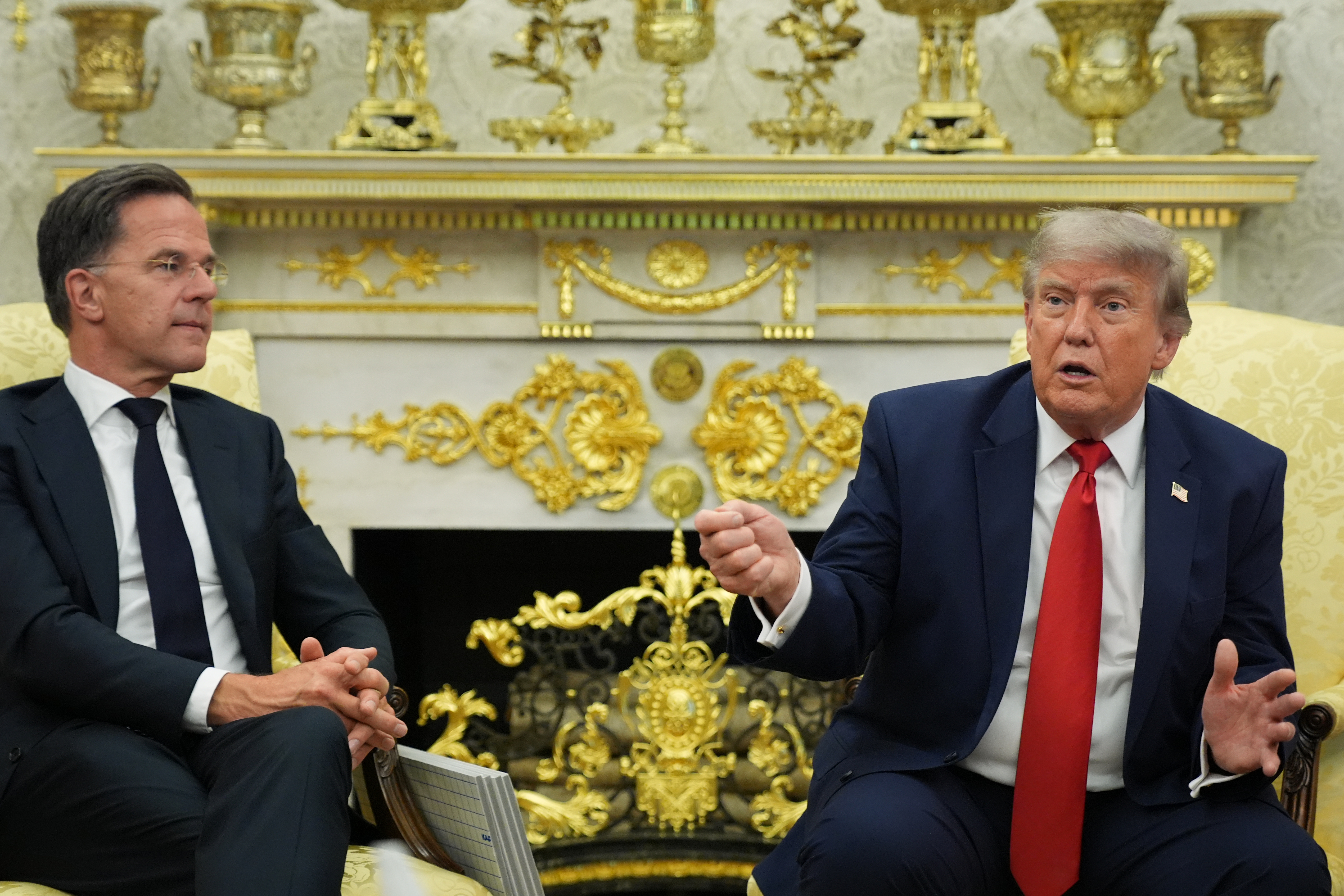
NATO Secretary General Mark Rutte and U.S. President Donald Trump in the Oval Office of the White House on June 24, 2026. —Jacquelyn Martin—AP

President Donald Trump said it is “ridiculous” for the United States to maintain its current level of support for NATO “when the relationship is not reciprocal."

Referring to the alliance as a "one-sided path” late Thursday, Trump doubled down on his long-argued criticism of allied nations’ defense spending ahead of next week’s planned NATO summit in Ankara, Turkey.

Alongside his Truth Social remarks, Trump posted a chart displaying contributions from NATO members, showing the U.S. vastly outspending its allies.

The President had earlier complained that the U.S. “spends more money on NATO than any other country, by far, to protect them, without getting any benefit.”

Seemingly citing figures from NATO’s defence expenditure data in 2025, he compared the “$999 billion” spent by the U.S. to the “$44.3 billion” put forward by Poland. [NATO's 2025 estimate for U.S. spending is $980 billion.] “Others, including Germany, are much lower,” Trump insisted. 

German Chancellor Friedrich Merz on Friday defended his country’s contributions.

"Germany is ​doubling its defense budget within four years. This is the greatest ⁠effort we have ever made to strengthen our defense capabilities. In this respect, ​we have no reason to shy away from anyone," he told reporters.

"We will state ​this, with all due modesty, and we are doing so as the European Union’s largest member state, bearing a responsibility within Europe."

NATO defense spending has long been a contentious issue for Trump who has, since his first term, accused European allies of not investing enough in their own militaries and relying too heavily on U.S. contributions and protections.

At the NATO summit in the Hague last year, most member states agreed to increase financial contributions, pledging to spend 5% of GDP annually on “core defense requirements as well as defense-and security-related spending by 2035.”

Trump celebrated the announcement, marking it as a win for the U.S., but he has since raised concerns that some members aren’t on course to meet the target.

Tensions between Trump and the NATO alliance have exacerbated this year amid the fallout of the Iran war. 

The U.S. President has repeatedly lambasted European countries for failing to get actively involved in the Iran war. He revived those criticisms on Thursday, arguing: “They were not there for us.” 

Several allies refused to allow the U.S. access to joint military bases for offensive operations against Iran. U.S. Defense Secretary Pete Hegseth labeled the decision “shameless” and argued it had put America’s sons and daughters “at risk.” 

At the height of the friction, Trump threatened to withdraw from the alliance—a move experts told TIME would have serious, far-reaching consequences.

Michael Clarke, a visiting professor of defense studies at King’s College London, tells TIME “the transatlantic element" of the NATO alliance "is in deep, deep trouble.”

“Politically, he already has [pulled the U.S. out of the alliance],” argues Clarke, reflecting on Trump's actions. "Because the idea that America would stand with its NATO allies in a European crisis is already in great doubt, which means the deterrent effect of it has already disappeared."

NATO Secretary General Mark Rutte, often described as the “Trump whisperer” for his diplomatic approach, visited the White House last week and attempted to ease tensions ahead of the upcoming summit.

In the Oval Office, Rutte referred to Trump's military intervention in Iran as “extremely important” and presented large printed charts illustrating how much allies have increased defense spending since Trump’s first term in office in 2017.

Rutte acknowledged there was “disappointment” with some allies, but characterized those as “isolated cases,” insisting that European countries were continuing to “live up to their bilateral basing agreements.”

The outreach, however, appeared to do little to soften Trump's criticism of the alliance.

Clarke says Trump’s comments are a usual tactic used by the President.

The summit in Turkey will likely revolve around "how angry President Trump chooses to feel about what he thinks is the lack of NATO support for his war in Iran, because he's determined to punish the Europeans for what he perceives as their lack of support," predicts Clarke.

Last month, Hegseth announced a review of U.S. military troops in Europe during a critical address to NATO defense ministers.

The review, which could last up to six months, “will examine America's force posture and basing in Europe” and will include consultations with the U.S. Congress. 

“It will be ​designed to ensure that NATO is moving fast and irreversibly toward Europe leading, stepping up to take primary responsibility for the defense of Europe,” Hegseth said at the NATO headquarters in Brussels.

It’s unclear if the review will lead to the further withdrawal of troops.

Washington informed allies a month ago that it would begin reducing the military assets it dedicates to NATO in an effort to address what officials described as an “unhealthy co-dependence in the NATO Force Model on U.S. forces.”

A NATO official told TIME on Friday that European allies have responded swiftly to the move.

“In a matter of weeks, European Allies have largely filled the gaps left by U.S. reductions to the NATO Force Model,” said Supreme Allied Commander Europe (SACEUR) spokesperson Martin O’Donnnell.

O’Donnell added that in the areas where this has not yet been possible, the alliance is “looking at alternate capabilities with matching effect.”

Clarke, meanwhile, says that the current NATO system "is the one the Americans wanted to create," insisting the U.S. once favored the idea that “everyone [should] depend on them, and it's only recently that they've said how unfair this is.”

show more
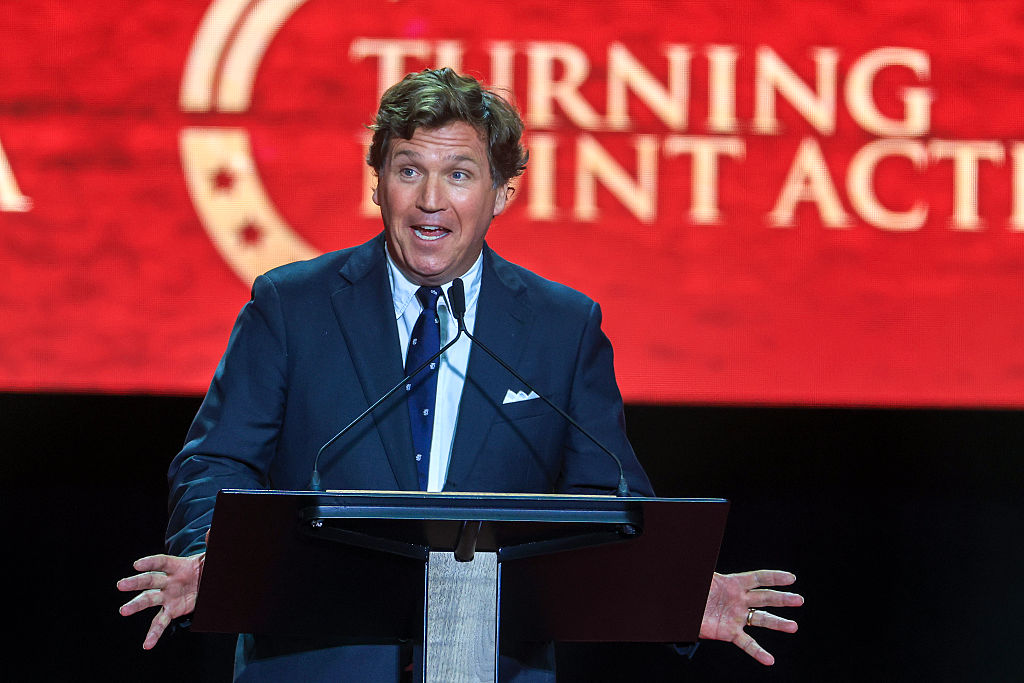
Tucker Carlson Floats Idea of New Political Party Amid Split From Trump
Published: 2026-07-03 17:49:54 | Created: 2026-07-04 08:48:38
Tucker Carlson speaks during a memorial service for conservative commentator Charlie Kirk at State Farm Stadium in Glendale, Arizona, on Sept. 21, 2025. —Joe Raedle––Getty Images

After recently pulling his years-long support of the GOP, Tucker Carlson has floated the idea of creating a new political party amid his rift with President Donald Trump and the broader MAGA coalition.

The Conservative commentator, who was once a close ally of Trump, said he’s “going to help build a third party,” insisting “there should be a good-faith effort to figure out what benefits the country.”

In an interview with the Columbia Journalism Review released Wednesday, Carlson argued that the U.S. government has forgotten about the American people. “If you make sixty thousand dollars a year, you’re degraded,” he said. “No one seems to care. It’s not even a factor.” 

Specifying that he would not want to be a candidate for any such new party, Carlson argued that Democrats and Republicans have become indistinguishable on key issues.

“That’s a one-party state posing as a democracy, and it needs to be broken,” Carlson claimed. “There’s going to be a third party, and I’m going to do everything I can to bring that about.”

Two major parties—Democratic and Republican—have dominated U.S. politics and no third party in recent memory has been able to penetrate the two-party system in a meaningful way.

Former 2020 Democratic presidential primary candidate Andrew Yang, for example, has pushed for representation beyond the two-party system, but has arguably encountered limited success with his Forward Party. 

Yet, Carlson isn’t the only former MAGA figure to push for a challenge of America’s political system.

After his relationship with Trump fractured earlier this year, Tesla CEO Elon Musk said he had “formed” a new political party titled the "America Party."

The moniker echoed that of his super political action committee (PAC), America PAC, which was founded in 2024 to support Trump’s efforts to return to the White House. The super PAC reportedly spent around $200 million to help elect Trump. Musk’s donations made him Trump’s largest, and most prominent, donor in the 2024 election.

More recently, former Congresswoman Marjorie Taylor Greene—who publicly split from Trump in 2025 and last week said she could no longer support the GOP—also called for change.

During a Piers Morgan Uncensored interview on Tuesday, Greene said she was “in talks with people” and that “serious conversations” were underway about creating a third party.

“There is a group of us that have literally fought the system, and I think there's a group of us that, if we decide to align, we could launch a true America-focused party that doesn't fall into the traps of Democrats and Republicans, but could align some serious players from the right and the left, and move forward,” she said.

Greene also acknowledged the practical challenges involved, noting: “It's difficult to launch a third party, so the reality is this isn't something that gets off the ground in just a couple of campaign cycles.”

Both Carlson and Greene were once among the most avid defenders of Trump and his vision, but they have both accused him of failing to uphold his “America first” campaign initiative by embarking on the Iran war.

In April, Carlson apologized to his podcast audience for “misleading” them in regards to Trump.

Joined on The Tucker Carlson Show by his brother Buckley, a former speechwriter for Trump, Carlson said: “I mean you, and I, and everyone else who supported him, you wrote speeches for him, I campaigned for him. We were implicated in this for sure.”

He continued: “We'll be tormented by it for a long time. I will be, and I want to say I'm sorry for misleading people, it was not intentional.”

The debate around a third party comes as both the Democrats and Republicans search for a way to reconnect with voters.

Trump this week announced that the Republican Party will stage a convention in Dallas this September to rally voters before the midterms.

Meanwhile, candidates backed by the Democratic Socialists of America have recently emerged triumphant in races across New York and Colorado.

show more
Blighty newsletter: Andy Burnham’s northern powerhouse
Published: 2026-06-17 08:03:47 | Created: 2026-07-04 08:47:41
A Burnham-led Labour might sharply shift political power towards the north, writes Hugo Gye, our political correspondent
show more
A road trip with Alexis de Tocqueville
Published: 2026-06-17 08:19:34 | Created: 2026-07-04 08:47:41
A handpicked article read aloud from the latest issue of The Economist
show more
The US in Brief: Trump gets bruised in the Peach State
Published: 2026-06-17 10:45:34 | Created: 2026-07-04 08:47:41
Our daily political update, featuring the stories that matter
show more
View from the summit: what did the G7 achieve?
Published: 2026-06-17 12:05:02 | Created: 2026-07-04 08:47:41
Also on the daily podcast: sex work in Japan and Country Life magazine
show more
Introducing our Business in Brief newsletter
Published: 2026-06-17 13:23:03 | Created: 2026-07-04 08:47:41
Every day we will deliver concise analysis of the stories driving business and markets worldwide 
show more
What happens when AI builds itself?
Published: 2026-06-17 13:54:25 | Created: 2026-07-04 08:47:41
Our podcast on science and technology. This week, why AI superintelligence might be much closer than people realise
show more
Why Westerners are falling for love scams
Published: 2026-06-17 15:16:38 | Created: 2026-07-04 08:47:41
Romance fraud is driven by poverty in west Africa and loneliness in the West, a new book argues
show more
Fox, Roku and the next phase of the streaming wars
Published: 2026-06-17 16:22:46 | Created: 2026-07-04 08:47:41
A $22bn deal creates a formidable new power in Hollywood
show more
The chocolate industry is built on the labour of bloodsucking midges
Published: 2026-06-17 16:25:57 | Created: 2026-07-04 08:47:41
Researchers have now confirmed how cacao plants are pollinated
show more
Ancient DNA is rewriting the history of plague
Published: 2026-06-17 16:31:22 | Created: 2026-07-04 08:47:41
Dense cities do not seem to have been necessary for outbreaks of the disease
show more
Iran’s battered economy will take years to recover from the war
Published: 2026-06-17 18:06:57 | Created: 2026-07-04 08:47:41
Its leaders want sanctions relief and aid for reconstruction
show more
Germany’s left-wing Die Linke party has won over the young
Published: 2026-06-17 18:24:33 | Created: 2026-07-04 08:47:41
The populists promise a “scorching hot socialist summer” of protest
show more
What Britain needs to do to grasp its big opportunities in AI
Published: 2026-06-17 18:33:41 | Created: 2026-07-04 08:47:41
For a start, the government needs to think bigger
show more
Tournament of losers
Published: 2026-06-17 19:41:46 | Created: 2026-07-04 08:47:41
The World Cup is a festival for corporate has-beens
show more
As American cities grapple with homelessness, one offers a fix
Published: 2026-06-17 21:09:47 | Created: 2026-07-04 08:47:41
Denver’s answer to a stubborn problem
show more
Why prioritization is deceptively difficult 
Published: 2026-06-18 08:31:18 | Created: 2026-07-04 08:47:41
A handpicked article read aloud from the latest issue of The Economist
show more
How Europe must respond to America’s AI warning shot
Published: 2026-06-18 08:33:55 | Created: 2026-07-04 08:47:41
Nothing short of the most ambitious political agenda in peacetime will do, writes Judith Dada
show more
The Brexit benefits you haven’t heard of
Published: 2026-06-18 08:49:28 | Created: 2026-07-04 08:47:41
Something to celebrate for cephalopods and puffins
show more
Rejoiners, Britain’s real conservative movement
Published: 2026-06-18 08:51:56 | Created: 2026-07-04 08:47:41
They want to turn back the clock on Brexit. Winning campaigns deal in the future 
show more
Donald Trump gambles that Iran wants money more than power
Published: 2026-06-18 08:58:00 | Created: 2026-07-04 08:47:41
The peace deal is all carrot and no stick
show more
India’s new economy still faces an old problem
Published: 2026-06-18 09:02:20 | Created: 2026-07-04 08:47:41
Family-run conglomerates make the stock market a tricky place to invest
show more
Republicans are desperate to move on from the Iran war
Published: 2026-06-18 09:06:36 | Created: 2026-07-04 08:47:41
The conflict will have stubborn political after-effects
show more
Tata’s big bets are yet to pay off
Published: 2026-06-18 09:10:42 | Created: 2026-07-04 08:47:41
The Indian conglomerate’s boardroom drama highlights a speculative strategy
show more
Europe buys the future, America builds it
Published: 2026-06-18 09:21:50 | Created: 2026-07-04 08:47:41
Does that matter? A high-stakes transatlantic spat has erupted over GDP figures
show more
A new golden age for Japanese banks comes with a catch
Published: 2026-06-18 09:23:55 | Created: 2026-07-04 08:47:41
Smaller lenders are saddled with low-return bonds they cannot sell
show more
War has strengthened the Islamic Republic. Peace could split it
Published: 2026-06-18 09:38:45 | Created: 2026-07-04 08:47:40
For now, the hardliners are in the ascendant
show more
The US in Brief: Trump’s treaty in Versailles
Published: 2026-06-18 10:29:25 | Created: 2026-07-04 08:47:40
Our daily political update, featuring the stories that matter
show more
Colombia faces a historic choice, writes its last president
Published: 2026-06-18 11:18:13 | Created: 2026-07-04 08:47:40
After four years of institutional decay, fiscal recklessness and deteriorating security, the country must change course, argues Iván Duque
show more
3. Boundless continent
Published: 2026-06-18 11:34:59 | Created: 2026-07-04 08:47:40
A rural township fights over a very modern frontier
show more
4. Independence of mind
Published: 2026-06-18 11:36:12 | Created: 2026-07-04 08:47:40
How Tocqueville’s ‘tyranny of the majority’ shows up at Harvard today
show more
Ten years on, how the Brexit vote changed Britain
Published: 2026-06-18 11:39:14 | Created: 2026-07-04 08:47:40
In many small ways, and mostly for the worse
show more
First rate: Kevin Warsh’s Fed debut
Published: 2026-06-18 12:15:42 | Created: 2026-07-04 08:47:40
Also on the daily podcast: Germany’s left-wing Die Linke wins over the young and hacks for managing your manager
show more
Politics
Published: 2026-06-18 12:45:58 | Created: 2026-07-04 08:47:40

No content available

Business
Published: 2026-06-18 12:45:58 | Created: 2026-07-04 08:47:40

No content available

Cartoon: Donald Trump’s Iran deal
Published: 2026-06-18 12:45:58 | Created: 2026-07-04 08:47:40

No content available

AI has granted America vast new power
Published: 2026-06-18 12:45:58 | Created: 2026-07-04 08:47:40
Its government is now the gatekeeper to frontier models—and most compute
show more
Britain is not ready to rejoin the EU
Published: 2026-06-18 12:45:58 | Created: 2026-07-04 08:47:40
After a lost decade, it is time to focus on the future
show more
Don’t restrict Chinese biotech
Published: 2026-06-18 12:45:58 | Created: 2026-07-04 08:47:40
Patients benefit from faster, cheaper treatments, wherever they are invented
show more
Were we too quick to attack “Gen Z socialism”?
Published: 2026-06-18 12:45:58 | Created: 2026-07-04 08:47:40
Also this week Trump and judges, crime in Britain, “Star Trek” and war, Ethiopia’s prime minister, edible medical devices
show more
Anthropic’s astonishing commercial success makes it a target
Published: 2026-06-18 12:45:58 | Created: 2026-07-04 08:47:40
The cultlike firm is battling with the government for control of superpowered AI
show more
Britain is slipping down the defence league table
Published: 2026-06-18 12:45:58 | Created: 2026-07-04 08:47:40
The government cannot avoid hard choices for ever
show more
Britain’s departure made Europe more French
Published: 2026-06-18 12:45:58 | Created: 2026-07-04 08:47:40
A smaller EU has learned to live without Britain
show more
Europeans should learn to love the air-conditioner
Published: 2026-06-18 12:45:58 | Created: 2026-07-04 08:47:40
Green electricity means never having to say sorry for lowering the thermostat
show more
Page 936 of 972 (48559 total items)