Представим ситуацию: в PostgreSQL хранится большое значение — документ, бинарные данные, крупный JSON или другой объект размером в несколько мегабайт. При этом приложению далеко не всегда нужен объект целиком. Иногда требуется получить лишь небольшой фрагмент.
Например, значение занимает 10 MiB, а запросу нужны всего 100 байт.
Кажется логичным, что PostgreSQL должен прочитать только эти 100 байт. Но на практике объём работы зависит от того, как значение хранится, было ли оно сжато и какой алгоритм сжатия использовался.
В этой статье проверим поведение PostgreSQL 18.6 экспериментально. Сравним EXTERNAL, PGLZ и LZ4 и посмотрим, что происходит, если читать один и тот же 100-байтовый фрагмент из начала, середины и конца большого значения.
Цель — не найти универсально «лучший» вариант хранения. Нас интересует более практический вопрос: какую работу PostgreSQL выполняет при частичном чтении большого TOAST-значения и при каких условиях различия становятся заметны.
Президент США Дональд Трамп вновь объяснил провал российского наступления на Киев в феврале 2022 года ошибкой «глупого генерала». По его словам, тот приказал наступающим танкам свернуть с шоссе в поля, где они увязли в грязи. Имени военного Трамп не назвал. Русская служба Би-би-си рассказывает, кем был тот самый генерал, действительно ли он виноват в провале блицкрига и как сложилась его карьера.
В восточно-сибирском поселке Тура в Эвенкии, где живет почти шесть тысяч человек, заканчиваются продукты в магазинах. В первую очередь не хватает свежих и скоропортящихся товаров — овощей, фруктов, молока.
Продукты сюда почти век доставляют по реке Нижняя Тунгуска, но в этом году она обмелела. Из-за изменения климата температура в Сибири растет быстрее, чем в мире в целом. Это приводит к пожарам и засухе, и доставлять продукты в Туру теперь куда сложнее.
Investigation marks rare move by DoJ against an ally of the US president. Plus, why the world’s coral reefs are facing a dire future
Good morning. Corey Lewandowski, a former political adviser to Donald Trump and top aide at the Department of Homeland Security, is under criminal investigation over allegations he profited off his role in the US government. The Department of Justice has not yet issued subpoenas or other legal demands in the criminal investigation, and a lawyer for Lewandowski did not immediately respond to a request for comment. The justice department under Trump has investigated several prominent critics of the president, but investigations of people close to Trump have been rare.
Lewandowski served as a top aide to Kristi Noem during her tenure as homeland security secretary. Lewandowski allegedly signed some DHS contracts despite having questionable legal authority as a special government employee, according to one DHS official. Certain grants and contracts, including those involving the Federal Emergency Management Agency, were put on hold at Lewandowski’s direction, according to two other sources.
Where else has Trump suffered a legal setback? Donald Trump has been ordered by a US judge to cooperate with the discovery process mandated for his lawsuit against the BBC and to sit for a deposition by 11 December – or else he could be subject to sanctions, including possible dismissal of the $10bn lawsuit.
What request has Trump claimed he made of Google? Trump has said Google rejected his request to rename the Atlantic Ocean after himself or America. Google has previously acceded to Trump’s demands, with locations labelled “Gulf of America” and “Lake America” for US users at the president’s request.
Trump’s latest tactic to champion Republicans at midterm rallies? Assessing men’s bodies in meticulous detail
Speaking at a rally in Youngstown, Ohio, earlier this month, to support the Republican senator Jon Husted, Donald Trump broke from his prepared remarks.
Trump said he had recently learned that Husted played football at university. The president, 80, said this had prompted him to conduct a physical assessment of Husted.
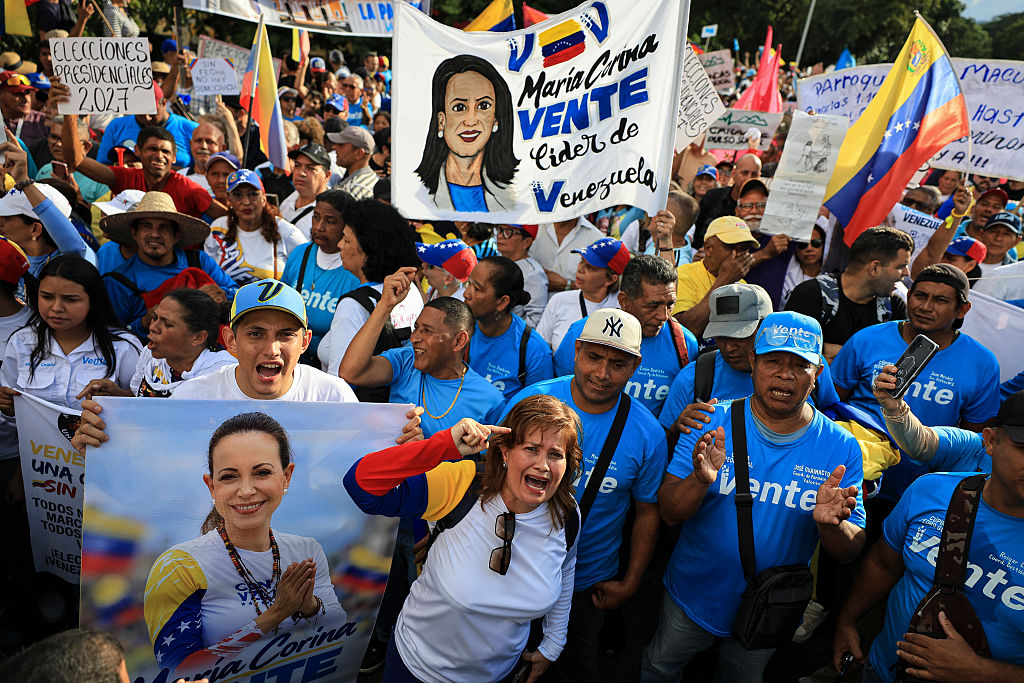
Demonstrators hold Opposition leader Maria Corina Machado's signs during a protest to demand a free presidential election in Caracas, Venezuela on Oct. 22, 2026. —Jesus Vargas—Getty Images
In the capital, Caracas, protesters gathered in Plaza Venezuela and called for presidential elections to be scheduled as early as 2027, as well as the release of all political prisoners in the country.
“We will have presidential elections very soon with María Corina as president,” said former congressman Piero Maroun, who attended the protests, according to independent local news organization Efecto Cocuyo. The Machado-led activist group Vente Venezuela spearheaded the protests, which led to the closure of some streets in Caracas. Others also staged protests in the states of Nueva Esparta, Táchira, and Zulia.
The ruling party that acting President Delcy Rodríguez belongs to, the United Socialist Party of Venezuela, also staged a gathering near the opposition demonstrators in Caracas, though for a women’s march for Breast Cancer Awareness Month.
Protesting has become common for disgruntled Venezuelans since the forced end of Nicolás Maduro’s presidency. Maduro and his predecessor Hugo Chávez heavily cracked down on political dissent. But since Maduro’s removal in January by U.S. forces, protesters have taken to the streets “with increasing frequency,” according to the international civil society alliance CIVICUS, citing data from the Venezuelan Observatory of Social Conflict, which recorded 1,101 protests during just the month of September, or about 37 demonstrations per day. These protests, however, have not necessarily been large.
Until this week. The Thursday protests, which Reuters described as “the first nationwide opposition protest in nearly two years,” coincided with the third anniversary of the opposition’s presidential primary elections, in which Machado emerged victorious.
Machado is still the opposition’s most prominent figurehead in the transition toward a democratic government: in an AtlasIntel survey conducted for Bloomberg News, Machado received 52% support, compared with 19% for Rodríguez. But Machado has her work cut out for her.
The protests also happened as Rodríguez met with Dinorah Figuera, the opposition representative backed by the U.S. State Department in negotiations for a political transition, inside the Venezuelan presidential palace. The three rounds of U.S.-backed talks between the Venezuelan government and Figuera’s faction have yet to yield an agreement on elections.
In a statement reported by El País after the meeting, Rodríguez appeared to reference the opposition protests, saying in Spanish: “There are still very, very small groups that resist and believe that trying to set the country ablaze and block streets is the way for Venezuela to move forward. I recognize the good Venezuelans who, through this dialogue, are promoting necessary changes.”
Since arresting Maduro in an extraordinary military operation in January, the U.S. has been working with an interim government led by Rodríguez, Maduro’s former deputy. Rodríguez and U.S. President Donald Trump both have said elections will eventually be held in the country, though Trump told TIME in late September: “It’s so raw now, you know that I just think it’s too soon.”
Why has an election not yet been scheduled?
The post-Maduro government opened talks in August with the opposition faction led by Figuera, the president of Venezuela’s 2015 National Assembly, to help the country achieve a democratic transition. But the changes are expected to take time.
Domestic opposition and international observers have long slammed Maduro’s 2018 and 2024 re-elections for lacking transparency and fairness, disputing the results and arguing that Machado’s proxy, Edmundo González Urrutia, actually won in the latter. This raised questions about the independence of the Supreme Court and Venezuela’s National Electoral Council, which have been packed with loyalists of the regime.
For the transition, the establishment and the opposition are trying to iron out details of reforming the court and the council. Even if this happens, experts told Reuters that authorities will still need to update voter rolls and ensure that parties can reach a consensus on how subsequent elections would work.
The twin earthquakes that struck Venezuela in June and caused extensive damage also complicated efforts toward stability in the country.
But the U.S. has also set certain prerequisites that could affect how soon elections could happen. President Trump and Secretary of State Marco Rubio outlined that they seek stabilization, economic recovery, and national reconciliation in Venezuela, on top of a political transition. Axios reported that it’s a multi-step process: change the court makeup, reform the electoral commission, and then announce an election date. Rubio also announced other requirements, including a truly free press.
“What would threaten an enduring republic in Venezuela would be that someone is elected and they inherit a complete catastrophe, economic and social, and then the whole project is endangered because now anything can happen,” Rubio said on Sept. 23, following Trump’s meeting with Rodríguez in New York. “We want to do two things at the same time.”
Critics argue that the Trump Administration’s position sidelines the opposition faction led by Machado and instead prioritizes oil agreements and economic stabilization over Venezuela’s democratic transition. In August, Trump announced that Washington agreed to a deal with Caracas, saying it would give the U.S. majority control over more than 65 billion barrels or about a fifth of Venezuela’s oil reserves.
Dhayana Fernández-Matos, a professor of political science at the Federal University of Pelotas in Brazil, told Spain’s broadcaster RTVE last month that an election in Venezuela is not a priority for Trump, as his “primary interest lies in oil and the geopolitical power of controlling the world’s largest proven crude oil reserves.”
TIME’s September interview with Trump hinted at the U.S.’s potential financial bias for a delayed election: after saying that it would be too soon for Venezuela to hold an election, the President said, “A lot of money is being made by us, but a lot of money is also being made by Venezuela, and we have complete control of all of them.”
Это Муфоед. С ним я познакомлю вас чуть позже. Пока же я расскажу небольшую историю, которая, уверен, уже перестала быть новинкой. Мне не хватало пары функций в блокноте от Windows. И я не пошел искать программу на замену, как сделал бы это раньше. Я пошел к ИИ, описал свои беды и через полчаса у меня была нужная программа только что созданная с нуля.
Но вот “с нуля” ли? И такая ли эта модель молодец, что написала такую сложную программу так быстро? Казалось бы - да. Но, нет. Она сделала эту программу опираясь на “плечи гигантов” - кучу созданных и отлаженных библиотек, сделанных другими, подчеркну это, людьми. И обучаясь на еще большей куче кода сделанного людьми.
Social media sites aren't the biggest fans of people leaving via hyperlinks. In fact, Meta has made it subscription-worthy for a Facebook Page to post more than two hyperlinks per month. What's the rationale for companies want to keep you on their site?
Demonstrators gather at the Washington Monument on October 8, 2026, in Washington, DC, to rally in support of a Cornell University student who alleges she was raped at a fraternity house on campus in 2024. | Michael A. McCoy for the Washington Post via Getty Images
Last month, a former Cornell University student identified in court papers as “Jane Doe” sued her university and seven members of the Chi Phi fraternity, alleging they raped her at the group’s house in October 2024. Cornell’s own disciplinary process for the incident had ended with two of the men expelled, two suspended and put on probation, one (who had already graduated) barred from campus, and two found not responsible but ordered to complete trainings and write reflection papers. The local district attorney declined to press charges.
Since the lawsuit was filed, the DA has reopened the case and New York state officials have launched an investigation. Students have also held sit-ins, and some are calling for the university’s president, Michael Kotlikoff, to resign. Cornell has suspended fraternity parties for the rest of the year.
But this kind of case — and the issues it raises about campus life — are not new. Educators, students, activists, and politicians have spent decades debating how to prevent sexual assault, how to protect victims, how to balance the rights of the accused, and what to do about Greek life. At times, those conversations have resulted in significant changes to policy — which in turn have also generated backlash and brought more changes in response.
Elizabeth Armstrong, a sociologist at the University of Michigan, began researching campus sexual assault in the early 2000s, embedding at a Midwestern university to understand how fraternities, alcohol, and the lack of anywhere else to go put students at risk. She has seen attention to the issue come and go in the public discourse across generations of students, often spurred by high-profile incidents like a Time magazine cover in 1991 spotlighting a first-year William & Mary student who was date raped, and a Stanford swimmer in 2016 who was sentenced to six months in jail for assaulting an unconscious woman after a frat party.
I wanted to know what Armstrong makes of Cornell, and if she thinks anything is different this time. Has anything actually gotten better since the Title IX fights of the 2010s? What do people who haven’t been on a campus in a while misunderstand about how students socialize? And what could a school like Cornell do right now, without waiting on the courts or Washington, DC?
I talked to Armstrong about Greek life, what survivors of sexual assault actually want from their schools, and the reforms she thinks colleges need to be paying attention to. Our conversation has been lightly edited and condensed for clarity.
Could you start by sharing briefly the kind of research you’ve done on campus sexual assault?
I did ethnographic and interview work at a Midwestern university, starting in 2003, and published a paper in 2006 on the organizational conditions that lead to sexual risk on campus. I later co-authored Paying for the Party: How College Maintains Inequality, a 2013 book based on that research.
Were there many people talking about this back in the early 2000s?
It was in something of a hiatus period. Interest in this issue essentially goes in waves. There was interest in the ’70s, then again in the late ’80s, and then there was a hiatus. My research and writing happened right before things started to build back up again with interest.
So before we get into Cornell specifically, could you paint a bit of a picture of how campus social life tends to work? Where students gather, who hosts parties, and where Greek life fits in?
So the basic gist is that at four-year American residential universities, students often live in residence halls or they live off campus, or if there’s residential Greek life, they live in fraternities and sororities.
Young people like to congregate, and they like to party, to have fun, and drink, and figure out opportunities to hook up. One of the things that has emerged, particularly on campuses with fraternities that have their own houses, is that these organizations control the party resources — like the space and alcohol, and time and energy to host.
So it’s hard to avoid them if you are someone who wants to party.
Yes, and one of the things that’s been coming out of the discussion related to Cornell is that the pandemic really flattened the number of bars, restaurants, and cafes in Ithaca — places where people might have otherwise had opportunities to hang out. So it gave an already really dominant Greek scene even more centrality and power over the way students socialize.
My next question was going to be what do people who haven’t been on a college campus in a while tend to misunderstand about the party scene, and that pandemic shift seems like an answer to that.
Yes, and people often don’t understand that for a lot of first-year students, who are generally under 21 but still wanting to drink, figuring out how to get alcohol, where the parties are, where the fun is going to be, is a challenge for them. Students entering college often don’t have good resources to know what’s safe and not safe.
Yeah, and it seems like colleges just cover their eyes and deploy a don’t-ask-don’t-tell policy on underage drinking.
Yes. Years ago, when I was doing more traveling and speaking on college campuses, cab drivers would be telling me how they’d deposit students drunk all the time. And if a school was religiously affiliated or anything, they would just deny that their own students were partying with alcohol at all. And so the students were just vastly more at risk than even at campuses where officials were willing to admit what actually goes on.
Based on your research of party rape, what parts of campus life do you think we should be paying attention to with Cornell and other colleges?
Here I’d bring up a book, Sexual Citizens by Jennifer Hirsch and Shamus Khan. They did ethnography at Columbia University, and they pointed out some concepts like “sexual geography” — which is this idea that you can go onto any campus and see the ways things are organized to be more risky.
They point out, for example, that if students have nowhere to socialize except in dorm rooms with beds, that’s more risky than if they had lounges or other kinds of nonsexual spaces to congregate. And like, are there fun things to do that are substance-free if people want that? Are there spaces for queer students or students of color to hang out? What are the social options, and who controls where the fun happens?
That makes so much sense. If there’s no alternative, then people will go to whatever option is available, even if it’s less safe.
Yeah, and I mean it’s tricky because sometimes it’s not considered hip or cool to do that. When we were doing our observation research way back in the early 2000s, the university we were studying was trying to create some non-frat party options, and the women that we studied thought those were just hopelessly nerdy and uncool, and they didn’t want to go because they were not seen as being high-status things to do.
What do you think colleges could be doing differently when it comes to parties?
One thing I think that colleges could do — like now that we do have Uber and Lyft — they could get a Lyft subscription where students can call up 24/7 to get home safely from wherever they happen to be, no questions asked. That could be expensive, but it’s a lot more expensive when serious harm happens. So ensuring people can get home safely could be one measure.
And Michael Roth, the president of Wesleyan, had an op-ed this week in the New York Times suggesting that universities consider making these organizations co-ed. That’s another option. Not abolishing them completely, but transforming them.
I’ve been really struck by the dissonance of having this conversation around male loneliness and male bonding on one hand, and this separate conversation about fraternities and whether they’re good or bad on the other.
I have a student, Anna Wood, who’s done interviews with fraternity men. She’s very interested in young men’s mental health, and loneliness, and friendship, and she’s finding that men get a kind of brotherhood more than friendship in fraternities. In other words, the fraternities aren’t really solving the male loneliness problem.
Are there any campuses today that you think are modeling something that is safer or better? Are there any other schools you think we should be paying attention to?
Well, there’s Wesleyan and Swarthmore; the students a few years ago organized to abolish Greek life on their campus. And I think in a lot of universities there are these “learning-living” communities that are organized around various kinds of themes or interests, like it could be organized around being interested in business or interested in international relations or STEM. But something where universities take on the project of helping young people form friendships.
I know we’ve been talking a lot about Greek life, but there’s sexual assault on campus outside of Greek life, too.
Yes, it happens everywhere from honors dorms to sporting teams to residence halls. And it’s not just sexual assault; it’s also intimate partner violence in more committed relationships. I mean there are undergraduate students who are murdered by their boyfriends. So just addressing Greek life would not solve the problem across the board.
So I was in college between 2010 and 2014, when the Obama administration’s 2011 Title IX letter reminding colleges to address sexual assault complaints helped ignite a national debate over campus investigations and discipline.
Exactly. It was a big issue on my campus and across the country. I understand those guidelines were loosened under Trump. As I’ve been following Cornell, I’ve seen a number of people respond by saying, “Well, nothing has changed or improved, and Title IX doesn’t work.”
I would love your thoughts on all of this, on where things stand. Do you see progress as just a ping-pong back and forth, or do you feel like things have improved at all from when you first started studying this?
One thing that seems to me that is better over time is that every single time this issue rises to the level of public awareness, there’s more people who get it. Like in each wave, more people understand that women don’t report sexual assault because they’re afraid of retaliation, because of trauma. More people understand this.
Like this time, as soon as the facts of the case became widely public, there was just sheer horror on the part of so many people. When I was in college in the ’80s, that would not have been true at all. I mean, there was a case here at the University of Michigan when I was an undergraduate where it felt like just four feminists on campus understood what was going on. So there’s really been a gradual sort of cultural awareness over time
Even just talking to you, the composition of journalists writing on this is very different now.
What do you mean?
You’re a woman who graduated from an elite college around the time when the Dear Colleague letter was introduced. Not that long ago in the ’70s, ’80s, and ’90s, where anyone who had a position to have any kind of way of impacting the public conversation, it was all men. There weren’t women who had access to that kind of public conversation. So I think that’s also a really, really important piece of what’s changed. The journalists are changing and helping the public get it.
Can you talk about what happened beginning with the Trump administration?
So on the Title IX front, and after the Dear Colleague letter from 2011, and the whole campus anti-rape movement that happened around that time — well, on the heels of that there was a really major backlash. And that’s something my colleagues and I are studying, like the men’s rights activists and people who are more middle of the road, like civil libertarians, who felt things had gone too far.
And then the Dear Colleague letter was revoked under Trump, and in 2020 new Title IX regulations were put forward as a result of the Department of Education’s work during the first Trump administration. Those regulations made it very, very, very, very difficult to find somebody on campus responsible for sexual misconduct. Those are still in effect, so from that perspective, the fact that Cornell actually managed to expel a couple of those men and hold all of them, you know, responsible in some way, shows just how compelling the evidence against them was because it’s actually really, really hard now.
And this was all wrapped up in the backlash to Me Too?
The backlash to the campus sexual assault stuff was already well underway when Me Too was getting started, but yes, there was this wave of stuff, and then we get the 2020 regulations, and the Biden administration tried and failed to undo them.
Why did they fail?
Well, it took a really long time because they went through this notice-and-comment period, and they got everything redrafted, and then as soon as Trump was elected again, it was legally challenged.
So it took too long, and then they ran out of time?
It’s not even clear that the regs the Biden administration wanted would have fixed anything because we also have these processes where there’s just so much legalization and complexity. I mean, what survivors want is they want this to stop. They want people to believe them. Survivors want different things, but often they don’t want some yearlong process where everyone’s asking them what happened again and again and again. They want to just do school.
We still don’t have a good process in place for survivors on campus through either Title IX or the criminal justice route.
No, and one of the things I think that is most straightforward that could be improved is on the notion of what’s known as supportive measures. So those are the things that are very consistent with Title IX, because the point of Title IX is for people to not be deprived of their access to education. So if you think about it from the point of view of the survivor, what do they need to be well, healthy, and stay in school?
They may need their tuition refunded for a semester. They might need mental health services. They may need somebody to contact all of their professors and tell them that they can’t get their work in. They may need some sort of immigration support. At Michigan State, after the Larry Nassar scandal, they built something called the Center for Survivors, which is supposed to operate as a kind of one-stop shop where a survivor can go and get all of their various needs met. You can imagine more schools building those out.
Hopefully not every school needs a Larry Nasser type figure to get them to step up.
Yeah, hopefully not. I don’t know if that’s come up in any of the Cornell conversations, but one of the things they could do is use this as an opportunity to really, really massively build out their supportive measures.
Я составил таблицу, в которой расставил SEO-факторы по значимости для GEO. Это моё текущее видение и практическая расстановка приоритетов на октябрь 2026 года, а не опубликованные данные алгоритмов ChatGPT, Google или Алисы. Ниже сначала покажу всю картину, а затем разделю факторы по двум сценариям продвижения.
Mercedes youngster could become youngest title winner
Max Verstappen says bumpy track makes drivers ‘suffer’
The Formula One world championship is within reach for Kimi Antonelli at the US Grand Prix in Austin this weekend. But while the young Italian approaches the race intending simply to have fun, there is disquiet among other drivers about the potential long-term health dangers posed by the state of the Texas circuit.
The 20-year-old Antonelli will become Formula One’s youngest world champion if he claims the title at the Circuit of the Americas on Sunday, eclipsing Sebastian Vettel’s record from 2010, when the German driver was 23 and Antonelli was four. It is an outside chance, as the Italian has acknowledged. He must win while needing his rivals to endure a poor day. His Mercedes teammate George Russell would have to finish outside the top eight and Ferrari’s Lewis Hamilton outside the top four.
Meghan reveals she was made aware of ‘disturbing allegations’ against him in 2018 by Met police
The Duchess of Sussex has said she is “deeply distressed” over accusations involving child sexual abuse images against her estranged father, Thomas Markle Sr, and revealed she was made aware of “disturbing allegations” against him in 2018 by the Metropolitan police.
Meghan issued a statement after the Sun newspaper published claims that her half-brother Thomas Markle Jr alleged he had found a stash of images belonging to their father at his former home in the Philippines.
Я пишу на чистом JavaScript и PHP уже больше 20 лет. За это время я пережил jQuery, Backbone, Ember, AngularJS и видел, как React и Vue захватили умы джунов. Долгое время я искренне считал, что <template> и <slot> — это какая‑то странная ерунда штука для полифиллов Web Components, которая в реальной жизни не нужна от слова «совсем».
Зачем клонировать узлы, если есть innerHTML? Зачем Shadow DOM, если есть BEM?
Оказалось, что я просто боялся нативных инструментов. Ага. Но вот, наконец‑то, перестал и моя жизнь стала проще, а бандлы легче.
Chaos unfolded during a town hall meeting in Pemberton, New Jersey, after Mayor Matthew Bianchini charged at a critic before being restrained by a former police chief.
Russia’s central bank left its key interest rate unchanged, and signaled only a slight decline in borrowing costs next year as inflation is set to remain stubbornly high.
Meghan reveals she was made aware of ‘disturbing allegations’ against him in 2018 by Met police
The Duchess of Sussex has said she is “deeply distressed” over accusations involving child sexual abuse images against her estranged father, Thomas Markle Sr, and revealed she was made aware of “disturbing allegations” against him in 2018 by the Metropolitan police.
Meghan issued a statement after the Sun newspaper published claims that her half-brother Thomas Markle Jr alleged he had found a stash of images belonging to their father at his former home in the Philippines.
Для ИТ-поддержки удалённый доступ — рабочий инструмент: подключиться к компьютеру пользователя, разобраться, поправить настройки и отключиться. Сессия закрыта, заявка тоже.
Для ИБ это выглядит несколько иначе.
Каждое удалённое подключение потенциально оставляет набор событий: кто подключился, к какому устройству, когда началась сессия, какие права использовались, какие действия выполнялись, передавались ли файлы, какие изменения произошли после этого.
Если эти события связать между собой, система удалённого доступа становится дополнительным источником телеметрии для расследования инцидентов.
Разберём это на примере RuDesktop — от простого кейса с пропавшим файлом до корреляции событий в SIEM.
Thomas Markle, the estranged father of Meghan, Duchess of Sussex, is facing a probe in the Philippines over alleged possession of child sexual abuse materials.
Сейчас модно говорить, как стало классно делать приложения / проекты / продукты с ИИ-агентами. Сел, накинул 1–2 промпта — и у тебя уже за вечер запущенное приложение. Но если погрузиться в процесс создания какого-либо продукта, то разработка — это всего лишь небольшая его часть.
Waititi joins a long list of movie-makers who were expected to bring a new direction to the franchise, before the studio appeared to get cold feet
Movie-making these days is a very expensive endeavour. In 1977, George Lucas’s Star Wars cost $11m to make, which would be approximately $60m in today’s money, and has since amassed $775m at the global box office, including rereleases. Fast forward to 2026 and the most recent film in the long-running space saga, The Mandalorian and Grogu, cost a reported $165m and brought in $346m worldwide. If there was ever a Hollywood gold rush, the mines ran dry long ago.
Perhaps this is one of the reasons why Disney-owned Lucasfilm seems to be so terrified of making new Star Wars movies. Since 2019’s The Rise of Skywalker, only one Star Wars film, the aforementioned Mando and Grogu movie, has actually made it into cinemas. But that has not stopped the studio announcing a small armada of other projects – sometimes via press release, more often at various high-profile celebrations, conferences or other corporate jamborees – that have so far failed to reach multiplexes.
Deep in cattle country, voter sentiments in an evangelical stronghold help explain why the country’s leftist president is the underdog in Sunday’s election.
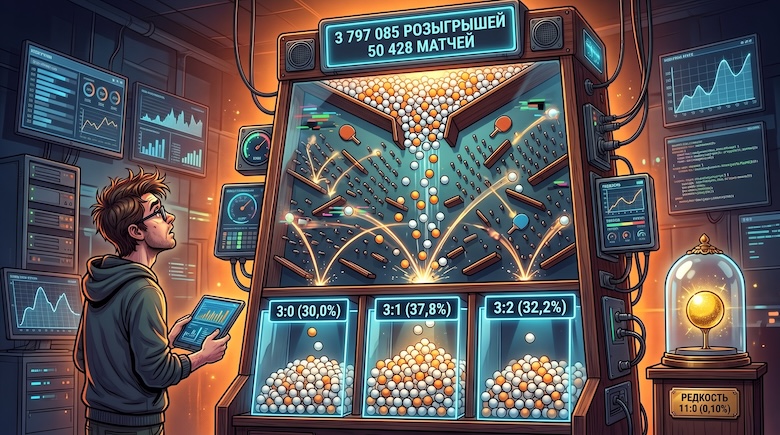
Если лидер при счёте 2:0 выигрывает настольный теннис в 90,6% случаев, то ставить на него должно быть выгодно. Но реальность вновь показала: математика работает, а букмекер её тоже знает. К тому же в таком стохастическом виде спорта, как настольный теннис, есть и другие интересные закономерности. Первая партия, подача, усталость к вечеру и дуэли «клиентов» с «мучителями» ведут себя не так, как подсказывает интуиция. Обыграть букмекера в итоге не удастся. Или всё-таки удастся? Я проверил на себе, и вот что получилось.
Мы собрали подборку из топ-10 проектов по рейтингу на сайте Product Radar за сентябрь 2026 года.
Product Radar — здесь каждую неделю публикуются лучшие онлайн-сервисы и железки от русскоязычных команд. Это площадка, где энтузиасты из мира технологий делятся своими идеями, обсуждают и создают вместе новые продукты, чтобы делать жизнь людей лучше.
Show features live chat sessions with breeders, a podcast and updates on dogs’ progress from birth to weigh-ins
A 24-hour Finnish TV show dedicated entirely to the live progress of a dog and her six newborn puppies is drawing millions of viewers.
As well as a 24-hour webcam, Pentulive (Puppy Live) includes live evening chat sessions with the dogs’ breeder, a podcast and an instant notification service that updates followers on the puppies’ progress – from their birth to weigh-ins and first nail trims – for eight weeks.
Адаптируем десктопные USB‑токены для работы на мобильных устройствах. Даже если производитель не закладывал поддержку мобильных устройств, это исправимо.
Emmanuel Macron has described the fatal shooting in a Paris suburb as a terrorist and racist attack which "marked a turning point" in the history of France.
CES 2026 loved these innovative headphones that transform into a Bluetooth speaker. After living with them, I’m impressed by the engineering, but less impressed by the sound.
BYD debuted Yangwang U9, a high-performance fully-electric supercar pitted against Ferrari NV and Lamborghini, on Tuesday, Jan. 16, 2024, in Shenzhen, China. —Qilai Shen-Bloomberg-Getty Images
For four decades, China’s rise was built on an extraordinary bargain with the world. China offered labor, scale and, eventually, an industrial ecosystem of unparalleled depth. The world supplied technology, capital and markets. China became richer. The rest of the world got cheaper and increasingly better goods. By the middle of this century, that bargain will have to change. Not because China’s manufacturing model has failed, but because it has become too successful.
Over the past few years, the United States has imposed tariffs and export controls. Multinational companies have adopted “China plus one” strategies. Supply chain resilience has become a boardroom obsession. Yet China’s exports have continued to grow, helping to cushion its weakening domestic economy. Its goods trade surplus reached a record $1.2 trillion in 2025. But it would be a mistake to assume that this can carry on indefinitely. Increasingly, what is economically efficient is no longer politically tenable.
China’s manufacturing dominance is generating resistance. And not only in America. Europe worries about the erosion of its industrial base. Developing countries welcome Chinese investment and admire aspects of China’s development experience, but still ask a reasonable question: where, in this model, is our development?
Most countries do not simply want to buy Chinese electric vehicles, batteries, solar panels, machinery and robots. They want factories of their own. They want their workers to acquire new skills and their suppliers to move up the value chain. They want technology and know-how. For years, Western companies complained that access to China’s enormous market came with demands for technology transfers. Now, China finds itself on the other side of the table, being asked to share its own expertise.
China cannot indefinitely remain the world’s manufacturer indefinitely. Its great economic challenge over the next few decades will be to remain deeply embedded in a global economy increasingly shaped by protectionism and national security. The answer may lie in a new role: a shift from being the factory of the world to an exporter of industrial and technological capabilities.
The new China model
China’s real advantage lies no longer in cheap labor or subsidies, but in the accumulated learning embedded in perhaps the densest industrial ecosystem the world has ever seen. What China can now export is not just what it makes, but what it has learnt about how to make it.
The industrial ecosystem that China built around smartphones accumulated expertise in batteries, sensors, precision manufacturing and power electronics. Those capabilities then migrated into electric vehicles. EVs, in turn, spurred further advances in batteries, chips and automation. Automation fed into robotics. Knowledge compounds as it moves between industries, suppliers, engineers and firms. Each industry creates capabilities that make the next one easier to build. This is China’s innovation flywheel.
The important question now is whether that learning can travel. Neither Brazil nor Indonesia can recreate Shenzhen by decree. But they need not retrace the 30 years China spent building it. They can build on what China has already learnt. Chinese companies can bring machinery, engineers, production processes and supply-chain expertise with them. Local workers learn; local suppliers improve.
Knowledge that took decades to accumulate in China can thus accelerate development elsewhere. That would be a very different model of Chinese globalization: not simply exporting the products of China’s industrial ecosystem, but giving other countries access to the knowledge embedded within it.
Such a shift is already under way. In Brazil, BYD is moving from importing cars to manufacturing them locally and developing local suppliers. In Hungary, it is pairing its first European passenger-car factory with a research and development center that will work with Hungarian universities and companies.
In Indonesia, Chinese investment is helping to build an integrated battery industry stretching from nickel processing to battery production and recycling. These early examples point to a different relationship with the world: one based less on exporting what China makes than on exporting the capability to make it.
At first glance, this may sound like a loss for China. Why give up production at home? Why train tomorrow’s competitors? Because the alternative may be worse. Countries increasingly want options. They do not want their economic future to depend overwhelmingly on any single supplier, Chinese or American.
The greater the dependence, the greater the political pressure to unwind it. A similar logic applies to artificial intelligence. The competition between the United States and China over AI is usually described as a race: who has the most powerful chips, the most computing power and the best frontier models? But another contest may matter just as much: whose AI is used most widely?
America retains formidable advantages at the technological frontier. China’s constraints have pushed its ecosystem in a somewhat different direction: toward efficiency, lower-cost deployment, open models and rapid downstream application. Chinese developers have strong incentives to spread their models widely, allow others to adapt them and capture value from the ecosystem that grows around them. The world’s most downloaded family of open AI models is Chinese: Alibaba’s Qwen.
From China, with love
Technologies that transform economies are not always the most advanced ones. Adoption and the intensity of use matter as much as proximity to the technological frontier. For much of the world, the AI that would matter most may not be the most intelligent model ever built. It may instead be one model that is cheap enough, open enough and adaptable enough to be used everywhere.
Openness is not simply an act of generosity. It can also be an economic strategy. Open systems surrender some rents at the core while creating larger markets for applications, integration and services. If China cannot monopolize the technological frontier, it can compete by making technology cheaper, more adaptable and more ubiquitous.
China itself offers the greatest modern demonstration of what technological diffusion can accomplish. After it began reforming and opening up its economy in the 1980s, foreign companies brought capital, manufacturing methods, management expertise and technology. Chinese workers and engineers learnt from them. Domestic suppliers emerged. Chinese companies adapted foreign technologies and eventually became innovators in their own right. themselves.
China has now reached the other side of that development process. By 2050, the most important measure of China’s economic success will not be how much it sells to the rest of the world, or how much of the world’s manufacturing remains within Chinese supply chains or whether a Chinese model tops every AI benchmark. It will likely be whether China’s success can help generate success for other countries.
Speaking in Shanghai in July, Xi Jinping argued that AI technologies should be “shared” so that countries could benefit from them more equitably. He also called for greater efforts to build AI capabilities in the Global South. The instinct is the right one. Dominance breeds resistance. Diffusion gives a reason for others to remain connected. For four decades, China benefited enormously from a world willing to share capital, technology, knowledge and markets.
The question for the next few decades is whether China can do the same for others.
Ускорение сборки не всегда требует менять сам процесс сборки. Иногда достаточно перестать заново скачивать и собирать то, что уже было получено на предыдущем запуске. Вопрос в том, что именно стоит сохранять между запусками и средствами какого уровня это лучше делать.
Разбираем два варианта кэширования зависимостей в GitLab CI и показываем, как выбрать подход с учетом того, как устроена сборка.
Show features live chat sessions with breeders, a podcast and updates on dogs’ progress from birth to weigh-ins
A 24-hour Finnish TV show dedicated entirely to the live progress of a dog and her six newborn puppies is drawing millions of viewers.
As well as a 24-hour webcam, Pentulive (Puppy Live) includes live evening chat sessions with the dogs’ breeder, a podcast and an instant notification service that updates followers on the puppies’ progress – from their birth to weigh-ins and first nail trims – for eight weeks.
With the World Series starting soon, owners and players will head to the negotiating table to figure out the next collective bargaining agreement. If neither side can come to an agreement, the 2027 season may be in jeopardy. NBC News' Steven Romo reports.
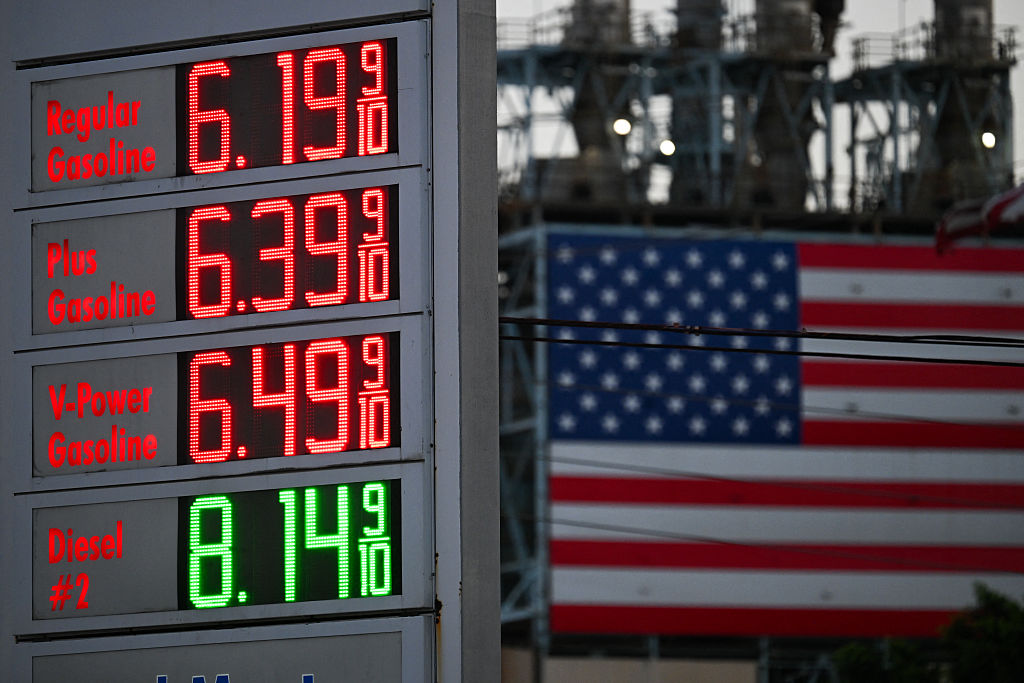
Gas prices at a Shell gas station above $6 a gallon for regular gasoline and $8 a gallon for diesel are displayed across from a U.S. flag outside of the Marathon Petroleum Corp. Los Angeles Refinery in Carson, Calif., on Sept. 22, 2026. —Patrick T. Fallon—AFP/Getty Images
President Donald Trump has invoked a Cold War-era law in an effort to boost oil production and lower energy prices.
In a presidential memorandum issued Thursday, Trump determined that petroleum production, refining, and related activities are essential to national defense under the 1950 Defense Production Act. The determination follows Trump’s declaration of a national energy emergency in January 2025.
“Ensuring resilient domestic petroleum production, refining, and logistics capacity is central to United States defense readiness,” the memo reads. “Without immediate Federal action, United States defense capabilities will remain vulnerable to disruption.”
The memo comes as the price of gas and diesel has soared across the country amid supply disruptions caused by the U.S. and Israel’s war against Iran. Brent crude futures rose 1.2% to $114.47 a barrel early Friday, extending gains after Thursday hit a five-month high. U.S. diesel pump prices averaged $6.32 a gallon, slightly higher than Thursday but below the September record, according to AAA. The high energy prices, and related inflation, have become a defining issue for voters in the coming midterm elections.
Here’s what to know.
What does the memo mean for energy production?
The memo means that energy production shortfalls are seen as a national defense risk.
The memo invokes Section 303 of the Defense Production Act, a law that allows the federal government to intervene in private industry for national defense. Section 303 allows the President to make purchases, purchase commitments, provide financial support and equipment, and expand production through other measures.
The memorandum also removes certain Section 303 requirements through an emergency waiver, including ordinary congressional notification and authorization constraints.
While the memo does not specify which projects could be funded, Vice President J.D. Vance said last week that the Administration would use the Defense Production Act to expand capacity at a Delek U.S. Holdings-owned refinery in Texas.
Without taking action, the memo said, U.S. industry would be unable to provide sufficient energy services in a “timely manner due to constrained financing, long lead times, permitting and infrastructure bottlenecks, and supply chain limitations.”
Has the Defense Production Act been invoked before?
Enacted during the Korean War, the Defense Production Act was first used to expand domestic industries in critical materials, such as aluminum and titanium, for national defense.
Section 303 of the act was also used during the pandemic to fund domestic production of medicines and vaccines. Former President Joe Biden also invoked the statute to support clean energy manufacturing and supply chains, including minerals used in electric vehicle batteries and the production of of energy-efficient heat pumps and insulation.
In April, more than a month after Iran began disrupting shipping through the Strait of Hormuz in retaliation for U.S.-Israeli Feb. 28 strikes, Trump invoked the act to declare petroleum, natural gas, coal, electricity grid, and other energy infrastructure essential to national defense. Citing April’s natural gas determination, the Department of Energy on Monday committed up to $42 million to advance the proposed Constitution Pipeline linking Pennsylvania and New York. The department also announced up to $50 million last week for transmission upgrades in Virginia and West Virginia, citing April’s grid determination.
Last year, Trump signed legislation providing $1 billion for Defense Production Act activities, including energy projects deemed critical to national security.
Trump’s use of Section 303 of the act for fossil fuel projects has drawn criticisms from environmentalists, with the Center for Biological Diversity calling the April memoranda, which waived congressional notification, “unlawful.” Nevertheless, the statute expressly includes energy production and construction in its definition of national defense.
How else has Trump tried to lower energy prices?
The Trump Administration has pursued a number of other measures aimed at lowering energy prices since the Iran War began. Earlier this month, Trump signed an executive order temporarily expanding access to tax-exempt dyed diesel, which is typically reserved for off-road farm and construction vehicles. The Group of 7 countries, including the U.S., also agreed to release 100 million barrels of diesel and crude oil reserves to the world over four months.
In August, the Administration extended the Jones Act waiver for another 90 days, allowing foreign-flagged ships to transport oil and certain other commodities between U.S. ports.
For many of these measures, industry analysts and stakeholders have said the reduction in energy prices is likely to be limited and possibly short-lived. Analysts estimated that the Jones Act waiver was expected to reduce gasoline prices by only pennies per gallon. Capital Economics economist Hamad Hussain said the reserve release could lower diesel prices temporarily, but would not resolve the underlying supply crunch. And analysts warned that the dyed diesel measure would have a limited effect on most consumers since the tax-exempt fuel isn’t widely available at ordinary commercial pumps. A Council on Foreign Relations analysis also suggested that damaged Russian refining capacity may make a near-term effect of the Russia deal on diesel markets unlikely, although Trump said the agreement would supply more than 300,000 tons of diesel to U.S. and global markets immediately.
Meanwhile, oil exports from the Middle East topped prewar levels last week, marking a rebound in regional oil shipments despite continuing security risks. Ships sailing through the Strait of Hormuz, however, still face attacks from Iran, while the Bab el-Mandeb Strait near Yemen has been threatened by the Houthi rebels. Analysts previously told TIME in June that the risk of further attacks and damage to facilities could delay a full-scale recovery.
Thursday’s memorandum could support investment in fuel capacity, but it’s uncertain how quick or measurable an effect it will have on energy prices. Gas prices still depend heavily on globally traded crude, according to the U.S. Energy Information Administration, although they can be influenced by domestic refining and distribution conditions. The U.S. was the largest crude producer globally last year, averaging 13.6 million barrels of crude a day.
Analysts warned, after the April memorandum, that federal support would not necessarily translate into immediate price relief.
“Until the pipes are in the ground and the fuel is flowing or transported, it may not be able to be called a true structural shift,” Cyrus Brooks, director of marketing at energy research firm RBAC, wrote in April.
Still, Brooks said of the April action that federal recognition of energy as important to national security could support important infrastructure investment, potentially relieving a bottleneck in domestic fuel production, refining or transportation.
“Energy security seems to be the brightest neon sign flashing,” he wrote. “Not because it’s everything, but because nothing works without it.”