RSS Feeds
Woman with Ebola in Nigeria confirmed as wife of Swiss diplomat
With MLB lockout looming, World Series readies for two small-market teams
Дайджест новостей: OpenAI нашёл критическую уязвимость в PHP, KYA в массы и QWEN-шпион ком-партии Китая

Привет Хабр!
Делюсь с вами интересными инфоповодами. Сегодняшнее направление моего ресёрча — Агентная экономика и её издержки.
Читать далееNetanyahu closes West Bank after thwarted potential ‘major attack’
Чек‑лист по хранению ключей в репозиториях на основе инцидентов с ИИ‑агентами
Вряд ли я тут кому то открою тайну, рассказом о том, как хранить ключи, но тут прочитал статью на TechCrunch, где рассказывается, что CERT‑In (национальное агентство кибербезопасности Индии) обнаружило, что ИИ‑агенты нескольких разработчиков моделей во время тестов добрались до живых систем индийских организаций. Агентам хватило учетки и настройки подключения, оставленных в конфигурации приложений и публичных репозиториях кода, и слишком широких облачных ролей. При этом пострадавшие организации вторжения сами не заметили.
Поэтому, больше для себя, решил написать чек‑лист, он состоит из девяти пунктов, каждый привязан к способу входа из этих инцидентов и говорит, что проверить, какой командой и как исправить. А в конце написал о том, что делать, если ключ уже утек.
Читать далееLet’s go nuts in the garden – and the cobnut is a great place to start
It’s high time we rediscovered these delicious nuts, but be warned: like the Victorians, squirrels can’t get enough of them
When I think of the crops I’m eager to grow, my mind rarely goes to nuts. But when I spotted the last of the season’s cobnuts at the greengrocer’s, it occurred to me that this could be one to consider. The nuts that come from the hazel – a tree that grows in many a woodland and also my front garden – have been foraged for millennia and cultivated versions have existed since Roman times.
It’s the cultivated varieties you want to plant for a decent crop of cobnuts, as wild hazel produces smaller yields. This is a tree that prefers mild conditions, hence their connection to Kent, where they were grown abundantly during the Victorian era (one of the most popular varieties is called the Kentish cob.) They prefer a sunny spot, in free-draining earth – a challenge for me with my clay soil – in a sheltered position where they’ll be protected from frosts that would affect pollination.
Continue reading...The Trump-Putin love story’s next chapter: selling out Ukraine | Sidney Blumenthal
The US president is portraying Zelenskyy as the villain as he strives for Russia’s approval
If Donald Trump could, he would fly to Munich to sign away Ukraine to Vladimir Putin, and return to wave the document as “peace in our time”, hoping to claim at least the second Fifa peace prize.
Whatever the complicated motives of Neville Chamberlain, his well-grounded fear after the carnage of a world war of another apocalypse and his wishful thinking that Hitler would be satiated after carving up Czechoslovakia, Chamberlain had not sent his son-in-law and former golf partner and real estate partner in advance to cut back-end deals with the Nazis to profit for his family and cronies.
Sidney Blumenthal, former senior adviser to Bill Clinton and Hillary Clinton, has published three books of a projected five-volume political life of Abraham Lincoln: A Self-Made Man, Wrestling With His Angel and All the Powers of Earth. He is a Guardian US columnist and co-host of the Court of History podcast
Continue reading...The 'trad wife-ification' of Elizabeth Holmes – Stateside with Kai and Carter
Nathan Fielder and Lance Oppenheim’s You Can See Everything has packed movie theaters and set records at the box office. It’s also kicked off a debate about, well, pretty much everything that happens on screen – including whether the film's subjects, notorious fraudster Elizabeth Holmes and her mysterious partner Billy Evans, can ever be trusted. Carter Sherman and Guardian arts writer Adrian Horton break down Horton's five-star review of the film, analyze Evans's most shocking moments and chart Holmes' trajectory from girlboss to (maybe) tradwife. They want to know: how did ideas about gender and sex shape this film? Contains spoilers
Continue reading...‘This is a lethal threat’: Indigenous groups fear Bolsonaro’s hold on voters in Brazil’s Amazon towns
Far-right presidential candidate is popular among those who believe more mining can help revitalise local economies
It was the night before the first round of Brazil’s presidential election and Rosimari Monteiro was so excited she couldn’t sleep. The 38-year-old spent hours tossing and turning at her home in the Amazon town of Mucajaí before rising at dawn to cast her vote.
“I was the first person to vote at my polling station … I voted 22, so we got off to a positive start,” recalls Monteiro, as she stands in her sitting room with her two young daughters.
Continue reading...Rubio turns to small Indian town as US faces high oil prices
TabPFN 3.5 — модель работы с табличными данными, умеющая в Фурье-препроцессинг, тестируем по SDD (OpenSpec + OpenCode)
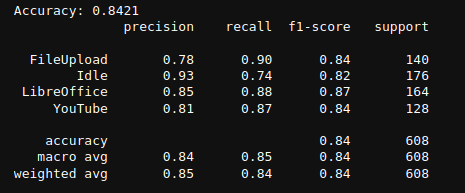
Наконец-то приехала фундаментальная модель, заточенная под работу с табличными данными и уже в базе умеющая препроцессить сырые данные. И у меня дошли руки ее потестировать.
Читать далее'It's part of the culture' - New York bans horse-drawn carriages after more than 160 years
Trump ramps up fraud investigations of immigrants as election approaches
The White House is turning anti-fraud initiatives into a central weapon in its efforts to curb both legal and illegal immigration.
Many Latinos are done with Trump. The shift is especially striking in Texas
Latino voters are souring on the GOP, fueled by frustration over rising costs and the Trump administration's aggressive approach to immigration enforcement.
Trump ordered to answer questions under oath in BBC lawsuit
Woman with Ebola in Nigeria confirmed as wife of Swiss diplomat
The A.I.-Powered Cameras Watching Border Towns, and a Midterms Attack Ad Causes Outrage
What Type of Mattress Is Right for You? (2026)
Meghan says she was informed about 'disturbing allegations' against her father in 2018
Is a job guarantee the solution to mass AI unemployment?
An old idea springs anew as a chorus of influential voices predicts that AI may trigger crises of vast magnitude
In a preface to his book Capitalism and Freedom, the American economist Milton Friedman famously observed that a crisis can propel once-fringe ideas into the political mainstream.
“Only a crisis – actual or perceived – produces real change. When that crisis occurs, the actions that are taken depend on the ideas that are lying around,” he wrote. The job of intellectuals, thinktanks and economists, he argued, is to refine the quality of these ambient ideas, so that good ones are ready when disaster strikes.
Continue reading...Как мы сидели в интернете в 2000-х: было непросто, но дико интересно

Сейчас интернет - это что-то вроде электричества. Он просто есть: дома, на работе, в метро, и вспоминаем мы о нем, только когда он вдруг пропадает, пусть даже в последнее время это случается все чаще. А ведь лет 25-30 назад все было совсем иначе. В интернет тогда не заходили, а именно выходили, и сам выход превращался в целый ритуал. Сначала нужно было дождаться, пока все наговорятся по телефону, потом дозвониться до провайдера, послушать, как скрипит и шипит модем, и только после этого открыть наконец нужную страницу. Которая, к слову, еще и грузиться могла минуту-полторы, а то и две. Звучит как испытание, но вспоминается почему-то с теплом. Вот и давайте вспомним, как это было.
Читать далееИИ в разработке на 1С: не чат, а процесс

ИИ-агенты пишут код все быстрее, а рабочий день разработчика 1С почти не изменился. Он по-прежнему пересказывает задачу агенту в чате, носит бизнес-вопросы аналитику, согласует решение с архитектором, сам меняет статусы и пишет комментарии. Чем сильнее агенты, тем больше времени уходит на эту переноску, а не на код.
Я собрал стенд, где агент работает не в чате, а в процессе. Задача из трекера сама идет по этапам: анализ, архитектура, план, код. Каждый этап агент делает в CI, а аналитик, архитектор и разработчик подключаются только там, где нужно их решение.
В статье — как это устроено, живая задача от заявки до merge, сколько времени это экономит команде и сколько стоит: 68 центов на задачу.
Смотреть путь задачиПочему мы забрали у LLM браузер: 8 выводов после года работы над расширением для промокодов

Изначально отдали GPT полный контроль: вот тебе страница магазина, вот список промокодов, разбирайся. На демо это выглядело хорошо. Ровно до того дня, когда он зашел на страницу оформления, увидел заполненную форму, прикинул, что задача выглядит примерно так, и двинулся нажимать кнопку покупки. Формально он выполнял инструкцию. Фактически мы в этот момент поняли, что полный контроль над чужим браузером LLM давать нельзя. Да и в релизе это было дорого, нестабильно и оказалось местами опасно.
Почти каждая деталь этой системы появилась после того, как что-то сломалось на проде. Так что дальше в основном собраны истории провалов. Предлагаю вашему вниманию разбор в деталях и наши выводы про работу с LLM в Web разработке и про построение AI-native продуктов. Будет полезно! -->
Читать далееGovernors Have an Opportunity to Give Civics Education a Badly Needed Boost

Governors have no shortage of ideas about how to improve education. But before deciding what to change, they need an honest answer to a more basic question: How are our students doing?
That sounds simple. It isn’t.
We governed Tennessee at different times and from different political parties. But we learned the same lesson: you cannot improve what you are unwilling to measure honestly.
Governors will get the chance to see how students in their state are doing in a critical,often-overlooked subject: civics. But they have to sign up by the end of January to get state-level results on the National Assessment of Educational Progress civics assessment, also known as the Nation’s Report Card, or NAEP.
For newly elected governors, that will mean making a quick decision shortly after taking office. It shouldn’t be a hard one, though.
U.S. students get limited instruction, particularly in early grades, about how our government works, the rights and responsibilities of citizens, and how to apply civics knowledge beyond the classroom. Governors can help change that by prioritizing and measuring what students know and can do in civics.
What we know now is limited but concerning: only 1 in 5 eighth graders in U.S. schools reached the NAEP Proficient level on the most recent Nation's Report Card in civics, meaning the vast majority of students likely struggle to identify the separation of powers and checks and balances spelled out in the Constitution.
Unlike in subjects like reading and math, we don't have state-specific information about how our own students are doing compared to students in other states in civics. That puts leaders at a disadvantage when trying to improve schools and communities and help young people develop the civic knowledge and skills they need to excel academically, in the workforce, and in their communities.
But beginning in 2028, if they meet the January deadline, states can get state-specific results in eighth-grade civics rather than just national averages. Tennessee's academic progress over the past two decades serves as an example of why all states should capitalize on this opportunity. In 2007, Tennessee’s extremely low Nation's Report Card scores in reading and math, which contradicted our own state assessment results, served as a wake-up call. Our state got to work raising K-12 expectations, increasing the rigor of our end-of-year state tests, and improving classroom practices.
The strategy worked: Between 2011 and 2015, Tennessee became the fastest-improving state on NAEP. And progress continues. Recently, for the first time, the state ranked in the top quarter of states for reading and math achievement.
This is why we believe NAEP is a particularly valuable tool. It’s considered the gold standard in assessments and is the only common yardstick that measures student learning across the country. It lets us know whether students today are doing better or worse than kids in those same grades did two years or two decades ago and how students in our state are doing compared to other states.
We didn't always have the benefit of state-level NAEP results. NAEP didn’t produce any state-specific data at all until the 1980s, when Tennessee joined other southern states in a pilot program to determine whether valid state results could be obtained from NAEP data. That paved the way toward a federal requirement 25 years ago that results for all 50 states in 4th- and 8th-grade reading and math be reported publicly.
That was a win for states and kids. But today, we have to ask ourselves, what about those other essential things that children learn in school besides reading and math?
States now have an opportunity to answer that question in civics. We hope they'll take it. We know from experience how valuable it is to have an honest, independent measure of how students are doing. Good policy requires good information. And good leadership requires being willing to confront what that information tells us.
Why Are We All So Thirsty For Reality TV Again?
Supreme Court allows New Hampshire to fully ban student IDs for voting in midterms
Raye wins the Mercury Prize with This Music May Contain Hope
Final James Bond screen tests to take place this weekend, reports say
Непостоянство земных недр: почему сутки не равны 24 часам

Как много можно было бы успеть сделать, если бы в сутках было больше 24 часов. Эта мысль часто преследует нас, когда дел становиться все больше, а времени на их выполнение — все меньше. Однако, сутки, на самом деле, не равны 24 часам. К сожалению отклонения не всегда в сторону увеличения и пренебрежительно малы. Тем не менее данное явление колебаний продолжительности суток является объектом интереса научного сообщества. Ученые из Альбертского университета (Канада) провели исследование, в котором установили причины данный колебаний, сокрытые в недрах Земли. Что удалось выяснить ученым, как протекает колебание продолжительности суток, и какие еще интересные данные удалось получить? Ответы на эти вопросы мы найдем в докладе ученых.
Читать далее«Денди», которая умела выходить в интернет

Казалось бы, об эпохальной нинтендовской восьмибитке в России знают всё. Но о том, что «Денди» изначальная — Nintendo Famicom — умела выходить в собственный интернет, слышали немногие. И вот как это было.
Читать далееMelanoma Vaccine Ushers in New Hope for Cancer Patients
The Bukeleization of Latin America Has Arrived
Does Congress Need to Approve the Arch? Trump Says It Did 100 Years Ago.
Fearing Mass A.I. Layoffs, Some in Congress Eye Ways to Aid Workers
Alpha School Claims to Teach Kids Twice as Fast. Many Don’t Make It.
How Long Will Russians Put Up With War? Here’s What They Told Us.
Hegseth Barred Trans Troops. Military Boards Are Rejecting Those Orders.
In Final Surge of Vast Midterm Spending, Parties Make Last-Ditch Appeals
Most Voters Believe the Midterm Elections Will Be Accurate, Poll Finds
The Michigan Senate Race Keeps Getting Nastier
How to ban gerrymandering when the Supreme Court is stacked against you

American elections aren’t what they used to be: Thanks to relentless, politically driven gerrymandering, fewer and fewer congressional seats are truly competitive. Millions of Americans are locked into districts where their vote will never elect the party of their choice.
But gerrymandering is also notoriously hard to fix. Many sitting lawmakers owe their seats to districts that have been wildly contorted to create secure seats. So asking legislators to ban gerrymandering often means asking them to endanger their own jobs.
Nevertheless, the stars may soon align for opponents of partisan electoral maps. Last time Democrats controlled the US House, they passed a bill that sought to eliminate gerrymandering. That bill died in the Senate. But, if the polls are correct, Democrats are poised to take both houses of Congress in November. If President Donald Trump remains an albatross around Republicans’ necks through 2028, Democrats could soon control both elected branches of government.
That’s good news for opponents of gerrymandered maps, because, as recent developments show, any viable solution to congressional gerrymandering will have to come from Congress and not the states. Some blue states, such as California and Virginia, had previously enacted constitutional amendments intended to halt gerrymandering in those states. But Democrats are now trying to bypass those bans because they prevent blue states from countering Republican gerrymanders in red states.
Key takeaways
- Democrats may soon have the votes in Congress to ban gerrymandering, but they still must overcome a hostile Supreme Court.
- Some of Democrats’ top priorities, such as fixing the Supreme Court’s decisions enabling racial gerrymandering, are almost certainly off the table. Others, like independent redistricting commissions, could run into trouble.
- Still, the Constitution should give Congress broad authority to tell states how they must draw maps to make them fair and nonpartisan.
Still, even if Democrats win the next two federal elections in historic landslides, they then must overcome the final boss monster standing between the United States and fair elections: the Supreme Court.
And unless the Court’s membership changes dramatically, that will be no easy task. Until fairly recently, the Supreme Court often blocked racial gerrymanders — those intended to lock voters of a particular race out of power — and it at least held open the possibility that a state’s maps could be struck down because of excessive partisanship.
Now, by contrast, many of the Court’s redistricting decisions read like a love letter to partisan maps. The Court’s Republican majority held in Rucho v. Common Cause (2019) that federal courts are forbidden from hearing cases alleging that a particular legislative map was drawn to benefit one political party. More recently, in Louisiana v. Callais (2026), the Court’s Republicans abolished longstanding safeguards against racial gerrymandering, ushering in a new wave of maps that favor white Republicans in the South.
There’s no way to guarantee that a Republican Supreme Court won’t simply make up a reason to toss out a Democratic voting rights law, no matter what that law says. Still, there are strategic ways to mitigate that risk. Opponents of gerrymandering can maximize the likelihood that redistricting reforms will survive judicial review by paying close attention to what the Supreme Court has already said about race, election law, and other related topics. Many of the Court’s recent cases suggest that Democrats may want to tweak their approach to a federal redistricting law — and the Court’s opinions give clues into how.
Don’t even think about passing a law that mentions race
The most obvious trap that Democrats could fall into when drafting an anti-gerrymandering bill is to mention race, or otherwise draw racial distinctions of any kind.
Until just a few months ago, the federal Voting Rights Act offered some of America’s strongest protections against gerrymandering. A 1982 amendment to that law prevented many racially polarized states — often states where white people vote Republican and Black people vote for Democrats — from drawing maps that maximized white power. This had the side effect of limiting partisan gerrymandering in that space, because requiring these red states to draw more Black-majority districts meant electing more Democrats.
But the Republican justices effectively repealed this amendment, which was signed into law by President Ronald Reagan, in Callais. That’s because all six of the Court’s Republicans swear fealty to an idea known as “colorblindness” — the idea that any law that draws racial distinctions, no matter the purpose, is equally repugnant. Under this theory, laws that aim to lift up historically disadvantaged racial groups are legally indistinguishable from the laws that codified Jim Crow. So, if a new act of Congress requires states to consider race when they draw legislative maps, that new law will almost certainly be struck down by this Court.
Congress takes an extraordinary risk, moreover, if it inserts a race-based provision into a broader law governing redistricting, even if the vast bulk of that law does not concern race at all. NFIB v. Sebelius (2012) is one big example of how that could go wrong: In that case, four of the Republican justices claimed that the entire Affordable Care Act must be struck down because those four concluded that just two provisions of the law are unconstitutional.
The current Court is both much more conservative and much more Republican than the one that heard NFIB — and probably will be just as motivated on the issue of gerrymandering as they were on Obamacare — so a majority of its members could potentially order an entire act of Congress repealed if they deem one provision in that law unconstitutional. And, even if they do not go that far, they still might carve giant holes in a law because of one provision that mentions race.
Democrats seem to understand these limitations: The last time Democrats controlled the House, it passed two significant voting rights bills (both of which died in the Senate). The For the People Act is an omnibus bill that includes many of the Democratic Party’s ideas to improve elections, including several provisions targeting gerrymandering. Meanwhile, the John R. Lewis Voting Rights Advancement Act seeks to undo many of the Supreme Court’s attacks on the Voting Rights Act, the landmark law barring race discrimination in voting, while also enhancing some of the VRA’s protections.
Democrats’ decision to, well, segregate racial reforms from their other voting rights proposals shows that they understand many of the tactical decisions they need to make because of this Court. By placing race-related reforms in the John Lewis Act, while passing non-race-related ideas in the separate For the People Act, Democrats reduce the likelihood that the later bill will fall. It would be extraordinary, even for this Supreme Court, to strike down one law because five or more justices deem an entirely separate law unconstitutional.
But let’s say the Democrats decide the best way to get gerrymandering reform through early next year is by reviving the For the People Act. That bill’s anti-gerrymandering provisions do still contain some references to race which Democrats may want to strip out in an abundance of caution. The bill, for example, would require states to draw their congressional districts using a commission made up of Democrats, Republicans, and people affiliated with neither party. One provision of this bill provides that the pool of potential members of these commissions should be screened to ensure that it is “representative of the demographic groups (including racial, ethnic, economic, and gender) and geographic regions of the State.”
Because this provision requires the government to consider race, this Court would very likely strike it down. If that happens, the Court might simply excise the reference to race from the broader statute and leave the rest of it intact, but there’s a danger that this Court could strike down all of the For the People Act’s provision calling for congressional maps to be drawn by independent commissions — or even possibly the entire Act.
So If Democrats decide the best way to enact gerrymandering reform early next year is by reviving that bill and finally getting it passed, they may want to strip out any mentions of race in an abundance of caution.
Relying on independent redistricting commissions to draw congressional districts is a dicey proposition with this Supreme Court
At least eight states currently use independent commissions to draw legislative maps, and several other states involve commissions in their mapmaking process. It’s a promising model because empirical research does suggest that these commissions are effective in reducing partisanship in legislative maps. One recent study, for example, found that moving from legislatively drawn maps to commissions “would increase the share of competitive seats within a state from 25 percent to 38 percent on average.”
The idea behind an independent commission is to take the task of drawing maps away from a partisan state legislature, and give it to a multipartisan body tasked with drawing maps that favor neither major political party. The For the People Act adopts this model. It proposes that each state should have a 15-member commission consisting of five Democrats, five Republicans, and five people affiliated with neither major party. Elected officials and their immediate family, candidates for office, significant political donors, and lobbyists are all barred from commission membership.
But there’s a constitutional problem with this approach, which arises out of a surprisingly banal question: Who, exactly, would employ these commissioners?
One possibility is to make them federal officials. But if these commissioners are employed by the federal government, the Constitution would probably classify them as “principal officers,” which would mean that they would have to be chosen by the president and confirmed by the Senate. And, in any event, the Court’s “unitary executive” cases establish that, if these commissioners count as federal officials, either the president or one of the president’s subordinates would have to have the power to fire them at-will.
Classifying the mapmaking commissioners as federal officials, in other words, would defeat the purpose of creating the redistricting commissions in the first place — because the commissioners would be partisan officials and not independent actors.
The For the People Act attempts to get around this problem by calling for state-run commissions. It requires each state to “establish a nonpartisan agency,” which will appoint commissioners to draw the state’s maps. But under the Supreme Court’s “anti-commandeering” doctrine, a doctrine that precedes the Roberts Court, the federal government is typically forbidden from ”issu[ing] direct orders to the governments of the States.” So that suggests that Congress may neither order a state to appoint these commissioners, nor control how a state’s commissioners draw the state’s maps.
In fairness, there is a plausible argument that the anti-commandeering doctrine does not apply to federal laws governing congressional elections. The Constitution allows states to determine the “Times, Places and Manner” for holding such elections, but it also permits Congress to “make or alter such Regulations.” So that suggests that, when Congress writes laws governing congressional elections, it may effectively rewrite a state’s laws to conform to the federal government’s wishes.
Still, this argument is untested. And the question of whether Congress can require states to set up redistricting commissions would ultimately be decided by a Supreme Court with a 6-3 Republican majority that is often hostile toward voting rights legislation. The fate of a federal law requiring states to set up their own commissions would depend on six Republican political appointees who were confronted with a law whose very purpose is to take the Republican Party’s gerrymandering tactics off the table.
Maybe these justices would set partisanship aside and allow a law calling for mandatory state-run commissions to exist. But Congress takes an enormous risk if it bets the future of redistricting on an untested legal theory that, at least, plausibly violates the anti-commandeering doctrine. If the Republican justices want to strike such a law down, they won’t have to work hard to come up with an argument for doing so.
Democrats may want to reconsider whether to rely on independent commissions as their primary solution to gerrymandering. At the very least, they should insert language into the For the People Act stating that, if the commissions are struck down, some alternative mechanism to restrict partisan gerrymandering will immediately spring into effect.
So what can Congress do?
Though independent commissions and race-conscious attempts to combat gerrymandering may be vulnerable to constitutional challenges, Congress’s power to “make or alter” the rules governing congressional elections is in the Constitution, and it is quite broad. That should permit Congress to order the states to draw maps using congressionally determined criteria.
Indeed, Congress has long exercised this power to dictate how states must draw their congressional districts. In 1842, for example, Congress required every state to elect members of the US using single-member districts. This law lapsed in 1929, but a similar law was put back into place in 1967. That law, which provides that no congressional district may “elect more than one Representative,” remains on the books today.
Right now, this law prevents states from enacting many promising reforms, such as proportional representation, but the fact that this law has existed for so long suggests that Congress does, in fact, have broad power to dictate how states draw congressional districts.
Some of the Court’s older precedents, moreover, also suggest that Congress’s power over congressional elections is expansive. Recall that the Constitution itself gives both state lawmakers and Congress authority to determine the “Times, Places and Manner” for holding these elections. States typically get the first crack at determining their own election laws, but Congress can “make or alter such Regulations.” In Smiley v. Holm (1932), the Court said that the power to determine the times, places, and manner for holding these elections includes the power “to provide a complete code for congressional elections.”
So that suggests that Congress may lay out a “complete code” governing how congressional districts should be drawn — assuming, of course, that Congress does not violate some other provision of the Constitution, such as the rules against race discrimination.
An act of Congress governing redistricting could take many forms. Congress might, for example, repeal the ban on multi-member districts established by the 1967 law, and implement proportional representation. Such a system could be set up in different ways, but in the simplest version, voters would cast a ballot for the party they want to control Congress, rather than voting for an individual candidate. Seats would then be allocated to parties based on the percentage of votes that party received. So if the Republican Party received 40 percent of the vote in a state with 10 House members, the GOP would get to pick four of those members of Congress.
Alternatively, Congress could retain the one-member-per-district rule, but implement rules governing how those districts must be drawn. The For the People Act, for example, lays out several criteria that the Act’s independent commissions must use when drawing congressional maps. Among other things, districts must “respect communities of interest, neighborhoods, and political subdivisions to the extent practicable.” The act would also prohibit states from redrawing their maps outside of the 10-year cycle established by the US census.
The bill also proposes several mathematical methods, which have names such as the “efficiency gap,” or the “Seats-Votes Curve,” that may be used to evaluate whether a particular map gives an unfair advantage to one political party.
As I’ve already explained, it is unclear whether Congress could actually create independent redistricting commissions. But a law mandating that congressional districts must be drawn in a particular way could still be enforced by a different body — the federal judiciary. If a state drew a map that violated Congress’s new rules, voters or political candidates in that state could file a lawsuit, and a court could order the state to come into compliance with federal law.
That said, one problem with this solution is that litigation often takes a long time. Historically, states that drew illegal maps that were eventually struck down by the courts often got to run one or more elections under the deficient maps before a court could determine that they were unlawful and must be replaced.
Another potential solution is that Congress could require states to “preclear” new maps with federal officials — borrowing from a method the original Voting Rights Act of 1965 used to prevent states from implementing racist maps before those maps could be challenged in litigation. Under that law, some states had to preclear new election rules with either the Justice Department or a DC-based federal court.
Though the Supreme Court effectively neutralized the VRA’s preclearance provision in Shelby County v. Holder (2013), much of the Shelby County decision criticized the VRA for applying preclearance only to some states and not others. So it is possible that this Court might uphold a new preclearance regime that applies to all 50 states. And even if it will not, Congress could adopt a belt-and-suspenders approach — requiring states to preclear their maps and permitting individual citizens to sue in order to challenge those maps. That way, if preclearance is struck down, lawsuits could still move forward.
There is no telling how this Supreme Court, which often makes up new legal rules that cannot be found in the Constitution’s text, would approach a federal law governing how states must draw their congressional maps. But existing precedents suggest that Congress would have broad discretion to design these rules how its members see fit. Outside of the racial context, the Court’s precedents largely limit which institutions may be placed in charge of redistricting or how members of those institutions are selected or removed. They place far fewer restrictions on the substance of federal election law.
Could judges be given the task of drawing maps?
Another way to potentially insulate the mapmaking process from partisan politics is for Congress to pass a law requiring maps to be drawn by judges, who are at least nominally nonpartisan. Virginia’s constitution, for example, provides that its districts shall be drawn by the state supreme court if the state legislature and a redistricting commission are unable to agree on legislative maps.
Similarly, the For the People Act would require a panel of three federal judges to draw a state’s maps if that state either fails to set up a redistricting commission, or the state’s commission does not come up with maps on its own.
Unfortunately, the For the People Act’s proposed process for creating these judge-drawn maps may be unconstitutional. That’s because the Constitution only permits federal courts to decide matters arising out of “cases” or “controversies” — meaning that the matter is presented to the court in a proper lawsuit where a plaintiff, who was actually injured in some way by a defendant, sues that defendant.
The For the People Act seems to contemplate a kind of public hearing, presided over by three judges, where any “interested members of the public may appear and be heard and present testimony” on what a state’s maps should look like. This process, in other words, does not really resemble a lawsuit, where a plaintiff and a defendant both make adversarial arguments and a judge determines which one of them is correct.
Although the bill does indicate that an individual plaintiff may trigger a hearing by filing a formal request with an appropriate court, this individual doesn’t really resemble a party to a lawsuit, in part because they do not appear to have any greater ability to present evidence to the three-judge panel than any other member of the public.
That said, these deficiencies in the For the People Act could probably be fixed with fairly minor tweaks. Instead of allowing any random member of the public to call for a hearing, the bill should identify specific classes of individuals — be they voters within a state, candidates, or political parties — who have standing to sue the state. The ensuing hearing should be conducted like a lawsuit, with both the plaintiff and the state presenting their own arguments for how to design the state’s maps. If Congress also wants the court to consider arguments from the public at large, those arguments could be submitted in amicus briefs.
And, of course, the bill should also lay out a legal criteria that judges can use to determine if a particular map is legal.
The biggest challenge for lawmakers probably won’t be the Constitution. It will be coming up with a solution that actually prevents partisans from drawing biased maps.
At least under current law, Congress has broad discretion to lay out nationwide rules governing congressional mapmaking. A federal law mandating proportional representation, or requiring states to draw compact districts, or mandating that states must use a particular mathematical model to construct maps that are free from partisan bias, or potentially even a law allowing judges to draw maps, would all likely be constitutional — even according to this Supreme Court.
But the fact that a particular law is constitutional does not mean that it will be effective in increasing the number of competitive districts and reducing the role that partisans play in the mapdrawing process.
The most challenging task facing Congress — or, at least, a future Congress that actually wants to do something about gerrymandering — is coming up with rules that actually force states to draw fair maps. It would be a tragedy if Congress enacts a law requiring states to use a particular method to design its districts, only to discover that this method does not actually prevent states from drawing partisan gerrymanders.
In a 2016 speech, for example, former Attorney General Eric Holder mocked states that draw districts that are “only contiguous at low tide” or that are “shaped like a contorted snake.” And he suggested that states should be required to draw maps which ensure that “people who live near each other, and who have similar interests” vote in the same district. Holder, in other words, seemed to suggest that compact districts are superior to ones that spread out throughout much of a state.
But this proposal could actually make some states’ maps more biased. That’s because Democrats tend to cluster together in cities, while Republicans tend to spread out more in rural and suburban areas of a state. So, if a state’s mapmaking process fetishizes drawing nearby voters together into the same district, Democrats may all be packed into urban districts that are so overwhelmingly Democratic that many of the votes cast in these districts will be wasted. Republicans, meanwhile, could be spread out across multiple districts to ensure that their votes are counted more efficiently.
These challenges don’t mean that federal lawmakers should abandon the project of halting partisan gerrymandering. But it does mean that they should proceed with some caution. The worst outcome would be if Congress required states to use a particular method when they draw their maps, and then that method did not achieve what Congress intended it to achieve.
Avoiding this outcome, moreover, will be more difficult because Congress may need to choose second-best solutions to reduce the likelihood that the Supreme Court strikes the entire law down.
It would be better if Congress could address partisan redistricting without an increasingly partisan Court breathing down its members’ necks. But Democrats cannot choose which justices sit on the Supreme Court at the moment they gain a congressional majority large enough to actually legislate. Absent extraordinary events, they will need to do their best to draft a law that this Court will not sabotage.
This story was produced in partnership with Protect Democracy and Journalism Funding Partners.
Prince William makes surprise appearance on Graham Norton Show
Meghan says she was informed about 'disturbing allegations' against her father in 2018
35 бесплатных уроков для бэкенд-разработчиков: Java, Python, Go, архитектура и ИИ

Бэкенд-разработка давно выходит за рамки одного языка: приходится разбираться с производительностью, пересматривать архитектурные решения и осваивать новые инструменты. В подборке — 35 бесплатных уроков OTUS на октябрь и ноябрь: от практики на Python, Java и Go до работы с высокими нагрузками и интеграции ИИ.
Смотреть подборку уроковButtigieg endorses independent over Democratic nominee in Montana Senate race
Detective raped by fellow officer David Carrick calls on Met chief to resign
Linda Williams, who was attacked in 2004, says force’s handling of her case was ‘like being raped all over again’
A detective who was raped by the former Scotland Yard officer David Carrick has called for the head of the Metropolitan police to resign, saying the handling of her case was “like being raped all over again”.
Linda Williams, 60, who has waived her right to anonymity, was attacked by Carrick in 2004. She launched a legal case against the Met for failing to protect her against the serial rapist, and has now settled for an undisclosed six-figure sum without the force admitting liability.
Continue reading...Songs of disenchantment: the sorrow of Nigeria
ИИ ускоряет сотрудника, но замедляет команду: где проходит граница полезной автоматизации

Я Антон Калуцкий, руководитель DEVCOM — экспертного центра аутстаффинга ИТ-специалистов с экспертизой в 1С. Делюсь наблюдениями, как разработчики 1С применяют ИИ в работе, какие задачи ему доверяют и в каких случаях он действительно помогает ускорить разработку.
Мы все чаще используем ИИ в работе: разработчики генерируют код, аналитики готовят требования и документацию, HR составляют описания вакансий и анализируют резюме, а руководители пишут письма, отчеты и протоколы встреч. На первый взгляд, производительность растет: если раньше аналитик тратил четыре часа на документ, то теперь справляется за час, а разработчик получает заготовку кода за несколько минут вместо половины рабочего дня.
Но что происходит с результатом дальше? По моему опыту, сотрудник действительно может работать быстрее в два-три раза, а скорость команды остается прежней. Более того, иногда ИИ замедляет общий процесс, потому что экономия времени на одном этапе оборачивается дополнительной работой на следующем.
Читать далее