A New York theater show about the infamous viral video explores the effects of growing up with internet porn
Among the first questions posed in Two Girls, a verbatim play reconstructing the events of the shock-porn video 2 Girls 1 Cup, is a seemingly simple one: “Can you describe the cup?”
The cup was plastic, insists one interview subject, transparent but also red, “like you get at a pizzeria”. Another man describes the cup, with certainty, as “a tapering, slightly green glass”. A third subject, sounding less certain, suggests it was a clear Ikea glass, six inches tall, adding: “You see into it, which is important.”
After decades of violent displacement and land theft, the country’s quilombola communities are fighting back
For most of his 39 years, Josias Dias dos Santos, known as Jota, has endured degrading cycles of displacement as a quilombola, a descendant of Black people once enslaved on Brazil’s sugar cane and coffee plantations. He says his and other quilombola families subsisting in the rainforests in Pará, northern Brazil, were first forced out of their settlements by violent loggers, then by ranchers and miners.
Yet, they say the worst came with the arrival of the palm oil industry in what is now the country’s most deforested state. Palm oil companies producing biofuels and supplying global customers, subsidised by the federal government, have laid claim to ever larger tracts of traditional quilombola territory over the past two decades.
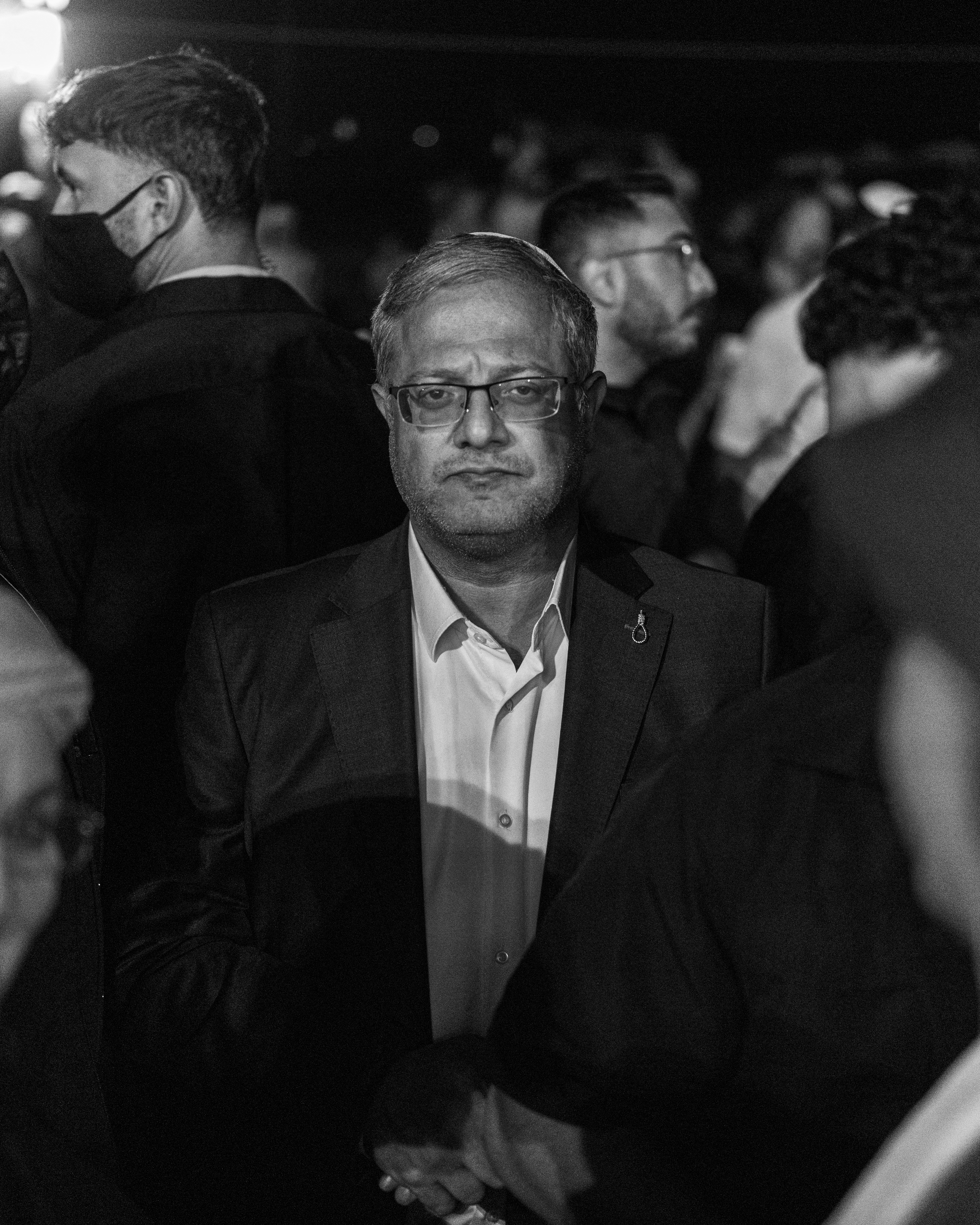
Itamar Ben-Gvir, Israel's national security minister and head of the far-right Otzma Yehudit (Jewish Power) party, arrives for an event commemorating the Jewish holiday of Sukkot, the Feast of the Tabernacles, in a field outside Kibbutz Nir-Am by the Israel-Gaza border on September 27, 2026. —Ilia Yefimovich—AFP/Getty Images
In a small office in the industrial district of Lod, a city outside Tel Aviv where Israeli forces expelled thousands of Palestinians during the 1948 war, sits the campaign headquarters of Otzma Yehudit, or “Jewish Power.” The ultra-nationalist party is led by Itamar Ben-Gvir, a far-right firebrand once deemed too extreme to serve in Israel’s military. He now sits in Benjamin Netanyahu’s cabinet as national security minister, overseeing the country’s police and prison services.
If Ben-Gvir has his way, the Oct. 27 election will give his party more seats in parliament and himself greater leverage over another right-wing government led by Netanyahu. His ambition is not to replace the prime minister but to make him even more dependent on the hardline parties pushing for Palestinians to leave Gaza and the West Bank—and for Israel to extend sovereignty over the territories.
“I want Netanyahu to be prime minister. He’s a leader. I prefer him a million times over Eisenkot,” Ben-Gvir tells me in a rare interview on Oct. 19, referring to Netanyahu’s chief rival, the former military chief Gadi Eisenkot. Pounding his chest, he adds: “What will really help Netanyahu be right wing is if I, Ben-Gvir, will be a senior minister and it’s a full right-wing government.”
The post he covets is defense minister, which would give him command over Israel’s armed forces and greater authority to pursue his vision for Gaza and the West Bank: fewer constraints on military operations, the “voluntary emigration” of Palestinians from both territories, and the expansion of Israeli control over lands he believes belong to the Jewish people. Netanyahu has resisted giving Ben-Gvir the portfolio. But Ben-Gvir and his allies hope to win enough seats to force Netanyahu to accommodate their demands or risk losing power. He may benefit from the rightward shift of Israeli politics, particularly among younger voters drawn to his confrontational style and uncompromising vision of Jewish sovereignty. In a Channel 12 survey of first-time Jewish voters, nearly three-quarters identified as right-wing or center-right.
Polls suggest a tight contest, with Eisenkot’s centrist Yashar party edging ahead of Netanyahu’s Likud in several recent surveys, but neither the prime minister’s right-wing bloc nor the opposition appears close to the 61 Knesset seats needed to govern. An average of four recent polls puts the two camps at roughly 50 and 53 seats, respectively, leaving Arab parties and smaller factions potentially pivotal. The result could be another fragile coalition; an unlikely unity government between Netanyahu and Eisenkot; or a prolonged deadlock that sends Israelis back to the polls.
Ben-Gvir, dressed in a white shirt and white kippah, speaks halting English. Under his leadership, Israel’s prison service has drawn allegations of abuse for its treatment of Palestinian detainees. But he wants a more direct role in determining Israel’s future in Gaza and the West Bank.
“If Israel wants to continue to live and not be destroyed, we have to capture all of Gaza,” he says. “We have to promote voluntary emigration. Gaza could be a Riviera. It’s a beautiful place. But we can’t have one Hamas member there.” His proposal would have Palestinians leave Gaza for countries willing to receive them, and then allow Israelis to establish settlements in the coastal enclave. It would reverse a defining decision of an earlier right-wing prime minister, Ariel Sharon, who in 2005 withdrew Israeli forces and evacuated more than 8,000 Jewish settlers from Gaza.
Ben-Gvir offers no clear explanation of which countries would accept large numbers of Palestinians, or how their departure could be considered voluntary under the conditions he proposes. “Gaza was always ours,” he says. “Israel is a tiny country. We have to be wider, broader. Hamas are terrorists who don’t just want to destroy Israel. They want to destroy the whole world.”
When I suggest that removing Palestinians from Gaza and resettling it would deepen Israel’s international isolation, he dismisses the concern. “I think that the stronger we are, we won’t be isolated,” he says. “Israel is isolated when it’s weak. If we help the population leave Gaza, we can be very strong.”
Ben-Gvir’s rhetoric and policy designs have drawn widespread condemnation at home and abroad, with critics across the political spectrum accusing him of inciting war crimes and eroding the foundations of Israeli democracy. “He’s a source of immense trouble,” Efraim Halevy, a former head of the Mossad, tells me.
His ambitions in the West Bank are no less sweeping. Ben-Gvir wants Israel to annex the territory, which he, like most Israelis, calls by its biblical names, Judea and Samaria. It is home to 3.3 million Palestinians and partially governed by the Palestinian Authority (PA), created by the 1993 Oslo Accords that envisioned a Palestinian state. Controlled by the Fatah party, the PA has a lightly armed security force that is trained by the U.S. military and historically works with Israel to suppress terror attacks. But Ben-Gvir wants Israeli security control over the area Palestinians envisage as the heartland of a future state. “We need to take away the weapons for the Palestinian Authority,” he says. “As of now, they are training in Jericho. They’re not training to direct traffic, are they? They want to do another Oct. 7.” A spokesperson for the PA did not respond to a request for comment.
The vision goes beyond annexation. Ben-Gvir says he would encourage millions of Palestinians who have lived in the West Bank for generations to pack up and go. “We want sovereignty in Judea and Samaria, where we also want voluntary emigration,” he says. “Just so we understand, we want voluntary emigration—not kicking anyone out. People will choose the option to leave.”
Whether Ben-Gvir can translate those ambitions into official Israeli policy will depend in part on the leverage his party wins on Oct. 27. He is counting on voters to strengthen his hand. “I hope the nation sends its message,” he says.
Ben-Gvir, 50, was born into a relatively secular Jewish family of Iraqi and Kurdish descent in Mevaseret Zion, a suburb of Jerusalem. His mother had belonged to the Irgun, the Jewish underground that fought British rule before Israel’s founding, but his parents were, by all accounts, not ideological zealots. Ben-Gvir took a different path. He became religious at 12 and, amid the violence of the first Palestinian intifada, gravitated toward the teachings of Meir Kahane, the American-born rabbi who advocated expelling Arabs from Israel and the occupied territories. By his teens, he was an activist in Kahane’s movement, which Israel eventually outlawed as a terrorist organization. Ben-Gvir was considered so extreme that the Israeli military barred him from compulsory service.
Today, Ben-Gvir continues to revere Kahane, even as he disavows some of his mentor’s most fanatical positions. “I went to his yeshiva. He did a lot of good things. He protected Jews. He was murdered sanctifying God’s name,” he tells me. “Not everything that he did do I fully agree with. In the past, I thought we should kick out all the Arabs from the land of Israel. Now I think there can be some. I accept that there are some Arabs who live here. And I have no problem with part of them. Those who recognize the State of Israel as the Jewish state. Those who are loyal to the Jewish State.”
As a young adult, Ben-Gvir moved to Kiryat Arba, a Jewish settlement overlooking the Palestinian city of Hebron, where Kahane’s legacy runs particularly deep. According to published accounts, he and his future wife, Ayala, visited the grave of Baruch Goldstein on their first date. Goldstein, an American-born physician and Kahane admirer, had massacred 29 Palestinian Muslims at prayer in Hebron in 1994 before being beaten to death by survivors. For years, Ben-Gvir displayed Goldstein’s portrait in his living room. He became an attorney for Jewish settlers and activists accused of extremist violence. He also acquired a criminal record, including convictions for incitement to racism and supporting a terrorist organization.
For years, Ben-Gvir remained on the fringes of Israeli politics, a familiar presence at settler demonstrations but an unlikely candidate for national office. Over time, he softened some of his rhetoric, publicly distanced himself from Kahane’s demand to remove all Arabs, and cultivated a more approachable persona without abandoning his annexationist aspirations.
His political breakthrough came under Netanyahu. Ahead of the 2022 election, the prime minister helped broker an alliance between Ben-Gvir’s party and Bezalel Smotrich’s Religious Zionism, giving Netanyahu enough seats to assemble a government. Netanyahu’s decision to bring two Jewish supremacists into government became emblematic of Israel’s rightward turn—and one of the factors in its growing international isolation.
As national security minister, Ben-Gvir has pursued a hardline agenda: expanding civilian gun ownership, imposing an increasingly draconian regime onPalestinian prisoners, and pressing for tougher policing of anti-government protests. He wore a noose-shaped pin as he championed legislation imposing the death penalty on Palestinians convicted of deadly terrorist attacks, and released an AI-generated video depicting Palestinian prisoners emerging from Israeli jails emaciated and weeping, a grotesque statement about the conditions of their confinement.
Ben-Gvir also encouraged Jewish prayer at the Jerusalem holy site known to Jews as the Temple Mount and to Muslims as Haram al-Sharif, challenging a decades-old arrangement governing the disputed religious site, which has traditionally permitted non-Muslims to visit but reserved the right to worship there for Muslims. Under Ben-Gvir, Israeli police have increasingly allowed Jews to pray at the site,a deliberate provocation to the Arab world, drawing condemnation from Palestinian and Jordanian authorities. “It used to be an apartheid up there and Jews could not pray,” he tells me. “That could not happen in any normal country. I returned justice to the Temple Mount.”
Ben-Gvir has also become one of the leading voices on the Israeli right seeking to shift responsibility for Oct. 7 away from Netanyahu and onto Israel’s military and intelligence establishment. Among the claims he repeats is that security officials failed to wake the prime minister as the attack unfolded—which is disputed by former security officials.
“Even if he’s not perfect, and even if he made mistakes, and he indeed made mistakes, what screwed him up on Oct. 7 was our intelligence,” Ben-Gvir says of Netanyahu. “The army, the intelligence, the Shin Bet. They are all to blame,” he adds. “Netanyahu is not clear of blame, but there are many people who are more at fault than him.”
Ben-Gvir’s relationship with the prime minister is not exactly warm. “I’m not backing him; I’m not his crony on everything. I think he’s much better than Eisenkot,” Ben-Gvir says. “I want to be next to him. I want him to be very strong. I want to pull him to the right.”
He tells me he would not join a unity government between Netanyahu and Eisenkot, a possibility if neither can assemble a governing coalition. “Governments like that are never good,” he says. “It's dancing in two weddings.” Besides, he adds, “It won’t fulfill my dreams.”
What Ben-Gvir wants from another Netanyahu government would place him at odds with the diplomatic framework advanced by the Trump Administration and its partners in Europe and the Arab world. The American-led Board of Peace envisions Gaza’s reconstruction under Palestinian leadership, the withdrawal of Israeli forces, and a possible path toward Palestinian statehood.
Ben-Gvir, on the other hand, wants Israeli sovereignty and the departure of much of Gaza’s Palestinian population. He cites polling that he says shows 52% of Gazans want to leave the territory, devastated by years of war and Hamas rule. If Israel helps that majority leave, he reasons, those who remain will eventually want to follow. “They will see it is successful for them, they’ll see there’s a future, there’s a life,” he says. “There’s good places in the world. Pretty places.” He offers no evidence that the remaining population would choose to relocate, or how such a migration could be arranged without coercion.
For Ben-Gvir and his allies, the coming election offers a chance to advance a far-reaching transformation of Israeli politics and society—to move the country toward a maximalist vision of a Jewish state, one with expanded territorial ambitions, fewer judicial constraints, and a government less inclined to heed international objections. Ben-Gvir dismisses concerns that such policies would cement Israel’s status as a pariah state. In his telling, the military campaigns against Hamas, Hezbollah, and Iran demonstrate the value of uncompromising power. “We made Israel stronger,” he says. “When Israel is stronger, the world respects that.”
Experts say Russia is trying to destroy energy infrastructure before winter and US ‘appeasement and flattery’ will not achieve peace
Russia has carried out a massive “demonstrative” attack on Ukraine, bombarding Kyiv with ballistic missiles just hours after Vladimir Putin said he had agreed to resume trilateral negotiations after talks with the US envoy Steve Witkoff.
Overnight, Moscow pounded the Ukrainian capital, killing at least two people and wounding 22, including four children. Targets included the southern bridge over the Dnipro River, civilian houses, energy infrastructure, an ambulance station, office buildings and a clinic.
The president thrust Springfield, Ohio, into the spotlight with a false pet-eating claim - years later, it remains at the heart of the immigration debate.
ALL NEW: After a man is murdered and his wife is found dead, it feeds into a local legend of a "cursed" house. "48 Hours" correspondent Peter Van Sant reports Saturday, Oct. 24 at 10/9c on CBS and streaming on Paramount+.
It's time for a history lesson, gang! Personal finance has changed a lot over 300 years of American history, but some beliefs about money and markets may be timeless. On this episode, Jill and Mark break format for a special interview with historian and author, Joseph Moore. You won't want to miss Joseph's unexpected insights!
When the sun goes down, the wind picks up in central New Mexico, whipping through arid canyons with a ghostly howl that for centuries, locals have likened to the wails of the folkloric ghost La Llorona.
A few hours east of Albuquerque, this June, those gusts began powering the largest wind farm this continent has ever seen, twirling over 900 colossal steel turbines. Each is as tall as the Statue of Liberty, scattered across a patch of desert roughly the size of Chicago. They plug into a 550-mile transmission line stitched across the Southwest and are now powering over one million homes — as far away as California.
The SunZia Wind and Transmission project is a rare 21st-century triumph of American infrastructure, an engineering marvel that generates more electricity than the Hoover Dam. When the turbines came online this spring, they immediately broke records for wind-generated power in California’s energy supply, where solar power may rule the day, but the winds of New Mexico increasingly fuel the night.
Key takeaways
SunZia, the largest clean energy megaproject in US history, finally came online this June, sending New Mexico wind power to customers in Arizona and California.
For over a decade and a half, the project was delayed by permitting issues, lawsuits, and above all, an energy market that wasn’t ready for the power it had to offer.
With the nation’s electricity demand skyrocketing, SunZia’s collaboration with conservationists may offer a blueprint for getting more megaprojects built.
After years of stagnant power growth, the US is absolutely starving for more electricity, with demand projected to rise by 25 percent by the end of this decade, and a staggering 78 percent by 2050. Enormous as this challenge might seem, it may ultimately be the catalyst the country needs to dramatically dial up its renewable energy infrastructure, so that the years to come are powered not by gas or coal, but by clean energy sources like the sun and the wind. By next summer, the project will have prevented about 9 million metric tons of carbon dioxide from entering the atmosphere, according to Pattern Energy, the project’s developer.
For decades, however, it seemed the project would remain little more than a spectral dream.
“It works!” This was the call Hunter Armistead, Pattern’s CEO, remembers getting from his head engineer when the turbines came online for the very first time. “We were creating power, and it was showing up 550 miles away in Phoenix, almost as if it was magic.” During the ribbon-cutting for the wind farm, some construction workers showed off massive new turbine tattoos. “It’s their pride that for the rest of their lives, they can drive by and tell their kid, ‘I did this,’” Armistead said.
But SunZia almost didn’t get built at all. It is not just the project’s scale that makes it remarkable, but the utter morass its developers slogged through to bring it online. The project spanned five presidential administrations, an ownership change, a major reroute, and a standoff with a US military base.
It also involved a series of lawsuits from local tribal communities and environmental advocates, some of which remain pending even as the turbines now finally whirl. Building any renewable megaproject requires vast amounts of space, and hyperspecific natural conditions, like a wind that blows at night or a reliably sun-soaked desert plain. Then getting that energy to major cities means traversing some of the most pristine, spectacular natural corridors this nation has left, and particularly in the Southwest, rubbing up against the sacred lands of local tribal communities.
The decades-long saga to settle some of these tensions has turned SunZia into a helpful lesson, and for many, deserved or not, it became the ultimate poster child for permitting reform. And for many years, the country’s need for power didn’t seem to call for such a wildly ambitious project anyway. But in the interim, as the world changed, SunZia changed too, becoming — at least in some places — a better and more collaborative project than it was when it began. And now, with a nation finally focused on building more clean energy megaprojects, it can offer a glimpse of what’s to come, even a blueprint of what could be.
The real reason(s) it took so long for SunZia to get built
When SunZia was first proposed in 2006, the same year Twitter went online, coal was still the most important electricity source in America, and the nation’s appetite for electricity had remained nearly flat year after year.
Sen. Martin Heinrich of New Mexico, for one, has cited SunZia as a key impetus for his co-sponsoring the Senate’s new plan for permitting reform. This would make it easier for the federal government to coordinate approval processes for interstate transmission lines, ensuring that they happen concurrently and preventing one state from dragging its heels.
The project had faced one particularly large and sticky permitting challenge: getting the power through the White Sands Missile Range. But this, and other challenges, were eventually resolved relatively quickly. And to David Hayes, who served as deputy secretary of the Department of the Interior during the Obama administration, this suggests that financing hamstrung the project even more than red tape.
“The facts are the facts, and they got their permit,” said Hayes — all the way back in 2015, not long after the Obama administration put SunZia on a “fast-track” to approval. “So we finally got the permit done. Hooray, right? And then nothing happens. Nothing happens.”
Part of that was the fact that the two states where SunZia wanted to build its transmission lines were not entirely on board. But it was also the sheer expense involved in building the project, especially given that the federal approval required burying parts of the transmission line near the missile range. Moreover, even if everything went perfectly with the project’s permitting process, it might have been impossible to build SunZia back then, said Armistead, because “we really didn’t have the market need for it.”
The US simply wasn’t as ravenous for new electricity as it is right now, and the importance of building out the future of energy was not enticing enough for investors on its own.
But, refusing to die a slow death of a thousand permitting blockades or financial setbacks, SunZia instead evolved. Pattern Energy, initially only in charge of developing the wind farm portion of the project, took over the transmission line project in 2022. Around that time, SunZia applied for a revised federal permit, one that would circumvent the missile range, and within less than two years — a relative sprint for federal bureaucracy — they had a new approval in hand. Then came $11 billion in financing from several global financial institutions, pension funds, and clean energy investors. Then, a few years of construction time later, the Americas’ biggest wind farm was finally switched on.
And more massive projects like this will be needed because nowadays, “there is no longer the excuse” of a market unready for high volumes of clean energy, Armistead told me. “It is game time, and we’re supposed to get this done.”
What America’s biggest clean energy project got right
One of the secrets to SunZia’s ultimate success in New Mexico was the project’s ability to strike compromises, even with some of its earliest critics. In some cases, a bunch of birds.
Right about now, the earliest migratory birds, like the crimson-capped sandhill crane, have begun arriving at their Southwestern wintering grounds, not far from some of SunZia’s newly operational high-voltage transmission lines.
This crane had nearly gone extinct before, driven in part by an explosion of new hydroelectric dams in the early 20th century, whose construction dried out local wetlands. SunZia’s initial route, which was planned across one of the most congested flyways in the country, threatened them again, birders feared, alongside other migratory species who might accidentally fly into the new power lines, a threat believed to kill millions of birds nationwide each year.
While SunZia’s original developer, the Southwestern Power Group, was largely unmoved by those concerns, said Sarah Rose, vice president of climate at the National Audubon Society, the nonprofit found an unusually receptive partner to compromise when Pattern Energy took over.
“They took their role as a project developer really seriously,” she said, “and I think they engaged with us with a lot of integrity and a lot of good faith.” Under a rerouting plan, original power lines were moved north, erected next to existing infrastructure, or affixed with visual warning systems or bird diverters. Not only did the changes make the bird advocates happy, but they were enough to help convince the New Mexico Public Regulation Commission, which had rejected SunZia’s permit application a few years earlier in part due to these concerns, to unanimously approve the project in 2022.
To be clear, not everybody believed Pattern always made the appropriate compromises, especially in Arizona, where SunZia’s route remained unchanged under the new management. Peter Else, a local environmentalist, has spent years fighting SunZia in court over its intrusion into the scenic San Pedro Valley, a region that is sacred to Indigenous communities such as the Tohono O’odham Nation and San Carlos Apache Tribe. To see it marred by more power lines through the landscape has been like “mourning a death,” Else said, “like an ecological homicide.”
He would have liked to see SunZia try to run the valley’s new power lines alongside existing ones, as it managed to do in parts of New Mexico, a process that Armistead told me would not have been possible because the Arizona portion of the line “was already put to bed,” and the original federal permit had found the valley to be “the least impactful and best route.” A lawsuit from the Tohono O’odham Nation and San Carlos Apache Tribe accusing SunZia and the Department of the Interior of failing to protect the valley remains pending.
Of course, climate change threatens many of these regions more than a single power line. In the two decades it took SunZia to begin pumping clean energy across state lines, waves of extreme heat have taken tens of thousands of American lives, and the entire Southwest has continued in a megadrought unseen in the past 1,200 years.
These are some of the very concerns that SunZia seeks, in part, to combat. And if we want to avoid even more heat deaths, extreme droughts, more flash floods, and more habitat destruction, then we probably will need a lot more facilities like it, some of which will require hard tradeoffs.
But they aren’t doomed always to. It may have taken SunZia over a decade to learn that lesson, but for future megaprojects, the blueprint may already be there. The nearby 280-mile high-voltage Southline Transmission Project spanning parts of Arizona and New Mexico is set to begin construction next year, and it’s been so intentional about minimizing its ecological and cultural impact that even Else praised it as a good idea. And this approach could pave the way for even more essential large-scale projects like it. “If more folks could come to the table looking for solutions as opposed to expecting conflict,” Rose said, “I think we would be able to move a lot more quickly.” Ideally, it won’t take another 20 years.
This story was supported by a grant from Arnold Ventures. Vox had full discretion over the content of this reporting.
Rep. Ilhan Omar (D-MN) poses for a portrait in her office on Capitol Hill on Wednesday December 10, 2025. | Demetrius Freeman/The Washington Post via Getty Images
Welcome to The Midterms, Actually. Every week I’ll be writing about two things: one big idea or trend I see forming across the 2026 primaries, and one thing I’m hearing from a voice on the ground. Let’s get into it.
One thing I’m thinking about: Electability and identity are intertwined
On Sunday, former President Barack Obama did something most others seemed to avoid: He called out the Trump administration’s targeting of Rep. Ilhan Omar.
The administration, Obama wrote, is “actively trying to deport Congresswoman Omar” over a theory he called unsubstantiated: that she was 18, not 17, when her father was naturalized. The effort, he said, “should outrage all Americans, regardless of how they feel about Congresswoman Omar’s political views.”
The statement stands in contrast to the mixed response of Democrats on the campaign trail and the relative silence of the mainstream press. House leadership put out a statement condemning the raid — but there’s been nothing from Senate Democratic leadership and little from the crop of elected officials expected to run for president in 2028.
As The Intercept’s Adam Johnson pointed out, the August 2025 raid on former Trump adviser John Bolton drew scathing editorials from the New York Times, Washington Post, and the Wall Street Journal within days. The same goes for other ways Trump has weaponized the federal government against his political enemies, from the cases against James Comey and New York Attorney General Letitia James to the pursuit of Federal Reserve officials (Obama named all three in his statement). Omar’s raid has drawn much less intense coverage. Last week, I got three requests from cable outlets to discuss “news of the day” — each mentioned fired White House press secretary Katie Zacharia, new midterms polling, and some combination of Pete Hegseth and the war with Iran. None mentioned Omar.
The entire episode has reminded me of Trump’s targeting of Black journalists like Don Lemon and Georgia Fort. Earlier this year, they were indicted after covering an anti-ICE protest that disrupted a service at Cities Church in St. Paul, and both have pleaded not guilty. In that case, there was also a muted reaction from the establishment press, possibly because of mixed feelings about Lemon personally or the lack of solidarity with independent Black media. Still, that silence was shortsighted, as the Trump administration used the incident as a stepping stone to target the wider media apparatus (See: Trump’s September attempt to bar CNN, MS NOW, and Politico from the White House).
With that in mind, I don’t think it’s hard to guess why Omar hasn’t received the fulsome backing of her party. I don’t think it’s the merits of the case: She hasn’t been charged with a crime, and the theory depends on a decades-old immigration filing by a father who died in 2020. It’s likely the fact that the Minnesota progressive has herself had a tense relationship with the Democratic establishment. That dates back to the 2019 fight over comments Omar made about the influence of the pro-Israel lobby in Congress, which some took to be antisemitic. In recent weeks, Minnesota Democrats, including Rep. Angie Craig and Sen. Amy Klobuchar’s office, criticized Omar’s plans to appear at an October 26 event hosted by state Sen. Omar Fateh with Hasan Piker, the controversial leftist Twitch streamer who has become a lightning rod in this year’s primaries.
But there’s another factor that we should also name in this episode: Islamophobia. As I discussed with Mehdi Hasan on Substack Live a couple weeks ago, the rise of the progressive left cannot be untangled from Muslim elected officials who have become its face: Omar in Minnesota, Abdul El-Sayed in Michigan, and Zohran Mamdani in New York City. And in each case, these candidates have faced attacks that explicitly seek to frame their religion and identity as inherently anti-American, a threat not only to our national values but our democracy itself.
Asked on CBS whether he believed El-Sayed was a terrorist, Republican Mike Rogers said to “look at the data — it’s pretty clear.” In a recent television ad (a seven-figure buy titled “Threat”) launched by Rogers and the National Republican Senatorial Committee, its narrator says, “Abdul raises money from dangerous people who finance terrorist networks,” tying the candidate to the Muslim Brotherhood and al-Qaeda. The NRSC’s ads also notably use his full name, Abdulrahman Mohamed El-Sayed.
But importantly, it’s not just Republicans engaging in overt bigotry. They have also been aided by moderate Democrats and the press, who have used the guise of “electability” to beat the same drum. Think back to the New York City mayoral race, where (Democrat!) Andrew Cuomo spent the final weeks running a campaign virtually indistinguishable from the tactics of the MAGA right. On a radio show, host Sid Rosenberg said Mamdani would cheer if another 9/11 happened, and Cuomo laughed, seeming to agree. Cuomo’s X account even posted, then deleted, an AI-generated ad called “Criminals for Zohran Mamdani,” which opens with a fake Mamdani eating rice with his hands. The campaign blamed a “junior staffer.”
The worst part: In following Republicans down the road of interrogating the Scary Muslims, we perpetrate a form of hate that has real costs. Just this May, two teenagers opened fire at the Islamic Center of San Diego, killing three people, and left behind a manifesto invoking the Christchurch mosque shooter. Analysts at the Anti-Defamation League found it expressed sweeping hatred of Muslims, Jews, Black and Hispanic people, and the LGBTQ+ community.
And journalistically, we avoid a more nuanced conversation that is the one worth having: the connection between identity and electability.
And journalistically, we avoid a more nuanced conversation that is the one worth having: the connection between identity and electability. The discussion about candidates El-Sayed and Mamdani, to this point, has focused on whether their progressive policy stances can play well in a general election. However, research shows that while candidates of marginalized backgrounds (women, Black and Latinos, Arabs, etc.) face an electoral penalty from voters regardless of ideology or political party, that’s especially true for Muslim candidates. A study of state legislative races in Politics and Religion this year found Muslim candidates were roughly 16 percentage points less likely to win general elections than non-Muslim candidates, and 10–15 points behind other racial minorities. Experiments by the political scientist Nazita Lajevardi, cited in that paper, found voters about 10 percent less likely to pick a Muslim candidate over a white one, with religion rather than race as the trigger.
This would seem to explain some of the reason El-Sayed seems to be running behind other Senate Democrats (if we believe the polling). But you rarely hear that reasoning given by the electability crowd, who more than often cites his progressive beliefs, and are we just supposed to nominate Christian white guys forever?
Here’s what is undeniable: Republicans have become quite adept at putting minority communities against each other in the Trump era, and they’re running that playbook in Michigan. Whether it’s telling Black communities that emerging immigrant populations are taking their jobs or telling immigrant communities that Democrats are too focused on Black issues, the strategy has been to exploit the racial tension at the heart of the Democratic base. And to some degree — it’s working.
In an August interview with Clay Cane at The Grio, a Black-focused outlet, El-Sayed said “mistrust among Black folk in Metro Detroit is well-founded,” pointing to what he described as tensions between some Arab and Muslim business owners. And the skepticism runs the other way too — as part of the difficulty El-Sayed has faced in Black communities is tied to the Islamophobia among that voting block. One example: At a July campaign event for Haley Stevens, a Farmington school board trustee told a Michigan Chronicle reporter, “Don’t just come in here speaking Arabic,” remarks the Council on American Islamic Relations condemned as anti-Arab racism and many read as aimed at El-Sayed. At an August 19 press conference, an older Black man in Detroit shouted at El-Sayed, “He’s an Arab — he don’t care nothing about Black folks.”
The layered nature of this issue should not be hard to grasp. Ask liberals about the 2024 election, and they are quick to point out the racism and sexism faced by candidates like Kamala Harris, and rightly argue that impacted her “electability” just as much as her refusal to break from President Joe Biden or embrace a clear ideological lane. But they conveniently leave out the importance of identity when it comes to Omar, El-Sayed, Mamdani, or even candidates like Francesca Hong in Wisconsin or Angie Nixon in Florida. As Zaid Jilani wrote recently, establishment Democrats are “effectively denying that prejudice exists in the United States if they’re really going to argue that Abdul El-Sayed will perform a few points behind other Democrats because of his PolIcY ViEwS rather than the GOP hating Muslims for 25 years.”
But we should be clear: “Hating Muslims” is not a prejudice that’s limited to the GOP, just as issues like racism, sexism, or antisemitism aren’t housed on one side of the aisle either. And in selectively ignoring the central role that prejudice plays in electoral politics — yes, even with progressive candidates — electability-focused Democrats aid the GOP’s desire to sow discord among their base.
The main reason for Democrats to stand up for Omar or El-Sayed is because it’s right, and they, too, have a place in American democracy. But at minimum, Democrats should see that in ignoring explicit Islamophobia — on the campaign trail or in the White House — they are being rather shortsighted. Trump’s campaign of retribution is unlikely to spare any enemy. Muslims may be the focus right now. But there’s no telling who’s next. You’re either for a multiracial, multifaith coalition — or you’re not.
One thing I’m hearing
This week, we talked to Christian Paz, a Vox correspondent covering national politics and American religion. He’s been reporting from Kansas for an upcoming story on pastor and Democratic Senate candidate Adam Hamilton, whose race has emerged as a major campaign battleground in the final stretch. I wanted to ask him how Hamilton’s faith is shaping his campaign, what he is hearing from voters, and what the race could tell us about the Democrats’ ability to compete in long held Republican states.
How is Adam Hamilton’s background as a pastor shaping his pitch, and what is he doing differently from other Democrats?
Watching Hamilton on the trail, it was remarkable to me how much his Methodist faith was at the heart of everything he talked about: about healthcare, climate, immigration, and foreign policy, about how his personal views either conflict with or bolster his policy stance, about how Trump and the GOP have failed Kansans, and about why he even decided to run (after he spent time dwelling on the Sermon on the Mount). He tailors his stump speech to different audiences, of course: At a progressive book shop, he leaned into a more anti-Trump speech; at a senior center he talked up his more conservative viewpoints on immigration and climate; at a Republicans for Hamilton rally he talked about the political center and why he wants to build a big tent; at a chapel, he led the audience in singing a hymn and quoted extensively from the Gospels as he shared his personally “pro-life” views — but it was all not just tinged, but immersed in Christianity.
“The race already tells us a few things, regardless of who wins or loses: Democrats should be creating opportunities to elevate religious people or clergy who want to run for office.”
It’s something I’ve only seen people like Rev. Raphael Warnock do, when speaking at churches on the campaign trail in 2020 and 2021. And it was different from James Talarico too — this guy leads a megachurch, and at times can slip into a kind of evangelical tone. That’s all pretty different than any other Democrat I’ve watched this cycle.
Hamilton needs to win over Kansans outside his party to have a shot. What were you hearing on the ground talking to voters?
The faith pitch is a huge part of why it does seem like he has a shot at winning: It doesn’t seem like he’s adopting or borrowing the language of the faithful, or their aesthetics, to talk politics, or just pitching the political center as a way to persuade voters. It’s that he’s adopting the tone and language of politics to talk about his faith — not the other way around. And the result is that when he talks about building a big tent, holding heterodox views, coexisting with people you disagree with — people trust and believe him.
I think I talked to more actual independents and Republicans who are backing Hamilton than actual die-hard Democrats over the days I was in Kansas. Some of these folks have voted at the local level for Democrats before, but tended to vote Republican at the national level. What unified those conversations was the sense that they think Hamilton is authentic, is a moral man with good character, and seems to be truly independent.
Others, including Democrats, said they appreciated how much time Hamilton spent talking about freedom of religion and diversity of thought — they liked that he would preface his religious talk with assurances that he wasn’t trying to convert anyone or force religion into people’s lives, but would also say he wasn’t going to compromise on it because of how genuinely he believes those things.
What could this race tell us about Democrats’ ability to reach religious voters in other Republican states?
The race already tells us a few things, regardless of who wins or loses: Democrats should be creating opportunities to elevate religious people or clergy who want to run for office. Those who aspire to run for office should also feel more comfortable talking about their faith if it’s actually a part of their lives. And Democrats shouldn’t feel beholden to the secular/atheist/none of the above/nothing in particular segment of their base because that isn’t big enough to actually win elections.
An American company is still supplying Taser weapons linked to prisoner abuse by Israeli forces. Plus, 12 valuable lessons about life and death by hospice workers
Good morning. An investigation has revealed that Israel is using US-made electroshock weapons on Palestinian detainees. The American company Axon is still supplying the Taser weapons despite evidence they have been used to torture prisoners. The news comes as US volunteers including a lawmaker helping Palestinians harvest olives were detained, and Heidi Levine revealed more details of her violent assault by Israeli settlers.
Human rights groups have condemned allegations of the repeated torture and ill-treatment of detainees held in Israeli detention centres and prisons using electric shock devices, with Amnesty calling for restrictions on exports of such devices. A spokesperson for the Israel Defense Forces said the abuse of detainees was strictly prohibited.
Who was detained by Israel near Nahalin in the occupied West Bank? The Israeli military detained about 80 US, Israeli and British volunteers helping Palestinians harvest olives near Bethlehem, including the New York Democratic congressional nominee Brad Lander, several rabbis and Israel’s former deputy attorney general. Soldiers said the area had been declared a closed military zone.
What more has Levine said about the Israeli settler attack on her? The Washington Post photojournalist who was attacked and seriously injured by Israeli settlers on Friday has described how she was saved with the help of local Palestinians. Witnesses said thee attack on her ceased only when young men used slingshots to aim stones at the settlers, forcing them back.
What is the latest development with US diplomats in the Middle East? The US state department has ordered some diplomats and the families of US government employees to leave Saudi Arabia, as it faces a barrage of near-daily attacks from Yemen’s Houthis. Reports have emerged of similar US withdrawals in UAE, Jordan, Qatar and Bahrain amid concerns of a return to conflict with Iran after the midterm elections.
Where has Elon Musk been spending his election campaign money? Elon Musk’s Super Pac has spent more than $500,000 in New York’s highly competitive 17th congressional district race to help Mike Lawler, the Republican incumbent, hold his seat. Lawler, a moderate Republican, is fending off a challenge from the Democrat Cait Conley in one of the most-watched races that could determine who controls Congress.
What has happened with letters containing white powder being sent to Congress? Nancy Pelosi’s office received “a suspicious letter” on Wednesday in what appears to be the latest incident of ill-intentioned mailings targeted at US Congress members. The offices of more than three dozen members of Congress across the political spectrum have received envelopes containing white powder in recent days.
What is Trump’s polling as the election looms? Donald Trump’s approval rating has sunk to 36%, the lowest recorded, with most respondents expressing frustration over his handling of the US economy, cost of living and Iran war. The president was heckled at least nine times during a campaign event yesterday, and reacted to a supporter punching a demonstrator by saying: “Man, I loved that.”
Mary Peltola’s campaign to represent Alaska in the US Senate has taken her to parts of the massive state’s interior that are inaccessible by road and on the frontlines of the cost-of-living crisis she hopes will make her the first Democrat to win the seat in nearly two decades.
А вы сразу начали использовать новую систему управления проектами?
Привет, Хабр! Знакома ли вам ситуация, когда внедренная ИСУП остается лежать на «полке» несмотря на все затраты: анализ процессов, закупку лицензий, настройку рабочих мест, миграцию данных и обучение сотрудников? Разберемся в статье, где искать проблему и возможно ли полностью отказаться от привычных инструментов в пользу единого ПО.
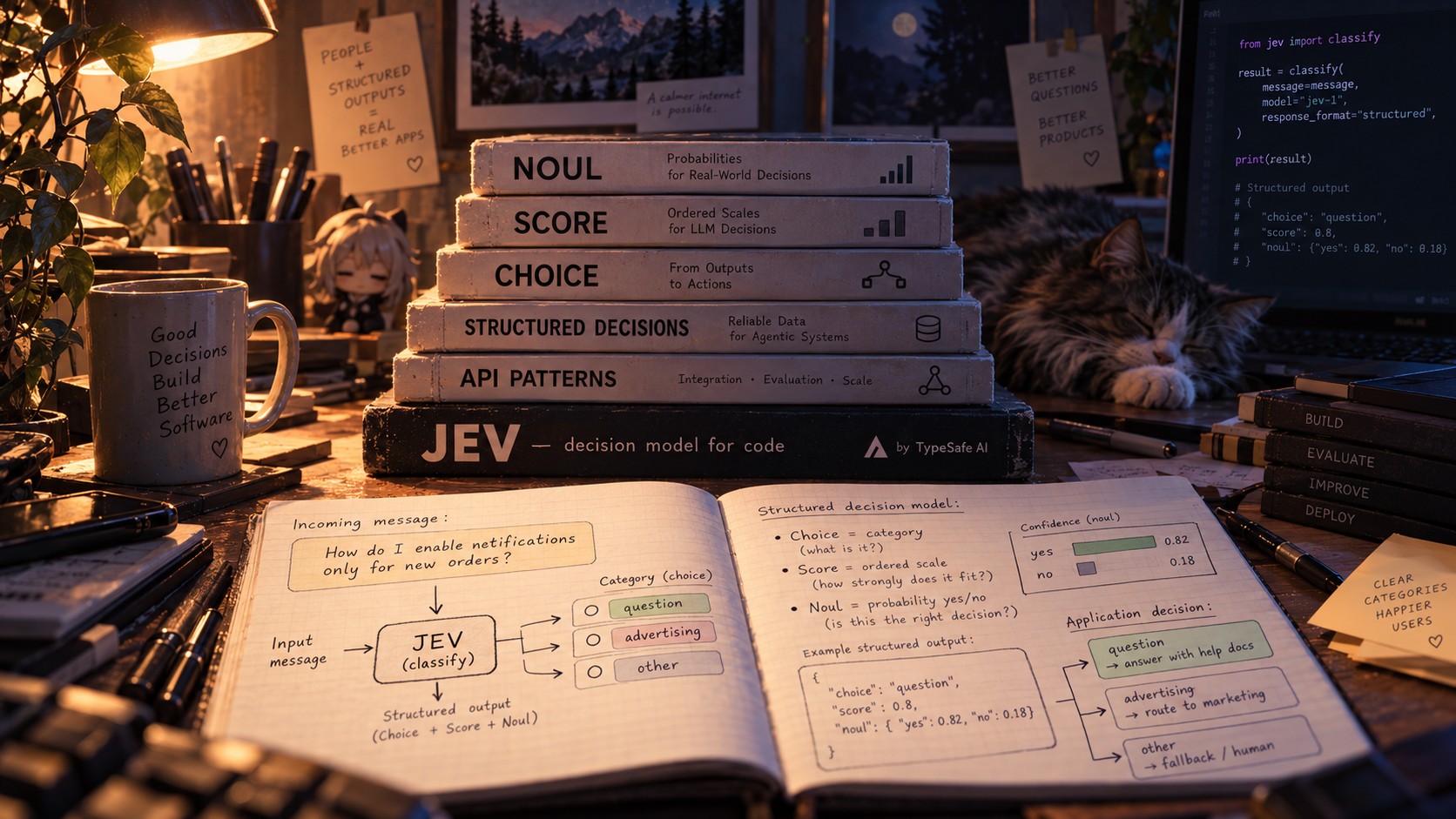
В чат приходит сообщение: «Подскажите, как подключить уведомления только для новых заказов?» Приложению нужно определить его тип: вопрос, реклама или другое. Дальнейшее действие зависит от выбранной категории.
Как ИИ-энтузиаст и технический писатель, который уже более пяти лет пишет об ИИ, я и так знаком со многими терминами. Но потом я подумал: «Есть же термины из области ИИ, которые людям стоит знать, в том числе и более новые».
Поэтому я написал эту статью, чтобы рассказать о 8 терминах и объяснить их как можно проще, не углубляясь в технические детали. В следующий раз, когда вы услышите или прочитаете о них, вы будете знать, что они означают.
ALL NEW: Multiple surveillance cameras capture the final moments of what happened before a mysterious figure ends a woman's life. "48 Hours" correspondent Anne-Marie Green reports Saturday, Oct. 24 at 9/8c on CBS and streaming on Paramount+.
Можно ли превратить обычный VPS в полноценный маршрутизатор MikroTik и связать его с физическим роутером через WireGuard?
Да, но установка CHR отличается от привычной настройки Linux-сервера. После записи образа RouterOS доступ по SSH исчезает, а ошибка в маршрутизации может полностью отрезать сервер от сети.
В статье разбираем установку MikroTik CHR на VPS, первый вход, настройку firewall, создание WireGuard-туннеля и маршрутизацию между двумя локальными сетями. С примерами команд для RouterOS 7, проверкой соединения и разбором ошибок, которые лучше предусмотреть заранее.
A battle for Alabama’s second congressional district is being fought against a backdrop of partisan gerrymandering and America’s ongoing civil rights struggle. Oliver Laughland and Tom Silverstone track down the Maga Republican Rhett Marques who is looking to unseat Democratic incumbent Shomari Figures but won’t answer questions about redistricting. Meanwhile, lower-income residents in rural parts of the district are still fighting for basic sanitation rights after Donald Trump ended federal assistance, which the administration described as 'illegal DEI'.
Kim Aris says ‘hearing her voice again means more than words can express’ amid loosening of detention restrictions
The son of Myanmar’s Aung San Suu Kyi has been allowed to speak to the detained former democratic leader for the first time in more than five years.
“Today, I was finally able to speak with my mother, Daw Aung San Suu Kyi, after more than five years. Hearing her voice again means more than words can express,” Kim Aris said in a post on Facebook on Thursday.
Привет, Хабр! Я Павел Молодан, продуктовый менеджер в UserGate. Последние 20 лет я работал в телекоме, а сейчас вместе с командой занимаюсь интеграцией аппаратного ускорения в продукты UserGate. В этой статье разберу, почему функции защиты замедляют межсетевой экран нового поколения, какие способы ускорения доступны и как FPGA помогает обрабатывать трафик, глубокую инспекцию, тяжелые сессии и шифрование. В финале покажу результаты наших экспериментальных платформ и приведу список вопросов, с которых стоит начинать такой проект у себя.
An earnings briefing on Wednesday revealed ad revenue has slowed since the European Union introduced the Less-Personalized Ads model at the beginning of this year.
Supermarket urges government not to ‘further aggravate’ pressure on costs for businesses in next week’s budget
Sainsbury’s has warned of a “pretty challenging” market in the run-up to Christmas as households are “finding it tough” and food producers face rising costs.
Simon Roberts, the chief executive of the UK’s second biggest supermarket, called on the government not to “further aggravate” pressure on costs for business in this month’s budget. He said it was “important this government does not repeat what we have seen in previous budgets” in raising business rates and employers’ national insurance contributions. “That’s been really hard,” he said.
Kim Aris says ‘hearing her voice again means more than words can express’ amid loosening of detention restrictions
The son of Myanmar’s Aung San Suu Kyi has been allowed to speak to the detained former democratic leader for the first time in more than five years.
“Today, I was finally able to speak with my mother, Daw Aung San Suu Kyi, after more than five years. Hearing her voice again means more than words can express,” Kim Aris said in a post on Facebook on Thursday.
Все данные лежат на быстрых SSD, хотя заказы трёхлетней давности читают раз в квартал. Это значит, что вы платите за дорогую ёмкость там, где она не нужна. Разбираем, как в Postgres Pro Enterprise расширения pgpro_ilm и pgpro_usage сами переносят редко используемые секции, таблицы и индексы на дешёвые диски. Показываем правила, на что они реагируют и какие подводные камни есть у этого механизма.
A coaster dares riders to be daring, with steep drops, high speeds and improbably tight curves. But safety has become a concern again after a man was thrown from his seat and died in Georgia.
Последние два года DAST на схемах DevSecOps рисуют одинаково: прямоугольник после deploy, внутри — ZAP или Nuclei. Сканер получил адрес стенда, вернул отчет, джоба позеленела. Только по зеленой джобе не понять, что проверено. Скан вполне мог закончиться без серьезных находок, потому что до них просто не дошел.
Меня зовут Даниил Слюсарь, я руковожу разработкой продуктов AppSec в Positive Technologies. Разберем, что внутри этого прямоугольника, какие задачи он решает, где ему место в конвейере и почему без него полноценной защиты не получится.