Arsenal are in talks with Bayer Leverkusen over Jarell Quansah. The asking price for the England defender expected to be at least €50m (£43m). He joined the German club from Liverpool last summer for an initial £30m, with the Reds inserting a buy-back clause in the deal.
Britain's Amy Hunt charges to 200m glory to secure her second European Championships gold medal - but the sprinter has her sights set on a historic quadruple in Birmingham.
Благодаря искусственному интеллекту код удешевился. Но ошибочные архитектурные решения остаются такими же дорогими, как и раньше.
Время от времени я спорю сам с собой о том, какие аспекты программной инженерии остались особенно важными в наше время, когда ИИ бегло пишет код. Вывод, к которому я прихожу, не понравится многим опытным разработчикам. Паттерны реализации, на усвоение которых мы потратили годы, стремительно обесцениваются. Но что насчёт умения структурировать системы в духе правильного проектирования? Это умение становится всё более, а не менее востребованным.
Давайте объясню это на конкретном примере. Система электронных продаж, написанная на Java — как раз такая штука, с которой большинство бэкендеров сталкивались хотя бы раз на протяжении карьеры.
Какова основная задача любого живого организма? Выживание и размножение для сохранения вида. Эта базовая мотивация является решающим фактором того, по какому пути идет эволюция того или иного вида. Эволюция нашего вида подарила нам весьма развитый интеллект, который сильно сместил приоритеты, управляющие поведением менее развитых организмов. Но понятие мотивации сохранилось. Любой тип добровольной деятельности подразумевает некое вознаграждение за выполнение определенных задач. Не всегда это нечто материальное, абстрактное вознаграждение также имеет вес. Но что именно мотивирует нас продолжать делать что-то, когда вознаграждение кажется все менее и менее вероятным? Короткий ответ — мозг. Более длинный ответ нашли ученые из Нагойского университета (Япония). Они провели исследование, в ходе которого установили, что орексиновые нейроны могут активироваться/инактивироваться в зависимости от мотивационных нужд. Как именно работают эти нейроны, и что происходит при их полной блокировке? Ответы на эти вопросы мы найдем в докладе ученых.
Привет! Я Дмитрий, старший Angular-разработчик в команде Klecks — платформы для разметки данных AI-Центра Т-Банка.
Последние годы мы жили с NSwag: один api.ts на 13 000 строк, Docker-сборка бэкенда и ожидание по 15—17 минут каждый раз, когда менялся контракт. В рамках одной из задач мы решили перейти к модели, где OpenAPI-файлы лежат в репозитории, а клиент генерируется через ng-openapi-gen. Расскажу, какие проблемы мы пытались решить, что пробовали на стороне ASP.NET Core и какой workflow получился в итоге.
Есть имена, которые не просто вписывают в учебники: они меняют саму оптику, через которую мы смотрим на прогресс. Ада Лавлейс как раз была из таких. Её часто называют первым программистом в истории, но это определение слишком узкое: она не просто написала алгоритм, она сформулировала саму философию того, что компьютер может делать.
На связи Андрей, руководитель направления безопасности облака в Selectel. В статье расскажу, как работать с индексами Wazuh напрямую через OpenSearch. Такой подход пригодится, когда встроенных возможностей Wazuh уже не хватает: нужно собрать собственный отчет, посчитать статистику по всей инфраструктуре, настроить нестандартный алертинг или выгрузить данные для BI и других внешних систем. Вместо того чтобы обходить ограничения дашбордов, мы научимся работать с тем, где эти данные хранятся на самом деле.
Под катом разберем, какие индексы есть в Wazuh 4.14, как устроены документы внутри них, как безопасно читать данные из Python и не создавать лишнюю нагрузку на кластер. А в конце посмотрим, что изменится в Wazuh 5.0 и к чему стоит подготовить свои скрипты уже сейчас. Небольшой спойлер: индексы там переименовали целиком.
Итак, два ряда чисел. Первый — насколько высоко пик каждого цикла стоял над трендом:
1.03 → 0.81 → 0.46 → 0.06
Второй — насколько глубоко дно уходило под тренд:
−0.28 · −0.24 · −0.38 · −0.37
Верхний ряд схлопывается монотонно, четыре цикла подряд, пятнадцать лет. Нижний стоит на месте: все четыре дна укладываются в коридор шириной 0.14. Пик декабря 2013 года стоял над трендом в десять раз. Пик октября 2025 превысил тренд на 15%.
Расхожая формулировка «четырёхлетний цикл умер» склеивает три разные вещи в одну. Тайминг цикла держится как держался: пики приходили на 13, 17, 18 и 18-й месяц после халвинга, максимальные падения — на 26, 29, 30 и 26-й. Дно не затухло вообще. Умер эйфорический верх.
Из этого наблюдения выросла интерактивная сквозная модель:
Broken engine parts were responsible for shattering a window on a Ryanair plane, causing a passenger to be partly sucked out mid-flight in July, US investigators have said.
A preliminary report by the National Transportation Safety Board (NTSB) found an engine fan blade broke off shortly after takeoff on the 10 July flight from Greece to Germany shattering the window and damaging the fuselage.
Firefighters discover body and say more than 40 people hurt in the Lokva Rogoznica and Omiš areas
England has received just 4mm of rain so far in August, or 6% of the long-term average for the month, the Environment Agency said on Friday, as reported by PA.
It follows the driest July on record for the country, when only 7mm of rain was measured, or 10% of the average.
To get past the stage-door entrance of the Queen theater, you need a negative COVID-19 test and a particular type of N95 mask. You have to promise not to eat or drink inside, and answer a questionnaire about your recent whereabouts, and then comes the Secret Service protocol (the sweep, the wands). Once you’re in, the floors normally sticky with spilled drinks are instead dotted with distance-marking tape for reasons that are obvious: this is where President-elect Joe Biden is basing his transition, and President-elect Biden takes COVID-19 very, very seriously.
“They told me we were gonna lose the campaign because of all this, remember?” Biden says in a Dec. 7 interview, gesturing at the precautions from a brown leather chair in a room above the stage. But “the good news,” Biden smiles, is he and his team “didn’t listen to anybody.” Like all such venues these days, the historic Wilmington, Del., playhouse is silent and empty. Instead of concerts, its fading green-and-red murals look down on a new production that’s opened out of town: a semicircle of blue-draped tables surrounding a lectern before a screen projecting the seal of the President-elect of the United States. Upstairs, Biden keeps a 16-ft. distance from everyone as he makes final preparations to take on the role of a lifetime.
—Portrait by Jason Seiler for TIME
As Biden sees it, trusting his instincts and tuning out the naysayers is a big reason why he’s going to be the next Commander in Chief. They said he was too old, too unsteady, too boring. That his pledge to restore the “soul of the nation” felt like antiquated hokum at a moment when Hurricane Trump was tearing through America, ripping through institutions, chewing up norms and spitting them out. “I got widely criticized,” Biden recalls, for “saying that we had to not greet Trump with a clenched fist but with more of an open hand. That we weren’t going to respond to hate with hate.” To him, it wasn’t about fighting Trump with righteous vengeance, or probing any deeper rot that might have contributed to his ascent. Biden believed most voters simply wanted reconciliation after four years of combat, that they craved decency, dignity, experience and competence. “What I got most criticized for was, I said we had to unite America,” he says. “I never came off that message.”
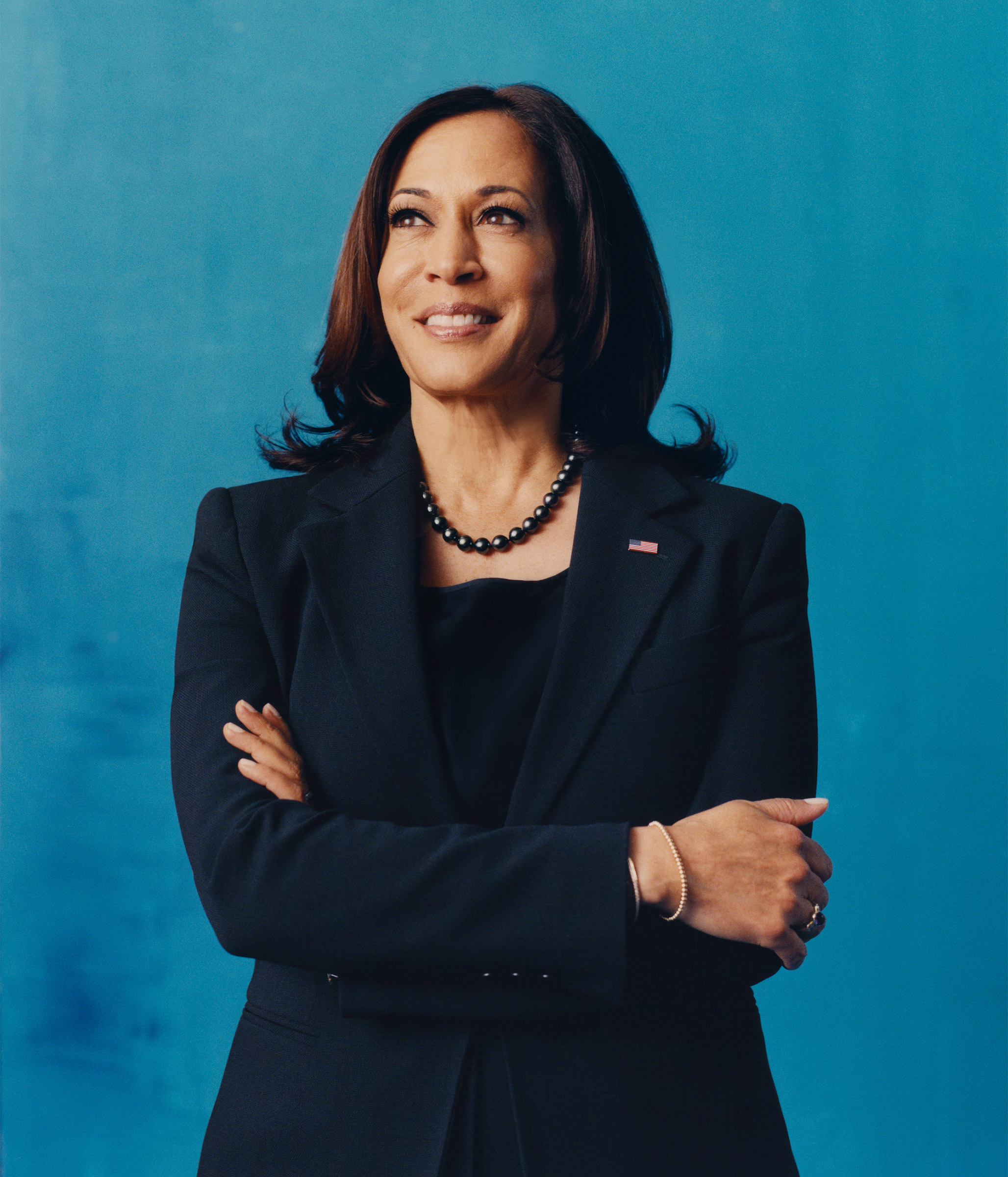
Biden had the vision, set the tone and topped the ticket. But he also recognized what he could not offer on his own, what a 78-year-old white man could never provide: generational change, a fresh perspective, and an embodiment of America’s diversity. For that, he needed Kamala Harris: California Senator, former district attorney and state attorney general, a biracial child of immigrants whose charisma and tough questioning of Trump Administration officials electrified millions of Democrats. The Vice President has never before been a woman, or Black, or Asian American. “I will be the first, but I will not be the last,” Harris says in a separate interview. “That’s about legacy, that’s about creating a pathway, that’s about leaving the door more open than it was when you walked in.”
The Democratic ticket was an unlikely partnership: forged in conflict and fused over Zoom, divided by generation, race and gender. They come from different coasts, different ideologies, different Americas. But they also have much in common, says Biden: working-class backgrounds, blended families, shared values. “We could have been raised by the same mother,” he says. In an age of tribalism, the union aims to demonstrate that differences don’t have to be divides.
No one knows the nature of this type of partnership better than Biden, who lived for eight years in the house Harris is about to move into. He has made the same commitment to her that he extracted from Barack Obama: that the VP will be the last person in the room after meetings, consulted on all big decisions. The two communicate every day, by telephone or text message, and Harris has offered welcome advice on Cabinet selections. “The way that he refers to himself and her when he speaks, he’s already making his biggest decisions with her at [his] side,” says Maya Harris, Kamala’s sister and closest confidant. Picking her as running mate “obviously has historic significance,” she says, “but clearly it’s been a choice that’s not about symbolism. It’s substantive.”
Together, they offered restoration and renewal in a single ticket. And America bought what they were selling: after the highest turnout in a century, they racked up 81 million votes and counting, the most in presidential history, topping Trump by some 7 million votes and flipping five battleground states.
Biden and Harris onstage in Wilmington, Del., at the end of the Democratic National Convention, which was held virtually because of the pandemic. —Olivier Douliery—AFP/Getty Images
Defeating the Minotaur was one thing; finding the way out of the labyrinth is another. A dark winter has descended, and there will be no rest for the victors. Trump is waging information warfare against his own people, the first President in history to openly subvert the peaceful transfer of power. The country has reached a grim new milestone: more than 3,000 COVID-19 deaths in one day. Millions of children are falling behind in their education; millions of parents are out of work. There is not only a COVID-19 crisis and an economic crisis to solve, but also “a long overdue reckoning on racial injustice and a climate crisis,” Harris says. “We have to be able to multitask.”
Given the scale and array of America’s problems, the question may not be whether this team can solve them but whether anyone could. U.S. politics has become a hellscape of intractable polarization, plagued by disinformation and mass delusion. Polling shows three-quarters of Trump voters wrongly believe the election was tainted by fraud. After four years of a White House that acted as a celebrity-driven rage machine, it seems naive to think of the presidency as an engine of progress.
So while Biden will be the 46th man to serve as President, he may be the first since Lincoln to inherit a Republic that is questioning the viability of its union. “This moment was one of those do-or-die moments,” Biden says. “Had Trump won, I think we would have changed the nature of who we are as a country for a long time.” Yet Trump, many experts argue, is not the aberration Biden describes but rather a symptom of America’s chronic conditions: a legacy of racism and widening inequality that undermines both its ideals and its functioning.
Biden and Harris share a faith that empathetic governance can restore the solidarity we’ve lost. Biden told TIME he has lately been reading about Franklin D. Roosevelt’s first 100 days, when FDR worked to pull the nation out of the Great Depression, a feat that helped restore confidence in democracy. “We’re the only country in the world that has come out of every crisis stronger than we went into the crisis,” he insists. “I predict we will come out of this crisis stronger than when we went in.” Their challenge is, above all, not about any one policy, proposal or piece of legislation. It is convincing America that a future exists, for all of us, together. It is nothing less than reconciling America with itself.
They are partners now, but they were rivals once. When the Democratic primary candidates met for their first debate in June 2019, Biden was the front runner, though he didn’t look much like one. His organization was rickety, his speeches baggy, his message seemingly out of step with the party’s mood. Harris looked equally lost, stagnant in the polls and shuffling campaign messages. After launching her campaign with fanfare—20,000 people turned out to her kickoff rally in Oakland, Calif.—she struggled to find her footing in a crowded field.
On a hot night in Miami, the Democrats’ past and future collided. Advisers had warned Biden that rivals would target his sepia-toned musings about compromises struck in Senate cloakrooms. But he wasn’t ready for Harris’ attack. “As the only Black person on this stage, I would like to speak on the issue of race,” she said, turning to address Biden. She told him it was “hurtful” to hear him praise segregationist Senators who had been his colleagues. “Not only that, but you also worked with them to oppose busing,” she continued. “There was a little girl in California who was part of the second class to integrate her public schools, and she was bused to school every day. And that little girl was me.” To Harris’ supporters and many more African Americans, the moment was a battle cry. Biden backers saw an ambush: within hours, her campaign had designed T-shirts with Harris’ childhood picture above those words.
Biden campaigns in New Hampshire on Feb. 9; his fifth-place finish in the primary was a low point, 18 days before his win in South Carolina —Tony Luong for TIME
In fact, the issue was more complex than it seemed. In the 1970s, Biden opposed federally mandated busing, not voluntary programs like the one Harris had participated in in Berkeley. Nor did Harris believe a federal mandate was necessary; her own stance was nearly identical to Biden’s. But to many Americans, it was powerful to see the only Black candidate onstage discuss sensitive policy through the prism of her lived experience. There was neither mystery nor malice to the confrontation. Harris was searching for momentum, and Biden was the primary’s piñata; to many, it seemed inevitable that he would fade, and whoever took him down might inherit the favor of the Democratic establishment.
But Biden was taken aback. Harris had been close with his son Beau while they both served as attorneys general of their states. Despite criticism of his involvement with regressive criminal-justice policy in the 1990s, Biden’s longtime advocacy for civil rights was a point of personal pride and had helped earn him the loyalty of many Black voters. While Biden did not hold a grudge, advisers say, his family, particularly his wife Jill Biden, was upset. Today, she concedes the exchange was a “surprise” because of Harris’ friendship with Beau, who died of brain cancer in 2015, but noted others on the debate stage criticized Biden as well. “This is a marriage, and I feel very protective of my husband and my children, as is any mother,” she tells TIME. “You move beyond it—that’s politics.”
Whatever boost Harris got in the primary was short-lived. She ran low on cash, sank in the polls and dropped out of the race in December. Biden seemed not far behind, limping to a fourth-place finish in Iowa and slipping to fifth in New Hampshire. That was the “lowest point,” Jill Biden recalls. “I had a feeling we weren’t going to win, but I didn’t think we would come in fifth. Nor did Joe.”
Harris stops for lunch in Waterloo, Iowa, in September 2019; she abandoned her presidential bid less than three months later —September Dawn Bottoms for TIME
Biden had always believed his support among Black voters would buoy his campaign in the Feb. 29 South Carolina primary. After a key endorsement from House majority whip Jim Clyburn, he won by nearly 30 points, establishing himself as the most credible alternative to Senator Bernie Sanders, who had been threatening to run away with the race. Fearful that a Sanders nomination would mean a second term for Trump, Biden’s moderate rivals Pete Buttigieg and Amy Klobuchar dropped out and endorsed him. Soon after, Biden cleaned up on Super Tuesday, winning 10 of 14 states and effectively clinching the contest. Harris endorsed Biden the next weekend, the 55th anniversary of Bloody Sunday, just before walking across the Edmund Pettus Bridge in Selma, Ala., with Representative John Lewis.
Biden felt vindicated. Progressives had insisted the party was in a revolutionary mood; instead, voters chose Biden’s pragmatism. Doubters predicted Biden’s record on race would haunt him; instead, he had Black voters to thank for reviving his campaign. Critics had lampooned “unity” as boring pabulum; instead, it seemed to resonate. “I was able to, against advice from a lot of people, do the things that I was told were gonna hurt me politically,” Biden says. “But I would argue that it turned out that that’s what the American people were looking for: they’re looking for some honesty, decency, respect, unity.”
Just as he found his footing, the ground shifted beneath his feet. By March 10, it was clear that the corona-virus would make it impossible to run a traditional campaign. “It was the culmination of all of the work that we’ve done for a year,” says Biden’s deputy campaign manager and incoming White House communications director Kate Bedingfield. “And we were having to think about, How are we going to reinvent campaigning in the general election?”
Biden canceled a planned rally in Ohio and returned to Philadelphia to speak to the whole staff in person for the last time. The campaign headquarters emptied out; the team retreated to their couches, where they marshaled volunteers online and tried to build camaraderie over Signal and Zoom. Biden himself retreated down the winding driveway to his 7,000-sq.-ft. home in Greenville, Del., past poplars, beech and oak trees, to his book-filled study overlooking a lake, where he would spend much of the next eight months.
Campaigns are fueled by excitement; Biden didn’t seem to have it. The situation had its advantages: being homebound disciplined a gaffe-prone candidate, and his themes of empathy and compassion resonated amid the ravages of COVID-19. But running for President online also neutralized Biden’s ability to connect with ordinary people through hugs and handshakes. The candidate’s lack of visibility meant picking a running mate would be one of his few big turns in the spotlight, and a more momentous decision than usual.
President-elect Joe Biden photographed in Wilmington, Del., on Dec. 7 —Camila Falquez for TIME
Biden was looking for his own Biden: someone reliable, simpatico and loyal, as he was to Obama. But he wanted more than compatibility. The septuagenarian nominee needed a youthful governing partner who was prepared to step in as Commander in Chief if needed, and a battle-tested running mate who would not create distractions and could keep the race focused on Trump. As an old white man leading a party reliant on voters of color, young people and women, Biden also needed to balance the ticket. In March, he had promised to pick a female Vice President; over the summer, the racial-justice protests that erupted after George Floyd’s killing increased pressure to choose a Black woman.
Biden’s selection committee, augmented by a team of vetting lawyers, initially interviewed nearly two dozen women, before whittling the list down to 11 people for Biden to interview. After Floyd’s death put racial justice front and center, Harris stood out in her conversations with the committee, discussing criminal-justice legislation she was leading in the Senate and her work on similar issues as attorney general. “She also brought a lived experience as a Black woman,” says Representative Lisa Blunt Rochester, who served as co-chair of the vetting committee. “She could talk from the perspective of her professional life as well as her personal life, and what we could and should do in the wake of his tragic murder.”
At 55, Harris was a generation Biden’s junior. She had experience in federal and state office, and had weathered the scrutiny that comes with running for President, even if her campaign didn’t succeed. She was a versatile politician, moving deftly from dissecting witnesses in hearings to dancing in drum lines. No major factions in the party opposed her, and most Democrats thrilled to the idea of putting the first woman of color on a major presidential ticket. But Biden, the connection candidate, didn’t just see a symbol or an appeal to a particular demographic; he perceived an ability, rooted in her upbringing, to see a better future for Americans like herself. “Her superpower is her multiple identities,” says Glynda Carr, CEO of Higher Heights, a political action committee that helps Black women run for office.
Some Biden allies remained wary of Harris. His family was the hardest sell. But Biden insisted he harbored no hard feelings from the debate skirmish. “He made it very clear that he was a big boy and wasn’t going to let that color him,” says Clyburn, who urged Biden to pick a Black woman and told him that many people, including Clyburn’s own late wife, had rooted for a Biden-Harris ticket from the start. Once Biden decided Harris was the best pick, the rest of the inner circle got behind the decision. Jill Biden was the one who called the vetting committee to inform them of the choice. “At the end of the day, it was his decision, and one that he made essentially alone,” Bedingfield says.
Vice President–elect Kamala Harris photographed in Wilmington, Del., on Dec. 7 —Camila Falquez for TIME
Harris was in her apartment in Washington’s West End neighborhood when her team learned that Biden wanted to reach her. She started getting ready to take the call. Then, an update: Biden wanted to talk over Zoom. A brief panic ensued as she scrambled to get herself video-ready. It “wasn’t actually one of my Zoom days,” she says. “That required a whole preparation process to be Zoom-ready for the Vice President.”
Biden cut to the chase. “Immediately he said, ‘So, you want to do this?’” Harris recalls, paraphrasing their conversation. “That’s who Joe is. There’s no pomp and circumstance with him. He’s a straight shooter.” Her husband Doug Emhoff and Jill Biden soon joined them on the call; within an hour, her apartment filled with campaign staffers carrying briefing binders. The next day, she was in Wilmington, where Jill greeted them with a plate of homemade cookies. To join the Biden campaign was to join the Biden family, and Harris and Emhoff spent about a week visiting with the Bidens and getting to know their kids, while Biden talked over the phone with Harris’ mother-in-law and her adult step-children, Cole and Ella. Harris’ relationship with Emhoff’s kids, who call her Momala, reminded Biden of his own wife’s relationship with his sons Beau and Hunter: a “blended family,” he calls it, where there’s “no distinction in their house.”
Picking a former rival—one whose dynamism might exceed his own—was a move that Trump never would have made. It “revealed a lot about Joe Biden,” says former Representative Steve Israel. “And she had the pronounced effect of mobilizing Democrats across the country.”
Joseph Robinette Biden Jr. has wanted to be President ever since he was a little boy with a mouth full of pebbles, reciting poetry to try to cure himself of his stutter. When his future mother-in-law asked what he planned to make of himself, Biden said “President,” adding, “of the United States.” Before she died in a car accident in 1972, his first wife Neilia told friends her husband would run the country one day; many years later, when Biden was in the twilight of his vice presidency, his son Beau, racked with terminal cancer and beginning to lose his speech, begged him not to abandon public life. He’s run for the Oval Office three times, worked with eight Presidents and served as Vice President for eight years in a career that stretched from the Senate to the Situation Room to countless swing-state diners and union halls. His operatic life story has veered from grief to triumph, rising star to tragic figure, statesman to survivor.
Biden’s American Dream began in the rosy aftermath of World War II, when America was flush with pride from its triumph over fascism. It was a Rockwell upbringing—football games, soda-pop shops—but it wasn’t always easy. At times money was tight; when Joe was 10, the family had to move in with his grandparents before his father found a job selling used cars. Although popular and outgoing, Biden was afflicted with a persistent stutter, which instilled in him a lifelong hatred of bullies and a belief that even the most stubborn obstacles could be overcome. “My mother’d say, ‘Joey, remember, the greatest virtue of all is courage,’” Biden recalls. “Without it you couldn’t love with abandon. And all other virtues depend on it.”
While other teenagers marched against the Vietnam War, Biden glad-handed around the University of Delaware in a sport coat. He was never the best student or hardest worker, but his charm and talent carried him through law school, a brief stint as a public defender and a seat on the New Castle County council. In 1972, as Harris was being bused to third grade, Biden mounted a long-shot bid for Senate. He courted comparisons to John F. Kennedy: a young, ambitious candidate with a big Irish-Catholic family, a photogenic wife and adorable kids, and a message about bringing a new generation to power. Congress had recently lowered the voting age from 21 to 18, and Biden’s sister Valerie, then as now his closest political adviser, organized a brigade of high schoolers to knock on thousands of doors, lifting the 29-year-old to victory over a two-term incumbent.
Just weeks later, the car carrying Biden’s wife and children on a Christmas shopping excursion was broadsided by a truck. Neilia and their 13-month-old daughter Naomi were killed. Biden’s two sons were badly injured. He came close to quitting the Senate before he was sworn in. “His grief makes him human,” says Moe Vela, a former senior adviser. “And he understands that shared humanity, that shared vulnerability, allows him to connect.”
From left: Biden and Jill, his future wife, met in 1975; Harris with her younger sister Maya and mother Shyamala Gopalan in 1968 —Courtesy Jill Biden; Courtesy Kamala Harris
As a Senator, Biden was rarely behind the times, but rarely ahead of them either. As Judiciary Committee chair, he oversaw the hearings into Anita Hill’s sexual harassment allegations against Supreme Court nominee Clarence Thomas, enraging many for not including public testimony by additional witnesses who could testify to Thomas’ pattern of behavior and for allowing the all-white, all-male committee to bully Hill. He championed the 1994 crime bill, which included both tough new sentencing laws and the Violence Against Women Act. He voted for the Defense of Marriage Act, which defined marriage as between a man and a woman, then, nearly two decades later, upstaged Obama by embracing same-sex marriage before the President did. He was a politician who followed public opinion but did not guide it, an institutionalist who believed in the moderating influence of the Senate almost as much as he believed in his own policy preferences.
He carried that disposition into the vice presidency. Once, when Vela was flying to Chile with Biden on Air Force Two, the aide complained in personal terms about a Republican Senator who was blocking an Obama proposal. Biden grabbed Vela’s left forearm with his right hand, as Vela recalls it, and said, “Moe, you’re wrong. That’s my friend. We might not agree every time on how to make America better, but we both agree that we want to make America better.” Biden advised younger politicians to criticize their rivals’ policies without impugning them personally. “Once you start attacking people’s character and their motivations, you prevent them from ever being able to get over the policy disagreement you had, and you lose them as someone you can potentially work with,” explains Delaware Senator Chris Coons, a Biden protégé.
Biden went out of his way to help Republicans where he could, once flying to Moscow and back in a single day to join a GOP colleague for a presentation on nuclear weapons. “Joe has a good heart,” says former Republican Senator John Danforth. “He’s got the temperament and the background to reach out and to work with all kinds of people to make government work again.”
Most of all, Biden became famous for his empathy. The stories are legion: how he hugged a grieving child; called a grandmother on the day her grandson was sworn into the Senate; reached out after a car accident, a cancer diagnosis, a death in the family. One former adviser recalled how Biden held up his entourage on the way out of the Executive Office Building to offer heartfelt thanks to a janitor for mopping a spill; another recalls he and Jill always sent food to the drivers waiting for them outside. During a photo shoot for this story, Biden asked the photographer, Camila Falquez, to FaceTime her parents. “Hola, Mami!” Falquez said as they came on the screen. “Hey, Dad, how are you?” Biden interjected, briefly pulling down his mask so the pair could see his face. “You guys have a wonderful daughter.”
Although Obama picked him in part because he believed Biden had put his presidential ambitions behind him, Biden toyed with running in 2016. He ultimately decided he wasn’t up to it in the wake of Beau’s death. But in 2017, when white supremacists marched in Charlottesville, Va., he decided he had to get back in the game. “He could not have lived with himself if he hadn’t run after Charlottesville,” says Biden’s longtime adviser Ted Kaufman, who is heading the presidential transition. “If he didn’t run and Trump won, he would have spent the rest of his life feeling he could have beaten Trump.”
As Biden was muscling his way through public-speaking requirements at Archmere Academy near Wilmington, in 1958, 19-year-old Shyamala Gopalan arrived in Berkeley to pursue a doctorate in nutrition and endocrinology. She soon realized that she had swapped one caste system for another. While her Tamil Brahman heritage signified her elite status in India, the U.S. was segmented along racial lines. -Gopalan joined a Black study group whose discussions on race helped inform the intellectual underpinnings of the Black Power movement. Malcolm X, Che Guevara and Fidel Castro were considered heroes, one of the group’s leaders, Aubrey LaBrie, told TIME last year. It was there that Gopalan met a Jamaican economics student named Donald Harris. They had two daughters, Kamala and Maya, before divorcing when Kamala was 7.
If Biden grew up in an age of American ascendance, Harris came of age in a nation confronting its legacy of injustice. Her parents took her to civil rights marches in a stroller. After their divorce, Kamala and Maya attended an after-school program decorated with images of Harriet Tubman and Sojourner Truth. Harris has recalled learning about George Washington Carver before she learned about George Washington. In 1970, when she started first grade in Berkeley, Kamala was in one of the first groups of students to be bused to a mostly white school across town in an early local experiment in integration. “Mommy had great expectations for us, but she had even greater expectations of us,” Maya Harris says. “And that sense of responsibility and duty that our mother instilled in us, to leave this world more fair and more just for more people than when we entered it, that sense of responsibility and duty has guided her throughout her life.”
Harris campaigns in McAllen, Texas, on Oct. 30, part of a late play to win the Lone Star State that fell short —Sergio Flores—Bloomberg/Getty Images
Although she grew up among activists and organizers, Kamala Harris wanted to make change by working within the system, not outside of it. At nearly every station in her career, she broke a barrier. In 2004, she was elected San Francisco DA; six years later, she was elected attorney general of California. The balance between “progressive prosecutor” and “top cop” was a delicate one. She implemented new programs for young nonviolent offenders, yet began enforcing truancy laws by threatening parents with fines if their kids missed school. Even in the 2020 campaign, Harris seemed to be juggling allegiances, down to her campaign slogan, “For the People,” intended to evoke her prosecutorial roots while blurring their controversial connotations.
Like Biden, she had a knack for sensing where the political wind was blowing and sometimes disappointed liberal activists. She sought to uphold questionable convictions, declined to support legislation to reduce low-level felonies to misdemeanors and tried to reinstate the death penalty, even though she claimed to oppose it. At the same time, she earned accolades on the left for taking on oil companies, for-profit colleges and predatory mortgage lenders, and for refusing to defend California’s ban on gay marriage. As a newly minted attorney general in 2011, she pulled out of a national mortgage-foreclosure settlement with five big banks when she felt the approximately $2 billion allotted for California didn’t give her constituents adequate restitution. Ultimately she procured a $20 billion settlement. “The fact that she was an AG and had her fingers on every aspect of governance in California will help her in every role she takes in the federal government,” says Doug Gansler, a former Maryland attorney general who served with her during this time.
Harris arrived in the Senate in 2017, the first Indian American in its history. Already a political celebrity, she impressed colleagues as much with her infectious laugh as with her ruthless probing of witnesses. Then–Attorney General Jeff Sessions complained that her rapid-fire questions made him “nervous”; she reduced the current Attorney General, Bill Barr, to stammering when she asked if the White House had ever asked his Justice Department to investigate anyone. In September 2018, her calm but pointed grilling of Supreme Court nominee Brett Kavanaugh went viral, enhancing her reputation on the left.
Harris played an integral role in that year’s bipartisan criminal-justice legislation and co-sponsored the liberal Green New Deal. Though she built a reputation as a serious policymaker, she never carved out a signature issue and seemed to elude ideological definition. She spent just two years in the Senate before launching her bid for President.
After clinching the nomination, Biden set to uniting his party. He won Sanders’ endorsement, solicited advice from Senator Elizabeth Warren and invited well-known progressives to offer policy ideas. “Biden’s ability to hold the party together can’t be overstated,” says veteran Democratic admaker Jim Margolis, who worked for Harris during the primary. “That was an impossible task for Hillary Clinton in 2016. In 2020, it was the name of the game.”
Biden’s political instincts were tested over and over, starting with the summer’s racial-justice protests. Trump was using images of urban riots to associate his rivals with chaos and lawlessness, even embracing vigilantes and far-right militias as symbols of a racist pro-police “law and order” message. Neither Biden nor Harris had been the first choice of racial-justice organizers. To some activists on the left, the idea of reconciliation smacked of weakness. “You call it unity, I call it capitulation,” says Alicia Garza, co-founder of Black Lives Matter and principal at the Black Futures Lab.
Biden sought a middle course. He knelt alongside activists, proposed substantive reforms to address structural racism and embraced the Black Lives Matter mantra. But he rejected calls to “defund the police” and denounced violence and the destruction of property. “I was cautioned by some really smart people. You know, ‘Don’t go out and talk about racial inequity,” Biden says. “‘Don’t mention it because you’re gonna lose the suburbs.’” He ignored them, believing the country had changed since President Richard Nixon’s coded appeals to the racial consciousness of the “silent majority.” “I think the American people are better and more decent than that,” Biden says.
To knock off an incumbent President for just the 10th time in American history, Biden and Harris had to revive the party’s fading strength with white voters without college degrees; energize its emerging base of diverse, urban young voters; and motivate the hordes of angry suburbanites, particularly college graduates and women, who had fled the Trump-era GOP. None of these constituencies would be enough to carry the Electoral College on its own, and leaning too far into any one of them risked alienating another.
A masked Biden speaks to supporters in Philadelphia on Election Day —Drew Angerer—Getty Images
Biden was perhaps the only Democratic candidate who could claw back some of the party’s lost ground with the culturally conservative white voters who dominate the swing states of the Rust Belt. Harris, meanwhile, brought a cultural competency that attracted the next generation of Democrats, right down to her footwear. When she stepped out of a plane in Chuck Taylor sneakers, many voters saw a politician who had literally walked miles in their shoes. Harris’ candidacy was especially meaningful to the Black women who form the backbone of the Democratic Party, and whose turnout was critical in flipping key states. “The electorate is continuing to change, and that demographic change is the story of this election,” says Henry Fernandez, CEO of the African American Research Collaborative. “It’s reflected in Kamala Harris.”
On election night, Biden was at home in Wilmington; 13 members of his family had individually quarantined beforehand in order to watch the returns come in together. Campaign staff gathered in front of a huge screen at the Chase Center nearby. Advisers downplayed the chance of a quick victory. Still, some Democrats panicked early in the night, fearing Trump’s strength in Florida foreshadowed a repeat of 2016. Biden allies reassured supporters that mail ballots would ultimately erase Trump’s lead, but many were anxious. “I sure went to bed depressed,” says longtime donor John Morgan.
Most of the Biden brain trust didn’t go to bed at all. Every hour or two, they were briefed by the campaign’s analytics director, Becca Siegel, who assured them Biden was getting the numbers he needed. “The mood was not dire or panicky,” says Bedingfield. “It was more like the agony of waiting and waiting for something that you know is coming.” For the next four days, the Bidens were “like every other family in America: we were glued to the TV,” Jill Biden recalls.
When the networks finally called the race on Nov. 7, Joe and Jill were away from the television, sitting on lawn chairs in the backyard. All of a sudden loud cheers broke the silence, and their grandchildren came running, shouting, “Pop won!” Once inside, Biden’s first call was to Harris.
Harris saw the news after coming back from a run in Delaware. She rushed back outside to find Emhoff to tell him, and that’s when she got the call from the President-elect. As the streets erupted in celebration, her sister Maya came over for a lunch of bagels and lox, with a plate of bacon to share. For millions across America, it was the dawn of a new era after four years of vexation and strife; for the sisters, watching footage of revelers gathering in front of the little yellow apartment in Berkeley where they grew up, it was as if time had stopped. “We kind of had this brief moment where everything was bursting all around us, but we could just sit for a bit and take it all in before plunging into what was about to become this imminent new, big reality,” Maya says.
Even now, friends say, that reality hasn’t quite sunk in. Harris’ longtime adviser Minyon Moore says she keeps asking: “Do you know you’re the Vice President yet?” And Harris replies, “No, not really, but I’m trying.”
All new Presidents inherit messes from their predecessors, but Biden is the first to have to think about literally decontaminating the White House. Combatting the pandemic is only the start of the challenge, at home and abroad. There are alliances to rebuild, a stimulus package to pass, a government to staff. Biden’s advisers are preparing a slew of Executive Orders: restoring the Deferred Action for Childhood Arrivals immigration program, rejoining the Paris Agreement, reversing the so-called Muslim ban and more. Biden’s “Build Back Better” plan aims to revitalize the virus-wracked economy—which some analysts say is unlikely to fully recover until 2023—by investing in infrastructure, education and childcare. “I think if my plan is able to be implemented,” Biden says, “it’s gonna go down as one of the most progressive Administrations in American history.”
Much of what Biden hopes to do, from Cabinet appointments to legislation, will have to pass a more divided Senate than the one he left a dozen years ago. If Republicans win at least one of Georgia’s two Senate seats in Jan. 5 runoffs, the fate of his agenda will be in the hands of Republican majority leader Mitch McConnell, who, like most GOP members of Congress, has refused even to acknowledge his victory. Biden’s relationships and peace offerings may not be worth much in this climate, says his friend William Cohen, a former GOP Senator. Republicans “will be watching not him but Donald Trump, and acting just as much out of fear of [Trump] in the future as they have in the past.” As in the campaign, the GOP is likely to amplify controversy surrounding Biden’s son Hunter, who on Dec. 9 released a statement acknowledging his tax affairs are under investigation by the U.S. Attorney’s office in Delaware.
Harris and Biden at a high school in Wilmington, Del., on Aug. 12 —Carolyn Kaster—AP
For now, Biden and Harris are busy building a team in a well-ordered sequence, starting with senior White House staff and progressing through clusters of appointments—first foreign policy, then economic officials, then health advisers, and so on. The Biden-Harris Administration is on track to be one of the most diverse in the nation’s history, though it doesn’t go far enough for some. Their relationship has continued to deepen. “The thing that I love that I’ve observed: it’s not stiff, it’s natural,” Jill Biden says. “They’re friends already, and the trust can only continue to grow.” Biden’s big jobs as Vice President—from selling the Recovery Act to negotiating budget deals with McConnell—tended to land in his lap, and he expects it will be similar for Harris, who has not yet announced a dedicated portfolio. To millions, the symbolism of Harris’ role is nearly as important as the substance. “What she’s projecting is America—it has risen just one more time,” Moore says.
Even if Trump still captivates a broad swath of the country, the President-elect believes the rancor will fade as Trump exits stage right. The next few months will be “letting the air out of the balloon,” says Biden. “I think you’re gonna see a lot more cooperation than anybody thinks.” Until then, he and Harris are polishing their scripts and rehearsing their lines inside the Queen. They have just six weeks to prepare. On Jan. 20, the lights will come up, and the show will go on. —With reporting by Alana Abramson, Brian Bennett, Vera Bergengruen, Madeleine Carlisle, Leslie Dickstein, Alejandro de la Garza, Simmone Shah, Lissandra Villa, Olivia B. Waxman and Julia Zorthian
TIME senior correspondent Charlotte Alter sat down with the California senator in Wilmington, Del., on Dec. 7—which happened to be Harris’s mother’s birthday.
“She’d be very proud,” Harris told Alter, when asked what her mother would say as her daughter prepares to take the oath of office. “And she would be very focused on the issues of the day and knowing that I would take seriously the responsibility that I have and will have to address those issues.”
Vice President–elect Kamala Harris photographed in Wilmington, Del., on Dec. 7 —Camila Falquez for TIME
Here are excerpts from Harris’ interview with Alter, edited for clarity.
On what she wants to do first
There’s a lot, to be honest. We’re talking about a public-health crisis that has killed hundreds of thousands of people, has infected tens of millions. We are in the midst of an economic crisis that’s being compared to the Great Depression. A long overdue reckoning on racial injustice. And a climate crisis. We have to be able to multitask, just like any parent or any human being does.
About Joe Biden
I can tell you many things about him with admiration and respect, including that Joe asked me to be his running mate because he understands that we have different life experiences. But he also knows—and I know, and it’s a point of pride for me—that we have an incredible amount of shared experiences and values. We were both raised in strong, hardworking families. We’re grounded in faith. We both have spent our entire careers in public service. I think that’s what makes ours a very full and very robust partnership.
Getting the call
My team got a call that the [former] Vice President would like to speak to you. The anxiety, the tension was high. What was this call gonna be? Instead of going on as some might with their involvement with themselves, immediately [Joe] said, “So, you want to do this?” He just got right to the point. That’s who Joe is. There’s no pomp and circumstance with him. He’s a straight shooter.
Why Biden and Harris won
The country wanted a leader who pledged their ability to heal and to build a broad coalition. The American people said, “Let’s move forward. Let’s understand that regardless of where you live, your race, your ethnicity, the language your grandmother speaks, let’s move forward knowing that the vast majority of us have more in common than what separates us.” It’s about basic stuff. Can I get a job? Are my kids gonna have the opportunity for an education that allows them to reach their God-given capacity? I think that’s what people want as we move forward. And I think that’s what the American people got.
Restoring “the soul of the nation”
Our souls will be well when people know that they can feed their children. When they know that they can have a job that allows them to not only pay the bills by the end of the month, but to have a sense of dignity, in terms of knowing they’re providing for their families and creating a pathway for their future possibilities. The soul of the nation is well when people don’t have to worry about whether they can afford their medical bills, or whether they’ll go bankrupt because they have a family member that’s sick. It’s these basic things that should be considered human rights, frankly, civil rights.
On being first
It is one of my responsibilities. My mother had many sayings. She would say, “Kamala, you may be the first to do many things; make sure you’re not the last.” Which is why [in my victory speech], I said, “I will be the first, but I will not be the last.” And that’s about legacy. That’s about creating a pathway. That’s about leaving the door more open than it was when you walked in. —With reporting by Charlotte Alter and Simmone Shah.
The reality of climate change is unequivocal, its effects are already playing out in every region of the planet, and we need to act now before the outlook gets worse. That was the warning message from the U.N. Intergovernmental Panel on Climate Change (IPCC) in a 4,000-page report, published Aug. 9, which laid out in methodical detail the ways in which human activity has set life on the planet on a collision course.
The U.N.'s climate-science body couldn’t have been more clear: if we continue to emit greenhouse gases at current rates, the effects of climate change will be catastrophic and irreversible. “Recent changes in the climate are widespread, rapid and intensifying—unprecedented in thousands of years,” says Ko Barrett, a vice chair of the IPCC.
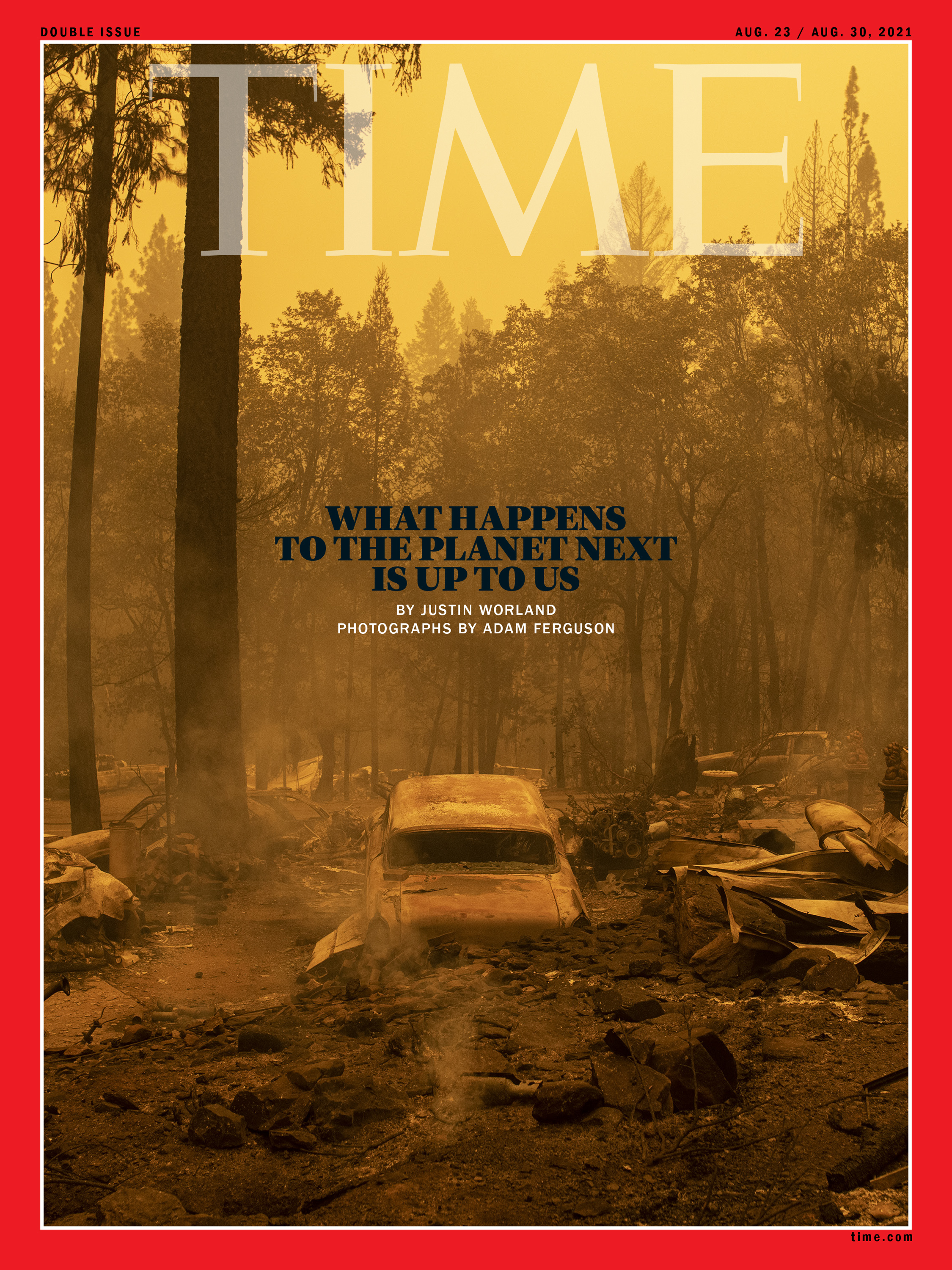
After the Dixie Fire in Indian Falls, Calif., in July. Get a print of TIME's cover. —Photographs by Adam Ferguson for TIME
It’s a revelation shocking to read and perhaps painfully obvious for the countless people who are already feeling the effects—from Germans whose homes were wiped away by floods this year to farmers suffering from ongoing drought in Central America. In the U.S. the nascent climate crisis appears most dramatic in the West, where a combination of drought and extreme heat has created life-threatening conditions.
TIME sent photographer Adam Ferguson on the road across six Western states—from Arizona to Washington—for more than five weeks in June and July to document how climate change is shaping life on the ground. He captured images of empty reservoirs and families who lost loved ones to unbearable heat. He encountered farmers worried about watering their crops and saw the devastation left by wildfires. It’s a searing warning from a particularly iconic region on a planet that is, in so many places, on fire, parched or underwater.
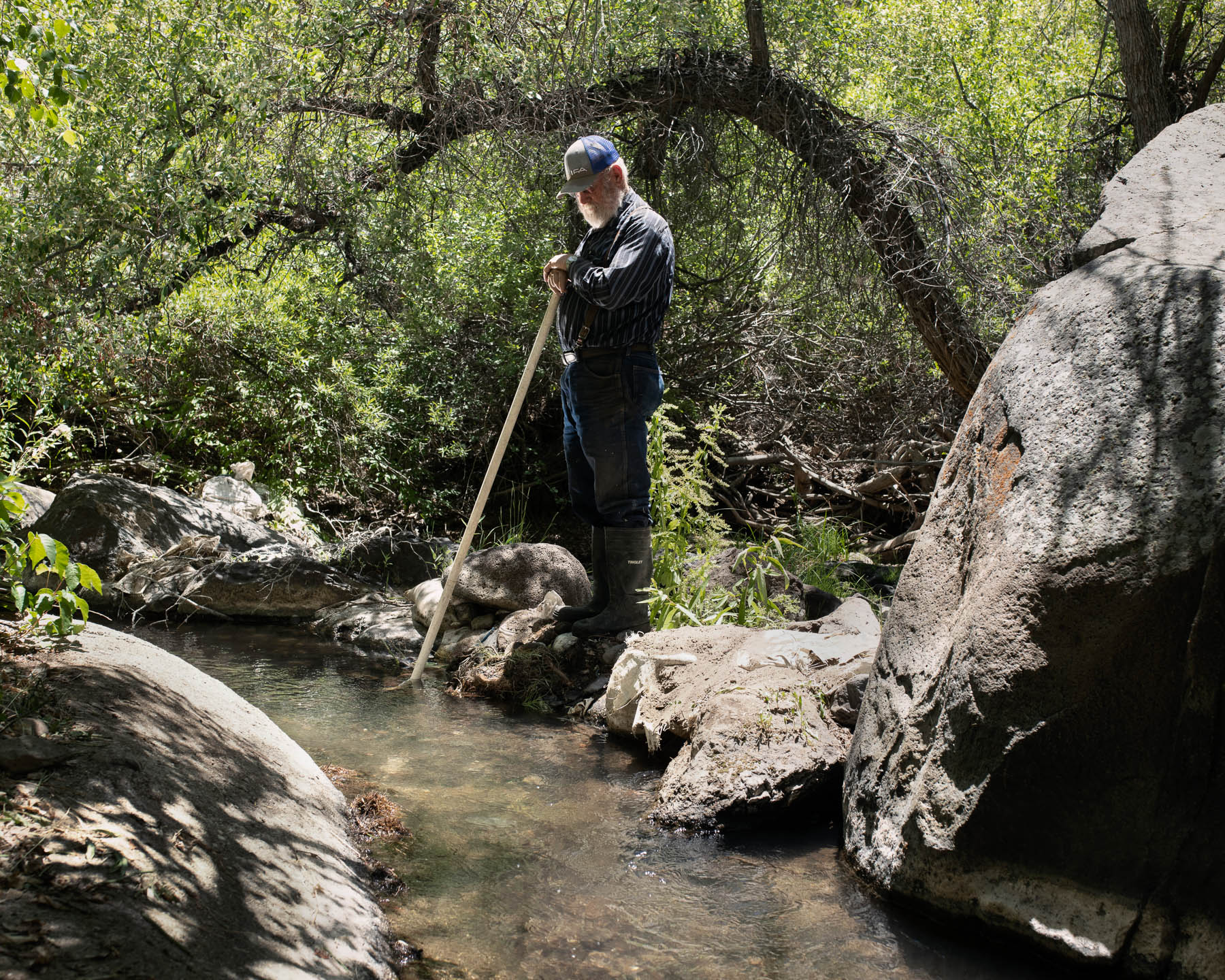
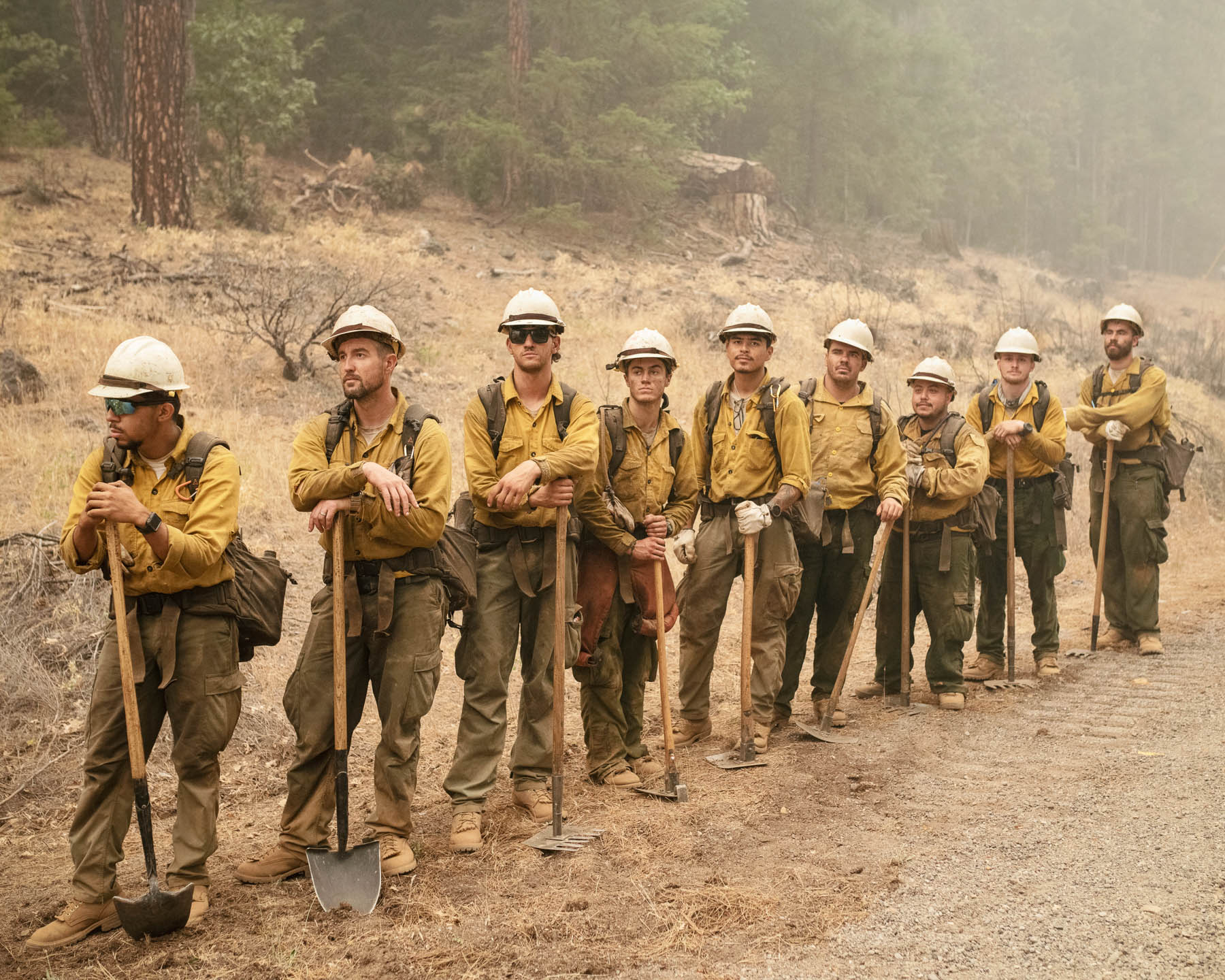
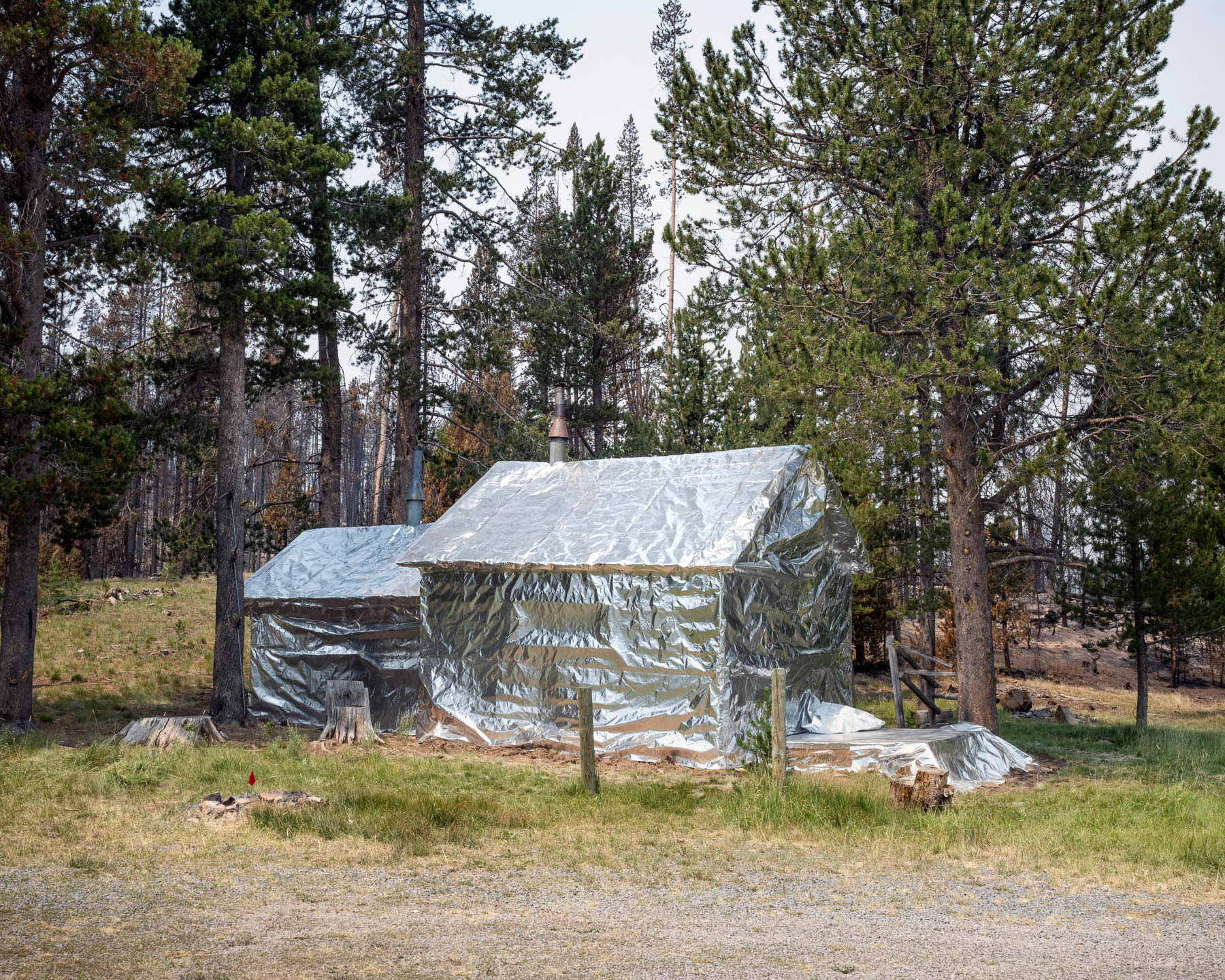
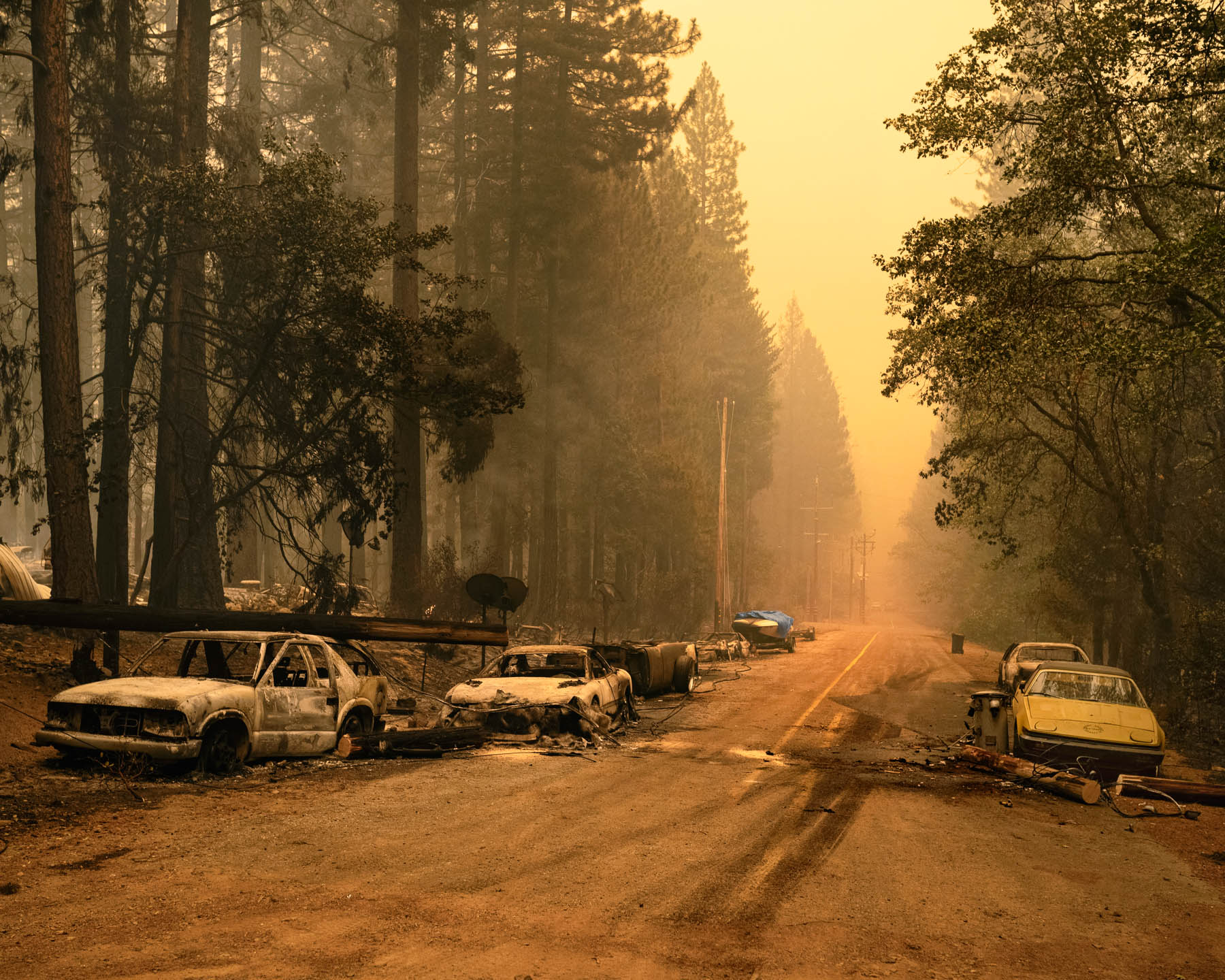
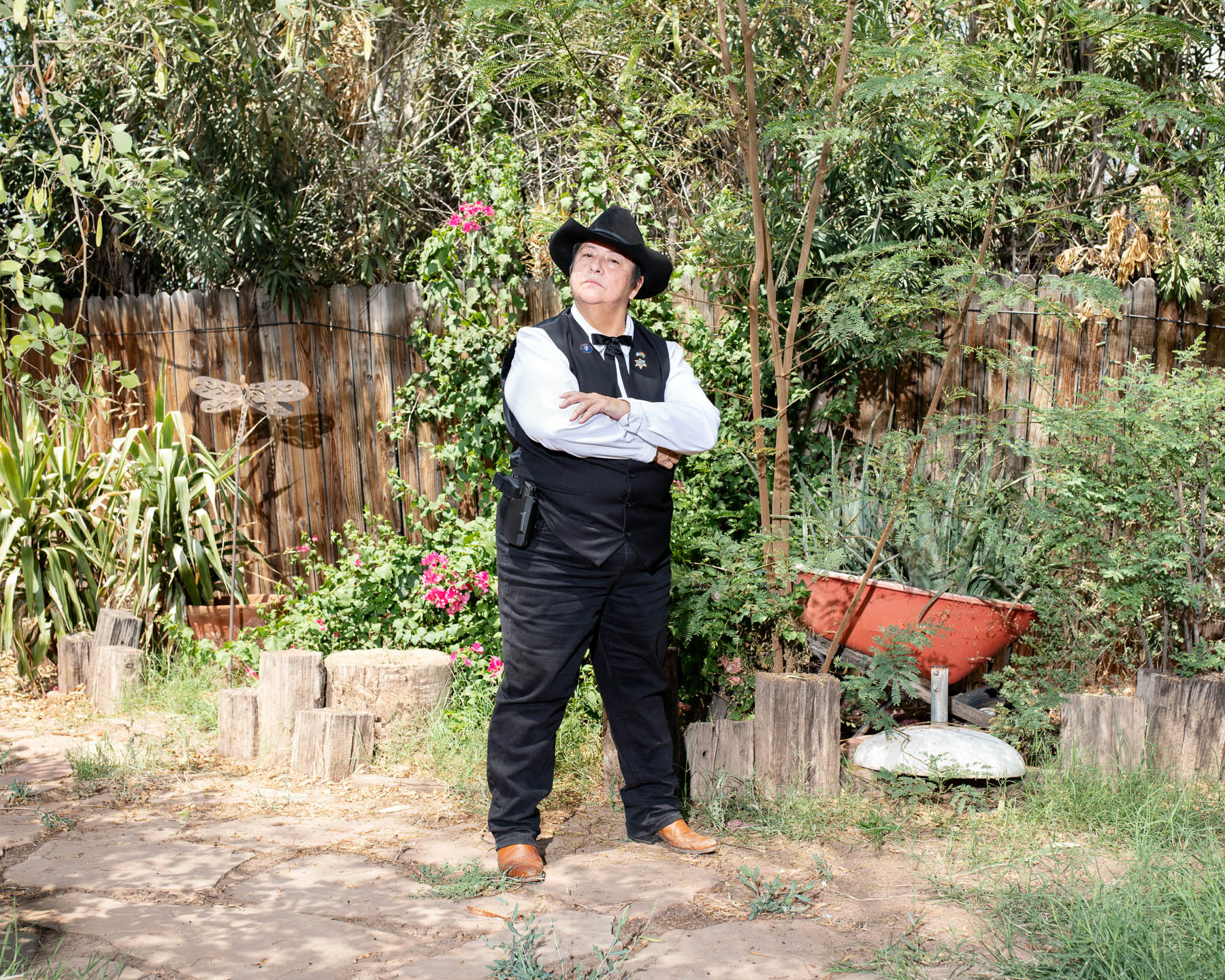
Near Central, Utah | Farmhand and local watermaster Richard Crockett checks the level of a canal on June 11. “Our water situation has never been this bad,” says Crockett, 78. “Right now, everybody’s praying for rain. But the forecasters say we’re not going to get any,” he adds. “Most farmers and ranchers in this area are facing extinction.” Up north, part of the Great Salt Lake dropped to its lowest level since record keeping began in 1847.Near Crescent Mills, Calif. | Firefighters stand for a portrait while fighting the Dixie Fire, the largest single fire in California's history, on July 25. The blaze, which started on July 13, had burned more than 554,000 acres by Aug. 15 and was only 31% contained.Fremont-Winema National Forest, Ore. | In advance of the Bootleg Fire's approach on July 23, a structure was wrapped in fire-retardant protective sheeting in a bid to save it from the flames. Forestry officials found it had been caused by lightning and went undetected for days before July 6, when it was reported. The fire, which for a time was America’s largest of the year, burned more than 413,000 acres and led to the evacuation of some 2,000 homes. By Aug. 15, it was 100% contained.Indian Falls, Calif. | Abandoned vehicles line a stretch of roadway on July 25 after the Dixie Fire burned through the area. As of Aug. 15, per a Cal Fire tally, America's largest wildfire of the year had destroyed more than 1,100 structures. For a time, smoke from the blaze led Denver's air quality to rank among the world's dirtiest.Lake Mead, Nev. | A view of the "bathtub ring," or high-water mark, from a largely empty Lake Mead Cruises boat on June 4. Nearly a week later, the water level reached its lowest point since being filled in the 1930s, after the construction of the Hoover Dam. Arizona farmers are expecting the first-ever cuts next year to their water supply from the mighty Colorado River. A contingency plan signed by Western states in 2019 will supplement some of the farmers' lost water.Goodyear, Ariz. | Jody Marquess, 43, looks at the recliner where his stepfather John Ramer died on June 17. It was Marquess’s birthday, but he was concerned about the 69-year-old, who eschewed air-conditioning. “He had tough-guy syndrome,” Marquess says, recalling a “stubborn” and “very frugal” but also “honest and simple” man. When Marquess stopped by that day—the high reached 118°F—he installed a portable AC unit for Ramer, who was sleeping. Two hours later, when he returned to drop off ice cream, Ramer was dead. From April through July, Maricopa County confirmed 47 heat-associated deaths, more than triple the figure confirmed by the end of the same period last year. Marquess had long wondered if this was how Ramer might die in Arizona: “I just didn’t think it was going to be this soon.”
Our water situation has never been this bad. Never.
—Richard Crockett
Global average temperatures have ticked up about 1.1°C since the Industrial Revolution, according to the IPCC, but that seemingly small number obscures the enormous and immediate spikes in temperature in particular places. The IPCC report, a collaboration among 234 authors, cites more than 14,000 studies and references, covering all the shifts that are occurring in the environment, from the way water circulates to the level of moisture in soil. At the core of all these changes is heat.
Heat waves that bring high temperatures that extend for days have become more frequent, and some areas, particularly vulnerable regions like the Arctic, are warming faster than others. These higher temperatures have a range of trickle-down effects: an altered jet stream, more intense drought and even increased precipitation, to name a few.
Any one of those ripple effects would create serious problems if it struck on its own, but when multiple ones land at the same time, the result is exacerbated. That’s what is happening right now in the Western U.S., where residents are experiencing what the IPCC has called a “compound extreme event.” In the U.S. west this year, heat has evaporated the water supply for farmers and ranchers—not to mention local communities. States have reported hundreds of excess deaths as bodies collapse without air-conditioning in unmanageable temperatures. And heat has led to drought, which has dried up forests and created tinder for wildfires.
“It’s the combination of heat waves, drought conditions and also windy conditions that allow fire propagation,” says Paola Andrea Arias Gómez, an IPCC co-author and associate professor at the school of the environment at the University of Antioquia in Colombia. That’s led to record fire numbers: Last year California experienced the worst fire season on record; this year the state has experienced nearly three times the acreage burn compared with the same point in 2020.
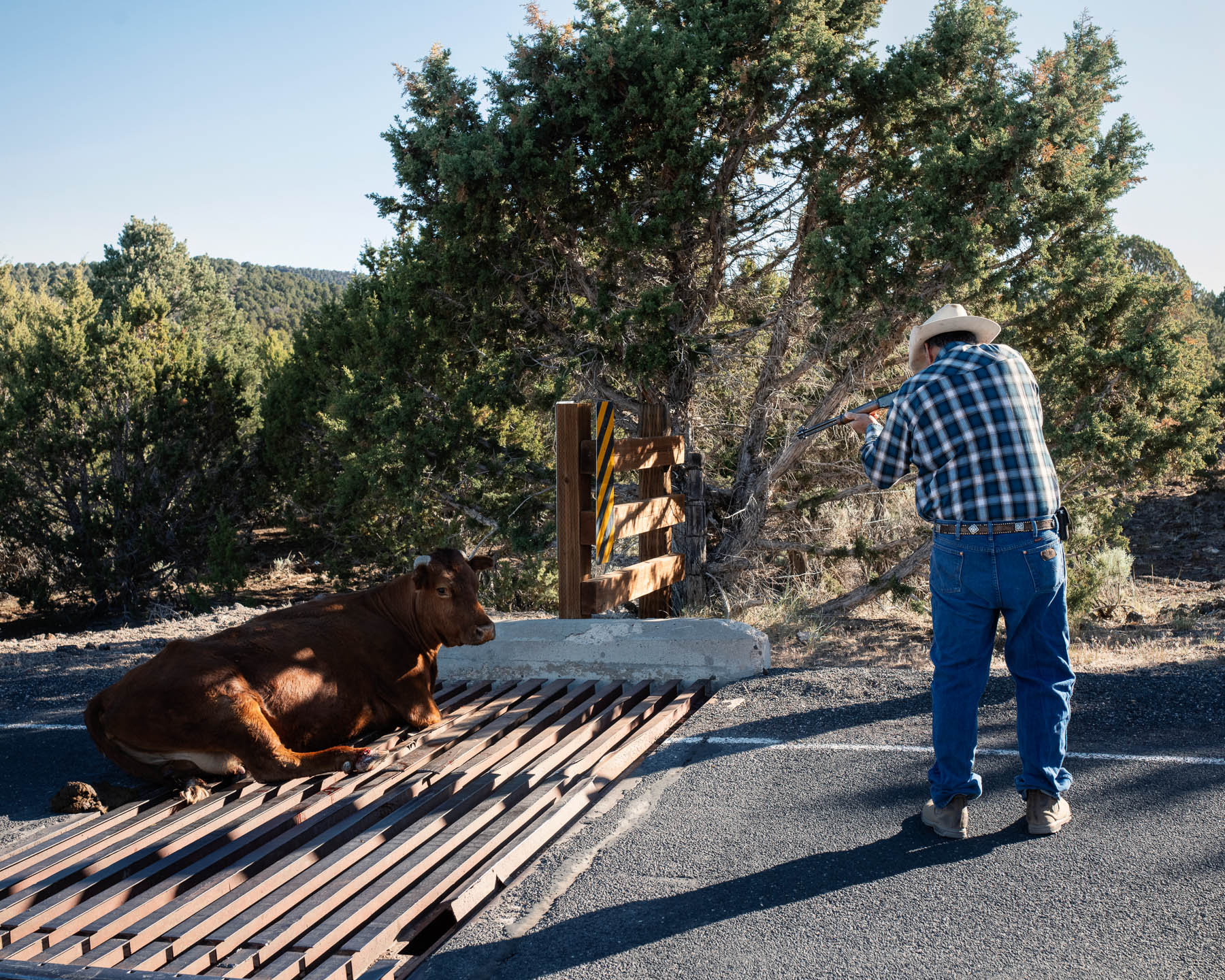
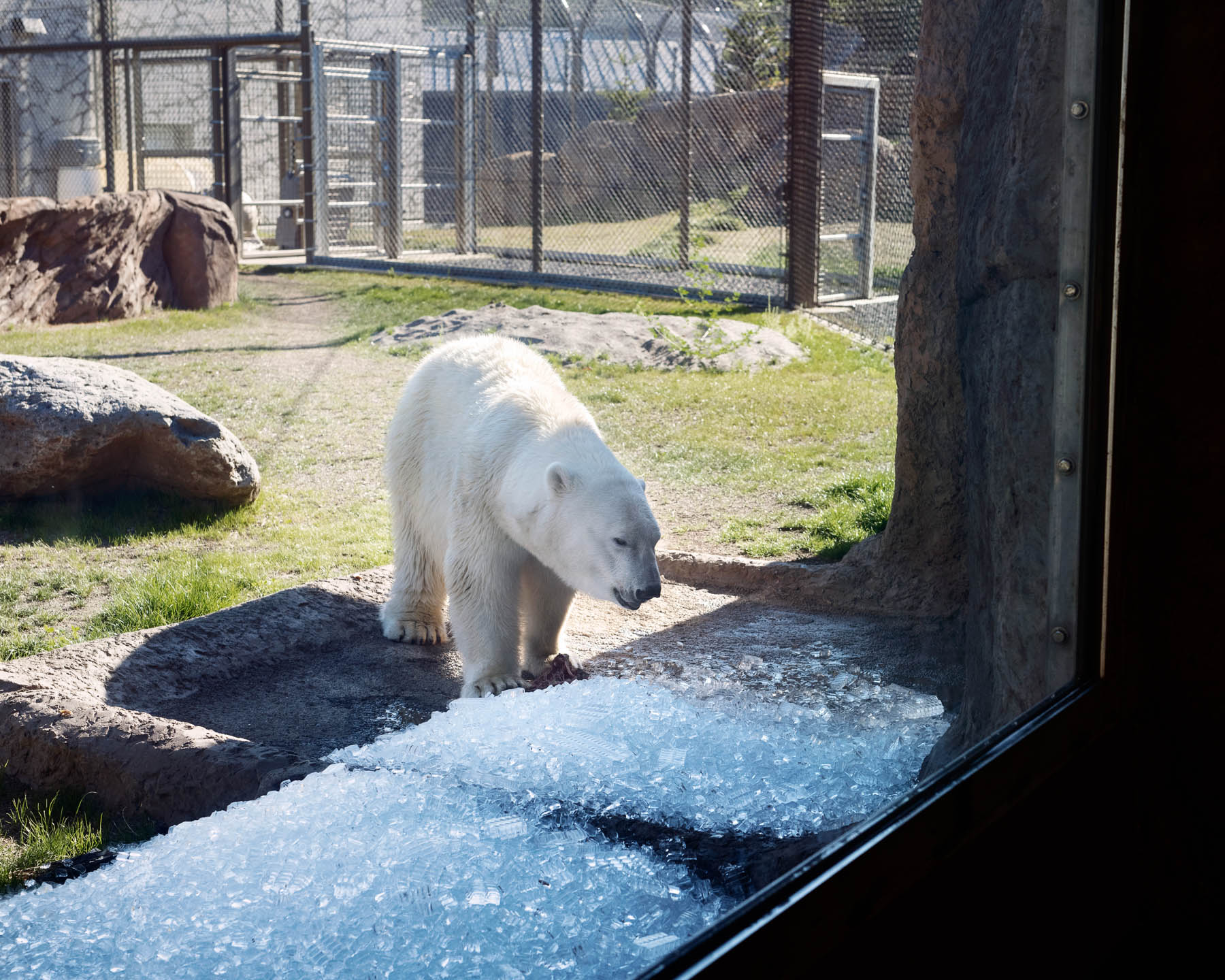
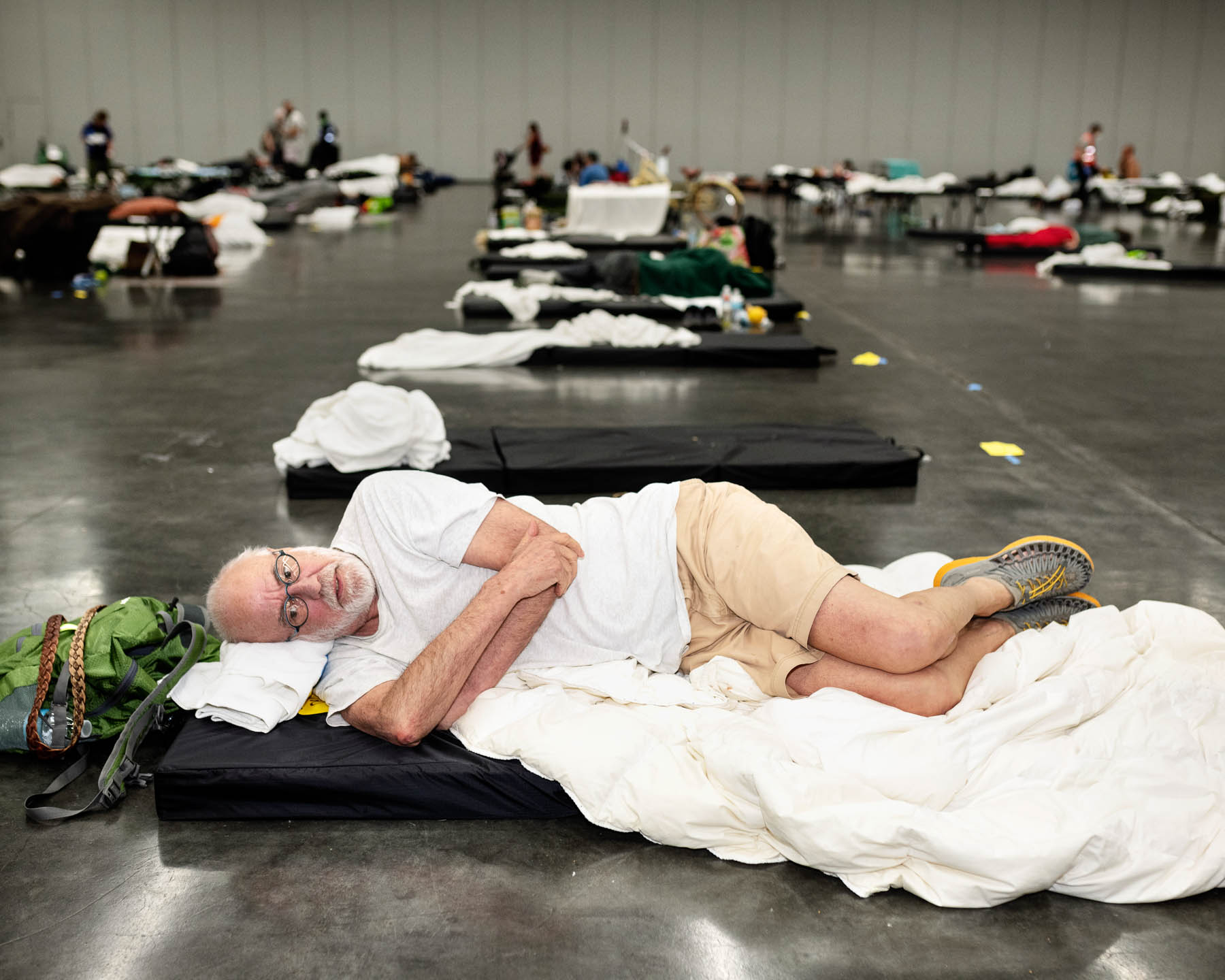
Portland, Ore. | Isaiah Vankova and Sofia Zambrano, both 18, stand on the bank of the Willamette River near Sellwood Riverfront Park on June 27. Record-shattering heat in Portland, where that day it was hotter than Dubai, would lead to canceled summer school programs and shuttered restaurants and other businesses. The next day, calling the heat “too dangerous,” the city’s parks-and-recreation department closed outdoor pools after lifeguards suffered “heat-related illnesses.”Phoenix, Ariz. | Firefighters from Phoenix Fire Department Station 18 tend to a man who suffered a medical emergency, as well as subsequent burns to his body after falling on the scalding ground, on June 17. The city experienced an "unprecedented" 53 days at 110°F or warmer last year, when the Arizona Burn Center recorded 104 burn injuries related to the heat in June, July and August, marking the highest number since it began keeping track in 2000.Near Pine Valley, Utah | On June 10, days after a rancher who runs approximately 800 head of cattle had moved many of them to higher ground for the summer, as he does annually, a straggler became stuck in a cattle grid. Unable to wrangle it free, the man then shot and removed it with members of his family. A year earlier, this area in Utah's southwest corner was "Abnormally Dry," the lowest classification of the U.S. Drought Monitor. This year, it was the highest: "Exceptional Drought."Portland, Ore. | Nora, a polar bear at the Oregon Zoo, during a record heat wave on June 28. The day's high would reach 116°F. A global team of researchers later found it would have been "virtually impossible without human-caused climate change." From 2010 to 2019, the high temperature recorded at Portland International Airport reached triple digits on 11 days, according to data tracked by The Oregonian/OregonLive. Since the beginning of 2020, it has happened on seven days—five of them over the past two months.Portland, Ore. | Rachel DeHart donates a bag of ice to a cooling station on June 27. One day after Portland hit 108°F, setting a new all-time high, the record fell again when the temperature reached 112°F.Portland, Ore. | As temperatures soared in late June, Dennis Henry, a 71-year-old with a heart condition that makes breathing more difficult, left his “lovely old apartment house” that lacks air conditioning and hopped on a bus to the Oregon Convention Center, where a 24-hour cooling station was operating. “Yesterday, I thought I could make it through the day and the night, but I looked at the projections for today and the day after, and I decided I better get my tail down here and make sure I get a spot,” Henry said on June 27. “They’re very nice here... The food’s even good,” he adds. “They keep it slightly colder than it needs to be. I go out and warm up every once in a while for a little bit. Which is ridiculous! Isn’t it ironic?”
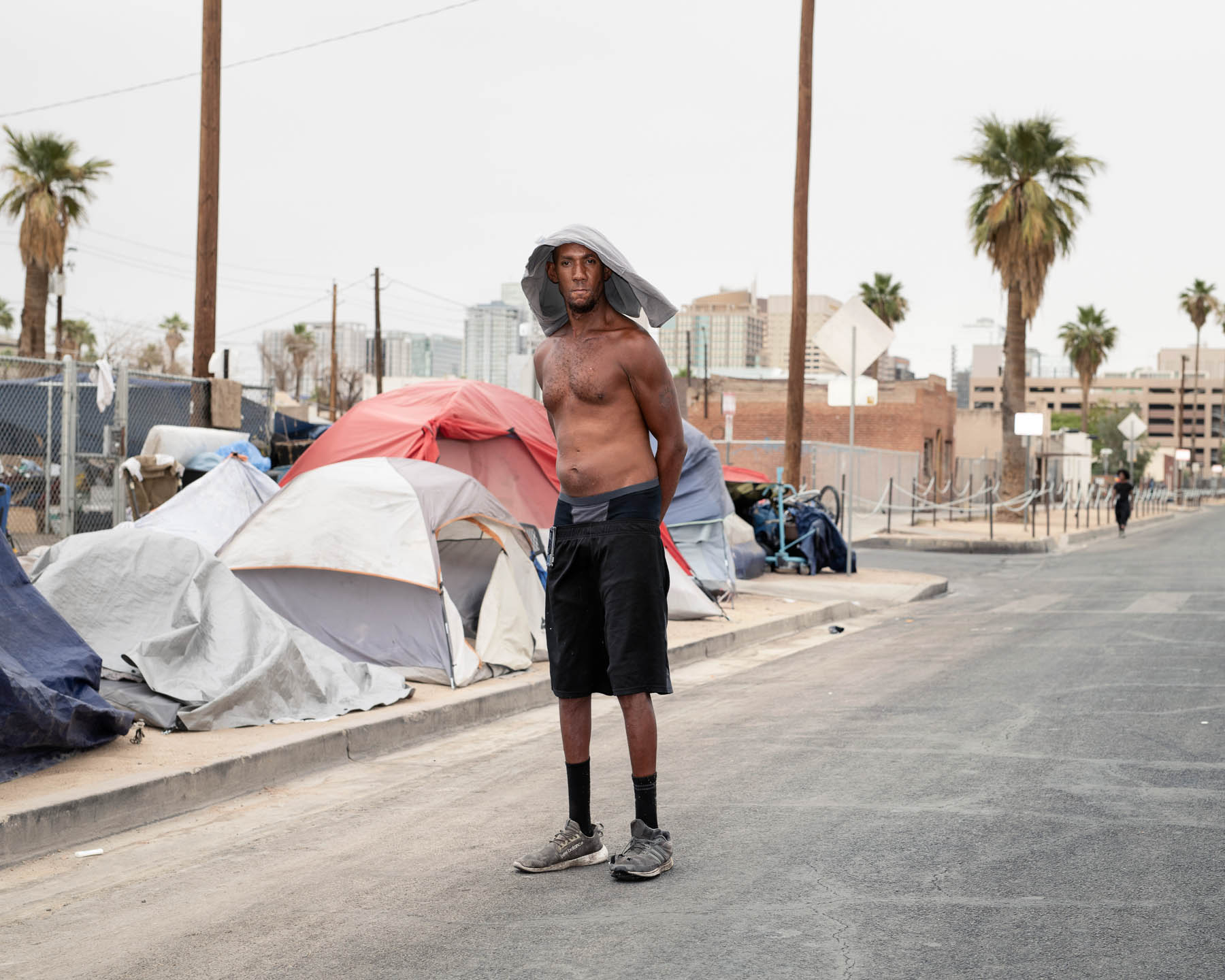
It feels like God is holding a magnifying glass to your legs.
—William Calvin "Slim" Sterling
The U.S. West is not alone in inhabiting dire climate straits. For the first time, the IPCC this year offered a comprehensive analysis of climate change at the regional level. Every region on the planet has already taken a hit from warming in one form or another, according to the report.
In places where people are already facing devastation, the scale of the climate-changed reality is starting to seep in. In the air-conditioned Oregon Convention Center in Portland, Dennis Henry, 71, tells TIME that he would consider moving if the heat waves became a regular occurrence. Henry had taken shelter in the cavernous meeting hall—a temporary fix, he acknowledges. “If the situation became extreme, where this was semi-normal ... no, I wouldn’t be here,” he says. But at the same time, “I can’t plan where to move, because who knows what they’re going to be like.”
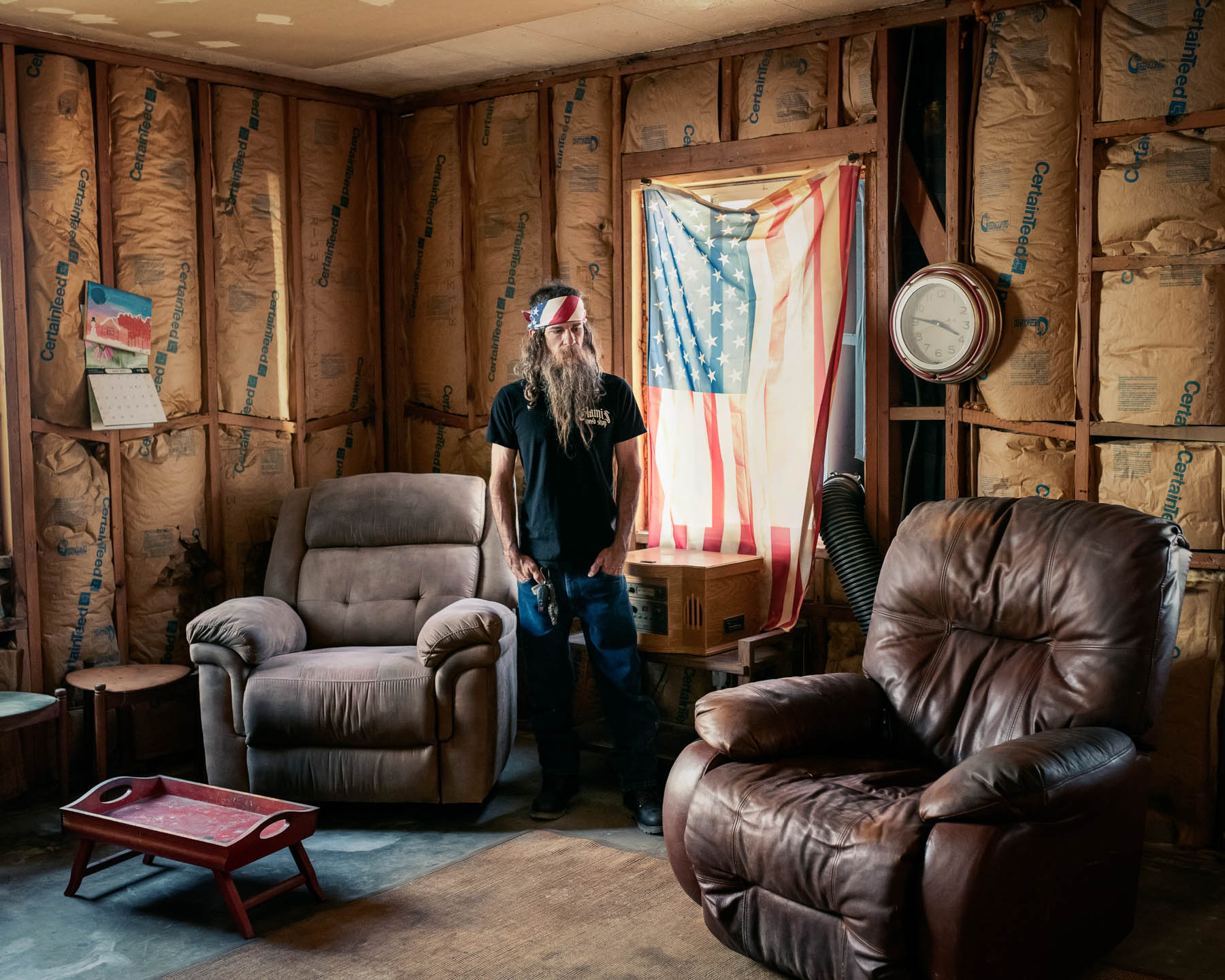
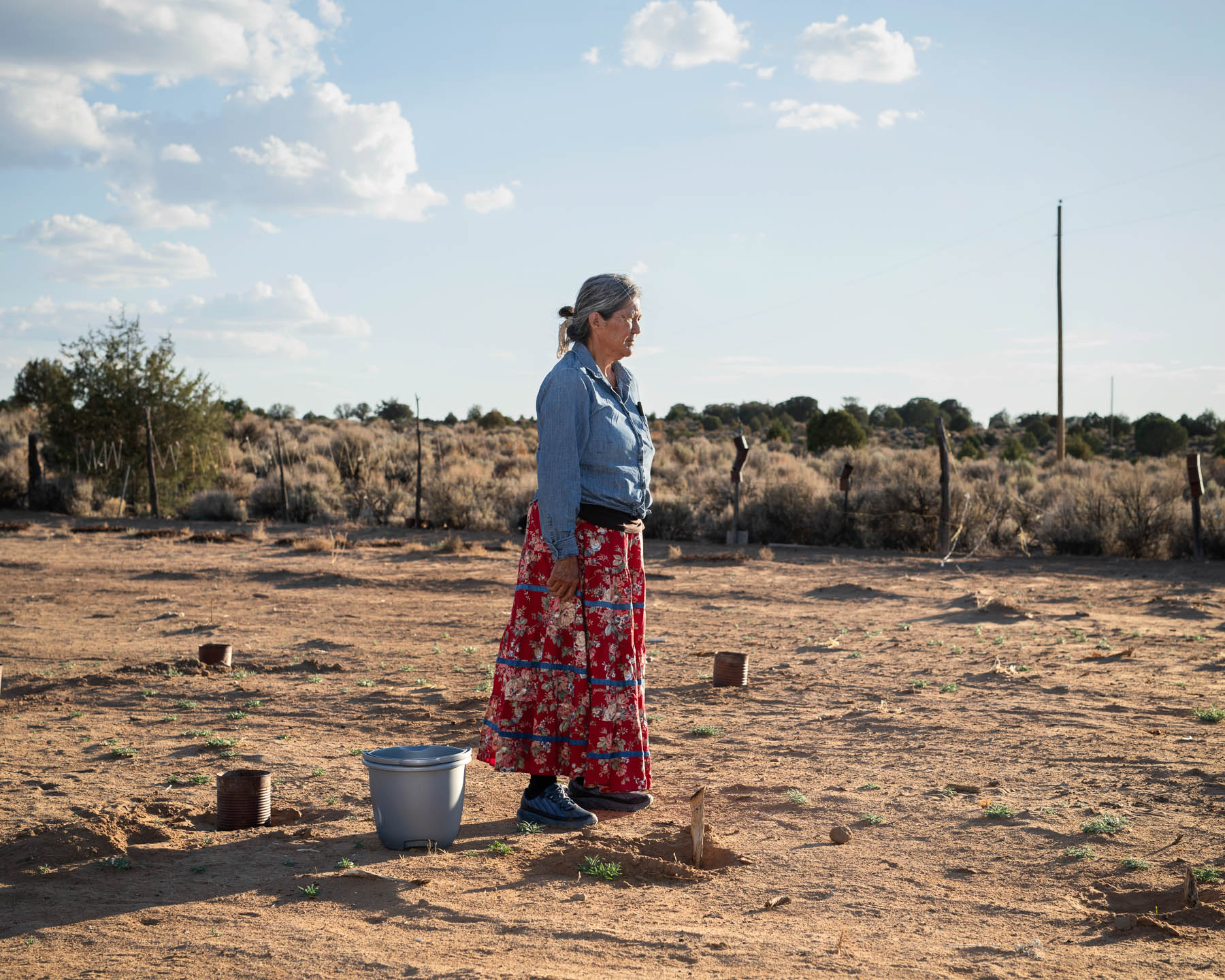
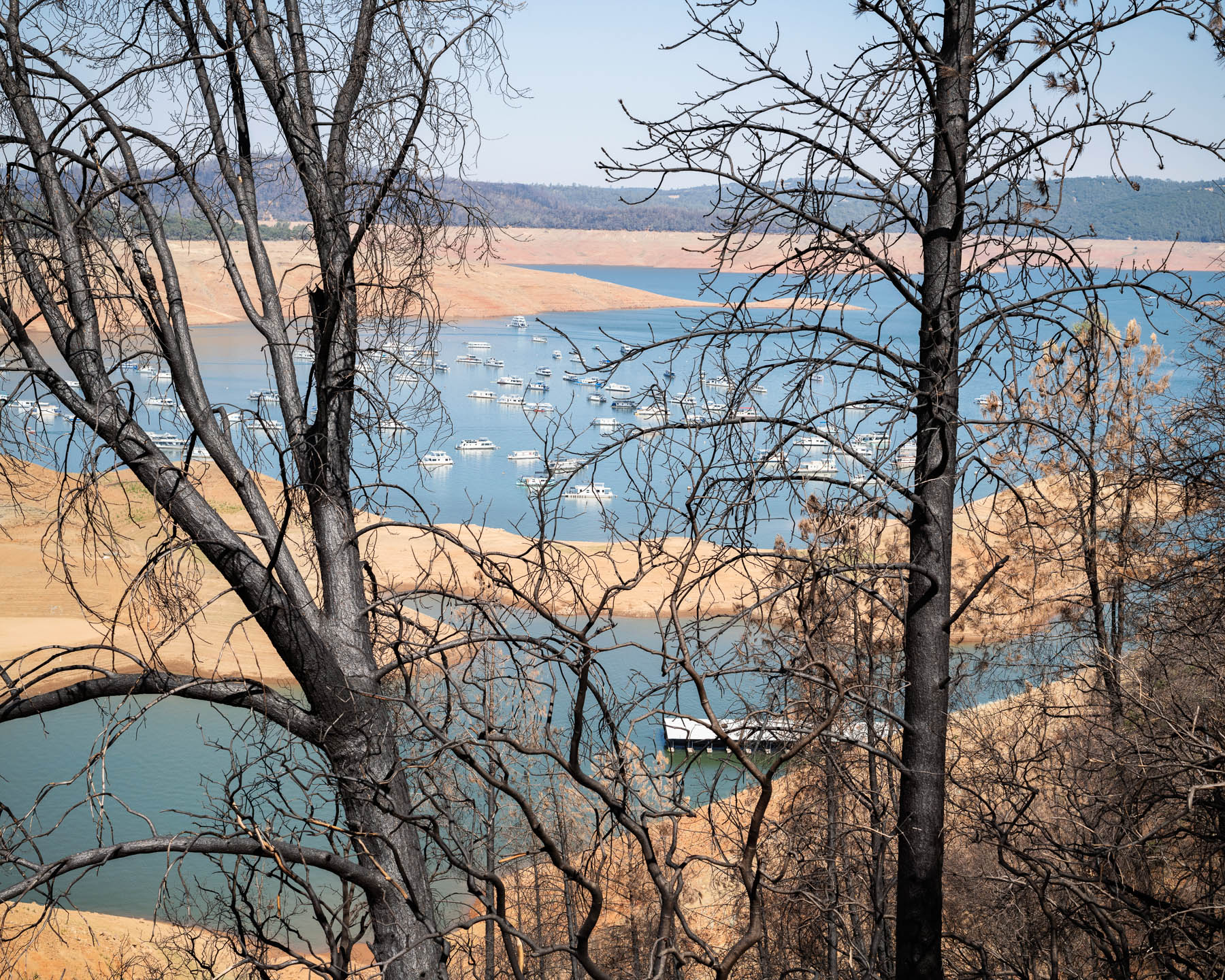
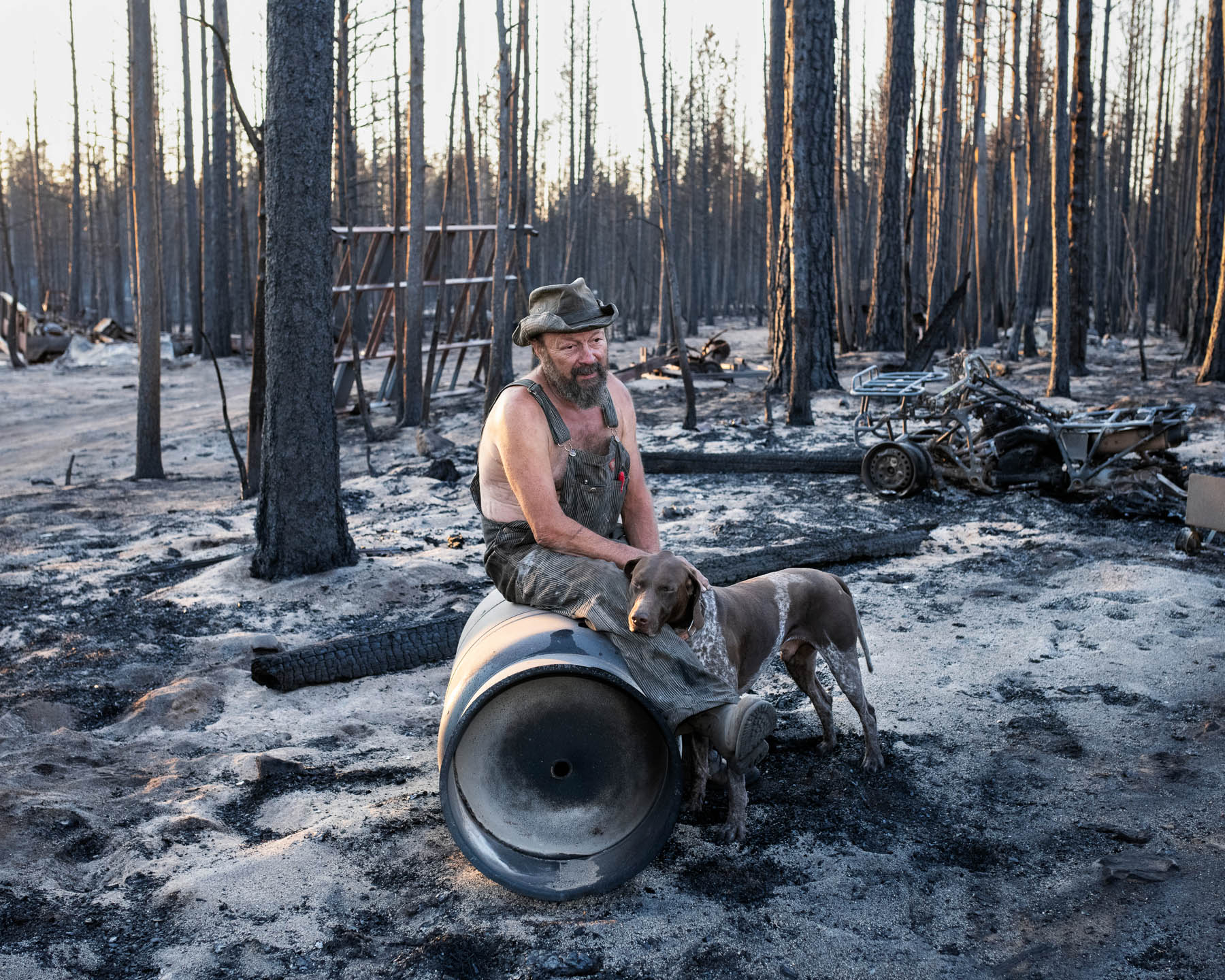
Hard Rock Chapter, Ariz. | Lorraine Herder, 68, stands on her recently planted cornfield in the Black Mesa region of Navajo Nation on June 24. When she was growing up, the family brought its livestock to nearby springs for water. With those sources long gone after decades of local coal operations and rising temperatures, “this area is all dried up,” she says. Each day, her family leaves home to fill a 275-gal. vat—at 1¢ per gal. Last year they spent $5,000 on supplemental feed for the animals.Lake Oroville, Calif. | A view of the lake through trees burned during a previous fire season on July 2, when the elevation was recorded at about 680 ft. above sea level. California's water resources department stated "extremely dry" soils and "climate change-induced early warm temperatures" led to a dramatic reduction in runoff this past spring. In early August, in a move the state said it anticipated, the hydroelectric plant that is fed by the reservoir was taken offline for the first time after water levels dropped below 645 ft., the previous low set in 1977. By late October, the state projects, the elevation could sink to as low as 620 ft.Phoenix, Ariz. | Constable Darlene Martinez has lived in Phoenix long enough—since the mid 1980s—“to see the climate change.” Martinez’s experience back then, as a carpenter who suffered from heatstroke during her first year in Arizona, has informed her approach today when carrying out orders of the court: evictions, warrants, orders of protection and more. “Evicting people in the heat,” she says, “is the hardest thing to do.” But Martinez, who hauls around cases of water in her vehicle, says she makes sure they have a means of transportation and another place to go. In the summer, she starts evictions at around 7 a.m., hours earlier than she did a decade ago. By the end of her day, the clothes under her bulletproof vest are “completely soaked.” Her signature black hat provides shade, but it hasn’t escaped unharmed. “The salt of my sweat wore out the rim,” she says. “After a year, I had to have it replaced.”Phoenix, Ariz. | Firefighters from Phoenix Fire Department Station 18 stand for a portrait after a house fire on June 16, a day when the high was 115°F. “The heat definitely intensifies everything we do this time of year,” says Capt. Mike Adelman, second from right, who has spent 27 years with the department. The firefighters often perform activities similar to what they will encounter on site as a means of confronting the summer’s highest temperatures. They also work to control their breathing and pay strict attention to their situational awareness, so as not to expend energy they’ll need when calls come in. “What it comes down to is staying trained up, staying acclimated to the heat and understanding the environment that we live in and that we work in, and really just being able to overcome those obstacles,” says Richie Robnett, third from right. “A big part of this job is, you’ve got to get comfortable being uncomfortable.”Phoenix, Ariz. | William Calvin “Slim” Sterling stands near his tent on June 14. “It feels like God is holding a magnifying glass to your legs,” said the 39-year-old, who suffered from heatstroke months ago, during what became Phoenix’s hottest June on record. “I can feel the sun cooking my shoulder blades.” For relief, he covers his head with a wet shirt, uses a battery-powered fan and stays as hydrated as possible. “It’s a war zone,” he says. At a nearby shelter with shade, “it’s like peace.”Sycan Estates, Ore. | Jeff Whited sits among his destroyed belongings on July 22. The Bootleg Fire arrived “just like a freight train,” says Whited. “It looks like a freaking bomb went off.” The 63-year-old had been helping clean up the wreckage of his brother’s burned-down house when flames reached his own. Guitars and amplifiers, snowmobiles and trucks, engine parts, chain saws, a huge cache of hand tools and much more—all gone, Whited says. “This sure was a beautiful place,” he says. “It doesn’t leave a beautiful memory with me, not this picture of it.” At the grave of his partner on his 12-acre property, wind chimes used to hang in the trees. Whited recalls asking why she wanted so many of them, to which she replied, “When I'm gone, baby, you’ll know I’m still there when you hear ’em.” After the fire, he says, “I can’t hear one. They’re gone. Every wind chime.”
It’s scary. It’s sad. We’re in trouble.
—Constable Darlene Martinez
It’s too soon, though, to completely throw in the towel. We may have almost certainly locked in some amount of global warming, but we still have choices to make that can determine how far past the red line we go. And every fraction of a degree matters.
Policymakers from around the globe are currently gearing up for global climate talks meant to put the world on track to keep temperatures from rising more than 1.5°C by the end of the century. The IPCC report “will give ammunition to those of us who are saying this is a crisis,” says Nat Keohane, president of the Center for Climate and Energy Solutions. But so too should the stories of those on the ground who already have lost homes, livelihoods and loved ones.
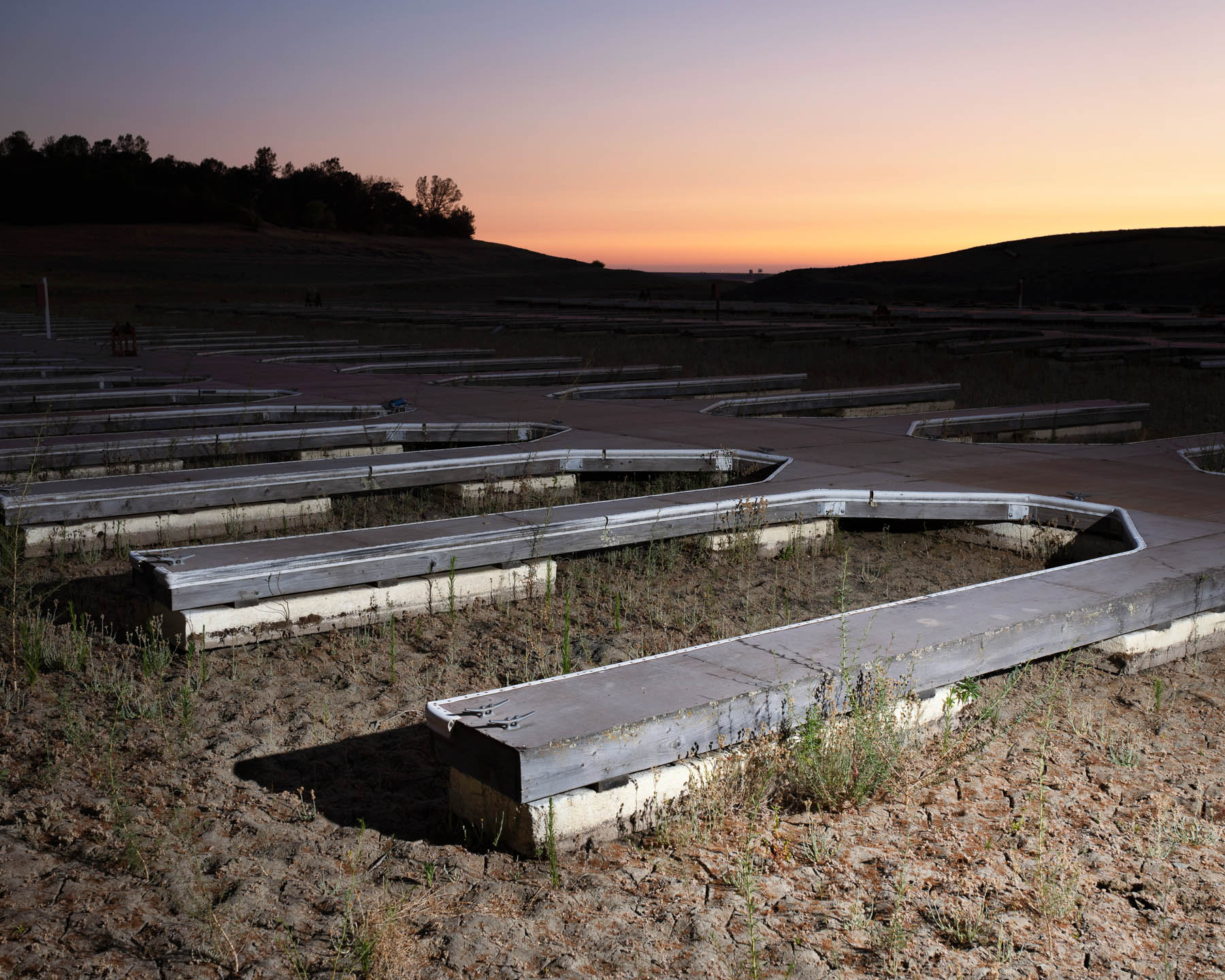
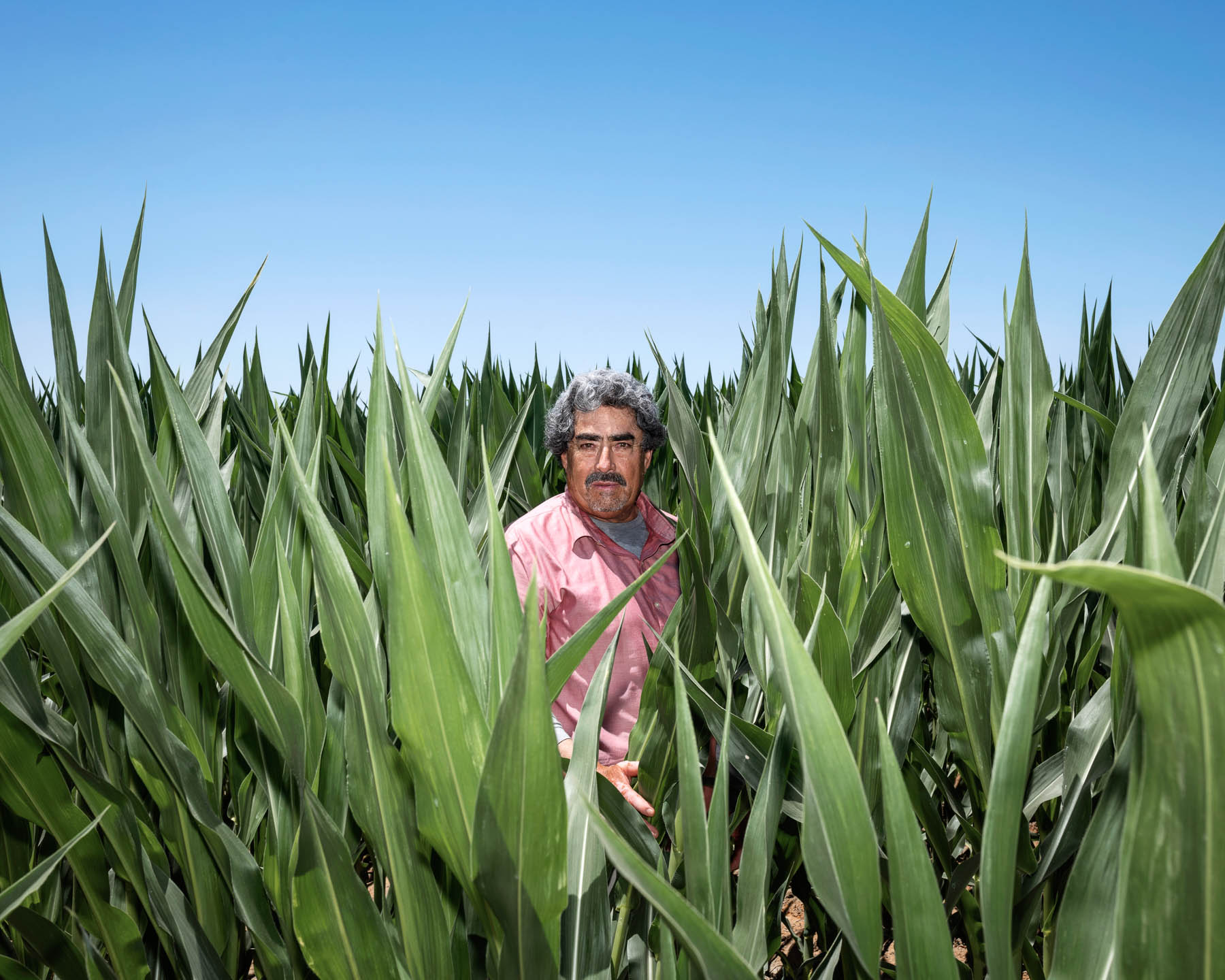
Palm Springs, Calif. | On June 18, Jill Langham and her friend Geoffrey-Martin Cyr planned to have drinks together in the evening. The desert city was experiencing a heat wave: for 43 consecutive days in June and July, temperatures hit 100°F or higher. The soles burned off Langham’s shoes that day, on which the high was 119°F. Cyr planned to lie out near a pool before meeting up. At close to 5 p.m., he texted to say he was “winded” but on his way. He never arrived. Langham didn’t think much of his absence—their plans were casual, and they were due to have brunch that weekend anyway. She later learned Cyr, 55, had collapsed and was transported to a hospital, where he died the next day from complications of heatstroke. “I really wish I had sent him a photo of those [shoes] and said, ‘Hey, be careful out there,’” she says. “Would he have listened? He was a sun worshipper.”El Dorado Hills, Calif. | Boat docks rest on the floor of Folsom Lake, a reservoir on the American River in the Sierra Nevada foothills about 25 miles east of Sacramento. On June 30, as California ended one of its driest rain seasons on record, the reservoir registered just 30% of its capacity. “This drought is real. Climate change is real,” Governor Gavin Newsom said three weeks later, standing bone dry in what in typical years would have been waist-deep water. “If you don’t believe in science, please, you’ve got to believe your own eyes.” By Aug. 14, the water had dropped 6% more.Pixley, Calif. | Guillermo Gomez, a U.S. resident born in Mexico, stands for a portrait in a field on Jer-Z-Boyz Ranch, where he makes his living as an irrigation worker, on July 4. Gomez has worked in this area for the past 24 years. "We didn't plant 220 acres because there wasn't enough water," Gomez says. "This is the worst drought I've seen."Near Corcoran, Calif. | Billowing dust rises behind a truck driving over a barren field on July 5. Water shortages prevented the land from being planted this season, as the drought choked off water to farms across the state. Some land in the surrounding area is reported to have sunk more than 11 ft. due to decades of groundwater extraction. Newsom has called on Californians to voluntarily reduce their water use by 15%.White Salmon, Wash. | Shane Brown, 35, visits the grave of his mother Jollene Brown at Klickitat County Cemetery District No. 1 on July 24. As a heat dome settled over the Pacific Northwest in late June, Jollene’s air conditioner wasn’t working properly, so he bought her a “swamp cooler”—an affordable device that cools the air through the evaporation of water. On the night of June 27, she told Shane, the air was so hot in her apartment that the cooler needed to be constantly refilled because the water evaporated so quickly. Shane said he would get her a new AC. The next morning, she wasn’t picking up his calls. After arriving at her home, Shane found her “just sitting in her recliner with her head to the side, like she had just fallen asleep,” he says. “Jolly,” 67, was full of opinions but not judgmental, loved Dolly Parton and Patsy Cline and puffins, and was among at least 60 people in Portland (and hundreds in the region) who died from hyperthermia during the heat wave. Shane called 911 and ran to a neighbor until police arrived. Later, while waiting for the medical examiner, he sat in the room with his mother “just because I wanted to be near her,” he says. “I didn’t want to leave her alone in the hot room.”
The air is musty, Buffy the Vampire Slayer is playing on an ancient TV by the door, and Olivia Rodrigo is flipping through racks of slip dresses and flared pants. “What’s your style?” she asks. I tell her, unhelpfully, that I’m looking for something I might actually wear. She nods and says, “Vibes.”
We’re at a vintage shop in East Los Angeles, one the 18-year-old singer-songwriter frequented while working on her debut album, Sour. She was out late last night at the American Music Awards, but she’s moving so quickly this morning you’d never guess. She’s using one hand to browse, the other to grip a matcha latte, and somehow, without my noticing, has managed to collect at least five pieces under her elbow.
Her rise to pop stardom was swift and definitive: it started on Jan. 8, when Rodrigo, already a Disney actor with an audience, released her first single, “Drivers License,” a torch song that took off on TikTok and stirred up theories about who inspired it. By Jan. 23, she became the youngest solo artist ever to debut at No. 1 on the Billboard Hot 100, where her song stayed for eight weeks.
She suggests, for me, a T-shirt reading #1 MOM. I explain why I can’t take it home: once you’re in your 30s, there’s no room for irony about motherhood. Instead, the winner is a baby blue tee with a spy plane on it. “It’s soft,” she says, handing it my way. I can’t describe why it’s cool. It just is.
Rodrigo has a gift for picking the best of the past—whether a well-worn shirt, the faded feedback of a guitar or the intensity of first love—and finding just the right way to situate it in the present. Her songs have hit with audiences of all ages, in large part because she renders adolescence so viscerally: she’s resentful, seething, crushed, itching to just grow up already. On Sour’s opening track, “Brutal,” she rants, “And I’m not cool and I’m not smart/ And I can’t even parallel park.” It’s teen angst, delivered with a wink.
—Photograph by Kelia Anne for TIME
Her rise to pop stardom was swift and definitive: it started on Jan. 8, when Rodrigo, already a Disney actor with an audience, released her first single, “Drivers License,” a torch song that took off on TikTok and stirred up theories about who inspired it. By Jan. 23, she became the youngest solo artist ever to debut at No. 1 on the Billboard Hot 100, where her song stayed for eight weeks. Soon after, Rodrigo was performing on Saturday Night Live, which had already aired a sketch about bros in a bar weeping along with the lyrics (“I got my driver’s license 55 years ago—why is this hitting me so hard?”). Halsey sent Rodrigo a cake, Cardi B shouted her out on Twitter, and Taylor Swift offered her props on Instagram.
Any questions about whether Rodrigo could repeat the success of “Drivers License” were put to rest when she released Sour on May 21. The album, scruffier than the symmetrical, beat-driven music that tends to dominate pop culture, announced her as a serious artist. With moody, confessional lyrics that added chapters to the story told in “Drivers License,” Sour offered something we needed after more than a year of unending distress: an outlet for anger and permission to cry. Hailed by critics, it also continued Rodrigo’s streak of smashing records: with approximately 385 million streams, Sour became Spotify’s most popular release by a female artist in its first week.
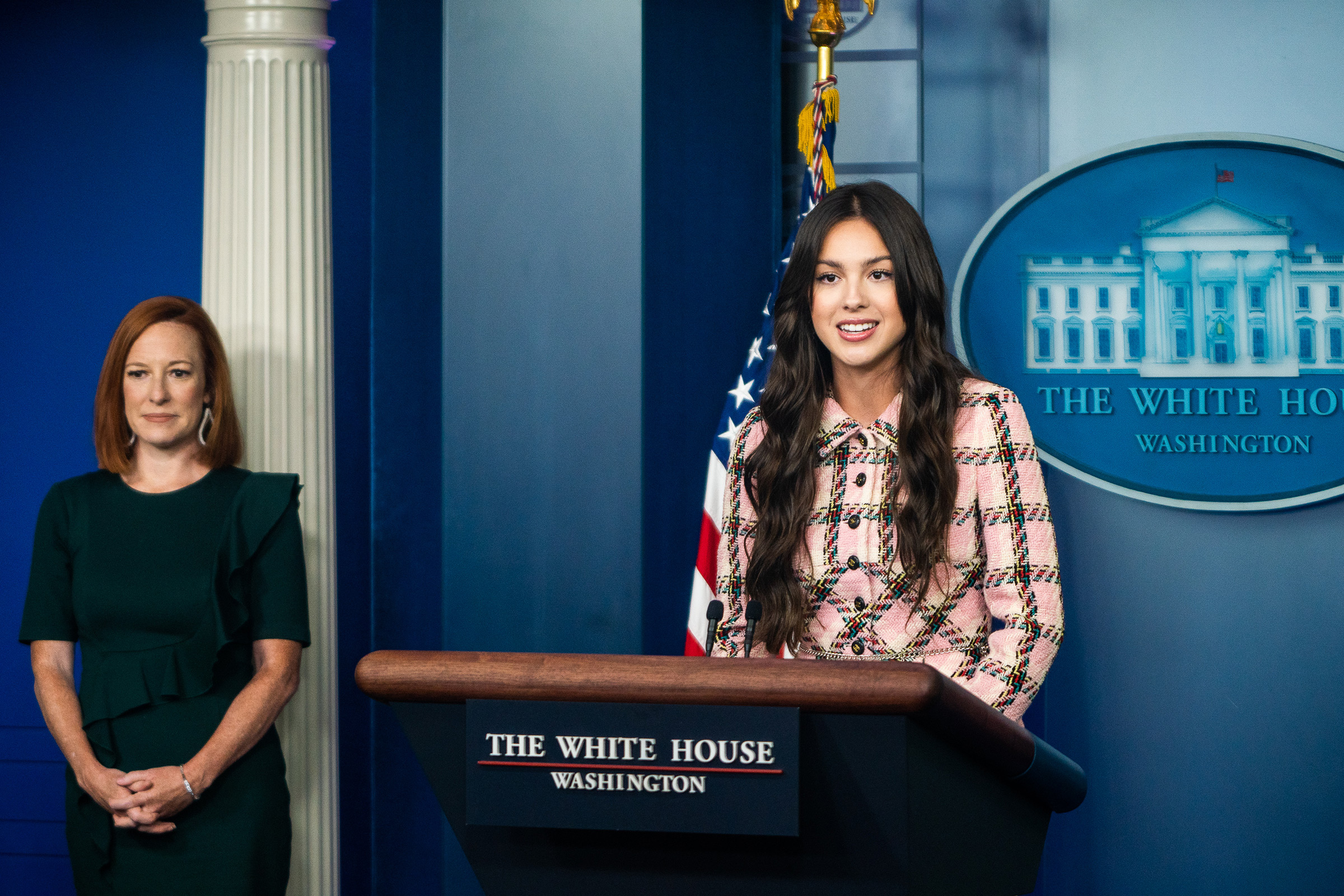
Rodrigo visiting the White House to encourage young people to get vaccinated, on July 14 —Demetrius Freeman—The Washington Post/Getty Images
For now, Rodrigo’s taking things one step at a time. She moved into her own place this year, but her parents are still a big part of her routine (she hasn’t quite figured out the whole grocery shopping and laundry thing yet). She knew the shape of her world was forever changed right after she released “Drivers License”—she shelved her fantasy of attending Columbia University—but she isn’t forcing anything. “I’d be lying if I said there wasn’t any pressure,” she says. “But I sometimes remember: This happened 10 months ago. You don’t have to have it all figured out yet.”
Rodrigo has been working toward her meteoric rise for more than a decade. A Filipino American, she grew up the only child of a therapist and a teacher in Temecula, Calif., and started writing songs, taking voice lessons and auditioning for acting jobs in grade school. Her first big role was in Grace Stirs Up Success, a 2015 American Girl movie about a spunky baker. By 12, she was playing a vlogger on Disney’s Bizaardvark, for which she learned to play the guitar and took the family to L.A. In 2019, Rodrigo made the jump to another Disney show that would change everything for her: High School Musical: The Musical: The Series, a reboot of the hit movies.
As Nini, a theater kid cast as the lead in her school’s production of High School Musical while going through a breakup with her co-star (an instance of art imitating life, if you believe the gossip about “Drivers License”), Rodrigo deftly stepped into the role of an ingenue balancing ambition and heartache. She was also able to showcase her songwriting skills: when they needed a reflective song for Nini, showrunner Tim Federle, who had seen videos of Rodrigo playing songs she wrote on Instagram, invited her to give it a shot. He sent her an email, with her mom copied, but noted that schoolwork and SAT prep should come first. Just a few days later, Rodrigo played him a draft. “She plugs into something that is so well observed and so raw,” Federle says. Her song “All I Want” took off on TikTok in late 2019, the hit of the season.
Instead of signing with Disney’s Hollywood Records, once home to Miley Cyrus and Selena Gomez, Rodrigo went with Geffen Records, which had emphasized her skill as a songwriter. The deal was announced in January 2021, and she chose to make her album with Dan Nigro, a producer who has worked with alt-pop darlings like Conan Gray and Caroline Polachek. Together, Nigro and Rodrigo had already made “Drivers License.”
Nigro and Rodrigo bonded over shared references: he and her mother are just a few years apart, which meant that his nostalgic favorites were the songs Rodrigo heard at home. “She knows the whole Rage Against the Machine catalog the same way I do,” Nigro says. And he respected her impulse to continue innovating as they crafted the songs that became Sour, even with the overwhelming success of “Drivers License.” “It made her feel empowered to do other things, which felt so mature,” he says. When Rodrigo released the swoony midtempo “Deja Vu” as her second single, she became the first artist ever to debut both of their first official singles in the top 10 of the Hot 100.
“Songwriting is the thing I take most seriously in my life,” Rodrigo says. “It’s the most personally gratifying too.” She’ll return for Season 3 of the High School Musical series, which starts filming in January, and maybe she’ll act more in the future. But music is her priority. While she was surrounded by adults with more power and experience when making Sour, she held firm in her belief that people want to hear something honest. The songs had to come from her. “I literally wrote them in my bedroom,” she says. “And I think you can tell.”
Rodrigo has a sense of humor about what she’s laid bare to the world. Recently, her therapist listened to “Brutal,” the teen tantrum anthem, for the first time. “She was like, ‘That song is like everything we talk about today,’” Rodrigo says. “And I’m like, ‘Oh, no! Have I not grown at all?’”
She embraces a key quality of her generation: messy, uninhibited vulnerability. It shows up in her songs and in the way she shares her life. She talks about her mental health, she watches Twilight, she gets angry, she posts pictures of her parking tickets—she does in the open all these things that 18-year-olds used to do in secret, making me ask myself why I was so ashamed to derive pleasure from cheesy movies, to have needs, to make mistakes.
—Kelia Anne for TIME
Like other young stars before her, she’s forming her identity and figuring out how to run her career in real time. “You definitely have to be a businesswoman to be a musician,” she says. She has a partnership with Geffen to be able to own her masters, the copyright to the recordings of her songs. Masters are typically held by labels—a practice that has prompted Swift to remake her albums so she can own the recordings. “There’s a path for me to have a stake in the music and art I create, which is only fair,” Rodrigo says.
She’s also found herself in the center of an industry debate that’s growing louder. As music-copyright claims have skyrocketed, artists and labels have sought to avoid bad publicity and costly lawsuits. Rodrigo, who took inspiration from Swift for a Sour track and credited her when it was released, faced Internet accusations that there were similarities between more of her songs and others’. She later added credits on two additional tracks. For her, it was a lesson in business, but also something deeper. “It was really frustrating to see people discredit and deny my creativity,” she says. (Nigro is more coy: “It seems like people get funny about things when songs become really popular.”)
The conversation about ownership often collides with questions about artistic influence. Music critics have identified echoes of Swift, Carly Simon and Alanis Morissette in Rodrigo’s visceral lyrics, and tones reminiscent of Avril Lavigne, Lorde and Paramore in the punky inflections of Sour’s melodies. She’s been put in prestigious company—but this also means she’s talked about as if she doesn’t stand on her own. Rodrigo knows the latter is impossible to avoid, but wishes it weren’t. “Young women are constantly compared to each other. I’m the ‘new this’ or ‘this woman meets that woman,’ and that can be reductive,” she says. “I’m just Olivia. I’m doing my own thing. It’s meaningful when people recognize that.”
Her idols do. She named Gwen Stefani as the person she’d most like to write a song with. “I’d be honored,” Stefani says. Morissette sees a “solidity” in her. “She has a steadfast care about self-expression. She’s not precious about it, nor does she seem overwhelmed by it all.” And songwriting legend Carole King, whose music Rodrigo discovered through her mother, says she has “a gift of knowing how to tell a story in a song.”
There’s an undeniable satisfaction in watching someone spin a heartbreak into a hit—and Rodrigo is open about how incredible that feels. At the same time, she’s aware that writing revealing lyrics also means inviting questions about the people she addresses in her songs. When I ask her what, if anything, she feels she owes those people, she laughs, her tone shifting. “At the core of it, all my songs are about me and my experiences and my feelings,” she says. She understands the alchemy at work for the listener—how anyone could take her words and apply them to their own life. Naming names would only ruin the effect. “It’s an important lesson in controlling your own narrative too,” she says. People write stories about her that she can’t control. Songwriting is a way of reclaiming her power.
And listening to Rodrigo’s music can be a way for her audience to reclaim theirs. She tilts the frame away from the people who’ve let you down and the disappointments you’ve faced and back toward the person who matters: you. Her songs offer validation—a kinship in knowing that your heartbreak, rage or self-doubt is universal. Young people feel seen, and adults get a potent reminder of how we all feel like that insecure deflated kid version of ourselves sometimes.
For an artist, it’s an impressive trick—time travel for the listener. In the vintage store, she moves through the decades herself, skimming confidently through things of the past. Now there’s a pile of clothes on the counter: the spy-plane shirt and another top for me; a slip dress, feathery tank, leather skirt and graphic tee for her. Everything in Rodrigo’s haul has Winona Ryder vibes—as a kid, she was more into the Audrey Hepburn look, but now she’s fascinated by the ’90s and Y2K. “It was the last time people could exist without being hypersaturated on social media,” she says. “People seemed cooler because they weren’t sharing every aspect of their lives.” She wraps the waist of the skirt around her neck to see if it will fit—a trick she saw on TikTok. She’ll give it to a friend if it doesn’t work out. As we walk to the back door, we stop to take a selfie. Rodrigo purses her lips, lifting her bag of clothes into the frame. At 18, she already knows: everything old becomes new again. —With reporting by Mariah Espada and Simmone Shah
Set Design by Mary Florence Brown; Styling by Chloe and Chenelle Delgadillo; Hair by Clayton Hawkins; Make-up by Molly Greenwald; Nails by Brittney Boyce
TIME’s 2021 Person of the Year will be revealed on Dec. 13 at 7:30 a.m. ET. Watch the live event on YouTube here.
The richest man in the world does not own a house and has recently been selling off his fortune. He tosses satellites into orbit and harnesses the sun; he drives a car he created that uses no gas and barely needs a driver. With a flick of his finger, the stock market soars or swoons. An army of devotees hangs on his every utterance. He dreams of Mars as he bestrides Earth, square-jawed and indomitable. Lately, Elon Musk also likes to live-tweet his poops.
Person of the Year is a marker of influence, and few individuals have had more influence than Musk on life on Earth, and potentially life off Earth too. In 2021, Musk emerged not just as the world’s richest person but also as perhaps the richest example of a massive shift in our society.
“Just dropping some friends off at the pool,” the 50-year-old zillionaire informed his 66 million Twitter followers on the evening of Nov. 29, having previously advised that at least half his tweets were “made on a porcelain throne.” After an interval—21 minutes, if you must know—an update: “Splish splash.”
“Sometimes I do hit some resonant notes with respect to humor,” Musk says of his puerile expressions. It’s a warm, windy December day at Starbase, his new rocket-fabrication and launch facility at the southern tip of Texas. Two of his Starship rockets—gleaming, pointy-nosed, 160-ft. stainless-steel silos—are silhouetted behind him in the setting sun. “But you know, not all jokes land.”
This is the man who aspires to save our planet and get us a new one to inhabit: clown, genius, edgelord, visionary, industrialist, showman, cad; a madcap hybrid of Thomas Edison, P.T. Barnum, Andrew Carnegie and Watchmen’s Doctor Manhattan, the brooding, blue-skinned man-god who invents electric cars and moves to Mars. His startup rocket company, SpaceX, has leapfrogged Boeing and others to own America’s spacefaring future. His car company, Tesla, controls two-thirds of the multibillion-dollar electric-vehicle market it pioneered and is valued at a cool $1 trillion. That has made Musk, with a net worth of more than $250 billion, the richest private citizen in history, at least on paper. He’s a player in robots and solar, cryptocurrency and climate, brain-computer implants to stave off the menace of artificial intelligence and underground tunnels to move people and freight at super speeds. He dominates Wall Street: “The way finance works now is that things are valuable not based on their cash flows but on their proximity to Elon Musk,” Bloomberg columnist Matt Levine wrote in February, after Musk’s “Gamestonk!!” tweet vaulted the meme-stock craze into the stratosphere.
—Photograph by Mark Mahaney for TIME
Musk has spent a lifetime defying the haters; now, it seems, he’s finally in position to put them in their place. For 2021 was the year of Elon Unbound. In April, SpaceX won NASA’s exclusive contract to put U.S. astronauts on the moon for the first time since 1972. In May, Musk hosted Saturday Night Live. In October, car-rental giant Hertz announced it planned to add 100,000 Teslas to its fleet. The juvenile missives from his unmistakably phallic Twitter avatar came days after one of his rockets launched NASA’s first antiasteroid planetary-defense test; a few weeks before another launched a first-of-its-kind mission to study cosmic X-rays; and amid Musk’s sale of 10% of his Tesla stock, a process that roiled markets, cost him billions and should produce enough tax revenue to fund the Commerce Department for a year. The sale was prompted by a Twitter poll Musk posted in a fit of pique over liberal Senators’ proposals to tax billionaires.
Many people are described as larger than life, but few deserve it. How many of us truly exceed our life span? How many will make it into the digital textbooks our spacefaring descendants will study? As Shakespeare observed in Julius Caesar, it’s far easier to be remembered for doing evil than doing good. How many will leave a mark on the world—much less the universe—for their contributions rather than their crimes? A few short years ago, Musk was roundly mocked as a crazy con artist on the verge of going broke. Now this shy South African with Asperger’s syndrome, who escaped a brutal childhood and overcame personal tragedy, bends governments and industry to the force of his ambition.
Musk at the Tesla Gigafactory in Grünheide, Germany, on oct. 9 —Patrick Pleul—Picture-Alliance/DPA/AP
To Musk, his vast fortune is a mere side effect of his ability not just to see but to do things others cannot, in arenas where the stakes are existential. “He was raised in a tough environment and born with a very special brain,” says Antonio Gracias, Musk’s close friend of two decades, who has held seats on the boards of Tesla and SpaceX. “Ninety-nine-point-nine percent of people in that situation don’t come out of it. Some small percentage come out of it with the ability he has to make great decisions under extraordinary pressure and the never-ending drive to change the course of humanity.”
Such cosmic ambition rarely comes without consequences, and Musk still must answer to earthly authorities. His companies have faced allegations of sexual harassment and poor working conditions; in October, a federal jury ordered Tesla to pay $137 million to a Black employee who accused the automaker of ignoring racial abuse. The businesses have also been fined for numerous regulatory violations. The feds are probing Tesla’s Autopilot software, which has been involved in an alarming number of crashes with parked emergency vehicles, resulting in injuries and death. The company’s expansion in China required cozying up to its repressive autocrats.
The toll his hard-driving style takes on staff is legendary. Former associates have described Musk as petty, cruel and petulant, particularly when frustrated or challenged. He recently separated from the experimental musician Grimes, the mother of his seventh son. “He is a savant when it comes to business, but his gift is not empathy with people,” says his brother and business partner Kimbal Musk. During the COVID-19 pandemic, he’s made statements downplaying the virus, broken local health regulations to keep his factories running and amplified skepticism about vaccine safety. Musk tells TIME he and his eligible children are vaccinated and that “the science is unequivocal,” but that he opposes vaccine mandates: “You are taking a risk, but people do risky things all the time,” he says of the unvaccinated. “I believe we’ve got to watch out for the erosion of freedom in America.” The vast expanse of human misery can seem an afterthought to a man with his eyes on Mars.
Musk is easily cast as a hubristic supervillain, lumped in with the tech bros and space playboys, for whom money is scorekeeping and rockets are the ultimate toy. But he’s different: he’s a manufacturing magnate—moving metal, not bytes. His rockets, built from scratch on an autodidact’s mold-breaking vision, have saved taxpayers billions, reinvigorated America’s space dreams and are launching satellites to expand Internet access across the globe. If Tesla delivers on its pledges, it has the potential to strike a major blow against global warming. The man from the future where technology makes all things possible is a throwback to our glorious industrial past, before America stagnated and stopped producing anything but rules, restrictions, limits, obstacles and Facebook.
“He is a humanist—not in the sense of being a nice person, because he isn’t,” says Robert Zubrin, founder of the Mars Society, who met Musk in 2001, when the young, newly minted dot-com millionaire sent a large unsolicited check to the organization. “He wants eternal glory for doing great deeds, and he is an asset to the human race because he defines a great deed as something that is great for humanity. He is greedy for glory. Money to him is a means, not an end. Who today evaluates Thomas Edison on the basis of which of his inventions turned a profit?”
For all his outlier qualities, Musk also embodies the zeitgeist of this liminal age. This was the year we emerged from the hundred-year plague only to find there was no normal to go back to, a year that felt like the cusp of a brave or terrifying new world, with nobody in charge and everything up for renegotiation—from how we work and travel to what we find meaning in and cherish. Musk is our avatar of infinite possibility, our usher to the remade world, where shopworn practices are cast aside and the unprecedented becomes logical, where Earth and humanity can still be saved. Perhaps no one man should have all that power. Perhaps this vision of the greater good comes with a human cost. But if many never voted or signed up for Musk’s wild zero-gravity ride, that is of no consequence to him.
Musk ducks his large frame under the massive steel ring that holds the tallest, most powerful rocket ever designed and peers up at the dozens of engine nozzles that will power it. His fluffy little gray dog, Marvin, follows close behind the heels of his black cowboy boots, which Musk has paired with a black Tom Ford jacket and black jeans. His excited technical patter suddenly goes quiet; he sees something up in the gnarled mass of metal tubes that displeases him. “If one engine catches fire,” he explains, “we want to ensure that fire does not spread through the entire volume.” There are barriers between the engines for this purpose, but he’s not convinced they’re sufficient.
Musk has a soft handshake and an even voice that expresses exasperation, joy and breathtaking ambition in the same quiet register. Tesla may be the principal source of his stupendous wealth and fame, as well as his greatest impact on the planet to date. But it is space that animates his wildest, most extreme ambitions. Musk’s toddler, X Æ A-Xii (pronounced “X”), has recently started saying car, to which his father responds, “Rocket!”
“The goal overall has been to make life multi-planetary and enable humanity to become a spacefaring civilization,” Musk says—not because it would be profitable, but because it would be “exciting,” at least to him. “And the next really big thing is to build a self-sustaining city on Mars and bring the animals and creatures of Earth there. Sort of like a futuristic Noah’s ark. We’ll bring more than two, though—it’s a little weird if there’s only two.”
How Musk can believe something so improbable is easier to understand when you learn just how unlikely his current spacefaring success has been. Before it was America’s passport to the solar system, SpaceX nearly bankrupted Musk. Its first rocket, the Falcon, failed three times before reaching orbit in 2008. The company proceeded to create the Falcon 9 and then the Falcon Heavy, which has three clusters of nine engines. Clustering engines was previously considered a bad idea because of the number of moving parts that can go explosively wrong—one of many assumptions Musk upended. “When I first looked at the clustering of engines on the Falcon 9, I had to roll my eyes,” says Scott Pace, director of George Washington University’s Space Policy Institute. “But that’s why Elon Musk is smarter than me.”
A Falcon 9 rocket lifts off on April 23, carrying a crew to the space station —ESA/Eyevine/Redux
Rockets also weren’t supposed to fly more than once. For decades, spent rocket stages were abandoned to the sea. “No one has ever made a fully reusable orbital rocket of any kind whatsoever,” Musk says. “We just live on a planet where this is an extremely difficult job.” He describes the challenge with evident relish. “It’s like, if this was a video game, the setting is on maximum but not impossible.” In the past six years, SpaceX has successfully landed the first stage of 90 of its Falcon 9 rockets and reflown 72 of them. Musk has yet to achieve full reusability by reflying both rocket stages.
Before Musk, America’s space industry was moribund. In 2011, NASA mothballed the last space shuttle, after inking a deal with SpaceX to make uncrewed cargo resupply runs to the International Space Station (ISS). SpaceX made its first such trip in 2012, two years ahead of the competition, and in 2014, NASA tapped the company and behemoth Boeing to fly crews to the ISS. SpaceX launched its first crew to the ISS aboard a Dragon spacecraft in May 2020. Boeing, delayed by development problems, is not planning even an uncrewed test flight until next year.
For the Dragon, Musk swept away old-school instrument panels and replaced them with three oversize touch screens. There’s no control stick; the spacecraft’s attitude, orbit and re-entry engines are all governed by the screens. Astronaut Doug Hurley, commander of the first crewed Dragon flight, worried the screens would delay reaction times, but SpaceX solved this by making Dragon an automated ship. “There’s no plans to do any more manual flying, certainly on the NASA missions,” Hurley says, “unless there’s a need for it from a systems failure kind of scenario.”
Success has not dampened Musk’s appetite for risk. After being lofted into space by a Falcon Super Heavy, his next rocket, the Starship, will light out for the moon, land there, take off and return to Earth, with no stages expended on the lunar journey. This so-called single-stage-to-orbit model has been the white whale of rocket designers for generations. In test flights, four prototype Starships exploded on landing before a successful test last May. For NASA and most private aerospace companies, a single crash is a setback that can take years to recover from. SpaceX works more like a Silicon Valley startup, where the goal is to fail quickly and iterate. This gets expensive fast. Over Thanksgiving, Musk emailed employees that Starship’s new Raptor engine was facing a “production crisis” that could bankrupt SpaceX if it did not achieve a “Starship flight rate of at least once every two weeks next year.” In a “worst-case situation,” he tells TIME, “bankruptcy is not out of the question, not that it’s likely.” The point, he says, was to remind staff that “we cannot lose our edge or get complacent.”
With its Starlink program, SpaceX hopes to launch a constellation of as many as 42,000 satellites to provide Internet service to the world. But that kind of orbiting swarm wreaks havoc on sky gazing. “Just how much stuff do you want to put up there?” asks Neal Lane, senior fellow in science and technology at Rice University. “The astronomers are appropriately making noise about interfering with their ability to observe.” (Gwynne Shotwell, SpaceX’s president, tells TIME the company is working on the problem.)
In April, NASA selected SpaceX to build the lunar lander for the Artemis program, thanks in part to a lowball $2.9 billion bid. A bid by Jeff Bezos’ Blue Origin came in at more than twice that. Bezos sued, accusing Musk of undercutting the competition. Musk took the opportunity to rub his victory in the face of the world’s second richest man: “If lobbying & lawyers could get u to orbit, Bezos would be on Pluto,” he tweeted. In November, the federal claims court ruled in Musk’s favor.
Sometime in the next month or two, Musk hopes to launch the Starship into orbit for the first time, powered by 33 engines at the base of an enormous, 230-ft. steel tube containing nearly 7.5 million lb. of supercooled liquid fuel. “I think we can do a loop around the moon maybe as soon as 2023,” he says, and land on the moon’s surface within three years.
Rocket at Starbase, the SpaceX launch site in Boca Chica, Texas —Mark Mahaney for TIME
SpaceX is a private company, so whether it’s profitable is not publicly known. (Note: TIME’s co-owners, Marc and Lynne Benioff, have invested in companies connected to space exploration, including SpaceX. They have no involvement in TIME’s editorial decisions.) But that’s not the point, Musk says. One day, he hopes, the rockets will carry 100 people at a time to Mars, where the ships can be refilled with fuel manufactured on the Red Planet and shuttled back to Earth. Asked when he sees this happening, Musk pauses for a long moment, as if calculating all the variables—federal regulations and production schedules, test-flight targets and bathroom requirements. “I’ll be surprised if we’re not landing on Mars within five years,” he finally says.
What will humans do there, and for how long? We have had little use for the moon since landing there 50 years ago. Musk argues that interplanetary life is the next great leap of evolution, like the emergence of multicellular organisms, and also that Mars could provide a home for humanity if Earth becomes uninhabitable. Experts aren’t so sure. “I have real doubts about the viability of a large settlement on Mars,” says John Logsdon, founder of Space Policy Institute. “What would people do there to earn a living? What would be the basis of a Mars economy?”
Musk is not deterred. Gamboling around the concrete slab littered with massive machines of his own creation, Musk acknowledges his latest rocket could go the way of his first three. “I wouldn’t say that our odds of getting to orbit the first time are high,” he says. “I would say optimistically it’s 50%.” The dark surface of the Gulf stretches over his shoulder; cell phones here pick up signals from Mexico, a stone’s throw away. How does it feel to think about the most powerful- rocket ever built exploding in a billion-dollar fireball? “Pretty scary!” he says, grinning. “So, excitement guaranteed on launch day!”
Then the tour is over. Musk turns, whistles to Marvin and strides briskly to his waiting Tesla.
Electric cars, like homemade rockets, were a graveyard of well-intentioned investment before Musk barreled into an industry in which he had no academic training. For decades, legacy automakers had stymied the development of electric vehicles, lobbying against fuel-efficiency standards and filing lawsuits against state mandates to develop the cars. Tesla’s business was sustained in part by generous support from the federal government, though the company got off the ground before it became available. A $465 million federal loan in 2010 helped prop up Tesla at a crucial juncture, and its customers have benefitted from hefty tax incentives.
Musk believed from the start that advances in lithium-ion battery technology made long-range electric vehicles possible. In practice, it wasn’t that easy. Tesla’s first decade was plagued by unmet deadlines, technical snafus and cost overruns. During the 2008 financial crisis, cash was so tight the company came within days of missing payroll. With a dwindling fortune, Musk borrowed $20 million from SpaceX to loan the company, cajoled another $20 million out of investors and raised the price of the company’s debut sports car to survive.
Tesla went public in 2010, but for years it remained in crisis mode. With production behind schedule, and the company at risk of running out of money, Musk spent much of April 2018 sleeping on the factory floor as he tried to iron out assembly-line issues. “He would wake up, look at the monitors on the wall and go chase the constraint,” says Musk’s adviser Omead Afshar, who slept on a cot. “He would be in there reviewing the system, redoing the code himself, solving problems, bouncing from station to station. He will endure the most pain to lead by example, and all of us around him really can’t complain when we’re not working that hard.” For Musk’s 47th birthday that June, he briefly paused for a bite of grocery-store cake, then went back to the paint-shop tunnel.
The body of a Tesla Model 3 at the company’s Fremont, Calif., factory —JUSTIN KANEPS—The New York Times/Redux
The cars finally rolled off the line, but soon enough, Musk shot himself in the foot. In August 2018, he tweeted that he had funding to take the company private for $420 a share. The Securities and Exchange Commission sued him, alleging he had committed securities fraud. The resulting settlement cost him his perch as Tesla’s board chair, though he was able to retain the title of CEO. The adult supervision extends only to a point. Three months later, Tesla sent a software update that enabled the car to make farting noises on command. (“Please put ‘invented car fart’ on my gravestone,” Musk tweeted.) But for all the immaturity, his public profile has an upside as well. “We don’t spend any money on advertising,” notes Tesla board chair Robyn Denholm. “His ability to communicate with a very wide range of people globally through social media, I think, has been a huge asset to the company—you know, by and large.” His longtime friend Bill Lee, who finds his memes and trolling “charming,” says he was the one who persuaded Musk to join Twitter. “I remember when he had zero followers,” Lee recalls. “He’s probably the most viral social influencer ever.”
Today, thanks in large part to Musk’s pace-setting, auto companies from VW to Nissan are jostling to invest billions in electric vehicles. Their about-face is driven less by altruism than by a dawning realization that Musk is eating their lunch. “Musk and Tesla forced the change,” says Michelle Krebs, an analyst at Cox Automotive. “He proved that there was a market for EVs.”
That has made Musk arguably the biggest private contributor to the fight against climate change. Had the 800,000 Teslas sold in the last year been gas-powered cars, they would have emitted more than 40 million metric tons of CO₂ over their lifetimes—equivalent to the annual emissions of Finland. But EVs may ultimately be less important to the climate fight than the central innovation that made them possible: batteries. Tesla has repurposed the lightweight, energy-dense cells that power its cars for huge grid-scale batteries that provide essential backup for renewables. Demand for Tesla’s smaller home-based Powerwall, which can store electricity from rooftop solar systems, has spiked as consumers look for alternatives to the grid, driven by everything from February’s Texas power shortage to the fire risk in California that has led to power shutoffs. In some areas, software enables utilities to tap into home-energy reserves when the grid is strained, instead of turning on high-polluting standby generators. Gerry Hawkes, a 72-year-old forester from Woodstock, Vt., has been participating in one such program since 2017, allowing his local utility to draw power from a pair of Tesla backup batteries in his basement. “It makes sense for power backup, and it makes sense for climate change,” Hawkes says.
A die-casting tool for the Model Y at a Tesla factory in Germany —Patrick Pleul—Getty Images
Some of Musk’s initiatives have generated more controversy. His effort to produce and sell solar roof tiles has stumbled. The Boring Co., which Musk started in 2016, put forward a plan to alleviate urban congestion by building miles of underground tunnels to whisk cars along at more than 100 m.p.h., but critics say plain old subways would be more efficient and equitable. Musk’s move to accept Bitcoin as payment for Teslas this spring prompted accusations of hypocrisy; the cryptocurrency’s computational “mining” operations are a climate disaster, drawing gargantuan amounts of electricity to process transactions. Musk subsequently shelved the plan.
Musk’s January announcement of a $100 million climate prize rankled some environmentalists because of its inclusion of proposals for direct-air carbon capture—giant machines to suck carbon dioxide out of the atmosphere. While some experts say researching that technology is necessary, others see it as a costly distraction. “Direct-air capture is a boondoggle,” says Mark Jacobson, director of Stanford’s Atmosphere/Energy program. “We can’t waste our time and money on things that just don’t work very well.”
Tesla’s hard-charging approach has also raised concerns. In May 2020, Musk reopened his Fremont, Calif., factory against local public-health orders. “It makes you wonder if your life is worth $20 an hour,” an anonymous Tesla worker told SF Weekly. Musk says the regulators were wrong. In March, the National Labor Relations Board ruled that a 2018 Musk tweet had broken labor laws, as did the company’s firing of a union activist. Tesla is appealing the ruling.
This summer, the National Highway Traffic Safety Administration opened a probe into Tesla’s Autopilot system, which has been involved in 11 crashes with parked emergency vehicles since 2018, leaving 17 people injured and one dead. Musk has been accused of overstating and misrepresenting the system’s abilities, starting with the name: despite the promises of an imminent driverless future, Tesla drivers still have to keep their hands on the wheel. “We still obviously have a lot of work to do,” Musk says of truly autonomous vehicles, though he insists the current software is safe. Tesla’s newest autonomous beta software has already been blamed for at least one crash since its broad release in September, and videos showing the cars making dangerous errors have circulated online. A former high-level employee in Tesla’s autonomous-development program tells TIME that the new system’s name, “Full Self-Driving,” is irresponsible.
In 2018, the Chinese government repealed a law against foreign ownership to allow Musk to build a factory in Shanghai. Now Tesla appears to make about half of its cars in China, but it risks losing its hold on the world’s largest car market as the one-party state turns to favor homegrown rivals like NIO and BYD. Musk has faced criticism for pandering to America’s increasingly assertive authoritarian rival. “Overall, Tesla has a good relationship with China,” Musk told a business conference on Dec. 6. “I don’t mean to endorse everything China does.”
Despite supply-chain shortages, Tesla delivered 241,300 vehicles in the most recent quarter, a record for the carmaker. Ford and GM’s combined market cap is less than a fifth of Tesla’s, even though they together sold three and a half times as many vehicles. The Tesla Model 3 became the best-selling vehicle in Europe in September, and the company is swamped by new orders. With demand soaring, Musk is expanding production, preparing to double its output with new factories in Germany and Texas.
Tesla’s gains have inspired investors to pour billions of dollars into EV startups like Rivian and Fisker. One rival, Lucid Motors, is run by a former Tesla engineer who helped create the Model S. The Lucid Air sedan was recently named the MotorTrend Car of the Year. Ford and GM have pumped money into thwarting Tesla’s expansion into pickup trucks, the most profitable segment of the domestic market. But Musk says he isn’t worried about being out-competed. “If somebody makes better cars than we do, and they then sell more cars than we do, I think that’s totally fine,” he says. “Our intent with Tesla was always that we would serve as an example to the car industry and hope that they also make electric cars, so that we can accelerate the transition to sustainable technology.”
Musk’s mother was a model and his father was a monster. Born in Pretoria in 1971, Elon was prone to long silences and speed-reading the encyclopedia. When he was 12, he wrote the code for a video game called Blastar, which he sold to a computer magazine for $500. “He was always different. He was my little genius boy,” his mother, Maye Musk, tells TIME. “From the time he was 3, we used to call him that—Genius Boy.”
His parents divorced when Musk was 8. After the divorce, Elon and brother Kimbal went to live with their father. Errol Musk was a brilliant engineer and entrepreneur; he was also, in Elon’s telling, an “evil” man who tormented the boy psychologically in ways Musk still finds painful to discuss. Errol Musk told Rolling Stone he once shot and killed three armed robbers who broke into his home. In 2017, Errol later acknowledged, he fathered a child with his ex-stepdaughter, 42 years his junior. Musk has said he no longer has contact with his father.
Musk, age 24, at his computer in 1995; that year, he co-founded his first company, Zip2, an online city guide that was a precursor to MapQuest and Yelp —Courtesy Maye MuskFrom left: Musk, middle, at age 4 with his mother Maye, brother Kimbal and sister Tosca; Maye, a model, began calling Elon her “genius boy” when he was 3 years old; Musk was born to a wealthy family in 1971. His parents divorced when he was young, and he went to live with their father—an engineer whom he has described as “evil” —Courtesy Maye MuskFrom left: Musk tweeted this picture in 2017, saying, “On my cousin’s farm in Canada at 17, wearing a hat on a hat”; Musk fled to Canada in part to avoid military service; Peter Thiel, left, and Musk at PayPal’s Palo Alto headquarters in 2000; two years later, eBay acquired the company for $1.5 billion, netting Musk $180 million —From left: Elon musk—Twitter; Paul Sakuma—APFrom left: their son, X Æ A-Xii, in 2021 at Musk’s Starbase facility in Boca Chica, Texas; Musk says he and Grimes are “semi-separated,” due in part to work commitments that keep them in different places; Musk with his friend Navaid Farooq at Queen’s University, Canada, which he attended in the early 1990s; Musk later studied at the University of Pennsylvania and, briefly, Stanford —From left: Elon Musk—Twitter; Courtesy Maye Musk
School was nearly as bad as home for the precocious child. Vicious gangs of bullies targeted Musk relentlessly, at one point beating him so badly he was hospitalized, until he hit a growth spurt in high school and started punching back. Musk’s maternal grandfather had moved from Canada to South Africa in 1950, arriving during the early years of apartheid. When Musk was 17, he made the opposite journey, in part to avoid the regime’s military draft. He took off for Canada, enrolling at Queen’s University in Ontario.
Musk later transferred to the University of Pennsylvania, from which he graduated with a double major in physics and economics. Accepted to Stanford University’s Ph.D. program, he moved to California but dropped out after two days. Instead, Elon and Kimbal decided to get in on the nascent Internet boom. They rented a tiny office in Palo Alto, slept on the floor, showered at the YMCA, pirated an Internet line from a neighbor and lived on Jack in the Box. While Kimbal tried to drum up business, Elon wrote code nonstop.
Their first company, Zip2, was the first Internet mapping service, using GPS data to help consumers find businesses in their neighborhood—a precursor to MapQuest. In 1999, Compaq bought the company and Musk netted $22 million for his share. For his next act, Musk decided to reimagine the global banking system. His company, X.com, eventually became part of PayPal, which was purchased by eBay in 2002. Musk came away with about $180 million. But instead of gloating over his payday, Musk still seems irked that these early companies never fulfilled their potential as he saw it. If PayPal had “just executed the product plan I wrote in July 2000,” he told a podcast last year, it could have put the entire banking industry out of business.
At 30, Musk was fabulously rich, but whiling away his days on a yacht didn’t appeal to him. After a severe bout of malaria nearly killed him in 2001, those close to him say, he seemed to feel an urgency to make more of his time on Earth. Around then, he was shocked to discover that NASA had no plans to go to Mars. Zubrin, of the Mars Society, introduced Musk to the community of serious space people, even though he was skeptical of the latest in a parade of rich man-boys with astro fetishes. A globetrotting engineer named Jim Cantrell lent Musk his college rocketry textbooks, which Musk devoured, and agreed to take him to Russia, where Musk hoped to buy an old Soviet intercontinental ballistic missile and turn it into a rocket launcher. “He did not come across as credible,” Cantrell recalls. “It was, ‘Who is this charlatan? This guy’s crazy; he’s not going to make a rocket.’”
After a couple of trips, Musk concluded that the Russians were trying to rip him off—and that their rockets weren’t even very good. He packed up and flew home from Moscow with Cantrell and Mike Griffin, who would go on to serve as NASA administrator under President George W. Bush and undersecretary of defense under President Donald Trump. “Griffin and I are back in coach drinking whiskey, and Mike says, ‘What do you think the idiot savant’s doing up there?’ loud enough for everyone to hear,” Cantrell recalls. “Elon’s sitting in the row ahead of us. And he turns around and says, ‘Hey guys, I think we can build this rocket ourselves. I’ve got a spreadsheet.’ We start looking at the spreadsheet, like, ‘Elon, where did you get this?’ I still use something similar to model a rocket today. He’d just gone and figured it out.”
Around the same time, Musk met a Stanford-trained engineer named JB Straubel, who was trying to turn old Porsches into electric cars. Energy storage had always been the biggest stumbling block—a conventional battery would have to be so big and heavy that the car would expend most of its power hauling its own weight around. Straubel believed recent advances in lithium ion batteries would enable much denser, lighter power cells, if only someone would give him the money to prove it. Most investors he met dismissed him as a crazy gadfly. Musk did the math and concluded on the spot that Straubel was right. A few months later, Musk pledged $6.5 million to a lithium-ion car startup called Tesla, becoming its largest investor and eventually taking it over. “I saw plenty of examples of people that had enormous wealth, and were entirely cautious,” Straubel says. “In Elon, there was this complete opposite mindset.”
Musk had made the incredibly risky decision to plow his fortune into simultaneous startups in industries with high costs, long development timelines and massive barriers to entry. The last successful startup in the American automotive industry, Chrysler, was founded in 1925. “I said, ‘Just choose one: solar or cars or rockets,’” Maye Musk recalls. “Obviously, he didn’t listen.”
By 2008, the scale of the challenge became clear. Tesla had taken deposits of up to $60,000 from over 1,000 EV enthusiasts but had yet to deliver more than a few sample vehicles. An automotive blog was running a regular “Tesla Death Watch” feature. SpaceX had attempted to launch three single-engine Falcon rockets from a remote atoll in the Pacific, and all had exploded. Then the financial crisis hit.
“The world imploded. GM and Chrysler went bankrupt. We did not want Tesla to go bankrupt,” Kimbal Musk recalls. “I remember him calling me in October and asking me if I had any money. I had no money—everything was gone, except for about $1 million I was saving to survive the recession. I wired it to him to put into Tesla. I told him, If everything goes to hell, at least we’ll be in hell together.” Musk scraped together $8 million of his own money to cover payroll one week.
Then, finally, the fourth rocket made a successful launch. And two days before Christmas, NASA made the shocking decision to award SpaceX $1.6 billion for 12 flights to the ISS. “I do sometimes wonder if other people have easier times building businesses, because all our businesses have been really freaking hard,” Kimbal Musk says. “Something about our upbringing makes us constantly want to be on the edge.”
Musk has been known to discuss his emotions as frankly and analytically as he does thrust-to-payload ratios, but he can be remarkably vulnerable in public. “If I’m not in love, if I’m not with a long-term companion, I cannot be happy,” he once confessed. He has cried in several interviews, and announced on Saturday Night Live that he has Asperger’s, an autism-spectrum disorder. Musk uttered this intimate disclosure so awkwardly that many viewers took it as a joke.
His first marriage was to his college sweetheart, Justine Miller, a writer. “I’m the alpha in this relationship,” he told her as the newlyweds danced at their wedding, according to a 2010 essay she wrote in Marie Claire. Tragedy struck two years later, when their 10-week-old son Nevada stopped breathing in his crib. Distraught, the couple began in vitro fertilization treatments, and Justine gave birth to twins and triplets, all of whom are boys. As Justine later told it, Elon abandoned her to tend to his companies as she spiraled into depression inside an L.A. mansion that became a gilded cage. Elon filed for divorce in the spring of 2008, and six weeks later announced his engagement to the British actor Talulah Riley. He and Riley were married, then divorced, then remarried, then divorced again in 2016.
In 2018, Musk began dating the musician Claire Boucher, whose stage name is Grimes. Their son, X, was born in May 2020. This September, the couple announced their relationship had ended. Grimes recently released a new song, “Player of Games”: “Sail away to the cold expanse of space,” she sings. “Even love couldn’t keep you in your place/ But can’t you love me like that?”
Musk explains the split as a matter of logistics. “Grimes and I are, I’d say, probably semi-separated,” Musk tells TIME in Texas. “We weren’t seeing each other that much, and I think this is to some degree a long-term thing, because what she needs to do is mostly in L.A. or touring, and my work is mostly in remote locations like this.” He says they are still good friends and he does not have a new girlfriend. “This place is basically like a technology monastery, you know. There are some women here, but not many. And it’s remote.”
“He would be happier with a partner,” says Kimbal. “But he’s also a very hard person to be partnered with.” Family and friends say Musk is sensitive and can take slights personally—particularly attacks on his wealth and media reports he views as unfair. Having pledged on Twitter this year that he would no longer own a residence, Musk has sold off his seven houses and considers his primary home a rental near the Starbase site in Boca Chica, Texas.
X is with his daddy today in Texas, and a nanny brings the child to Musk between appointments. The toddler has his father’s porcelain skin and a mane of straw-blond hair, shaved on the sides into the same fauxhawk Musk recently adopted. Musk takes him over to a patch of AstroTurf in front of the Starbase employee restaurant (“Astropub”), which has an awning made of rocket flaps. X toddles for a few minutes while Musk watches, arms crossed. Then it’s time to leave, and Marvin departs with Musk while X goes with his nanny.
In the future Musk envisions, no one tells you what to do. Robots perform all the labor, and goods and services are abundant, so people only work because they want to. “There’s, like, plenty for everyone, essentially,” he says. “There’s not necessarily anyone who’s the boss of you. I don’t mean to suggest chaos, but rather that you’re not under anyone’s thumb. So you have the freedom to do whatever you’d like to do, provided it does not cause harm to others.”
Elon Musk at the SpaceX launch site in Boca Chica, Texas, December 3, 2021. —Photograph by Mark Mahaney for TIME
Musk has disavowed terrestrial political affiliations and maintained good relations with politicians of both parties, including Presidents Obama and Trump, though he quit the latter’s business council after only a few months over the decision to pull out of the Paris climate accords. Of President Joe Biden, he says, “I don’t think he’s doing an amazing job, but I don’t know—it’s hard to tell.” He has an ardent following in some of the nastier precincts of the far right, but Musk claims that when he tweeted “Take the red pill” last year, he had no idea that “red-pilling” was a right-wing dog whistle: “I was just referring to The Matrix,” the movie from which the meme derives.
Unlike some techno-libertarians, Musk doesn’t anticipate a grim future of competition for resources in which only the naturally gifted prevail. But he rejects the idea that the size of his fortune constitutes a policy problem in and of itself, or that he is morally obligated to pay some share of it in taxes. A recent ProPublica investigation found that Musk and many others in his tax bracket paid no individual federal taxes as recently as 2018 because they had no income, only assets. In October, Senate Democrats considered imposing a “billionaires’ tax” on wealth. When Democratic Senator Ron Wyden of Oregon tweeted in support of it, Musk responded with a vulgar insult of Wyden’s appearance in his profile photo.
A close-up of a Starship at the SpaceX launch site in Texas —Mark Mahaney for TIME
When the topic of government comes up in TIME’s interview, Musk briefly amuses himself by humming rapper Warren G’s ’90s hip-hop hit “Regulate.” “They’re basically saying they want control of the assets,” he says. “This does not result in, actually, the good of the people. You want those who are managing capital to be good stewards of capital. And I think the government is inherently not a good steward of capital.”
In an interview, Wyden agreed with Musk’s interpretation of his position, at least in part: the purpose of such a tax is to take assets out of private hands for public use. Government, he argues, is inherently a more public-spirited and accountable steward of resources than any individual, and is empowered to ensure all of society benefits from the profits a dynamic economy generates. “In this country, I think there is a consensus that we ought to pay for the priorities we really care about, and everyone ought to pay their fair share,” Wyden says.
James Pethokoukis, an economic analyst with the conservative-leaning American Enterprise Institute, thinks Musk does have a coherent politics, whether or not he articulates it. “The reason it’s confusing is it’s not on the traditional left-right spectrum,” he says. “It is a politics of progress.” At a time when segments of the right and left alike champion protectionist populism—from Republican Senator Josh Hawley’s hostility to free trade to Bernie Sanders’ redistributionism—this puts Musk at odds with both. “It is a view that says the solution to man’s problems is growth and technological progress and maximizing human potential,” Pethokoukis says. “It’s not a view fully represented by either side in this country.”
Musk at an event for The Boring Company, his high-speed tunnel venture —Joshua Lott—Getty Images
Musk’s belief in progress is not absolute. He has been outspoken about confronting what he sees as the dangers of out-of-control artificial intelligence, and cofounded the AI companies Neuralink and Open AI to advance that goal. He finds cryptocurrency interesting and can talk endlessly about the conception of money as “an information system for resource allocation.” But he doubts that crypto will replace fiat currency, and disavows responsibility for the way his tweets have sent markets into a tizzy. “Markets move themselves all the time,” he says, “based on nothing as far as I can tell. So the statements that I make, are they materially different from random movements of the stock that might happen anyway? I don’t think so.”
Zubrin, of the Mars Society, believes three qualities could fell Musk: his workaholism, his recklessness or a sort of earned hubris. “Great leaders become incapable of hearing criticism,” he says. “Why did Napoleon fail in Russia? Because every time before, he had succeeded. Plenty of French generals were saying, ‘Why don’t we just take Poland and be good?’ But every time in the past, the people who urged caution had been wrong.”
Nevertheless, Zubrin would not bet against his old friend. “Genius is a word that is frequently associated with Musk; wisdom is not,” he says wryly. “But there is one sense in which Musk, in my view, is very wise, which is that he understands that he doesn’t have forever.”
In other words: Get in, loser. We’re going to Mars. —With reporting by Mariah Espada, Nik Popli and Julia Zorthian
Correction, Dec. 14, 2021
The original version of this story misstated Elon Musk’s age when his parents divorced. He was 8, not 9.
The warehouse in Los Angeles is cold and drafty, transformed this November day into a photo-shoot dreamland for Jennie, Jisoo, Lisa, and Rosé, the four members of Blackpink. Cement floors sprout into a fairy-tale garden, and a glossy vintage station wagon is parked next to a man-made hill. For nearly 12 hours, the performers—some of the most popular women in the world—gamely hit their poses. In the evening, huddled up with fuzzy blankets over bare legs in front of a makeshift plywood backdrop, they seem less like superstars than best friends unwinding. “We put in a lot of work so we could look like superwomen,” says Jennie. “We’re very normal girls, at the end of the day.”
Blackpink is more than a K-pop group. They have become a global brand of their own, and in 2022, they are Time’s Entertainer of the Year.
Normal as they may be, their 2022 has been anything but. They appeared at the VMAs in August, performing their hit single “Pink Venom,” and onstage during their latest blockbuster world tour, which kicked off in October and will hit 27 cities over nine months. Shows sold out in minutes and were attended by tens of thousands of fans, including celebrities like Selena Gomez and Usher. The foursome released its highly anticipated second studio album, Born Pink, in September, which notched a record as the best-selling album by a Korean girl group, with over 2 million album sales. It continues to dominate on YouTube, where Blackpink is the biggest musical act with over 83 million subscribers.
—Photograph by Petra Collins for TIME
You don’t accomplish all that by being like other pop groups. Most have a limited life span: they age out, flame out, or see one member rise above. But Blackpink has managed to become the biggest girl group in the world precisely by allowing its members to be solo stars in their own right. The group may be bigger than the sum of its parts, but each of its parts is bigger than most other pop groups’ combined efforts. As the culture becomes more stratified—only a handful of musicians stand out, from Taylor Swift to Drake to, yes, BTS—Blackpink has managed to succeed by demanding our attention everywhere we have attention to give: not just in our headphones, but also in fashion and on screen. Still, in a pop landscape that’s not built for longevity, how do you maintain your spot at the top?
The members of Blackpink were recruited through an audition process by YG, one of the traditional “Big Three” K-pop labels in South Korea. During their five-plus years of training at the dormlike YG facilities in Seoul, the young women learned to dance, sing, and perform together, watching as other trainees failed to meet the company’s exacting standards. K-pop produces revenues upwards of $10 billion per year. Blackpink in particular is a serious engine in that market, especially for YG. There’s a lot of financial pressure riding on their continued success. But that doesn’t seem to faze them. “If we consider this in the business way, we wouldn’t be able to do this,” Jennie says. “We do it out of our heart.”
BLACKPINK performs onstage at the 2022 MTV VMAs at Prudential Center on August 28, 2022 in Newark, New Jersey. —Jeff Kravitz—Getty Images for MTV/Paramount Global
The varied international backgrounds of the members add to their global appeal. Jennie, 26, was born in Seoul but moved to New Zealand as a child. Rosé, 25, was born in Auckland and raised in Melbourne. Lisa, 25, is Thai and grew up in Thailand; she was the first nonethnically Korean trainee signed to YG’s label. Jisoo, 27, is from Gunpo, a small city in South Korea, and the only one of the four who has lived in the country all her life. “We’re all from different cultures,” Rosé says. Their differences, she says, are “only a plus,” especially in the studio.
When they officially debuted in 2016, it was as YG’s first girl group in seven years. To K-pop fans, this was a big deal: YG was known for creating stars, and Blackpink’s debut was widely anticipated. But the reception to their first singles, the dance-floor-ready, fast-paced “Whistle” and “Boombayah,” was tremendous. Blackpink has a specific brand of catchy, glittery, and bombastic hip-hop-tinged pop with high-impact aesthetics, often showing up in sparkly designer clothes; in their biggest hits, Jennie and Lisa rap while Rosé and Jisoo sing, each of them emanating a strong dose of cool-girl attitude. They quickly developed a loyal fandom, called Blinks, and a massive following on social media. They stood out to U.S. label Interscope, which partnered with YG in 2018 to manage Blackpink’s business outside Asia. Interscope CEO and chairman John Janick attributes their popularity to the “meticulous” approach they take to their music: “I think that really sets them apart.”
But the music alone does not account for Blackpink’s massive visibility, Janick says: “They’re all four stars in their own way.” For instance, Jennie’s early solo project “Solo” was an unflinching hip-hop banger, continuing to subvert expectations about what a female K-pop star could sound like. In 2023, the Chanel ambassador will appear in HBO’s The Idol, alongside the Weeknd. Lisa, who reps the luxury brand Celine, has released two solo songs that reflect her knack for hip-hop-influenced earworms. Jisoo made her acting debut on the drama Snowdrop, and with 66 million Instagram followers became the platform’s most-followed Korean actress. Rosé, whose 2021 singles “On the Ground” and “Gone” charted highly globally, made a splash at the Met Gala last year, in a dress by Saint Laurent, for whom she is a brand ambassador. All four have attended various Fashion Week shows this year: “Being able to go to Paris and see our fans in person for the first time since the pandemic—it was very memorable for me,” says Jisoo. (Influencer marketing platforms calculated that Jisoo topped celebrities like Kylie Jenner at the recent Paris shows, with an earned media value of over $22 million, boosting sales for her brand partner Dior by over $45 million.)
—Petra Collins for TIME
Side pursuits aren’t rare for K-pop groups—see the seven members of BTS now pursuing solo paths—but the scale of Blackpink’s successes, and the cohesion they maintain while regularly doing their own things, may very well be exceptional. As Minsuk Yang, chairman and CEO of YG, puts it, “Blackpink will continue to play its role as a trendsetting icon, not only in music, but also in beauty, fashion, and other industries.”
As the year closes, the group isn’t slowing down. It still has more than 20 dates on its tour with stops in from Berlin to Bangkok this winter alone. It’s an arduous undertaking, even for pros used to this kind of thing. When Blackpink first toured in the U.S. in 2019, the intensity of the calendar took its toll; in a hit Netflix documentary released in 2020, they can be seen struggling with the relentless schedule. This time they are better prepared. “Now we know how to take care of ourselves a little better,” says Jennie. “We try to be prepared in terms of our health and our mental health.” The pandemic not only offered a chance to rest and focus on solo projects, but also increased the fans’ desire to see them return to the stage. That excitement is clear in the euphoria of concert attendees who have waited years to see their favorites dance to “How You Like That” and “DDU-DU DDU-DU.” “Being able to come back with the team to tour and meet the fans worldwide has been a highlight,” Lisa says.
—Petra Collins for TIME
Despite all this pressure, their focus is laser sharp—and short-term. “My No. 1 rule is not to look ahead, and enjoy every day, because it gets too overwhelming once we start planning a year ahead, two years ahead,” says Jennie. Popularity is a tricky, fast-paced game. For Blackpink, the way forward is sticking together, allowing one another the space to grow—and keeping people guessing about what’s next. Their ambition may be limitless, but they need to pace themselves too: “I just want everyone in one piece,” says Jennie. Who are they, really? “Four rock stars,” Rosé says, succinct and to the point. “There we go,” says Jennie, as Rosé, Lisa, and Jisoo nod and laugh. “That’s our answer.” —With reporting bySolcyre Burga and Aria Chen
Set Design by Nicholas Des Jardins; Styling by Minhee Park; Hair by Seonyeong Lee; Make-up by Myungsun Lee; Production by 360PM
Cast your eyes to the floor and you’ll notice: though there are dozens of people here, engaged in as many conversations over afternoon cocktails, virtually all the shoes in the room are angled toward Michelle Yeoh.
It’s mid-November in Los Angeles, which means the city is gearing up for Oscars season, and Yeoh is holding court before an industry screening of her film Everything Everywhere All at Once. Everyone here wants to meet her, to shake her hand, to be remembered by her. Dressed in staggering platform sneakers and an embellished blazer, she’s posing for photos, cracking jokes, throwing her head back to laugh, sipping from a glass of wine—embodying the role of the star—until fellow actor Ke Huy Quan approaches, and she softens. She places a hand on his cheek, brushes something from his shirt. The two played husband and wife in the surreal, action-packed family love story, and through their connection, Yeoh’s warmth becomes visible in the chaos.
—Photograph by Michelle Watt for TIME
“They call it a campaign,” she says later, exhaling in the silence of a private dining room. She’s played her part, and now she can eat. “It’s a little overwhelming.”
The fact that all this is new to Yeoh is remarkable. Since making her debut in Hong Kong action films in the mid-’80s, the now 60-year-old Malaysian actor has battled Jet Li in The Mummy: Tomb of the Dragon Emperor, flung herself onto a moving car driven by Jackie Chan in Supercop, and jumped off a skyscraper with Pierce Brosnan’s James Bond in Tomorrow Never Dies. She had major roles in Crouching Tiger, Hidden Dragon;Memoirs of a Geisha; and Crazy Rich Asians. She’s done Marvel, Star Trek,Kung Fu Panda,Minions—Avatar,Transformers, and The Witcher are next. But, until Everything Everywhere All at Once, which premiered in March, she had never been No. 1 on a Hollywood call sheet.
She’s clear about why: Asian actors have long been given stereotypical or inconsequential roles, and rarely top billing. “It shouldn’t be about my race, but it has been a battle,” she says, golden baubles on her jacket clanging as she mimics elbowing her way through a crowd. “At least let me try.”
Which is why the role of Evelyn Wang in Everything Everywhere All at Once was such a revelation. In the hit art-housefilm directed by Daniel Kwan and Daniel Scheinert (known as Daniels), Yeoh is an overworked, over-burdened immigrant wife and mother facing an IRS audit of the family laundromat when, suddenly, everything changes. She learns that there are multiple versions of the universe, and they’re all facing a threat that only she can stop—if she can figure out how to jump between different realities and pick up skills possessed by different versions of herself. Yeoh has the opportunity to showcase all of her talents—as a martial artist but also, in portraying Evelyn’s deep love for her family, even as she struggles to communicate with them, her abilities as a dramatic actor. It’s a shift for the actor, who toggles between wacky sequences, like a world where humans have hot dogs for fingers, and intimate moments. “She usually plays masters, tough fighters,” says Jet Li. “The action—I know she can do it. But really acting from the heart, believing the part, makes the movie very special.”
Yeoh knew the film would be a hit when it premiered at SXSW: “The last time when I felt that so immediately was in Cannes for Crouching Tiger, Hidden Dragon.” —Courtesy A24
This is the moment Yeoh has long been waiting for: a big, starring role, the kind that could make her a household name. She likes to tell the story of how, during a recent press tour, she kept hearing from young journalists that their parents were excited for them to interview her. Her point is that she wants young people themselves to think she’s cool and relevant. I know this means I probably shouldn’t bring up my parents, but there’s a problem: my mom, who I’ve heard refer to Yeoh as her “hero,” is currently hiding in my company-provided hotel room. She doesn’t live in Los Angeles—she flew here, ostensibly to spend time with me, but we both know the truth. She wants to meet Michelle Yeoh.
Yeoh was not meant to be a movie star. Growing up in Ipoh, Malaysia, she imagined a future in ballet. But a back injury at the Royal Academy of Dance in London cut her dancing ambitions short, and in 1983 her mother entered her in the Miss Malaysia pageant—which she won—and soon she was filming a wristwatch commercial with Jackie Chan. The production company for the ad also made movies, and she quickly found her way into the industry.
Yeoh has been a major star in Asia for decades—she was a giant in the golden age of Hong Kong action cinema, top-lining dozens of films and earning a reputation for nailing daring stunts. She nearly quit acting more than once—first because she got married and planned to have children (a path she learned wasn’t possible for her), and later because of injuries she suffered on set. In 1995, Yeoh was recovering from a stunt gone wrong when Quentin Tarantino, in Hong Kong to promote Pulp Fiction, stopped by to pay homage. As he recited her fight sequences, frame by frame, Yeoh decided she wasn’t done. Soon, she landed her first major Hollywood role: Wai Lin, the Chinese secret agent in Tomorrow Never Dies who, in what was then a departure for the franchise, was every bit James Bond’s equal.
—Michelle Watt
Around that time was when Yeoh realized that there was a fast way to gain a foothold in the U.S., and there was a right way. People she met could not distinguish Malaysia from China or Japan, and were overly complimentary of her English. After Bond, the offers came in—but they were for the only kind of roles the industry could imagine for someone who looked like her. Yeoh turned down everything that perpetuated harmful tropes about Asian women, and it was three years before she made another Hollywood film.
That project was the 2000 martial-arts fantasy Crouching Tiger, Hidden Dragon. Director Ang Lee thought of her first for the role of the warrior Yu Shu Lien, who grounds the movie. “I would hope, selfishly, that it was the peak for her,” Lee says, adding that she made him cry on set. “But she just went on making good performances, year after year.”
Another high point was 2018’s Crazy Rich Asians, in which Yeoh played a tough yet loving mother who disapproves of her son’s relationship. For Kevin Kwan, the author of the book and an executive producer on the film, her performance exposed a dichotomy: audience members in Asia expected nothing less from a familiar star, while Americans treated her like a new discovery. There was a push to launch an Oscar campaign for her, but it didn’t take off. “Hopefully, that planted a seed,” Kwan says. “And you keep building.”
Yeoh is carrying an added weight in this year’s Academy Awards race: the understanding that victory for her would be received by Asians everywhere as victory for them too. No Asian woman has won Best Actress. “I’ve thought about it,” she admits. “And not just me—I feel like my full Asian community has thought about it. They come up to me and they say, ‘You’re doing it for us.’”
Yeoh is suddenly finding herself, after all these years, in the conversation with many women, white women in particular, who are considered to be the very best at their craft. “I do look at all my peers—Cate Blanchett, Olivia Colman, Helen Mirren—and go, Oh God, I envy all the different opportunities you get to showcase your talent again and again,” Yeoh says. She put everything she had into playing Evelyn Wang. “When you get an opportunity like this, you have to pour your heart and soul into it, because you don’t know when the next chance is,” she says. “I think that is my biggest fear: Please don’t let this be the one and only.”
It’s hard to put into words what representation means to people who so rarely enjoy it—how it feels to see, for the first time, a person onscreen who looks like you or someone you love saving the world. I’m trying to find the right way to ask Yeoh what this means to her when I realize I need to tell her the truth: I’ve stashed my mother nearby, and she’s dying for an introduction. I’m not at all surprised when Yeoh insists I bring Mom to the photo shoot the next morning.
In the car on the way to the studio, I offer my mother a warning: this is a top-secret operation, and she cannot take photos. Inevitably, the moment we arrive and she takes in the scene—the crew, the equipment, and the Michelle Yeoh, radiant in front of long, lighted mirrors—Mom’s phone is out of her pocket. But Yeoh greets us both with such warmth and recognition that in that moment we are not journalist and guest—we are daughter and mother, greeting an icon who represents us in a way that feels deeply personal.
For hours, I watch my mom watch Yeoh. She has her arms stretched outward in a glittering gown, she’s dancing. Everyone is rapt. And she reminds me of my mom—they are of the same generation, after all, and they are both dynamic and fierce and wonderful in ways that feel related, at least to me. To see my mom witness Yeoh at work is to understand what she means to so many people around the world.
—Michelle Watt for TIME
If life is a series of decisions that set you on your own path, Yeoh has made some good ones. Starring in a film about confronting multiple realities has meant she’s been answering questions about alternate versions of her own life all year—what if she’d never injured her back as a teen ballerina? What if she’d had children and remained retired? What if Tarantino had never visited her? Her answer is always the same: There’s no point in wondering what if. Her life has gone the way it has gone, and there’s only forward from here.
What happens next, at least for this film, is out of her hands. But that doesn’t stop her from reaching one across the table, palm open toward me.
“OK,” she says, meeting my eyes with a disarming combination of jest and sincerity. “Give it to me.” Yeoh has always been a woman who knows what she wants: to prove herself, to lend voice to fully embodied, fascinating characters, to play and to love and to reach generations through the magic of movies. Now she wants that Oscar—that validation for herself and for people around the world who look like her, like us, so we can experience what it feels like to be told we belong. “It’s not about needing it,” she says. “It’s that feeling that you don’t have to explain: it’s love from other people. My arms are out open.” —With reporting byMariah Espada
Set Design by Rian Calhoun; Styling by Jordan Johnson; Hair by Bertrand W Delacourt; Make-up by Sabrina Bedrani
When Aaron Judge stood in the Yankee Stadium batter’s box in late September, he couldn’t quite shake the silence. Some 45,000 voices hushed, as if they were at a basilica, not a ball field. As fans anticipated a landmark moment in sports—the breaking of a revered home-run record—they refused to peep as the pitcher wound up.
“I never noticed the crowd until they stopped cheering, which was one of the craziest things in my career,” says Judge, 30, sitting in the leafy courtyard of his luxury New York City apartment building, about a week after the end of a monumental campaign in which he set a new American League home-run mark, with 62. “That’s when I started to kind of realize, ‘Oh boy, there’s something special going on here.’”
Judge—who at 6 ft. 7 in. and 282 lb. checks in as one of the most massive players in baseball history–slugged his 60th home run, tying Babe Ruth’s 1927 milestone, on Sept. 20, launching a 95-m.p.h. sinker deep into the left-center field bleachers. From there, the story got suspenseful. Over five home games and two more on the road in Toronto, Judge failed to tie Roger Maris’ American League record of 61. He began to press, and opposing pitchers, in no mood to become subjects of trivia questions for generations, remained reluctant to throw him strikes. Judge, however, locked in just in time. He tied Maris in Toronto on Sept. 28, and finally hit No. 62 on Oct. 4, a 391-ft. blast off Rangers pitcher Jesus Tinoco in the second-to-last game of the season. (Remember that name, for your sports-bar quiz night, circa 2041.)
The record chase boosted attendance, television ratings, and social media engagement down the stretch of the 2022 baseball season. ESPN even cut into college-football coverage to show potential record-breaking swings, interrupting sacrosanct Saturday-afternoon viewing routines. “That’s really good for the game,” Major League Baseball commissioner Rob Manfred tells TIME. “When you cut into football, you’re hitting people that you might not otherwise get to.” Judge became a free agent in on Nov. 6, bringing buzz to the offseason. In early December, Judge agreed to sign the richest free-agent contract in the game’s history, keeping him a New York Yankee for the next nine years.
—Photograph by Martin Schoeller for TIME
In a year full of memorable athletic achievements—Stephen Curry shooting the Golden State Warriors to another NBA title, Serena Williams and Roger Federer taking their final tennis bows, the World Cup wizards scoring goals in Qatar—none was more transcendent than Judge’s. Sports fans hold individual records dear, and no game cherishes its numbers quite like the national pastime. Many fans and pundits even consider Judge the “authentic” single-season home-run champ, given that all the National League players who’ve hit more than Judge—Barry Bonds (73 in 2001), Mark McGwire (70 in 1998, 65 in 1999), and Sammy Sosa (66 in 1998, 64 in 2001, 63 in 1999)—did so under a cloud of steroid suspicion.
Judge still considers Bonds, one of his favorite players while growing up in tiny Linden, Calif., some 75 miles east of San Francisco, the rightful record holder. “I’ll say I have the AL record,” Judge tells TIME. “I’ll hold my head on that.” He won’t, however, dissuade public sentiment. “I’m not going to try to change someone’s opinion if they say I am, or I’m not,” he says. “That’s up to them.”
As a tall, biracial kid growing up with white adoptive parents in Linden, a rural town of 1,784 in the 2010 Census with a 0.6% African American population, Judge stood out. But thanks in part, he thinks, to his athletic prowess—Judge was a three-sport (baseball, football, basketball) star at Linden High—he felt accepted. “Just because I didn’t look like my parents and was a little taller than everyone else and maybe had a little more freckles, no one treated me any different.”
When Judge was around 10, he asked his parents Wayne and Patty, both schoolteachers, why he and his older brother, who is of Korean descent, didn’t look at all like their parents. They told him the boys were adopted, and offered to provide any information he wanted to know about his biological parents. Judge just asked if he could go back outside and play. “I’ve just never had a need,” says Judge, “because I’ve felt at home.” (Judge says he does know that his biological father is Black and his biological mother is white.)
Judge launches his 62nd home run of the 2022 season—the most in American League history—into the Globe Life Field seats in Arlington, Texas, on Oct. 4 —Ben Ludeman—Texas Rangers/Getty Images
Though the Oakland A’s drafted Judge in the 31st round out of high school, he chose to go to Fresno State, his parents’ alma mater. At Fresno, coach Mike Batesole would fine players who used I or me in boastful conversation. Judge, who reached the big leagues in 2016, has continued to adhere to that team-first philosophy in New York, constantly crediting his teammates in interviews throughout his home-run charge, earning him comparisons to the longtime face of the Yankees, shortstop Derek Jeter. “Ultimately, if you’re artificial, time will expose you,” Jeter tells TIME. “You can’t fake out New Yorkers. You either mean it or you don’t, and it appears to me that he means it.”
Judge denies mimicking Jeter—or anyone else. “I’m always confused when people are like, ‘Oh, you’re like Jeter, you’re like this guy,’” Judge says. “I try not to be. I just try to be who I am.” He cops to strategic communication, which was Jeter’s MO. He’s unlikely to, say, leak juicy details of a team meeting to the New York tabloids. “To say I’m boring, I don’t care,” says Judge. “I’m in front of that camera after every single game. They can never say I’m not accountable.”
In 2017, Judge set a new rookie home-run record, with 52 (Pete Alonso of the New York Mets broke that mark two seasons later). Injuries curtailed Judge’s home-run numbers the next three years. Starting late in the 2021 season, he made a subtle hitting adjustment, moving his hands from behind his neck to the middle of his chest at the plate. This enables him to coil his hips and load up his power before swinging through the ball. This action creates a slingshot effect. “You want to stretch the rubber band all the way out,” says Judge. “And once you get to that moment, you want to release it.”
The adjustment made his at-bats a must-watch. Judge’s highlights generated 84% more engagements than the average post on MLB’s Facebook page. The MLB Network’s telecast of the Sept. 28 Yankee game in Toronto, in which Judge smacked his 61st home run, was the most-watched regular-season game in eight years. At the start of the season, according to MLB data, 21% of fans ranked Shohei Ohtani as “the most exciting player to watch in baseball right now,” while only 4% thought the same of Judge. Come October, 27% of fans said Judge was the most exciting player in the game, a near sevenfold increase. Just 16% picked Ohtani.
Judge has remained the object of attention this off-season, a validation of his decision ahead of opening day not to extend his Yankees contact beyond his “walk” year, the last season before a player can become a free agent. He had felt blindsided in April when New York Yankees GM Brian Cashman took the rare step of publicly revealing that Judge had turned down $213.5 million to stay in the Bronx for the next seven years. “We kind of said, Hey, let’s keep this between us,” says Judge. “I was a little upset that the numbers came out. I understand it’s a negotiation tactic. Put pressure on me. Turn the fans against me, turn the media on me. That part of it I didn’t like.” (A Yankees spokesperson declined to make Cashman available for comment.)
Judge, whose home-run chase captivated sports fans, in New York City on Nov. 2 —Martin Schoeller for TIME
Though he had been confident he could earn more as a free agent, when his season got off to a somewhat slow start, Judge second-guessed himself. “But then you kick yourself in the butt and say, Nah, man,” he says. “Come on.” By the end of May, Judge had slugged 18 homers and was off toward history. Besides setting the new AL home-run record, Judge led the AL in runs batted in and finished second in batting average. He didn’t make a single error in the outfield. Now he is expected to command north of $300 million over the next eight or nine years on the free-agent market. “I don’t even think it’s arguable,” says Yankees first baseman Anthony Rizzo. “It’s the best walk year you can ever have in any sport.”
As a result, Judge was flush with options. Remaining with the Yankees could allow him to join the pantheon of icons—Jeter, Lou Gehrig, Joe DiMaggio, Mickey Mantle, Mariano Rivera—who wore only pinstripes during Hall of Fame careers. Another franchise, like the well-moneyed Los Angeles Dodgers, could swoop in with an offer that would be hard to refuse. Coming home to the Bay Area to play for his childhood team, the San Francisco Giants, also holds clear appeal.
In fact his wife, high school sweetheart Samantha Bracksieck, reminded him of a prediction he made in 2010, his senior year at Linden High School. “I said, in 10 years, I’ll be married to Sam,” says Judge, “and playing for the San Francisco Giants.” Judge smiles. “I was like, that’d better not get out.”
The thought of Judge playing out his days elsewhere brings jitters to the pinstripe faithful. “I just pray and hope that [Yankees owner] Hal Steinbrenner does the right thing and makes it mo’ better and gives Aaron Judge his money,” says New York sports superfan Spike Lee in mid-November, while Judge was still deciding. “Hal, you had the chance to sign him, and you bet against him. Yankee Nation is looking at you, Hal. What are you going to do? To paraphrase my Puerto Rican brother, Fat Joe, last season’s price is not this season’s price.”
Judge got his money, with a whopping $360 million deal. In the end, he chose between the Yankees, Giants, and San Diego Padres, ultimately banking on the allure of “Yankee-for-life” status. His decision should pay off for baseball. “There’s just absolutely no doubt—our research supports this—that player continuity in a particular market is really important to building fandom in the game,” he says.
Sitting on a fountain’s edge in his courtyard, Judge eyes the future. “When I was young and getting into the game, all guys ever talked about was, ‘Hey, wait until you become a free agent,’” Judge told TIME, quite correctly. "You’re getting a chance to make your own decision, start a legacy somewhere, start something new somewhere. I’m looking forward to the whole process, man. It’s going to be special.”
Four years ago, Gregory Robinson wanted nothing to do with what might be the greatest spacecraft ever built. It didn’t, at the time, seem like it would ever actually become what it was promised to be: a machine that would take images from space, return them to Earth, and gobsmack the public with their clarity and depth and sheer celestial beauty—the kind of beauty that could, even briefly, stop a fraught and fractious species like ours from the daily messes we make of our world and leave us thinking, just once, You know what? When we try, we can do something truly grand.
TIME's 2022 Innovator of the Year is Gregory Robinson and The James Webb Telescope
What the spacecraft did seem like at the time was a massive white elephant, one that a man in Robinson’s position would not want to go near. For one thing, it was grossly over budget—with a sticker price that had risen from an initial estimate in 1995 of just $500 million to $8.8 billion. For another thing, it was years behind schedule. Its launch was originally set for 2007, and here it was the spring of 2018 and still nobody could say exactly when it would leave the ground. And finally, Robinson, who was at the time NASA’s deputy associate administrator of programs, liked the job he had just fine—overseeing no fewer than 114 NASA spacecraft either already flying or in the development pipeline.
And now, here came his boss, NASA associate administrator Thomas Zurbuchen, offering him a dog of an assignment: give up all of those fine spacecraft with their fine missions, and take over as program director of the James Webb Space Telescope—a generational project, yes, but with many blown deadlines and bloated costs and all the headaches that came with them. The telescope’s launch, at the time, was set for less than half a year away—October 2018—and once again it looked as if it would miss its target.
The Webb telescope depicted by an artist as it might look in space. —NASA GSFC/CIL/Adriana Manrique Gutierrez
“We have some major challenges,” Robinson recalls Zurbuchen saying to him. “We’re starting to realize we may not make our launch date.” Zurbuchen then got to his point, asking—more like insisting, as Robinson recalls it—that he take over the reins of the project. “You’re the right guy to do it,” Zurbuchen said. “We’ve looked at a lot of different people, and you’re the right guy.”
Zurbuchen was impressed not just by Robinson’s technical acumen, but also his skills with a workforce. “The majority of problems we encountered with Webb during its [previous] six years were people and team problems,” Zurbuchen said in an email to TIME. “Technically, most issues had been resolved, but the team had struggled to come together and execute seamlessly. This is where Greg’s strengths really lie. He can walk into a meeting or launch room and walk out knowing what the energy of the team is, and also what hinders their progress.”
All the same, Robinson resisted the Webb offer for weeks before ultimately relenting to Zurbuchen’s entreaties. Four years on, the decision looks like an eminently good one. The seven-ton James Webb Space Telescope, with its prodigious 6.5-m (21.3 ft.) main mirror, is now situated in space 1.6 million km (1 million miles) from Earth, peering deeper into the universe, and thus further back in time, than any other space observatory ever built. If the Hubble Space Telescope has been NASA’s astronomical workhorse for more than 30 years, the Webb is the newer, grander, more powerful racehorse.
“Until Webb, Hubble was the best in the business,” says Robinson. “But to see the clarity, the differences in the images we’re getting now, it just blows my mind.”
The public’s awed reaction has mirrored Robinson’s own; the Webb telescope has come to represent something larger and grander than all of us. The long effort to get the spacecraft built, the mission it was assigned—searching for clues to the very origins of the universe—have worked a certain transcendent good. From the hands of a team of thousands of researchers, engineers, and factory-line workers came a ship that, if it doesn’t exactly kick open the doors to the secrets of the cosmos, at least parts the curtain. “This beautiful machine,” says senior project scientist John Mather, “has worked in every way that it was supposed to work.”
That beautiful work Webb is doing is a function of the wavelength in which its mirror sees the universe. Hubble scans space principally in the visible spectrum—the same wavelength with which the human eye sees. That allows it to peer 13.4 billion light-years away, seeing light that has been traveling to us for 13.4 billion years—or just 400 million years after the Big Bang. But Hubble is blind to what happened in that critical earlier phase of the universe’s infancy, because visible light from so far away can’t penetrate the intervening dust of interstellar space.
Infrared radiation, however, cuts right through the dust, allowing a telescope that, like Webb, detects energy in that frequency to see as far as 13.6 billion light-years distant. The additional 200 million years seems like a small difference, but it’s not.
“The difference between what Hubble and Webb [see] is not like comparing someone who’s 70 years old to somebody who’s 71 years old,” said Scott Friedman, an astronomer with the Webb team, in a conversation with TIME last year. “It’s like comparing a baby who’s 1 day old to a baby who’s 1 year old.”
Hubble, launched in 1990, had been in space for no more than five years before NASA began drawing up plans for an infrared observatory that was then called the Next Generation Space Telescope. The idea was a bold one, but it seemed snakebit from the start. Nobody had ever built a telescope like this before, and the research and development process was slow and painstaking, with the original half-billion price tag climbing steadily over the years—to $1 billion in 2000; $2.5 billion in 2004 (by which point the telescope had been renamed in honor of former NASA administrator James Webb); $4.5 billion in 2006; $8 billion in 2011; and $8.8 billion when Robinson took over in 2018.
—Chris Gunn—NASA
That made Robinson’s job a potentially thankless one, but he was not working alone. At the time he took command of the project, NASA had already empaneled an independent review board to help set Webb to rights at last. Working with the board, Robinson improved the project’s efficiency rating—a ratio of scheduled tasks to completed tasks—from 55% to 95%. He also made the process more transparent, holding regular meetings with the White House Office of Management and Budget as well as appropriations committees in both houses of Congress.
And Robinson made it a point to tell some hard truths: Webb, he frankly conceded, was going to be later still—not launching until the end of 2021—and would cost more still, with a final price tag of $10 billion. But those would be the drop-dead limits.
“I tried to be a little more realistic,” Robinson says. “We tend to come into these things with a hero syndrome, and that can get you into trouble. I tried to institute better schedules, better milestones. Our rule was ‘Go fast, but don’t rush.’”
On Christmas Day 2021, the James Webb Space Telescope at last left the ground, aboard a European Space Agency (ESA) Ariane 5 rocket launched from Kourou, French Guiana, in South America. Hitching a ride with the ESA was a necessity because of the Webb’s size—which is too big for any rocket in the American fleet. Only the Ariane 5’s 5.4-m (17.7 ft.) fairing could accommodate it.
Launching from French Guiana came with its own challenges. Robinson and the rest of the NASA team were on-site for three weeks before liftoff as the telescope was loaded into the rocket and countdown rehearsals were run again and again. The jungle environment required the crew to take anti-malarial pills, tolerate ants in the hotel rooms, and stay alert to the stray jaguar that would appear on or around the launch site.
“One night, one of our engineers came back to his hotel and found a 6-ft. snake in his room,” says Bill Ochs, Webb’s now retired project manager.
Once in space, the telescope required three months before it could unfold its mirror and bring all of its observation instruments online. The process required successfully overcoming 344 so-called single-point failures—a pulley or actuator or switch that, if it went awry, could all by itself doom the mission. The biggest challenge involved unfurling the Webb’s tennis-court-size sunshield—a structure made of five layers of foil-like Kapton that keeps the temperature of the telescope’s mirror and instruments at a frigid –223°C (–370°F). That bitter temperature is necessary to prevent stray heat from distorting Webb’s infrared images the way stray light can ruin optical pictures. All 344 single-point failures worked perfectly and at last, in March 2022, the telescope switched on its 6.5-m eye and captured its initial image.
For that first picture, engineers at Webb’s mission-control center at the Space Telescope Science Institute (STScI) in Baltimore turned the telescope toward an entirely unremarkable star that goes by the decidedly technical name TYC 4212-1079-1. The choice was a practical one: TYC 4212-1079-1, some 2,000 light-years from Earth, has no nearby neighbors, allowing Webb to focus on it alone.
At first the image was a mess, with all 18 of the mirror segments capturing their own image of the star. “Imagine an a cappella chorus where everyone has their own key and their own song,” says Webb’s operations project scientist Jane Rigby. But over the course of several days the team focused the mirror, adjusting the position of each segment on the order of nanometers—less than the width of a human hair—until the 18 blurred images resolved into a single, impossibly bright and sharp one, with hundreds of galaxies photobombing it in the background.
Webb’s image of the Pillars of Creation, a star-forming region 6,500 light-years from Earth —NASA/ESA/CSA/STScI
“I can tell you that I’ve worked with geeks my whole life, and there was no better scene,” says Robinson, who was at the STScI at the time. “To see a bunch of people just falling over themselves with joy, it was a beautiful thing. I’m glad I was a part of it.”
In July, the whole world got to experience a similarly sublime moment when the Webb team unveiled four eye-popping images, including a field of galaxies known as SMACS 0723; the Carina Nebula—one of the cosmos’ great nurseries for new stars—located 7,600 light-years from Earth; and Stephan’s Quintet, a cluster of five galaxies first imaged by more primitive telescopes in 1877. The big reveal took place at a White House event attended by multiple members of the Webb team.
“These images are going to remind the world that America can do big things, and remind the American people—especially our children—that there’s nothing beyond our capacity,” President Joe Biden said during the event. “We can see possibilities no one has ever seen before. We can go places no one has ever gone before.”
With that early hoopla passed, the telescope has now entered its operational phase and is settling down to do more than just deliver eye candy. Astronomers from around the world who want to conduct research on the telescope are invited to submit proposals for observation time, and the Webb team expects to receive 1,000 such pitches per year—with only enough telescope time available to accommodate about 200 of them.
Despite that selectivity, Robinson—who has since retired, calling Webb the “capstone” of his career—sees the telescope as very much a democratic instrument. It may be owned and operated by NASA, but, Robinson says, “29 states in the U.S., 14 countries, and over 10,000 people touched this telescope.”
(Backwoodz) The rapper-producer duo muster a breakup record with glistening beats and lovelorn lyrics that mull over grievances without resolve
Tough as they may be, breakups make for good material. Doomed! is Open Mike Eagle’s entry into that wide canon – sitting alongside Tyler, the Creator’s Igor and Ye’s 808s & Heartbreak in the alt-rap subcategory – and finds the LA-via-Chicago rapper every bit as wide-eyed, caustic and, at-times, crushing as those who’ve Kübler-Rossed their way out of a relationship before him. Out of lemons, lemonade, and all that.
In fact, without the disintegration of his five-year relationship, he and Kenny Segal – the feted Low End Theory-reared producer who helms the entire project – might have been resigned to merely cropping up as occasional features on each other’s records forever. The breakup gave sessions a focal point, and half a decade’s grievances to mull. Or, as Eagle puts it languidly over lounge glockenspiel on Streets of Rage: Public Arguments Edition: “These is true stories told loosely.”
Bodhana Sivanandan, 11, is youngest ever British women’s champion while Supratit Banerjee, 12, becomes England’s youngest ever international master
A new generation took over at the top of British chess on Sunday, when a trio of youthful talents demonstrated their skills on a national stage. Shreyas Royal, 17, of Dartford, Kent, became the youngest ever British champion, breaking Michael Adams’s 1989 record by two months and underlining his status as an emerging world-class talent. Bodhana Sivanandan, aged 11, and Supratit Banerjee, 12, also delivered memorable performances.
First prize at the University of Warwick, Coventry, was £10,000.
They may have sold Robbie Ure, their top scorer, to Sevilla, but the team from Uppsala have good reason to believe they can finish the job
For most teams, losing a forward with 15 goals in 15 games midway through the season, amid a historic title chase, might be cause for panic. Sirius, the runaway Allsvenskan leaders, are not most teams.
“I’m actually really confident,” says Henrik Castegren, the club captain, when asked about the team’s ability to adapt after Robbie Ure’s move to Sevilla for a club-record fee, reported to be £5.6m plus add-ons. “I’m really happy for Robbie, but also quite sad because I enjoyed playing with him a lot. I think he was by far the best player in this league for the first six months [of the season] … but, with that being said, I’m feeling quite comfortable with us moving forward.”
Firefighters discover body and say more than 40 people hurt in the Lokva Rogoznica and Omiš areas
England has received just 4mm of rain so far in August, or 6% of the long-term average for the month, the Environment Agency said on Friday, as reported by PA.
It follows the driest July on record for the country, when only 7mm of rain was measured, or 10% of the average.
The union for independent school teachers in New South Wales has demanded greater scrutiny of Catholic schools as the chief executive of their governing body told a corruption inquiry payments to a lobbying firm were not a “sham arrangement” to fund Liberal party factional work.
Когда система мониторинга отправляет алерт, он редко выглядит так, как хотелось бы дежурному инженеру.
Один источник пишет critical, другой — disaster, третий передаёт severity: 5. В одном payload сервис называется checkout, в другом — payments-api, а в третьем его приходится угадывать по namespace.
Если все эти события приходят через общий Alertmanager или webhook, одной статической настройки маршрута быстро становится недостаточно.
Помните, как лет 5-7 назад все сидели на Yup или Ajv и всех всё устраивало? Потом появилось «Parse, don’t validate», стало настольной книгой для кучи разработчиков и в итоге выстрелило и у нас, в JavaScript и TypeScript. Тысячи библиотек со схемами - лучшее тому подтверждение.
Но это уже решённая проблема. А вот что не решено — обратная сторона:
Ни падения, ни предупреждения. Где-то сломалась математика, а клиент получил null и нарисовал пустую ячейку. И это только один пункт из списка: undefined там, где в типах написано string; молча пропавшие ключи; Map и Set, превращающиеся в {}; и вообще отправляется всё - включая поля, которые вы отправлять не собирались.
Кажется, за 7 лет разработки я собрал все эти грабли. В статье разбираю каждый пункт и показываю как это чинится - “Encode, don’t stringify”
В ИТ-проектах я всё чаще вижу новую норму: когда руководитель проекта, заказчик или HR рассматривает специалиста в команду, он уже не ограничивается присланным резюме. Гораздо проще открыть ChatGPT, Gemini, DeepSeek или другую привычную модель и спросить: «Что известно об этом человеке как о профессионале?» И вот здесь начинается самое интересное: машина собирает ответ не из того, что человек хотел о себе рассказать, а из того, что о нём действительно осталось в цифровой среде.
Для зрелого специалиста это создаёт совершенно новую проблему. Можно иметь двадцать лет опыта, десятки сложных проектов и сильную профессиональную репутацию — и при этом обнаружить, что в цифровом мире вся эта история существует разрозненными кусками. Резюме сообщает должности, профиль показывает выбранное представление, цифровой след хранит отдельные события, но ни один из этих элементов сам по себе ещё не доказывает профессиональную способность. Чем легче с помощью ИИ написать безупречное резюме, тем важнее становится другое: можно ли восстановить путь от заявленной компетенции к реальной задаче, личному действию, результату и подтверждению.
Именно с этого вопроса у меня началось исследование профессионального цифрового профиля, которое в итоге привело к гораздо более широкой идее — доказательной цифровой профессиональной карты. Она нужна не для того, чтобы громче рассказывать о себе, а для того, чтобы самому управлять своей профессиональной историей: связывать проекты, роли, результаты и доказательства, сохранять границы раскрытия и не оставлять машине право додумывать отсутствующие связи. О том, почему это становится особенно важно в мире ИИ и что постепенно может прийти на смену привычному резюме, — дальше в статье.
Моя Roadmap разработчика имитационных моделей в AnyLogic породила в моём канале больше вопросов, чем ответов. Суммируя которые можно прийти к медианному:: «А что это вообще за зверь?». Поэтому к вашему вниманию новая статья, позволяющая хоть и не приручить, но по крайней мере погладить эту животинку. Для этого нам понадобится: 1) познать ИМ суть, 2) понять ареол обитания и 3) осознать незаменимость в дикой природе сложных систем.
У нас в среднем два релиза в день, бандл весит 7,76 МиБ после brotli, и половина клиентов качает его заново по несколько раз в сутки: хеш в имени файла поменялся - значит, кеш мимо. Compression Dictionary Transport (RFC 9842) позволяет объявить вчерашнюю сборку словарём для сегодняшней, и вместо 7,76 МиБ уезжает 15 КБ.
Рассказываю, что из этого работает на практике при непрерывной поставке: почему дельты только к предыдущей сборке хватает лишь на 43% визитов, как считать окно словарей по своим логам, как отдавать дельты из nginx без reload на каждый релиз, и что ломается на откатах, канарейках и бампах зависимостей. Все цифры - с нашего портала, методика в конце.
OFC’s 11 votes could prove crucial in Fifa election
Stance shows continued backing from smaller nations
The Oceania Football Confederation (OFC) has declared its support for Gianni Infantino following demands from Uefa, Concacaf and the Asian Football Confederation for the Fifa president to resign, in a development that further highlights world football’s civil war.
After a meeting of its executive committee in Fiji on Wednesday, the OFC issued a statement on Friday praising “the progress achieved over the last decade” by Fifa in its first public comments since the abandoned World Cup sell-off plan emerged this month.
Broken engine parts were responsible for shattering a window on a Ryanair plane, causing a passenger to be partly sucked out mid-flight in July, US investigators have said.
A preliminary report by the National Transportation Safety Board (NTSB) found an engine fan blade broke off shortly after takeoff on the 10 July flight from Greece to Germany shattering the window and damaging the fuselage.
Это четвертая статья серии о том, почему акустика, которая хорошо измеряется, может плохо звучать
В первой статье выяснилось то, что АЧХ суммирует всю поступившую энергию независимо от времени её прихода. Во второй — что помещение добавляет к звуку большое количество отраженных копий и резонансов, с которыми надо научиться дружить. В третьей — что качество воспроизведения низких частот сухие цифры характеристик не отражают.
Первые три статьи рассматривали вопросы, находящиеся за пределами самих динамиков: измерительную методику, влияние комнаты, особенности конструкции корпуса. Все они были решены одна за другой: я переставил мебель, заглушил порт, использовал только действительно работающие цифровые фильтры. Теперь же обсудим ситуацию, когда проблема рождается на этапе создания ещё до выпуска модели на рынок и устранить её впоследствии невозможно.
В моем случае признаки были стабильными и конкретными. Где-то в верхней середине начинался участок, который звенел у меня в ушах, и у этого участка была отчётливо слышимая нижняя граница. Ниже неё звучание оставалось нормальным, однако начиная с определённой ноты появлялись неприятные ощущения, причём всегда на одних и тех же частотах. Из-за этого вместо отдыха от повседневного шума я проводил время, внимательно прислушиваясь к недостаткам воспроизведения. Итогом становились напрасно потраченное время, повышенная усталость и выход из комнаты раздражённым.
В этой статье я хочу рассмотреть конструктивные решения, влияющие на звук, показать, почему эквализация здесь неэффективна, и подсказать как прогнозировать последствия таких решений исходя из общедоступной информации.
The 78-year-old British widow threatened with removal from Sweden after 21 years has said she has been left feeling sick with worry after being told she had lost an appeal against deportation in a growing row over the country’s handling of Brexit.
“I am in shock. I feel sick. An individual’s life is at stake at my age. It is hell. I have done nothing wrong. I don’t take anything from this country. I am self sufficient, I put money in this country, have no criminal record,” said Joyce Thomas from her home in Sweden on Thursday.
Есть довольно привычный сценарий продвижения корпоративного продукта. Мы выпускаем решение, готовим страницу мероприятия, назначаем дату вебинара, делаем рассылки, рисуем баннеры, собираем регистрации, готовим презентацию, напоминаем об эфире, проводим его, публикуем запись, разбираем вопросы и передаем заинтересовавшихся пользователей продажам.
А потом возникает неприятный вопрос: а покупателю вообще нужен был вебинар? Может быть, ему достаточно было за несколько минут увидеть продукт в работе. А может быть, наоборот: никакая запись не ответит на его вопросы, потому что нужно понять, подойдет ли решение именно для его компании.
После нескольких таких запусков я пришла к выводу, что спор «вебинар или видео» в 2026 году сформулирован не совсем правильно. Покупатель выбирает не столько формат. Он выбирает, сколько собственного времени и общения с продавцом готов потратить, чтобы принять решение.
Классическая корпоративная воронка часто выглядит примерно так: Хотите посмотреть продукт? Оставьте заявку → менеджер позвонит → договоримся о времени → проведем демонстрацию.
С точки зрения продавца все логично. Компания получила контакт и может начинать продажу. С точки зрения покупателя еще ничего не произошло, а обязательств уже довольно много. Ему нужно оставить данные, дождаться звонка, договориться о времени и выделить место в календаре. И только после этого он наконец увидит интерфейс. На Маркетплейсе это особенно заметно. Рядом находятся другие продукты, часть из которых можно изучить немедленно. Поэтому индивидуальная демонстрация не должна быть единственным способом увидеть продукт.
The 78-year-old British widow threatened with removal from Sweden after 21 years has said she has been left feeling sick with worry after being told she had lost an appeal against deportation in a growing row over the country’s handling of Brexit.
“I am in shock. I feel sick. An individual’s life is at stake at my age. It is hell. I have done nothing wrong. I don’t take anything from this country. I am self sufficient, I put money in this country, have no criminal record,” said Joyce Thomas from her home in Sweden on Thursday.
Weather forecasts once gave Britons something safe to chat about. Not any more, and that’s a problem for the experts – indeed, for all of us
In this fragmented but supposedly mild country, watching and talking about the weather forecast is meant to be a reassuring, unifying activity. Collectively, we have created and maintained a national climate narrative of small disappointments and pleasures.The first weather forecaster to appear on British TV, George Cowling, made his debut on the BBC in January 1954, predicting that “tomorrow would be rather windy”, but “a good day to hang out the washing”. For most of the 72 years since, such brief, carefully calibrated broadcasts have provided people from Aberdeen to Penzance with practical information, small talk and minor grumbles about essentially the same situation: living in a country where the weather is constantly changing, in a paradoxically unchanging way.
Yet like the traditional British climate, that common weather culture may now be evaporating. “Met Office considers issuing red ‘extreme heat warning’ across Britain while nation enjoys ‘incredible summer’,” said the headline above the forecast on the GB News website on Monday, caught between terror and delight at the latest heatwave. As the climate crisis has affected this country in more and more unmistakable but uneven ways, TV weather forecasters have increasingly struggled to find the right language to describe this transformation’s daily consequences. Their struggle influences and exemplifies that of many Britons to understand, and work out what we think about, the apparent end of the weather patterns we expected to shape our whole lives.
There’s a lot to unpack as this proud son of Toronto closes in on 40 – from his gambling to his very public dates. Here goes!
Even if you can only name a handful of rappers, Drake is probably one of them. Not so many years ago, he was among the planet’s biggest celebrities, named in the same breath as Taylor Swift and Beyoncé and breaking chart records set by the Beatles. Many of his dozens of hit singles – Work, One Dance, Hotline Bling and God’s Plan – were ubiquitous, among the last truly crossover radio hits.
Drake is still landing chart spots (if not critical acclaim), but now it’s his foray into the “creator economy” that’s raising eyebrows – shilling for a crypto casino, fraternising with manosphere influencers and, just last weekend, live-streaming dates with OnlyFans models. So what’s this all about? Is Toronto’s once-golden boy having a midlife crisis – or is it a media-savvy pivot? Here’s how Drake got caught up in the “creator economy”.
Cartoon royalty were lined for a live-action toon hybrid Coyote vs Acme. Then it was shelved as a tax write-off. But its cast, crew and fans fought for its release. Three years later it’s set to be a surprise summer hit
Back in 2020, Dave Green started making his new film, Coyote vs Acme. Mixing live action with animation, it would be an unconventional courtroom drama that pitched actor Will Forte against a host of 2D Looney Tunes characters – including cartoon royalty such as Foghorn Leghorn, Porky Pig and Bugs Bunny. This, Green believed, would weave a heady spell for cinemagoers of all ages. Six years later, his film is finally about to be released. When Green first called “Action!”, his dark hair was not yet flecked liberally with grey. It is now.
“We’ve held on to a lot of hope these past few years,” Green says from his home in Los Angeles, “and we never really let go of it.”
- Как избавиться от тех, кто ПОСТОЯННО кликает по вашей рекламе. - Защищаем сайт БЕЗ КАПЧИ: рисуем кнопку, которая будет невидима для бота. - Как вычесть мусорные визиты из Яндекс.Директа. - Как кормить Директ конверсиями, чтобы он НЕ учился на МУСОРЕ.
И ТОПовый лайвхак! Ловушка для ботов, которую может повторить каждый.
Покажу простой эксперимент, с помощью которого можно своими глазами увидеть и доказать, что по вашей рекламе кликает именно бот.
Физика, всё же, удивительная штука, и, порой открывает мир совершенно с неожиданных сторон — например, как вам понравится, что можно вызывать физическое движение объектов, простым воздействием магнитного поля?!
Несмотря на кажущуюся странность такой возможности — это широко известный научный эксперимент, одним из авторов которого являлся сам знаменитый Эйнштейн…