RSS Feeds
Councils to get more powers to stop vape and betting shops, PM announces
Что консоли подарили разработчикам

В истории консолей были не только битвы за терафлопсы и священные войны фанатов у кого спрайты квадратнее, но еще и подарки для индустрии разработки, самим фанатам, и отдельно разработчикам, которые сначала выглядели как причуда отдельного вендора, а через некоторое время становились стандартом, без которого уже невозможно было продать приставку конечному потребителю. Картридж, список друзей, аналоговый стик, съёмная карта памяти - это всё кто-то придумал первым, обычно под конкретное железо и для решения конкретной проблемы или для новой игры, и обычно без понимания, что вообще заложил стандарт на следующие тридцать лет.
Я пройдусь в статье по основным моментам и что они дали разработчику такого, что осталось в фундаменте разработки игр. Иногда подарок технический, вроде Mode 7 или PCM-звука, иногда больше инфраструктурный, принесший лицензирование или достижения, а иногда просто сменивший модель мышления разработчика, отдельной компании или вообще всей индустрии. Как обычно в нашем болоте, каждый подарок обычно приходил с подводными камнями, и про них я тоже постараюсь рассказать, потому что за все приходится платить, а игрострой любит сначала придумать, а потом превозмогать.
Читать далееGB's Amy Hunt wins European 100m gold
Britain’s Amy Hunt powers to emphatic 100m European gold and thrills home crowd
24-year-old secures title in 11.00sec in Birmingham
Norway win 4x400m mixed relay, Britain second
After a display of icy resolve and sustained power had secured Amy Hunt a European 100m gold medal, Britain’s new sprint queen reached for a Freddie Mercury lyric. “I want it all,” she said, before peering into a golden future.
The Cambridge graduate, 24, now plans to leave the European Championships with four gold medals, adding the 200m and 4x100m women’s and mixed relays to her 100m title. On this evidence, would you dare bet against her?
Continue reading...Takeaways From Jason Arday’s Memoir
Nevada authorities investigate dozens of mysterious tree poisonings in Lake Tahoe
Incidents of damaged trees at Burnt Cedar beach have been reported since 2022 and seem to be linked, officials say
Pine trees near Lake Tahoe are being poisoned in what authorities believe are a series of interconnected incidents in the popular tourist community on border of Nevada and California.
The incidents have damaged nearly 30 trees, some reportedly more than a century old, and caused hundreds of thousands of dollars in losses.
Continue reading...Bullock warns more hikes possible after RBA holds cash rate at 4.35% – as it happened
This blog is now closed
Get our breaking news email, free app or daily news podcast
Ted O’Brien says that just because the Japanese government has downplayed melon-gate, doesn’t mean Anthony Albanese’s gaffe isn’t a “national embarrassment”.
We’ve seen reports Japan sent a memo to the government last month suggesting they did not believe the prime minister’s comments about the pair of crown melons he received as a gift were made with “ill intention”.
This is one of our most important partnerships. This is a national embarrassment. Now, we can say, ‘yes, but, you know, some people think it isn’t.’ Well, here we are on national radio talking about it. The Australian prime minister has been inappropriate …
I’m the shadow minister for foreign affairs. I don’t have the authority to apologise on behalf of the government or the prime minister. If I did have that authority, I would have done so.
People who want to have a punt should be allowed to have a punt. But we should also recognise it comes with harmful effects that need to be addressed … we’ve got to protect children from being exposed unnecessarily to gambling ads when really they should be spending time with family. I also believe in the importance of law and order, which is why we need to ensure that we push back against any predatory illegal behaviour of inducements and whatnot.
Continue reading...WNBA player DiJonai Carrington ejected after foul against Sophie Cunningham, sparking controversy
More than 100 killed in Colombian earthquake
Meta launches new AI model as Sen. Bernie Sanders calls for more regulation
Doctor urges parents to "ignore what the president is saying" about vaccines
Forest to host Leeds in EFL Cup - second-round draw in full
‘Re-Fyre Festival’: LA Jazz Festival called off just days before scheduled kickoff
Engeem: Как я сделал «двигатель в коробочке», пока отдыхал от мозгов для АКПП

Привет, хабр! Помните мою прошлую эпопею про создание ATCU-ESP32 — мозгов для АКПП, которые умнее заводских? Так вот, пока я проектировал ту сложную плату, я понял, что мне катастрофически не хватает опыта в KiCad и понимания, как вообще организовать мелкосерийное производство в Китае.
И тут я вспомнил про свой старый проект — Engeem. Идея валялась на полке уже давно, еще с тех пор, как я впервые собрал его на макетке и выложил на Drive2. Но тогда это была просто кучка проводов. Я решил: А сделаю-ка я из него полноценный продукт, набью шишки, и с новыми силами вернусь к коробке".
Так родился Engeem — стенд-эмулятор ДПКВ/ДФ для диагностики и тестирования ЭБУ. Если кратко — это готовый настольный девайс, который генерирует сигналы датчиков и заставляет блок управления "думать", что он крутит реальный двигатель. Теперь не нужно тащить ЭБУ к машине или искать донора, чтобы проверить прошивку после ремонта.
Читать далееGoogle co-founder Sergey Brin has now spent $100 million to fight the billionaire tax
Rebecca Solnit on Andrew Tate and Trump’s misogyny – Stateside with Kai and Carter
Andrew Tate and his brother Tristan may soon be extradited back to the UK – but the manosphere influencers' case will have lasting consequences in the US, where the Tates reportedly maintained multiple ties to the Trump administration. (The Tates have been charged with rape, trafficking and numerous other crimes, but deny all criminal wrongdoing.) Host Carter Sherman talks with author and Guardian columnist Rebecca Solnit about what the Andrew Tate saga reveals about Republicans' approach toward sexual violence and Donald Trump's connections to the manosphere. They ask: do people secretly like it when the US president hates women?
Continue reading...Trump demands Iran pay compensation for decades of US soldier deaths
US president’s statement is latest sign that negotations to end war and reopen strait of Hormuz have stalled
Donald Trump has said he will demand that Iran pay compensation for the deaths of thousands of US soldiers and Iran’s own civilians killed in recent decades in the latest sign his negotiations to end the war and reopen the strait of Hormuz have reached an impasse.
The US president is trying to end conflicts in Iran, Gaza and Lebanon, and his additional demands of Iran are likely to provoke anger in Tehran at the same time as Israel has rejected Trump’s terms for a 15-point roadmap to end the war in Gaza.
Continue reading...GB's Hunt comes of age with European 100m gold
As Francesca Hong surged, Democratic rivals held their fire: From the Politics Desk
Italian Diver Discovers Hundreds of Ancient Amphorae in Sicily
How a Counterintelligence Inquiry Into Trump’s Russia Ties Was Derailed
Trump demands Iran pay compensation for decades of US soldier deaths
US president’s statement is latest sign that negotations to end war and reopen strait of Hormuz have stalled
Donald Trump has said he will demand that Iran pay compensation for the deaths of thousands of US soldiers and Iran’s own civilians killed in recent decades in the latest sign his negotiations to end the war and reopen the strait of Hormuz have reached an impasse.
The US president is trying to end conflicts in Iran, Gaza and Lebanon, and his additional demands of Iran are likely to provoke anger in Tehran at the same time as Israel has rejected Trump’s terms for a 15-point roadmap to end the war in Gaza.
Continue reading...We Must Remember Nagasaki
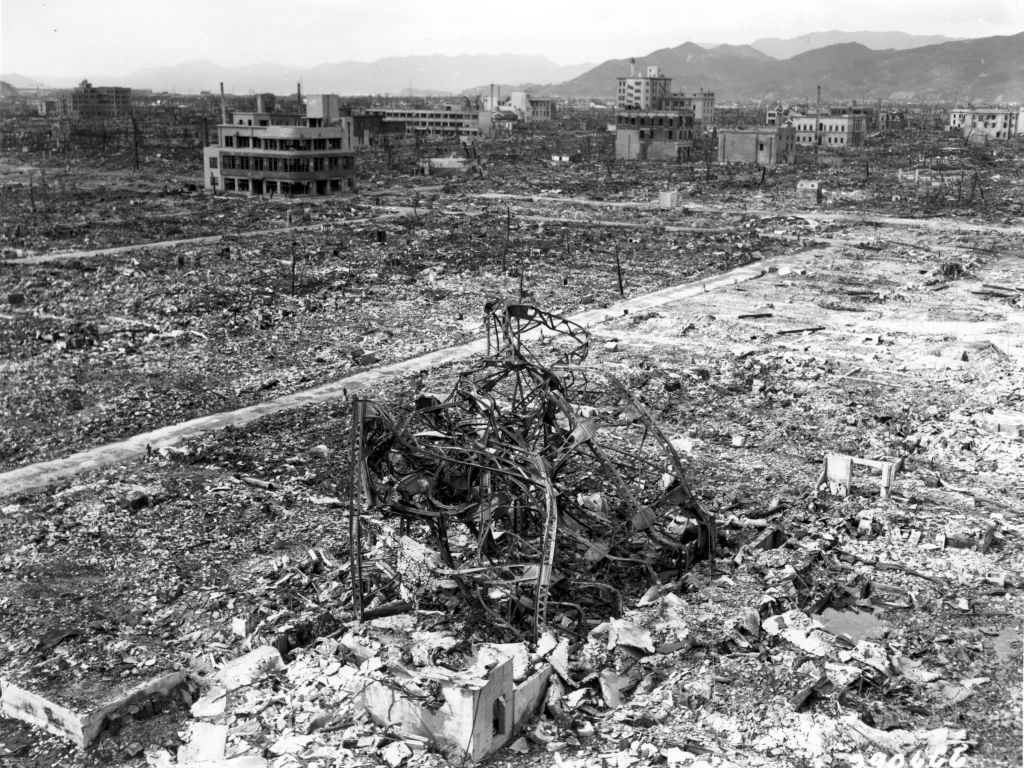
Each August, the world pauses to remember the U.S. dropping an atomic bomb on Hiroshima, Japan during World War II.
Newspapers publish retrospectives, television documentaries revisit the devastation, and world leaders gather to warn against the destructive power of atomic weapons.
Nagasaki, bombed just three days later, receives only a fraction of that attention. The imbalance extends well beyond anniversary commemorations. In 2025, Hiroshima’s Peace Memorial Museum welcomed over 2.5 million visitors, while Nagasaki’s attracted fewer than 900,000.
Yet history tells a different story.
While Hiroshima has become the defining symbol of the atomic age, it was Nagasaki that helped change the course of World War II. The second atomic bomb—not the first—broke the deadlock within Japan’s leadership, compelled Emperor Hirohito to intervene in the political process, and set in motion Japan’s surrender. Eighty-one years later, that fact remains one of the least appreciated turning points of the twentieth century.
By the summer of 1945, Japan had largely lost the war militarily. Its Navy rested on the muddy floor of the Pacific, while the remains of its air force were being converted into kamikazes. Sixty-four of its cities had been reduced to rubble and ash by incendiary bombs, as a submarine blockade strangled its economy, cutting off food, fuel, and raw materials.
But, I would argue, there is a difference between defeat and surrender. And historical records tell us that the latter remained unthinkable for Japan’s military leaders.
Japan still counted 5 million men under arms, a force military leaders believed offered one final opportunity. Their strategy was simple: inflict such brutal casualties on invading American troops that Washington would have no choice but to abandon its demand for unconditional surrender and grant Japan more favorable peace terms.
President Harry Truman had already approved Operation Olympic, the November 1945 invasion of Kyushu, the first phase of a massive assault on the Japanese home islands. The savage battles of Iwo Jima and Okinawa had already demonstrated the ferocity with which Japanese forces would defend their homeland. One July 1945 Pentagon estimate projected America would suffer between 1.7 million and 4 million casualties. Japanese military and civilian losses were expected to reach between 5 to 10 million.
Then, on August 6, the United States dropped the first atomic bomb on Hiroshima, obliterating nearly five square miles of the city. Approximately 140,000 men, women, and children ultimately died from the blast or the subsequent effects of radiation.
But contrary to popular understanding among many today, Hiroshima did not convince Japan to surrender. In fact, Japan’s Supreme War Council—the six men responsible for directing the war—did not even meet in the days immediately following the attack. The military leadership remained committed to fighting on despite the destruction of an entire city.
Many were convinced that Hiroshima represented a terrible but isolated event. Atomic weapons were new and extraordinarily expensive, and they surmised that there was no way the Americans had more than one—or at most, a few—such bombs.
If America had only limited bombs, Japanese leaders concluded, they could still hope to force a costly invasion and perhaps negotiate better terms.
Nagasaki shattered that illusion.
Just 75 hours after Hiroshima, a second atomic bomb annihilated another Japanese city, killing 73,000 people. Two cities had vanished in just three days. From Tokyo’s perspective, there was no way of knowing whether the United States possessed two bombs—or twenty. Even more terrifying, America now might never even need to invade Japan. It could simply destroy one city after another until nothing remained.
That realization prompted Japan’s leaders to at last confront the reality that the war could not be won. Even after Nagasaki, however, surrender was far from certain. The Supreme War Council deadlocked three-to-three between those favoring peace and those determined to fight to the finish. The impasse was broken only when Emperor Hirohito took the extraordinary step of personally intervening in the political decision-making process—a move virtually unprecedented in modern Japanese history—to demand Japan at last accept surrender.
None of this diminishes the horror of either atomic bombing. Tens of thousands of men, women, and children died in unimaginable circumstances. Their suffering deserves remembrance, mourning, and reflection on the terrible consequences of nuclear war.
But moral judgments and historical causation are not the same question. And the historical evidence is clear. Hiroshima alone did not end the war. Nagasaki did.
For decades, public memory has elevated Hiroshima into a universal symbol of the tragedy of war and horror of atomic weapons, while allowing Nagasaki to fade into the background. Hiroshima was unquestionably the first use of an atomic weapon, and more people did die in that attack than in Nagasaki. But the prominence accorded to Hiroshima has unintentionally obscured the event that helped force Japan’s surrender.
Understanding that distinction is important.
It reminds us that history is rarely as simple as anniversary news stories portray, and that decisive moments are not always the ones we see remembered. And equally as important, it reminds us that the final days of World War II were not shaped by a single atomic bomb, but by Japan’s terrifying realization that the United States could strike again—and again.
History should continue to remember Hiroshima as the beginning of the atomic age.
But it should also remember Nagasaki as the moment World War II finally ended.
Mark Zuckerberg’s AI manifesto is exactly why people don’t like AI
After his Reflecting Pool vandalism case is dismissed, David Hearn looks for closure

The ex-Olympian accused of damaging the reflecting pool tells NPR the experience has been "Orwellian" and "Kafkaesque." And it's not over yet: His lawyers are fighting to close the case permanently.
(Image credit: Rod Lamkey)

Rockets face nervous wait after defeat by Brave
Why has Araujo joined Liverpool and where did it go wrong at Barcelona?
Israel can afford to lose US aid

This story appeared in Today, Explained, a daily newsletter that helps you understand the most compelling news and stories of the day. Subscribe here.
President Donald Trump may have to settle for the hand-me-down Nobel Prize medal that he scored several months ago. Despite their best efforts, his envoys don’t seem to be having much luck advancing a peace deal in Gaza.
Over the weekend — just days after Trump announced a “HISTORIC” agreement to gradually disarm Hamas and stand down Israeli troops — Israeli Prime Minister Benjamin Netanyahu rejected the framework.
The plan, brokered by Trump’s Board of Peace, would have seen both sides ramp down in tandem. But that’s apparently a nonstarter for Netanyahu, who said Hamas must disarm before Israeli troops withdraw. Israel still controls about 70 percent of the Gaza Strip, according to NPR — and has continued launching attacks in the territory, even after an October ceasefire.
What happens if the US cuts off aid to Israel?
It’s the latest setback in what has been a long and ugly conflict — a conflict that has turned many Americans against their longtime ally, Israel. Against that backdrop, some Democratic lawmakers and pro-Palestinian activists are advancing a once-fringe policy in the hopes of forcing Israel to end the war in Gaza and change its course in the occupied West Bank: cutting off military aid to Israel.
It’s an intuitive approach to behavior modification, familiar to any parent who has denied a child a desired toy or treat: withhold something they want until they behave. But Israel, in this admittedly imperfect metaphor, is not a toddler. It’s a full-grown adult with a $600 billion economy and a mind of its own…and it can absolutely buy its own drones and missile-defense systems.
Here’s a statistic that really drove that point home for me: In 2025, Israel spent about 7.9 percent of its GDP on its military, plus US aid. To sustain that level of military investment without US support, Israel would need to allocate 8.5 percent of GDP to its military. Not exactly a massive change.
There are other valid arguments for the US to end Israeli aid, of course. (Among the most common: to avoid complicity in war crimes and possible genocide in the Gaza Strip.) But if US lawmakers hope to force Israel’s hand, on the two-state solution or anything else, then cutting military aid probably won’t provide enough leverage.
One link for later
➨ About that organic chicken…many consumers shell out twice as much for organic poultry because they believe it was raised humanely. But while an organic certification does, on paper, require more space, fresh air and outdoor access for chickens, farms that supply Costco and other major retailers have been accused of serious animal welfare violations.
Before you go…
- Did you know…that migratory birds can sense the Earth’s magnetic field and use it to navigate? But scientists still don’t know which body part the birds use to do that sensing.
- Today’s trivia: What is Dorothy’s last name in The Wizard of Oz? (You can find this and other brain puzzles in Vox’s daily crossword. Look for the answer in tomorrow’s edition.)
- Yesterday’s trivia: On Thursday, we asked you for the fourth-largest Great Lake. That would be Lake Erie, which ranks as the 11th largest lake globally.
Big Bear bald eagle Jackie has died, California veterinary center says
Deadline passes for embattled Republican Rep. Max Miller to drop off ballot
Mark Zuckerberg’s mega-yacht didn’t respond to call for help from small boat in Alaska
Todd Blanche sworn in as attorney general after bruising confirmation battle
Trump and RFK Jr. try again to upend vaccines for kids
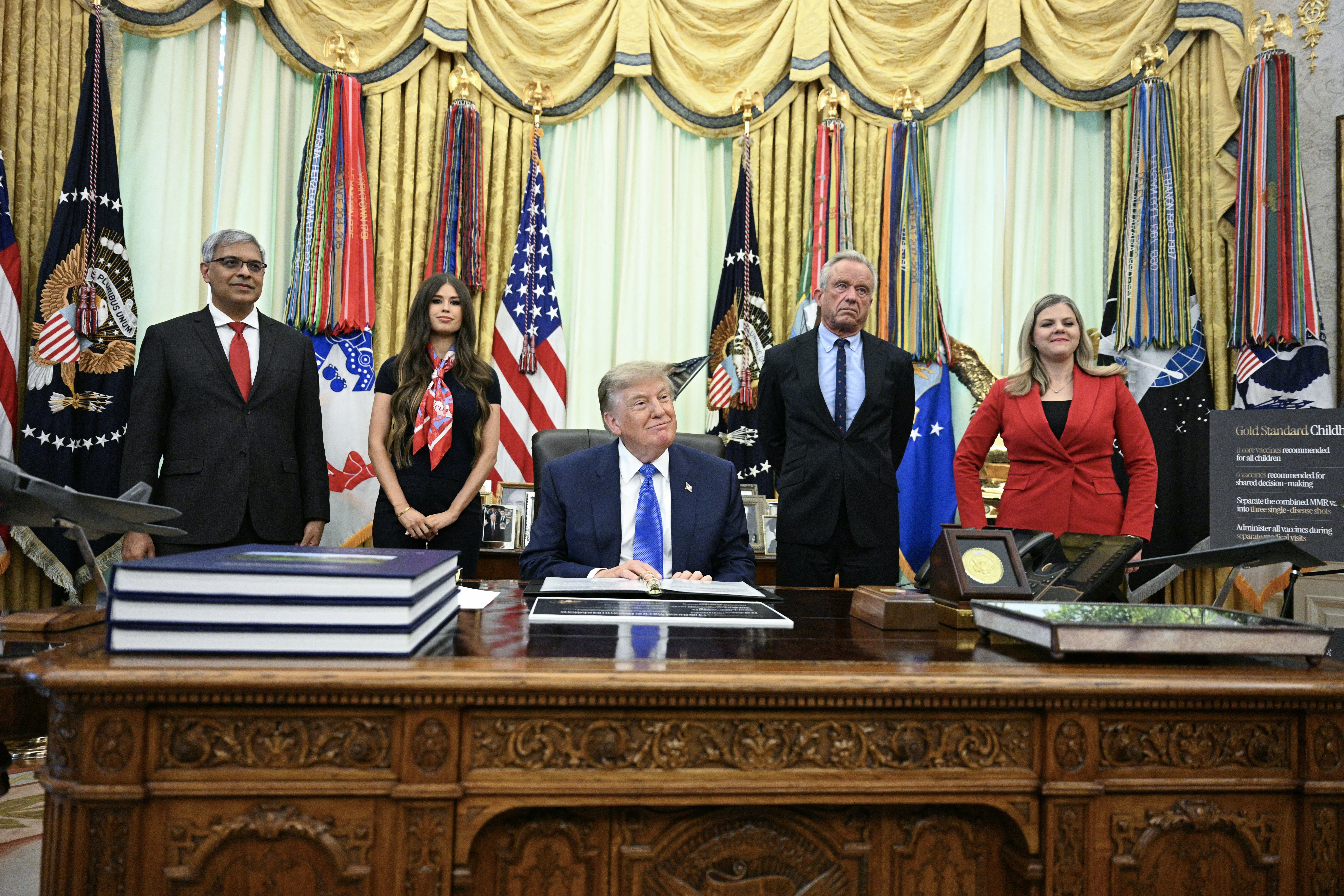
President Trump signed an executive order on Monday about vaccines, saying children should get fewer. His administration has been blocked in the courts from changing the vaccine schedule.
(Image credit: Jim Watson)

Court clears way for social media addiction suits against tech giants
Firefighting in New Forest to continue for several days
How much would you pay for a smarter baby?
RSS вырос до 3 ГБ, а tracemalloc показывает 180 МБ: как найти остальные 2,8

RSS растёт к лимиту контейнера, tracemalloc показывает прежние 180 МБ, а gc.collect() ничего не меняет. Разберём, как в такой ситуации отделить утечку Python-объектов от нативных аллокаций и удержания памяти системным аллокатором — и понять, где именно искать причину до OOMKilled.
Gory AI clips of fruit and veg characters could radicalise kids, researchers say
The U.S. just had its hottest month on record
WATCH: Trump signs executive order on childhood vaccine recommendations
US judge drops criminal charges against Indian billionaire Gautam Adani
Justice department says it decided to abandon fraud and bribery case in which Adani Group has denied wrongdoing
A US judge on Monday dismissed criminal charges against the Indian billionaire Gautam Adani, after the justice department said it had decided to abandon the fraud and bribery case.
The Brooklyn-based district judge Nicholas Garaufis’s decision to grant federal prosecutors’ rare attempt to toss the case came after he inquired into their reasons for doing so, including by asking Adani whether anything was promised in exchange for the dropping of the case. In November 2024, before the charges were unsealed, Adani had promised to invest $10bn in the United States.
Continue reading...Claude поднял нижнюю границу гипотезы Римана: с 41,6% до 67,2% нулей на критической прямой

Anthropic отправила исследовательскую версию Claude на штурм гипотезы Римана — одной из самых знаменитых нерешенных задач математики. Гипотезу модель, разумеется, не доказала. Но в процессе она неожиданно продвинула смежную задачу: подняла доказанную нижнюю границу доли нулей дзета-функции, лежащих на критической прямой, с 41,6% до 67,2%. Об этом Anthropic рассказала в блоге 10 августа.
Читать далее