RSS Feeds
Opinion | The Environmental Law Institute’s Defense
Tech industry is buzzing after a Claude agent hacked into a gym
West Nile virus season peaks in late August — here’s what you can use to stay safe
Trump signs executive order on childhood vaccines
Injured bald eagle presumed to be Jackie has died: Wildlife rescue
Watch: Trump signs executive order updating childhood vaccine recommendations
Contiguous U.S. breaks its record for hottest month ever, NOAA says
Why Taylor Farms faces scrutiny over salmonella and cyclospora outbreaks
Trump order aims to cut number of diseases all children should be vaccinated against from 18 to 11
Why are gold prices falling? 4 factors that are impacting gold's value
Trump signs order to limit childhood vaccines and split MMR shots
What to Know About the Earthquake in Colombia
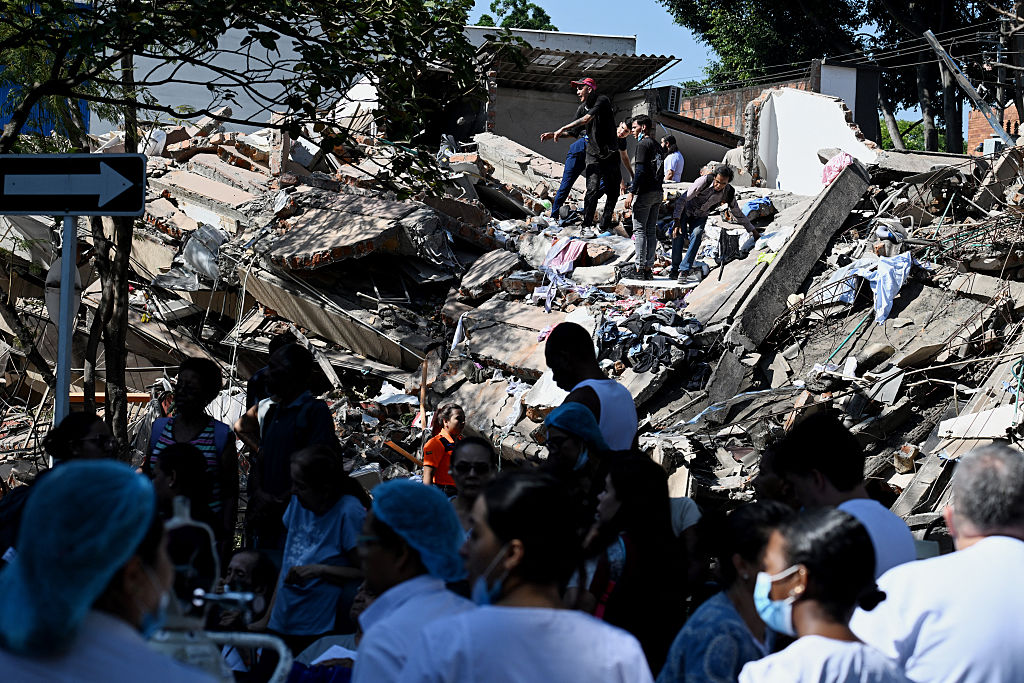
A 7.4-magnitude earthquake rattled western Colombia on Monday, causing widespread destruction and leaving more than 100 people dead.
Colombian President Abelardo De La Espriella, who was sworn into office just days before the disaster struck the nation, said in a post on X on Monday morning that he had “directly assumed leadership of the emergency response.” In another post that morning, he said that he was traveling to the nation’s capital, Bogotá, “to focus on addressing the emergency facing our country.”
“To the Colombians who are going through difficult times today, I want to say: you are not alone,” he said. “You have a President who cares deeply for his people and who will do everything necessary to protect you, support you, and move forward together in rebuilding the affected regions.”
The Colombian President declared an emergency later that day, The Associated Press reported.
Here’s what to know about the earthquake.
When and where did the earthquake happen?
The earthquake hit Colombia at 7:34 a.m. local time, according to the U.S. Geological Survey (USGS).
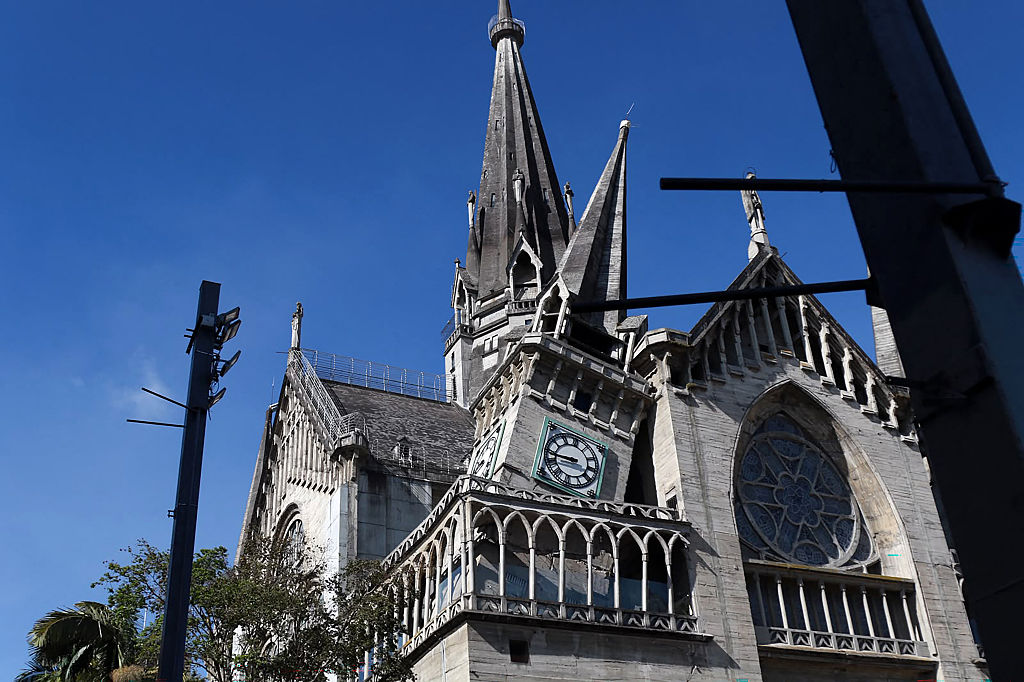
The epicenter of the earthquake was near San José del Palmar, a community west of the country’s capital with a population of 5,000. Other cities nearby, including Pereira, Manizales, and Cali, were impacted, too.
Neighboring countries, including Venezuela, Ecuador, and Panama, also felt the quake.
How strong was the earthquake?
USGS reported that the earthquake that struck Colombia had a 7.4 magnitude. “Magnitude” indicates the size of a quake—one with a 5.3 magnitude, for instance, is a “moderate” quake, whereas one with a 6.3 is considered “strong,” according to USGS. The back-to-back quakes that shook Venezuela in June and left more than 6,000 people dead each had a magnitude above 7.
The Colombian Geological Service reported that the quake had a depth of about 103 km, in addition to its 7.4 magnitude, and said it was the largest seismic event recorded in the country in this century
What is the death toll?
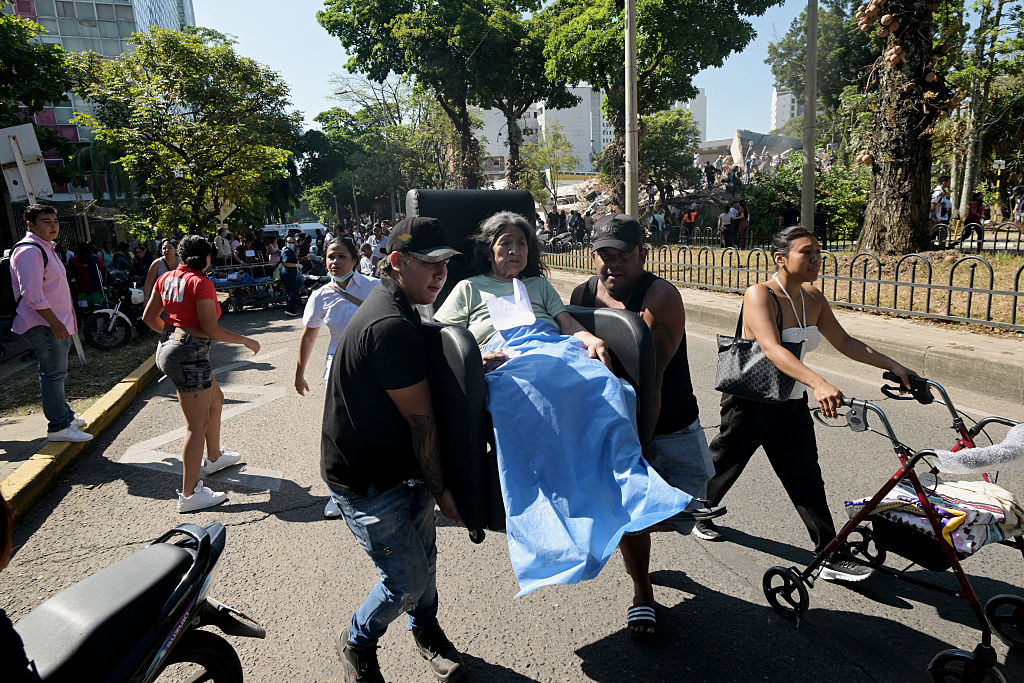
According to preliminary information from the Colombian Association of Capital Cities (Asocapitales), at least 132 people have died, and at least 570 people were injured in the quake as of Monday evening.
But the death toll is still expected to rise, as local officials said that they had received reports of many people trapped under buildings that had collapsed.
What damage has been reported?
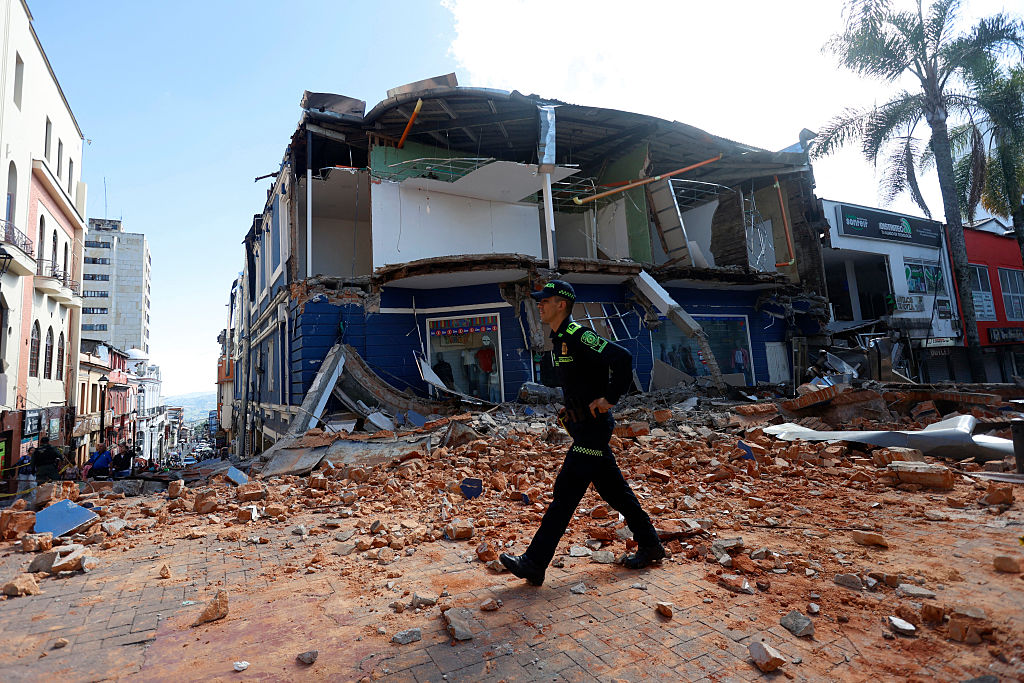
De La Espriella said on Monday that the quake damaged more than 1,500 homes—adding that it completely destroyed some of them. More than a dozen health centers and even more schools were also damaged in the disaster, the New York Times reported.
Asocapitales added that 86 buildings have collapsed, seven airports suspended operations, and five cities—Pereira, Cali, Quibdó, Manizales, and Armenia—are “experiencing the most severe impacts.”
The International Rescue Committee (IRC) said that its teams are monitoring the situation.
"Our teams near the epicenter in Chocó are reporting damages to infrastructure, including to hospitals and clinics," Nicole Kast, IRC's Country Director for Colombia, Venezuela and Ecuador, said in a statement. "Impacted communities were already facing armed conflict and high levels of poverty before the ground began to shake. The IRC is monitoring the situation and stands ready to scale up its response as the full extent of the destruction becomes clear."
Colombia’s civil aviation authority said in a post on X on Monday morning that it had received reports of damage at airports in Pereira, Manizales, Quibdó, Armenia, Cartago, and Buenaventura, and that operations there were being suspended “for safety reasons” until the damage had been assessed.
Is there a tsunami threat after the earthquake?
While earthquakes can sometimes trigger tsunamis, the U.S. Tsunami Warning System said on Monday that there was no warning, advisory, watch, or threat for a tsunami after the earthquake in Colombia.
How are other governments responding?
Governments across Latin America offered assistance.
Venezuela, which is still recovering from quakes that shook it in June, offered Colombia the deployment of rescue workers and humanitarian aid: its foreign minister Félix Plasencia said in a statement that Caracas “expresses its deepest solidarity and fraternity” with the people of Colombia.
El Salvador’s President Nayib Bukele said they are communicating with Colombia and are “ready to provide immediate support with our rescue teams, medical personnel, paramedics, supplies, or any other assistance.” Mexico’s President Claudia Sheinbaum also offered assistance should Bogotá require it.
The U.S. State Department announced it would provide $15.5 million for emergency shelter, food, and other earthquake response aid. Ursula von der Leyen of the European Commission said on social media that the European Union has already mobilized its satellite service to assist in rescue operations and is ready to provide additional support.
—Chad de Guzman contributed reporting.
Trump signs order to limit childhood vaccines and split MMR shots
Slain Arizona student planned to break up with her Indian boyfriend, arrest warrant says
Police question person of interest after Mississippi woman found hanging from tree
Doctors push back on Trump executive order to change childhood vaccine schedule
Florida was a swing state. Now it’s MAGA-land
What to know after Netanyahu rejects Trump's Gaza peace plan
Trump signs order attempting to override CDC vaccine schedule and break up MMR shots
President and RFK Jr, the health secretary, repeatedly referred to autism during signing, though studies show no link between it and vaccines
Donald Trump has signed an executive order with plans for sweeping changes to the childhood vaccination schedule that attempts to override the authority of the US Centers for Disease Control and Prevention (CDC).
It is an attempt to undergird the changes made earlier this year to CDC vaccination recommendations, which were halted by a federal judge. The CDC is the federal agency tasked with recommending vaccines, not the White House.
Continue reading...‘National priority’ to equip UK firefighters amid growing wildfire threat
Exclusive: FBU calls for more funding as ‘unprecedented summer’ puts rising demands on already stretched crews
Firefighters in the UK are under increased pressure as a result of an “unprecedented summer of dangerous and volatile wildfires”, the Fire Brigades Union has said, as many parts of the country brace for a fifth heatwave of the year.
As authorities declared almost three-quarters of England was now in drought, Steve Wright, the FBU general secretary, said the unpredictable environmental challenges the UK was now confronted with meant it was a “national priority” to have enough properly equipped firefighters to “face these threats”.
Continue reading...MSP apologises for hurt caused by rape 'demonisation' comments
Treasury contributed to woman's death, inquest hears
VLAN и одна старая мечта: как я начал делать Visual IDE для сетей

Кстати, хочу поблагодарить сообщество за обратную связь по EvertyDesk. Я увидел огромное количество замечаний, идей и реальных проверок. Много ребят запускали проект у себя, ковыряли его, находили проблемы, и вместе мы дотащили всё до версии 2.0.1. Да, я перепрыгнул с 0.0.1 почти сразу. Иногда нумерация версий тоже хочет жить быстрее разработчика.
Нейросети очень помогают добивать мелкие и очевидные баги. Это невозможно сравнить с тем, как я работал раньше, и с тем, как работаю сейчас.
Некоторые спрашивали про Contributor в виде cloud. Ребят, было бы стыдно этого не указать. Значительная часть работы действительно идёт в диалоге с нейросетями. Я фанат технологий, и иногда меня в хорошем смысле удивляет, насколько круто они умеют делать рутинную работу.
В целом я считаю, что мы живём в удивительное время.
Меня можно за это хейтить. Можно не хейтить. Я просто качусь по общей технологической волне и не особенно жду признания. Сегодня я могу делать вещи, которые раньше даже в виде заказной разработки выглядели безумными идеями.
Поэтому я решил начать параллельную серию статей. Помимо своего VST3-плагина для сведения я хочу наконец сделать то, о чём мечтал годами, пока работал ведущим инженером у частного интернет-провайдера.
Читать далееWaymo Is Growing Faster Than Ever. So Are Its ‘Edge Cases.’
Russian court bars only anti-war party from standing in parliamentary elections
30 years later, a former gang member will stand trial for Tupac's murder
Топ вопросов с NLP собеседований: архитектуры LLM, инференс и оптимизация

На NLP/LLM собеседованиях все чаще проверяют не только знание трансформеров, но и понимание того, как устроены современные GPT-like модели: почему большинство генеративных LLM используют decoder-only архитектуру, чем LLaMA отличается от ванильного Transformer, зачем нужны RoPE, RMSNorm, SwiGLU и GQA.
Почему инференс LLM дорогой и какие оптимизации помогают его ускорять: fused kernels, FlashAttention, KV-cache и PagedAttention, continuous batching, speculative decoding, квантизация и дистилляция.
Много схем и картинок, а также полный список вопросов с собесов в конце.
Читать далееJuly was hottest month ever recorded in US as heatwaves scorched country
Scientists have made clear that the elevated heat in the US was being amplified by the human-caused climate crisis
July was the hottest month ever recorded in the US, with repeated, scorching heatwaves across much of the country helping shatter all previous monthly temperature records stretching back over the full 132 years of reliable measurements.
Last month’s average temperature was 3.3F (1.8C) higher than the 20th century average for the contiguous United States, which excludes Alaska and Hawaii, according to new data from the National Oceanic and Atmospheric Administration (Noaa).
Continue reading...Todd Blanche, Trump’s former personal lawyer, sworn in as US attorney general
Loyalist sworn in after Senate voted narrowly in favor of his confirmation on Saturday morning
Todd Blanche has been sworn as US attorney general, cementing Donald Trump’s installation of his former personal attorney in charge of the Department of Justice.
Blanche, who has been serving as acting attorney general since April, was confirmed in his new position during a ceremony at the White House on Monday. The 52-year-old is the second Senate-confirmed attorney general of Trump’s second term, after Pam Bondi, who was ousted earlier this year.
Continue reading...Todd Blanche, Trump’s former personal lawyer, sworn in as US attorney general
Loyalist sworn in after Senate voted narrowly in favor of his confirmation on Saturday morning
Todd Blanche has been sworn as US attorney general, cementing Donald Trump’s installation of his former personal attorney in charge of the Department of Justice.
Blanche, who has been serving as acting attorney general since April, was confirmed in his new position during a ceremony at the White House on Monday. The 52-year-old is the second Senate-confirmed attorney general of Trump’s second term, after Pam Bondi, who was ousted earlier this year.
Continue reading...Jake Whisenant, record-setting speed climber, dies at 30 in climbing accident
Americanswers...on 5 Live! Will Trump's new challenge to birthright citizenship work?
Meta launches new AI model for home as Mark Zuckerberg pushes for open-source strategy
How much interest can a $75,000 high-yield savings account earn over the next year?
Trump signs executive order on vaccines
Watch: Videos capture the moment a 7.4-magnitude earthquake strikes Colombia
What makes Meta glasses cool also makes them super weird

The comical charm of Meta’s new AI-enhanced, smart glasses is that they’re seemingly made for someone unimpressed, perhaps thoroughly, with the way they’re experiencing life.
Being unhappy with life in its current state is, of course, intrinsically human and a problem that is as old as time. In fairy tales and folklore, the motif ends with a lesson — sometimes with the aid of magic, divine punishment, and maybe a witch or two — to be thankful for the things you have. More contemporary interpretations involve time travel and alternate realities, and perhaps some kind of Christmas theme.
Now, in 2026, we have glasses imbued with technological magic. The $300 Meta glasses are equipped with dual cameras as well as multiple microphones and tiny speakers that connect to an AI-powered app on your phone. This allows you to understand languages you can’t speak, command music to be played, perhaps even identify people you don’t know, and record anything you want and keep it, should you desire, forever. Having the ability to do these things, according to Meta, could make life a little better.
The problem with Meta’s pitch is that the improvements the glasses promise come at a price. These super-powered spectacles run the risk of annoying or offending or creeping out the people around you.
And worst of all, even if you’re just plainly wearing the glasses, they’re killing the vibe for everyone else.
Wear Meta glasses at your own risk
The major takeaway from Meta’s advertisements and overall promotional strategy for its glasses is that you’re supposed to wear them everywhere: Japanese restaurants, nights out at bars and clubs, on escalators (possibly to somewhere cool), backstage at concerts, at Kardashian houses, in Miami Beach, skydiving, and everywhere in between.
What these stylish commercials and dynamic morsels of marketing do not tell you is that at all these places there will likely be people who do not want to see you wearing these glasses at all.
“For a few weeks there was a trainer at the gym I noticed wearing glasses — black Ray-Bans — and he had never worn glasses before. It took me a few days but I realized they were Meta,” Sean, a non-Meta glasses wearer in DC, told me. Vox agreed to let Sean and other people interviewed for this article to go by their first name or pseudonym to let them speak freely about these spectacles.
“I almost said something to a manager, but then he stopped wearing them before I could say anything,” he added.
How not to look like a creep wearing Meta glasses
While Meta glasses enthusiasts and critics are on opposite ends of the spectrum when it comes purchasing Meta glasses, both camps are actually pretty close when it comes to advice on how not to look like a creep when wearing them.
One of the main things I was told was just not to film around people. If you’re going to buy these glasses and film, you should film solo activities and not in the direction of other people. Think: ziplining, hiking, gardening, boating, and bicycle rides. The ocean, mountains, flowers, and trails do not care about being filmed the way people do.
The other thing that kept coming up was to be understanding and try not to film anyone without their consent. Because the tech’s relatively new, people are still getting used to these devices. They might not know about the recording light or might have in their heads that people wearing these things are recording everything. That might lead to situations where someone comes up to you and asks about them or perhaps even tense situations where someone thinks they’re being recorded. Being transparent about the glasses (e.g., explaining the recording light) and respecting people’s privacy by telling them what you’re recording (e.g., your form at the gym) and if they might be in the shot goes a long way.
Sean explained his unease. All around this country, people film in the gym all the time — to the point where it’s obnoxious and gets in everyone’s way. This trainer could just be following the trend, using the glasses (which are less cumbersome than an entire tripod setup) to film his clients’ form or creating content for a YouTube channel. But not knowing what the glasses are for, what the trainer is recording, or where he’s recording is what bothered Sean.
“I don’t want to be in the background of videos all over the internet or on TikTok,” he said.
There’s a little bit of social absurdity here in that we’ve been encouraged to post and have so many platforms — TikTok, Instagram, YouTube, etc. — to do so. Meta has continually emphasized that not only do these glasses allow people to share their points of view but also that everyone’s point of view is so important that it needs to be shared. At the same time, more people posting more than ever has made people aware of being a background character in someone else’s content. And it turns out that real-life, regular people are not particularly invested in how the stranger next to them in Meta glasses sees the world.
Patrick, a writer living in New York, told me about a wedding he’d recently attended, where he saw an old friend wearing a pair. His group of friends told their pal that they wouldn’t talk to him until he took them off.
As someone who aspires to be the kind of person you want to sit next to at a wedding, this is understandable. A wedding is theoretically two people sharing the most romantic day of their lives, but it is also a well of gossip, judgment, inside jokes, and lore that’s shared by the people who are watching said couple share the most romantic day of their lives. There’s also the possibility that, depending on the wedding, the spirit might move oneself to partake in the erotic violence known as the “chicken dance” and would not want any of that recorded.
“One person screamed, ‘Ew the Kylie glasses, gross.’ It felt so cathartic,” Patrick said, referencing Meta glasses spokesmodel Kylie Jenner who, in her personal life, may or may not wear the glasses she advertises.
In addition to weddings and the gym, people also told me that they don’t want to see the glasses at restaurants, not on dance floors or at parties, and definitely not in an immersive theater setting. I even spoke to someone who started a petition to ban them from bars.
“I’m staunchly anti-photographs at good parties — the best parties in the world ban photography from the dancefloor,” said Vee, a nightlife aficionado who has owned but does not use his pair of Meta glasses anymore. “When people know there’s a camera on them, they behave differently. They start to monitor their own behavior. They become self-conscious and they start to think, Well, what will the people watching this video think I’m doing? Am I being cringe?”
Going out partying is a completely different experience from lifting weights at the gym, and both are obviously very different from attending a wedding with friends. Yet, the critique of wearing Meta glasses at all these places is the same. No matter the vibe, Meta glasses will kill it and flatten the mood. People can’t enjoy the moment because the moment is being intrinsically changed by a person who might be recording.
One of the rather unfortunate terms that Meta glasses have acquired is “pervert glasses.” This is largely due to the trend of pickup artists, pranksters, and yes, perverts, who are using the glasses to film others without their consent. Vee, the dance enthusiast, told me that it’s one more reason why he doesn’t believe that these specs have any place in nightlife.
“There’s a very significant community of people who trade videos that they’ve taken: candid videos of women who are in various states of undress. It’s just this kind of seedy underground,” Vee said, pointing out that Reddit had to ban entire forums dedicated to sharing nonconsensual videos and pictures of women at festivals and clubs.
As Vee explained, people at festivals and nightlife events are often partaking in drugs and alcohol. He has no problem with that. What he does take issue with is that no one doing these things should have to think about being someone else’s content. Intoxicated people aren’t in the state of mind where they can consent to being in someone’s video or are even aware that someone’s Meta glasses have their recording light on.
“There’s this whole kind of creeper contingent of folks who are trying to learn how to disable the recording light,” Vee said. “It’s not everybody who owns these glasses obviously, but there is a significant number of creepers who are giving the hardware a very bad name.”
Are we being too mean to pervert glasses?
The indicator light has since become a major flashpoint. The light is part of the glasses’ vibe-kill persona as it makes clear to everyone that can see that recording is taking place, and it’s especially vibrant in dimly lit places. The effect, I imagine, is like when the toys in Toy Story collapse when they see a human. That’s led to a contingent of glasses-wearers who want to disable the feature.
While it’s understandable that someone might not want to draw even more attention to these glasses, hacking the light source is something a creeper would also do. Hence the “pervert glasses” moniker. These privacy concerns are why Meta is now rolling out an update that will disable the spectacles’ recording feature if said light is tampered with.
“I think if you tamper with that, they should just break,” Jason, a 28-year-old Meta glasses owner, told me. “It’s the thin veil that makes it like, ‘Okay, at least you’re telling me you’re filming me.’ So the idea that if you tamper with it? No, your product should be bricked.”
Jason bought a pair of Meta glasses in November with the idea that he would use them to film food content and post reviews. He had even picked out a name, “Sandwich Digest,” and dreamt of its success. But on his first wear, he took them to a Japanese sandwich shop and quickly realized that his future as a Meta glasses-wearing food critic was not a fun one.
“I felt so uncomfortable,” Jason said, noting that the obviousness of his Meta glasses and their recording light spiked his self-consciousness. “But I also felt like the people I was interacting with were also uncomfortable. And I felt like they were feeling like, Okay, we both know this is weird, but I can’t say that because you’re actively filming me.”
The strange interaction Jason described is a version of the panopticon effect, the idea that being recorded makes people alter their baseline behavior, perhaps to the point where people self-regulate even when they’re not being recorded. For Jason, there was no “real” restaurant experience to be filmed because everyone was so uncomfortable with being recorded.
Therein is the conundrum: Even if you’re not using these glasses to be a creep, people still think you’re a creep, and you know that they think you’re a creep.
Therein is the conundrum: Even if you’re not using these glasses to be a creep, people still think you’re a creep, and you know that they think you’re a creep.
Since that initial encounter, Jason tells me that he’s only ever used the filming feature to capture a zipline experience he had in Mexico at the beginning of the year. He thinks he might also use them to capture hikes or excursions on an upcoming vacation, but he won’t use them in the vicinity of or to film other people — especially since they’ve been dubbed pervert glasses.
“People’s perception of these glasses now is not what it was when I bought them in November,” he told me. “And had it been then, and if I knew what I know now, I probably wouldn’t have bought them.”
Max, a Meta glasses wearer based in Australia, is a bit more keen on them but still shares some of Jason’s sentiment about their not-so-great reputation. Max explained to me that he has two pairs and wears them around 40 hours per week, mainly when he’s working, or walking and driving from place to place. Though he says he’s never had a negative interaction when wearing his glasses, he understands the backlash.
“While we’re constantly being recorded when in public anyway, there’s a big difference between mass surveillance and one random weirdo recording you for their own purposes,” Max said, making the point that the indicator light, as awkward and obnoxious as it is, could be the accessory’s most important feature.
“It’s really the only defense wearers have against the ‘pervert glasses’ remarks,” he added. “If the firmware update is successful, and the marketing around the update is widespread, I think we can slowly turn the public in their favor again.”
To be clear, many Meta glasses owners like Max pointed out that the glasses do have extremely useful features, like hands-free calling or the ability to translate foreign languages in real time. Meta also touts the glasses’ accessibility features, including those for people with reduced vision or hearing. They also offer sun protection.
These are all ostensibly helpful gizmos, and their existence seems to indicate that Meta and its tech cohort are trying to figure out how to make these glasses as essential to our everyday lives as smartphones. Perhaps, when these features become more innovative or exciting or if the glasses become so popular, the narrative around why people buy them may change.
But for now, the singularly intriguing thing about these specs is simultaneously their most publicly maligned feature: the filming.
“There are probably a million things to film with them that are probably not weird,” Jason, the one-time Meta glasses food critic, told me. “But like if you’re wearing them at the beach, I would probably be side-eyeing you because you’re wearing ‘pervert glasses’ at the beach — fork found in kitchen.”
July was hottest month ever recorded in US as heatwaves scorched country
Scientists have made clear that the elevated heat in the US was being amplified by the human-caused climate crisis
July was the hottest month ever recorded in the US, with repeated, scorching heatwaves across much of the country helping shatter all previous monthly temperature records stretching back over the full 132 years of reliable measurements.
Last month’s average temperature was 3.3F (1.8C) higher than the 20th century average for the contiguous United States, which excludes Alaska and Hawaii, according to new data from the National Oceanic and Atmospheric Administration (Noaa).
Continue reading...Ann Widdecombe police investigate whether accused had role in Farage incident
Police looking into whether Joshua Kerry linked to alleged attempted burglary last year at Reform leader’s then home
Police are investigating whether Joshua Kerry, the man charged with the murder of the former Reform UK and Conservative politician Ann Widdecombe, had any role in an attempted burglary last year at the then London home of Nigel Farage.
Kerry, 28, from Rotherham, was charged with the murder of Widdecombe, 78, who was killed at her Devon home in July, after an investigation by counter-terrorism police.
Continue reading...