RSS Feeds
Pennsylvania Gov. Josh Shapiro talks landslide reelection
Mother of Ghanaian boy killed in US 'wants justice' as she flies for funeral
Talarico says victory sends message to Musk: "Texas is not for sale"
SoCal Outback Steakhouse franchisee files for bankruptcy, citing California's labor costs
San Diego-based Cerca Trova Restaurant Group, which once operated nearly 100 Outback Steakhouse restaurants, filed for Chapter 11 bankruptcy on Monday.
'Not a hit on me': Trump faults candidates and Fox News, not himself, for Republican losses
Reflecting on the losses, Trump largely put the onus on the candidates, some of whom he said he only endorsed for the good of the party.
Nadal set to join Real Madrid board of directors
Trump Reacts to Midterm Results: ‘I Wasn’t on the Ballot’
Casey, Jansen and Timoney start against Argentina
‘Musk’ Director Alex Gibney Wants to Know if Democrats Can Now Hold Elon Musk Accountable
Muslim Votes Matter softens anti-Labor stance ahead of Victorian election in bid to defeat One Nation in at-risk seats
Exclusive: Advocacy group will put volunteers on the ground in Labor-held outer suburban seats that could swing towards Pauline Hanson’s party
Get our daily political email, free app or daily news podcast
Muslim Votes Matter will relax its anti-Labor position at this month’s Victorian election, putting volunteers on the ground in key outer suburban seats the incumbent government risks losing to One Nation.
The grassroots advocacy group will direct its supporters to vote for Labor ahead of Pauline Hanson’s party in all lower house Victorian electorates and will aim to have volunteers on the ground in the seats of Greenvale, in Melbourne’s north, and Narre Warren South, in the city’s south-east, which the party fears could be seized by One Nation.
Sign up for Guardian Australia’s Politics, really newsletter here
Continue reading...‘Discontent and distrust’: annual social cohesion checkup shows exactly what’s making Australia angry
Cost of living and AI outrank climate change and war as top concerns for future, but support for multiculturalism remains strong
Get our daily political email, free app or daily news podcast
The vast majority of Australians support immigration and multiculturalism despite more feeling poorer – and increasingly pessimistic and distrustful of government, the annual Scanlon report on social cohesion has revealed.
People are more worried about artificial intelligence than climate change or going to war, but a global economic downturn and cost-of-living pressures are Australians’ key concerns.
Continue reading...Australia has a bad inflation problem. So why are we middle-of-the pack on the misery index?
Comparing Australia to other countries may not be much comfort but does offer some perspective on the economy
Get our breaking news email, free app or daily news podcast
Is Australia’s inflation problem worse than the rest of the world’s?
A day after the Reserve Bank delivered its fifth interest rate hike for the year, increasingly stressed mortgage holders would be justified asking. For Jonathan Kearns, the chief economist at Challenger, the answer is easy.
Continue reading...Albanese government warned it is ‘sleepwalking into another robodebt scenario’ over use of algorithms and AI
Centre for Public Integrity report calls for audit and public register of all automated decision-making
Get our breaking news email, free app or daily news podcast
The federal government is “sleepwalking its way into another robodebt” scandal amid a lack of transparency and legislation around the use of algorithms and AI in decisions, the chief executive of the independent thinktank the Centre for Public Integrity said.
Dr Catherine Williams launched the centre’s “Computer Says No” report on Thursday, which examines the use of automated decision-making (ADM) tools by the government and calls for urgent reform.
Continue reading...Endangered giant burrowing frog returns to wild after tadpoles rescued from ashes of black summer fires
Tadpoles collected from puddles in East Gippsland were transported to Melbourne zoo, where they were raised to metamorphosis and successfully bred in captivity for the first time
After the 2019-20 black summer bushfires, scientists in eastern Victoria stumbled across something they had been after for years: puddles of tadpoles from the southern giant burrowing frog, one of the state’s most cryptic amphibians.
The fires had torn through extensive areas in East Gippsland, sparking concerns for the survival of the frog, which is considered critically endangered in Victoria.
Continue reading...Votes are still being counted to see who will represent Mississippi in the Senate
Votes are still being counted to determine who will represent Mississippi in the U.S. Senate. Democrat Scott Colom was only a handful of votes ahead of Republican Cindy Hyde-Smith early Wednesday.

James Talarico on flipping Texas Senate seat in race against Ken Paxton
Where in the U.S. are homeowners most at risk of extreme weather?
Stonehaven train derailment could have been avoided if drain built correctly, says sheriff
Негативная спека: ваш лучший друг багтрек
В прошлой статье я рассказывал, как искал и помогал исправлять уязвимости в Ginux. Это совместимое с Linux ядро ОС, независимо написанное на Rust. Его автор, Грегори Курцер, участвовал в создании CentOS и основал Rocky Linux. Опыта разработки операционных систем у человека достаточно.
У проекта есть собственная методика — HDAE, Human-Directed Agentic Engineering. Человек задаёт архитектуру, ограничения и условия приёмки, агенты пишут код, проверяют и исправляют. По словам автора, работающее ядро получилось за одиннадцать дней. Задача всё-таки посложнее подсчёта калорий по фотографии обеда.
Я пришёл искать уязвимости со своими rust-in-peace и reproof. Но по мере работы всё чаще замечал: баги возникали на границах, там, где ключевые свойства системы были реализованы лишь частично.
Лимит памяти есть, но часть выделений в него не попадает. Настройку можно включить, но на работу программы она не влияет. Управление возвращается ядру, пока программа обращается к нему через системные вызовы. А если она просто крутится в цикле?
Находки сами попросились на обобщение. В серии «Я созидатель, а ты ССД» мы уже обсуждали, почему спека ещё не гарантирует работающий продукт. Расширим вопрос: что мы забываем написать в спеке, прежде чем отдаём её агенту?
Читать далееHuntingdon train attack passengers thought stabbing was a 'joke'
Сигналы из «зептовселенной»: новое открытие приближает обнаружение темной материи
The Democrats’ extraordinary triumph, explained
How Keisha Lance Bottoms found out she was elected governor of Georgia
Revolut’s valuation jumps 53% to $115B in new share sale as it prepares to launch US bank
'This is a disaster': Angry Republicans blame Trump for midterms defeat
UNHCR criticises UK’s 30-year ‘earned settlement’ plans for refugees
Home secretary Shabana Mahmood maintains rigorous rules for those who arrive on small boats
The UN refugee agency has said a government plan to make refugees wait up to 30 years before they get permission to settle in the UK “raises significant concerns”.
The strategy was unveiled earlier this week by Shabana Mahmood, the home secretary, as she announced a softening of aspects of her immigration plans, but kept some of the rigorous rules drawn up by her office last year.
Continue reading...Fleabag creator donates flat to help early-career writers live in London
Phoebe Waller-Bridge joins stars signing up to scheme aimed at tackling class barriers in theatre
Phoebe Waller-Bridge has donated a London flat so that early-career writers can afford to live in the capital.
The creator of the hit show Fleabag bought the property specifically for Writers’ Block, a new scheme tackling class barriers in theatre. The flat will be offered to writers from disadvantaged backgrounds, who will pay only bills. Waller-Bridge has also made what the initiative described as a “generous financial contribution”.
Continue reading...Elon Musk's millions fail to deliver Texas for the Republicans in fierce midterms
DFL trifecta 2.0: Democrats win full control of Minnesota government
Prosecutors Seek to Drop Charges Against Russian Scientist Accused of Smuggling Frog Embryos
Democrats dominate midterm elections, regain control of Congress
Trump emphasizes "I wasn't on the ballot" after Democrats take House, Senate
Repudiation of Trump, economic pain drove Dems to House victory: Voter Poll analysis
‘I’m 100 Percent at War With Trump’: MAGA Revolts After Midterms Wipeout
UK Officials Said AI Would Add £400 Billion to the Economy. That Figure Mainly Came From Google
Elon Musk's millions fail to deliver Texas for the Republicans in fierce midterms
Welcome to Trump’s Lame-Duck Era
On the eve of an election that threatened to upend his presidency, Donald Trump went to the Lincoln Memorial Reflecting Pool, where he had overseen a multimillion-dollar renovation that went awry when its new coating peeled and algae turned the water green. Aides hoped the President would focus on the concerns weighing on ordinary Americans: soaring gas prices, expensive groceries, a new war in the Middle East. Instead, Trump spent much of his 53-minute speech talking about construction projects rather than the struggles of the nation he had been elected to serve.
It was a bewildering capstone to a strange campaign. Allies marveled at Trump’s inability to stay on message as he crisscrossed the country. He boasted that oil companies were making a fortune as Americans struggled with energy costs. He claimed New Yorkers were no longer allowed to call their mothers “mom,” suggested renaming New Mexico “New America,” and repeatedly mimicked a Democratic Senate candidate vomiting at the sight of meat. Time and again, he veered into bizarre digressions about men's physiques. As one Trump aide put: “It’s hard to reach voters who can’t afford gas when your candidate keeps talking about Arnold Palmer’s endowment and Jon Husted’s ass.”
The scale of the Democrats’ victory was staggering. They seized control of both the House and Senate with ease. They captured governorships and Senate seats by commanding margins in traditionally Republican states, and prevailed in House districts gerrymandered to favor the GOP. The wipeout was a clear repudiation of Trump. Across the country, the President’s handpicked candidates went down to resounding defeats, including scandal-plagued Ken Paxton in Texas and Darlene Graham, the sister of the late Senator Lindsey Graham, in South Carolina—nominees he had elevated over the objections of party leaders who believed other Republicans stood a better chance. By night's end, Trump acknowledged the opposition's victory and recognized that the war in Iran was a factor in his loss. "We actually have the greatest economy," Trump told Fox News. "But because of the gasoline prices people don't see it as much as they would have without it. And the gasoline was caused by Iran."
Trump’s confidantes often remarked that he cared little about the outcome of the midterms. He regarded his party's loss of seats in Congress as an inescapable historical pattern. He had a point: Barack Obama's Democrats took a beating in consecutive midterms, and George W. Bush's Republicans were drubbed in 2006. Trump himself oversaw the loss of dozens of House seats in 2018. Advisers tried convincing the President that he had some agency over the election’s trajectory, but “he had trouble getting past the history,” one of Trump's top advisers says. He grew resigned to the gridlocked slugfest ahead and dismissive of the investigations and potential impeachment proceedings Democrats could embark upon. “They’ll probably go after me,” he told TIME in late September, “and I’ll go after them.”

For more than a decade, Trump has commanded a degree of loyalty from Republicans unmatched in modern politics, bending lawmakers to his will and making dissent a career-ending proposition. The trouncing the GOP suffered on Nov. 3, coupled with the growing perception that Trump has become a political liability, could usher in a very different final two years for a lame-duck President, causing his grip on the GOP to finally slacken. An NBC News exit poll on Tuesday revealed that 43% of voters said they cast their votes to express disapproval of Trump.
Presidents in the final two years of their second terms often pivot toward foreign policy, where they can exercise executive power with fewer constraints from Congress or the courts. Trump was already signaling his readiness to resume military strikes against Iran. Another senior Administration official says Trump plans to concentrate even more heavily on the Western Hemisphere in the final years of his presidency, where a succession of pro-Trump heads of state have risen to power and where he and his allies see an intensifying competition with China and Iran for regional influence. “It's such an opportunity to align,” says one senior Administration official. “There'll be an expanded focus there.”
But after two years wielding executive authority freely, there will be new checks on Trump’s power. He will struggle to secure confirmation for his nominees. Aides anticipate Supreme Court battles over his expected reliance on officials serving in an acting capacity in positions that ordinarily require Senate confirmation. And yet those closest to Trump insist he will be anything but constrained. They predict him to grow more brazen, more defiant, and more determined to fight at any cost. “Don’t expect a kinder, gentler Trump,” one close ally says. “This may be the end of one chapter of Trump’s presidency, but it’s also the beginning of another. ”
With the midterms ramping up in late September, Trump's aides thought he seemed more checked out than usual. He had yet to dip significantly into the $400 million war chest of his allied super PAC. Republicans were pleading with him to pour money into one particularly desperate contest: the fight to defend Ken Paxton in ruby-red Texas. Trump eventually authorized the two men he had tapped to oversee his outside political operation, Chris LaCivita and James Blair, to begin spending heavily to preserve Republicans' chances of maintaining control of the Senate and limit their losses in the House.
Chief of staff Susie Wiles and other advisers urged Trump to hit the campaign trail, appealing to him as a savior. He planned an ambitious campaign sprint to help Republicans stave off a midterm disaster: 32 competitive congressional districts in a single month, a rush of the trademark rallies that had powered his political rise. But even as Trump returned to the trail with renewed intensity, he repeatedly veered off message, generating the kinds of controversies his advisers hoped he would avoid. At a rally in South Carolina, he praised a supporter who appeared to punch a protester, comparing him to former heavyweight boxing champion Evander Holyfield. He even seemed to mock the unquestioning loyalty of his own supporters. “I could say the stupidest things and you’d clap me,” he told one crowd in Clarksville, Tenn.
Trump tried to recreate a strategy from his 2024 campaign, seeking to reach low-propensity voters through nonpolitical channels and the alternative media platforms that Americans were increasingly consuming. Aides enlisted professional athletes and other celebrity validators who could lend local appeal at campaign stops. They brought Baltimore Ravens players to an event in Maryland and University of Georgia football legend Todd Gurley to a rally in the Peach State. They brought the boxer Jake Paul to another in Youngstown, Ohio. They brought Nicki Minaj, the best-selling female rapper of all time, onto the campaign trail in Michigan, where Trump praised her for having “one hell of a beautiful ass” that was “hard to miss.” Later, aides mischievously floated the prospect of Minaj serving as Trump’s next White House press secretary.

Throughout the midterm cycle, Trump’s political instincts seemed increasingly out of step. He promised Americans $5,000 checks if they kept Republicans in control of Congress, drawing condemnation from ethics watchdogs who likened the offer to an attempt to buy votes. He replaced White House press secretary Karoline Leavitt with Katie Zacharia; the untested Newsmax personality who lasted just five days after a disastrous press conference and revelations that she had presented herself as a lawyer despite having passed the bar in China but not the United States. Against the advice of advisers, including Vice President J.D. Vance, Trump endorsed Israeli Prime Minister Benjamin Netanyahu for re-election, despite the Israeli leader’s unpopularity among Americans. The endorsement came only after two of Netanyahu’s staunchest American allies—U.S. Ambassador to Israel Mike Huckabee and Fox News host Mark Levin—personally urged Trump to intervene, according to a source familiar with the matter. (Huckabee and Levin did not immediately reply to requests for comment.) Trump joked about withholding disaster aid from states that failed to elect Republican senators. As often as not, his interventions compounded his political troubles. A Washington Post–Ipsos poll found that 67% of Americans believed he did not carefully consider important decisions.
The dismal performance of Republicans closely aligned with Trump, despite his personal interventions and nearly half a billion dollars in spending by Elon Musk, offered a stark measure of the backlash against his Administration. Voters were grappling with record-high gas prices, an unpopular war in the Middle East, and persistent economic hardship as the Administration faced scrutiny over its handling of the Epstein files and allegations that Trump and his allies had profited from their positions of power. The discontent extended beyond the cost of living. An October Fox News poll found that 60% of registered voters were extremely concerned about government corruption, surpassing even concerns about inflation and high prices.
As the returns rolled in on Tuesday night, allies at the White House knew they were witnessing the end of one period of Trump's radical, norm-shattering second presidency. But they also understood that another, potentially more perilous phase was beginning. The voters had rendered their verdict on Trump and the party that had enabled him for the past two years, delivering a resounding demand for change.
Read more: Inside the Democrats' Plans to Take On Trump
But those closest to him expected the President to grow only more ferocious and less conciliatory in the face of Democratic oversight. Advisers suggest Democrats will overplay their hand, allowing him to recast himself as the victim of political persecution rather than the architect of his own predicament. “Historically, he has always done well when he’s the target,” says one aide. “He knows better than anyone how to use that to his advantage.”
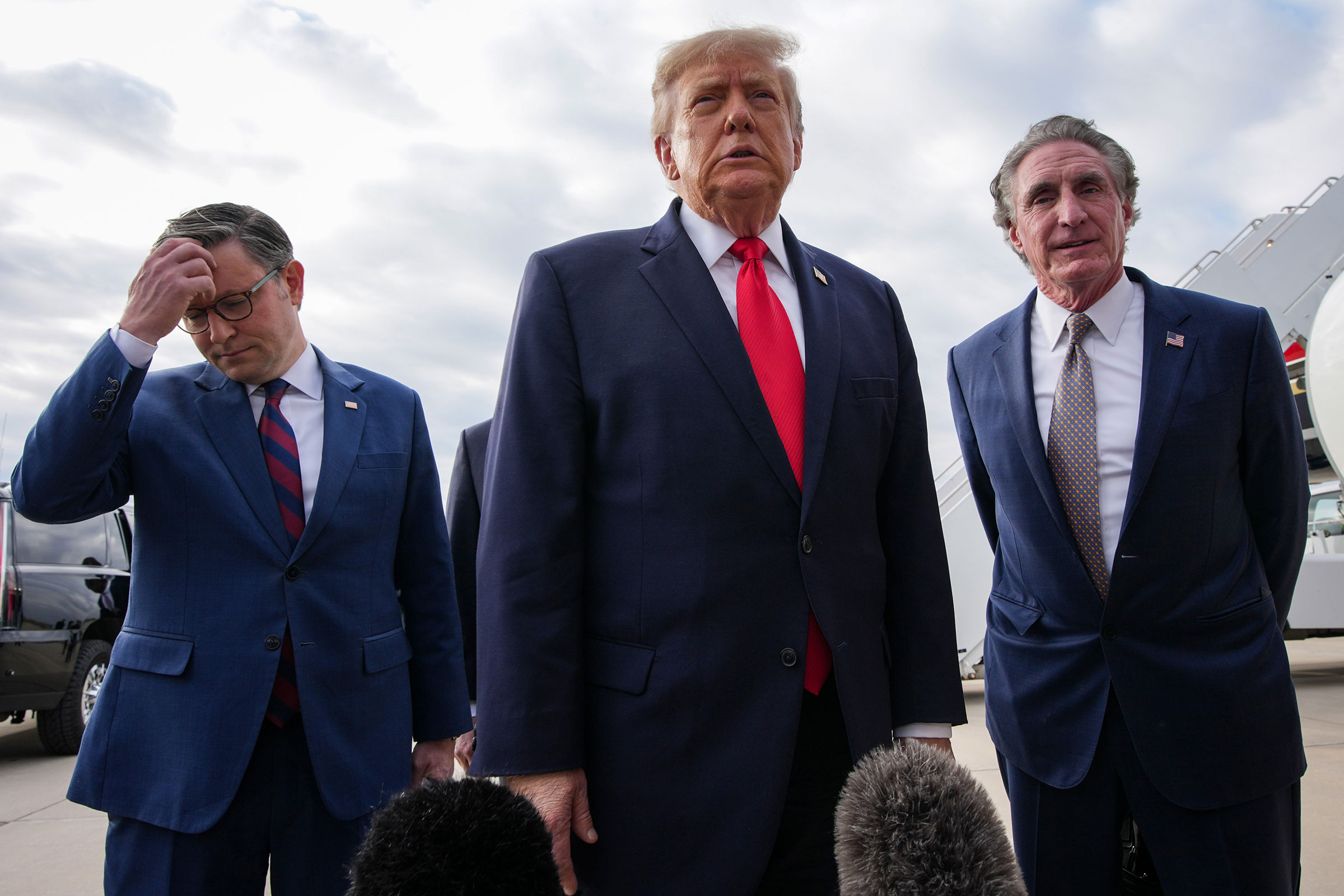
Aides are bracing for a wave of staff turnover, a combination of attrition and Trump dispensing with officials who have frustrated him. The result could be a further retreat into an insular circle of loyalists who are unable or unwilling to deliver bad news or curb his impulses. Inside the White House, advisers have been contemplating the implications of divided government. “His natural inclination is to work with Democrats or Independents or whatever,” says another senior aide. “But he’s aware of the investigations and the games the other side will play, and he’s prepared to fight back.” Already, the Democratic wave had already emboldened the party’s leaders. The expected incoming chair of the House Oversight Committee delivered a succinct warning on X: “LAWYER UP.”
But the road ahead will be unlike any Trump has traveled before. Constitutionally barred from seeking another term, the President may find that Republicans face a new political calculus as they begin contemplating a post-Trump future. As the 2028 presidential race takes shape, Vice President J.D. Vance will confront the delicate task of forging an identity independent of Trump without alienating the man whose endorsement he may still need. Those tensions could strain not only their relationship but the broader coalition Trump has spent a decade assembling—one already showing signs of fracture as once-loyal allies like Tucker Carlson and Marjorie Taylor Greene have turned against him. The question is whether the fear and loyalty that have sustained Trump's dominance of the GOP will endure as his party begins looking beyond him.
Want to know what all your co-workers earn? Be careful what you wish for | André Spicer
A new proposal for openness about pay could have unexpected downsides – if workers become demotivated, resentful and more likely to quit
Would you like to know what your colleagues are paid? If the Equality and Human Rights Commission gets its way, you will be able to find out. Under its proposals, workers will be able to request detailed information about the pay, bonuses and other perks received by their co-workers. The government agency argues that if we increase pay transparency, we can also reduce the pay gap between men and women. But countries that have tried this model have discovered that there are downsides to it too.
The gap between men’s and women’s pay had started to close when equal pay legislation was introduced in Britain in the 1970s, and then more women moved into previous male-dominated occupations in the 80s and 90s. Today, women in the UK earn on average about 6.8% less than what men earn.
André Spicer is professor of organisational behaviour at the Bayes Business School at City, University of London. He is the author of the book Business Bullshit
Iran unveils ‘We will kill Trump’ banner – but US president may now be tempted to resume bombing
Iran celebrates its claimed role in ‘regime change’ amid pressure on Trump to ‘finish the job’ with attack
Iran this week unveiled a huge billboard and banners over Enqelab Square in central Tehran. The billboard pledged in English: “We will kill Trump” – elevating the degree of personal animus with which Donald Trump is viewed in official Iranian circles.
The poster depicts the US president behind bars with his head bowed. And in a sense, given the US midterm election results on Tuesday, Iran has indeed killed Trump, or at least the second term of his presidency. Trump’s reverse is all the more piquant because it comes on the day Iran’s leadership celebrates the anniversary of the seizure of the US embassy in Tehran in 1979, an event that ensnared Jimmy Carter, and a reminder of how Iran has ruined the prospects of more than one US president.
Continue reading...Oil Prices Sink as U.S. Midterms Raise Market Hopes for Middle East Solution
[Перевод] Нашли гонку данных в Go‑коде. Исправили — и через три дня откатили фикс

В Go обнаружили гонку данных, исправили её, а спустя три дня откатили фикс. Оказалось, что HTTP-клиент может продолжать отправлять тело запроса даже после получения ответа от сервера, и это приводит к неожиданным последствиям при повторном использовании буферов. Разбираем два реальных случая из vmagent и vmauth, в которых одна и та же проблема потребовала противоположных решений.
Читать разборInside the Democrats' Plans to Take On Trump
When Hakeem Jeffries took the stage at an election-night celebration just south of the U.S. Capitol, well before midnight, the crowd was already chanting “Speaker Jeffries! Speaker Jeffries!” The Brooklyn Democrat emerged to the strains of “Unbelievable” by the Notorious B.I.G., then looked straight into the camera and declared, “America is back.” He paused, breaking into a broad grin as he savored the moment.
After nearly two years in the minority, Jeffries is likely to become the first Black Speaker of the House, his party riding a stunning wave of victories that swept Republicans from power on Capitol Hill. “I learned very early on that a setback was nothing more than a setup for a comeback,” he told the jubilant crowd. “Today begins the great American comeback.” Minutes later, Senate Democratic Leader Chuck Schumer had his own victory to celebrate a few blocks away: “We have five words for the American people: Relief is on the way,” he told campaign staff.
It was a coast-to-coast rout that exceeded the Democrats’ high expectations. As of Wednesday morning, the party had flipped at least 29 House seats, including victories in swing districts in Pennsylvania, Colorado, and Virginia, while Senate victories in deep red states like Texas, South Carolina, Kansas, and Iowa gave them control of the upper chamber. The results were a decisive rebuke of a President whose handling of the economy, rising prices, and the war with Iran had fueled widespread discontent, and who spent the closing days of the campaign musing about candidates’ anatomy and dismissing Americans’ concerns over their bottom line.

Click here to buy your copy of this issue
For the first time since Trump returned to Washington, Democrats will be empowered to do more than stomp and shout. They will be able to set the legislative agenda in both chambers of Congress, compel testimony from Administration officials, investigate allegations of corruption, force Republicans to take difficult votes, and block new Cabinet nominees or federal judges. Party leaders see an opportunity to turn the public's discontent with Trump into a sustained argument for returning Democrats to the White House in 2028. “This feels like 2018 on steroids,” says Representative Ted Lieu of California, vice chair of the House Democratic Caucus, referring to the election during Trump’s first term when Democrats won control of the House. The ensuing two years were marked by a lengthy government shutdown and two impeachments.
The next two should be similarly contentious. Interviews with more than two dozen Democratic leaders, strategists, and members of Congress in the days before the election revealed a party itching to fight on nearly every front the President has opened. “LAWYER UP,” Representative Robert Garcia of California, who is in line to chair the powerful Oversight Committee, posted on social media as returns came in. Democrats are preparing a legislative offensive aimed at reversing some of the Administration's most unpopular policies, including cuts to Medicaid, the expiration of federal health insurance subsidies, Trump's sweeping tariffs, and the war in Iran. They plan to advance proposals to lower the costs of housing and health care while pursuing aggressive investigations into the President's Administration and business interests. Some party officials are already looking beyond the next two years, hoping to develop a more expansive economic agenda that could define the next presidential campaign.
After two years in which Republican majorities on the Hill deferred to Trump, Democrats are poised to reassert Congress’s role as a coequal branch of government. They know much of their agenda stands little chance of becoming law; already, Trump has embraced the moniker “Mr. Veto.” But members believe they can make political gains even when they cannot achieve legislative victories. By advocating for policies that command broad public support, party leaders hope to expose divisions among Republicans, force Trump to defend unpopular decisions, and demonstrate what a government fully led by Democrats would prioritize.

But when the midterm victory laps conclude, the Democrats’ challenges will be waiting for them. Even leading up to their commanding win, surveys showed the party remained unpopular. Its leaders are divided over how far left to move, what kind of economic message will win back the voters who abandoned them in 2024, and how aggressively to confront Trump. Democrats are split on how seriously to pursue a third Trump impeachment, a path that many party leaders see as a political dead end. “If we make Donald Trump the center of our focus, we will lose this moment in history,” says Senator Cory Booker of New Jersey. “We need to deal with the American people’s problems.”
There’s also a risk that Democrats have raised expectations they cannot meet. After campaigning on promises to lower prices, restore government accountability, and rein in a President they portray as dangerously unconstrained, they now have to demonstrate their governance can make a tangible difference in Americans' lives. The temptation to interpret the election as a sweeping mandate could be especially perilous for a party whose recent victories have owed as much to dissatisfaction with Republicans as to enthusiasm for its own leadership.
“I'm really worried that we're going to misread victory as an endorsement of us or America falling in love with Democrats,” says Representative Jim Himes of Connecticut, the ranking member of the Intelligence Committee. “We need to remember that we have been asked to audition for a role in which the party has failed.” The warning hangs over the plans Democrats are preparing to put into motion. The next two years in Washington are likely to be defined by confrontation and gridlock. Now Democrats have the task of convincing Americans that this is what victory looks like.
In mid-September, House Democrats gathered in a basement conference room in the U.S. Capitol to discuss strategy. National polling predicted a blue wave and Democrats were giddy about the prospect of making gains across the country. But they had yet to settle on a message for the final weeks of the campaign. Members swapped tales from the campaign trail that revealed dueling frustrations among the electorate. In competitive districts, constituents were furious about soaring gasoline and diesel prices. In Democratic strongholds, voters were obsessed with corruption, expressing the belief that Trump and his inner circle appeared to be profiting off the presidency.
Then Representative Jamie Raskin of Maryland spoke up, offering a formulation that crystallized the party’s closing argument. “We're talking about the same thing,” Raskin told colleagues. “Accountability and affordability are not a fork in the road for us politically. They are two sides of the same coin.” Candidates in swing districts began hammering the idea that corruption in the federal government and a cost-of-living crisis were intertwined.
Their agenda will be guided by the same concept. Democrats are preparing a flurry of investigations into Trump and his allies, with the goal of exposing alleged abuses of power and putting the President's financial dealings under public scrutiny. The idea is to tie as many of these probes as possible to Americans’ economic stress. Joshua Miller, director of Congress Watch at Public Citizen, a progressive think tank, says members of his organization have been meeting with Democratic officials for months to discuss how to hold hearings Americans will see as meaningful, not merely performative. “This is the first step to actually auditioning for what a significant reform agenda would look like if Democrats were given unified control in 2029,” Miller says. “It’s also the first step to regaining the American people's trust.”

In the Senate, the Judiciary Committee, expected to be chaired by Senator Sheldon Whitehouse of Rhode Island, and the Permanent Subcommittee on Investigations, under Senator Richard Blumenthal of Connecticut, are preparing to play central roles in the investigative offensive. Their House counterparts on the Judiciary and Oversight committees are gearing up for an equally aggressive push. Raskin, a Maryland progressive and former constitutional law professor who led Trump’s second impeachment prosecution, is likely to become House Judiciary Chair, while Garcia is expected to take the helm of Oversight. Both committees have been hiring, recruiting several dozen additional lawyers and staff.
According to staffers familiar with the committees’ plans, the committees intend to probe Trump’s cryptocurrency dealings; Truth Social’s sale of faster access to his market-moving posts, a service that could give paying trading firms an edge over other investors; the luxury presidential aircraft donated by the Qataris; and allegations that wealthy and well-connected donors and allies secured tariff exemptions or other government favors in exchange for contributions to Trump pet projects like the White House ballroom or Trump-aligned PACs. They’re also demanding records of Trump’s AI chatbot usage, citing a TIME report that the President consulted Elon Musk’s chatbot Grok before launching the January raid that captured Venezuelan president Nicolás Maduro.
Democrats are keen to scrutinize Jared Kushner, Trump’s son-in-law, over alleged conflicts of interest (which Kushner has denied) stemming from his central role in Middle East peace negotiations and his investment firm’s ties to Gulf states. Democrats also want to investigate whether 1789 Capital, an investment firm where Donald Trump Jr. is a partner, profited from political connections or advanced knowledge of federal funding decisions affecting companies in its portfolio. Among them is Vulcan Elements, which secured a $620 million Pentagon loan months after 1789 invested. (1789 denies wrongdoing and says Trump Jr. does not participate in its investment decisions.) “You have endless amounts of grift coming out of the White House from the entire family,” Garcia alleges. “It’s like watching The Sopranos,” adds Raskin. (In a statement, White House spokesperson Davis Ingle said “there are no conflicts of interest” and insisted that “President Trump only acts in the best interests of the American public—which is why they overwhelmingly re-elected him to this office, despite years of lies and false accusations against him and his businesses.”)

Looming over these investigations is the question of whether to try to impeach Trump for a third time. Jeffries, who declined an interview for this story, isn’t tipping his hand, saying only that Democrats “haven't ruled anything out.” But many Democrats are wary about another impeachment. Senator Adam Schiff of California, an impeachment manager in Trump’s first term, says his party needs to be clear-eyed about public sentiment. “We're going to need to see where the country is,” he says. But voter appetite alone would not set them up for success; Democrats know there would be little chance to obtain the two-thirds supermajority in the Senate required to convict and remove Trump from office.
The hesitancy surrounding a Trump impeachment could fade. In 2018, Democratic leaders talked down the prospects of impeachment, only to start proceedings a year later. The lawmakers already in favor of impeachment hearings call it a matter of historical precedent and public duty. “The base will also demand it,” says Representative Ro Khanna of California, who is exploring a run for president in 2028. Voters themselves are torn on impeaching Trump again, with a slight majority of those polled in an October NBC News Decision Desk Poll supporting it.
For now, according to conversations with more than two dozen lawmakers, Democrats are coalescing around a compromise option: targeting Defense Secretary Pete Hegseth for impeachment instead. A resolution was introduced earlier this fall to impeach Hegseth for allegations of unauthorized military operations in Iran, Yemen, the Caribbean, and the eastern Pacific Ocean. Additional articles allege extrajudicial killings, ignoring laws to minimize civilian casualties, and the unauthorized capture of Maduro. Representative Adam Smith of Washington, who is positioned for a second round as chair of the House Armed Services Committee, says by targeting Hegseth instead of Trump, Democrats believe they may be able to draw enough Senate Republicans to join them. “It's got a bigger chance of getting a stronger bipartisan vote, and sort of building momentum,” Smith says.
With ten days to go until the midterm election, Bob Harvie, the Democrat running against Representative Brian Fitzpatrick in Pennsylvania’s 1st District, stood before an auditorium of prospective voters to take their questions. Sarah McBride, a 43-year-old single mom and self-described independent, approached the microphone in the newly renovated school. She sounded tired and a little nervous. “I guess what I’ve been left wondering is like, are you a fighter?” she asked. “The last thing we need in Congress is another wallflower Democrat who is going to be too afraid to make a move and do anything.”
Harvie, who unseated Fitzpatrick, hopes to show voters like McBride that he and nearly 30 newly- elected colleagues in the House can turn their campaign trail rhetoric into legislation that can improve their lives. In the first week of the new Congress, according to lawmakers and aides, House Democrats plan to advance legislation to rescind Trump’s tariffs, restore expired Affordable Care Act premium subsidies, and reverse $1 trillion in Medicaid cuts. They also plan to put forth a resolution to require Trump to either end the war in Iran or obtain congressional authorization to continue it. Senate leaders have been less clear about their immediate agenda, though members echoed many of the same priorities as House Democrats.
Democrats see repealing the tariffs and ending the war as their two biggest opportunities to address the country’s economic downturn. “If we are able to reverse at least one or both of those things, that would be massive,” says Representative Brendan Boyle of Pennsylvania, who is in line to become the next chair of the House Budget Committee. “I look at that as basically the whole ballgame.”
It’s not clear how they intend to win it. Senate Democrats may look to a process known as budget reconciliation as a way to pass tax and spending legislation with simple majorities, bypassing the 60-vote filibuster threshold. But those bills would still need to get through Trump. Democrats will need Republican support in the Senate to override presidential vetoes. Congress has already passed nonbinding measures under the War Powers Resolution to end military action in Iran, which Trump has rejected and ignored. “We don’t have an off switch,” Smith says. The party could also attempt to block Iran war funds through appropriations, or threaten a shutdown over the issue. But that would require members, including those in competitive districts, risk being accused of withholding support from troops in the field. Their best option may be ramping up pressure through messaging votes. But many in the party, especially the progressive wing, see value in picking fights that force Trump to defend unpopular decisions, illustrating for voters what a Democratic government would prioritize. “We need to demonstrate to Americans that we’re willing to take shots,” says Representative Summer Lee of Pennsylvania. “I think that that is going to be just as important as making them.”
Some Democrats fear looking feckless if they pursue an agenda that’s laser-focused on fighting the Trump Administration and gets nowhere. Many are keen to maintain the emphasis on affordability that helped lift them to power. One slate of proposals, authored by the center-left New Democrats caucus, urges the party to focus on five areas: the costs of groceries, housing, health care, energy, and family care. A separate agenda from the Congressional Progressive Caucus includes bills to fund expanded affordable child care, another to provide downpayment assistance for first-time homeowners, and to raise federal overtime pay. "Every single week we should be passing clear, bold policy that would reduce prices and increase paychecks,” says Representative Greg Casar of Texas, the chair of the Congressional Progressive Caucus. Other priorities include measures tackling AI regulation, data centers, and reproductive health.
Even if none of these become law, party strategists see upside to forcing Trump to veto popular bills. “We’re telling the country that these are our priorities,” says Schiff, “and if you give us the White House in two years, then we’ll be able to more fully deliver.” It’s an approach that echoes the party’s strategy a generation ago. When Democrats seized control of Congress under an unpopular Republican president in 2006, they used the ensuing gridlock to build their case for gaining more power. “We got a lot done in Congress,” says former Democratic National Committee Chair Jaime Harrison, “but it was all vetoed and stalled by George W. Bush, and then we hung that obstruction around the necks of the Republican Party going into ’08.”
Democrats could find opportunities to send Trump bills he would actually sign, particularly on pocketbook issues where their proposals overlap with his promises, such as lowering prescription drug prices or expanding the housing supply. The president has signaled some willingness to cut deals. “What happens is I veto everything,” Trump told reporters in October of the possibility of a Democratic-controlled Congress. “You veto, veto, veto, and then they come and they say, ‘How do we get it done?’”
As Democrats take power, a central question is how well they can work together to wield it. The first test will come as both chambers choose their leaders. The Senate victory puts Schumer in a strong position to return as majority leader, several Senate Democrats and strategists tell TIME. It marks a turnaround from March 2025, when his decision to help advance a Republican funding bill to avert a government shutdown prompted calls for him to step aside. “If you bring home the bacon and you bring us to victory, then you deserve to stay,” says Senator Ruben Gallego of Arizona, who credited Schumer with recruiting candidates who flipped Republican-held seats this cycle and largely holding the caucus together against Medicaid cuts last year. Danny Weiss, a onetime chief of staff to former Speaker Nancy Pelosi, noted the 75-year-old Schumer could be challenged in a moment when there’s an appetite for younger leadership. “But usually,” he notes, “you get rewarded for pulling off a miraculous win.”

Within the incoming House Democratic caucus, support for Jeffries to be Speaker is wide, but not necessarily deep. Allies describe him as a politically savvy but cautious leader. Interviews with a wide range of current and incoming members suggest he is well positioned to become Speaker when the caucus convenes to elect one on Jan. 3. But some members see his caution as a liability in a moment when Democrats need to show their strength. A handful of progressive members have not committed to backing him. The incoming freshmen include democratic socialists like Darializa Avila Chevalier and Chris Rabb who won their races in part by running against the party establishment. “Is Jeffries willing to meet us halfway?” Rabb asks.
Unlike Republican House Speaker Mike Johnson, Jeffries appears poised to lead a majority large enough to pass legislation without unanimous support from either wing of his caucus. But vocal dissenters could still undermine his efforts to project party unity. The five incoming socialist lawmakers have been quietly coordinating their strategy since the summer, holding meetings in person and over Zoom and exchanging messages in a group chat as they weigh how to advocate for progressive causes. They have discussed what concessions they might extract for support on pivotal votes, which procedural tools could give them greater influence, and whether they could enlist other lawmakers dissatisfied with the party's direction. The group is slightly larger than the so-called Squad, the group of legislators that has been pushing Democrats to take far-left positions for the better part of a decade, and it’s yet to settle on a formal list of demands, let alone a name for the nascent socialist wing of the party. “Every piece of leverage needs to be on the table,” says incoming Representative Claire Valdez of New York, a member of the group, who refers to her comrades as “the bloc” for now.
The newcomers, in coordination with progressives already in Congress, may call for votes on Medicare for All, abolishing ICE, and blocking weapons sales to Israel. “If they start pushing Medicare for All, that causes a lot of political problems within the caucus,” says Representative Josh Gottheimer of New Jersey, a moderate democrat. “To ensure we actually win the White House, it would be smart for us to put out a practical agenda.” Israel may be an even dicier issue for Jeffries, a longtime supporter of the Jewish state whose Brooklyn district includes an Orthodox community. Over the past year, nearly half of House Democrats voted to cut off aid to Israel. The public falling-out between Michigan Senate candidates Abdul El-Sayed and Haley Stevens over Israel policy offered a reminder of the divisions bubbling beneath the surface.
How Jeffries enforces consensus is an open question. After two centrist Democrats, Representatives Jared Golden of Maine and Marie Gluesenkamp Perez of Washington, broke with their party on a procedural vote in September, Democratic leaders discussed establishing guardrails to limit dissent within the ranks. One idea, proposed by Jeffries’ leadership team, was to penalize members who voted against the party’s own procedural rules governing legislation, potentially costing them coveted committee assignments or leadership positions. Another idea tied a member’s ability to advance within the caucus to their financial contributions to the Democratic Congressional Campaign Committee. The suggestions sparked quick backlash from progressives, who saw the proposals as an attempt to consolidate power just as a new generation of left-wing lawmakers was preparing to enter Congress. “I think it's ludicrous,” says incoming Representative Melat Kiros, a DSA-backed progressive from Denver. “For them to be punishing other members for not meeting their agenda goes in direct conflict with what the American people want.”
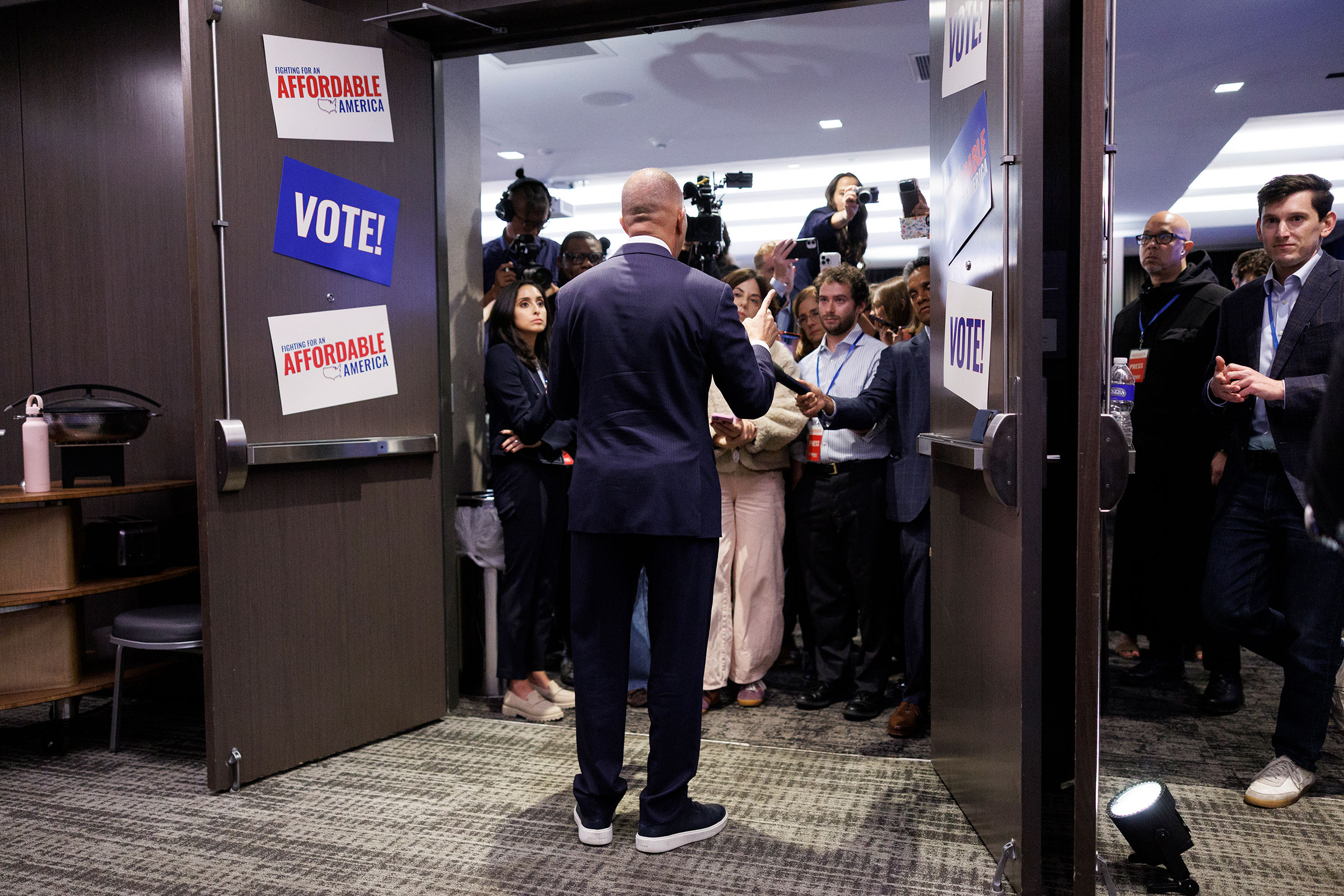
Some of these disagreements go to the heart of a question Democrats have struggled to answer since their defeat in 2024: whether their path back to national power lies in embracing the economic populism championed by their ascendant left wing or rebuilding the more ideologically diverse coalition that once made them more competitive nationally. Both factions believe the election vindicated their approach. Representative Jason Crow of Colorado, who helped recruit Democratic candidates in competitive districts, says the party has just started bringing back voters in working-class and rural communities and can’t squander that. “The Democratic Party has to be very honest that we have fallen short in the past,” Crow says, adding that people want a government “that can respond to how quickly the world and Americans' lives are changing."
The midterm election may have proven that Americans sought a check on Trump in Congress. But it offered no clear answer about the kind of Democratic Party voters would be willing to send back to the White House. The next two years will offer an opportunity to shape that conversation, and the candidates who emerge in 2028 will have to navigate the divisions that Democrats have yet to resolve. “If we mess up,” says Gallego, “those voters will swing right back to Republicans in 2028, and we'll lose the next election.”