RSS Feeds
LIV aimed to 'destroy the European Tour' - McIlroy
‘A win the size of Texas’: Democrats celebrate shrinking Republican dominance in a big state
Voters watched results in near disbelief as James Talarico claimed victory in Senate race and Gina Hinojosa was elected state’s first Latina governor
“This is amazing,” exclaimed Tiffany Dunsmore, 44, the owner of Austin Scavenger Hunt, as the city skyline gleamed in the distance on a balmy night. “I cannot believe Texas went blue!”
For 32 long years, turning Texas blue had been an elusive prize for Democrats in the US’s second biggest state. There were false dawns, nearly men and broken dreams. But on Tuesday the party’s agony finally came to an end.
Continue reading...'We have great leverage here': DNC chair Ken Martin on Democrats' midterms sweep

Democrats flipped Senate seats in Republican strongholds and won control of Congress. DNC chair Ken Martin explains why he believes voters gave his party a mandate and what comes next.
(Image credit: Stephen Maturen)

How AI Backlash Shaped the 2026 Midterms
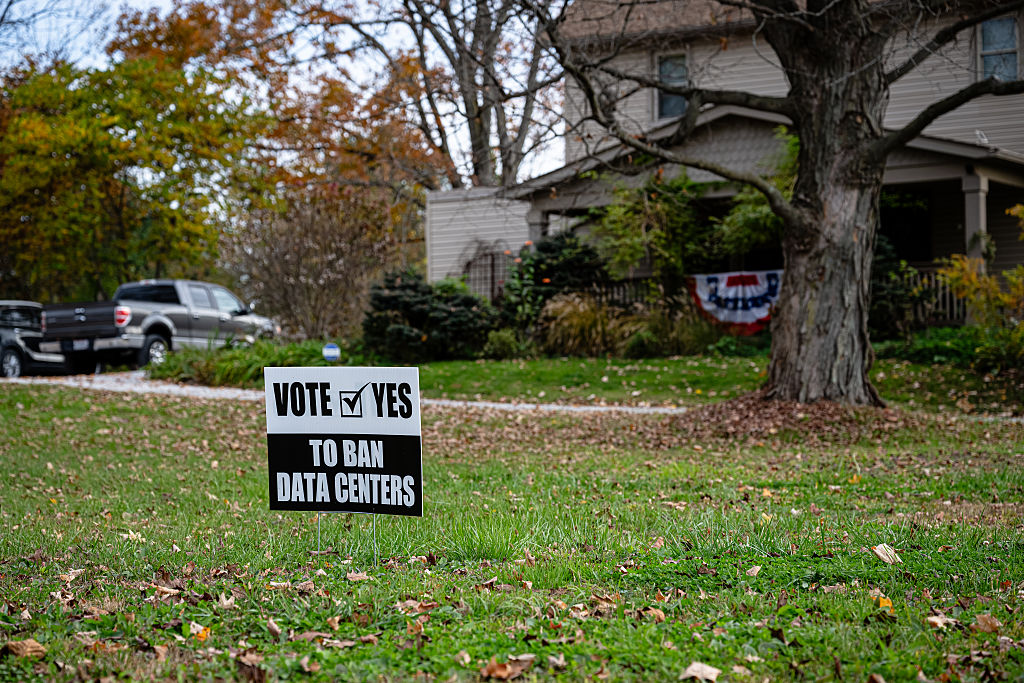
For the past year, a faction of the AI industry bent on unfettered development looked poised to use its wealth to tip the 2026 midterms in its favor. But on Nov. 3, that accelerationist wing could hardly have had a worse night.
An NBC exit poll found that 56% of voters said that AI and data centers were a “crucial or major factor” in their vote for Congress. Democrats spent more than $100 million on broadcast ads casting their Republican opponents as being overly cozy with Big Tech and data centers—and decisively won in many of those races, including Ohio, Kansas, and Iowa.
Data center bans or moratoriums passed in counties across the country, from Edgewater, Fla., to Bloomington, Ill., while the mayors of Piqua, Ohio and Yukon, Oklahoma were recalled for their previous support of data center projects.
Data center and accelerationist super PACs failed to make a major dent in influencing elections through spending. One of the key candidates they spent money on, Darline Graham, lost to Annie Andrews, who nicknamed Graham “Data Center Darline” and called for a two-year moratorium on new projects. The accelerationists' ineffectiveness opened a pathway for “pro-safety” PACs to outspend them in key races. Several candidates backed by those groups, including Michigan’s Abdul El-Sayed and Colorado’s Manny Rutinel, won.
Don’t expect sweeping federal AI regulation soon. Even with both chambers, Democrats need substantial Republican support to pass over a potential Presidential veto.
But this election served as the stunning capstone in a year of mounting anti-AI populism, during which Donald Trump has spurred on the industry and said that opponents of data centers “want to end up being backwards and poor.” Now, Congress could haul executives before committees to answer questions and undo Republican efforts to block state-level laws.
Even without law change, politicians may think twice before siding with the AI industry. “Voters had their say tonight: they are overwhelmingly in support of AI safety and security, and very much against data centers and flock cameras,” says Brendan Steinhauser, a Republican strategist and the CEO of The Alliance for Secure AI. “The AI industry is going to have to get ready to deal with it because I think there's a big deluge of bills at the state and federal level coming their way.”
Data centers became a political liability
Americans would rather live near a prison, methadone clinic, or a nuclear power plant than an AI data center, according to comparative polling done by progressive research firm Blue Rose Research. Existential concerns about AI have grown, says Ali Mortell, the firm’s director of research, but data centers’ concrete local impacts—including higher energy bills, noise, and environmental concerns—were far more salient.
Accordingly, Democratic candidates who opposed data centers more strongly than their opponents won in many races. In Ohio, Senator-elect Sherrod Brown ran millions of dollars of ads calling Husted “the face of data centers in Ohio." Brown won by five percentage points. The National Republican Senatorial Committee even acknowledged that Husted’s ties to the industry were a problem, writing in an August memo that “more than any other thing in this race, data centers are the anchor hanging around Husted’s neck.”
In Kansas, Cindy Holscher led in the governor’s race on Wednesday morning after running an ad calling for a pause on data centers until Kansas set guardrails to protect its communities, farms, jobs, and budgets. Her opponent Ty Masterson had received $1.5 million from a data center super PAC.
In Arizona, Democrat Amish Shah, who pledged to “stop data centers from being built,” led Jay Feely, who said American data centers were necessary to beat China in the global AI race, on Wednesday morning.
Comparisons suggesting that U.S. data centers use less water than the nation’s golf courses have done little to reassure voters. Developers’ promises to cover higher energy bills soften opposition but win few supporters. Trust in institutions is low, so when tech companies and politicians offer reassurance, Mortell says, “voters are not positioned to believe that's true.”
An October Politico poll found that nearly half of Americans identify Republicans as the party most eager to build data centers. But Democrats could find themselves on the other side of the backlash. In Wisconsin, Republican Tom Tiffany derisively called his opponent “Data Center David Crowley.” Crowley shifted toward tighter restrictions in October—and won.
“There's not a clear divide between Democratic voters and Republican voters on how they're thinking about [data centers]. Opinion has soured with everyone,” Mortell says.
AI money backed both sides
AI accelerationists also struggled to translate their considerable campaign contributions into electoral victories.
The super PAC Leading the Future was created with more than $100 million in funding to support pro-AI candidates in August 2025. But because public skepticism of the AI industry has become so widespread, the PAC's financial contributions were met with backlash, creating headaches for candidates who received the money.
According to one survey, three-quarters of likely voters said that they would be less likely to vote for a candidate if they found out they had accepted a donation from an AI super PAC. As the general election approached, big donors like OpenAI’s Greg Brockman and Ron Conway backed away from previously promised donations, and Leading the Future mostly kept their powder dry.
Elon Musk didn’t fare well either. The AI leader was the biggest donor in this cycle at $446 million, $168 million of which effectively went to supporting Ken Paxton in Texas. But Paxton was crushed by James Talarico, who has called for the ending of "sweetheart tax deals" for Big Tech and other guardrails.
Leading the Future and associated PACs were far outspent by pro-safety PACs designed specifically to counter their influence. Those pro-safety groups had a wealthy supporter of their own. Anthropic contributed more than $40 million to Public First Action, which advocates for stronger safeguards. That money was restricted from election activities, though Anthropic employees separately donated another $5 million to support campaign efforts.
Pro-safety PACs notched wins in Michigan (Thomas More Barrett faced $896,250 in opposition funding); Colorado (Manny Rutinel, who has called for a conditional moratorium, received $1.5 million from pro-safety groups); and Wisconsin (where Rebecca Cooke defeated Derrick Van Orden after a pro-safety group spent more than $880,000 opposing him).
But neither side's cash proved decisive. The largest spending battle of the cycle among AI-focused super PACs was a New York congressional primary. Pro-safety groups spent $21.3 million supporting Alex Bores, while accelerationists spent $8.2 million opposing him. Bores lost—but the winner, Micah Lasher, had co-sponsored the same AI safety law that made Bores an industry target.
What about AI misinformation?
Another major worry from AI critics was that AI deepfakes would spread misinformation about candidates. While AI deepfakes were circulated, they do not appear to have had an outsize impact in many races.
For instance, deepfaked videos of Maine Senator-elect Troy Jackson appearing to threaten his campaign staff circulated the week before the election, but Jackson went on to win by more than seven percentage points. In Wisconsin, Van Orden posted several deepfake videos on social media of Cooke saying things she never said. Van Orden lost.
AI could become a bigger election issue
After two years of a pro-acceleration agenda, the AI industry is now preparing for a harsher political climate. OpenAI plans to launch a policy and PR offensive, Axios reports, including an effort to rebrand data centers as “AI compute campuses.” Meanwhile, Meta is reportedly building a bipartisan team to strengthen its relationship with Democrats, while maintaining its ties with Republicans. “There's going to be a lot more questions from Congress,” says Steinhauser, whose Alliance for Secure AI Action is a bipartisan nonprofit that advocates for guardrails.
With Trump in the White House, sweeping federal AI legislation would likely require either his signature or enough bipartisan support to overcome a veto. With anti-AI sentiment crossing party lines, cross-party collaboration isn’t out of the question. “I think this is a good chance for Trump to have a bipartisan win,” Steinhauser says.
"I also think you're going to see more movement at the state level," Steinhauser says. Democrats in Congress might not be able to pass sweeping federal regulation, but the ban on state AI regulation Republicans have sought will be harder to enact. “If Congress is gridlocked, what happens in California will govern AI for the U.S. and the world,” says Scott Singer, a fellow at the Carnegie Endowment for International Peace who was a lead writer of a report commissioned by California Gov. Gavin Newsom, which informed SB-53—the first U.S. law governing frontier AI systems.
Blue Rose’s polling finds AI is ranked 29th out of 39 issues. But in the last year, its salience has risen more than any other issue, including war in the Middle East. As AI advances, its effects on jobs and people’s safety could make for a very different political debate in 2028, Mortell says. “This was the first cycle where AI showed up in the political discourse, and it’s arguably the least important that it will ever be again.”
Photos: Celebration and gloom at watch parties across the U.S.
US midterms voters said: enough is enough. Is this the beginning of the end for Trump?
With Democrats in power, Trump may be under siege and lose his dominance over the Republican party – but his id will relish the prospect of fighting
Donald Trump posted a document on social media this summer by a supposed historian that compared him with, among others, Napoleon Bonaparte and Adolf Hitler. That now seems fitting: the US president has himself fought one battle too many, and appears to have brought about his own destruction.
Tuesday’s US midterm elections were a thumping, shellacking and extinction-level event rolled into one. Ruby-red Republican strongholds once deemed safe toppled like dominoes. Democrats won Senate seats for the first time in Kansas since 1932, in Texas since 1988 and in South Carolina since 1998.
Continue reading...French blood banks hacked in latest cyber-attack on Europe
Temperature and defrosting thresholds raised to ‘very high levels’ at three cold stores stocking vital blood products
France’s national blood service has said hackers accessed control systems and boosted temperatures at three cold stores stocking vital blood products, in an apparent escalation of recent cyber-attacks on fridges and freezers across Europe.
The French blood service (EFS) said temperature and defrosting thresholds had been raised to “very high levels” in the attack, adding that its alarm systems had allowed technicians to intervene before the products were compromised.
Continue reading...Presidents for Dummies and Harry Potter mania: photos of the day – Wednesday
The Guardian’s picture editors select photographs from around the world
Warning: this gallery contains sensitive images
World Series champion Teixeira wins US House seat as former NFL reporter Tafoya’s Senate bid fails
Former MLB star wins for Republicans in Texas
Turek’s Iowa victory clinches Senate for Democrats
Tafoya loses to Peggy Flanagan in Minnesota
Former World Series champion turned Republican politician Mark Teixeira will represent Texas’s 21st congressional district in Washington after defeating Democrat Kristin Hook in Tuesday’s midterm elections.
On Wednesday morning, Teixeira was leading with 54.5% of the votes after 99% of the ballots had been counted.
Continue reading...‘A historic beatdown’: Americans take back their country in rebuke to Trump | Rebecca Solnit, Judd Legum, Charles Blow, Wajahat Ali and Katie Phang
Rebecca Solnit and other leading writers on the epic changes to the political map
This is a special election edition of How We Win, a Guardian opinion series with leading thinkers, offering bold ideas for America’s political future. Sign up here to receive future editions in your inbox.
Continue reading...«Богатство агентов»: масштабирование ИИ без увеличения модели

Привет, Хабр! С вами снова МТС и сегодня мы предлагаем поразмышлять о том, как можно масштабировать систему искусственного интеллекта без банального увеличения модели.
Представьте, что вместо одного огромного универсального ИИ-ассистента у вас есть сотни маленьких специализированных агентов от разных разработчиков, и вместе они решают задачи лучше, чем любая отдельная система, созданная даже при бюджете в несколько раз больше. Именно эту идею исследуют авторы научной работы The Wealth of Agents: Scaling Agentic AI Across Developers.
В этой статье мы попробуем на человеческом языке разобрать решаемую проблему, чего уже удалось достичь и что это значит для будущего агентного ИИ в целом.
Читать далееНападающий «Тенерифе» Хесус де Мигель умер после столкновения с вратарем на поле
Победители и побежденные. Ночь американских выборов в фотографиях
Жизнь после Claude Code: как я переехал на Codex и сохранил историю проектов

В конце октября я неожиданно остался без рабочего Claude Code. После запроса на подтверждение личности Anthropic приостановила доступ к моей платной организации. Подписку Claude Max 20x впоследствии отменили, а в возврате средств отказали. Апелляцию я отправил, но разработку проектов останавливать на неопределённый срок не хотелось.
Проблема оказалась не столько в выборе другой нейросети.
За время работы с Claude Code накопились десятки проектов и диалогов. В них оставались архитектурные решения, обсуждения функций, результаты экспериментов, исправления ошибок, планы развития и множество мелочей, которые не всегда попадали в документацию.
Исходный код никуда не исчез. Git-репозитории тоже. Но как объяснить новому агенту, почему проект устроен именно так, какие варианты мы уже отвергли и на чём остановились вчера?
Я решил перейти на OpenAI Codex. Сначала задумался о собственном инструменте переноса истории, затем попробовал встроенный импорт Codex, но результат меня не устроил.
В итоге обнаружил Hansard — инструмент, который не только позволяет восстанавливать историю работы в разных ИИ-агентах, но и предлагает дополнительные возможности для хранения, поиска и повторного использования накопленного контекста.
Расскажу, что получилось, что не получилось и как повторить такой переезд.
Читать далееAll’s Fair season two review – am I delirious … or is this getting good?
From Glenn Close in pleather to naughty rumours about Bruno Mars, this legal drama is still absolutely ludicrous. But squint hard enough and it has slightly improved since its zero-star debut
On the one hand, Trump and the Maga movement have been routed in the midterms. On the other, the second season of All’s Fair is out. Truly, the lord giveth and the lord taketh away.
For those of you who have blanked the first season from your mind, All’s Fair is the existentially terrible offering from Ryan Murphy’s increasingly manure-filled stable, starring Kim Kardashian, Naomi Watts, Niecy Nash-Betts and, absolutely unaccountably, Glenn Close as the super-duper lawyers of an all-female California divorce firm. Sarah Paulson plays their bananas enemy lawyer, Carrington Lane. And if you think that is some rum work pulled at the font, the other characters labour under the monikers Allura, Emerald and Liberty. Close gets off lightly with Dina, which I hope suggests she has at least some clout left in this strange business we call show.
Continue reading...French blood banks hacked in latest cyber-attack on Europe
Temperature and defrosting thresholds raised to ‘very high levels’ at three cold stores stocking vital blood products
France’s national blood service has said hackers accessed control systems and boosted temperatures at three cold stores stocking vital blood products, in an apparent escalation of recent cyber-attacks on fridges and freezers across Europe.
The French blood service (EFS) said temperature and defrosting thresholds had been raised to “very high levels” in the attack, adding that its alarm systems had allowed technicians to intervene before the products were compromised.
Continue reading...US midterms voters said: enough is enough. Is this the beginning of the end for Trump?
With Democrats in power, Trump may be under siege and lose his dominance over the Republican party – but his id will relish the prospect of fighting
Donald Trump posted a document on social media this summer by a supposed historian that compared him with, among others, Napoleon Bonaparte and Adolf Hitler. That now seems fitting: the US president has himself fought one battle too many, and appears to have brought about his own destruction.
Tuesday’s US midterm elections were a thumping, shellacking and extinction-level event rolled into one. Ruby-red Republican strongholds once deemed safe toppled like dominoes. Democrats won Senate seats for the first time in Kansas since 1932, in Texas since 1988 and in South Carolina since 1998.
Continue reading...Where Trump and Republicans lost the midterms – a visual analysis of the key states
The Democrats have taken control of the Senate and the House of Representatives. These charts and maps reveal the key trends and races behind this result
The Republicans have lost seven Senators, 25 House districts and five governor races.
As of 9.25am Eastern Time (ET) on Wednesday, more than 1,900 of nearly 2,500 counties with Senate elections had returned more than 90% of their votes. Americans did not turn out in significant numbers for the Republicans amid high fuel prices and dissatisfaction with the president.
Continue reading...Так что это за фрукт такой Cyberleek? И как он, вероятно, помог Rockstar с GTA 6

Без сюжетных спойлеров.
Чтобы наказать игровую индустрию за жадность, анонимный автор начал выкладывать чужую игру и продвигать собственный мемкоин. Издателю достались угрозы, игрокам предложили голосовать за следующие утечки, а интернет получил нового персонажа: кибернетический лук-порей.
Читать далееPolice say explosive devices found in Belfast are linked to ‘rightwing terrorism’
Suspect arrested after police uncover 17 improvised explosive devices during operation in Shankill Road area
An arsenal of explosive devices discovered in Northern Ireland is believed to be linked to far-right terrorism, police have said.
The stash of 17 improvised explosive devices and other material was found during searches in the Shankill Road area of Belfast on 30 and 31 October.
Continue reading...WATCH: Democrats projected to gain control of House and Senate
От Minisforum до серверной стойки за 100 000 рублей. Что стало с моим Homelab спустя 3 года

Больше 2 лет назад я написал свою первую статью про homelab на Minisforum, с тех пор его состав кардинально поменялся. В этой статье я расскажу, что с ним произошло за эти три года и как я его модифицировал.
Читать далееPolice say explosive devices found in Belfast are linked to ‘rightwing terrorism’
Suspect arrested after police uncover 17 improvised explosive devices during operation in Shankill Road area
An arsenal of explosive devices discovered in Northern Ireland is believed to be linked to far-right terrorism, police have said.
The stash of 17 improvised explosive devices and other material was found during searches in the Shankill Road area of Belfast on 30 and 31 October.
Continue reading...Jodie Burrage offered support by WTA after death threats and online abuse
Briton received abusive messages after defeat in India
WTA says ‘staff in Chennai offering Jodie support’
The WTA has offered additional support to Jodie Burrage after she received death threats and online abuse following a first-round defeat at a tournament in India on Tuesday.
Burrage shared a raft of abusive messages sent to her Instagram account after a gruelling 3-6, 6-3, 7-5 defeat against India’s Vaishnavi Adkar at the Chennai Open. The 27‑year‑old, who was playing her first WTA Tour match since last summer, accompanied the messages with the caption: “Nice welcome back to the tour. I remember why I left.”
Continue reading...Ramayana: Rise of a Legend review – India’s most expensive film ever becomes spectacular, huge-scale epic
Based on the ancient classical poem about Rama, the avatar of the Hindu god Vishnu, this three-hour blockbuster is highly enjoyable
Here is a thoroughly engaging, rousing and spectacular Indian epic melodrama from director Nitesh Tiwari, with music by Hans Zimmer and AR Rahman, based on the ancient classical poem about Rama, the avatar of the Hindu god Vishnu. It has often been adapted for live-action and animated movies in the past, though surely not on this scale, the current three-hour blockbuster being only the first half. (There are no musical numbers though.) The idea of aristocrats submitting stoically and yet playfully to exile in the forest has something Shakespearean about it, and if you are suffering from Homer-withdrawal after Christopher Nolan’s The Odyssey, a story about the noble Prince Rama finally vowing to wage war on a distant city where his wife has been abducted might just fit the bill.
Ranbir Kapoor plays the mythical Rama, a noble warrior and statesman who has been brought into being in the city state of Ayodhya as a bodily representative of Vishnu, and from the first his sense of destiny is overwhelming. But what exactly is that destiny? In broad terms, his fate is to face off with Ravana (Naveen “Yash” Kumar), king of far-off Lanka, a figure whose former slave status once triggered in him such a cosmically intense prayer for justice that Lord Brahma offered him the superpower of athletic strength and indifference to pain.
Continue reading...«Иногда на сцене у меня перехватывает дыхание»: как я пришла в академический хор

Привет, Хабр! Меня зовут Даша, я работаю в МТС чуть больше двух лет. Сначала занималась подбором ИТ-специалистов, а в этом году перешла в команду обучения руководителей. Но эта статья будет не о работе, а о моем хобби. Чуть больше года назад я начала петь в академическом хоре «Ковчег». Теперь три вечера в неделю после работы провожу на репетициях.
С хоровым пением я знакома с детства. В начальных классах я училась в музыкальной школе по этой специальности, поэтому нотная грамота и многие другие моменты были мне известны. Правда, прошло немало времени, прежде чем я снова вернулась к этому занятию. Расскажу, как хобби, которое приносит удовольствие, помогает перезагрузиться и какие навыки развивает.
Читать далееHow one US city cut its infant mortality rate by half

A decade ago, a water lead crisis launched Flint, Michigan, into national headlines. But for years, the city of roughly 80,000 has also quietly carried the weight of a tragically high newborn mortality rate.
In 2024, there were 9.4 infant deaths for every 1,000 births in Flint — nearly twice the mortality rate of 5.54 in the US, which itself outpaces all other high-income nations.
But a new study shows that there might be a way to reverse that grim trend — a method that seems to have already made an enormous difference in Flint.
Over the last two years, Flint has been testing a no-strings-attached cash transfer program, Rx Kids, administered through nonprofit GiveDirectly. Pregnant women in the city were given a lump sum of $1,500 at the start of their enrollment, typically in the first 16 weeks of pregnancy, followed by $500 every month until one year after childbirth.
New findings released this week from an Rx Kids study tracking the program showed that neonatal mortality — which refers to the period up to a month after birth — dropped by nearly half in Flint, from 9.4 to 5.1 deaths per 1,000 live births, after mothers received cash assistance.
It’s important to note that Rx Kids has only collected data up to the neonatal period — it’s still unclear what the outcomes might look like for the first year of infancy.
Nevertheless, Mona Hanna, associate dean for public health at Michigan State University and co-director of Rx Kids, who is also the lead author on the study, stressed the importance of intervening specifically during pregnancy and the year after birth. That stretch of time, which is known as the perinatal period, is when low-income families often take on significant financial burden as their expenses rise and incomes remain low.
According to Hanna, Flint mothers spent the money largely as child allowance: Baby supplies were the top expense, followed by rent and food. Some of the benefits of direct cash transfer may also have been behavioral. A previous study on the same Rx Kids Flint cohort found that expectant mothers were less likely to engage in high-risk behaviors, such as smoking, during pregnancy. That, in turn, may have led to lower NICU admissions and healthier birth outcomes.
Hanna suggests that one of the most important effects of direct cash transfers could have been increased access to prenatal care.
“For a baby to not be born [prematurely], they have to have good prenatal care, and we saw that,” Hanna said. As she explains it, mothers who enrolled in the program were able to get “the screening and the treatment and all these other resources they need. We’re seeing better nutrition security and satisfaction. That’s important for healthier births.”
Flint may have been particularly well positioned to benefit from the Rx Kids cash transfers, especially because of the relative simplicity of the program’s setup. It’s a city with a relatively small population, and more than 90 percent of pregnant mothers in the entire geographic region enrolled in the program. That high uptake rate can be partly explained by the program’s low barrier to entry. As long as you live in a Flint zip code, you can receive money.
Unconditional cash transfers have had promising results in other contexts, too. A study first published last summer found that after unconditional cash transfers to households in Kenya, infant deaths dropped by 48 percent. Hospital deliveries increased, and recipients had better access to maternal healthcare and nutrition services.
In the US, other findings on the benefits of direct cash transfers have been a little more complicated. One of the biggest challenges came from the Baby’s First Years Study, which ran for four years between 2018 and 2022 and gave $4,000 a year to low-income families with young children in a large randomized controlled trial. The trial found no significant effects on child development.
Nigel Paneth, an emeritus professor of epidemiology at Michigan State University, has studied preterm births for decades. He described the Rx Kids study findings as promising, but notes there are limitations built into the design of the study, which, like many other community-level population studies, did not have a randomized control group for the sake of comparison. He said that if the program was to ever expand, “you would have to see if this effect is generalizable and not just” the product of some other factor.
“I also think we’re really obligated to begin to try to see if we can figure out the mechanism,” Paneth said. “What is going on? What might happen in pregnancy that a cash transfer would change? It’s not intuitively obvious what that might be.”
The question of scale also remains notable. Providing a total of $7,500 per family in a relatively small urban area is one thing, but spreading the same amount of cash to families around the country could easily become prohibitively expensive. That said, Rx Kids is expanding its testing ground, building out similar programs in over 60 locations across Michigan, with financial support from the state itself.
“Poverty is a pathogen. It makes kids sick and communities sick,” Hanna said. “With more funding, we could go anywhere.”
TechCrunch Founder Summit 2026: Doors open at 9 a.m. ET in Boston
U.S. Marine dies in Japan during training, military says
WATCH: What Trump’s next two years with a Democratic Congress could look like
Препарируем Clover (пытаюсь собрать самую легкую раму для 5 дюймового дрона)

В статье описан процесс проектирования и испытания рамы для пятдюймового квадрокоптера Clover с применением 3D-печати. Целью работы было найти лёгкую и достаточно жёсткую конструкцию, пригодную для печати на доступном оборудовании, для этого были созданы и сравнены несколько вариантов геометрии, выполнены упрощённые статические и динамические расчёты, а также изготовлены опытные образцы.
Читать далееDemocrats win governorships in Texas and other GOP-controlled states in rebuke to Republicans
Как заставить модель gemma-4-12B‑it QAT почти «летать» на ноутбучной RTX 2000 Ada, сохранив холод и тишину
Уже несколько месяцев я активно экспериментирую с локальными языковыми моделями на своем ноутбуке Lenovo ThinkPad P16 Gen 2 (Intel Core i7-13850HX, 128 GB RAM, Samsung 980 Pro 2 TB + 990 Pro 1 TB).
Конфигурация очень бодрая для любых задач, кроме… работы с тяжелыми ИИ-моделями. И узкое горлышко здесь очевидно - видеокарта Nvidia RTX 2000 Ada Laptop всего с 8 ГБ VRAM.
Дискретная, быстрая, заточенная под ИИ, но видеопамяти катастрофически мало! Тем не менее даже в эти 8 гигабайт вполне можно уместить отличную локальную модель, да еще и с контекстом на 8192 токена. Это позволяет вести долгие осмысленные диалоги без потери нити обсуждения.
После долгих поисков и тестов я остановился на одной модели - gemma-4-12B-it-QAT в квантовании q4_0.
Почему именно она?
Премиальный уровень «из коробки»: Это модель от Google, обученная на их топовых решениях. Метод QAT (Quantization-Aware Training) минимизирует потери качества при «упаковке» в 4 бита.
Минимум галлюцинаций: При правильной настройке (особенно с немного заниженной температурой) модель отлично держит контекст и выдает точные энциклопедические данные. Срез знаний у нее свежий “конец 2025 - начало 2026 года”. Настоящая локальная «мини-Википедия»!
Хороший кодинг: Модель отлично пишет код (особенно на Python и PowerShell). Последующая верификация в среде разработки проходит практически со 100%-й точностью. Идеально влезает в VRAM: Вместе с контекстом в 8192 токена она целиком помещается в 8 ГБ видеопамяти. В LM Studio на моем ноутбуке она выдает честные 12 токенов в секунду, чего более чем достаточно для комфортного диалога.
Читать далееTears, celebrations and selfies: US midterms in pictures
Sharp objects found in Halloween sweets in three European nations
ANC under pressure to reverse South Africa decline
Left-wing Democrat Abdul El-Sayed wins in Michigan to become first Muslim senator
Trump takes aim at Republicans but says Democrats did a 'good job'
Trump blamed Fox News for Republican losses even as network’s hosts went easy on him
Fox News pundits hardly criticized the US president in midterms coverage but Trump was still quick to cast blame
In the weeks leading up to Tuesday’s midterm elections, Donald Trump made clear that he would place some blame on his favorite cable channel, Fox News, if his party did poorly.
On election day, he didn’t disappoint.
Continue reading...US midterm elections 2026 live: Democratic lead grows in Mississippi Senate race as Republican blame game begins
Scott Colom leads Republican Cindy Hyde-Smith by 1,138 votes with 96% of the vote counted – a small but growing margin
Wall Street surged at the open, after Democrats scored historic victories in midterm elections and secured control of US Congress.
The Dow Jones rose 2%, while the tech-heavy Nasdaq and the benchmark S&P 500 both gained more than 1%. That’s quite a reversal: Overnight, stock futures fell sharply as investors worried about the prospect of tougher regulation of the AI sector and the impact on economic growth.
Continue reading...Разработка ПО с жёсткими ограничениями бюджета

Есть множество проектов, в которых нужно разработать какое-либо ПО с жёсткими ограничениями по бюджету. Хочу поделиться своим методом работы с такими проектами.
Это не серебряная пуля, но, думаю, мой опыт будет интересен. В основном такой подход я практикую для небольших проектов: срок разработки — до 14 месяцев, а общее количество участников команды — до 10 человек. Для более крупных проектов такой подход уже не подойдёт: сделать их бюджетно — совсем другая история.
Сразу уточню границы. Речь не о ситуации, когда денег нет совсем, а о проекте, на который есть примерно 60–70% от необходимой суммы. Этот диапазон основан на моём личном опыте нескольких проектов, а не на универсальной формуле: конкретный результат зависит от системы, команды и ограничений заказчика. Размер возможной экономии сильно зависит от квалификации техлида проекта. Также рассказ будет о создании чего-то нового, когда нельзя просто переиспользовать предыдущий опыт и готовые наработки. Не все описанные шаги нужны для каждого проекта, но пропускать их стоит осознанно, а не потому, что на них якобы нет денег.
Читать далееDozens arrested outside court hearing Palestine Action ban challenge
Trump blamed Fox News for Republican losses even as network’s hosts went easy on him
Fox News pundits hardly criticized the US president in midterms coverage but Trump was still quick to cast blame
In the weeks leading up to Tuesday’s midterm elections, Donald Trump made clear that he would place some blame on his favorite cable channel, Fox News, if his party did poorly.
On election day, he didn’t disappoint.
Continue reading...Election week in Trumpland: algae, space proclamations and a deflection of blame
Donald Trump’s unrelenting focus on the ‘beautification of Washington’ and Fox News ratings did not stop the Democrats’ decisive midterm election wins
This was originally published in This Week in Trumpland. Sign up to receive it in your inbox every Wednesday.
Standing at the Lincoln Memorial reflecting pool on Monday afternoon, Donald Trump zeroed in on his closing message of the high-stakes midterm elections: it can take a long time to get rid of filth.
Less than 24 hours before Americans headed to the polls, the US president staged a bizarre press conference in which he touted his troubled $14m renovation of the Washington DC landmark and blamed his predecessors for the algae that once bloomed in its water.
Continue reading...Republican blame game begins as Democrat’s Mississippi lead grows – as it happened
This blog has now closed – our live US midterms results coverage continues here
Wall Street surged at the open, after Democrats scored historic victories in midterm elections and secured control of US Congress.
The Dow Jones rose 2%, while the tech-heavy Nasdaq and the benchmark S&P 500 both gained more than 1%. That’s quite a reversal: Overnight, stock futures fell sharply as investors worried about the prospect of tougher regulation of the AI sector and the impact on economic growth.
Continue reading...