3PAR 8000/9000 после вендорской поддержки: как посчитать запас жизни СХД
В первой статье блога мы рассказали, кто мы, и разобрали приёмку сервера по журналам BMC. Эта статья про массивы HPE 3PAR, с которыми у нас тот же подход, что и с серверами: покупаем рабочие, проверяем, инициализируем и прогоняем тестами под конкретного клиента, продаём с гарантией и закрываем её собственным складом запчастей. Услуг обслуживания и восстановления чужих инсталляций мы не оказываем.
Текст для владельцев 3PAR, у которых закончилась вендорская поддержка: как по паспорту массива и телеметрии дисков оценить, сколько он ещё проживёт, что должно лежать на полке с запчастями и что в этих массивах ломается в жизни. Практика собрана на десятках машин, прошедших через наш склад, в том числе история, где три «мёртвых» диска ожили от одной команды.
Начнём с дат. 31 августа 2026 года по опубликованному графику HPE закончилась поддержка всей серии 3PAR 8000, моделей 8200, 8400, 8440 и 8450 разом. Серия 9000 продержится ненамного дольше: у 9450 в календаре стоит 1 мая 2027-го. Одна из самых массовых enterprise-СХД российских ЦОДов 2015–2022 годов официально вышла из жизненного цикла вендора.
Для российских владельцев в этих датах меньше драмы, чем кажется. HPE ушла из России ещё в 2022-м: контрактной поддержки, доступа к порталу с прошивками и вендорских замен у большинства местных инсталляций нет уже четвёртый год. EOSL сделал официальным для всего мира то, что здесь давно повседневность: массив живёт ровно настолько, насколько выстроена его собственная система жизнеобеспечения.
The Democratic Party will win control of the Senate in addition to the House, CBS News projects. CBS News' Weijia Jiang spoke to President Trump and shares her key takeaways from the conversation.
Выпустил шестую бету Akbura — декларативного языка разметки для Avalonia.
В этот раз удалось ускорить холодную генерацию кода в 2,5 раза и сократить количество аллокаций почти втрое. Но самое интересное! Это то что добавил реактивные привязки произвольных C#-выражений, которые автоматически отслеживают изменения вложенных свойств.
В статье расскажу, что изменилось, покажу результаты бенчмарков и примеры новой функциональности.
Democratic Maryland Gov. Wes Moore, projected to win reelection, joins CBS News on election night to discuss the other gubernatorial races across the U.S., including historic wins for other Black governors.
Americans showed that the power to choose their leaders belongs to them. Now they must remain vigilant until officials certify every race and the winners take office.
In a resounding rebuke of President Donald Trump and his Republican Party, Democrats will control both the House and Senate for the last two years of Trump’s presidency, cementing one of the strongest midterm showings for either party in decades. The Associated Press called the upper chamber for Democrats late on Tuesday, after the party’s candidates secured victories in battleground races across the map. The outlet later called control of the lower chamber in the early hours of Wednesday morning as Democrats picked up more than two dozen seats.
The milestone potentially sets up a new political dynamic in Washington. A President has not had to deal with a Congress completely controlled by the opposition party since the last two years of Barack Obama’s presidency. Congress now stands to be a true counterweight to the White House and its agenda.
Democrats needed to net four seats to claim the Senate majority—a tough task given the map this cycle clearly favored Republicans. But with wins in Texas, Ohio, North Carolina, Iowa, and Maine, Democrats achieved what most handicappers had treated as a long shot until just weeks before Election Day. Democrats in multiple toss-up Senate races managed to effectively harness a national mood against Trump, the economy and the Iran War to win in places initially deemed out of reach for the party. Outstanding Senate races in states like Michigan could potentially pad Democrats’ majority.
The new Senate is likely to be led by Senator Chuck Schumer of New York, who will regain his title of Senate Majority Leader from Republican Senator John Thune of South Dakota. While some Democrats have criticized Schumer’s leadership as minority leader over the past two years, it’s not clear if any Senators are prepared to challenge his leadership before the next Congress convenes in January.
The size of a possible Democratic majority in the House is still unclear as votes in many states were still being tallied, but signs of a significant Trump-centered backlash were popping up all over the country Tuesday night, potentially setting up the party to come away with a double-digit majority. Strategists with both parties had predicted for months that Republicans were unlikely to hold onto the House, where they could only afford to lose three seats.
House Democrats have vowed to use a House majority to aggressively investigate Trump, his Administration, and his allies, as well as push policy proposals they campaigned on, including ending the Iran War, undoing Trump’s tariffs and lowering the cost of living.
Likely Democratic control of the House would also mean the end of Mike Johnson’s speakership, with Democrats likely set to rally behind their leader in the House, Rep. Hakeem Jeffries of New York, to replace him. Jeffries would be the first Black speaker in U.S. history.
Polls had been consistently pointing for months to the House flipping to Democrats. For well over a year, nearly every poll from a reputable pollster asking voters which party’s candidate they intended to support showed Democrats with a clear advantage. But Republicans managed to hold their own or do better in fundraising, especially in pivotal battlegrounds for control of the Senate. And some Democrats as recently as this past weekend were worried that they may somehow still come up short.
Republicans spent much of the year trying to make the best of a bad environment. They constantly claimed the polls were all off, that Trump could still turn out his coalition that remade the modern GOP, and that Democrats’ overconfidence could depress their own turnout.
As Election Day neared, Republicans moved into triage mode. While they initially had planned to go on the offense against incumbent Democrats, those ambitions quickly evaporated as they shifted funding away from flipping Democratic seats and toward shoring up Republicans in a wider array of districts.
By late Tuesday, as exit polls started to paint a picture of the national mood, there were signs that many polls had likely under-estimated Democrats’ strength heading into Election Day.
The new Democratic caucus in both chambers are poised to include many new faces, from those who ran as moderates to self-avowed democratic socialists who ran as much against centrist leaders like Jeffries than Trump. Now starts the messy business of this new majority figuring out what they plan to do with their power. Trump will certainly be watching closely.
Democrats have regained control of the US Senate, routing Republicans nationwide with historic victories that will give them powerful new leverage over Donald Trump for the remainder of his presidency.
Together with their likely triumph in the House of Representatives, Democrats are expected to have full control of Congress beginning next year, for the first time since 2022.
The victories in the House and Senate return Democrats to full control of Congress for the first time since 2023 and deepens the level of expected friction between them and President Trump.
Democrats have regained control of the US Senate, routing Republicans nationwide with historic victories that will give them powerful new leverage over Donald Trump for the remainder of his presidency.
Together with their likely triumph in the House of Representatives, Democrats are expected to have full control of Congress beginning next year, for the first time since 2022.
A public inquiry into the $368bn Aukus nuclear submarine agreement has called the plan “the worst, riskiest and most costly defence decision ever made by an Australian government”, urging its immediate termination.
Former Labor MP and Midnight Oil frontman Peter Garrett, alongside former chief of defence Adm Chris Barrie, led the inquiry dominated by critics of the deal with the UK and US, recommending the suspension of plans for new bases and for a royal commission to be held into the agreement signed by the former Morrison government.
NBC News projects that Democrat Amy Acton will win Ohio's race for governor over Republican Vivek Ramaswamy. NBC News' Steve Kornacki takes a look at how the results are trending across the state.
More than 118 million users watch microdramas every month as the serialized format has taken off in India. EloElo's Story TV is one of the top apps for microdramas, with over 33 million active users, according to analysts.
Democrats won control of the Senate in the 2026 elections with a raft of victories over Republicans in key races, cementing the new majority and flipping party control of the upper chamber.
The New York mayor tells NPR's Juana Summers that newly elected democratic socialists need to seize this moment and show voters what politics can deliver.
Adam Hamilton (left) and James Talarico both won a Senate seat in their state. | Jim Vondruska; Brandon Bell/Getty Images
The Democratic Senate victories in Texas and Kansas on Tuesday night were about more than just turning two red states blue — which, to be sure, is historic enough.
They also signal the rise of a new kind of Democratic politics in the late Trump era — a more explicitly religious one.
In Texas, James Talarico, the Presbyterian seminarian, was beating Republican state Attorney General Ken Paxton by 20 points at the time of the call. And in Kansas, which hasn’t elected a Democrat to the Senate in nearly a century, the Rev. Adam Hamilton, the chief pastor of the state’s largest church, has defeated incumbent Sen. Roger Marshall.
They belong to a rising tide in American politics: the emergence of a religious left that marries moderate or liberal strains of Christianity with Democratic policy and political priorities. Their wins are the first major victories of this movement in the 2026 cycle.
Meanwhile, in nearby Iowa, two more Democratic Christians — the Lutheran minister Sarah Trone Garriott and the Presbyterian minister Lindsay James — are also leading in their races to flip Republican-held House seats.
Back when Talarico won his bid to be the Democratic nominee for US Senate in Texas, I wrote that he and his opponent represented two drastically different visions of American Christianity. Talarico had emerged victorious from a bitter primary battle, betting that the best way to do Democratic politics in a red state was to expand the base by reclaiming religion, forgiving political rivals, and loving neighbors, even if they voted differently. He basically preached on the campaign stump — even saying in a recent interview that Paxton is a “child of God.” And he was doing this as a pastor-in-training, representing a dying breed of mainline Protestant Christians as a Presbyterian.
He was facing off against an avatar of the dominant brand of American Christianity today. A hard-line conservative evangelical Christian, Paxton represented the kind of religious politics that has made Christianity synonymous with conservative Republicanismin the modern era.
Paxton had been a leading figure in the Texas GOP’s crusade to infuse the public square with a more conservative-tinged vision of Christianity, arguing last year that “in Texas classrooms, we want the Word of God opened, the Ten Commandments displayed, and prayers lifted up. … Our nation was founded on the rock of Biblical Truth, and I will not stand by while the far-left attempts to push our country into the sinking sand.”
Hamilton did the same throughout his stronger-than-expected campaign. On the trail, as he’s done for decades as the pastor of the United Methodist Church of the Resurrection in the Kansas City suburbs, he spoke frequently about his faith journey and belief in Christ, about loving one another, and about repairing relationships ruined by Trump-era politics. Also like Talarico, he doubled down on kitchen-table issues and listed off all the ways the Trump administration had hurt Americans.
But he also told me that he viewed himself as part of this national movement of pastors, ministers, and religious people squaring off against “Christian nationalism” and showing Christians and non-Christians alike how biblical values and Jesus’ teachings might lead someone to a Democratic policy worldview.
“I want Democrats to be able to talk about faith and to do so in a way that reflects a difference from what you see in Christian nationalism,” Hamilton told me in early October when I visited Kansas for a profile of him. “Our faith reflects the ideas of justice and fairness. Two thousand verses in the Bible talk about poverty and taking care of the poor. That’s not what you hear from Christian nationalists. But it is what you hear from Christians who are Democrats.”
He told me last month that, whether he won or lost, he hoped people of faith who happen to be Democrats continue to play an active role in politics — for the sake of the Democratic Party and for the sake of Christianity. “Thoughtful Christian people have something important to add to the conversation,” he said.
Both Hamilton and Talarico faced criticism of their religious message. Detractors, including President Donald Trump and Vice President JD Vance, as well as average evangelical and conservative Christians, took issue with their theological interpretations, the state of their denominations, or the authenticity of their faiths (some attacks were less sophisticated, such as simply calling Talarico or Hamilton “woke”).
But their wins suggest at least that enough moderate Christians, and independent-minded Republicans, were persuaded by their articulations of their faith to side with these religious candidates. That should be an encouraging sign for Democrats moving forward to continue to expand the faith lane and think about the faith angle in future elections and coalition building.
To remain competitive in future congressional and presidential contests, some analysts argue, Democrats must continue to make inroads with the religious vote. “At some point you’ve got to say to the loud secular left, ‘Hey, we appreciate you and we want your votes, of course, but you’re going to vote for us anyway. We need the votes of Catholics and mainline Protestants and those kinds of people,” the religion and politics scholar Ryan Burge told me.
Historically, though, the establishment class — the donors, activists, and organizers who power campaigns — has not always been comfortable appealing to these religious groups, since they often have priorities at odds with those of the base. But Hamilton and Talarico’s win in deep-red country shows what can be gained if they can get more comfortable with a new kind of Democrat.
Democrat Annie Andrews addressed supporters after ABC News projected her the winner of the South Carolina Senate race, flipping the seat once held by the late Lindsey Graham.
Democrat Keisha Lance Bottoms addressed supporters after ABC News projected her the winner of the Georgia governor's race, making her the first Black female governor in the history of the U.S.
Adam Hamilton has clinched a historic victory in the US Senate race in Kansas, becoming the first Democrat to represent the state in the chamber since 1932.
Kansas emerged as an unexpected battleground this year as Democrats sought to regain control of the Senate. The closely watched Cook Political Report rated the race as a toss-up, noting it was one of several agriculture-heavy areas to be hit hard by high fuel and fertilizer prices because of Donald Trump’s war on Iran.
NBC News projects that Democrats will take control of the House next year, giving them the power to investigate Trump and advance legislation to check his policies.
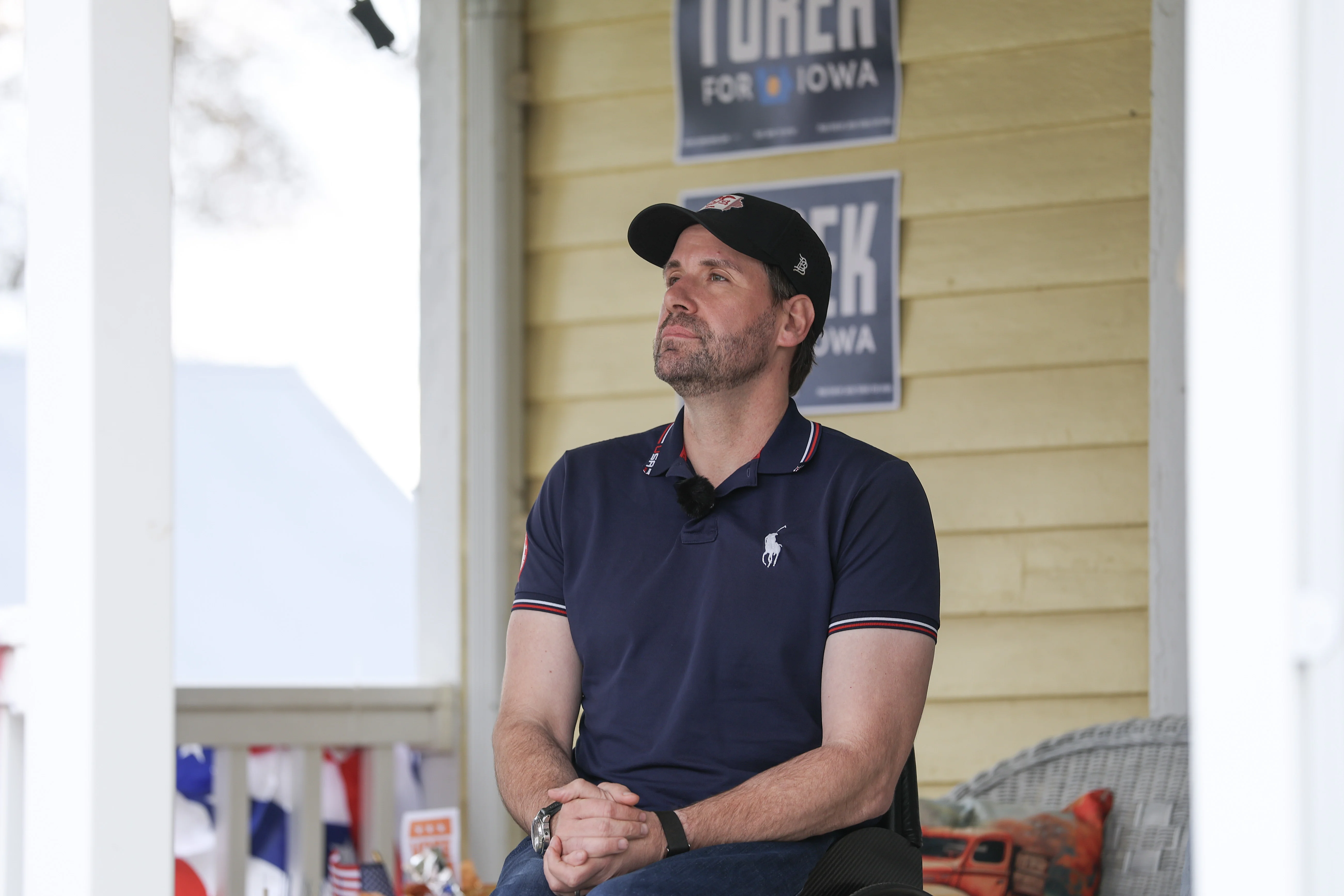
Democratic state Rep. Josh Turek defeated GOP Rep. Ashley Hinson in the Iowa Senate race, CBS News projects, in a major pickup for Democrats as they seek to take control of the upper chamber.
Kansas Democratic Senate candidate Adam Hamilton speaks to reporters during a campaign event at Coffee Daze in Wichita, Kansas, on November 2, 2026. —Jim Vondruska—Getty Images
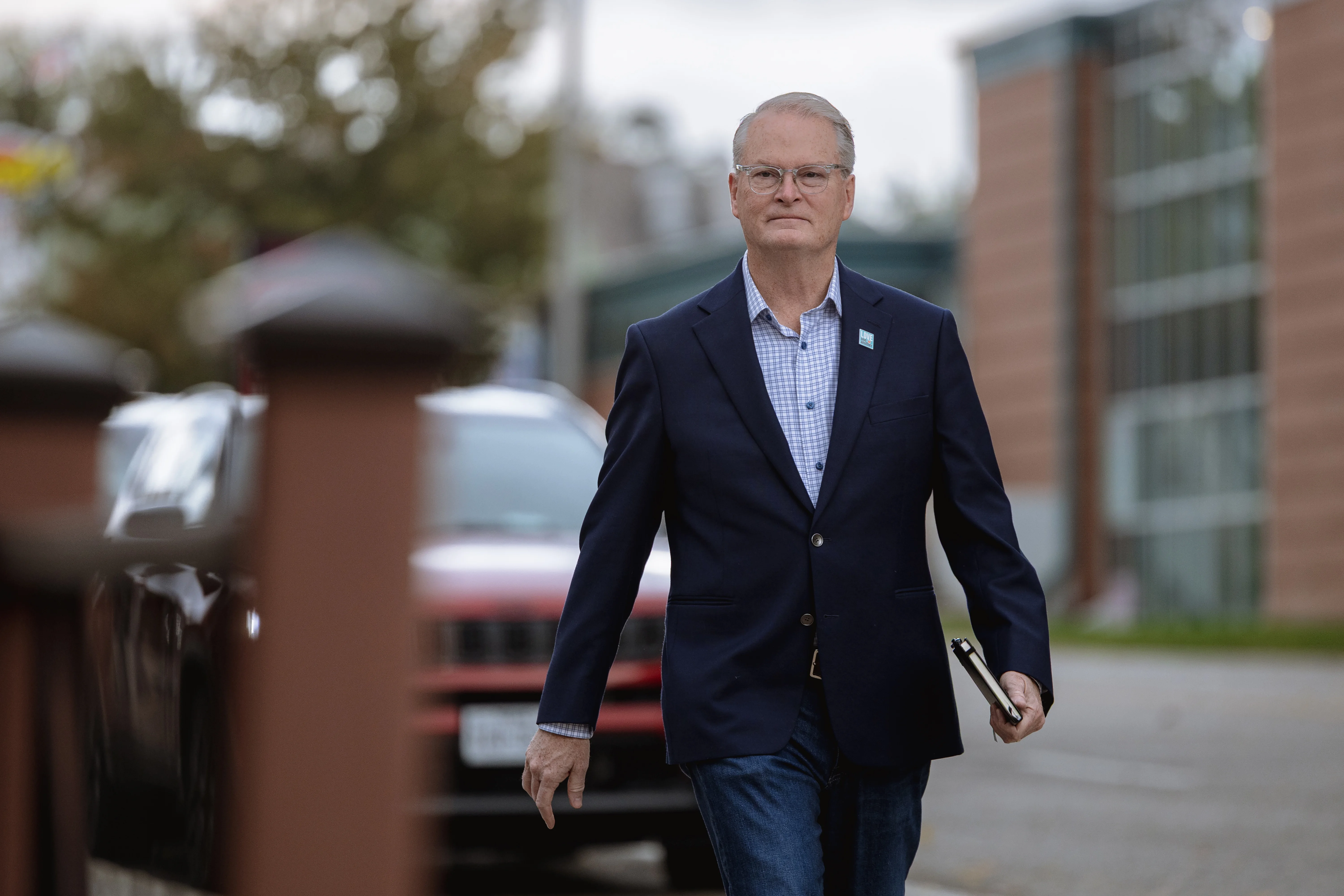
Megachurch pastor Adam Hamilton has defeated Republican incumbent Sen. Roger Marshall in Kansas’ Senate race, becoming the first Democrat elected to the position in the state in almost 100 years.
The Associated Press called the race on Tuesday evening for Hamilton, who earned 51.9% of the vote with 91% of votes counted. Marshall earned 45.2% of the vote, AP reported. The result delivers a major blow to the GOP as the party seeks to maintain control of Congress.
The race emerged as a surprisingly close battle in the lead up to Election Day, despite the fact that President Donald Trump won the state by 16 points just two years earlier in his 2024 reelection bid. For months, the Cook Political Report had categorized the contest as “Likely Republican.”
But in recent weeks the election forecaster twice shifted the race toward Democrats as polls showed Hamilton narrowing the gap with Marshall, moving it first to “Lean Republican” on September 23 and then to a true “Toss Up” on Oct. 6.
Republicans took notice in the past two months, diverting resources from swing-state Senate battles like that in North Carolina to defend Marshall’s seat. According to AdImpact, the Republican Senate Leadership Fund reserved $8.2 million for Kansas, the kind of funds usually allocated for traditional battleground states.
AdImpact found that overall, the Kansas Senate race saw a 3,332% increase in ad spending over the 2022 Kansas Senate general election.
Marshall, a former OB-GYN and military officer who represented Kansas in the House before being elected to the Senate in 2020, has been a staunch supporter of President Donald Trump and received Trump’s endorsement as one of the President’s “favorite senators.”
But while the President’s backing may once have served Marshall, experts told TIME leading up to the election that the senator’s closeness to Trump, whose approval rating has dropped to a new low, could pose a challenge for his reelection bid in the current political climate.
Voters have put blame on the Trump Administration for economic issues, experts said, including the war in Iran hiking up fuel prices and Trump’s tariff regime affecting the agriculture, aerospace, and other industries. Agriculture is the largest economic driver in Kansas, contributing $62 billion and close to 150,000 jobs, so retaliatory tariffs impacting Kansas’ grown commodities have had a ballooning effect in recent months.
“The agricultural industry is suffering right now,” Alexandra Middlewood, an associate professor of political science at Wichita State University, told TIME in October. “At the same time, it is harvest season, and diesel prices have gone up, and so farmers and ranchers are really struggling in the state.”
Trump stopped in Salina, Kansas, on Sunday in an effort to boost Marshall's campaign in the final weekend before the midterms, telling supporters to “pretend I'm on the ballot.”
“I'm closing it down tonight. This is it. I had to come here to make sure that Roger got elected. I had to do it,” Trump said on Sunday.
Hamilton, the founding and senior pastor for one of the largest United Methodist churches in the U.S., meanwhile positioned himself during the campaign as a centrist, willing to work with Republican lawmakers and the President.
“I’m somebody who stands in the middle,” Hamilton said in the race’s second debate in October. “I’m going to try to work for all Kansans, Republicans, independents and Democrats.”
In a seismic political upset that would have seemed improbable only a few weeks ago, Democrat Gina Hinojosa has defeated three-term governor Greg Abbott on Tuesday, shattering the Republican grip on the highest and most powerful executive office in Texas.
Hinojosa’s historic victory – she will be the state’s first ever Latina governor – ended Abbott’s bid for an unprecedented fourth term, and delivered Democrats their most consequential victory in the state in a generation.
Adam Hamilton has clinched a historic victory in the US Senate race in Kansas, fueling the country’s Democratic takeover of Congress as voters in key battleground states expressed frustration with Donald Trump. It’s the first time a Democrat has been elected to represent Kansas in the Senate since 1932.
With his victory speech, Hamilton, a longtime pastor, transformed a crowded hotel ballroom into his own congregation, his podium into a pulpit. Speaking at a hotel in Overland Park, he recited Bible passages and the parable of Good Samaritan in his address.
Voters across the US have elected Democrats to lead many of the biggest states in the nation, marking a sea change in traditional Republican strongholds such as Georgia and Texas in what could have a profound effect on Donald Trump’s remaining term and the 2028 presidential election.
From Keisha Lance Bottoms’ victory in Georgia, making the former Atlanta mayor the first Black woman to be elected governor of any state, to Amy Acton’s win in reliably red Ohio, the results represented a repudiation of Trump, rank corruption in Washington and the power of billionaires to shape American politics. Democrats aimed to win a majority of governorships in the US, something they have not done since the 2006 midterm elections.
In a stunning upset, Gina Hinojosa was elected the first Democratic governor of Texas in more than 30 years on Tuesday, ousting Republican incumbent Greg Abbott and catapulting a decided underdog to national prominence leading what has long been the nation's most populous red state.
Democrat Rob Sand has won Tuesday's election to be the next governor of Iowa. His win flips the seat held by a retiring Republican governor and likely sets up four years of divided government in the state.
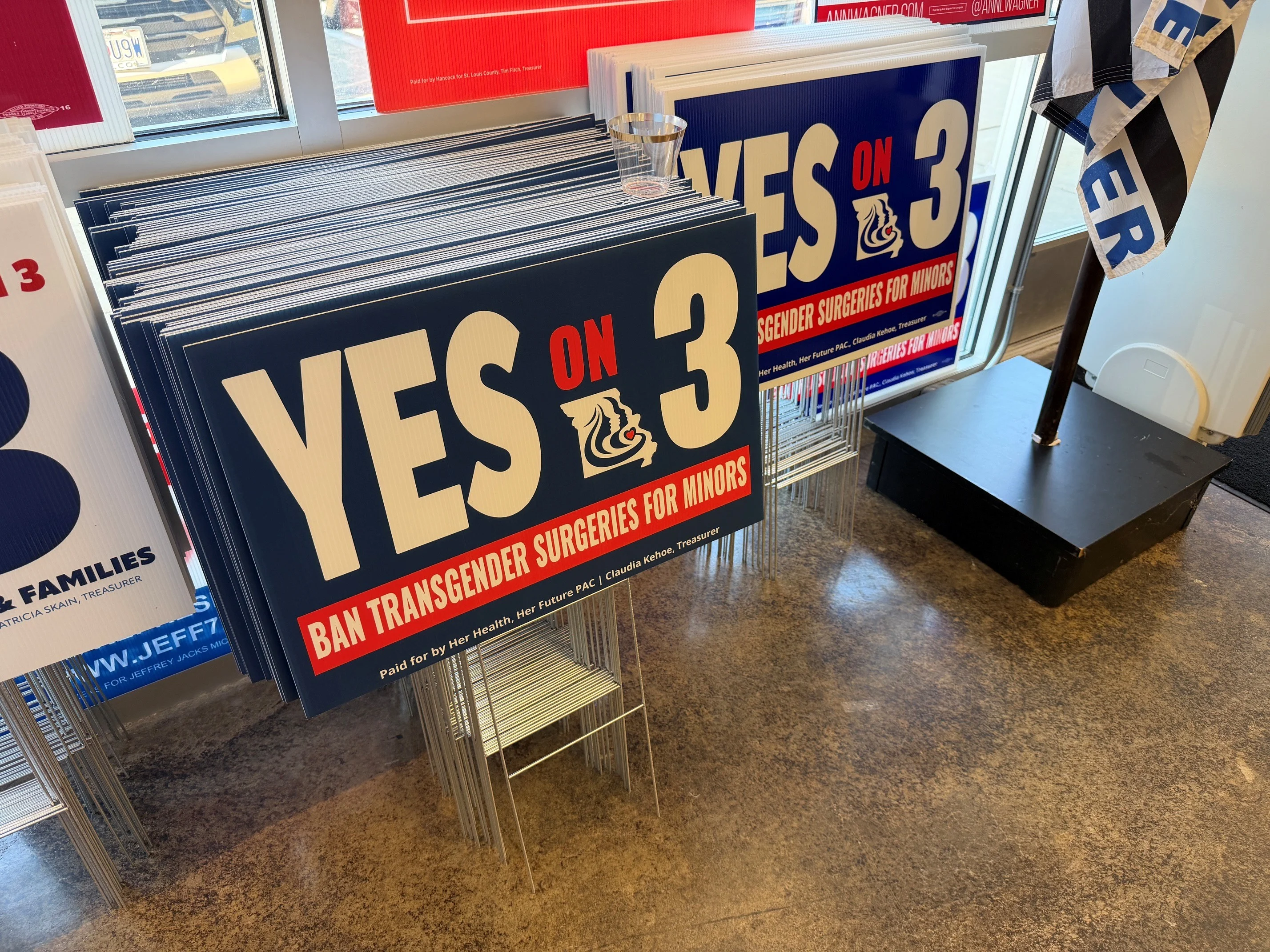
Missouri voters defeated a measure that would have banned abortion just two years after voters legalized abortion in another vote. Voters in Missouri legalized abortion two years ago but this time the abortion ban was coupled with a ban on transgender treatment for minors. Opponents said it was misleading.
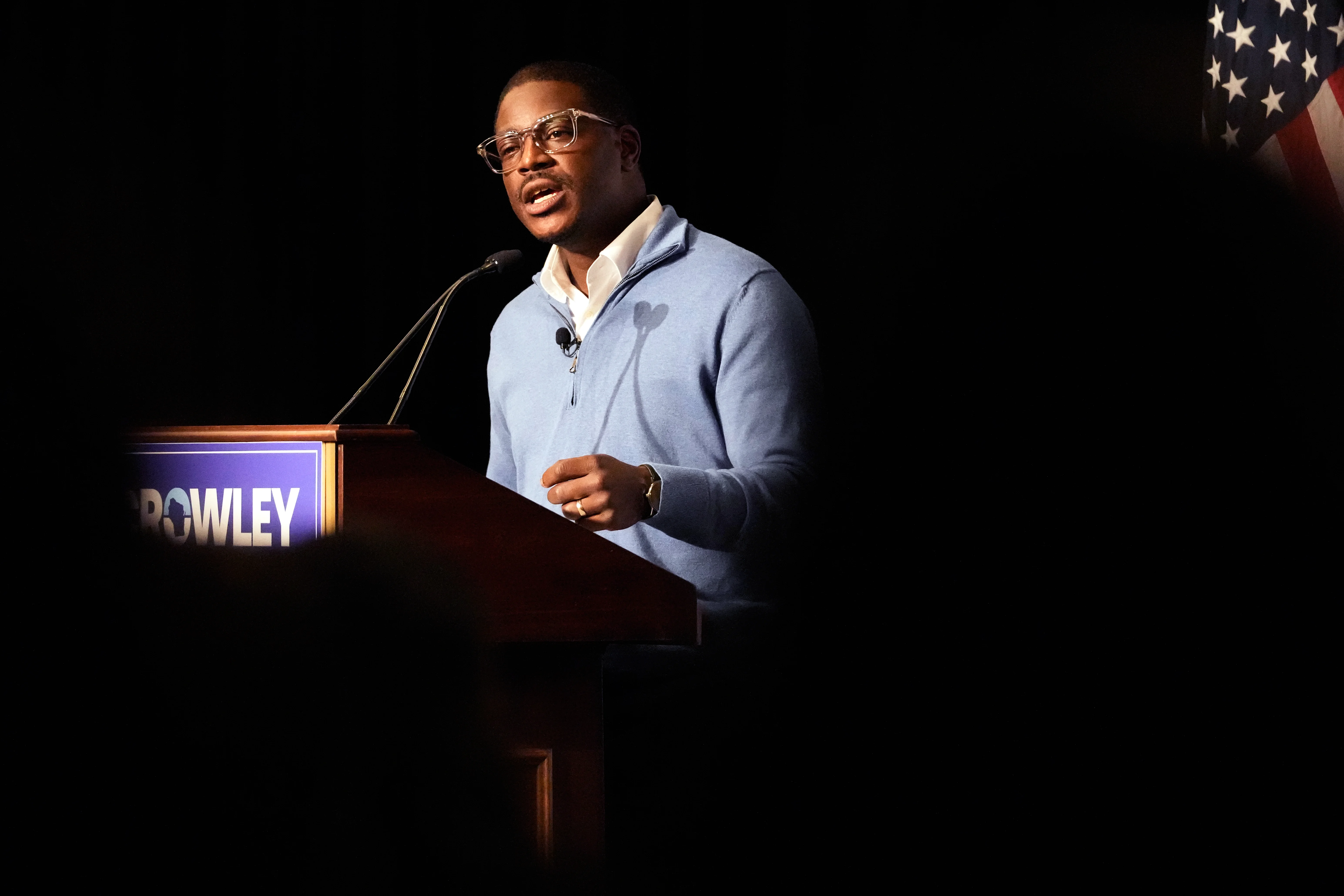
Democrat David Crowley defeated Republican Congressman Tom Tiffany in a campaign that focused on "lowering costs for working families" and bringing more jobs to Wisconsin.