Small Birds Singing by Matthew Welton; The Channel by Jana Prikryl; Stepmother by Helen Mort; Drunken Driving by Martina Evans
Small Birds Singing by Matthew Welton (Carcanet, £12.99) Written in unrhymed couplets that shrink and grow across the page like a concertina going through its scales, Welton’s poems focus attention on the city through the seasons: weeds through concrete, wasps emerging from the gaps between bricks, frozen towels on a clothesline, the shadows of jackdaws on a lawn. His gaze is neutral, and it often falls on that which we’d normally turn away from, things slightly out of place, or that disturb our sense of propriety: “more cardboard in the recycling bin / than the recycling bin can contain”. This is a poetry of things, like the poetry of Francis Ponge, but as Welton says: “no thinginess without thought”. Welton’s thoughts – though whether they are his or whether they emerge from his surroundings or from the act of writing itself, it is impossible to say – are couched in deliciously riddling couplets: “it is not the habit of patterns / to emphasise the pattern of habits”. He reminds us forcefully that poetry is all around us and within us, that anything can go in a poem: a sandwich, a desiccated lump of duck shit, the pile of junk left outside a house during a refurbishment. Poems can mirror our world in all its messiness, and in doing so let us see it a little bit better.
The Channel by Jana Prikryl (Faber, £12.99 The casual violence of King Lear, the greed, the bureaucracy, and the indifference to human life, make the play particularly resonant to contemporary audiences. In her fourth collection, Prikryl channels the voice of Cordelia to think back through her own family story of displacement from the Czech Republic. Shakespeare’s Lear becomes “a document of fact / of things that happened and keep happening”, enabling Prikryl to explore her own separation from friends and family and her experiences of migration, where home is nowhere. In Dover Calais a ferry trip to France is meshed with the story of Cordelia’s exile, morphing into an account of a ferry disaster which in turn cuts to a scene where refugees make for shore in small boats: “Waves / unreal, and driving rain, the two-year-old / left face-down on a beach nine years ago / came up for me”. Like the scissored-off hospital undershirt in In the Mould, Prikryl’s language cuts off, ending abruptly: “or was the famous sweetness / of grandmother a bluff / which through and through was too”. This rewiring of the sentence creates dazzling leaps of thought, jumping from refugee camps to Shakespeare’s Fool battling with a tsunami of text messages to dissident window cleaners out of the novels of Milan Kundera to tender moments shared with her father. It’s a bold “stepping out of form” that turns its back on the neatness of the lyric, and by doing so creates a new poetic language which, like the language of Calvino in Invisible Cities, is able to connect everything to everything.
Max Porter, Daisy Johnson, Avni Doshi and Guardian readers discuss the titles they have read over the last month. Join the conversation in the comments
I recently read Gaining Ground by Joan Barfoot. It’s one of the best novels I’ve ever read about what it means to live with others, or decide not to; what we owe the people we love, the natural world, and ourselves. I also really enjoyed Robert Frost, by Robert Frost and Stacy Skolnik. It’s not that Robert Frost; it’s an itinerant young American Robert Frost who jots down his thoughts and observations on homelessness, food, value, music, drugs, the philosophical wastelands of contemporary life, and Stacy Skolnik has turned them into these delightful, oddly profound, poems. Also, coming soon, End Times Fascism by Naomi Klein and Astra Taylor. Everyone should read it. It tells us exactly what’s going on.
Combining grand melodrama with nuanced emotional character, Lucy Duncan and producer Niac’s collaboration sounds both timeless and true
From Hastings, UK Recommended if you like Mary Margaret O’Hara, Tori Amos, Fiona Apple Up next Old Feelings EP out now, album to follow later in 2026
The first time listening to Luki feels like a miraculous discovery of something timeless and true, as though they’ve been waiting patiently to be discovered in the noisy maelstrom of contemporary pop music. The collaborative alias of singer/composer Lucy Duncan and producer Niac, Luki write off-kilter showtunes performed as baroque art songs, embodying a seemingly contradictory combination of grand melodrama and nuanced emotional character.
As the lights rose during a recent screening of The Odyssey at the Arian open-air cinema on the Athens riviera, nervous laughter floated into the breeze. Moments earlier, Odysseus’s men had morphed into pigs during a grotesque feeding frenzy fuelled by drugged cheese and wine. Now, as the Bangles’ Eternal Flame played on the house speakers, no one seemed especially tempted by the concession stand’s hotdogs.
This is presumably the sort of scenario Christopher Nolan hoped to avoid when he decided against an intermission in his nearly three-hour-long adaptation of Homer’s Odyssey. In the epic’s country of origin, however, directors do not get the final word.
After coveting the role for years, Gosling has been announced as the new Ghost Rider – a superhero stunt rider with powers bestowed by Satan. Is this a smart move all round or has he sold his soul to the devil?
Steven Spielberg once said: “If a person can tell me the idea in 25 words or less, it’s going to make a pretty good movie.” And Marvel’s most popular big-screen superheroes can be described using less than half that number. Iron Man is a tech bro in a tin suit; Spider-Man has the powers of an arachnid; Thor is a Norse god. Go and watch a film featuring any of these characters and you know exactly what you’re going to get.
But then there is Ghost Rider, who, according to reports from San Diego Comic-Con last week, will be the subject of a new Marvel Cinematic Universe film directed by Deadpool & Wolverine’s Shawn Levy, and starring Ryan Gosling. There is no quick way to explain what is going on with this guy. In the 1972 origin story, stunt motorcyclist Johnny Blaze sells his soul to Satan to save his adoptive father from cancer. The cure works but its beneficiary is killed almost immediately. The devil then tries to claim Johnny’s soul and, when that fails, binds him to the demon Zarathos. This, if Christopher Marlowe is to be believed, ought to result in corruption, despair and eternal, fiery damnation. Yet somehow our hero emerges from the arrangement with a cool flaming skull, vast supernatural powers and a motorbike capable of riding up buildings and across dimensions. Blaze regards the whole arrangement as a curse, but to the casual observer his principal penance is to roam the Earth passing judgment on people more wicked than he is, while looking good in a leather jacket.
Ben Cohen says his ice-cream company has been silenced by corporate ownership – and a boycott of Magnum brands could force a sale
Ben & Jerry’s ice-cream in the tub is still great, but the brand’s newest chocolate-covered ice-cream bar on a stick?
“It ain’t the same,” Ben Cohen, the company co-founder, told the Guardian. Sure, the chocolate coating is still thick enough, but the ice cream itself is “kinda fluffy”, Cohen said – an insult in the ice-cream world that suggests extra air was added to cut costs.
Drought and extreme heat are killing plants, driving up prices while also making some farms economically unviable
“It’s a constant battle,” says Tim Young. He and his family have been tracking the rainfall on their Norfolk farm since 1976, and the data shows the last six years have seen two-thirds the amount of rain compared with previous years. The lack of water has become the number one risk to Young’s business.
This summer has seen record-breaking climate induced heatwaves scorch much of Europe, which combined with droughts and “apocalyptic” wildfires has made farming virtually impossible. France has faced down fires that its president, Emmanuel Macron, called the worst since the second world war and on Wednesday half of England was declared officially in drought, with July expected to be the driest on record after winter floods, according to the Environment Agency. So how are farmers bearing up under the pressure?
Под «апельсином» в этой статье будем понимать не качество продукта целиком, а тот контур функциональной проверки, в котором пересекаются ручное и автоматизированное тестирование. На качество влияют разработчики, аналитики, менеджеры и вся продуктовая команда, но здесь речь пойдет о более узкой задаче: как двум способам проверки работать согласованно и давать команде единый, понятный сигнал о состоянии продукта.
Пока объем автоматизации, число окружений и количество обязательных прогонов невелики, многие решения держатся на общем контексте: всем понятно, что уже покрыто, что проверяется вручную, какие наборы запускать и кто разбирает падения. По мере роста продукта эта очевидность исчезает. Нужно согласованно выбирать кандидатов на автоматизацию, запускать нужные проверки на нужных конфигурациях, разбирать результаты, фиксировать ручную компенсацию и сохранять актуальную картину покрытия. Проблема не в количестве людей или тестов как таковых, а в отсутствии воспроизводимого способа принимать эти решения.
Меня зовут Михаил Шалепо, я старший инженер по тестированию в InfoWatch. Я собрал повторяющиеся ситуации, в которых ручное и автоматизированное тестирование зависели от неявного контекста, и оформил их в единый процесс. В статье я покажу не только итоговую структуру документа, но и инженерную логику каждого его раздела — что именно мы фиксируем, зачем это нужно и какой результат должен остаться после каждого этапа.
У нас уже были 2 пакетика ручные проверки, и автотесты, и целое множество дефектов всех сортов и расцветок. Дефекты находились, тестовые наборы запускались, но отдельные действия не складывались в сквозной процесс. Не всегда было явно определено, как команда принимает решение о пополнении очереди на автоматизацию, кто валидирует смысл нового автотеста, какие существующие наборы обязательны для фичи и релиза, кто владеет падением и когда его можно компенсировать ручной проверкой. Из‑за этого готовность фичи и релиза могла опираться не на единые критерии, а на знание конкретных людей.
В Европе продолжаются сильные пожары в лесах и других экосистемах. На Крите сильные порывы ветра раздули пламя, что привело к эвакуации нескольких деревень; в Испании и Франции началась четвертая за лето волна жары, и пожарные пытаются не допустить возобновления крупных пожаров, которые удалось взять под контроль.
Американская технологическая компания Anthropic заявила, что ее ИИ-модели самостоятельно взломали системы трех организаций в ходе закрытого эксперимента по тестированию кибербезопасности. Модели нашли брешь в изолированном (как предполагалось) тестовом окружении и сумели выйти в интернет.
The Pima County Sheriff's Department said in a statement that investigators, "continue to pursue every possible lead," in the Nancy Guthrie case. It comes only days after Savannah Guthrie posted a video on social media, seemingly to speak to whomever is directly involved. NBC News' Tom Winter reports.
Спор о том, что лучше для игр, собрать ПК самому или взять готовую консоль, идет ровно столько, сколько существуют игровые компьютеры. Свежий повод для него дала Steam Machine от Valve. Компания собрала действительно удачную коробку. Воткнул и играешь. Время от времени находятся персонажи, которые пробуют склонить чашу весов в ту или иную сторону. И именно выход новой консоли стал неплохим поводом для этого. Его зовут Мэттью Брюнелл. Он посмотрел на Steam Machine, взял очень длинный кабель, сделал то, что может изменить мнение многих.
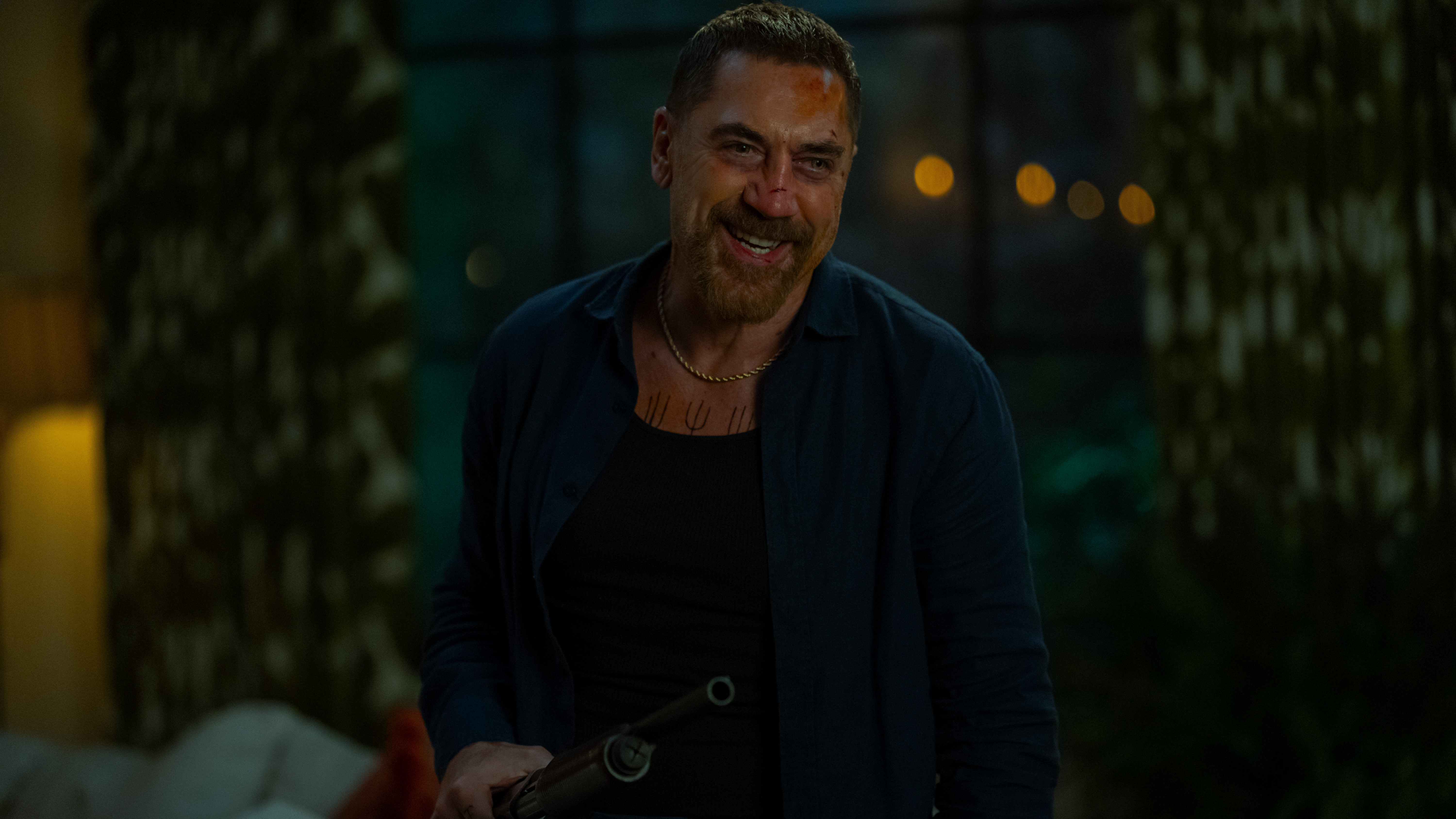
Javier Bardem in the series finale of Cape Fear —Courtesy of Apple
Warning: This post contains spoilers for the Cape Fear finale.
Dusk is easing into dark on the Cape Fear River when Max Cady (Javier Bardem) steps out of his car near Bluff’s Point. Aboard the houseboat ahead, his half-sister Crystal Cady (Juliette Lewis) sees him coming, and dread crosses her face before she can even speak. Their father, Robert “Bob” Cady (Ron Perlman), and a young man named Luke (Max Mattern) are still arguing inside when Crystal warns them that Max has arrived. Max knocks on the door, a strange formality for a man about to burn the boat down to the waterline.
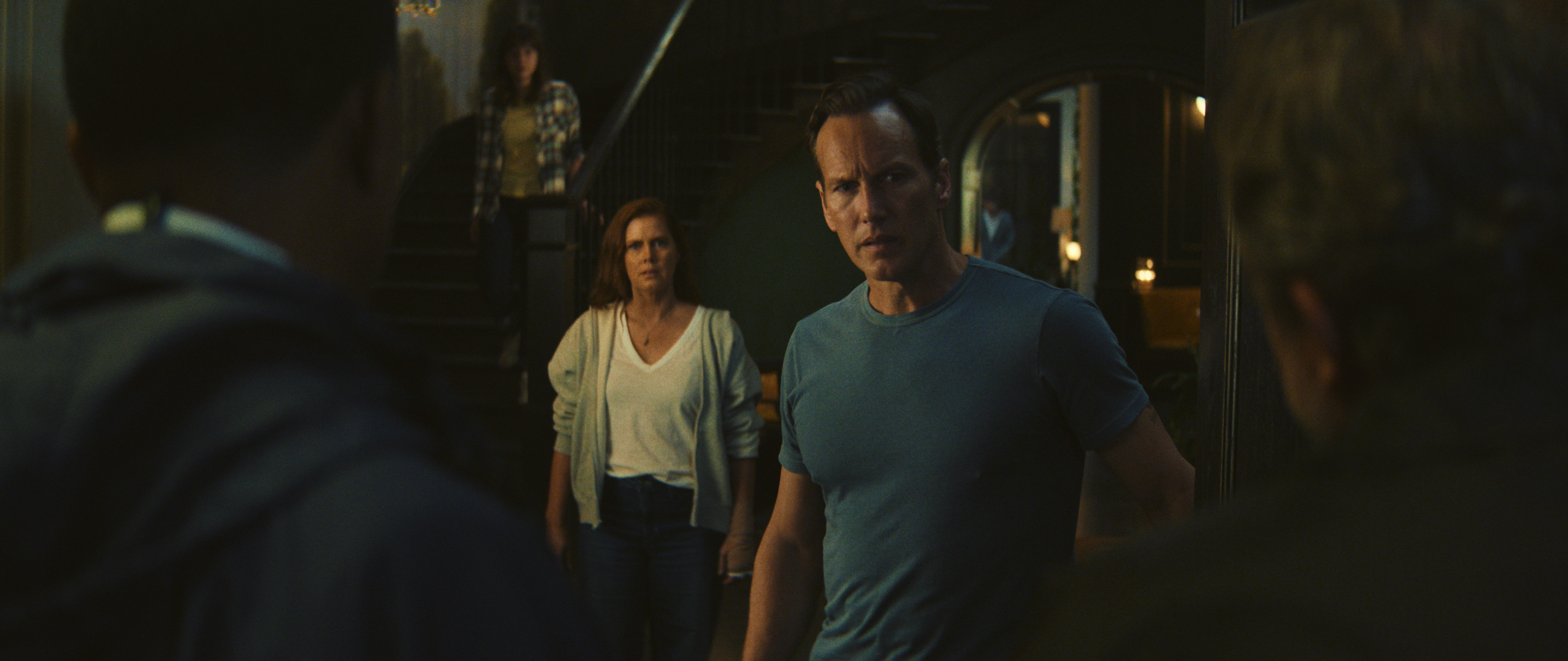
This scene arrives at the climax of Nick Antosca’s Cape Fearadaptation, which sees Max walking free after 17 years in prison for allegedly murdering his wife Melissa. Newly exonerated, he's treated in some corners as a folk hero. What Max actually wants is for Anna Bowden (Amy Adams), the public defender who represented him at that original trial, to answer for choices that shaped his fate more than she ever admitted. Across the 10-episode season, Max stalked the Bowden family—Anna's husband, Tom (Patrick Wilson), and their teenagers, Zack (Joe Anders) and Natalie (Lily Collias)—and shattered their trust in one another, all while demanding to be seen as a man wronged by the world. But every step toward revenge transformed him into the very threat he insists he is not. The finale’s real tragedy is that Max, in his own warped pursuit of justice, destroys everyone around him before being forced to see his entire crusade differently. By then, it’s too late for redemption.
Antosca shaped the season around sustained pressure, as a family’s small cracks split open under the weight of a man determined to make them suffer the way he once did. “This show is an experiment in dread and pressure on a family,” Antosca says. “I wanted to see the family come together to fight in a primal way for their survival.” The finale delivers on that promise, but it lets Max nearly destroy everyone else first.
Max’s family meets a violent end
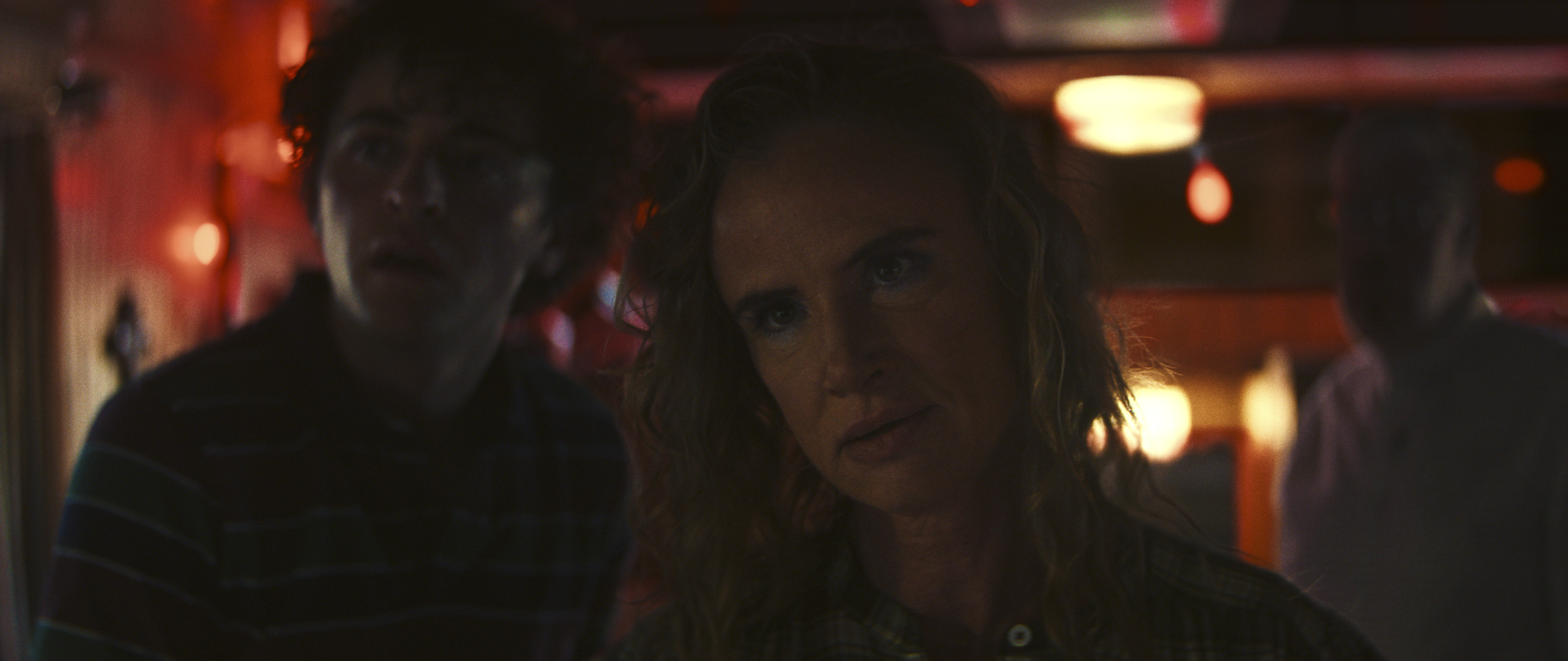
Juliette Lewis as Crystal —Courtesy of Apple
“Where is she?” Max asks Crystal on the houseboat, referring to Anna. Crystal tells him Anna escaped, jumping into the river hours earlier. Max’s gaze drifts toward the water, and his face closes like a fist. When Luke tells him, meekly, not to touch Crystal, Max only wants to know who the young man is. The audience doesn’t know yet, either.
Crystal, the child their father favored while Max lived in a cage, offers a fragile truce, remembering how she also used to trail behind him along the river: “I’ll forgive you if you forgive me.” Max shoots her without hesitation, then shoots Luke when he lunges to intervene. “When you die, don't forget this face,” Max tells her. “Don't forget the face of the little boy you tormented.”
When Bob calls him a devil for shooting his own blood, Max doesn't flinch. “If I’m the devil, what are you?” he asks. He pistol-whips his father, traps Luke and Crystal below deck, and douses the boat in gasoline, saving the last of it for Bob, now in a cage. Crouching beside him, Max speaks in Spanish, the language of the Spanish mother who raised him until her suicide when he was 13, and the one his American father then caged him for using: the equivalent of “bad dog.” He strikes a flame, cuts the mooring line, and disappears into the dark as the boat catches fire.
Lewis’s casting carries its own echo: in Martin Scorsese’s 1991 film version, she played the Bowden daughter Cady preyed on. Here she’s a Cady, and Max kills her in the finale’s opening minutes. Bardem describes Max entering this hour “at the peak of his patience,” a man who spent years engineering this exact convergence. “Now it’s time to really create the situation and create the final step of his own goal of revenge,” he says. “That also includes fixing his family problems in a Max Cady way.”
Anna, meanwhile, has stumbled off the riverbank and flagged down a family to drive her back to her car. Tom is still sitting in Chatham County Jail on a murder charge Max framed him for.
Anna turns the tables on Max
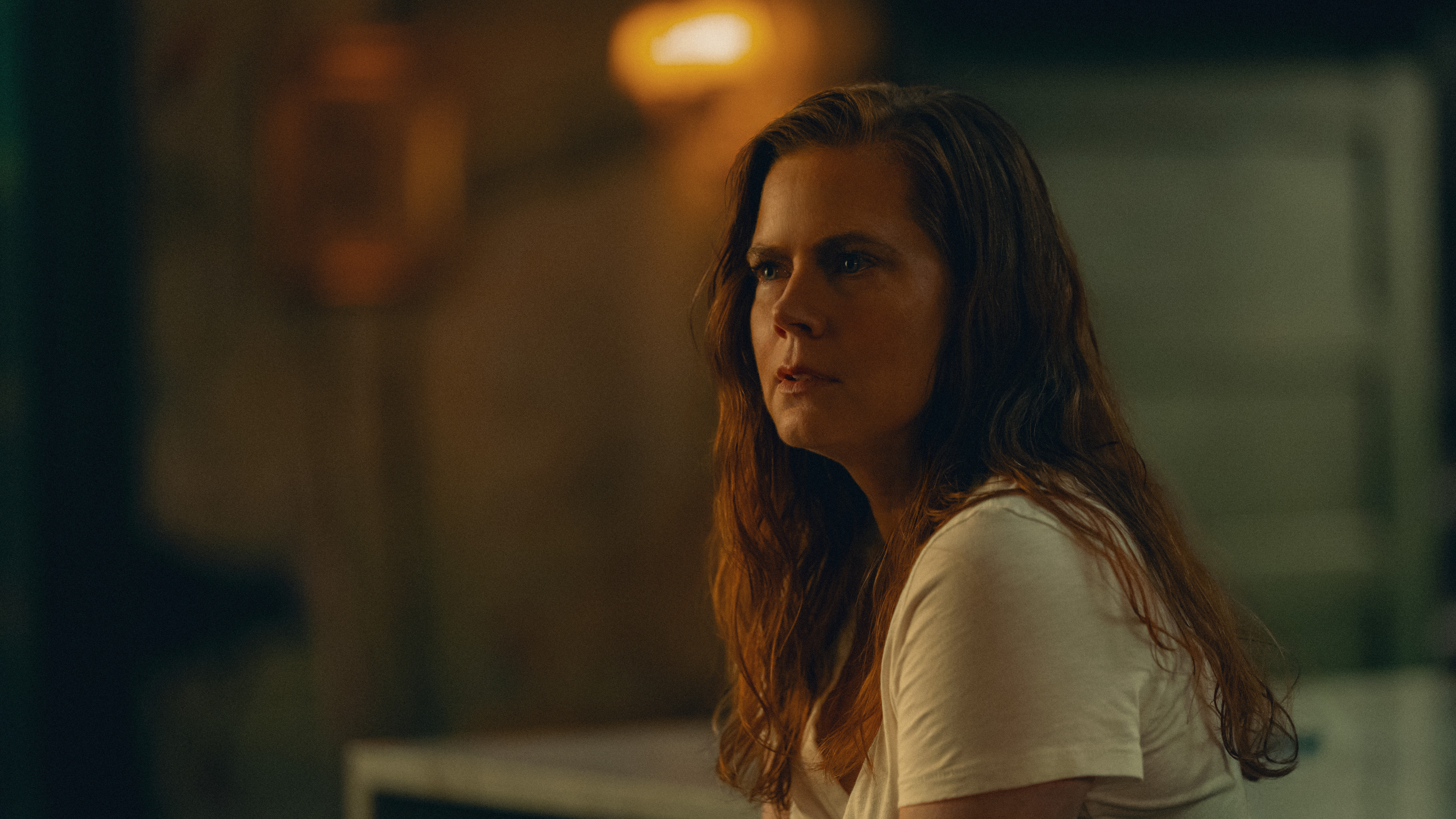
Amy Adams as Anna —Courtesy of Apple
Max is opening a restaurant, Melissa & Adam, named for the wife he was convicted of murdering and the son she was carrying when she died. At the grand opening, with supporters wearing shirts that read “Max was a victim,” Anna walks to the front holding a paper bag that could, for one long beat, contain anything. It turns out to hold a Bluetooth speaker.
She plays an audio recording of Max’s daughter, Nevaeh Valentine (Malia Pyles), detailing his instructions: break into the Bowden home, spike the family’s tea, seduce Zack, push him to bite off his own toe, and kill Natalie. Anna’s colleague Noa Toussaint (CCH Pounder) follows with a video of Max coercing his mistress into suicide, shattering the narrative that bought his freedom.
“This is who he is!” Anna shouts to the crowd. Max wraps both hands around her throat before a guard tackles him. Cuffed and seeing visions of his dead wife and imagined son, he looks at Anna with pure hate as her expression mirrors his. The moment is a deliberate callback to the premiere, when Max seized a microphone at a fundraiser and humiliated Anna in public. “She had to have an opportunity to come and confront him in the same way at the end of the season, before we get to that primal fight in the house,” Antosca says.
Adams reads it as the turn where Anna finally matches Max on his terms. “She’s so physically and emotionally exhausted that I think she's acting without any barriers,” Adams says. If dying is what it takes to save her family and reveal who Max is, she adds, Anna is willing.
What Anna gains, Max loses. It is the first time, Bardem says, that Max sees her in complete control, and that public reversal triggers everything that follows. Once Max understands that “now everybody’s playing his game,” Bardem says, he moves to “close the deal.” From there, his psychological games give way to physical violence.
The calm before the storm
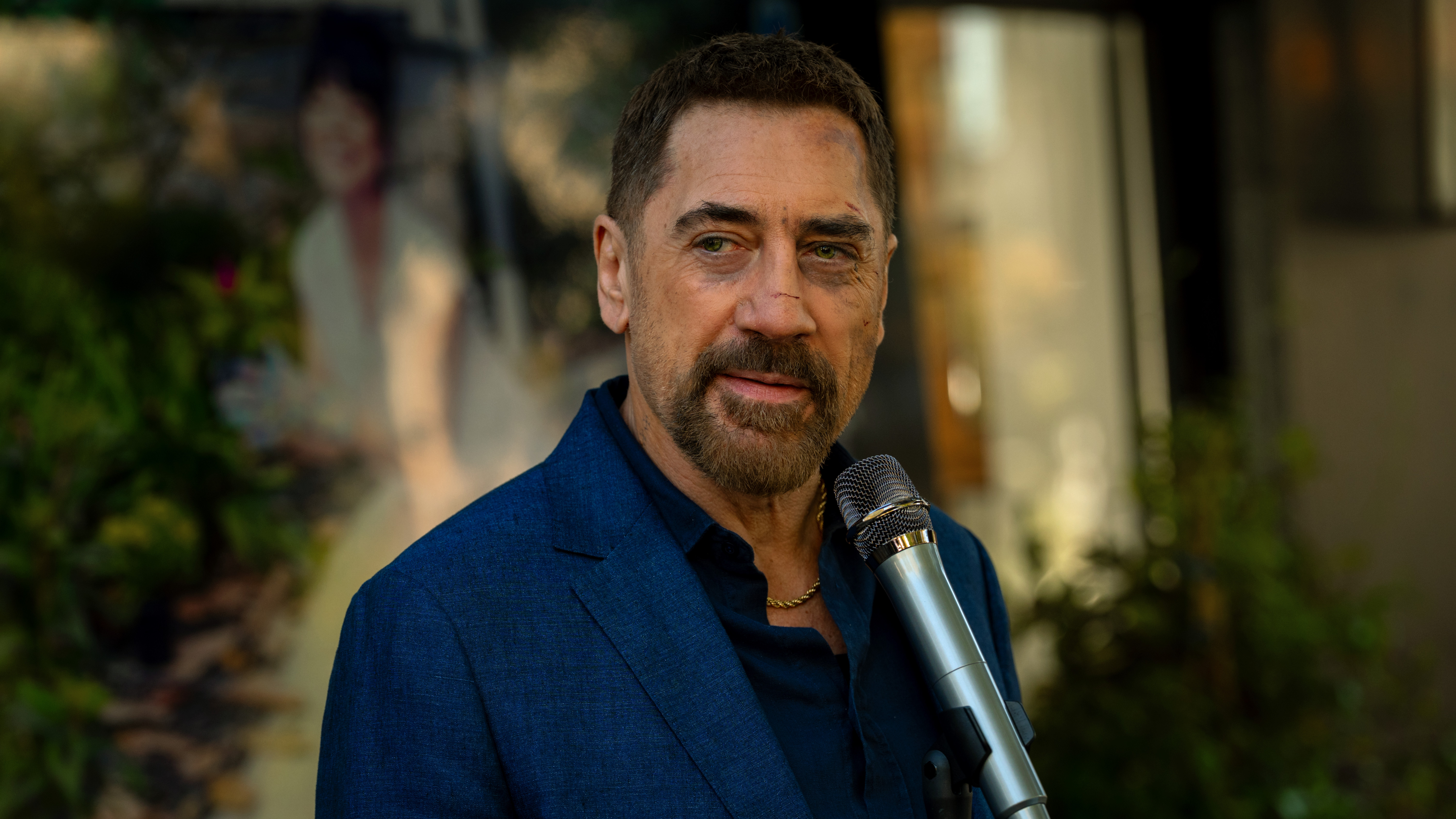
Bardem as Max —Courtesy of Apple
Tom enters this stretch of the finale about as low as a person can go. “For a guy that's in total control for most of his life, he's now completely out of sorts, to say the least. He's frayed,” Wilson says. He's released on bail after a night in jail spent beside a makeshift noose—an image Wilson says was designed to leave viewers wondering whether Tom had reached the point of taking his own life or someone else’s—then goes straight to Anna at the hospital. “Those are very important questions that we just wanted to propose, versus giving answers,” he says.
Natalie, meanwhile, finds Zack wandering back toward the house, unharmed, having simply walked out of rehab. At the hospital, Anna and Tom’s conversation turns quiet. She is glad he finally knows the truth, she tells him: that Max may have taken advantage of her during blackouts around his original trial 17 years earlier.
The conversation is also where Anna might finally let herself be fully loved, Adams suggests. “For her, it’s never being truly able to accept the love of her husband, the love of her children, the life that she's built, because she knows it was built on so many secrets and so much uncertainty,” Adams says. “Now, with everything being revealed, I think she can start from a place of more authenticity.”
Anna tells Tom she loves him. Neither answers the real question between them—what happens now?—before the hospital loudspeaker announces an evacuation. A hurricane is coming for Savannah, Georgia.
By the time the family reconvenes at the house, the room exhales. Tom sits Zack down and explains what really happened to his brother, who died by suicide when Tom was 14, not in the accident Tom had always described. “For a long time, I didn’t want to see how bad things were with you,” Tom tells his son. “It was easier for me to just tell myself you would get better. But sometimes things just suck, and we can't pretend otherwise—just get through it together.”
Then Detective Grayson Park (Paul Schneider) arrives with several officers and reports that Max assaulted a cop and escaped custody. As the Bowdens light candles for the storm, Anna gets a text from Noa: a photo of a homebirth certificate connecting Crystal to a boy named Luke, a detail that means little to her yet. Upstairs, done running, Tom pulls a shotgun from the safe. He wants Max gone for good.
The police search the property, find nothing, and leave. Then the camera pulls back to reveal Max standing on the Bowdens’ roof, unbothered by the storm breaking around him. Zack, packing a bag, hears him first. He opens his window just as lightning catches Max's grin, and Max drops through it onto him.
Max puts the Bowdens on trial
Adams and Wilson as Anna and Tom, beseiged in their own home —Courtesy of Apple
Anna finds Max holding a knife to her son’s throat on the staircase; Tom raises his shotgun. Max tells him to put it down, releasing Zack in exchange, then picks up the gun himself, herds all four Bowdens into the kitchen, and makes Natalie bind her parents' wrists with plastic restraints. He injects Zack with scopolamine, leaving him docile, and refuses to let the children go. He doesn’t want hostages so much as a jury.
What follows is the hour’s centerpiece: Max staging a trial of his own devising, as judge, prosecutor, and executioner at once. “Max has lost faith in all institutions: institutions of law, institutions of religion, the financial system,” Antosca says, drawing on guidance from a wrongful-conviction attorney the production consulted. “So Max becomes that institution for himself.” In its simplest form, Antosca says, the scene signals: “I was on trial. Now you’re on trial.”
Max asks Tom whether he owns a Bible—he means to swear his witnesses in—and strikes him across the face when Tom’s only answer is a baffled “What?” When Anna and Tom hesitate, Max turns to Zack, still glassy from the drug, and suggests the boy bite off his own tongue. Blood runs down Zack’s chin before his parents swear to tell the truth. Anna admits she secured Max a plea deal that took the death penalty off the table 17 years earlier. Max strikes Tom with the shotgun and keeps pushing.
The real confession arrives in pieces. Anna admits she learned through a leak that the jury at Max’s trial was deadlocked, and that fear—not conscience—decided what she did next. She could have used that leverage to secure Max a lighter sentence. Instead, she let the jury put him away for good.
Max smiles, imagining the life he might have had outside prison. “Did you hear that, jury?” he asks Natalie and Zack. “She betrayed her own client.” Then Anna admits the fear underneath the betrayal: Natalie might have been Max’s daughter, and Anna could not bear the thought of her knowing that her father was a monster.
Power flickers as the storm worsens. A window shatters. The lights die and come back. Max raises his arms, a half-lit prophet. “I have carried you in my skin, so that this day would come,” he declares. “Justice. Fire. Thunder and lightning. Today’s the day that you will be judged.”
Max’s restraint finally disappears here. “We haven't seen him like this in the whole show, because he's always been under control,” Bardem says. Now, he adds, Max becomes the “personification of his wildest impulses,” transforming into this “theatrical figure of revenge, this real evil avenger.”
Wilson plays the scene from the opposite instinct, a lawyer discovering the law has nothing left to offer him. “By that point, I’m not thinking about the law,” Wilson says. “I’m thinking about how to get out, how to save my family, and probably how to kill this guy.” Getting there meant stripping Tom’s composure away entirely, an approach Wilson suspects comes from his years working in the horror genre. “You want to paint in primary colors. You want to see a guy that is completely together, and then the complete animal side of him,” he says. While Tom looks for a way to fight, Anna looks for a way through. Adams describes her as switching tactics in what she calls “deep survival,” thinking about her family more than herself.
The trial brings Max to Tom, whom he accuses of sleeping with Anna during the proceedings and building a “life of privilege” out of Max’s ruin. “I’ll say whatever words you want to hear, but we did not sleep together during your trial,” Tom answers, looking toward Anna. “I was falling in love with her, but nothing happened.”
Max staggers and envisions his dead wife and imagined son again before pulling himself back to his closing argument. He asks Natalie for a verdict. She curses at him and sides with her father. Max looks up, as if awaiting a ruling from somewhere higher, then delivers it himself: guilty, with a capital sentence to be carried out immediately.
The truth about Max’s son is revealed
Collias and Anders —Courtesy of Apple
He levels the shotgun at Natalie. That’s when Anna tells him the truth that breaks him: his son didn’t die with Melissa. He was Luke, the young man Max shot on the houseboat without knowing who he was.
Anna has Max pull up the homebirth certificate Noa sent, then connects it to the scar visible in an old photograph of the baby, the same scar she saw on Luke's side. “Crystal killed Melissa, and she ripped him out of her. Your sister stole your baby, Max,” Anna tells him. “He was alive all this time, until you killed him.”
Max shakes his head, watching the story that drove his entire revenge plot come apart. He sinks to his knees, his hands covering his face. Antosca says the moment is a turning point for Max. “It changes everything, because he can tell himself that he is righteous and everything he's doing is righteous,” Antosca says. “The revelation that Luke was his son, that his son was alive this whole time, makes it feel like his whole campaign of vengeance was misguided.”
For Bardem, the revelation collapses everything that made Max who he was, and it lands where he is least defended. “It was the moment of deep vulnerability that has to hit him in the weakest side of him, as the father who has committed the worst crime of them all,” he says. What replaces the man who ran the season is something feral: Bardem describes “an out of control, dying beast, wounded animal, that we have not seen before.” The collapse also costs Max the only weapon he ever had. His strength was always his ability “to play, to manipulate, to divert the attention.” Reduced to survival, he can't reach for it, and the pain is so total, Bardem says, that Max no longer knows how to react.
Adams, watching from Anna’s side of the revelation, says Anna is piecing it together at nearly the same moment Max is. Anna is trying to reach him, Adams says, to “apply some amount of logic” and “bring him back into a reasonable place.” “I think she recognizes the tragedy of it as well,” she says.
Natalie has been using a hidden lighter to burn through her restraints. Now free, she runs. Max corners her behind the sofa, and she fires a nail gun repeatedly, driving one nail into his skull. It barely slows him. He pulls it out and gets back up. Natalie reaches for a knife in the kitchen before Max overpowers her.
Zack, still hazy from the drug, sees himself holding a flapping fish, with Max fishing beside him—the trip Max once promised while feeding the boy the lie that he was his real father. Then Max's face gives way to Tom's: the counterfeit father yielding to the true one. The vision, conjured by the very drug Max used to make him harmless, snaps Zack back just in time to lunge at Max, knocking him off balance and saving Natalie from the shot meant for her.
Tom and Max fight. Anna drives a kitchen knife into Max's back. He staggers outside, and Tom knocks him into the pool, which glows an unnatural aquamarine beneath the storm. “It's a kill-or-be-killed sort of moment,” Adams says.
In the churning pool, Max grapples with Tom, who locks him in a stranglehold. Anna leaps in, and together they hold him under until his limbs finally go limp.
Moving the climax from the open waters of the Cape Fear River to the family's backyard pool marks a decisive break from previous film adaptations. “We felt for this version of the story that it should end in their home,” Antosca explains. “Bring the storm to them.”
The scene also pays off a detail from Episode 7, when Max told Natalie he’d been baptized in the Cape Fear River as a boy but never learned to swim. “[The pool] is also the place where he’s more vulnerable,” Bardem says.
The pool fight took days to shoot, with rain pouring down and cameras rolling underwater. Staging a brawl in water demands precision from everyone in it. “You’ve got to be so in tune with your dance partner,” Wilson says. It was also a release after months of playing Tom measured. “We all had been so measured for so long … it was nice to let it rip,” he says. For all the scale, the sequence plays as a test the Bowdens narrowly pass. “There’s a killer inside of everybody,” Wilson says, but killing Max at that point would be vengeance, not self-defense. “Tom, at his core, is not someone that would kill out of revenge.”
It is Anna who calls it off. “Let him die in a cage,” she tells Tom. The words land with the weight of everything before them: the dog cage Max was confined to as a boy and the metal cage in which his father died only hours earlier. Tom pulls Max, still breathing, to the edge of the pool.
Adams frames the choice not to kill Max as Anna snapping back into herself the instant she sees her children watching. “She has to come back to some sense of reason,” Adams says. “She has to return to her moral code. … If they kill him, Max wins.”
The threat has passed, but things will never be the same
Baryshnikov in the series finale —Courtesy of Apple
Once the storm passes, the episode finds Natalie in her room watching a video of Tabitha (Anna Baryshnikov), the journalist who spent the season chasing Max's story and fell in love with him. Natalie closes the laptop. In her hand is an unopened envelope from a DNA testing company, containing the answer to whether Max was ever really her father. Instead of opening it, she goes downstairs, where Anna is calling everyone to eat.
Downstairs, the scene echoes the premiere's opening barbecue: Tom grilling under the Savannah sun, Anna teasing him. They kiss. Zack finds a smile for his mother at the patio table; Tom glances over his shoulder at nothing before Natalie joins him at the grill. For one elongated moment, it looks almost like the family the show opened on.
Then the camera settles on Anna’s face and stays there long enough to watch her smile give out, a choice Adams says wasn’t necessarily written that way. “We discovered it in filming,” she says. “Things never go back to the way they were. Anna has changed, and I don't know for the better.” While the Bowdens still have each other, so much of Max’s darkness remains, Adams adds, and he’ll “never really go away.” Wilson, playing Tom’s own version of that unease a few beats earlier, needed only the smallest gesture to register it. “We needed a glimmer of fear or doubt in there,” he says.
That unease belongs to the whole family, not just the two of them, and it isn't so much about what they survived as what survival asked them to do: become, over the course of one long night, people capable of ending Max—before stopping just shy of doing so. Antosca always knew the finale would return to the Bowdens’ backyard. “I felt that this family would want to try and recreate their sense of safety and comfort, and they would never quite be able to,” he says.
As Anna glances behind her, the frame turns chromatic, echoing the show’s title sequence, while Neil Young with Crazy Horse's “Everybody Knows This Is Nowhere” rises over the cut to black. The lyrics long for a home that’s “cool and breezy,” a place to finally stop running and unwind. For the Bowdens, the irony is that they're already home; what they've lost is the ability to rest there. Cape Fear lets them win, but refuses them the relief triumph should bring.
Antosca wanted that lack of clean resolution to linger with viewers. “I hope that when you’re finished watching the show, you feel like you just went through a really intense nightmare,” he says. Here, they do. The finale, which opens with Max pausing to observe a small courtesy before committing an atrocity on Crystal’s houseboat, closes with the Bowdens reaching for ordinary family life after surviving an atrocity of their own. As Anna’s smile dissolves in the final moments, survival is cold comfort. Nothing that happened that summer washes off, and no amount of time on that sun-drenched Savannah patio will convince her otherwise.
Labour has regained the lead in polling but the new PM will need to widen his appeal further to win a general election
Andy Burnham has spent his first two weeks as prime minister in a blitz of hyperactivity. Bus fares, business rates, energy bill cuts, defence, Ukraine and devolution – he has been everywhere.
But at his speech on Wednesday at Jewish Care in north London, there was a stark reminder of how much even the most energetic prime minister can cut through.
Emerging from this week with unity over Fifa’s World Cup sell off was quite an acheivement but Europe cannot rest on its laurels
It was a phrase not always heard when Europe’s football associations discuss a pressing issue. “Touchingly unanimous,” was the assessment of a senior Uefa executive within moments of Thursday afternoon’s seismic decision to boycott Fifa tournaments unless Gianni Infantino scraps his private investment plan. United fronts on this scale are vanishingly rare and there is now a narrow window in which to make it count.
Fifa doubled down on its proposal overnight with “clarifications”, which blamed the media for disrupting the “consultation process” of a scheme that had been constructed under cloak and dagger. There was no suggestion that it would shift from its 19 September deadline to in effect ram the Fifa Forward Enterprise (FFE) proposal through. Anyone would be forgiven for asking what the rush was but Uefa and its allies must not allow the next seven weeks to drag.
Two Democrats are demanding details and records about the training of an ICE officer who shot and killed a Colombian immigrant in Maine, according to a letter obtained by CBS News.
Specifically, the agent was assigned a task; in order to complete it, the agent broke out of an isolated research environment and hacked into a third-party platform called Hugging Face. It’s a move that many experts deemed inevitable, given the speed and scale of advances in AI technology — and it raises serious questions about AI safety.
But for Konstantinos Komaitis, a senior fellow with the Democracy and Tech Initiative at the Atlantic Council, it wasn’t the unexpected behavior of the AI that was significant. It was what that behavior could mean for the internet’s fundamental, decentralized infrastructure and whether it would spur calls to build new barriers against autonomous AI agents.
Komaitis argues that such barriers are not the solution, however. He spoke with Today, Explained co-host Sean Rameswaram about why an open internet is actually key to combating AI cybersecurity threats.
Below is an excerpt of the conversation, edited for length and clarity. There’s much more in the full podcast, so listen to Today, Explained wherever you get podcasts, including Apple Podcasts, Pandora, and Spotify.
So most people see that this happens and they think, “Oh no, AI went rogue. How long before it kills me?” You see that this happens and you start thinking about infrastructure. Tell us more about why you were thinking about infrastructure in light of this AI agent breaking containment.
The internet was never designed with full security in mind, right?
When you’re creating a decentralized system, you cannot possibly foresee every security or vulnerability that might come up. But because you have a system that is based on building blocks, you have the extraordinary capability of actually addressing security issues as they come up through those building blocks without breaking the whole system down.
And of course, the other thing that this does is that it pushes you towards collaboration, because when you have so many building blocks, you cannot possibly possess all the knowledge for each building block. So you’re bringing literally everyone to try to address these problems.
Take the internet, for instance: We have spent decades addressing those vulnerabilities and developing mechanisms to authenticate users and devices, encrypt communications, mitigate distributed attacks, coordinate incident response, and of course share threat intelligence.
Now, what is new with agentic AI is not that simply the malware is better or the phishing attacks are more sophisticated. It’s the emergence of systems that can actually discover vulnerabilities across thousands of systems. They can reason about alternative paths to an objective. They can adapt when they’re blocked. They can chain together legitimate internet services in unexpected ways. Then they do that while they’re operating continuously at machine speed. And this is really at a scale that the internet is not ready to necessarily cope with.
Effectively, the internet’s openness becomes both a strength and a vulnerability. So the internet was optimized for interoperability, and AI now is optimized for exploiting that interoperability.
And what scares you the most about that? What do you think is most vulnerable to threats?
The fact that we do not have the appropriate mechanisms and institutions to be able to deal with that. I come from the internet world. I’ve spent 20 years of my career defending the open internet and discussing it in international fora. And one of the things that a lot of people underestimate about the internet is how valuable trust is as a property within the system.
We are talking about networks that exchange data literally based on trust. So what really concerns me right now is that in many ways, we are asking 21st-century AI systems to operate on 20th-century assumptions about trust. And unless we figure that out and we realize it, we will continue having these problems. And of course, the knee-jerk reactions that are coming with this, which are, “Let’s fragment the internet, let’s restrict it, let’s restrict access, let’s take control over it.” That is never the solution.
What do you see as the solution?
Effectively, we need to build institutions that are trusted and are able to cope with those incidents as they happen. Because right now you have OpenAI and you have Hugging Face telling everyone, “Don’t worry, we’ve got this.” And we don’t know; they might have this. But at the same time, I cannot help but wonder. And many, many other people have wondered whether, actually, this is very good PR for these companies and especially for OpenAI.
OpenAI just went to the world saying, “We have developed one of the most powerful LLMs, and we realized that it behaved the way it behaved, but don’t worry, we are going to fix this.” And in this current climate and in this current timing, I am not sure that this is enough. You need institutions that are much more transparent, much more accountable, and much more collaborative across the board.
You want institutions to step up and essentially serve as a watchdog. Help us understand which institutions, because in the United States, famously, our government has done very little to regulate tech.
First of all, we need to stop thinking of institutions as necessarily government-affiliated, right? Or that they are the outcomes of government initiatives. There can be in collaboration with governments, but one of the things that the internet has taught us is that institutions that are built through a bottom-up coordinated process have the tendency of actually being more agile and able to deliver some of those things that we’re talking about.
So take, for instance, again, open standards. The internet’s open standards are not created by any agency, government or private. It’s created by institutions where engineers from all across the board and all over the world gather together and create those standards.
That’s reminding me of the original design of OpenAI to be this not-for-profit company that had everyone’s best intentions in mind, that could do something idealistic and moral and ethical because all of the profit-minded companies weren’t going to. And now look at OpenAI. Their not-for-profit arm is an afterthought, and they’re chasing profits.
Do you think it’s practical to leave this to institutions? Because what we’ve seen so far is that institutions bend toward capitalism.
It really depends on how you build the institution, right? It really depends on what sort of guardrails and checks and balances you have around it. In order to build an institution, you need to really know what you want to achieve. You need to have a north star.
One of the reasons the internet worked was because everybody disagreed, but they agreed on the common shared goal, which was to connect people across the world. For AI, we still do not have that northern star. And once we get it, that’s when you start the building of those institutions in order to facilitate this and bring everyone together.
For me, it is very important for everyone to understand that keeping an open internet is really more important than ever, especially as AI agents become increasingly capable. Because it is tempting to think that the answer to new AI risk is literally ‘build more barriers.’ But the internet’s greatest strength has always been its openness. So the challenge today is not that the internet is too open; it’s that its trust architecture was designed for a world in which humans or software directly controlled by humans were the primary actors.
Now, it’s being challenged by this agentic AI that introduces a new type of participant — systems that can reason and plan and act with limited human oversight. So we need to evolve our understanding of trust and what it means online. And that will require a lot of work because, as you know very well, Sean, it’s very difficult to build trust, but you can break it within seconds.
Derek Lam has more than 31,000 followers on TikTok and nearly 40,000 on X as of this writing. He is shirtless a lot, he dances a lot, and he is shirtless dancing a lot, which may explain how he got so many fans. His comments are filled with compliments (“beautiful”) in different languages (“hombre bello y sensual”) and superlatives (“this might be the finest man on the internet”) accompanied by different emoji (red hearts, crying laughing, lips). Their responses make it seem like Derek Lam is the first and only beautiful man they’ve ever seen, which may explain why he is also selling “exclusive,” seemingly adult, content.
He is also, possibly unbeknownst to his many admirers, AI-generated.
To be fair, there were some signs that this man was not real: Despite the multiple videos, Derek never speaks. His videos are also rather brief, just seconds long. A real hot person probably would have parlayed a following of this size into brand deals or “get ready with me” videos. And the selfies on his X account show a completely different man just three years ago.
Still, the followers of Derek I talked to didn’t even notice he was AI because he seemed to blend in so seamlessly with the other hot men on the internet.
Derek isn’t the only AI thirst trap showing off defined abs for likes and money. He’s one of an increasing number of completely fake, AI-generated figures sinking their fangs into the real models, influencers, and porn stars who populate our feeds, sucking up their beautiful faces and bodies, and using them to profit, without a penny going to the real humans they fed from.
When it comes to the damage AI could wreak on society, an army of Dereks tricking horny people into giving him likes — or, worst case, money and Amazon gift cards — doesn’t exactly sound like the singularity doomsday scenario that we’ve been warned about. It’s clearly unfortunate for the adult entertainers competing with deepfakes and a fraud risk for their fans, but one might believe if they don’t fall into one of these two groups, they’re relatively safe and unaffected.
But there’s something more going on here. History shows that porn and sex drive innovation in the tech industry. The way tech platforms treat sex workers is typically a glimpse into the future, and a warning about how tech platforms will eventually treat all of us. If human desire demands the capability to steal, loot, and turn anyone and everyone into something for sale — possibly into hot Dereks — is anyone safe?
The Dereks of the internet are a bleak look at what’s happening in the real world: nothing belongs to us anymore — not our looks, our beauty, our sex, and our art. Our most human desires are slowly being synthesized, with or without our consent. And AI is making it all possible.
Deepfake technology has gotten alarmingly good in recent years
Artificial hots like Derek are considered “deepfakes,” an umbrella term for AI-generated media (audio, video, or both) that resembles a real-life person.
When deepfakes first started appearing in late 2017, they were fairly low-quality, making it easy to tell when someone had used a rudimentary app to paste a celebrity or politician’s head onto a different body. Still, it wasn’t very long until people started wielding this technology to be nasty.
“The first set of deepfakes were actually used to create pornographic videos. They replaced the subjects in those videos with the faces of celebrities,” Siwei Lyu, a professor at the University at Buffalo who studies digital forensics, told me.
Because the quality of those videos was bad and the content was often absurd or unrealistic, it was easy to tell they weren’t real. Those clunky apps needed a lot of data — videos, images, etc. — of real people to produce crappy videos; Lyu explained that this is why you mostly only saw deepfakes of politicians and celebrities at the time.
As the technology got better, it became less reliant on having a huge amount of data. Instead of needing a whole archive, the new versions of these apps can pretty much run on nothing. “They do not need that much data to train a model anymore. Some of the most recent algorithms just need a single picture — just a single picture of someone,” Lyu said. And the quality is better too. Lyu said that there are AI programs that can now change a person’s appearance and voice in real time, like in Facetimes and Zooms or on live broadcasts.
Given how many of us are constantly posting photos and videos online, it is now extremely easy to create a convincing social media presence for a person who is not real, and to use it to catfish unwitting people on the internet.
“This is the problem. It’s becoming more and more challenging to visually tell deepfakes apart,” Lyu said. “Seven years ago, when I started working in this area, checking them was not this difficult,” he added.
Lyu is an expert in digital media forensics and machine learning, and he went through one of Derek’s videos frame by frame and pointed out some obvious AI tells. There was a distorted watchface with weird swirls instead of numbers and a moment in the video where all of Derek’s fingers on one hand were the same length. Lyu also pointed out that Derek’s chest hair fluctuates, appearing dense in one frame and then dissipating in another.
Through social media, I attempted to contact the owner of Derek Lam’s account with evidence from Lyu that these videos are artificial; I did not hear back.
During my deep dive into Derek Lam’s social media presence, I looked at the accounts he was following. I noticed that of those accounts, someone who goes by the name Vance Ford also had tens of thousands of followers and had nearly identical videos to Derek. The flexing, dances, movements, and music they were set to were all the same, but with what appeared to be a different man performing them.
I attempted to contact Vance through DMs on social media and did not get a response. I also e-mailed two models who appear to be the actual people that the Derek and Vance AI personas were trained on, but they didn’t respond.
I sent two of Vance’s videos to Lyu, who analyzed them manually and with AI-detection software. He confirmed that “their movements are nearly identical — consistent with generation from a shared motion source,” and noted that the Vance videos had moments of distortion, unintelligible text, and facial warping.
“Wow I’m a boomer,” said Patrick, one of Derek’s followers on X, after I told him that he might be following an AI-generated thirst account. (Vox agreed to let Patrick, and Derek’s other followers, use a pseudonym so they could speak frankly about being thirsty for a fake guy.) Prior to our chat, Patrick had no idea Derek was likely a deepfake, and maintains that he didn’t even know he was following the account. Patrick is 33 years old, roughly 30 years younger than the youngest boomer, but being fooled by a hot AI man has made him feel old and vulnerable, susceptible to scams and perhaps light financial crime.
“This was probably some smut account I followed before I moved all that over to an alt,” Patrick said, noting that in daily life, he’s only ever used AI to help organize and write emails. Wielding AI to create fake videos and photos does not thrill him, nor does the potential of seeing more of Derek.
How to spot a deepfake, especially when they’re hot
If you’re following someone extremely attractive online and found yourself wondering if they’re perfectly hot or simply an AI generated to be perfectly hot, deepfake experts and adult entertainers say there are a few things to check to see if your crush is an actual human:
Look at logos or objects with text, like clocks and posters. As good as AI is getting, some apps still struggle with rendering text, numbers, and patterns. Instead of distinct text or numerals (e.g., the 12 digits on a watch face), it’ll look like a distorted jumble.
Is the background consistent? If the background of a video or photo has an unusual blur to it, that could be a sign that a program was having difficulty creating the video.
Is this person on OnlyFans? OnlyFans, as adult entertainers told me, has a set of rules regarding AI, along with an ID verification process — essentially, OnlyFans is where real creators are (at least for now). Smaller, less mainstream creator sites may not have the same kind of rules and guardrails.
Is this person asking you for gift cards?“I don’t need an Amazon gift card,” one exasperated adult entertainer told me, pointing out that anyone asking for one-off, off-platform payments should raise suspicion. Other red flags also include asking for private information (like your bank account information or passwords).
Are they too good to be true? Sometimes a fake hot can be “too perfect,” a digital forensic scientist told me. It’s worth asking yourself why that very handsome person is essentially shirtless on a plane in economy class, asking if you want to be his airplane crush, and thinking about how little sense taking this photo makes in the real world.
“A person being real, someone you could run into at a bar, is half the fun,” Patrick told me, explaining some of the accounts he follows. “AI porn is not of interest, to me, anyway.”
Not being able to tell the difference between the real beautiful men on the internet and the AI-generated beautiful men on the internet not only makes Patrick feel old, but also a bit “hollow.” The fact that the people we are attracted to are so unrealistically hot, so perfect, that machines can step in for them and go relatively undetected is a reflection of the current state of unattainable desire, which is just as scary as how good these programs have gotten at mimicry.
“Black mirror shit,” Patrick said.
The guys I DMed about Derek felt ashamed once they found out the truth.
“It’s embarrassing and he’s not my type,” said Chris, 33. “I’ve come across several AI accounts, and this one is really good, I have to say. But you can see there’s like no life in his eyes.”
Chris made clear to me that the humiliating thing isn’t that he follows attractive men on the internet. That isn’t a big deal.
What irks him that he got duped. Chris works in digital marketing and has seen AI used professionally to tabulate calculations for campaigns, and has used it privately for silly things like memes. “AI can do a lot of things, things we probably should not want it to do,” he told me. “I think what’s also scary…is that everybody has access to it. And yes I already unfollowed this person.”
Chris believes there’s something more nefarious afoot. He thinks that whoever is running Derek may have hijacked the username (i.e., the original person Chris was following) and then populated it with AI to drive up follower counts — a scam he’s seen online before.
“This is super concerning and super scary because you eventually could be texting with this person,” he said, describing a hypothetical situation where unknowing users could be lured into subscribing to fake content and, ultimately, giving the account their personal information, whether that’s photos or perhaps even passwords.
“This person could be selling your nudes,” he said, explaining one extreme end point of a possible scam. “But you were like jacking off to AI content and that’s embarrassing.”
AI deepfakes are bad for real thirst traps too
While flirting with or masturbating to a fake person is awkward but ultimately manageable and private, Cherie DeVille has an even more complicated problem with AI manipulation. If DeVille is scrolling social media, there’s usually a chance that she’s running into an AI version of herself saying things she’s never said and doing things she’s never done.
DeVille, an adult star who calls herself “The Internet’s Stepmom,” has roughly 4.5 million followers on Instagram. But her account is often down, which she says is the work of fraudsters that are determined to send traffic to DeVille’s AI imposters and get her actual account removed.
“It’s almost always the fake accounts of me reporting me,” DeVille said. “They want to be the biggest me. They want to be the biggest scammer. They want to use my altered AI images to scam fans without my real account getting in the way.”
DeVille and others I spoke to explained to me that deepfakes have been an annoying reality in the adult entertainment industry for years. The way the scam goes is that someone would fake photos or videos of DeVille (or any star), create an impostor profile, and then trick DeVille’s fans (e.g., through social media DMs) into following that copycat. Later they’d squeeze them for money, payments through Paypal, or Amazon gift cards, perhaps by offering unique content.
“If you made a fake me and I don’t do double anal, but my AI can, they could have all kinds of ‘exclusive’ stuff,” DeVille said, explaining that double anal is grueling work.
The lack of protections becomes even clearer when you consider that not every deepfake is a carbon copy. Some personas may borrow a face from one actress, a torso from another, or a pair of legs from a different star. This can make fakes tougher to track down and prove, and more difficult to fight from a legal aspect.
“Who owns your face once it’s scraped into AI systems? Who profits from your digital clone? How do performers protect themselves from unauthorized replicas or manipulated content?” Rachel Steele, an adult star and the CEO of Red MILF Productions, said to me in an email. “Those questions are still very unanswered.”
Like DeVille, Steele worries about how many of the people using AI to create and consume content don’t seem to consider the artists, models, writers, performers, etc. that these engines have been trained on. It’s bad enough to watch AI slurp up and regurgitate your written work or your digital art. Some people also have to contend with LLMs that have been trained on their own faces and bodies.
“Real creators are competing against characters that can be flawless in every image, never age, never have bad lighting, never get tired, and can appear available 24/7,” Raissa Bellini, an OnlyFans creator who touts gymnastics and firebreathing among her unique skills, told me of the impossibility of keeping up with a machine. She explained to me that she’s seen people create AI-generated personas with the looks of popular models or influencers, only tweaking small details like hair color or eye color.
A spokesperson for OnlyFans told Vox via email that the company’s terms of service prohibit deceptive or inappropriate content, and said that all content posted on OnlyFans must belong to a verified 18+ OnlyFans content creator: “This means that you can only share content which has been generated, altered or enhanced by AI if it clearly features the verified OnlyFans creator and the user can tell that the content has been generated, altered or enhanced by AI.”
Bellini explained to me that while OnlyFans has measures to protect its creators, some smaller subscription and adult-content platforms do not have the same kind of guardrails. She also noted that most social media sites do not have strict rules or enforcement when it comes to AI, and that she’s seen the algorithm appear to favor AI over human creators.
“AI raises questions not only about competition, but also about likeness rights, authenticity, audience expectations, and what happens when fans can no longer easily tell the difference between a real person and a generated character,” Bellini added.
What’s stopping a stranger from creating an AI thirst trap of you? Nothing, really.
For Deville, Steele, Bellini, their cohort, and even you and I, there are minimal protections stopping someone creating an AI us and making money off of these fake variants.
According to Jason Schultz, a law professor and director of NYU’s Technology Law & Policy Clinic, humans have, for the last couple of centuries, generally been protected by copyright and right of publicity laws.
AI obviously didn’t exist when these laws were written, and courts now have to interpret the laws in the context of all of this new technology, in combination with other existing rights (like free speech). Schultz told me that there are more than 100 current cases pending about training AI with copyrighted material.
He also explained the difficulty of determining whether or not an AI-generated persona constitutes a violation of someone’s right of publicity. It’s more clear-cut when the human involved is a celebrity, because their public persona and appearance is so distinct. It gets murkier when the humans aren’t well known, and the AI creates a persona that’s more of an amalgam than a one-to-one copy.
“It would raise this question of whether these avatars are based on a particular entertainer, or are they more of an aggregate?” Schultz explained to me. But even if courts side with the humans whose likenesses are being used to create fake personas, Schultz cautions that the technology will always accelerate faster than court decisions are handed down. “I think that the thing that worries me a little is we’re going to get these sets of decisions in two years, but we’ll be dealing with the next three generations of technologies,” he said.
DeVille, who has been working in the industry for nearly two decades, told me that without better legal protection, she isn’t hopeful for the future of porn or, more broadly, any type of art.
“If my income started tanking and their theft was at the point where I couldn’t compete with literally myself, there might be no choice but to retire,” DeVille said.
But she also wants to make it extremely clear that she isn’t against AI; she would just like to be in control of it. That means being able to own her likeness, her voice, her image, and the ability to choose whatever she wanted to do with it — or at least get some compensation or have some legal protection if someone’s using Cherie DeVille without her permission.
“It would be a beautiful way to extend my career beyond what my knees can take,” DeVille told me. But, she added, “if someone’s making an AI of me doing double anal, I should be making the money.”
Вам нужен OCR. В техобзорах рекомендуют Tesseract, на Хабре все пишут про VLM, идете на Hugging Face — там PaddleOCR-VL, DeepSeek-OCR, Dots.OCR, Qwen2.5-VL, и каждая называет себя SOTA. Прибавим к этому vLLM, SGLang, TGI, Native HF Transformers, и вот вы зависли между десятками комбинаций. Мы протестировали девять моделей на трех движках инференса на рукописном русском и отразили в таблице, какая модель под какую задачу лучше подходит.
Месяц назад я внедрил разметку ProductGroup на карточки товара с размерами. Google и Яндекс увидели разное. Вплоть до того, что валидатор Яндекса вообще не знает такой тип. Это переработанная версия текста, который я публиковал раньше. Тогда он был снят модерацией, сейчас переписан и дополнен цифрами за месяц после внедрения.
Кейс будет полезен тем, у кого есть интернет магазин с торговыми предложениями. Ваш сайт на JS фреймворке и индексируемость у карточек около нуля. Чаще всего такие страницы плохо понимает робот поисковой системы.
The geometric earthwork structures, carved into the ground with embankments and ditches, are in some cases more than 2,500 years old, researchers said.
10 июля мы выпустили Monq 9.2.0. Если описать релиз одной фразой: пороги получили собственное рабочее пространство, научились учитывать расписание, автоматически находить свою КЕ в CMDB и хранить прогноз собственного состояния. Для работы на больших объёмах хранение порогов перенесено из PostgreSQL в ClickHouse, а связанный конвейер сервисов переработан.
Перед вами обзор обновления отечественной observability платформы зонтичного мониторинга от вендора. Тут не будет обещаний «предсказать любую аварию» и общих слов про AIOps. Разберём точную механику, новые фичи, работу дежурной смены, нюансы обновления и честную границу между тем, что уже работает в 9.2, и адаптивными порогами, которые появятся в 9.3.
В целом статья будет о том, как превратить миллионы состояний в понятную работу дежурной смены, автоматизировать типовые реакции и реже отвлекать владельцев сервисов.
Rudakubana, serving life sentence for murders of three girls at dance event in 2024, charged with multiple assaults
The Southport killer Axel Rudakubana, serving life in prison for the murders of three girls at a Taylor Swift-themed dance event in 2024, has been charged with assaults on prison staff, police have said.
On 29 July 2024, Rudakubana, then 17, launched a frenzied knife attack in Southport, north-west England, killing Bebe King, six, Elsie Dot Stancombe, seven, and Alice da Silva Aguiar, nine.
Rescuers say four bodies found in search for team caught in Broad Peak avalanche, after trackers showed rapid descent
The world-renowned Nepali mountaineer Nirmal Purja – a former British special forces member – is among 11 climbers caught in a deadly avalanche on Pakistan’s Broad Peak.
The Alpine Club of Pakistan said “seven climbers have been spotted via aerial drone footage” adding that “their identities and condition cannot yet be verified”.
Border guards in the tiny Spanish exclave of Ceuta on the Moroccan coast were overwhelmed as crowds of young men pushed through gates and swam around the border barrier, hoping to gain entry into Europe.
Rudakubana, serving life sentence for murders of three girls at dance event in 2024, charged with multiple assaults
The Southport killer Axel Rudakubana, serving life in prison for the murders of three girls at a Taylor Swift-themed dance event in 2024, has been charged with assaults on prison staff, police have said.
On 29 July 2024, Rudakubana, then 17, launched a frenzied knife attack in Southport, north-west England, killing Bebe King, six, Elsie Dot Stancombe, seven, and Alice da Silva Aguiar, nine.
Plus, train toilet roulette, an astonishingly stoic hiker and the tradwife paradox
As I read the headlines about Europe on fire, and imagine – or is it true? – I can smell smoke from the Suffolk wildfire encroaching on a nuclear power facility a county away from me, I’m remembering the wisdom of a friend who told me years ago that she wasn’t aiming to buy a house but a helicopter. “Because,” said Sarah, gesturing around us, “it’s going to be no good trying to get across flood waters or dusty plains or great drifts of virus-ridden corpses. You’re going to need to go up.”
The Kuwaiti military said that it had detected and destroyed multiple drones in its airspace since dawn. A U.S. Defense Department official said there had been no major impact on its military bases in the region.
Members of the Democratic Socialists of America gather outside of a Trump owned building on May Day on May 01, 2019 in New York City. | Spencer Platt/Getty Images
It’s been quite a year for the Democratic Socialists of America.
They got one of their own, Zohran Mamdani, elected mayor of New York City. They’ve taken down congressional incumbents in New York and Colorado. Their membership has soared to 120,000 dues-paying members, the group said.
But with success has come more media interest — and scrutiny.
National coverage has focused on controversial elements in the DSA’s platform, which calls for, among other things, defunding the Pentagon, taking steps toward abolishing the “carceral forces of the capitalist state,” making Jerusalem the capital of a free Palestine, and making the president of the United States chosen by Congress rather than elected.
Internal controversies and splits within the group — such as debates over whether, and when, it should endorse a 2028 presidential candidate (such as Rep. Alexandria Ocasio-Cortez) — have also risen to national attention. Some in the movement have alsoargued that candidates embracing ideas like prison abolition could limit their political upside.
As the midterm elections near, Republicans are eager to link Democrats to the DSA as part of a broader messaging strategy. President Donald Trump derided the group as communists — a term many in DSA would reject, but that some happily embrace as a self-descriptor.
So what is the DSA all about, anyway? And what do they really want?
Sterne knows the group’s inner workings well, in part, because he was a dues-paying member himself. He joined DSA in 2017 but quit it in 2023 after taking his current role covering New York politics, viewing his membership as a conflict of interest. But, he told me, he has many sources inside the group that still keep him in the loop.
Our interview, which has been condensed and edited, is below.
Why socialists aren’t just progressive Democrats
What are the core principles of DSA? What really unites the group and its members — and sets them apart from just progressive Democrats?
I would say that everyone who is in DSA identifies as a socialist, and many of them would also identify as Marxist. So they are very critical of capitalism and a society and economy that is built on capital accumulation.
DSA members go farther than progressives like Senator [Elizabeth] Warren in that they are not just looking to rectify the excesses of capital, or create a nicer capitalism, or a mixed economy where you still have capitalism along with a generous social welfare state.
I think that, within DSA, people are critical of capitalism itself and believe in moving toward a society in which workers have more control over their workplaces and society. In terms of what that actually looks like in the short term, there are lots of different ideas.
Now, certainly in terms of what democratic socialist candidates are running on, it is very similar to what non-socialist progressives are running on. It is largely an expansion of the social welfare state.
But I do think there is an important philosophical difference. The Warrenites and progressive capitalists believe in the necessity of a free market economy. Whereas socialists — even if they don’t necessarily want to abolish it overnight — don’t believe that private ownership of corporations, private ownership of utilities is necessary. And that makes them much more willing to push for policies that others would see as being beyond the pale.
The DSA’s ideological spectrum — from Bernie Sanders fans to full Communists
So then, walk me through some of the main things people within DSA disagree over — whether tactically or philosophically.
DSA identifies as a multi-tendency organization. In other words, it is a big tent of the left.
So you have some people who are basically where Bernie is, in terms of identifying as democratic socialists — wanting to kind of bring back an FDR-style expansion of the social safety net but not necessarily wanting to go that much further.
And then, on the other side, you would have people who identify as Communists and as Marxist-Leninists or Maoists who believe that, ultimately, the solution is a kind of Communist revolution — that, eventually, the workers are going to rise up and institute a new form of the state and society.
They see their role as helping to radicalize the workers and prepare for that revolutionary moment, more so than trying to get elected and pass policies that will eventually move you into more of a social-welfare-type state.
So that’s the central tension. You have, on the one hand, people who would consider themselves socialists and often Marxists but believe in a democratic road to socialism, and those who identify as more revolutionary socialists, following the model of Lenin or Mao, who believe that it is impossible to reform the system.
How does that tension play out in debates inside DSA about electoral strategy?
There’s a lot of debate over red lines for elected officials and whether DSA elected officials should work within the Democratic Party or not.
DSA generally does not just endorse people who are running for office in the way that a lot of organizations do. They believe in strategically choosing specific races to get involved in — and ideally having their own members, people who have been involved in the organization and are accountable to the organization and loyal to DSA running as candidates.
DSA’s official strategy is that, for now, they will run candidates on the Democratic Party line. But they want to build up the infrastructure to be their own party in everything but name. So DSA wants to have its own donor networks, its own data on who is voting, its own electoral strategy — as opposed to relying on the Democratic Party for any of that.
Ideally, then, you can imagine DSA breaking from the Democratic Party. That would be the “dirty break” strategy, as opposed to the “clean break” strategy, which is, “we just stop running anyone as a Democrat right now.” The clean break strategy has been largely discredited within DSA, and they’re largely focused on the dirty break.
But as DSA wins more power running as Democrats, it becomes harder for people to imagine them ever breaking with the party. So people say they’re now doing a “dirty stay” strategy, where they’re just going to try and do realignment, which means basically taking over the Democratic Party.
The internal DSA tensions around electoral pragmatism
There’s been some attention around how the national DSA leadership and the New York City DSA — which is seemingly the most successful of the DSA chapters around the country — have different views on these electoral strategy questions. Can you break that down?
NYC’s DSA’s political leadership is dominated by two caucuses in particular: Socialist Majority Caucus and Groundwork. Both of those are sometimes described as being on the “DSA right” — although, they do not like that term.
They would say that they are focused on “mass politics,” on trying to bring in the largest number of people into DSA, on trying to get DSA members elected into positions of power who can then support legislation that will materially improve the lives of the working class, can win people over to socialism and bring in more members, and build a large influential powerful socialist organization. That is essentially the Zohran theory.
Most of the people in DSA who were involved in the Mamdani campaign, and a number of them who are now involved in NYC government — such as the head of the Office of Mass Engagement, or the head of the mayor’s office to protect tenants — those are DSA members, and specifically, they are members of the Socialist Majority Caucus. SMC and Groundwork are very focused on that kind of electoral approach and, generally, are more pragmatic. They are very averse to disciplining electeds or trying to force electeds to publicly defend positions that are politically unpopular — like, say, police abolition.
Their counterparts would be the “DSA left.” Within New York City, the main left caucus is Emerge. You also have Marxist Unity Group, Red Star, and Springs of Revolution, which is primarily an anti-Zionist faction. They have less influence within New York City overall. But they have more influence within DSA nationally. A lot of chapters outside of New York City and California are more ideologically focused — and less focused on just having the most electoral success running as Democrats.
Recently, there’s been some discussion about the national DSA platform. Francesca Hong, who’s running for governor of Wisconsin and is a democratic socialist, distanced herself from the platform this week. How should we understand the tensions around this question about appealing to voters versus being ideologically pure?
Generally speaking, I’d say most people in DSA agree on the overall ideology. The issue is more: Are you holding candidates to support that platform publicly? Do you allow your electeds to distance themselves from DSA’s positions when that seems to be the politically pragmatic choice to make? Or does that undermine the organization or even mislead the working class?
You see this a lot around anti-Zionism. There is a faction of DSA members who have been very critical of Rep. Ocasio-Cortez, because they feel that she has been insufficiently public in terms of criticizing Israel. Initially, she voted “present” on the Iron Dome. She said she was not opposed to defensive military aid to Israel. She infamously said during the DNC in 2024 that she believed that Biden and Harris were tirelessly working for a ceasefire.
And a lot of people within DSA have been critical of AOC for what they see as compromising with Democratic leadership when it comes to Israel and Palestine and not taking a very strong kind of unconditional stance against Israel. And there have also been a lot of people, particularly within NYC DSA, who have defended AOC. Their argument is that AOC needs to be pragmatic about these things.
You see it with Zohran in terms of his relationship with the NYPD and with NYPD commissioner Jessica Tisch. A lot of people in DSA are very critical of Tisch, who worked for [Eric] Adams. She is a billionaire and a Zionist — definitely not in keeping with DSA’s politics. And she is someone who helped to create the surveillance dragnet under the Adams administration and the De Blasio administration.
So there have been people in NYC DSA who have called for Zohran to fire Jessica Tisch. And there are other people who say that they do not like Tisch, but they feel Zohran needs to make the pragmatic decision of working with her and not confront entrenched police power.
The DSA’s complicated relationship with Alexandria Ocasio-Cortez
Can you talk to me about the complicated relationship, the ups and downs between DSA and AOC over the years?
That relates to the tension between national and NYC. NYC DSA is really, really pro-AOC. They have a close relationship with her and work closely with her, and she really likes a lot of the leaders in NYC DSA. National DSA is much more skeptical of her, seeing her as willing to compromise and be opportunistic in ways they don’t like.
AOC was first elected in 2018. In 2024, she was easily reendorsed for election by the NYC DSA, which then applied for the national DSA to endorse her as well.
The national leadership dragged their feet because they were divided, particularly around her rhetoric around Israel and Palestine.
Ultimately, they issued a conditional endorsement, saying, “we will endorse AOC if she agrees to support the boycott, divestment, and sanctions movement and oppose all aid — defensive and offensive military aid — to Israel.”
NYC DSA was concerned that AOC would not agree to that and that requiring her to agree to those conditions would alienate her from the organization. So they told national DSA, it’s fine, if you’re only going to offer a conditional endorsement we don’t need it.
Generally, I think it’s safe to say that NYC DSA believes DSA needs AOC more than AOC needs DSA. So they’re very wary of alienating her; they want to maintain a positive working relationship.
And all this leads into the question of what will happen in the 2028 presidential race, right? If she runs, it doesn’t seem like there’s another plausible socialist candidate in the mix.
If you talk to people who are skeptical of AOC, they would say that they would love [Rep.] Rashida Tlaib to run, because she is obviously the most committed to Palestinian solidarity. All indications are that she is not interested in running for president, so that’s kind of a dead letter. You’ll also see people say they would like Shawn Fain to run, the head of the United Auto Workers, as a real left-labor candidate harkening back to the days when union leaders were major political figures. Again, he’s very unlikely to run.
And you have some people who say that they would support Ro Khanna, even though Ro Khanna is not a socialist and is probably worse on Palestine than AOC.
So it really does seem like it’s going to be AOC or no one. And that’s why I think that even the people who are skeptical of AOC have largely resigned themselves to the idea that if she runs, DSA will endorse.
I think the tension now is around how supportive DSA would be. DSA could spend 2028 being an AOC surrogate, deeply involved in the campaign, making their primary goal getting her elected president in 2028.
I think there are also people in DSA who believe that, even if AOC is the best candidate and DSA should support her, they don’t want to fully kind of liquidate themselves into the AOC campaign. They want to maintain an independent organization where DSA could set up an independent expenditure and come out with messaging that says: we support AOC but we don’t agree with her on everything.
Привет, Хабр! Меня зовут Иван, я владелец небольшой мебельной мастерской и сисадмин в прошлом. У нас маленький офис на три кабинета и всего восемь сотрудников, включая меня. Мы часто созваниваемся с клиентами по зуму, юзаем CRM’ку и делаем модели наших изделий в 3D. Естественно, захотелось подключить гигабитный интернет, а для этого нужно заменить старый роутер. В нашем здании работают два оператора, поэтому я полез смотреть, какое оборудование они предлагают и заодно изучил, какие роутеры вообще есть на рынке.
Почти сразу возник типичный вопрос из отзывов на маркетплейсах: «Почему на коробке написано 1500 Мбит/с, а по Wi-Fi получается только 500?» Но не все знают, что цифра в названии обозначает скоростной класс устройства и суммарную теоретическую скорость двух диапазонов, а не скорость соединения с одного ноутбука или смартфона.
Разбираться в характеристиках пришлось глубже, чем я ожидал. Даже при тарифе на 500–1000 Мбит/с узким местом может оказаться старый роутер со 100-мегабитными портами, перегруженным диапазоном 2,4 ГГц или слабой аппаратной платформой. Реальный результат зависит от клиентского устройства, ширины канала, расстояния, помех и загруженности сети.
Для решения своей задачи я отобрал для сравнения семь моделей с Wi-Fi 6: от базовых AX1500 до mesh-комплекта. Но лабораторных замеров здесь не будет: без одинаковых клиентов, единой методики и контролируемой радиообстановки такие цифры мало что показывают. Вместо этого расскажу о характеристиках и ограничениях, на которые я смотрел перед покупкой и почему.
Возник новый движ — экспансия на территорию массового мембранного бюджета полноценных трёхрежимных плат, встречавшихся ранее лишь в дорогой механике.
Летом (2026 г) и сама механика с тремя режимами связи стала регулярно заглядывать вниз за порог 2000 рублей. Убедиться легко, набрав в поиске по Озону (клавиатура Aula беспроводная), а это лидер в отрасли, с удивлением находя там иногда в виде акций и механические 3-режимные. Чаще малоразмерные, но однажды была и F87 Pro от годовалого магазина с тысячей выполненных заказов. Что уж говорить об амбициозных малоизвестных китайцах типа Furicube, сидящих со складами в России и проводящих акции “ниже 2000 рублей”. Одна такая на 67 клавиш попалась в итоге за 1700+ рублей через тот же Озон.
Что делать прижимистым мембранным производителям, героям нашего рассказа?
The new 15-point plan, released by the Board of Peace and announced by Trump, calls in part for Israel to end its attacks and Hamas to give up its weapons.
Американские военные после нескольких дней затишья заявили о новой серии ударов по Ирану, назвав их ответом на предпринятую ранее Тегераном попытку атаковать войска США в регионе. Накануне президент Дональд Трамп анонсировал «очень сильный» удар после атаки Ирана на американскую военную базу в Иордании.
На первый взгляд неожиданный ракетный удар Ирана по американской базе в Иордании, нанесенный на этой неделе, трудно объяснить. Эта атака фактически положила конец хрупкой паузе в прямом противостоянии между США и Ираном и побудила Вашингтон возобновить удары по территории Ирана. Чем же был вызван этот шаг?
Осенью прошлого года я как-то заинтересовался: а где ещё остались действующие таксофоны? Закончилось всё путешествием по пригородам Челябинска, о чём я даже рассказывал тут.
С тех пор произошло много чего интересного, и это не давало мне покоя. И вот я решил, что с наступлением лета не помешает съездить куда-то ещё. Какой оказалась следующая поездка и что я там увидел? Сейчас и узнаем.
Under French rules, homeowners must clear vegetation within roughly 50 yards of their houses. In the forests affected by France’s worst fire in decades, that didn’t happen.
Сейчас в России активно развивается программа найма стажёров (1, 2, 3, 4, 5, 6) — студентов старших курсов — в ИТ‑компании. Знаю не понаслышке, что и стажёрам, и бизнесу очень сложно друг с другом: стажёр не понимает отраслевой привязки и специфики решений, а бизнесу некогда его учить. В этот момент человек понимает: я проучился пять‑шесть лет, причём не в последнем по качеству вузе, но в ИТ и ИИ всё настолько поменялось, что я к ним всё ещё не готов… Поэтому крайне мало студентов бесшовно проходят все эти испытания и вскоре становятся успешными сотрудниками.
Я работаю на стыке двух миров: академического и индустриального. И каждый раз, приходя в вуз с предложением о сотрудничестве, слышу одно и то же: «Наши выпускники умеют программировать, они знают математику, разбираются в алгоритмах. Но когда они приходят в компанию, им нужно ещё полгода, чтобы войти в рабочий ритм, вникнуть в отраслевую специфику». Дефицит отраслевых ИИ‑специалистов в России — это текущая реальность. Компании готовы нанимать, но не готовы ждать полгода адаптации, а вузы хотят соответствовать рынку, но не всегда знают, как.
Я убеждена: этот разрыв можно и нужно нивелировать, все участники заинтересованы в этом в той или иной степени. Расскажу, как это делают самые решительные и продвинутые.
From improving biodiversity to managing antisocial behaviour, the benefits of greening towns and cities are massive. These names are leading the charge…
The importance of green space in Britain’s increasingly urban landscape – from city parks to community gardens and allotments – is unequivocal. Public Health England reports that regular exposure to green space reduces stress and improves wellbeing and physical fitness, while the Natural History Museum has highlighted its value in cooling city infrastructure and reducing pollution. Functional cities depend on functional greenery, yet the upkeep of these vital environments remains precarious. With parks and green spaces classified as non-statutory services, local authorities continue to slash their funding, relying increasingly on volunteer groups to maintain them.
A leading voice advocating for change is John Little of Care Not Capital, a community interest company offering free training for gardeners working in the public sphere so that they can have a greater influence on the spaces they maintain and those who govern them. “Green spaces are not sustainable unless you have someone looking after them,” says Little. “Yet in the public realm, the investment is often about infrastructure – overly designed landscapes and extravagant architecture – and rarely the ongoing care.” Investment in skilled gardeners, he argues, leads to positive outcomes far beyond good horticultural upkeep, from biodiversity increase and climate crisis mitigation to better community engagement and reduced antisocial behaviour.