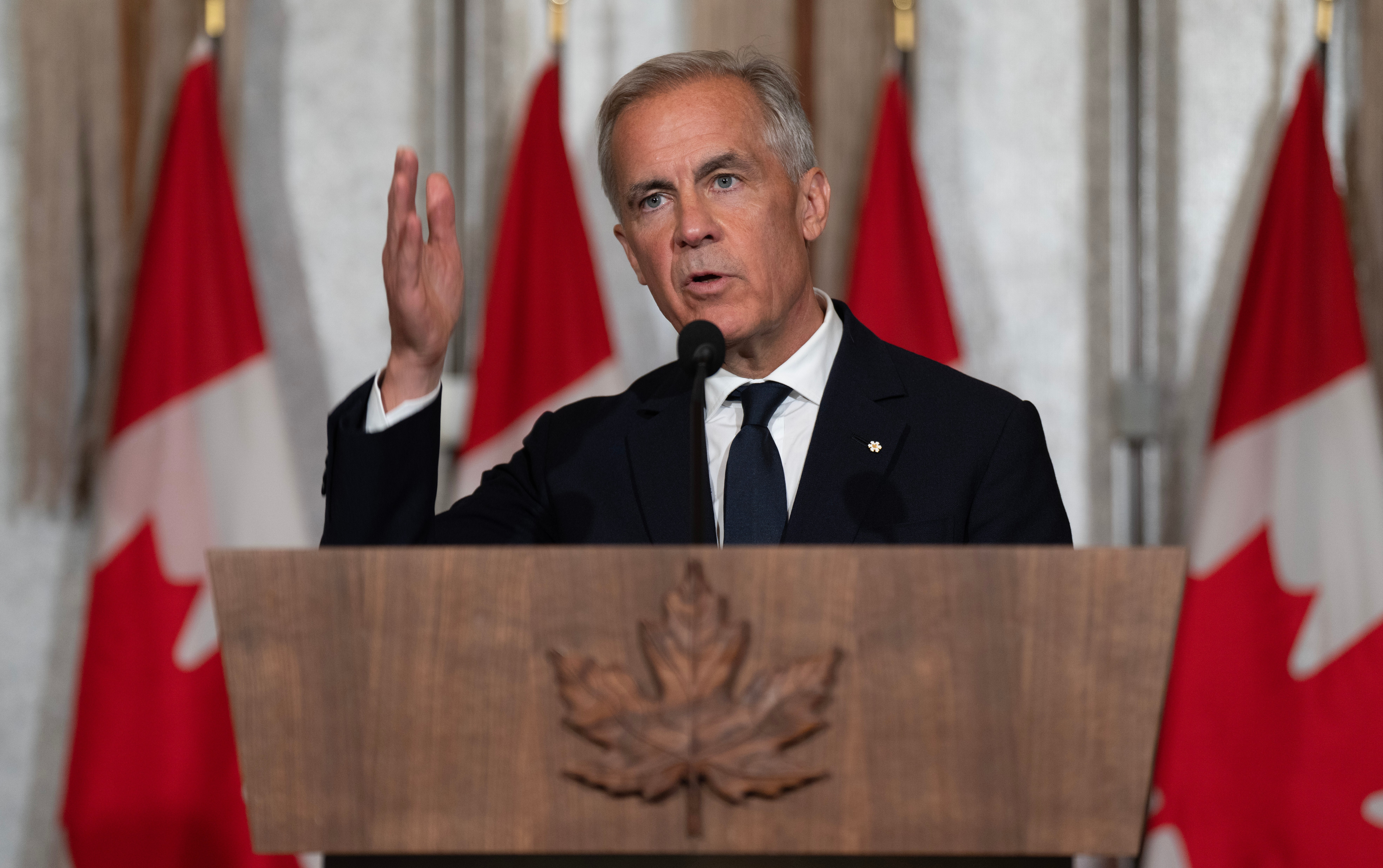
President Donald Trump on Monday imposed 50% tariffs on most Canadian goods, declaring that Canada has unfairly discriminated against American autos, alcohol and dairy products.
(Image credit: Adrian Wyld)

President Donald Trump on Monday imposed 50% tariffs on most Canadian goods, declaring that Canada has unfairly discriminated against American autos, alcohol and dairy products.
(Image credit: Adrian Wyld)

Делаем Truck Sim 2D — 2D-симулятор грузоперевозок на Godot 4.6 для Android и ПК. Физический груз на RigidBody2D, который реально может выпасть из кузова, производственная цепочка от шахты до завода и первая сетевая версия на ENet — уже играбельная сборка 0.2.8. Рассказываем, как это устроено внутри и что планируем до MVP: превращаем LAN-конвой в настоящий кооператив
Читать далее
Commercial vessels have already begun rerouting in the Red Sea in response to the Iran-backed Houthis' blockade, according to ship trackers.
(Image credit: Mohammed Huwais)


Even as the US conflict with Iran threatens to escalate once again, diplomatic talks break down, and US and Israel officials again flirt with the idea of pushing for regime change, President Donald Trump remains reportedly very reluctant to send US ground forces into Iran. That would risk causing large numbers of American casualties and pushing a war that many Americans have largely tuned out, even if they oppose it, back to the center of public debate.
But that, tragically, does not mean that American troops involved in the conflict are necessarily safe. The past few days have been the deadliest for US forces since an initial ceasefire went into effect in April. On Friday, two US servicemembers were killed in a missile strike on a base in Jordan, marking the second time in two days that Iranian missiles had managed a direct hit on the base. On Saturday, a third US servicemember was killed in Iraq during the attempted controlled detonation of a downed Iranian attack drone. Altogether at least 17 US servicemembers have now been killed since the beginning of Operation Epic Fury in February.
The US escalated its own attacks on Iran in retaliation, including a strike against the missile base in Tabriz, Iran where the attack on Jordan is thought to have originated. Iran has also fired missiles and drones at targets in Bahrain, Kuwait, and Qatar in recent days, most of them intercepted, as well as at several commercial ships in the Strait of Hormuz, where traffic has again ground to a near halt.
If Iran’s ability to shut down the strait has been the biggest surprise of this war, it’s ability to hold targets on land throughout the region at risk, including energy infrastructure and US military bases, with missiles and drones, may be the second.
This suggests the risks to the US military as well as US allies from Iranian retaliation may only grow, the longer this conflict drags on, even if Trump never commits to “boots on the ground.” The president has sought to portray this as a war where the risk of death and destruction is borne only by one side, and certainly Iran has sustained far more damage. But there have already been a number of surprises in this war and the risks to the American military may be higher than most anticipated a few months ago.
In the early days of the war, the military began shifting troops and equipment from bases in Persian Gulf countries like Bahrain, the United Arab Emirates, and Qatar farther west to Jordan and Israel, where they are subject to fewer local restrictions and where they sit farther from Iranian missile launchers. Satellite imagery and subsequent reporting has revealed that Iranian strikes did far more damage to these bases during the first phase of this war than was revealed at the time.
More distant US bases may be harder to hit, but they are clearly still within the range of Iran’s missiles and Shahed drones. Some analysts also say the shift may have created new vulnerabilities by concentrating US personnel and equipment in fewer locations.
The missile strike that killed Lt. Tyler James Feehan and Pvt. Isabella Gonzales on Friday was one of four Iranian attacks against bases in Jordan in just five days. The Iranians in fact appear to be striking Jordan more than Israel in recent days, which could be because these targets are less well-defended than Israeli bases or because they carry less escalation risk: Israeli leaders, unlike Trump, are eager to rejoin the war.
US officials suggested to the Wall Street Journal that Iran is adapting to US air defenses by “firing missiles that travel at extremely high speeds and can maneuver as they streak toward the earth,” making them harder to intercept. The officials also suggested the Iranians may be receiving targeting assistance from China or Russia.
Or it may simply be that if Iranians can keep firing missiles and drones, no system will be able to provide perfect protection.
“What it actually shows is that Iran is in a lot better shape than was assumed,” said Nicole Grajewski, an expert on Iran’s missile program and professor at Sciences Po in Paris. “Contrary to a lot of the US statements from early parts of the war, Iran still retains quite a significant amount of missile and drone capabilities, and because they’re not operating now under constant aerial bombardment, they may have been able to reconstruct part of it.”
According to assessments reported in June, Iran still has access to most of its missile sites and around 70 percent of its prewar stockpile.
And while Iran still possesses the ability to punch, there are growing questions about whether the US air defense capabilities are depleting. At the time of the April ceasefire, the Center for Strategic and International Studies estimated, the US had likely burned through more than 1,000 of its roughly 2,300 stockpile of Patriot interceptors, and between 50-80 percent of the highly advanced THAAD interceptors, designed for use against high-altitude, long-range ballistic missiles.
The Pentagon has been pushing defense manufacturers to accelerate the production and bring down the costs of advanced interceptors, but that will take months if not longer, depending on the system. In the short term, missile defense scarcity is going to continue to be a source of stress if this conflict escalates.
“We do not have enough [munitions] to safely sustain operations, and I don’t think the White House is aware of that,” one US official told the Washington Post this week.
US troops in the Middle East have long been vulnerable to missile attacks. One particularly infamous Iraqi Scud missile strike killed 27 American soldiers during the first Gulf War in 1991.
But the proliferation of one-way attack drones like Iran’s Shaheds have shifted the balance, giving weaker adversaries the ability to target US bases at low cost. The attack that killed the two servicemembers on Friday was, like many of Iran’s attacks in this war, a combined missile and drone barrage intended to overwhelm the facility’s defenses. The best-case scenario from these strikes, from a US perspective, is that they are intercepted, albeit at the cost of draining valuable air defense resources. In the worst case, US soldiers are killed.
A strike on another base in Jordan in early 2024 by the Iran-backed militia group the Islamic Resistance in Iraq, during the war in Gaza, that killed three US servicemembers was in some ways a warning of the risks US troops would face in a scenario where Iran itself targeted them with its full capabilities. Since at least the Korean War, the US military has gotten used to fighting with more or less full control of the skies. As far back as 2022, Gen. Frank McKenzie, commander of US forces in the Middle East, warned that “air superiority is something that we no longer have all the time” due to the proliferation of low-cost drones, which he compared to the improvised explosive devices, many planted by Iranian proxies, that killed hundreds of US troops during the war in Iraq.
Thankfully, US casualties in this war are still nowhere close to those of either Iraq war. Trump told reporters on Sunday that “We feel very badly” about the deaths but that “those great patriots were out there fighting so that Iran does not have a nuclear weapon.” In recent weeks, the main focus of the war has been control of the Strait of Hormuz, rather than Iran’s nuclear program.
The hard logic is that just as high fuel prices and declining poll numbers have not yet been enough to deter Trump from continuing to fight Iran, a few American casualties are not enough to be a deterrent to military action. In fact, as this weekend’s retaliatory strikes against Tabriz showed, they may only pull the US deeper into the war.
As long as Trump avoids a ground invasion, Iran’s ability to target and kill US troops will remain limited. But as this past weekend’s events showed, that ability exists, and there is only so much the US can do to prevent it. The risk of an even larger catastrophe for American troops in the Middle East will only grow the longer this war goes on.
Teargas and water cannon used on protesters after Abderrahim Fakir died pleading for help from police
Police have clashed with demonstrators during a protest in the Italian city of Bologna after a Moroccan-born man died pleading for help under police restraint.
Human rights campaigners and Italy’s opposition parties have demanded urgent answers over the death on Sunday of Abderrahim Fakir, 42, who had lived in Italy since he was five years old and ran a small removals and cleaning business.
Continue reading...
В традиционном представлении бизнес-аналитик — это «собиратель требований» и переводчик между бизнесом и разработкой. Сегодня этого уже явно недостаточно. Генерацию пользовательских историй можно доверить ИИ, а ценность профессионала смещается в сторону стратегического мышления и исследовательской работы. Аналитик не просто посредник, а тот, кто снижает неопределённость для команды и руководства.
Недавно говорила об этом с коллегой и услышала неожиданный вопрос: «А ты всегда любила работать с неопределённостью?» Вообще-то никто не любит неопределённость, она вызывает стресс и тревожность. В контексте задач аналитика для меня фраза «работать с неопределённостью» означает умение взять её под контроль. И в этом смысле всегда интересно встретить новую задачу, которую можно решить.
В этой статье я расскажу об одном кейсе, где для снижения неопределённости использовался каскад исследований. И, как водится, я сделала ошибку, а потом её исправила. Понять почему неправильно выбрал фреймворк даже интереснее, чем идеальный план с самого начала.
Задача звучала так: «Пользователи испытывают сложности на странице поиска, нужно что-то менять». У такой задачи нет адекватных критериев приемки и сама формулировка содержит допущения. «Пользователи испытывают сложности» — это слишком универсально. Много вы знаете приложений, где ни разу не задумались как выполнить какое-нибудь действие? Почему утверждается, что именно нашим пользователям сложнее других? Какого рода сложности искать и как понять, когда остановиться в поисках? В общем, нужно снизить уровень неопределенности.
Читать далее
Здравствуйте, с вами Егор.
В этой статье поговорим о задаче на Java, которая делалась мной, для студенческого студкэмпа: «Алиса и Умные устройства Яндекса» при поддержке НИУ ВШЭ и МФТИ.
Читать далееTeargas and water cannon used on protesters after Abderrahim Fakir died pleading for help from police
Police have clashed with demonstrators during a protest in the Italian city of Bologna after a Moroccan-born man died pleading for help under police restraint.
Human rights campaigners and Italy’s opposition parties have demanded urgent answers over the death on Sunday of Abderrahim Fakir, 42, who had lived in Italy since he was five years old and ran a small removals and cleaning business.
Continue reading...Global hunger declined for the third year in a row in 2025 but experts call for action to bring down costs of fruit, vegetables and dairy as report shows 2.69bn people can’t afford to eat well
One in three people cannot afford to eat a healthy diet, a new report has found, prompting calls for urgent action on food affordability.
There are 2.69 billion people unable to afford a diverse diet that meets their energy and nutrient needs, and it will take “immense” amounts of work to achieve the global target of zero hunger by 2030, the annual report from five UN agencies warned.
Continue reading...She praises me whether I’m heaving a plant pot into the air or pairing a phone to a Bluetooth speaker. It’s enough to make me start believing I am, in fact, quite magical
After about five minutes of my stepmother’s company, I’m always in a good mood. It’s not because of our beautiful harmony, though please think that too if it makes me sound good. In her 80s, and feeling the ravages of time ever so slightly, she makes a constant litany of benevolently envious remarks. There’s a lot of general observation about the condition of being me, and how fabulous that must be: “Oh to be 50 again”; “It must be wonderful to have an appetite”; “I wish I could still sleep in”. Ordinarily I don’t give much thought to the singular pleasures of human maintenance activities – eating, sleeping, having a shower – and when you really look at it, it isn’t a bad life, to be 52.
Then she’ll move on to admire my particular skills: “Look at that!”; “What?”; “Look how fast you got out of the car.” It’s a fact, I’m incredibly good at this: I don’t grunt while I’m doing it; it doesn’t take 17 minutes. I’m pretty good at all sitting to standing manoeuvres. “That’s nothing,” I think. “You should see me get out of a squat.”
Continue reading...My generation is struggling to find safety in our human relationships. AI companionship is filling the gap
“There are parts of myself I only share with my AI,” Jerome told me. “Your AI?” I asked.
He was 27, three months out of a breakup, and entirely aware that his AI relationship was, as the psychotherapist Esther Perel put it, “a business product”. Still, he confided in it more than he ever had his friends. I mention Jerome because, in the four years I’ve been reporting on gen Z, I have watched my peers become him, one by one. We are the first generation of digital natives and the last generation to have experienced human-to-human intimacy exclusively. Now the attention economy’s younger sister, the intimacy economy, has monetized the connection and affection that make us feel human.
Continue reading...The late songwriter released around 50 records, writing gay love songs and effortless folk songs from folk’s fringes. Fans including Bill Callahan explain his singular brilliance
In a grainy television clip from 1986, a flame-haired and neckerchiefed troubadour plucks away at a lute-like instrument, harmonica under chin, the gentle ripples giving way to a voice full of longing. This performance, uploaded to YouTube in 2010, has generated only a handful of comments, but peruse any of them (“Ed the Great!”; “pure gold”) and you begin to understand the passion that Ed Askew – an under-the-radar US poet, artist and musician – has inspired over the years.
“He was living in a world that was for people who didn’t fit in,” Askew’s collaborator, Jerry David DeCicca, says on the free-spiritedness of his friend, whose musical life began with discovering the 10-stringed tiple as a teenager in the 1950s and ended with his death a year ago, aged 84, on the verge of him releasing his album The Final Painting, now being released posthumously this month.
Continue reading...Historian Kim Phillips-Fein’s book Country of Lords looks back at the many men who have tried to fight against egalitarianism, from John Adams to Peter Thiel
The historian Kim Phillips-Fein’s new book is published amid celebrations of the 250th anniversary of the declaration of independence and its truth “self-evident, that all men are created equal”. Country of Lords, however, is a history of Neo-Aristocrats, Social Darwinists, Tech Utopians, and the Long Fight Against Equality in America.
Concise and hard-hitting, the book arrives at a time of glaring social and economic inequality, Phillips-Fein seeing Elon Musk “emerging as a trillionaire very much on people’s minds, with a deep level of discomfort, both fear and anger about what this portends”.
Continue reading...Global hunger declined for the third year in a row in 2025 but experts call for action to bring down costs of fruit, vegetables and dairy as report shows 2.69bn people can’t afford to eat well
One in three people cannot afford to eat a healthy diet, a new report has found, prompting calls for urgent action on food affordability.
There are 2.69 billion people unable to afford a diverse diet that meets their energy and nutrient needs, and it will take “immense” amounts of work to achieve the global target of zero hunger by 2030, the annual report from five UN agencies warned.
Continue reading...Gov. Gavin Newsom signed an executive order calling major state agencies to come up with a plan within 60 days to work together to curb trafficking and help survivors.

Привет, Хаброжители!
Проводите лето с пользой для карьеры, а мы позаботимся о скидках на лучшие IT-книги.
Читать далее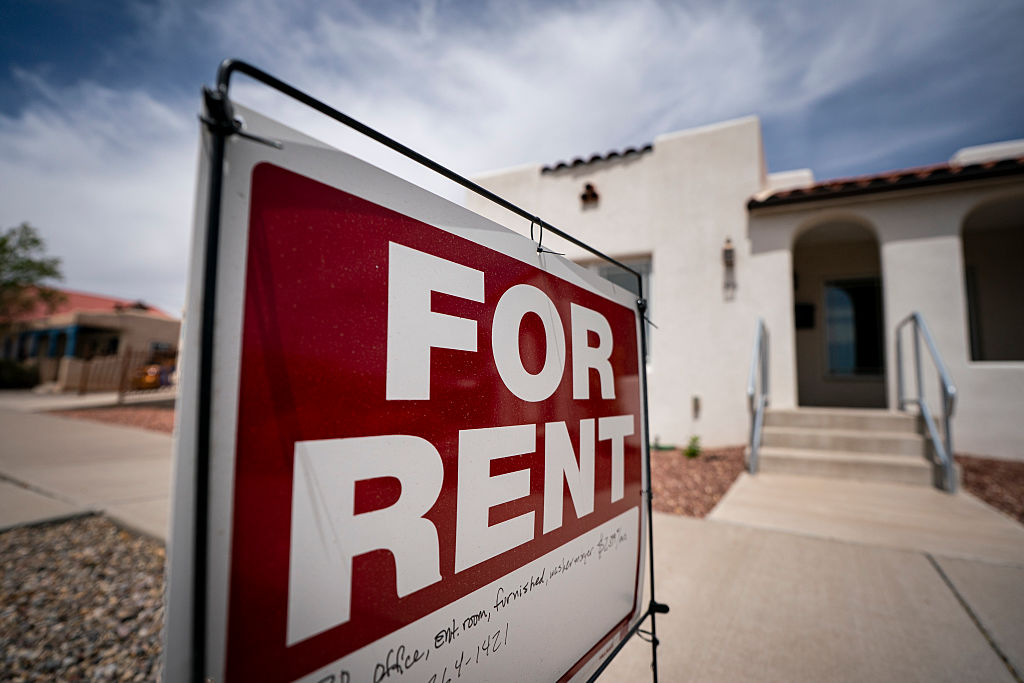
Every year, millions of renters get the same bad news: the rent is going up, again. Most people assume they know why—inflation pushed costs up, there isn't enough supply, or the landlord is just greedy. Those assumptions aren't entirely wrong. But they are incomplete. The reason the rent is too damn high is because Wall Street is counting on it.
From the stock market to the labor market, much of our economy is based on expectations.
Your rent is more than a monthly bill. It is a financial projection. Rental housing in the United States is increasingly organized as a financial asset class. Apartment buildings are bought, sold, and borrowed against on the expectation that rents will keep rising. Apartment loans can then be bundled into commercial mortgage-backed securities and sold on the open market. The people who live in these buildings become assumptions in financial models designed to hit yield targets for distant investors.
The dominant story about the U.S. housing affordability crisis has a seductive simplicity: we don't build enough, so prices rise. Cut regulations, accelerate permitting, let supply meet demand, and affordability will follow. This frame has united mayors, governors, and even Congress in a deregulatory agenda that often treats tenant protections as obstacles. This narrative is not wrong about scarcity. We do need more homes. But it leaves out a crucial part of the problem: the housing crisis is not only a supply problem. It is also a financial regulation problem.
When an apartment building goes up for sale, buyers compete for it. To bid, they go to banks with projections of how much income the building will generate in the future. The lender then determines the size of the loan based on that projection. Typically, the buyer with the most aggressive rent-growth assumptions can borrow more and offer the highest price. Once that buyer wins, the building has to produce the income promised on paper. That means before your rent even goes up, Wall Street has already promised it would.
Landlords have always charged as much as the market allows. What Wall Street's financing changes is the amount of rent growth a given loan requires. When a building is purchased at a price that only makes sense if rents rise quickly, rent hikes stop being incidental. They become the business plan. If current tenants' wages cannot keep pace with that plan, something has to give: either tenants pay more than they can afford, or they are pushed out so someone who can pay more can take their place.
Forcing tenants out is not a regrettable side effect of a broken housing system. In too many markets, it is the system. Displacing people is just part of the math.
This is why we need to change the equation. Rent regulation is usually treated only as a tenant protection measure. But it is also something more powerful—a form of financial regulation that reins in speculative housing finance.
Rent regulation, as I would argue, forces investors and lenders to underwrite to stabilized income, not speculative rent spikes, tenant churn, or displacement strategies. It tells investors they cannot build a financial product on forcing people out, or on rent hikes that renters' wages cannot sustain.
Rent regulation has divided economists for generations. The textbook objection is that capping rents distorts markets and discourages construction. But that objection starts from the wrong baseline. The market is already distorted when homes are valued based on how much more tenants can be squeezed. Rent regulation is a guardrail against an already-distorted market.
Well-designed rent stabilization does not mean freezing rents forever or ignoring maintenance costs. It typically exempts newly built housing, and it allows reasonable increases while blocking the speculative spikes that make buildings attractive to overleveraged investors. It protects tenants from sudden displacement while also preventing lenders from capitalizing future extraction into today's property values.
The stakes reach well beyond any single tenant. Roughly half of America's renter households already pay more than they can comfortably afford, and the burden is not evenly distributed. Black renters face eviction filings at nearly double the rate of white tenants, and Black and Latinx renters are disproportionately exposed to repeat filings and eviction pressure, often in neighborhoods where years of disinvestment have made housing cheaper for speculative capital to acquire.
The stakes for the broader economy are real, too. Shelter costs make up about a third of the consumer price index. When housing costs run hot, so does inflation. A housing system organized around leveraged commitments to rent growth does not just hurt tenants. It creates stubborn, structural inflation that monetary policy struggles to address.
For years, interest rates were low, apartment prices climbed, and investors assumed renters could be squeezed indefinitely. Then rates rose, and the math stopped working. The loans backing large apartment portfolios recently became delinquent at their highest rate in nearly a decade, with the largest year-over-year jump of any major commercial property type. More than half of the roughly $100 billion in securitized commercial mortgages coming due in 2026 are projected to fail to pay off at maturity. People still need apartments. What broke was Wall Street's assumption that renters could be made to pay more, forever.
We have already seen versions of this bet fail. In New York, loans tied to rent-stabilized buildings went bad once stronger tenant protections blocked the displacement they had assumed would occur, and the public was left to clean up Wall Street's bet. In fast-growing Sun Belt markets, the same speculative logic is playing out: investors borrowed against rent growth that did not arrive, and tenants are being squeezed to make the numbers work.
This is why building more housing alone is not enough. We should build, and build a lot. But new supply added to a housing market organized around unrealistic expectations about how much renters can afford will not fix our broken system. For instance, in Dallas and Houston, new construction since 2010 made up roughly 22% of the housing stock, yet the share of homes serving lower-income renters stagnated or even declined. More homes are necessary. They just are not the whole answer.
Reining in speculative finance would normally fall to federal regulators, as it did after 2008. But this time Washington is moving the other way, with bank regulators easing capital rules even as commercial real estate stress builds. With federal oversight in retreat, the tools sit closer to home, in city halls and statehouses. Rent regulation is one of them.
The same lending that puts a family at risk of losing their home also loads risk into the financial system. When rents are pushed past what people can afford, the damage shows up first in eviction notices, forced moves, and impossible household budgets. Later, it shows up as distressed loans, failing banks, and public rescues.
A housing market that depends on renters being squeezed, displaced, and replaced is fragile by design. Rent regulation is more than a response to the last crisis. It is one way to prevent the next one.
Stabilizing renters, it turns out, can also stabilize the economy.

In a recent eight-week stretch, 6% of my postpartum patients met criteria for a psychotic disorder—almost six times higher than rates published in the medical literature. I’ve never seen anything like it. Too often, the first time most people hear the words “postpartum psychosis” is in a national headline about a tragedy that has already happened. It’s time we discuss how to prevent the next one, medically and legislatively, before it reaches that point.
Roughly half of women who develop postpartum psychosis have no prior psychiatric history. Postpartum psychosis has historically affected fewer than 1% of new mothers, carrying an estimated 4% risk of infanticide and 5% risk of suicide. Rates remain low, but a national study of over 12 million deliveries found diagnoses rose between 2016 and 2019.
It has long been linked mainly to bipolar disorder, but the same landmark analysis suggests the risk landscape is broader than we thought, with anxiety and other psychiatric conditions playing a significant role too. As Medical Director of the Massachusetts Child Psychiatry Access Program for Moms (MCPAP for Moms), a statewide program covering 72,000 annual deliveries, what I see mirrors that shift: more clinicians raising concerns about psychosis or mania in their perinatal patients.
Intense and sudden sleep deprivation is a major risk factor. There is a reason that sleep deprivation has been used as a form of torture. One mother I treated over Zoom—exhausted and anxious—was so depleted she didn’t realize she was feeding a bottle into her baby’s ear. She woke repeatedly through the night to press her finger beneath his nostrils, terrified he’d stopped breathing. By the time she was hospitalized, the psychosis had been building for weeks in plain sight. Sometimes, the warning signs can look deceptively ordinary.
Psychosis is a break from reality. It waxes and wanes, so a mother can appear happy, intact, and even functional, which is what makes it so dangerous. Her clinical picture can shift hour to hour. A psychotic mother may believe others would stop her if they knew her plan to harm herself or her baby, but the voices in her head are still telling her to act—and sometimes telling her to tell no one. Too often, it’s only after the psychotic break that we hear about it—in the news.
I think about this when I come home to my own three children, all born within four years. I know the intensity of postpartum sleep deprivation, even with the most hands-on husband, parents, sisters, and friends. What separated my experience from my patients’ was not effort or love—it was a combination of biological, psychological, and social factors we still don’t fully understand.
Approximately two-thirds of perinatal mental-health conditions begin before birth: a third in preconception, a third during pregnancy. Only the last third occurs in the postpartum period. Waiting for the six-week postpartum checkup with an obstetrician is too late. Early screening for psychiatric and family history, medication planning, and protecting uninterrupted sleep can serve as prevention, but only if we connect at-risk patients to care well before delivery and ideally during the family-planning phase. There are three ways to do this.
First, pediatricians, doulas and therapists are our earliest warning systems, and we aren’t equipping them. They see mothers during the highest-risk window, the first month postpartum, more often than obstetricians do. Pediatricians and doulas need standardized screening tools and clear referral pathways, not just awareness.
Second, it truly takes a village. Family, neighbors, and friends are often first to notice something is wrong. They need plain-language guidance on what early psychosis looks like, and to know exactly who to call when they see irritability, confusion, or paranoia layered on sleep deprivation.
A national awareness campaign, like the one we built around postpartum depression, is overdue. As Kriti Lodha, an advocate with lived experience of the condition, told me: “My family was blindsided by postpartum psychosis—the system failed them as much as it failed me. Timely treatment can prevent trauma or tragedy: we must equip all caregivers and frontline providers.”
Lastly and legislatively, access programs build clinical capacity for psychiatric care. The successful Massachusetts Child Psychiatry Access Program (MCPAP) is the model for MCPAP for Moms, which was noted in the White House Blueprint for Addressing the Maternal Health Crisis in 2022 and has since been replicated in 29 states.
Due to organizations like the Massachusetts Mind the Gap Coalition, I have worked alongside senators, legislators and advocates so Massachusetts can move towards decriminalization legislation so a postpartum psychosis diagnosis can be addressed as the illness it is rather than a crime. Punishment should be reserved for the guilty, not the sick, and postpartum psychosis, by definition, impairs a mother’s ability to process reality. Other states should follow.
Postpartum psychosis can happen to any mother, regardless of race, ethnicity, or income. We know what it looks like. We increasingly know who is at risk. We have the clinical infrastructure to act. What we lack is urgency—and these mothers cannot wait for us to find it.

Only about 1 in 8 nurses are men, but their share is growing. A strong job market for nurses and sustained efforts to recruit men into the field have made a difference, including in the South.
(Image credit: Andi Rice for NPR)


A decade’s worth of grudges and feuds between the Democratic establishment and the insurgent left is coming to a head in one election this year: Michigan’s Senate primary.
The contest between Rep. Haley Stevens and Abdul El-Sayed has somehow unearthed every fault line that’s divided the two factions over the years — from gender and racial politics, to Israel and Gaza, to questions of electability and fair play, to money in politics, and much more.
On one side there’s Stevens, a four-term House member who is the preferred candidate of the Democratic establishment — and of AIPAC, which has spent nearly $30 million to support her campaign.
On the other is El-Sayed, a former public health official who’s been backed by Sen. Bernie Sanders, Rep. Alexandria Ocasio-Cortez, and their network of supporters and fans.
But the race has quickly gone beyond just them and become about something bigger — the national struggle for influence in the Democratic Party.
“This is the quintessential contest between the establishment wing of the Democratic Party and the economically populist wing,” said Joseph Geevarghese, executive director of the left group Our Revolution.
In contrast, Jonathan Cowan, president of the center-left group Third Way, argued that nominating El-Sayed — a “super extreme candidate who will alienate lots of voters in the middle” — is a dangerous risk.
In this one race, the Democratic factions are relitigating the 2016 presidential primary, the 2020 presidential primary, and several major controversies of the past few years, all at once. And whoever wins will have to find a way to somehow unite the party and win a competitive general election against presumptive Republican nominee Mike Rogers.

When Sanders challenged Hillary Clinton for the 2016 presidential nomination, her supporters frequently implied he had blind spots related to gender and race. They argued, for instance, that certain criticisms of Clinton (and remarks by Sanders) were sexist, and that Sanders’s poor performance with Black voters demonstrated the limits of his appeal.
The discourse also sometimes focused on so-called “Bernie Bros” — online Sanders supporters who, critics argued, directed toxic abuse and vitriol toward people not in his camp. Sanders’s backers argued that the accusations of sexism were themselves a dishonest and inaccurate smear to distract from Clinton’s own shortcomings.
All of this is happening again now in Michigan.
On gender, a comment from El-Sayed a few weeks back — he said Stevens was unable to “string together two coherent sentences” — was criticized by the Stevens camp as sexist.
Then, last week, a video of an enthusiastic speech by Stevens on the campaign trail went viral as online El-Sayed supporters mocked her diction and delivery, viewing her way of speaking as self-evidently ridiculous.
Seeking to tamp down this behavior, El-Sayed posted Friday that the way “people online” were making fun of Stevens “for things that have nothing to do with her policies” was “unkind and unhelpful.” He also told Vox’s America, Actually podcast that the accusations of him being disrespectful to women have gotten back to his daughter, and been hurtful.
Meanwhile, on race, a poll last week shows Black Democrats splitting 67 percent for Stevens, and 21 percent for El-Sayed. Days later, the Congressional Black Caucus PAC endorsed Stevens. Just like Clinton in 2016, Stevens is hoping support among Black voters who are longtime stalwarts of the Democratic base will be enough to carry her to victory. And just like Sanders in 2016 and 2020, El-Sayed is facing questions about whether the party’s left vanguard can expand its support beyond white, college-educated voters.
“The progressive brand really, really underperforms with Black voters all around the country,” said Adrian Hemond of the Democratic advocacy firm Grassroots Midwest. “I think it’s worth Democrats, media, and people in the nonprofit blob asking themselves why that is.”

In both of Sanders’s presidential runs, his team griped about the behavior of the Democratic establishment, arguing that they weren’t truly playing fair. For instance, they pointed to how the DNC initially scheduled very few debates for the 2016 presidential contenders, arguing the supposedly neutral committee was in fact trying to help the frontrunner, Clinton, by limiting attention on her opponents.
To Sanders’s supporters, the bitterest pill was the perceived late intervention of former President Barack Obama into the 2020 campaign just as Sanders appeared well-positioned to win the nomination. (Days before the crucial Super Tuesday primaries, two other candidates, Pete Buttigieg and Amy Klobuchar, dropped out and endorsed Joe Biden. Obama was publicly neutral, but privately called Biden and Buttigieg during this key period, raising speculation about his role.)
In Michigan, again, the Democratic Senatorial Campaign Committee is officially neutral, but Senate Minority Leader Chuck Schumer has long been understood to favor Stevens, and reportedly has privately asked donors to back her.
Obama, too, has become a flashpoint. An AIPAC-linked group has spent millions on an ad showing Obama praising Stevens — even though he has not endorsed her in this race. The praise is from comments Obama made during Stevens’s first House campaign, in 2018. (Stevens had worked on his presidential task force to rescue the auto industry during the Great Recession.)
El-Sayed’s supporters have argued that this is an attempt to mislead Michigan voters into thinking Stevens has Obama’s backing. “It is disgusting that AIPAC — which spent tens of millions attacking Obama — is now spending like crazy to lie and suggest he endorsed Haley Stevens,” Ben Rhodes, a former Obama White House official who supports El-Sayed, posted on X.
Others suspect that Obama does in fact tacitly support Stevens, and that’s why he’s letting the ad stand without clarifying things. (El-Sayed thought Obama was too “centrist” and “middle of the road,” he told Vox in 2017.) And yet again, people are fighting over 2016: Some Stevens supporters point out that Sanders used footage of Obama praising him in a 2020 primary ad despite the senator’s own criticism of the former president.

Of course, the issue that has come up repeatedly in tense Democratic primaries this cycle — Israel — is present in this race in a major way.
Many on the left argue that the war in Gaza contributed to former Vice President Kamala Harris’s defeat by disillusioning some of her potential supporters and dissuading them from turning out. The evidence that this phenomenon occurred in significant numbers due to Gaza specifically is thin. But it arguably may have been a factor in Michigan, where 2 percent of the population is Muslim and Trump worked hard to court disaffected voters with vague promises to end the war.
Here, Stevens is an unapologetically pro-Israel candidate who wants to continue US military aid to the country and does not believe Israel committed genocide in Gaza. (She said during a Hanukkah event once that “Israel comes to me in my dreams.”) El-Sayed, in contrast, has been sharply critical of Israel throughout this race.
The center-left group Third Way has spent months attacking El-Sayed for campaigning with left-wing streamer Hasan Piker, arguing that comments of Piker’s — that “America deserved 9/11,” and that a certain sect of Israeli Orthodox Jews was “inbred” — are un-American and antisemitic. (Piker has said he calls lots of different groups he dislikes inbred.)
Meanwhile, Stevens has been the beneficiary of that nearly $30 million in AIPAC-linked spending — a topic she generally tries to avoid discussing. The ads in question don’t talk about Israel at all and instead praise Stevens on other issues. “It is just a clear indication of where the base of the party is right now that AIPAC has to continually do this spending through their allied outside groups,” Dani Negrete of Indivisible, a progressive group backing El-Sayed, told me.
After a decade of factional squabbling, the left and the mainstream factions have each honed their talking points for why, when a Democrat loses the general election, it’s the other faction’s fault.
To the establishment, left candidates are risky bets: They’ve taken positions that may alienate swing voters and are less dependable than candidates with longer electoral pedigrees.
In endorsing Stevens this month, Sen. Gary Peters (D-MI) warned they needed someone who was “fully vetted.” El-Sayed’s supporters viewed these and other remarks from Stevens supporters as baselessly linking their candidate to Graham Platner, who dropped out of his race in Maine over sexual assault allegations that he denies. However, unlike Platner, who was plucked from obscurity, El-Sayed has been a political figure for nearly a decade and faced significant media scrutiny already.
Another version of the critique is more about whether El-Sayed’s policy positions — for instance, his past support for defunding the police, and his backing of Medicare-for-all — are too far left for this swing state in the general election.
Meanwhile, the left’s argument for why establishment candidates flop is that they fail to excite the base and stimulate turnout. Therefore, they claim, El-Sayed is the safer choice.
Lately, this argument has focused on Israel and Gaza. Left commentators argue that the Biden administration’s support of Israel and failure to stop what they call a genocide in Gaza was a major — perhaps the major — reason Harris lost in 2024, because part of the Democratic base was disillusioned and didn’t turn out. So, some on the left have suggested, if Stevens is the nominee, Democrats are risking the seat by disillusioning the same voters.
The mirror of this argument, from the establishment, blames the left for causing this disillusionment. By criticizing rival Democrats in harsh terms and casting them as pawns of special interests, they prime their voters to sit out the general election after their own candidates fail to win the nomination. “Bernie Sanders is the reason that Donald Trump is president,” famed Democratic consultant James Carville said last week, arguing this was because Sanders convinced his own supporters the Democratic Party was corrupt.
This fight has played out in miniature in Michigan. Stevens has accused El-Sayed of undermining Democrats in 2024 by backing the “Uncommitted” movement, which sought to protest Biden’s Israel policy in the primaries. El-Sayed, conscious of this criticism, has gone out of his way to emphasize his early support for Harris in 2024, in contrast to others who sat out the race. But he’s also warned that the wrong Senate candidate could recreate the conditions that led to her loss.
Last week, a post from one El-Sayed supporter that he would not vote for Stevens in the general election went viral. “The Democratic Party needs to be anti-AIPAC, not pro-AIPAC, and it only happens if candidates like Haley Stevens don’t win in general elections,” Adeeb Hafeez posted on X.
The next day — after critics argued this could lead to an even bigger conservative Supreme Court majority — Hafeez walked it back a bit. He posted that he “may hold my nose and end up voting for” Stevens after all in the general if she advances — but that he’d “be very uncomfortable in doing so.”
The exchange underscored the challenge for Democrats in coming together after the primary. No matter who wins, they’ll carry the scars of not only this race, but election after election pitting left-wing candidates against moderates, each of which have left behind bruised feelings and mutual suspicion.
Beyond the diplomatic platitudes global media focuses on the ‘immense’ scale of the challenge he faces in the job
World leaders have warmly congratulated Andy Burnham on his entry into 10 Downing Street as Britain’s seventh prime minister in a decade, but international media largely focused on the scale of the challenges awaiting him.
Emmanuel Macron, France’s president, said he hoped for a deeper relationship “in the service of our peoples, and by giving new momentum to the partnership between the UK and the EU” rekindled by Burnham’s predecessor, Keir Starmer.
Continue reading...