Runcorn MP Sarah Pochin says parliament mounting ‘vicious and desperate campaign to stop Reform UK’
A Reform UK MP has complained that the standards system investigating Nigel Farage over undeclared gifts is a “kangaroo court”.
Sarah Pochin, the Runcorn MP, said Farage had called a byelection in his Clacton seat so voters could decide whether they backed him or not, and argued that “the media, the British state and the old parties have mounted a vicious and desperate campaign to stop Reform UK”.
The prolific retail investor, which last month won approval for a deal to avert the collapse of WHSmith's former high street arm, is weighing a bid for Harvey Nichols, the upmarket department store chain.
Demonstrators march during a protest against AI data centers in Vancouver, British Columbia. | Ethan Cairns/Bloomberg via Getty Images
AI was supposed to make our lives better. Instead, it’s made many of us scared and angry. Communities are protesting against the building of new data centers — the warehouses of IT equipment powering the AI buildout — across the country, and increasingly they’re winning. And polling shows most Americans think AI is moving too fast.
So how did public opinion on AI curdle so quickly? Jasmine Sun, who reports on the industry from San Francisco, argues that the backlash treats AI less as a technology and more as a political project. “The debate was not about like, is ChatGPT useful to me?” Sun told me during a taping of Vox’s The Gray Area. “The debate was actually something more like, there are these big corporations and unaccountable billionaires…coming into my city, coming into my life and changing it without having any sort of democratic input?”
Filling in for Sean Illing, I talked to Sun about the rise of “AI populism,” the parallels with the Industrial Revolution, and how the backlash could crash into the 2028 presidential election.
As always, there’s much more in the full podcast, which drops every Monday, so listen to and follow us on Apple Podcasts, Spotify, Pandora, or wherever you find podcasts.
You’ve been writing about a phenomenon you call AI populism. How would you define that? What is AI populism?
I define AI populism as a worldview where AI is not seen as an ordinary technology, but specifically as an elite political project to be resisted. I came to the term while thinking about the AI backlash and the reasons people are increasingly anti-AI — whether that’s LLM slop, whether that’s Waymos in their city, whether that’s a new data center project. One thing that occurred to me was that a lot of times the debate wasn’t about whether ChatGPT is useful to me, or whether Waymos are safer than a human driver. The debate was actually something more like: There are these big corporations and unaccountable billionaires who are coming into my city, coming into my life, and changing it without any democratic input.
When I talk to people who are opposing AI in various ways, they seem more concerned with this concentration-of-power, anti-elite dimension — which is where I take the word “populism” — rather than classic AI safety concerns, which are more about the technical characteristics that might introduce risk.
You wrote a piece that touched on some of this but went to a darker place — “AI populism’s warning shots” — and you wrote about actual shots. Sam Altman, the CEO of OpenAI, was targeted by a Molotov cocktail and a shooting within the span of a couple of days. There was an Indiana councilman who voted for a data center and woke up to gunshots at his home and a note reading “no data centers.” Why do you think of those incidents of violence as warning shots of something to come?
It was pretty scary. I’m no Sam Altman fanboy, but it’s terrifying that assassination attempts are showing up in response to people’s worries about AI. One factor is that we’ve been seeing a rising wave of political violence and support for political violence in the US, especially among young people, over the past few years — the UnitedHealthcare CEO shooting, the Charlie Kirk shooting. Increasingly, a lot of disaffected, maybe nihilistic young people are turning toward political violence as a way to express political beliefs they don’t feel they have other channels for. Or maybe that person is just unwell. But I do expect to see more of it, because my theory of political discontent is that if people feel they have institutional channels to bargain for their rights — if they feel the democratic process is working, or they’re part of a union and believe their union leader will go bargain about how automation shows up in the workplace — they’ll most likely go through those channels.
When it feels like the official channels aren’t working, opposition becomes much more diffuse and volatile. That’s part of why, in creative communities, you’ll see people witch-hunting each other over AI use. I think we’ll see more political violence against people seen as AI leaders, or as supporting AI leaders.
That’s really scary.
Yeah, I’m quite worried about it. But again, my sense is that it comes from a feeling of — what else is there to be done, when you have this level of concentration of wealth and power, and there’s no democratic input right now into how AI is regulated or built?
It’s like a jump straight from complaining at your community meeting about the data center to an act of violence.
I was talking to some friends about this. During the 20th century in the US, there was a wave of factory mechanization and automation, but unions were really strong — often when a company said, “We’re going to bring in these machines,” they’d sit down with the factory union leader and say, “Okay, you can bring in the machines, but we’re going to couple that with a wage increase,” or a 35-hour workweek, or earlier retirement. There was a channel to make a deal about how automation would show up in your workplace. That meant people were more likely to accept it as something lifting all boats. I don’t think that’s happening now — most of the industries affected by AI aren’t organized in labor unions, and the democratic channels are questionable at best.
It’s like when people have agency to be part of the transition, the process goes a lot smoother. Is there a historical analogy for a technological change that didn’t allow for input from the people involved? I’m thinking of the Luddites.
The Luddites are a good example. When the automated looms were introduced, there was a lot of violence against the looms. The book I’d really recommend here is Carl Benedikt Frey’s The Technology Trap. He’s an Oxford economist who studied a ton of historical examples — in Europe, in China, all over the world — including the Luddites and 20th-century automation. His central question was: In what contexts do workers successfully stop automation, and in what contexts do they allow it to be introduced? How does the political environment, or the balance of power between people and their leaders, change the outcome? He found that when automation was introduced alongside social welfare policies — a higher minimum wage, some form of redistribution — people were much more willing to accept it, which is fairly rational.
I want to talk about Silicon Valley’s understanding of this backlash more generally. You’re painting a pretty dark picture, and you’re right in the belly of the beast in San Francisco — I’m sure you talk to people involved with AI every day. Is there a moment when it clicked for them that this backlash is real and something they have to take seriously? Or has that happened yet?
I’ve definitely noticed a huge difference, over the past six months, in how seriously people in Silicon Valley take the AI backlash.
Like what?
People just talk about it more. I’d bring up AI populism to people last year, and they’d normally say, “It doesn’t matter — technology always introduces some discontent, people get annoyed but they get used to it, like the internet.” That was the standard reaction last year. Not anymore. I think part of the reason OpenAI and Anthropic have felt pressure to introduce economic policy proposals around job automation is that they’re seeing how worried people are. The data center moratoriums and the broader data center backlash have been surprising and meaningful in getting AI leaders to recognize they have both a messaging problem and an actual problem with the product and the technology they’re introducing.
A lot of the increasing opposition to AI in Washington has caused people to see this too. At first, Trump — as you mentioned — was very pro-AI. He and David Sacks were accelerationists; they wanted AI to go faster and to block attempts at regulation.
He was the AI czar.
“The moratoriums, the regulation fights, even the booing at graduations, the literal assassination attempts — people in Silicon Valley have become much more worried.”
He was the AI czar — he’s no longer the AI czar. But it turned out a lot of other constituencies, both on the left and the right, were pretty opposed. For example, Trump and David Sacks tried to introduce a big federal bill that would preempt all state-level AI regulation — no state could regulate AI for 10 years. They tried to sneak it into a big omnibus bill so no one would notice. But members of Congress realized it was happening, and — whether for kid-safety reasons or frontier-safety reasons — people said, Wait a second, the idea of preventing any state from regulating AI for ten years is crazy. A lot of people organized in Washington to successfully stop that preemption. I think that showed the scale and bipartisanship of a coalition that was very keen to make sure it stayed possible to regulate AI was underestimated. As a result of all this — the moratoriums, the regulation fights, even the booing at graduations, the literal assassination attempts — people in Silicon Valley have become much more worried.
China is our big competitor in the AI race, and it certainly has all the conditions for a populist pushback to AI — youth unemployment is really high, and AI technology is in some ways more advanced at taking over real-world jobs. I was watching a video about fully automated factories and a robot pharmacist. You’re one of the rare American tech reporters who gets to spend time in China, and you wrote a piece that surprised me — you found there wasn’t really a populist backlash to AI there. Why not?
I was really interested in this question, and I was finishing my New York Times piece while in China for a few weeks, talking to both AI people and non-AI people. The main reason there’s not a big populist backlash in China is that there isn’t a lot of social unrest or populist backlash against anything — the entire MO of the Chinese government, the No. 1 priority, is domestic social stability. Any whisper of protest gets shut down; that’s why they have such strong speech controls. So one factor is that China doesn’t have much of a culture of resistance in general, whether in workplaces or politically. I’m not saying no one dissents — but it has a cultural effect too, because people don’t see it as useful or as an option. When I ask family members of mine in China about AI, sometimes they’re annoyed about specific things, but fundamentally, the idea of opposing AI is seen as almost unimaginable.
The other thing about China is that if you’re middle-aged there, you’ve lived through so many political, economic, and technological revolutions in your lifetime. When I was a little kid visiting Shanghai in the mid-2000s, there were no high-speed trains — now China has some of the best high-speed rail systems in the world. Technology has always gone hand in hand with dramatic economic advancement, with being lifted out of poverty. The modernization process has been aggressive and disruptive, but it’s not something the party has offered opportunities to resist, and it’s something most Chinese people still see as an inevitability that was mostly good for most people — because incomes did increase by dramatic amounts alongside the technological change. So I think people have a similar attitude toward AI: It’s much less about “Can I stop the AI wave?” and more “How can I take advantage of the AI wave to get ahead economically?”
We were just talking about this deep pessimism about what technology can bring us here in the US. I think a lot of people look around and think: We don’t have a cure for cancer yet, but we’ve sure seen our lives get worse in a lot of ways because of technology, social media, whatever. That pessimism probably fuels the backlash to AI, the skepticism about whether it can ever deliver on its promises. And that experience just isn’t the same in China, or probably much of the rest of the world, where technological progress has been faster and more concrete in people’s lives.
My 90-year-old grandfather said he’d love an elder-care robot to help him do tasks around the house so he doesn’t have to rely on his kids — he wants more freedom and mobility. It’s seen more as a tool to help individual goals. Even with the robot factories or pharmacies — one thing that struck me visiting a robot pharmacy was that the PR people happily said, “Yep, we’re doing these robots because human workers take too many smoke breaks and bathroom breaks and take too long.”
You’d never say that in the US, but they’re probably thinking the same thing — they just don’t say it. The other thing they mentioned is that this lets the pharmacy operate 24/7, because a lot of people need medications in the middle of the night and want to order via the DoorDash equivalent. There was actually a labor shortage before — Chinese workers weren’t willing to work night shifts — so these pharmacies are offering real consumer surplus. A significant percentage of orders come in overnight, when no other pharmacy is open. And with the factories, part of the issue is that Chinese workers, especially young people, don’t want to do factory work anymore.
“I think the 2028 presidential primary and election is really where I expect AI to become a centerpiece of the conversation.”
That anecdote gets at the promise and peril of AI, and the role of the backlash movement — which I’m still wrestling with how I feel about. On the one hand, I want to live in a world where cancer gets cured, where we live in an era of abundance, where things are cheap and easy to make because factories can run all the time with machine workers who don’t require anything — I want the future we were promised, of flying cars and everything working well.
But I also don’t want to lose my job, or see humanity wiped out by an angry machine god. Because we don’t really know what’s going to happen yet, it’s hard to work out my own feelings about the pushback here in the States — what’s appropriate, and what’s holding us back from real advances in our lives.
Totally, I agree. I like Waymos — I think they’re safer, and I’d prefer a safer robot car driv[ing] me around instead of me driving. I’m not a good driver; no one should let me drive. So I wrestle with some of the same things.
To close out the conversation — let’s come back to the United States. AI populism is brewing as a political force. We’ve seen it show up in a couple of races so far, but it’s early. We’ve got the midterms, then the presidential election. How do you think it’s going to affect American politics this November, and in 2028?
My sense is that this November, it’s going to be more about state and local races where AI really shows up. I’m going to spend some time in Michigan and Wisconsin this summer touring some of the data center sites facing the most opposition — those states also have contested governor and Senate races where AI and data centers have become a core issue, so I’m interested to learn more there. I think the 2028 presidential primary and election is really where I expect AI to become a centerpiece of the conversation — especially if we start to see some of the employment impacts people are expecting. As soon as we see something like a 2 percent rise in unemployment, if that happens, I think people will be very upset, and we should expect a ton of focus on the issue.
The other thing I’ll note is political opportunism — you’re already seeing a bit of this, where politicians are likely to raise the salience of AI above where people might ordinarily care about it, because it’s become a convenient boogeyman. It polls so poorly, people are so anti-AI and anti-data-center, AI billionaires are so unsympathetic, that no matter what your policy program is, AI is a great reason to push it. I think a lot of politicians who are being clever about this are going to move AI to the center of the conversation, raising its salience to manufacture urgency for proposals they’re already excited about. That’s definitely something I’m watching for 2028.
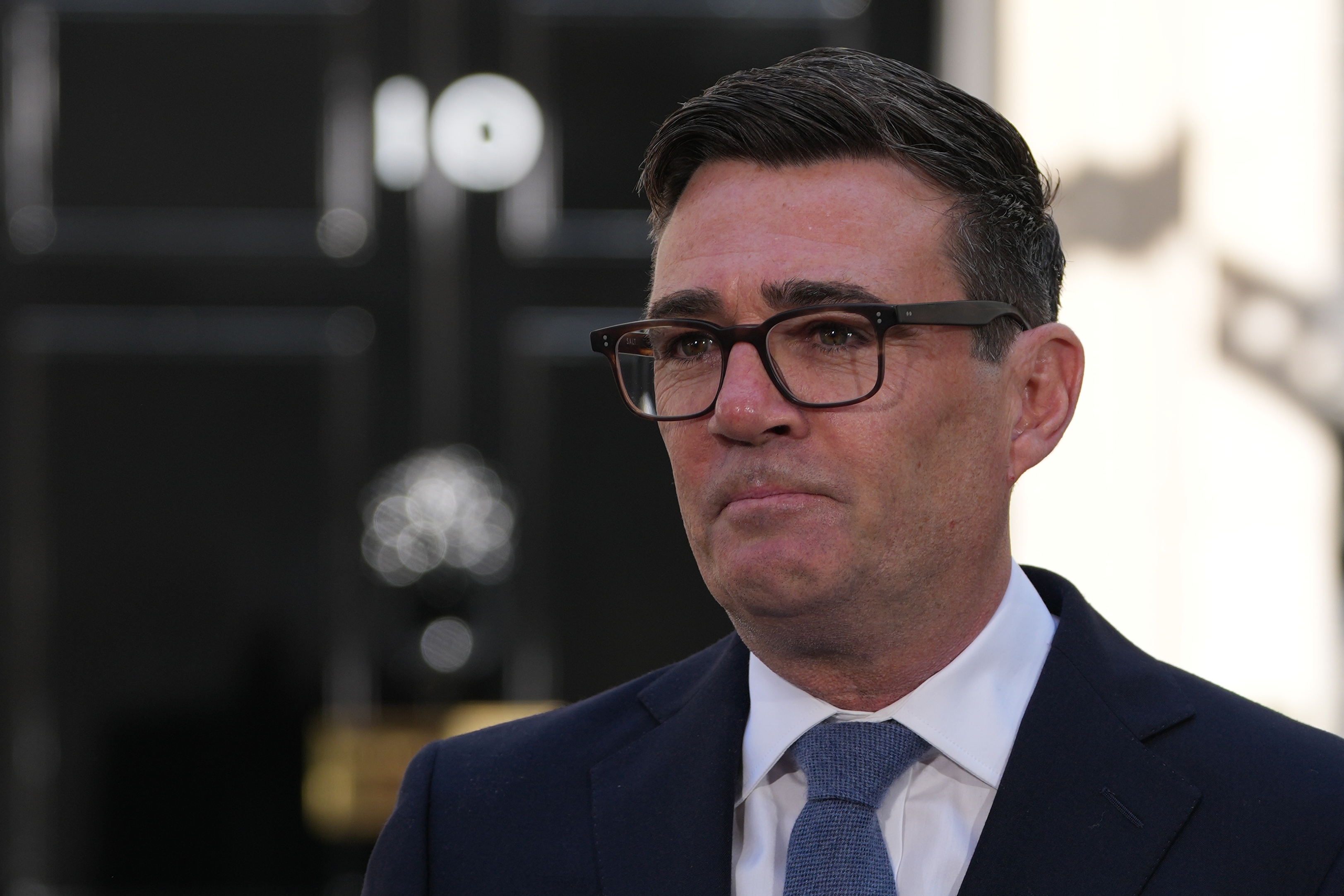
Andy Burnham has said his arrival in power will be a “circuit breaker” moment for Britain, pledging that his government will restore hope to millions of people, as he addressed the country for the first time from Downing Street.
After taking over from Keir Starmer, the new prime minister said he would set out a 10-year plan later this year to transform the UK from “where we are now to where I believe we all want Britain to be”.
Demonstrators and many soldiers want President Volodymyr Zelensky to reaffirm the vision of drone warfare laid out by the defense minister he fired last week.
OMB proposal would upend entire grant-making system – and put vast sums into hands of political appointees
It was a late Friday afternoon in Boston when Harvard School of Public Health professor Nancy Krieger, a social epidemiologist, received an email that would reshape the next year of her life.
It was from the National Institutes of Health (NIH) – her nearly $1m grant to study how discrimination affects population health was canceled.
Global increase in cases of predators coercing children to harm themselves or produce child sexual abuse material
Cases of predators coercing children into producing sexual photos and videos of themselves have surged globally in the past year, a cruel phenomenon known as “sadistic online exploitation”, child safety experts and law enforcement officials warn.
In cases of sadistic online exploitation, perpetrators target vulnerable teens on social media platforms and online games. These predators then compel their victims into producing child sexual abuse material (CSAM), harming themselves and others, or, in extreme cases, attempting suicide.
In the US, call or text the Childhelp abuse hotline on 800-422-4453 or visit their website for more resources and to report child abuse or DM for help. For adult survivors of child abuse, help is available at ascasupport.org. In the UK, the NSPCC offers support to children on 0800 1111, and adults concerned about a child on 0808 800 5000. The National Association for People Abused in Childhood (Napac) offers support for adult survivors on 0808 801 0331. In Australia, children, young adults, parents and teachers can contact the Kids Helpline on 1800 55 1800, or Bravehearts on 1800 272 831, and adult survivors can contact Blue Knot Foundation on 1300 657 380. Other sources of help can be found at Child Helplines International
Man charged with murder after Kirandeep Kaur was allegedly stabbed while in bed with husband and baby
The family of a woman who was killed as she slept in bed with her husband and three-month-old baby have said they want justice, and for her body to be returned to India.
A man has been charged with murder over the attack on Kirandeep Kaur at her home in Hayes, west London, on the morning of 12 July. Kaur, who had reportedly been living in the UK since 2024 on a student visa, allegedly suffered a stab wound to the chest and was pronounced dead at 8.26am.
The Chinese online retail platform AliExpress has been fined a record €550m (£470m) by the EU over its failure to stop illegal goods including harmful clothing, cosmetics and kitchen gadgets being sold through its site.
The European Commission fine is the biggest imposed by the bloc under Digital Services Act (DSA) legislation to protect consumers from illegal goods and deceptive or addictive marketing techniques.
Jake Johnson grew up relying on government assistance. Now he’s running for Tim Waltz’s old seat in Congress
High school math teacher Jake Johnson easily recalls the role government assistance played for his family in Stewartville, Minnesota, when he was growing up.
His father was a garbage collector and his mother read meters for the local gas company. They relied on food stamps for groceries and Medicaid for healthcare. When it was time for Johnson to go to college, Pell grants and Stafford loans helped him pay the bill.
Global increase in cases of predators coercing children to harm themselves or produce child sexual abuse material
Cases of predators coercing children into producing sexual photos and videos of themselves have surged globally in the past year, a cruel phenomenon known as “sadistic online exploitation”, child safety experts and law enforcement officials warn.
In cases of sadistic online exploitation, perpetrators target vulnerable teens on social media platforms and online games. These predators then compel their victims into producing child sexual abuse material (CSAM), harming themselves and others, or, in extreme cases, attempting suicide.
In the US, call or text the Childhelp abuse hotline on 800-422-4453 or visit their website for more resources and to report child abuse or DM for help. For adult survivors of child abuse, help is available at ascasupport.org. In the UK, the NSPCC offers support to children on 0800 1111, and adults concerned about a child on 0808 800 5000. The National Association for People Abused in Childhood (Napac) offers support for adult survivors on 0808 801 0331. In Australia, children, young adults, parents and teachers can contact the Kids Helpline on 1800 55 1800, or Bravehearts on 1800 272 831, and adult survivors can contact Blue Knot Foundation on 1300 657 380. Other sources of help can be found at Child Helplines International
Man charged with murder after Kirandeep Kaur was allegedly stabbed while in bed with husband and baby
The family of a woman who was killed as she slept in bed with her husband and three-month-old baby have said they want justice, and for her body to be returned to India.
A man has been charged with murder over the attack on Kirandeep Kaur at her home in Hayes, west London, on the morning of 12 July. Kaur, who had reportedly been living in the UK since 2024 on a student visa, allegedly suffered a stab wound to the chest and was pronounced dead at 8.26am.
Thousands of low-income households are benefiting from a simple system that captures and filters rainfall from the city’s roofs
Walking up a steep hill to a small informal settlement of about 45 houses in Cristo Rey, above San Gregorio Atlapulco in Mexico City, Ana Aparicio Bahena arrives at her simple home. As she walks through her lush, verdant garden, she points out plants such as the prickly pear, cactus leaves with tiny, hair-like spines, and picks blackberries hanging from a bush, handing them to her two daughters.
“I can grow vegetables,” says Aparicio Bahena proudly, holding up a small onion. “I have avocados, lemons, potatoes … I never used to be able to grow my own food. It’s wonderful.”
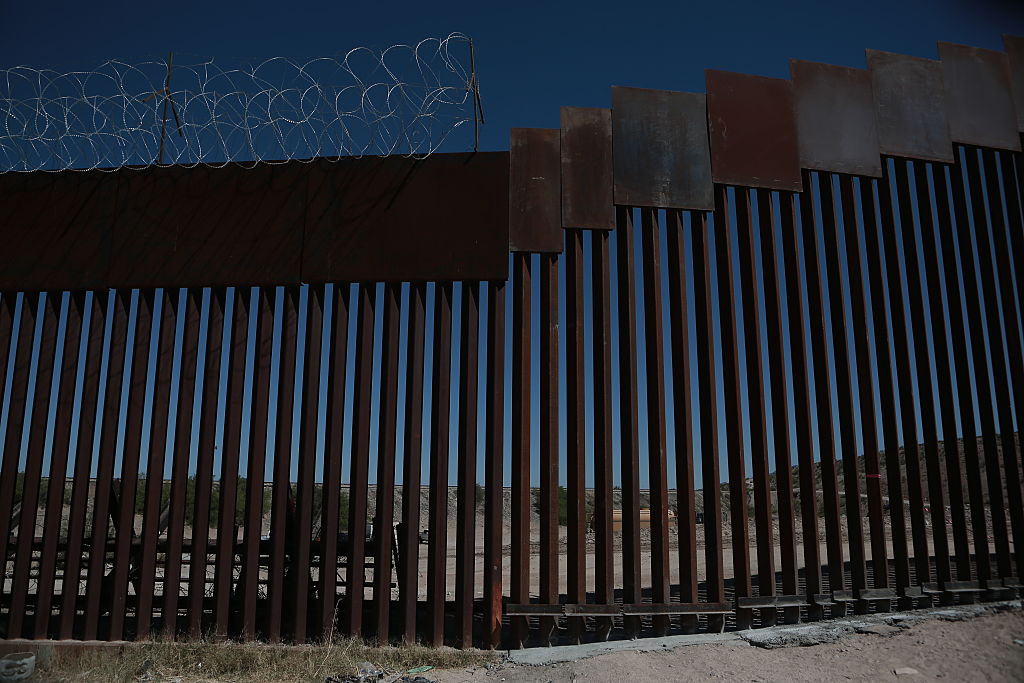
Border wall between Ciudad Juarez and New Mexico on April 22, 2026. —Christian Torres—Anadolu/Getty Images
In the afternoon of December 9, 2021, in my third month as U.S. Ambassador to Mexico, I received an urgent message from Mexico’s foreign affairs minister. That morning, there had been a terrible accident in southern Mexico involving migrants being smuggled north, one that required the urgent attention of Mexico, Guatemala, and the United States.
The foreign minister told me that in the southern Mexican city of Tuxtla Gutiérrez, about 140 miles from the nearest Mexico-Guatemala border crossing, a tractor-trailer had crashed while carrying more than 160 Guatemalan migrants. I would soon learn that 56 people had died in the crash and over 100 were seriously injured. Reportedly, the smugglers, known as “coyotes,” had charged the migrants around $15,000 each to stuff them into trailers like cattle for days on end to transport them across Mexico to the United States.
A few days later, I flew to Tuxtla Gutiérrez and headed straight to the hospital. Two patients in the corner of the ICU caught my eye: a young mother who suffered severe trauma to the entire side of her head and her toddler son, who was miraculously unharmed. Their names (which I’ve changed here to protect them) were Vanessa and Damián.
I spoke softly with Vanessa at her bedside, learning that she and Damián were trying to get to Wisconsin, where her husband had been working on a dairy farm. Vanessa had not seen him since he had left Guatemala for the United States, and Damián had never met his father. I couldn’t imagine the pain and fear this young woman and her son had felt in that packed trailer, somehow surviving the pandemonium of blood, death, and confusion to end up in the ICU.
Vanessa thanked me for checking on her, adding that she had faith she would soon be reunited with her husband. “Vanessa,” I said, “the immigration system we have in America is broken. Very broken. My hope is that one day, we’ll be able to fix it. This shouldn’t have to happen.” I wanted to beg her not to try again—it was too dangerous.
This incident, and countless other tragedies like it, is what inaction looks like. And for decades, both American political parties have been responsible for it. Republicans, led by President Donald Trump, seized on the border as a political weapon, exploiting fear of migrants to win elections. For them, a broken border is good politics. Democrats, on the other hand, have lacked the leadership and political power to deliver solutions, effectively ceding the issue to their political rivals. Both parties have committed political malpractice, and it’s easy to understand why. The 2000-mile-long U.S.-Mexico border has become the third rail of American politics. Touch it, and it can kill your political career.
As U.S. ambassador, I urgently and passionately made the argument to people in the White House and the halls of Congress that we needed to fix our border and find durable solutions. I warned Democrats that if we did not address this, it would contribute to defeat in the November 2024 elections. I’m sorry to say I was correct.
Trump was right that the border was broken and needed to be fixed. But his plan of enforcement, tearing families apart, terrorizing communities with mass ICE raids, and pitting nations against nations is not the solution. Just last week in Houston, an ICE officer shot and killed Lorenzo Salgado Araujo, the owner of a construction business, as he drove his crew to a job site, though he was not the target of the ICE operation. A 52-year-old father of three U.S. citizens, Mr. Araujo had lived here for more than three decades. His killing has drawn protests, calls for an independent investigation, and an announcement from Mexico that it will pursue legal action, precisely the kind of rupture between neighbors we should seek to prevent.
As we speed toward the midterms in November and a presidential election just two years away, a new border and immigration plan for this country must be a top priority. I propose the creation of a New American Alliance, a North America where the borders, migration, and our nation's deep economic and cultural ties are fixed to create an untapped opportunity rather than a manufactured crisis. It is a truer expression of who we are as Americans—people who achieve greatness when we are united and when we work together toward common goals.
Over 520 million people from all walks of life call the United States, Mexico, and Canada home. Our histories, our economies, our cultures—and yes, our crises—are inextricably linked, stretching far beyond our shared border. We must work to build the safest, most prosperous, and most opportunity-rich region in the world: one where hard work is rewarded, communities are secure, economic growth benefits ordinary people, and every child has a fair chance to succeed.
Importantly, we should not erase borders or diminish national identity. Rather, we must commit to work together where cooperation makes all three nations stronger, and to finally treat the border as the economic and democratic opportunity it can be.
I have been speaking with prospective Democratic candidates for the 2028 presidential election, and I will happily speak with any Republicans or Independents seeking solutions, because it is imperative that they transcend the dysfunctional politics that threaten our national and economic security. In my conversations, I hear encouraging things, but I also sense wariness. This is not a time for trepidation. The 2028 election is around the corner, and the issue of immigration, the U.S.-Mexico border, and how we co-exist peacefully with our neighbors will be defined by the leaders we choose and the demands we make of them. All of us—regardless of party, class, or race—must demand better.
For me, a son of the American Southwest, where my family has farmed and ranched for over 400 years, this is personal. Despite our sometimes painful history, we must fight for the promise of a better future along our borderlands. Our future, our democracy, and our economic and national security are worth the fight.
Nicolás Maduro and his wife, Cilia Flores, are seen in handcuffs after landing at a Manhattan helipad, escorted by heavily armed federal agents as they make their way into an armored car en route to a federal courthouse in Manhattan on January 5, 2026, in New York City. | XNY/Star Max/GC Images
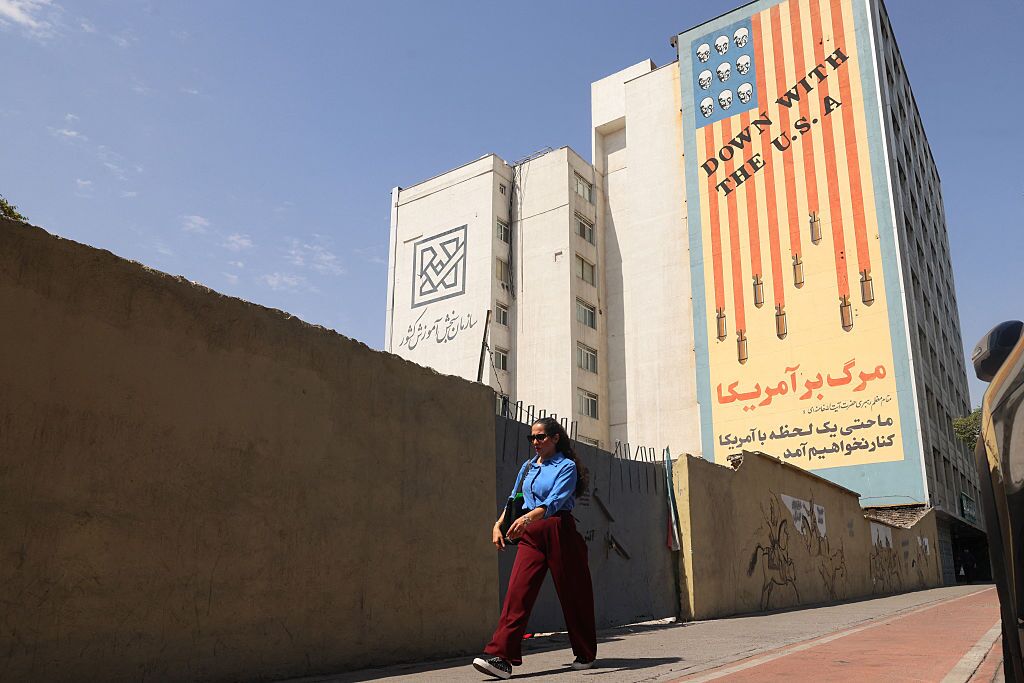
Last week presented a stark contrast in the trajectories of the Trump administration’s two riskiest foreign policy ventures. On July 13, the President Donald Trump formally declared a return to military action in Iran, making clear that a war that he had anticipated would last just four or five weeks will stretch past the five month mark and probably longer. Trump appears increasingly frustrated by Iran’s failure to concede to his demand to fully reopen the Strait of Hormuz, comparing the country to a “great boxer”: “You think you have them beat, and then all of a sudden he comes back and he gives you a shot.”
Key takeaways
After removing President Nicolás Maduro in January, the US is now effectively controlling Venezuela via new President Delcy Rodríguez. On the other hand, after five months of fighting, Iran shows no signs it will accede to Trump’s demands.
Trump cited Venezuela as a model for how he would like to control Iran and spoke of finding another “Delcy” to run that country, but it should have been obvious that was never going to work, given the differences between the two countries.
Trump has spoken of attempting regime change in other countries, particularly Cuba. The question going forward is whether the experience of Iran has changed his views on how easy this would be.
On the far side of the globe, however, the other country Trump attacked this term has proven much more manageable. Venezuela’s government — now led by former Vice President Delcy Rodríguez, who took power when Nicolás Maduro was captured in a US raid in January — agreed to talks with an opposition leader handpicked by the US that aimed at “strengthening democracy.”
The New York Times reported earlier this week that US Secretary of State Marco Rubio is effectively the “viceroy” of Venezuela, ruling the country in absentia from Washington, DC. (“Viceroy” is traditionally an official who governs a country or colony as a direct representative of a monarch.) The US has direct control over the revenues Venezuela receives from selling its oil abroad, giving Rubio effective power over the country’s budget. The grip is so tight, the Times reports, that Rodriguez asks for White House approval before appearing on Fox News, much to Trump’s delight.
Two different countries in two different parts of the world with two different responses to Trumpian military pressure. But when future historians tell the story of how this administration ended up enmeshed in exactly the sort of Middle East quagmire that he had run for office pledging to avoid, they’re likely to devote at least a few paragraphs to Venezuela. The easy success of one operation set the stage for the still unfolding disaster of the other.
Exporting the Venezuela model
In a daring predawn raid on January 3, US Special Forces managed to capture Maduro in a matter of hours, with no US troops killed. Contrary to the warnings of critics that such regime change would result in chaos — and to the hopes of the Venezuelan opposition that it would lead to democracy — Trump and Rubio successfully replaced Maduro with his much more pliant vice president, who has proven more than happy to let Washington call the shots. Trump now regularly muses about making Venezuela the 51st state.
The operation was, the Times reported, “evidence to the president of the unmatched prowess of U.S. forces” and, along with the relative success of the first round of airstrikes against Iran’s nuclear program last June, emboldened him to take further military action.
“What we did in Venezuela, I think, is the perfect scenario,” Trump said in early March, referring to prospects for regime change in Iran. And in one sense it worked; the US was able to remove the head of state within hours of launching military action, with Iranian Ayatollah Ali Khamenei killed in a joint US-Israeli airstrike.
“I have to be involved in the appointment, like with Delcy in Venezuela,” Trump said, when Iran’s regime was considering Khamenei’s successor.
Trump was not involved. Iran’s Assembly of experts chose the former supreme leader’s son, Mojtaba Khamenei, whom Trump dismissed as “unacceptable” and a “lightweight”.
Despite this, Trump continued to insist that regime change had effectively happened in Iran and that its new leaders were “much more reasonable.” While Iran’s new political system is still very much a work in progress, its insistence on maintaining control of the state and ongoing attacks against shipping and US allies in the region have made it fairly clear that it will not be taking orders from Marco Rubio or anyone else in DC.
Why Iran is not Venezuela
On the surface, there are some striking similarities between Iran and Venezuela: They were once close allies of each other, as well as of Russia and China. Both are oil dependent authoritarian states espousing a revolutionary ideology defined in large part by opposition to the United States. Both are known for sponsoring foreign militant groups. Both have a history of disputed elections and crushing opposition protests. Both have large and vocal exile communities in the US. Both have struggling economies and have spent years under US sanctions.
That’s where the similarities end, however. Start with the military: Iran’s combined forces are roughly three times the size of Venezuela’s and far better equipped, possessing missile and drone capabilities that have spread chaos across the region for months. Iran’s senior leaders came of age during the brutal Iran-Iraq war of the 1980s and have spent decades engaged in proxy battles with the US and Israel, whereas Venezuela has not fought an interstate war in modern times. It’s telling that Maduro was relying on Cuban personnel for his own security.
Then, there’s geography. Thanks to its fortuitous location on the western side of the Strait of Hormuz, Iran has means to retaliate against the US by blocking shipping through the world’s most important energy chokepoint, driving up oil prices. Venezuela may have the world’s largest oil reserves, but it doesn’t have anywhere near the ability to disrupt global energy flows.
Iran was able to attack US allies throughout the Gulf with both its own missiles and via the military groups it supports throughout the region. Despite Trump’s misleading claims that Maduro’s government was in direct control of gangs in the US or weaponizing migration, Venezuela simply didn’t have the same kind of leverage with which to fight back.
There’s history, too. Even at the nadir of relations with the US, when Venezuela was under heavy American sanctions and formal diplomatic contacts were cut off, there were still periodic talks over energy issues and prisoner releases. The US oil company Chevron continued to operate inside the country. Rodriguez herself was a familiar figure to US officials, having participated in talks with both the Biden and Trump administrations.
And finally, there’s ideology. Venezuela’s rulers may still be publicly committed to the “Bolivarian” socialist vision of former leader Hugo Chávez, but, in reality, the regime operates as “an extreme form of crony capitalism with some pretenses of redistribution of oil windfalls to the poor,” said Chris Sabatini, director of the Latin America program at the think tank Chatham House. Senior civilian and military officials were heavily involved in a range of enterprises of varying degrees of legality from the oil industry, from gold mining to drug trafficking. When push came to shove, they were more interested in preserving their fiefdoms than standing up for a long-dead revolution.
According to some reporting, denied by the Venezuelan government, Rodríguez had been in direct contact with US officials prior to Maduro’s capture, assuring them of her cooperation, which would make this less a regime change invasion than a US-enabled coup. Even Interior Minister Diasdello Cabello, considered the hardest of the hardline Chavistas with a US price on his head, has been more than happy to play ball with the country’s new American overlords.
Iran has widespread corruption, as well, but the regime is far more organized, disciplined, and committed to the radical Islamist ideology of the 1979 revolution. Iran’s leaders had long been planning for invasion and had detailed succession plans in place for when top leaders were eliminated. The fact that the US’s Israeli partners were reportedly cultivating Mahmoud Ahmadinejad, the former president best remembered for calling for Israel to be wiped off the map and promoting a long-shot plan to arm Kurdish rebels to mount a ground invasion, is an indication that there were simply no plausible candidates for an “Iranian Delcy.”
It should have been obvious from the start that a quick and easy operation that would replace Iran’s top leaders with more cooperative ones without requiring a dangerous and costly ground invasion by US troops was never a realistic prospect. It’s notable that the administration sidelined many of its own Iran experts ahead of the war, but, in fairness, Trump’s own CIA director dismissed Israel’s optimistic regime change scenarios as “farcical.”
“President Trump has not really taken the time to study the history of Iran-US relations going back to 1979, or even earlier,” said the Middle East Institute’s Alex Vatanka. “If he had studied that relationship, I think he would have taken a different approach.” But Trump may have been thinking less about what happened in Tehran in 1979 than what had happened in Caracas just a few weeks earlier.
The end of hubris?
Many scoffed in January when Trump suggested that the US would be “running” Venezuela for the foreseeable future, but that appears to be more or less what’s happening now. It’s not clear how long this arrangement can last. Discontent with both Rodríguez and Trump is growing in Venezuela, and many in the opposition accuse the government of using the recent devastating earthquake as a pretext to delay called-for democratic reforms. Venezuelans may come to hold the United States responsible for the failures of the government it is remotely controlling.
But the initial success of the Venezuela operation was a vindication for a president who often sees himself as running the world in addition to the United States.
Has Trump faith in his ability to bend other countries to his will been shaken at all by the Iran experience? He has frequently described Cuba as “next” on the list of countries he’d like to “take” after Venezuela and Cuba.
In terms of culture and geography, Cuba may look more like Venezuela. But in terms of its political system, it’s “more like Iran,” said Sabatini. “It’s completely state-centric, vertical, disciplined.” Dealing with a system still fiercely devoted to its founding revolutionary ideology that has been largely isolated from the US for decades, the administration may have no better luck finding a “Cuban Delcy” than it did finding an Iranian one.
On the other hand, Trump is once again talking about taking over Greenland and posting memes referencing his desire to annex Canada. Iran may have proven that Venezuela was the exception, not the rule, when it comes to regime change, but Trump’s ambitions for world domination do not seem to have disappeared.
From countertop kits to a bathroom bucket full of straw and beyond, I spent a year testing popular mushroom-growing methods. Here’s what fruited—and what just grew mold.
In a transition of power presided over by King Charles, Andy Burnham has replaced Keir Starmer as the United Kingdom's prime minister. Both are from the center-left Labour Party.
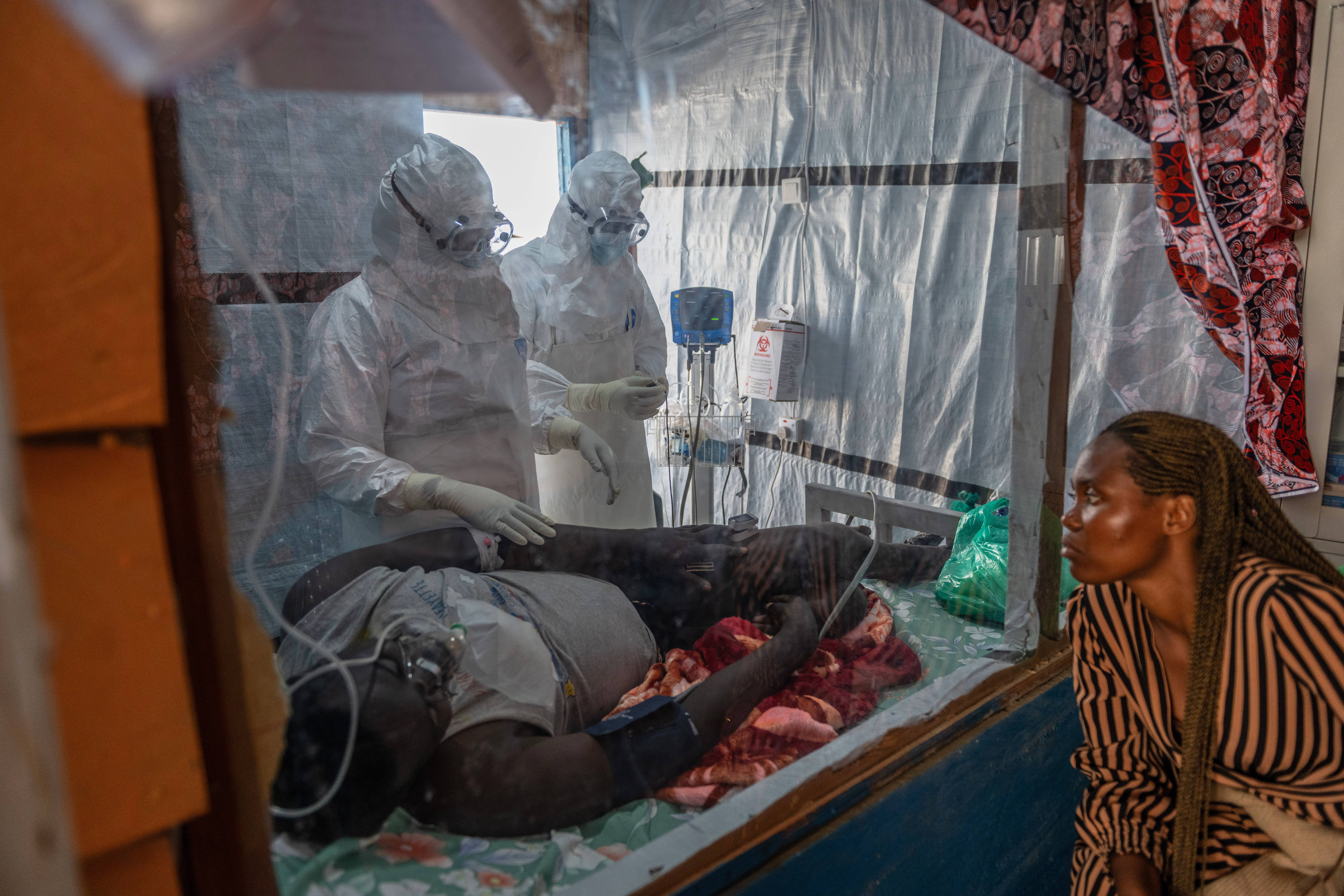
Congo's health ministry said the deaths were recorded out of the 2,344 cases confirmed as of Saturday. Thirty-seven new deaths were recorded in the previous 24 hours in one of the highest totals.
Red-cockaded woodpeckers are among the many federally endangered species that rely on forest habitat for survival. | Jared Lloyd/Getty Images
The greatest threat to animals in the US and globally is the destruction of their habitat — replacing grasslands with farms, cutting forests for timber, building suburbs atop wetlands. It’s the main reason why hundreds of species have been listed under the Endangered Species Act, which gives federal protection to species that are currently at risk of extinction or are about to be.
That’s what makes a recent move by the Trump administration both confusing and — according to many environmental advocates — incredibly alarming.
In a rule published earlier this month, the administration determined that, in many cases, destroying the habitat of federally threatened and endangered species is no longer explicitly illegal, even if doing so could ultimately drive them extinct. The rule upends half a century of regulatory precedent that survived many Republican administrations. Environmental advocates also say it runs counter to the very intent of the Endangered Species Act, which Congress passed in 1973 with near-unanimous bipartisan support (and which Richard Nixon signed into law).
While the Trump administration has made several recent decisions that weaken protections for endangered species — amid what many scientists call an extinction crisis — this one may have the most far-ranging consequences. Here’s why.
A rule that could blow up the ESA
The Endangered Species Act is a complicated law, but on a simple level it makes it illegal for anyone to “take” endangered species without authorization from the government. “Take” is defined in the law by 10 different terms: harass, harm, pursue, hunt, shoot, wound, kill, trap, capture, or collect.
It’s the meaning of one of those words — harm — that matters most here. Up until the recent rule, the government’s definition for harm included destroying an animal’s habitat if it impairs essential behaviors, such as breeding. That might include, say, building a hotel on top of a beach that endangered sea turtles use for nesting. Such a definition was important because destroying the habitat of an already imperiled species could push it over the edge, wildlife advocates say. What’s more is that, according to the language of the law itself, the purpose of the ESA includes conserving “ecosystems upon which endangered species and threatened species depend.”
Get in touch
Got a tip or feedback on this story? Reach out to reporter Benji Jones at benji.jones@vox.com.
The Trump administration, however, just threw out that definition of harm and the unambiguous protection it has long afforded habitat. And while it didn’t offer a new definition, the administration said that it agrees with a much narrower interpretation of the term — articulated three decades ago in a dissent by the late conservative Justice Antonin Scalia — that only includes actions that directly and intentionally harm individual animals, such as capturing a sea turtle to eat or keep as a pet.
“For years, federal agencies abused the ESA to obstruct lawful land use and burden American families and businesses,” Doug Burgum, Secretary of the Interior Department, which oversees endangered species protections, said in a statement. “That approach turned routine activity into a regulatory trap, drove up costs that impacted people’s lives, and expanded federal authority beyond what Congress intended. This action restores common sense, respects private property, provides much-needed certainty for landowners and follows the statute Congress actually passed.” (The Interior Department declined to provide a comment on our reporting, pointing us instead to its press release and the notice in the Federal Register.)
Under the new rule, set to take effect in September, “harm” no longer explicitly includes actions that may accidentally or indirectly doom a wildlife population to extinction. A company building luxury villas on a private beach that endangered sea turtles need for survival would not unambiguously be considered take — and thus be illegal — unless the company knew it’d crush turtle eggs or the turtles themselves in the process. Neither would logging old-growth forests that endangered birds inhabit, building wind turbines that are known to kill endangered bats, or constructing a road that would likely get endangered snakes run over.
The administration’s interpretation of take “really completely blows up the Endangered Species Act,” said J.B. Ruhl, a lawyer at Vanderbilt University and a leading expert on the ESA.
To be clear, these sorts of actions were never forbidden outright — and this is key. An important feature of the ESA is that, with some exceptions, it allows companies, counties and states, and federal agencies to kill or harm endangered species, as long as they take steps to limit their impact. Indeed, nonfederal organizations of all kinds have, for decades, received federal permits that allow them to “take”endangered species, in exchange for coming up with a plan to minimize the harm they may cause. In Hawaii, for example, an electric utility that operates power lines that can injure endangered birds takes steps to prevent collisions and funds an avian rehab facility that helps offset some of its impacts.
The problem now is that these conservation plans — which wildlife advocates say are critical for species recovery — are rooted in the defunct definition of harm, according to Daniel Rohlf, a law professor at Lewis & Clark Law School.
The whole purpose of these so-called Habitat Conservation Plans is to lessen the incidental, or accidental, impacts on endangered species, while at the same time allowing companies to still build and operate legally. But in rescinding the former definition of harm, the Trump administration has essentially just said that all that incidental killing is no longer illegal anyway. That may undermine future Habitat Conservation Plans and those that have yet to be finalized. This “pulls the rug out from under literally decades of work,” Rohlf said of the recent rule.
Next up: The Supreme Court?
Even under the new rule, the ESA still has some important protections for habitat. When the government lists a species as threatened or endangered, for example, it usually designates what’s called “critical habitat” — areas that it deems essential to the survival of the species. Under the ESA, all federal agencies have to ensure that their actions, such as permitting new mines or wind farms, do not destroy critical habitat or jeopardize the existence of a species. Those responsibilities are still intact.
It’s also not certain that the new rule will stick. Several environmental groups have already sued the administration to try to reinstate the former definition, alleging, among other claims, that rescinding the definition of harm violates the language and the intent of the ESA. This challenge is likely to reach the Supreme Court, Ruhl says.
To understand what could happen next requires some important context.
Until two years ago, courts typically deferred to federal agencies to determine how to interpret ambiguous language in laws like the ESA. This legal principle was known as the Chevron doctrine. It was the Fish and Wildlife Service, for example, that published a rule decades ago clarifying that the ambiguous word harm includes destroying an endangered animal’s habitat. That interpretation survived a famous 1995 Supreme Court case, Babbitt v. Sweet Home Chapter of Communities for a Great Oregon, in which Oregon landowners and the timber industry argued that the government defined “harm” too broadly. The court decided that an “ordinary understanding” of that term “naturally encompasses habitat modification” that injures or kills endangered species.
In the summer of 2024, however, the Chevron doctrine was overturned. That means the power to interpret unclear language in laws now rests with the courts.
The Trump administration has seized on this fact, Rohlf said. Instead of redefining what harm means, the administration simply axed the existing definition that included impacts to habitat that injure wildlife. It will now be up to the courts to decide what is considered harm in future cases brought under the ESA — such as if, say, an environmental group sues a developer, claiming that it destroyed essential habitat for an endangered species in violation of the Act. The administration did not stop short of making clear what it thinks: In the preamble to the rule, it said harm should only include actions made directly and intentionally against endangered organisms.
Wildlife advocates point out that the Supreme Court already determined that a definition of harm including habitat destruction is reasonable. That’s what Babbitt v. Sweet Home was about. But because that case rested, in part, on the now-overturned Chevron doctrine, the courts — and perhaps eventually the Supreme Court — may relitigate the meaning of harm. (The Supreme Court did make it clear that it won’t call into question decisions that relied on the Chevron doctrine before it was overturned.)
Ultimately, it’s hard to argue that harming an endangered species, in a plain reading of the word, does not include destroying vital habitat that it needs to survive or other actions that kill or injure them indirectly, legal scholars told me. It’s also clear that Congress saw it this way when it wrote the law. There’s a whole section of the ESA about granting permits for “incidental take,” which could include damaging an animal’s habitat, according to Holly Doremus, a law professor at the University of California, Berkeley. That section only makes sense, she says, if you’re interpreting harm to include actions that accidentally and indirectly kill or injure species — which is far broader than the definition that the Trump administration would like to use.
For the Trump administration to really get what it wants, Doremus said, it would need to remove the word “harm” from the ESA altogether. Short of that, she said, Trump officials “want to make ‘harm’ as ineffective a statutory term as possible.”
Should the administration succeed — should the courts determine that “harm” does not apply to destroying the habitat of endangered species — environmental advocates warn that the ESA will lose much of its extinction-preventing power.
“If this decision is allowed to stand, it eviscerates the statute on which imperiled species conservation has rested in this country since 1973,” said Jane Davenport, a senior attorney at Defenders of Wildlife, an advocacy group. “This is truly a stake through the heart of the ESA.”
Youth-led group calls on education minister to quit in one of India’s largest anti-government rallies in years
Tens of thousands of protesters have defied police orders and descended on Delhi to demand the resignation of India’s education minister in one of the largest anti-government demonstrations in years.
A huge crowd, largely made up of students and gen Z-ers, filled the streets in the heart of India’s capital from early Monday morning shouting anti-government slogans. Hundreds had already camped out overnight.
Eight people die and dozens are injured as several cities are hit by missile and drone attacks, while Kyiv continues its own assault on Russian infrastructure.
New £500m town centre welcomes its first tenant this month, but displaced traders say promises that they could return have been broken
Diana Sach once employed more than 30 people and catered for hundreds more every day from her Latin American restaurant and delicatessen, famous for its Peruvian empanadas, in south London’s Elephant and Castle district.
Now, she looks longingly at the shiny tall buildings that have replaced the brightly coloured but shabby shopping centre that was her home from home before being demolished in 2021.
President Trump railed against "forever wars," but with hostilities increasing and negotiations at a standstill, there appears no easy exit from the war he launched on Iran.
The U.S. attacks were the ninth consecutive day of bombing since peace talks between the two countries collapsed in dispute over a memorandum of understanding focused on the Strait of Hormuz.
Sergio Furnari said he thought the lifesize sculpture – which no one commissioned – would raise ‘millions’ of dollars
A New York sculptor has been left furious after spending $100,000 of his own money to build a lifesize statue of Charlie Kirk, only to find that no one wants to buy it.
Sergio Furnari, originally from Italy, had hoped the statue of the deceased far-right activist, which he intends to display in Times Square, would raise “millions” of dollars. Instead, he said he has been inundated by messages from people saying they intend to urinate on the sculpture.