RSS Feeds

What to Do When Someone Is Yelling at You, According to Psychologists
Published: 2026-07-16 14:56:06 | Created: 2026-07-16 15:01:37
—Photo-Illustration by TIME (Source Images: Alina Kolyuka, Swan222, Heroik/Danial Project via Canva)

Even in healthy relationships, people sometimes lose their tempers. A disagreement with your partner escalates into shouting; a friend snaps after weeks of bottled-up frustration; a coworker raises their voice during a stressful meeting.

When someone’s raging at you, two phrases seem almost instinctual to say. The first is some version of “calm down.” The second is a quick, reflexive “I’m sorry.” Those responses might feel like the fastest way to defuse the situation—but experts say they often do the opposite.

Telling a furious person to calm down usually lands as criticism, says Dr. Lokesh Shahani, an associate professor in the department of psychiatry and behavioral sciences at UTHealth Houston. (Plus, it rarely works.) A knee-jerk apology can backfire in a different way: It signals that the other person’s intimidation is working. It might stop the yelling in the moment, Shahani says, but it also teaches them that rage gets results.

The goal, experts say, isn't to make the other person stop feeling angry. It's to make a real conversation possible again. That requires doing two things at once: protecting your own boundaries—because no one deserves to be berated—while also making the other person feel genuinely heard. Those strategies, however, have limits. "If you feel physically unsafe or if you feel emotionally unsafe, then you need to end the conversation and disengage," says Moshe Cohen, a conflict-resolution expert in Boston. If someone is threatening you, trying to intimidate you, or making you fear for your safety, the priority isn't finding the perfect words. It's getting yourself out of the situation.

Here’s what to say to someone who’s raging at you, according to psychiatrists, psychologists, and conflict-resolution experts.

“Help me understand what happened from your perspective.”

Another common response to being yelled at is to interrupt, defend, and point out everything the other person got wrong. It's an understandable impulse—but it usually pours gasoline on the fire. "When people are angry, they're not thinking clearly," Shahani says. "They can't hear you." Before you can have a productive conversation, you have to restore the conditions for one.

That's why Shahani reaches for the same phrase again and again—not just during major conflicts, but in everyday disagreements with the people he loves: "Help me understand what happened from your perspective." Its power is that it makes only one promise: attention. "I'm here to hear you. I'm here to understand you," he says. "I'm not promising I'm going to be able to help you, but at least you have my ear." Simply signaling that you're willing to listen often lowers the other person's defenses enough that they can begin explaining instead of shouting.

Cohen has found the same thing during three decades of mediating workplace disputes and other high-conflict situations. People who are furious are often reacting from a place of frustration, fear, or disappointment, he says—not just the specific event they're yelling about. Maybe your partner feels taken for granted, or your boss thinks you dropped the ball on an important project. One of the fastest ways to uncover what's really driving the conflict is to get curious. Ask open-ended questions, listen carefully to the answers, and resist the urge to rebut every point, he advises. "Nothing de-escalates anger as much as listening and validation," Cohen says.

“I can see how important this is to you.”

Think about the last time you were furious. Chances are, you weren't looking for someone to solve the problem in the first 30 seconds—you wanted to know they understood why it mattered to you. That's why psychologists often recommend starting with validation—not because it excuses someone's behavior, but because it helps them feel heard enough to move forward. You're acknowledging that the person's feelings make sense from their perspective, not conceding that their behavior or conclusions are justified.

The key is to validate the emotion—not the behavior. "Explosive anger is usually a secondary emotion," says Arela Agako, a clinical psychologist in Toronto. Underneath the yelling is often something more vulnerable, like a sense of fear, shame, or sadness. A friend who's furious that you canceled plans at the last minute, for example, might actually be feeling unimportant. Or a spouse snapping about dirty dishes may be reacting to months of feeling overwhelmed. 

Rather than validating the yelling itself, acknowledge what the anger is trying to communicate. You might say, "I can see how important this is to you," or, "I can see why that would be upsetting." You're recognizing the emotion without suggesting the outburst is acceptable.

“You’re right that…”

Agreeing with someone who's furious at you probably feels like the last thing you want to do. Most of us worry that saying "you're right" means admitting defeat—or taking the blame for something that isn't our fault. But experts say that in this context, that's not what this phrase is about. Instead, it lowers the other person's defenses enough that the conversation can move forward.

Rod Mitchell, a psychologist in Calgary, Canada, who specializes in anger management, uses a technique he calls "disarming." The goal isn't to agree with everything the angry person is saying. It's to look for the genuine grain of truth in what they're saying—even if it's only a small piece of the bigger picture—and acknowledge it out loud. If they're upset because you were late, for example, you might say, "You're right that I should have let you know I was running behind." If they're frustrated that you forgot to follow through on something, you might respond: "You're right—that slipped through the cracks." 

"Anger is often a defensive emotion," Mitchell says. "Finding a way to agree with the other person is genuinely surprising to them."

Cohen sees the same dynamic in mediation. If someone is angry because you missed a deadline, for example, acknowledge the impact before explaining yourself. "You're right," you might say. "I should have delivered it on time." Only then should you offer context or explain what got in the way. Acknowledging one true thing often makes people much more willing to hear the rest of what you have to say. 

“I’m willing to talk, but not if we’re yelling at each other.”

When someone starts shouting—your partner raising their voice across the dinner table, a customer yelling across the counter—it's natural to want it to stop. That's why so many people instinctively blurt out a directive to "calm down." The trouble is that those two words almost never have the intended effect. Rather than hearing them as an invitation to take a breath, angry people often hear them as a judgment about how they're behaving.

Shahani prefers a different approach: Set a boundary without making the other person feel attacked. Saying "I'm willing to talk, but not if we're yelling at each other," for example, communicates that you're interested in hearing what they have to say—but only if the conversation stays respectful. "It's an indirect hint, but not a direct criticism of someone's behavior," he says. The goal isn't to win the argument; it’s to create the conditions for having a productive discussion.

“I have an idea that might help. Do you want to hear it?”

One of the biggest mistakes people make during an argument is trying to solve the problem too soon. The impulse comes from a good place: We want to help. But if someone is still emotionally flooded, they're usually not ready to hear solutions. Instead of listening, they're often just waiting for another chance to explain why they're upset.

That's why Cohen recommends holding off on advice until the other person has had a chance to fully vent. Wait until they’ve explained what happened—and until you genuinely understand their point of view—before considering shifting the conversation toward problem-solving. Otherwise, he says, people tend to ignore your suggestions and simply repeat the thing they were upset about in the first place.

When it feels like the right time to offer an idea, Cohen suggests asking permission first: "I have an idea that might help. Do you want to hear it?" That way, rather than talking at someone, you're inviting them into a conversation—and once people say yes, they're more likely to commit to listening. 

“I want to hear you, and I can’t do that while it’s at this level.”

Even if you say everything "right," some conversations simply aren't ready to happen. The other person may be too overwhelmed to listen, too angry to think clearly, or too set on fighting to engage productively.

When that happens, psychologists recommend calling a timeout rather than trying to power through. Mitchell likes this phrasing: "I want to hear you, and I can't do that while it's at this level. Let's stop and come back to it." Framing the pause this way makes it clear that you're not dismissing the other person's concerns. You're protecting the conversation by waiting until both of you are in a better place to have it.

Sometimes, though, even that isn't enough. If someone continues yelling, insulting you, or making you feel emotionally or physically unsafe, it's time to disengage. Cohen suggests one final, clear boundary: "The way you're saying that isn't working for me. I can't be a party to this kind of conversation." If the behavior doesn't change, follow through. "Unless we can have a different conversation, I'm going to have to end this." Then leave the room or hang up the phone. Walking away isn't giving up on the relationship—it's refusing to participate in a conversation that's no longer productive.
show more
More than 800 Canadian wildfires burning as air quality alerts extend to US
Published: 2026-07-16 17:36:43 | Created: 2026-07-16 15:00:37
The air quality in large parts of Michigan, Minneapolis and Minnesota is deemed "hazardous" by authorities.
show more
Sheryl Sandberg leads $10 million investment in AI-powered vehicle inspection service
Published: 2026-07-16 15:00:00 | Created: 2026-07-16 15:00:37
The startup, founded in 2021, lets enterprise customers use smartphones to scan and spot vehicle damage.
show more
What Are The Risks of Extreme Heat Combined With Bad Air Quality?
Published: 2026-07-16 14:51:16 | Created: 2026-07-16 14:56:38
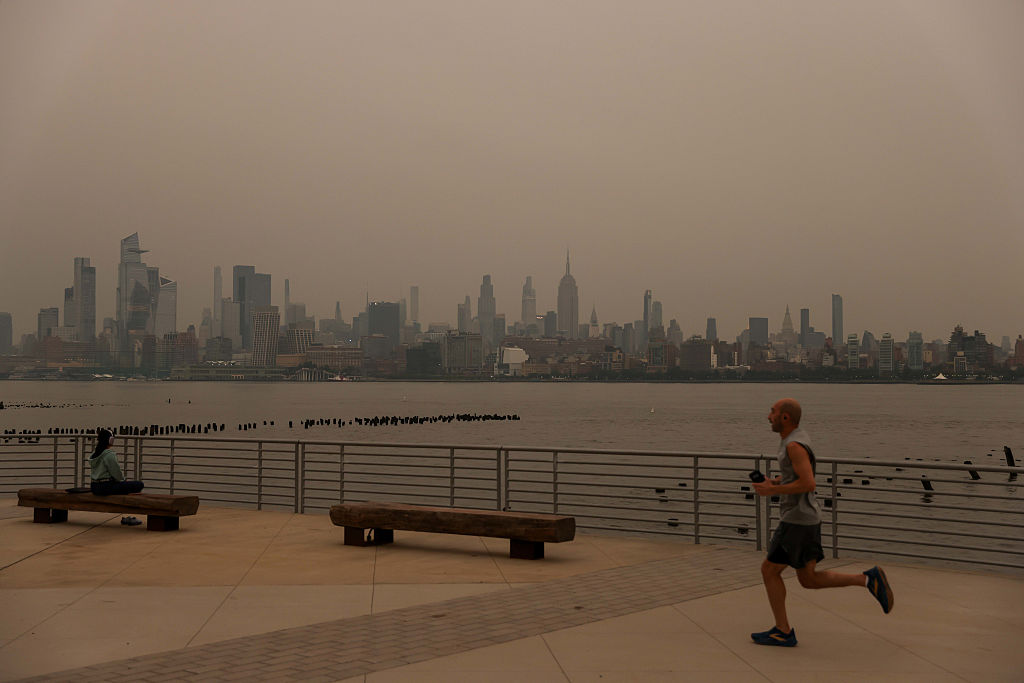
Smoke from wildfires in Canada shrouds the Manhattan skyline at sunrise in Jersey City, New Jersey, U.S., on July 16, 2026. —Michael Nagle—Getty Images

Heavy smoke from wildfires in Canada and Minnesota have brought hazy skies and poor air quality to millions across the United States. Air quality advisories are in effect across several states, including New York, New Jersey, and Wisconsin. It comes as parts of the U.S. are facing record-high temperatures this week—the National Weather Service has forecasted widespread temperatures of 95-105°F.

Heat waves contribute to poor air quality—in fact some of the worst air quality often comes during heat waves. Hot, stagnant air causes air pollution to accumulate and increases the formation of the air pollutant ozone, while hotter, drier conditions are causing more frequent, severe wildfire events that worsen air quality. “All of this together means that the population is frequently experiencing poor air quality events during the summertime that often coincide with extreme heat, and both air pollution and heat are harmful to our health,” says Mary Rice, director of the Center for Climate, Health, and the Global Environment at the Harvard T.H. Chan School of Public Health. 

What are the risks of combined exposure to poor air quality and extreme heat?

The combination of extreme heat and poor air quality can be particularly harmful. Approximately 489,000 heat-related deaths occur globally each year, according to the World Health Organization, while the combined effects of ambient air pollution and household air pollution are associated with 6.7 million annual premature deaths globally. One 2022 study published in the American Journal of Respiratory and Critical Care Medicine found that mortality risk on days with combined exposure increases by an estimated 21%.

Fine particle pollution from wildfire smoke can cause shortness of breath, coughing, dizziness, or fatigue and can aggravate heart and lung diseases and other chronic health issues, while extreme heat can exacerbate illnesses like cardiovascular disease, diabetes, and asthma.

“We know that many of the impacts of air pollution are through the ways in which it strains our cardiovascular and respiratory systems, and we know that heat also strains our cardiovascular system and our respiratory system,” says Allan Just, Nazareth-Ferguson Family University associate professor of public health at Brown University. “When it's hot out, your heart needs to work harder to push blood out to the periphery to try to cool you down, and when it's polluted, the small particles can get from your lungs into your bloodstream, and they cause inflammation, and they can damage your heart tissue.” 

Part of the challenge is that, when there’s air pollution, it’s hard to follow the same rules you might heed during a normal heat wave. 

“Both of these environmental stressors are hitting us at the same time, and the ways in which we adapt to handle them, sometimes can be counteracting,” says Just. “When it's very hot, people are opening their windows because they want ventilation, but when it's very polluted, we encourage people to close their windows.” 

How do you stay safe when there’s both extreme heat and bad air quality? 

Your phone’s weather app can tell you if there is poor air quality. The U.S. Environmental Protection Agency has a webpage and app called AirNow that gives some guidance on what kinds of air quality you may be experiencing and appropriate actions to take. 

You can even configure the app to create a forecast to give you advance notice when you’re likely to experience unhealthy air, so you can make proactive decisions like modifying your plans for outdoor activities or turning on HEPA filters.

Certain groups may be more vulnerable than others. Older adults, people who are pregnant, and young children are all at a higher risk for adverse health impacts due to combined exposure. Outdoor workers and people who don’t have air conditioning at home can also be vulnerable. 

Stay indoors as much as you can, but avoid opening windows to keep cool, as that can further expose you to polluted air. Set air conditioners or HVAC systems to recirculate indoor air rather than draw in outside air, and if you or a member of your household is particularly vulnerable, consider purchasing a HEPA filter, which are designed to capture small, airborne particles, 

Avoid unnecessary outdoor activities, and if you have to go outside, a KN95 or N95 mask can help reduce the amount of fine particulate matter you’re exposed to. 

As the planet continues to warm, the double threat of bad air quality and extreme heat is only going to get worse, Just warns. “Climate change is making this more severe, and this is going to be, unfortunately, a regular problem.” 

It’s a problem we’re not yet prepared to meet. “Our way of notifying people about temperature doesn't take into account what the air quality is, and our ways of notifying people about air quality doesn't take into account what the temperature is,” Just notes. “We may want to think about systems that warn people about this co-occurrence because that's going to be more common, and there's increasing evidence that that's more harmful than just one problem at a time.”

show more
Will Iran Target Another Maritime Chokepoint? The Bab El-Mandeb Strait Is Under Threat
Published: 2026-07-16 14:52:26 | Created: 2026-07-16 14:56:38
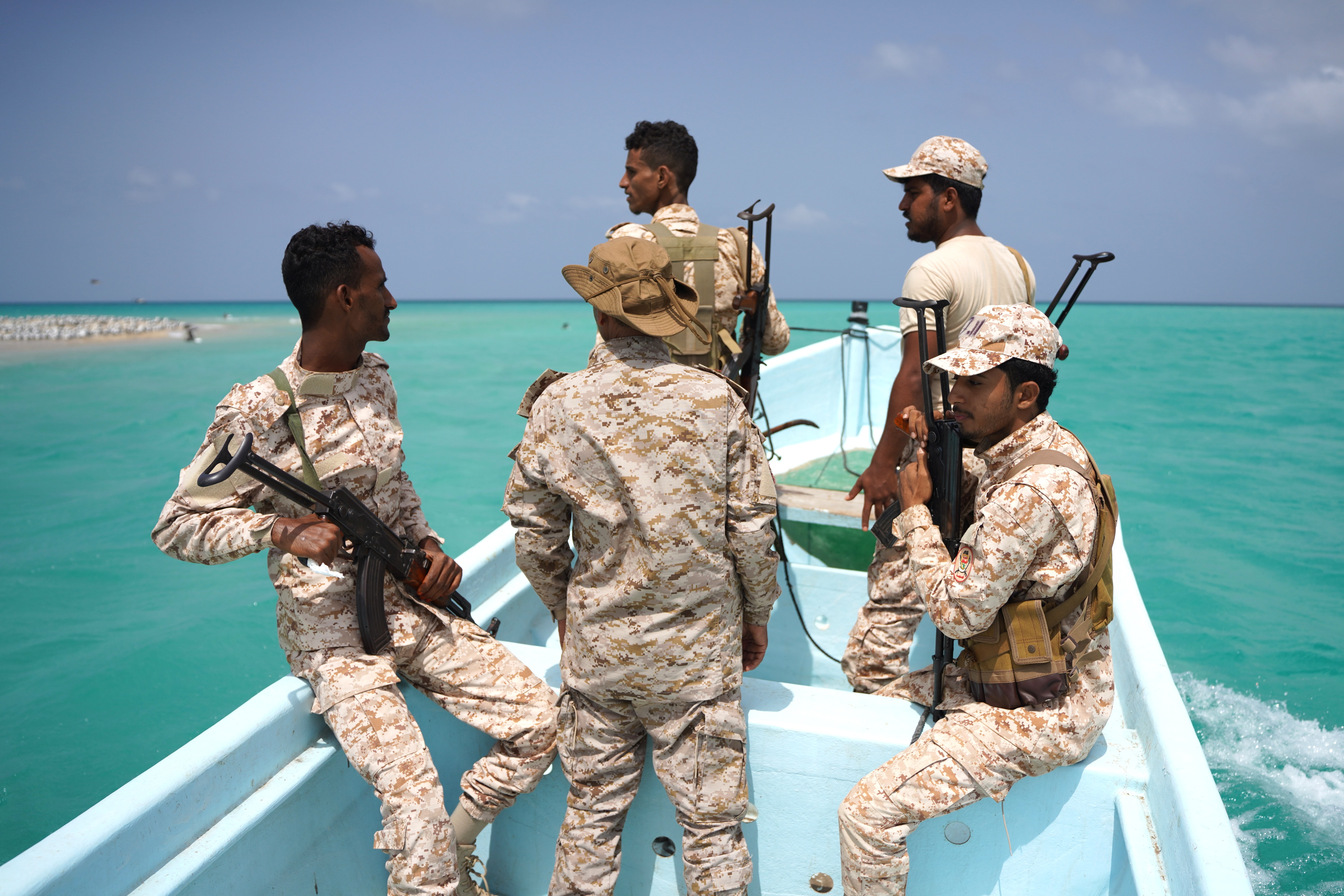
Yemeni soldiers patrol the strategic Bab el-Mandeb Strait on April 5, 2026. —Abdulnasser Alseddik—AP

As the U.S. and Iran trade fresh strikes over the Strait of Hormuz, concerns are mounting for another critical maritime chokepoint, the Bab el-Mandeb Strait.

Situated between Yemen and Djibouti and Eritrea in the Horn of Africa, the waterway has again come under threat by Houthi and Iranian officials.

Iran's Islamic Revolutionary Guard Corps (IRGC) warned Wednesday it could target "all other export corridors that benefit the U.S. and its allies" in response to the U.S. reinstating its naval blockade in the Strait of Hormuz.

"Regional energy exports are either shared by all, or denied to all," the IRGC said in a statement carried by state-run news agency IRNA.

The Houthis on Monday accused Saudi Arabia of breaking a four-year cease-fire, blaming the country for an airstrike on the Sana’a airport. After the bombing, the Houthis fired missiles at Saudi ​Arabia, with senior Houthi officials threatening to upend global trade transiting the Bab el-Mandeb.

“If the current situation aggravates, the Bab el-Mandeb Strait and the Strait of Hormuz will be closed in an operational alliance. Oil prices would then skyrocket to $200 a barrel in a dreadful shock,” a senior Houthi official warned, according to a report by Iran's Press TV.

Experts have told TIME it’s not entirely accurate to think of the Houthi rebels as a direct Iranian proxy, as “they have their own locally defined interests.”

Yet the warning over the Bab el-Mandeb has fueled concerns that Iran could seek to disrupt the Red Sea gateway by using Yemen's Houthi allies to assert pressure.

At times of heightened tensions, the Houthis have used the Bab el-Mandeb as a geopolitical bargaining tool, disrupting the passage of trade in a similar fashion to how Tehran has monopolized the Strait of Hormuz since the start of the Iran war.

With tensions over naval navigation in the Middle East reaching a critical point once more, here’s what you need to know.

What is the Bab el-Mandeb Strait?

The Bab el-Mandeb Strait connects the Red Sea to the Gulf of Aden and the Arabian Sea and is around 18 miles wide at its narrowest point.

It serves as a key transit route for oil shipments moving from the Persian Gulf through the Suez Canal to Europe and beyond to various worldwide shipping markets.

Experts tell TIME the waterway is critical for the global economy. 

“The importance of Bab el-Mandeb has increased specifically amid what's happening in the Strait of Hormuz,” says Noam Raydan, a senior fellow at The Washington Institute for Near East Policy. “Saudi Arabia managed to re-route some of the volumes that used to cross via the Strait of Hormuz and go mostly to Asia and other markets. They started using a pipeline that runs to the Red Sea and exporting out of the Red Sea via the Bab el-Mandeb.”

In November 2023, during the early stages of the Israel-Hamas war, Yemen’s Houthi militia began targeting commercial vessels in the Red Sea, disrupting flows through the Bab el-Mandeb. The Houthis framed their campaign as an act of solidarity with the Palestinian cause. 

According to the U.S. Energy Information Administration (EIA), crude oil exports and petroleum liquids transiting via the Bab el-Mandeb Strait increased from 5.7 million in 2020 to 9.3 million barrels per day in 2023. This figure decreased to 4.1 million barrels per day in 2024 following the Houthi attacks on the Strait and remained steady at 4.2 million barrels for the first quarter of 2025.

Following the cease-fire between Israel and Hamas in October 2025, it was reported the Houthis would pause their attacks on commercial vessels in the Red Sea.

However, in March, the Houthis entered the Iran war and in June, the group threatened to resume targeting Israeli-linked ships in the Red Sea.

Despite the rising tensions, Raydan says there has been an increase in transit via the Red Sea this year, with cargo companies pursuing alternative routes in light of the Strait of Hormuz coming under fire.

“We've had a lot of tankers that would go up to Yanbu instead of entering the Persian Gulf. They load in Yanbu, the Red Sea, and then they go back down via Bab el-Mandeb, and then they go to Asia, including markets like South Korea and China,” says Raydan.

Crude oil and condensate transiting the Bab el-Mandeb increased from 3.7 million barrels per day in the first quarter of 2025 to 5.4 million in the first quarter of 2026, according to the EIA.

Data from the EIA also shows that the flow of liquified natural gas (LNG) through the passage has significantly increased, having come to a halt in the second quarter of 2025 and returning to 2.9 billion cubic feet per day in the first quarter of 2026.

How has Iran threatened to restrict the Bab el-Mandeb Strait—and how could that impact global trade?

Throughout the Iran war, Iranian officials have threatened to use the Bab el-Mandeb as another way to exert pressure on the energy market and global economy. 

Mohammad Bagher Ghalibaf, Iran’s parliament speaker, has indicated Iranian interest in the Bab el-Mandeb, which is Arabic for "Gate of Tears," due to its tricky navigation conditions.

“What share of global oil, LNG, wheat, rice, and fertilizer shipments transits the Bab-el-Mandeb Strait?” he queried on April 3. “Which countries and companies account for the highest transit volumes through the Strait?” 

Iran’s direct ability to act in the region is limited, Eugene Gholz, an associate professor of political science at the University of Notre Dame, told TIME in April.

“The reason Iran can threaten to disrupt ships in the Strait of Hormuz is that Iran has military forces directly located on the coast of the Strait. Iran has no military forces near the Bab el-Mandeb,” said Gholz, adding that Iran would instead have to assert its influence via regional proxies.

Raydan tells TIME that having another vital chokepoint such as the Bab el-Mandeb disrupted in any way would undoubtedly “add more pressure to the global energy markets.”

“Fuel, oil, gasoline, and other products pass through Bab el-Mandeb. So oil tankers in general carrying liquids, we [also] have bulk carriers. These can carry, for instance, grains, they can carry steel. We have container ships. Container ships are the ones that can carry commodities like clothes, like toys, and other stuff. And then you have, of course, the gas carriers, and specifically here, I'm referring to liquefied natural gas (LNG) and liquefied petroleum gas, which is used for cooking and heating,” she says, highlighting the critical trade that transits the waterway.

If Iranian forces or the Houthis were to follow through on their threats against the Bab el-Mandeb, vessels would be forced to transit the Cape of Good Hope, a shipping route towards the southernmost point of the African continent, which could be a time-consuming and costly detour.

“If a ship wants to come to the Red Sea and Bab el-Mandeb is closed, and if it wants to get to Europe, the only way for it to do that, is to go around the Cape of Good Hope. There's no other way,” says Rayden.

Has Iran blocked the Bab el-Mandeb Strait before?

Iran has not directly blocked the Bab el-Mandeb Strait, which has largely fallen under the influence of Houthi forces since 2023.

Iran signaled interest in the area through limited naval activity in April 2015, when Iranian naval officials said two destroyers had reached the entrance of Bab el-Mandeb, describing their mission as protecting commercial shipping.

Analysis from the International Institute for Strategic Studies (IISS) has described the Iran-Houthi relationship as a partnership rather than a direct command structure.

The IISS found that, despite the presence of Iranian political and military advisers in Yemen's Sana’a, the relationship between Iran and the Houthis remains one in which both sides assert their independence while often aligning on foreign and military objectives.

How has the Strait of Hormuz disruption affected global trade?

The disruption of the Strait of Hormuz has thrown global supply chains into disarray and tightened energy markets around the world.

Oil prices surged at the end of April, with Brent crude nearing $126 per barrel—the highest level since 2022 when Russia invaded of Ukraine. 

The increase drove up gas prices in the United States and around the world.

In May, a U.K. lawmaker warned the world was on the brink of a “global food crisis” if the Strait of Hormuz did not immediately reopen. 

Following the signing of the Memorandum of Understanding on June 17, shipping through the Hormuz started to gradually resume, easing pressure on energy markets and sending both oil and gas prices steadily lower.

However, renewed hostilities—and Iran’s targeting of several commercial vessels—has caused prices to soar once more. 

According to the AAA, the national average price for U.S. gas reached $3.94 per gallon on Thursday. Prior to the onset of the Iran war, the national average for a gallon of regular gasoline stood at $2.98 on Feb. 26.

Brent crude, the international benchmark, reached $86.51 a barrel on Wednesday, its highest level in four weeks.

On Wednesday, 13 vessels transited the Strait, global trade intelligence source Kpler told TIME. This is far lower than the 138 vessels that typically passed through the waterway each day prior to the war.

show more
Target of Monaco bomb blames attack on Ukrainian spy agency
Published: 2026-07-16 14:51:34 | Created: 2026-07-16 14:56:37

Vadym Iermolaiev says military intelligence officers were behind assassination attempt that seriously wounded partner and child

Monaco bomb mystery deepens as Ukraine’s security services linked to murder of prime suspect

The Ukrainian businessman who survived an assassination attempt in Monaco has accused Ukraine’s military intelligence agency of organising the attack.

In his first public statement since the bombing that shook the wealthy principality, Vadym Iermolaiev alleged that serving and former officers of the GUR military intelligence agency were behind the attempted killing, which left him injured but his partner critically wounded.

Continue reading...
show more
Target of Monaco bomb blames attack on Ukrainian spy agency
Feed: World news | The Guardian (https://www.theguardian.com/world/rss)
Published: 2026-07-16 14:51:34 | Created: 2026-07-16 14:55:37

Vadym Iermolaiev says military intelligence officers were behind assassination attempt that seriously wounded partner and child

Monaco bomb mystery deepens as Ukraine’s security services linked to murder of prime suspect

The Ukrainian businessman who survived an assassination attempt in Monaco has accused Ukraine’s military intelligence agency of organising the attack.

In his first public statement since the bombing that shook the wealthy principality, Vadym Iermolaiev alleged that serving and former officers of the GUR military intelligence agency were behind the attempted killing, which left him injured but his partner critically wounded.

Continue reading...
show more
Air quality plummets in 20 US states as smoke from Canadian wildfires spreads
Feed: World news | The Guardian (https://www.theguardian.com/world/rss)
Published: 2026-07-16 22:21:08 | Created: 2026-07-16 14:55:37

Millions of Americans face air quality alerts from Minnesota to New York as authorities urge people to stay indoors

Smoke from wildfires burning in south-central Canada and parts of Minnesota is spreading across the US, prompting air quality alerts in more than 20 states with millions of Americans expected to face unhealthy air conditions this week.

The smoke from the more than 180 active wildfires in northern Ontario made Chicago’s air quality the worst in the world on Thursday evening, followed by Detroit and Minneapolis, according to IQAir’s global rankings.

Continue reading...
show more
New clues, including GPS data, emerge from Nolan Wells' death investigation
Published: 2026-07-16 14:42:55 | Created: 2026-07-16 14:51:38
Newly obtained GPS data from the Mississippi Department of Marine Resources tracks the movements of the boat that Mississippi teen Nolan Wells was on before he went missing. Wells was found dead after a Fourth of July boat trip to Horn Island with friends. CBS News' Anna Schecter has the latest on the investigation.
show more
Argentina fans overjoyed as Messi lifts team to 2-1 World Cup victory over England
Published: 2026-07-16 14:44:50 | Created: 2026-07-16 14:51:38
Argentina fans across the world celebrated as their team advanced to the FIFA World Cup final with a late comeback against rival England. CBS News' Nicole Valdes has more.
show more
Trump is expected to make election conspiracies a focus of his national address
Feed: PBS News Hour - The Latest (https://www.pbs.org/newshour/feeds/rss/headlines)
Published: 2026-07-16 14:44:22 | Created: 2026-07-16 14:47:37
President Donald Trump is set to address the nation on Thursday night on topics he said will include elections and voting machines, suggesting he is likely to revisit some of the unproven claims he has previously made about Republican losses, particularly his own in 2020.
show more
Foreclosures surged 21% in the first half of 2026, new data shows
Published: 2026-07-16 15:39:03 | Created: 2026-07-16 14:46:37
The state with the biggest jump in foreclosure activity was Idaho, where filings increased 59% compared to the same time last year.
show more
TikTok faces Ofcom investigation over child age checks
Published: 2026-07-16 11:08:33 | Created: 2026-07-16 14:45:38
It follows a review by the regulator in May that criticised the platform for not being "safe enough" for children.
show more
Claudia Winkleman quits chat show after one series
Published: 2026-07-16 12:37:32 | Created: 2026-07-16 14:45:38
Winkleman said she was "incredibly grateful" for the opportunity, but had been "too nervous" to enjoy it.
show more
How to Protect Yourself From Wildfire Smoke
Published: 2026-07-16 14:40:51 | Created: 2026-07-16 14:45:37
Monitor air quality, prepare to stay inside and pay close attention to people with chronic conditions.
show more
From The Sports Desk: Lionel Messi leads another late comeback win for Argentina
Published: 2026-07-16 14:30:00 | Created: 2026-07-16 14:42:37
In the second World Cup semifinal, England struck first, taking a 1-0 lead early in the second half and then retreating into a defensive shell.
show more
Burnham too influenced by ‘vested interests’ to offer change, Polanski says
Feed: World news | The Guardian (https://www.theguardian.com/world/rss)
Published: 2026-07-16 14:35:14 | Created: 2026-07-16 14:40:38

Exclusive: Green party launches pushback against idea that next PM will have more left-leaning agenda than Starmer

Andy Burnham is “too in hock to vested interests” to offer real change, Zack Polanski has said as the Greens launched a pushback against the incoming prime minister, portraying him as cautious and weak on such areas as wealth taxes, Gaza and rent controls.

Under Polanski’s leadership the Green party in England and Wales has more than tripled its membership, and is closely tracking Labour in opinion polls, with much of the new support coming from former Labour voters disenchanted with Keir Starmer’s approach.

Continue reading...
show more
Private schools offer 41% more tree shade than state schools in England
Feed: World news | The Guardian (https://www.theguardian.com/world/rss)
Published: 2026-07-16 14:37:19 | Created: 2026-07-16 14:40:38

Analysis reveals stark socioeconomic divide, with schools with highest free school meal eligibility having fewer trees

Private school grounds in England offer 41% more tree cover than at state schools for cooling and shade in extreme temperatures, research has found.

As teachers and students prepare to take their summer holidays after weeks of high temperatures where some classrooms reached highs of 40C, an analysis of tree cover in schools in England reveals a stark socioeconomic divide.

Continue reading...
show more
Why AMI Labs’ Alexandre LeBrun won’t call his AI ‘AGI’ or ‘superintelligence’
Published: 2026-07-16 14:40:00 | Created: 2026-07-16 14:40:37
While everyone in AI is chasing "superintelligence," Alexandre LeBrun, CEO of Yann LeCun’s world model startup, AMI Labs, dismisses the word.
show more
Wildfires force thousands to evacuate as smoke darkens skies over major cities
Feed: The Latest News from the UK and Around the World | Sky News (https://feeds.skynews.com/feeds/rss/home.xml)
Published: 2026-07-16 10:17:00 | Created: 2026-07-16 14:39:37
Thousands of people have been told to leave more than a million acres of wilderness as wildfires spread.
show more
Football Daily | It’s the end of the World Cup as England know it
Published: 2026-07-16 13:38:05 | Created: 2026-07-16 14:36:38

Sign up now! Sign up now! Sign up now? Sign up now!

They say never go that far back. In the last half an hour of their end-of-days Geopolitics World Cup semi-final with Argentina, England committed to the bit in the Deep South. No wonder there were gaps. Thomas Tuchel stood and watched national trauma unfold in front of his eyes as towering aerial threats such as Alexis Mac Allister and Lautaro Martínez beat his four centre-backs to cross after cross. Forget the ghosts of ‘66, the spectre of Southgate loomed over his successor as realism reared its ugly head at the business end of an England men’s major-tournament run once again.

Continue reading...
show more
Female tennis players faced 12,000 abusive posts in 2025
Published: 2026-07-16 14:31:17 | Created: 2026-07-16 14:36:38
Female tennis players received 12,000 abusive posts in 2025, according to a new report.
show more
Dozens rescued in central Texas after region hit by flash flooding for third day in a row
Published: 2026-07-16 14:24:17 | Created: 2026-07-16 14:32:37
Torrential rain slammed central Texas for the third day in a row, triggering dangerous flash floods in parts of the region. The same storm system also spun up a tornado near San Antonio. Jason Allen has the latest.
show more
Senior defense officials considering military action against Cuba
Published: 2026-07-16 14:25:02 | Created: 2026-07-16 14:32:37
The Pentagon is drawing up plans for possible military action in Cuba, U.S. officials say. Charlie D'Agata reports.
show more
Meteorite that hit home contains "alien world chemistry," experts say
Published: 2026-07-16 14:26:00 | Created: 2026-07-16 14:29:37
When scientists examined the preserved fragments of a meteorite that crashed in 2024, they found brine-like fluids and key molecules.
show more
From the archives: Pat Oliphant and the art of political cartoons
Published: 2026-07-16 14:26:09 | Created: 2026-07-16 14:29:37
Pulitzer Prize-winning cartoonist Pat Oliphant, whose acidic drawings skewering political figures were syndicated in as many as 500 publications around the world, died on July 13, 2026 at age 90. In this April 16, 2000 "Sunday Morning" story, Oliphant talked with Morley Safer about caricature, censorship, and the influence of the first great political cartoonist, 19th century French master Honoré Daumier, whose grotesque drawings of King Louis Philippe led to a curtailment of press freedom in France in 1835.
show more
How much interest will a $5,000 no-penalty CD earn now?
Published: 2026-07-16 14:26:28 | Created: 2026-07-16 14:29:37
Wondering if a no-penalty CD is worth it in this rate landscape? Here's what a $5,000 deposit could earn today.
show more
Denshattack! review – time to get on board with kickflipping trains
Published: 2026-07-16 14:09:39 | Created: 2026-07-16 14:27:38

PC, PS5, Xbox Series X/S, Nintendo Switch 2; Undercoders
Colourful, counter-cultural and captivating – this rail riding game set in a dystopian Japan is as weird as it is exhilarating

Every now and again a game appears with a premise so outrageous you stop in your tracks to take it all in. Denshattack!, a game about kickflipping trains across a dystopian future Japan, is the epitome of this feeling. Set in a post climate disaster world, people have retreated to corporate-owned domed cities to live out their days in air-conditioned, ignorant comfort. Save for a handful of outcasts, the rest of the country is a mess of broken infrastructure, where rival gangs battle it out on the ruins of Japan’s famously extensive rail network. Naive upstart Emi has one goal: become the best Denshattacker there is, one sick nosegrind at a time.

Taking the idea of an on-rails platforming game to its extreme conclusion, developers Undercoders have combined the best bits of the Tony Hawk’s Pro Skater series – grinding, flipping and spinning through an entire dictionary of tricks – with the anti-establishment message behind Jet Set Radio. The rivals Emi encounters showcase the history of Japanese misfits, pitting you against ageing rockabillies and violent girl gangs without a shred of judgment.

Continue reading...
show more
Grief Is the Thing With Feathers by Max Porter review – a bravura rendering of bereavement
Published: 2026-07-16 14:00:42 | Created: 2026-07-16 14:27:38

Actor Russell Tovey’s narration crackles with compassion and menace in this magical story of a widower and his young sons in mourning

Less than a week after the sudden death of his wife, a grieving man opens his front door to a giant crow who scoops him up into his wing and tells him: “I won’t leave until you don’t need me anymore.” Still in shock, the man is facing the prospect of raising his two young sons alone. The bird, which has previously been roaming around the family’s flat at night, has observed a household of “heavy mourning, every surface dead Mum, every crayon, tractor, coat, welly covered in a film of grief”. In that first visit, the man “woke up and didn’t see me against the blackness of his trauma”.

First published in 2015 and since adapted as a play and film, Grief Is the Thing With Feathers is an inventive and sharply observed novella by Max Porter which uses verse, dialogue and the supernatural to examine a family grappling with the loss of a wife and mother who had been “busy living, and then she was gone”. In a story that shifts between the perspectives of “Dad”, “Boys” and “Crow”, we learn the man is a writer who is working on a book about the poet Ted Hughes called Crow on the Couch.

Continue reading...
show more
Moonshot’s upcoming Kimi 3 is expected to close the gap with Anthropic’s Opus 4.8
Published: 2026-07-16 14:26:29 | Created: 2026-07-16 14:26:37
The FT reports Kimi K3 will be the largest open AI model from China, with a parameter count between 2 trillion and 3 trillion. 
show more
U.S. and Iran trade more attacks as feud over Strait of Hormuz escalates
Published: 2026-07-16 14:18:50 | Created: 2026-07-16 14:24:37
The U.S. unleashed another night of strikes targeting multiple locations aimed at degrading Iran's ability to threaten commercial shipping in the Strait of Hormuz. CBS News' Courtney Kealy reports.
show more
Fan may get 'only joking' added to England World Cup winners tattoo after defeat
Published: 2026-07-16 14:03:30 | Created: 2026-07-16 14:23:37
Sean Carrington says he has "no regrets" about his tattoo despite the Three Lions' frustrating exit.
show more
Trump fires U.S. attorney in Washington on heels of court appointment
Published: 2026-07-24 00:35:00 | Created: 2026-07-16 14:22:37
Judges on the U.S. District Court for the Western District of Washington had appointed Roger Rogoff as U.S. attorney in Seattle. But he was fired shortly after.
show more
The Odyssey, by Donald Trump
Published: 2026-07-16 16:36:27 | Created: 2026-07-16 14:20:37
The president lacks not only a coherent strategic concept but an elementary understanding of what strategy is.
show more
Navy's Blue Angels won't be reprimanded after video shows low flyover
Published: 2026-07-16 21:13:00 | Created: 2026-07-16 14:16:37
The Blue Angels said an aircraft "flew lower than standard profiles, resulting in a disturbance on the beach that affected civilian chairs and umbrellas."
show more
'Good day to drown a few sorrows,' says King as he pours pint
Published: 2026-07-16 13:58:32 | Created: 2026-07-16 14:12:37
King Charles III hinted at England's World Cup semi-final loss as he poured a pint in a pub.
show more
Pergolesi: L’Olimpiade album review
Published: 2026-07-16 14:00:40 | Created: 2026-07-16 14:11:38

Monaco/Raftis/Colombo/Frigato/Orchestra Ghislieri/Prandi
(Arcana)

Recorded from a live performance in an 18th-century theatre in Jesi – Pergolesi’s hometown – this is a brain-addling tale of love triangles and long-lost twins set in the ancient Olympics

Pietro Metastasio’s tale of dirty doings at the ancient Olympic Games proved so popular that more than 60 composers set it to music, including Caldara (for whom it was written), Vivaldi and Cherubini. Pergolesi’s version, premiered in 1735, resurrected in 1937, is among the finest, presaging what should have been a glorious operatic career if only the composer hadn’t died at the age of 26.

The story begins as the formidable Megacle is persuaded to compete in disguise as his hot-headed and not entirely honourable friend Licida. What Megacle doesn’t know is that the prize is the hand of Aristea, the woman he has fallen in love with himself. Throw in Licida’s cast-off mistress Argene masquerading as a shepherdess and the discovery that Licida is actually Aristea’s long-lost twin and you have all the ingredients for a plot of brain-addling complexity.

Continue reading...
show more
Hal Williams, actor best known for Sanford and Son and 227, dies aged 91
Published: 2026-07-16 13:49:42 | Created: 2026-07-16 14:11:37

The actor, who also appeared in The Waltons and Private Benjamin, died at his home in California

Hal Williams, the actor best known for TV roles in Sanford & Son and 227, has died at the age of 91.

His representative confirmed that Williams died on 15 July at his home in California.

This article was amended on 16 July 2026. It was originally stated that Sanford and Son ran from an incorrect number of years

Continue reading...
show more
Trump’s Board of Peace drops full Gaza recovery plan in favour of tiny pilot scheme
Published: 2026-07-16 13:58:29 | Created: 2026-07-16 14:11:37

Revised plan aims to ‘keep something going’ amid fears Netanyahu may gamble on new all-out offensive before Israeli elections

The Gaza recovery plan being pursued by Donald Trump’s Board of Peace (BoP) has shrunk dramatically from an ambitious blueprint for the reconstruction of the whole territory to a small pilot project in the south of the strip.

Even the envisaged pilot scheme – involving a temporary camp for a tiny fraction of Gaza’s 2 million displaced people, with a Palestinian administration, police and a small international security force – is not expected to take shape before the end of the year.

Continue reading...
show more
How green is Andy Burnham? Britain’s next PM faces tough climate decisions
Feed: World news | The Guardian (https://www.theguardian.com/world/rss)
Published: 2026-07-16 14:00:41 | Created: 2026-07-16 14:10:37

Heatwaves, high energy prices, calls for reindustrialisation and North Sea drilling are all high on the to-do list

Wildfires cast a pall of smoke this week over Greater Manchester, whose former mayor Andy Burnham stands on the threshold of No 10. Amid three UK heatwaves so far this year, which have killed thousands of people in England and Wales, damaged harvests and left children crying in classrooms, the new prime minister’s plans for the climate crisis remain as shrouded as his city.

“Burnham has been very quiet about the climate [crisis] so far,” says Chris Venables, an environmental campaigner and fellow at the Green Alliance thinktank. “I don’t think [it] is at the forefront of his mind, but that does not mean he will water down this agenda.”

Continue reading...
show more
Trump’s Board of Peace drops full Gaza recovery plan in favour of tiny pilot scheme
Feed: World news | The Guardian (https://www.theguardian.com/world/rss)
Published: 2026-07-16 13:58:29 | Created: 2026-07-16 14:10:37

Revised plan aims to ‘keep something going’ amid fears Netanyahu may gamble on new all-out offensive before Israeli elections

The Gaza recovery plan being pursued by Donald Trump’s Board of Peace (BoP) has shrunk dramatically from an ambitious blueprint for the reconstruction of the whole territory to a small pilot project in the south of the strip.

Even the envisaged pilot scheme – involving a temporary camp for a tiny fraction of Gaza’s 2 million displaced people, with a Palestinian administration, police and a small international security force – is not expected to take shape before the end of the year.

Continue reading...
show more
Opinion | The Church’s Hope in China
Published: 2026-07-16 14:07:00 | Created: 2026-07-16 14:08:37
Ezra Jin’s release raises hopes for the country’s faithful.
show more
A War Neither America Nor Iran Can Win
Published: 2026-07-16 14:00:00 | Created: 2026-07-16 14:06:38
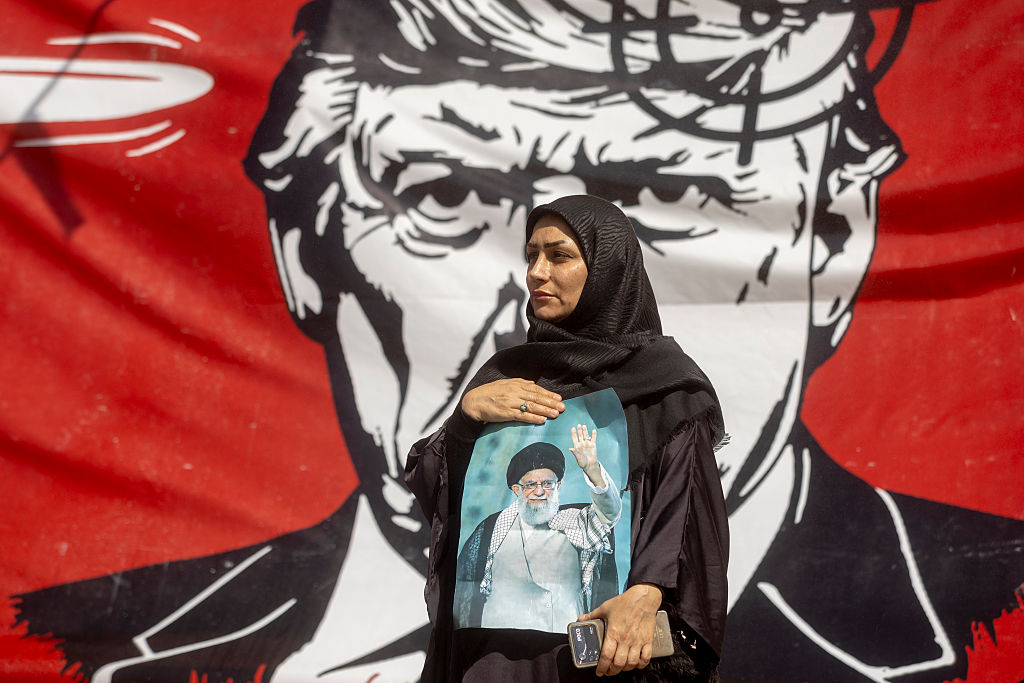
A woman holds a portrait of Iran's slain Supreme Leader, Ayatollah Ali Khamenei, in front of a banner depicting President Donald Trump with a target on his head, during Khamenei's funeral ceremonies on July 5, 2026 in Tehran, Iran. —Majid Saeedi-Getty Images

Fears of a return to full blown war are growing as the United States and Iran are increasingly trading military strikes. The memorandum of understanding the two countries signed after 40 days of American and Israeli bombing on Iran and Iranian strikes against the Gulf countries and Israel­­ lasted barely a month before it unravelled.

The Trump Administration has revoked the sanctions waivers it offered Iran, reimposed the naval blockade of Iran’s ports, conducted heavy aerial bombing on more than a 100 military targets in the country. Iran has retaliated against American allies in the Gulf: Kuwait, Bahrain, and Jordan. The speed of this collapse reveals that Washington and Tehran signed an initial agreement without ever agreeing on what it was meant to accomplish.

Washington treated the initial agreement as the opening move in a process to restore freedom of navigation through the Strait of Hormuz, ease the economic strain of the closed waterway, and gradually constrain Iran’s coercive capabilities. Tehran considered it as a pause that preserved leverage while testing the Trump Administration's seriousness and appetite for a wider deal. Tehran never accepted that the agreement required it to relinquish influence over the Strait or guarantee unrestricted passage through it.

The gaps in interpretation hardened quickly into suspicion. Iranian officials concluded that the U.S. was using the lull to weaken them by degrees, opening a passage out of the Strait in coordination with Oman and working to disentangle Lebanon and Hezbollah from Iran’s orbit.

From Tehran’s perspective, the initial agreement had become a mechanism for extracting concessions. Iran responded by striking ships and reasserting its capacity to disrupt maritime traffic. Washington read the strikes as an outright breach and resumed military action.

Tehran and Washington are locked in conflict over the Strait of Hormuz, but it is not simply a dispute over the waterway.

For Washington, freedom of navigation was always a precondition for broader diplomacy. For Tehran, the threat to navigation was leverage to be traded away only within a comprehensive settlement. The United States and Iran were never negotiating the same thing.

Why Tehran is betting on escalation

Iran’s return to conflict is best read as a calculated gamble. Its leaders seem to judge gradual strategic erosion as more dangerous than another confrontation with the United States, and potentially Israel, whose willingness to strike Iranian territory independent of Washington remains a live variable in how far this escalates.

Above all, Tehran’s leadership fears a staged unwinding of its leverage. Once it stops threatening shipping and restrains its regional partners, those tools become difficult to recover. Escalation, in this logic, is meant to raise the cost of the standoff enough to force Washington back to the table on broader terms.

That wager rests on their accurate reading of President Donald Trump himself. Tehran expects him to want to avoid rising energy prices, American casualties, and another open ended war in the Middle East, particularly with midterm elections approaching. Iran’s strategists appear eager to challenge Trump before the mid-term elections rather than wait for a post-election return to war. 

But Tehran may be misreading the source of Trump’s caution. He entered his second term with an aggressive projection of American power and appears to have approached Iran with the same assumption as he did with Venezuela: that overwhelming force could quickly compel a supposedly weaker country to submit. In doing so, he underestimated the resilience of the Iranian state. His reluctance to accept an open-ended war coexists with a deep aversion to humiliation, creating the risk that failed coercion will lead not to restraint but to further escalation.

The domestic trap in Iran

Iran’s internal politics make compromise harder still. Ayatollah Ali Khamenei’s nine-day, multi-city funeral allowed the state to project continuity after the death of their longstanding Supreme Leader and the bombing campaign that preceded it. The choreography also exposed real uncertainty and elevated calls for revenge. The absence of the new Supreme Leader Mojtaba Khamenei from public view, attributed to injury or security precautions, underscored how unsettled the distribution of power remains inside a factionalized system that still depends on internal consensus to function.

There was enough agreement among the Iranian leadership to sign the memorandum of understanding and test American appetite for negotiation. There is no formal consensus, however, and no faction willing to move first on anything that could be portrayed as surrendering leverage, legitimizing the bombing campaign, or handing Trump a clear victory.

A fatwa against Trump issued on Jun. 29 by Grand Ayatollah Makarem Shirazi, an influential and senior cleric, reinforces this dynamic. It recasts Trump not merely as the leader of a hostile state but as a personal and religious adversary of the Islamic Republic, which makes any future accommodation with him politically costly.

Continued conflict also benefits the Islamic Revolutionary Guard Corps (IRGC), which controls the state’s principal instruments of military and regional pressure. The longer negotiation can be framed as capitulation, the more that coercive leverage stays in the hands of the security establishment. Ayatollah Ruhollah Khomeini once described accepting the 1988 ceasefire with Iraq as drinking from a poisoned chalice. Today’s leadership does not yet believe continued resistance demands such a compromise, which is precisely why it has not reached for that chalice itself.

The risk of overreach

Iran may be securing short-term leverage, but it will come at the expense of its longer-term position. Continued attacks on shipping will grow harder for Gulf Arab governments to tolerate. They have spent years managing a careful balance with Tehran, but they are unlikely to indefinitely absorb daily strikes and open threats to trade, energy exports, and regional stability. If sustained, this strategy risks backfiring.

The Gulf states will lean harder on American protection and tighter security coordination rather than coming to see Iran as central to any workable regional order. The United Arab Emirates and Saudi Arabia are already developing plans to reduce their dependence on Hormuz by building alternative pipelines and ports. It also risks hollowing out the mediators’ role. Qatar, Oman, and Pakistan can broker diplomacy only while both sides continue to value that channel. Repeated breaches and widening strikes steadily narrow that space, and with it, Iran’s own room to negotiate a way out when it eventually decides it needs one.

Ultimately, Iran is running a familiar playbook of escalating to deescalate. By returning to conflict, it hopes to demonstrate that it cannot be weakened gradually and that no stable regional order can be built without it. This strategy only works if both sides preserve a credible path back to diplomacy. Without one, escalation will compound, hardliners will be empowered, mediators will lose patience, and every future concession will get politically harder for both governments to make. There is no durable military solution.

Tehran cannot compel Washington to abandon its regional interests, and Washington cannot eliminate Tehran’s ability to impose costs without risking exactly the wider war it says it wants to avoid. The only viable path forward is a revived, mutually understood memorandum of understanding covering maritime passage, sanctions relief, nuclear limits, and military restraint, with real mechanisms to verify compliance including a deconfliction channel to resolve disputes before they escalate. 

Without that reciprocity, the pattern will likely repeat. Tehran will keep arming itself against disarmament, Washington will misread its leverage, and the next ceasefire will be just another interlude rather than a path toward any lasting exit from these wars.

show more
Why you should care about World Cup third-place play-off
Published: 2026-07-16 10:44:03 | Created: 2026-07-16 14:03:37
It might feel like the last thing anyone wants right now - but here is why, actually, you do want to watch the World Cup's third-place play-off.
show more
Argentina defeats England in stunning comeback to claim spot in World Cup final
Published: 2026-07-16 13:56:49 | Created: 2026-07-16 14:02:37
Argentina will face Spain in the World Cup final after scoring twice in the last seven minutes against England to mount a stunning comeback. Nicole Valdes reports.
show more
How do creditors decide whether to accept a settlement offer?
Published: 2026-07-16 13:57:05 | Created: 2026-07-16 14:02:37
Creditors weigh more than your offer amount, so what else can improve your odds of reaching a settlement?
show more
Exclusive discounts from CBS Mornings Deals
Published: 2026-07-16 13:46:44 | Created: 2026-07-16 13:57:37
On this edition of CBS Mornings Deals, we show you items that will help improve your everyday lifestyle. Visit cbsdeals.com to take advantage of these exclusive deals today. CBS earns commissions on purchases made through cbsdeals.com.
show more
The man who would change Russia?
Published: 2026-07-16 12:51:03 | Created: 2026-07-16 13:56:38
On the contrary, Andrey Melnichenko’s essay is about how to make sure nothing changes at all, says Boris Bondarev
show more
Politics
Published: 2026-07-16 12:53:49 | Created: 2026-07-16 13:56:38

No content available

Business
Published: 2026-07-16 12:53:49 | Created: 2026-07-16 13:56:38

No content available

Page 736 of 988 (49396 total items)