RSS Feeds
4 Best Personal Safety Alarms: Garmin, Sabre, & More (2026)
Oil Prices Tick Higher as U.S. Reinstates Iran Blockade
A SpaceX vet raised $65M to pull wire harnesses out of the Cold War era
Bollywood just surrendered to censorship. Hollywood could be next.

In 2023, the Indian director Honey Trehan was on the verge of a breakthrough. His film Punjab ’95, which told the story of a human rights activist murdered for investigating mass killings of Sikhs in the state of Punjab, had been given a prominent slot at the Toronto International Film Festival. Trehan was convinced the film would be big; its star, Sikh Bollywood A-lister Diljit Dosangh, believed in the project so much that he didn’t even ask for a salary.
Key takeaways
- The recent censorship of the Indian film Satluj has drawn new attention to the way that Indian Prime Minister Narendra Modi has attacked free expression in Bollywood.
- Over the course of more than a decade in power, Modi has used a mix of punishment and incentives to push the massive industry away from producing themes that challenge his government — and turned propaganda films into box office successes.
- There’s a lesson here for the United States. Though protections for free speech in Hollywood are far more robust, Trump has made several moves that resemble Modi’s — suggesting that Americans need to be vigilant about protecting free speech here.
But the premiere never happened. According to Trehan, his producer got a threatening call from someone affiliated with the Indian government, saying that if the film screened in Toronto, it would never appear at home. Trehan and his producer agreed, but the approval never came. India’s ratings agency, the Central Board of Film Certification (CBFC), demanded 127 cuts — including cutting the word “Punjab” from a film about the state. If implemented, they would have left the film (in Trehan’s words) as little more than a “trailer.”
After years of court cases and failed wrangling, Trehan and his producer gave up on a theatrical release. They signed an agreement with Zee5, an Indian streaming service, to premiere the film exclusively on their platform in July under the new name Satluj.
But just two days after the film’s release on July 3, Zee5 removed Satluj for Indian viewers at the request of the government, which claimed the film threatened public order and national security. This weekend, it was removed from Zee5’s international service as well, meaning the film was no longer legally accessible anywhere on the planet.
When we spoke on Monday, Trehan was still unsure why the government had gone to such great lengths to suppress his film. He claims to have heard nothing beyond vague public claims about the film threatening public safety and Indian sovereignty. But it’s clear that the events had rocked his faith in his country.
“When all these kinds of things happen,” he says, “you are bound to ask this question to yourself: Are we still living in a democracy?”
Since Prime Minister Narendra Modi took office in 2014, the Indian film industry — which has a cultural footprint that rivals Hollywood and even surpasses it in some regions — has undergone a transformation. Once seen as a bastion of Indian multiculturalism and secularism, the kind of business where Muslims and even Pakistanis could be stars, the Indian film industry has increasingly been remade in its right-wing government’s image. Films that celebrate Hindus and demonize Muslims make up an ever-growing share of industry output; films that take up politically difficult topics, like Satluj, are becoming scarcer.

This is by design. As part of its broader assault on democratic freedoms, the Modi government has taken a series of very visible steps to reward ideologically simpatico filmmakers — and punish dissidents. The industry has gotten the message, and shifted its output accordingly. Those filmmakers willing to speak publicly, like Trehan, describe a widespread climate of self-censorship, painting a portrait of an industry that has chosen compliance over courage.
“There are so many things I want to make and I get told, ‘No one will touch it,’” the Indian director Shruti Ganguly tells me. “Actors who speak out against the government — they don’t get work.”
Understanding how this happened matters to Indians — but not only them. The Trump administration has, in several ways, laid the groundwork for a similar attack on cinematic free speech. While the American version is vastly less developed than what’s happening in India, the subordination of Bollywood has exposed the general means through which a powerful and seemingly liberal entertainment industry can be brought to heel by a determined government.
In today’s America, “you can see an [early stage] of what happened to allow institutions to be captured and politicized” in India, says Sadanand Dhume, an expert on Indian politics at the Council on Foreign Relations think tank.
The fall of Bollywood
Censorship in Indian film is hardly new. The CBFC, created in 1951, is empowered not just to rate movies but to block their release outright if it finds a film contrary to any of the sweeping categories in Section 5B of the Cinematograph Act: the sovereignty of India, the security of the state, friendly relations with foreign countries, public order, decency, or morality.
It is a power that certainly had been abused prior to Modi’s premiership. Aman Bhargava, a data scientist based in Bangalore, recently examined data on over 8,000 Indian films censored by the CBFC between its founding and the end of the 20th century. His investigation found extremely high levels of censorship in the board’s first three decades, focusing primarily on depictions of sex and violence. But political censorship was hardly unheard of. During the Emergency, a two-year period from 1975 to 1977 where Prime Minister Indira Gandhi assumed essentially dictatorial powers, censors literally burned the prints of a film satirizing her leadership.
“There are so many filmmakers whose film is stuck. But they are not ready to speak out of fear.”
Honey Trehan, director
By the 1990s, instances of CBFC censorship had declined dramatically. Modi has not only revived it, but significantly expanded its scope — creating a new censorial regime even worse than what came before. “The past was problematic. The present is worse,” Dhume says.
This judgment is backed by extensive evidence, published in both the Indian and American press, demonstrating the government’s increasingly tight grip over Hindi-language filmmaking.
The most obvious mechanism has been politicization of the CBFC. The current chair — a poet named Prasoon Joshi — is a vocal ally of the prime minister; in a phone call, the Indian film critic Sucharita Tyagi described him as a government “stooge.” Trehan, similarly, says the body is working “hand-in-glove” with Modi’s Ministry of Information “to control the narrative” on politically sensitive topics.
Over time, the Modi government has moved to remove checks on its allies’ power. In 2021, it eliminated a decades-old special appellate board that allowed filmmakers to contest CBFC rulings — forcing them instead to go through regular litigation for relief. But India’s justice system is slow and expensive, often an unrealistic option for movies that need to make their budgets back in a timely fashion. Trehan’s Satluj shows how difficult it is to fight the censor, and why so few in Bollywood are willing to do it.
“Over the past decade, the CBFC has become less a certifying body and more an arm of state-sponsored and sentiment-driven censorship,” journalist Saurav Das wrote last year in Frontline, an English-language Indian magazine published by The Hindu newspaper. “With every decision, every inexplicable demand for cuts, and every instance of folded resistance in the face of fringe protests, the Board has revealed what it truly is: a morality police in disguise.”
Nor is the CBFC Modi’s only weapon. “The tax authority,” Dhume says, “is basically completely politicized in India” — and can be wielded against filmmakers and studios who step out of line. So can the police: Five years ago, Indian police arrested the son of Muslim megastar Shah Rukh Khan on drug charges. The move was widely interpreted as retaliation for Khan’s outspokenness on violence against Muslims. Khan’s son was detained for three weeks and released on bail; prosecutors dropped the charges seven months after his arrest, ultimately admitting he never had possessed drugs in the first place.

Modi’s BJP party also has something no prior Indian government possessed: a fervent online cadre that directs waves of threats and harassment at dissident directors, actors, and even film critics. In January 2021, a Muslim supporting actor in an Amazon-hosted streaming show called Tandav — a soapy political drama that took shots at life under the BJP — became deluged by online hate. Angry Modi fans repeatedly reported him to the police for alleged insults to Hinduism; Amazon eventually cut one of his scenes to try and appease the mob.
But the Modi government hasn’t been satisfied with only punishing critical filmmakers. It has also provided ample incentives to studios who wish to make ideological propaganda.
This began with 2022’s The Kashmir Files, a movie about very real killings of Hindus in the contested territory of Jammu and Kashmir that exaggerated the scope and severity of the situation to demonize Muslims. Widely panned by critics as dishonest shlock, the film received a huge promotional push from the ruling party. Modi personally endorsed it, and at least eight BJP-governed states gave it a special exemption from entertainment taxes to lower ticket prices. BJP states also gave government employees time off from work to go see the film, and even hosted screenings. As a result, it was one of the best-performing movies of the year.
The success of The Kashmir Files showed that there was a real audience for aggressively nationalist films — as makes sense in a country that has elected Modi to the premiership three times, and where he currently enjoys a roughly 70 percent approval rating. As such, it has spawned more sophisticated imitators.
In 2025, a film called Dhurandhar — a slick action movie about an Indian sleeper agent killing his way through mafia and terror networks in Pakistan — dominated the box office, becoming the third-highest grossing Hindi film of all time. Dhurandhar 2: The Revenge premiered this year, and is more nakedly propagandistic: Variety’s reviewer wrote that it “practically features Modi as a supporting character through endless news snippets.” It has already surpassed the box office total of its predecessor.
The end result is a kind of profit-minded self-censorship. Increasingly, Indian film studios shy away from financing movies with controversial themes and shovel money at jingoistic fare like Dhurandhar. An 11-month investigation by the Indian publication Article 14 concluded that this has effectively transformed the most prominent sector of the Indian film industry.
“Barring a minuscule minority, Hindi filmdom has collectively capitulated before the BJP government, thus handing a virtual cakewalk to the right-wing in India’s most high-profile film industry,” Article 14’s Anna M M Vetticad writes.
To be clear: It’s not that critical voices in the film industry have been silenced entirely. Independent-minded films still get made — like 2023’s Jawan and Pathaan, Shah Rukh Khan-led action films that The Atlantic described as “littered with subversive commentary on India under Modi.” The environment is markedly freer outside Hindi-language cinema; the Malayam and Tamil film industries have been more resistant to government pressure.

But the Hindi industry is the biggest and most influential: The term “Bollywood” itself generally refers only to Hindi studios. And it’s clear that the balance is off there — leading the government’s anti-Muslim narrative to dominate in one of India’s most important cultural spheres.
“There are so many filmmakers whose film is stuck,” Trehan says. “But they are not ready to speak out of fear.”
The future of Hollywood?
What Modi has done to Indian film carries clear lessons for other backsliding democracies — most notably, the United States.
The first lesson is that free expression in major industries depends, in large part, on preserving nonpartisan leadership and norms in powerful government agencies.
India’s CBFC, tax agencies, and law enforcement have long had problems, including abusive political interventions. But Modi has made these problems considerably worse, to the point where it is less a change in degree than in kind. Today, key agencies have become staffed by political cronies who act like extensions of ruling parties. This capture of nominally nonpartisan institutions is what enabled him to bring so much political pressure on studios, producers, and actors.
The second lesson is that big cultural industries — whatever their professed political values — are first and foremost profit-seeking entities. Bollywood has a reputation as a more culturally progressive space, even casting Pakistani actors in prominent roles during the early Modi years. But when it became clear that the balance of financial power favored the government, that critical films might never see the light of day and propagandistic ones would make bank, Indian film studios shifted accordingly.
“Movie-making is an expensive business, so you understand where they’re coming from.” Dhume says. One film critic, granted anonymity by Indian journalist Kaashif Hajee, was even blunter: “The only God is the box office.”
We have seen both of these mechanisms at work in the second Trump administration.
President Donald Trump has famously demolished the independence of agencies like the Justice Department and the Federal Communications Commission, and even tried to weaponize them against its enemies in the entertainment industry — most notably when it tried to force Jimmy Kimmel off the air earlier this year.

That effort failed. But there are also many examples of American conglomerates seeming to bow to government pressure, like CBS’s decision to cancel Trump critic Stephen Colbert’s show while its parent company awaited FCC approval for its merger.
There’s even a handful of examples of studios pushing out films nakedly bidding for the president’s favor, like Amazon’s Melania documentary. While that film was a box office dud — it made just $16.7 million on a $75 million budget — it was widely seen as an effort to win favor with the administration on other regulatory matters. Ted Hope, one of the founders of Amazon’s studio arm, called the film “an outright bribe” in an interview with the New York Times.
Overall, however, these cases remain exceptional. There is no evidence that the American entertainment industry is shifting toward MAGA propaganda in any mass way; Trump critical-fare (like the Star Wars series Andor or the superhero satire The Boys) remains vastly more popular with critics and audiences.
This owes partly to structural dissimilarities between the United States and India. The American ratings board has long been far weaker than the CBFC, and the First Amendment is far stronger than India’s constitutional speech protections. We are less than two years into Trump’s second term; Modi has been in power continuously since 2014. It would be very surprising to do in a year and a half what Modi accomplished over a decade.
The lesson of India’s film industry is not, then, that Trump is on the verge of conquering Hollywood. Rather, it’s that he has identified the right mechanisms for pressuring the entertainment industry: using politicized agencies to both raise the costs of free speech and create incentives for companies to toe a state-friendly line.
That these lines of attack are at present underdeveloped in the United States does not mean they could not, eventually, become something more serious. Any effort to future-proof American democracy, to safeguard its foundations from further assault, requires serious study of how these tactics worked in places like India and identifying means of blocking them.
“The situation with a film like Satluj…is a warning call — not just for Indians, but other countries around the world when it comes to how governments are going to control the creative business,” Ganguly says.
Kimberley Thompson's daughter pays tribute to her 'loving' mother
Watch: Celebrations as Gibraltar-Spain border fence removed
EasyJet passengers stuck on tarmac for hours when plane couldn't refuel
Ancient DNA analysis reveals Wiltshire’s Upton Lovell Shaman was a woman
Exclusive: Analysis offers ‘smoking gun evidence’ that overturns previous assumption that bronze age individual was male
The Upton Lovell Shaman, a bronze age individual who has been depicted in museum exhibits as a bearded spiritual leader and metalworker, was female, an ancient DNA analysis has revealed.
The 4,000-year-old skeleton, along with the extensive collection of stone axes, metalworking tools and the remains of an elaborate ceremonial cloak found in the grave, is viewed as among the most significant bronze age burials in Britain.
We Go Way Back opens at the Francis Crick Institute on 16 July
Continue reading...The billionaire could face criminal charges for possibly violating Wisconsin law when he offered voters $1 million last year, a bipartisan panel found.
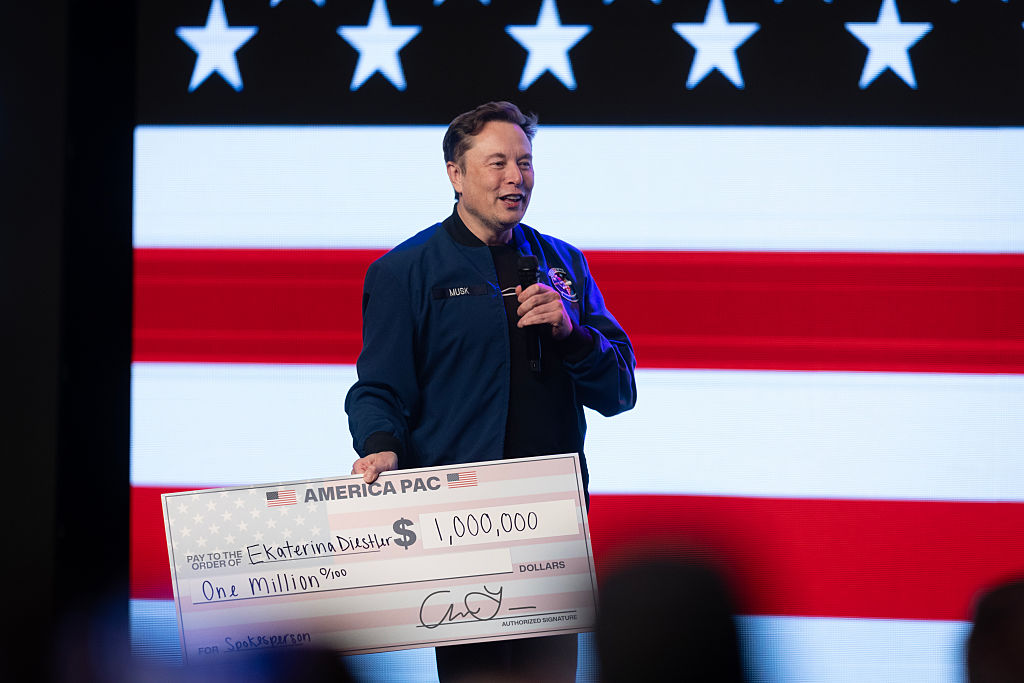
Elon Musk could face charges for violating Wisconsin election law when he gave some voters $1 million checks during the state Supreme Court election last year.
The Wisconsin Elections Commission, which consists of three Democrats and three Republicans, found probable cause that the billionaire violated the state’s election bribery law “by making a social media post that offered one million dollars to individuals who voted in the 2025 Wisconsin Supreme Court Election in order to induce them to vote in that election,” the Milwaukee Journal Sentinel reported on Tuesday.
The commission voted 5-1 in closed session last Thursday to refer two confidential complaints from Milwaukee and Green Bay to the Brown County district attorney’s office for possible criminal prosecution. Under state law, prosecutors have 40 days to notify the commission of their decision. TIME has reached out to Brown County District Attorney David Lasee for comment.
Musk, the richest person in the world, spent heavily in an effort to flip control of the Supreme Court in the battleground state. He backed then-Circuit Court Judge and former Wisconsin Attorney General Brad Schimel, a Republican. Musk and organizations he funded or controlled spent more than $20 million on his campaign. Schimel ultimately lost to Democrat Susan Crawford, preserving the Democratic majority in the Supreme Court. In total, conservative and liberal supporters spent more than $100 million on the race, the most of any judicial election in American history.
Under scrutiny are Musk’s $1 million voter giveaways.
“On Sunday night, I will give a talk in Wisconsin,” Musk posted on X in late March. “Entrance is limited to those who have voted in the Supreme Court election. I will also personally hand over two checks for a million dollars each in appreciation for you taking the time to vote. This is super important.”
The post has since been deleted.
Soon after, Musk clarified in another post, “entrance is limited to those who have signed the petition in opposition to activist judges. I will also hand over checks for a million dollars to 2 people to be spokesmen for the petition.”
Musk gave out the two $1 million checks at a rally in Brown County on March 30, 2025, shortly before the April 1 election. Days prior, Musk’s America PAC awarded another million-dollar check to a Wisconsin voter who signed its petition opposing “activist judges.” The PAC also offered registered voters $100 if they signed the petition or referred someone to sign it.
Multiple efforts to stop Musk
The complaints are not the only effort to rein in Musk’s political spending.
Wisconsin Attorney General Josh Kaul, a Democrat, filed a lawsuit on March 28, 2025, a day after Musk’s first social media post, seeking to stop Musk from distributing the checks.
Musk’s attorneys at the time had argued that an injunction would “restrain Musk’s political speech and curtail his First Amendment rights.”
The million-dollar giveaways were intended to “generate a grassroots movement in opposition to activist judges, not to expressly advocate for or against any candidate,” Musk’s attorneys argued in legal filings.
State courts ultimately declined to block the giveaways and the Wisconsin Supreme Court denied Kaul’s emergency petition without explaining its reasoning.
Last June, the Wisconsin Democracy Campaign, a government watchdog, and two voters filed a lawsuit alleging that Musk, America PAC, and another of Musk’s political organizations violated laws on election bribery and unauthorized lotteries. It also argues that their conduct constituted an unlawful civil conspiracy and public nuisance.
The lawsuit seeks to bar Musk from offering similar cash payments to Wisconsin voters in future elections. The lawsuit is pending in Brown County.
Musk’s America PAC held similar million-dollar giveaways in the lead up to the 2024 presidential election. Musk announced in October that year that the group would award $1 million every day to a registered voter in one of seven swing states—Arizona, Georgia, Michigan, Nevada, North Carolina, Pennsylvania, and Wisconsin—who signed a petition supporting the First and Second Amendments. The group also offered money to petition signers who referred another voter to sign it.
Philadelphia District Attorney Larry Krasner sued Musk and America PAC, arguing that the giveaway was an illegal lottery under Pennsylvania law. But Judge Angelo Foglietta declined to issue an injunction. Musk’s attorneys had argued that the recipients were selected to serve as paid spokespeople.
Last May, Musk announced that he planned to significantly reduce his political spending.
“In terms of political spending, I’m going to do a lot less in the future,” he said. “I think I’ve done enough.”
The World Cup of Calvinball: Fifa’s hasty changes turn refereeing into a free-for-all | Beau Dure
Match officials are enforcing tweaks to the laws of the game that have hardly been tested. The results? Drama, ‘mistaken identities’ and lots of confusion
In the comic strip Calvin and Hobbes, the titular characters occasionally played a game known as Calvinball.
The rules were amorphous. At any moment, something like a “30-yard base wicket” may become part of the game. Determining a “winner” was besides the point, as the score for one game was given as “Q to 12.” The fictional, farcical sport entered public consciousness and was even cited by US supreme court justice Ketanji Brown Jackson in a blistering dissent last year.
Continue reading...Over 100 House Democrats vote to end military aid to Israel in significant rebuke to US ally – as it happened
This live blog is now closed.
In his opening statement before senators today, Todd Blanche, said that he is “pleased to testify again today to tell everybody here that we are doing just that-we are keeping America safe”.
The nominee for attorney general, who has been leading the justice department in an acting capacity since Pam Bondi was fired in April.
Continue reading...Sadiq Khan backs calls for maximum workplace temperature in UK
Mayor of London backs calls from unions to update health and safety rules in light of more frequent heatwaves
The mayor of London, Sadiq Khan, is backing calls for a maximum workplace temperature as pressure grows on the government to protect workers from the impact of repeated heatwaves across the UK.
The extreme heat has left people struggling to cope as temperatures in some workplaces climb above 40C, causing thousands of schools to close and hospital and transport systems to break down.
Continue reading...What happened to David Batty, who shook off penalty miss against Argentina?
British illegal immigrant in 'international criminal organisation' shot dead in US
Seven Britons among those killed in Spain wildfires
Tourists warned of methanol poisoning risks in new campaign
Russian attacks kill eight as Ukraine hits Black Sea oil tankers
Sadiq Khan backs calls for maximum workplace temperature in UK
Mayor of London backs calls from unions to update health and safety rules in light of more frequent heatwaves
The mayor of London, Sadiq Khan, is backing calls for a maximum workplace temperature as pressure grows on the government to protect workers from the impact of repeated heatwaves across the UK.
The extreme heat has left people struggling to cope as temperatures in some workplaces climb above 40C, causing thousands of schools to close and hospital and transport systems to break down.
Continue reading...Starmer shares tributes and offers ‘full support’ to his successor in his final PMQs before stepping down – UK politics live
Lindsay Hoyle thanks Starmer for his leadership, particularly in regard to ‘his steadfast support for Ukraine’
Labour should ditch the triple-lock pensions promise to help tackle the UK’s straitened public finances, the Organisation for Economic Cooperation and Development has urged. Heather Stewart has the story.
I’m afraid we are not going to be able to open comments today for staffing reasons. If you want to contact me directly, it is probably best to get me on on Bluesky at @andrewsparrowgdn.bsky.social.
Continue reading...The U.S. and Iran Face Dwindling Options to End the War
Trump Flip-Flops on Strait of Hormuz Plan, and U.S. Cyclospora Outbreak Spreads
Never mind the garage forecourt – carnations deserve a place in your garden
Easy to grow, hardy and charming, these once-maligned flowers are having a much-deserved comeback
You might not know the term Caryophyllaceae but I guarantee you’d be able to spot a carnation, which is part of this family. Garage forecourt carnations have been having a semi-ironic fashion moment as a cut flower for a while now, but I’m yet to see them making a garden comeback.
I’d always dismissed the whole family as fusty, old-fashioned bedding plants for fussy little gardens. But it turns out that whoever is in charge of the carnation comms is having a good run. I keep seeing them around. Rose campion, another Caryophyllaceae, has even turned up in my garden – or rather, it has survived there. I didn’t plant it, and a photo from last July shows a scorched wasteland (it’s now a haven for moths, grasshoppers and bees, which shows what not mowing can do). But they’re biennial (they take two seasons to get from seed to flower), so I guess it was biding its time. It’s bright pink with a soft grey leaf, and not the kind of thing I’d choose, but I’m enjoying it so much I’ll be encouraging it to self-seed in the wildflower patch.
Continue reading...Democrats grill Todd Blanche on ICE agents at polling sites and Kash Patel’s conduct at attorney general confirmation hearing – live
Trump’s nominee for attorney general – also his former personal defense lawyer – faces questions from senators as he attempts to take the top justice department role
In his opening statement before senators today, Todd Blanche, said that he is “pleased to testify again today to tell everybody here that we are doing just that-we are keeping America safe”.
The nominee for attorney general, who has been leading the justice department in an acting capacity since Pam Bondi was fired in April.
Continue reading...Moscow warns that foreign troops in Ukraine would be seen as legitimate targets – Europe live
Members of the pro-Ukraine “coalition of the willing” this week reasserted their desire for such a force after a cessation of hostilities
Meanwhile, the Kremlin has rejected Lithuanian president’s warnings about a potential Russian attack on critical infrastructure (10:06), dismissing them as “horror stories” intended to “prepare public for further militarisation.”
Reuters reported that the Kremlin said these comments were merely a “pretext for further deployment of Nato military infrastructure to Baltic states.”
Continue reading...The Mitch McConnell mystery is solved. But it doesn’t look good for America | Moira Donegan
The senator is alive, a key requirement to maintain one’s job in the US Senate
Like any good proof-of-life photo, it featured that day’s newspaper. After a nearly month-long disappearance, when it was clear that he had been rushed to the hospital but not clear why or in what condition, Mitch McConnell broke his silence, as they say in the tabloids, by releasing a photograph of himself sitting upright in a hospital bed. He wore a pink button-up shirt, and his vacant, lipless mouth seemed to form something meant to resemble a smile. Beside him was his wife, the comparatively pert former Trump transportation secretary Elaine Chao, her coiffed hair as stiff as the couple’s determination. In a statement, McConnell said that he had been hospitalized after a fall, and was being treated for pneumonia.
The picture was meant to put an end to the rampant speculation over whether the senator, aged 84, was dead or not. You would think this would be a simple enough question to answer. If the man himself wasn’t available to clear up the matter, couldn’t someone have held two fingers to the inside of his wrist to check for a pulse, or propped a hand mirror under his nose to see if it fogged? No such luck, apparently. The Kentucky senator was missing for weeks, with no word, his office only releasing vague and repetitive acknowledgments that he had been hospitalized. Public emergency services records indicate that paramedics were called to his Washington address on 14 June, where they administered CPR on an unconscious person who was allegedly suffering a cardiac arrest – one whose identity has been withheld. McConnell had been in a Washington DC area hospital ever since.
Moira Donegan is a Guardian US columnist
Continue reading...Ali G is back. I really wish he wasn’t | Arwa Mahdawi
Back in the day, he was funny. But that day was 24 years ago – and the character sits uncomfortably in a post-shame world
Have we not suffered enough? The US is currently in the throes of a parasite-induced watery diarrhoea outbreak while being governed by a mad king suffering from a horrible case of logorrhea. Meanwhile, on both sides of the Atlantic the temperature is about a million degrees and the world is experiencing a “Godzilla” El Niño. Thanks to the extreme weather and the Iran war, global food prices are about to rocket. Everything is going to hell, basically. And now, to top it all off, we’ve just had the news that we’re getting an Ali G reboot.
I iz being deadly serious here. News broke last week that Sacha Baron Cohen has finished secretly filming a new Ali G movie – 24 years after the character, a satirical take on privileged suburban kids appropriating black street culture, was last seen on the big screen. Baron Cohen then showed up at Wimbledon over the weekend in character, posting an Instagram proclaiming: “I iz Back!”
Continue reading...US trial could reveal who paid hackers to target Exxon climate critics: ‘on the edge of our seats’
Oil giant has denied involvement, but climate activists are closely watching court case against Israeli private investigator for answers
A group of American climate activists are closely watching a US court case that could reveal who hired hackers to target their inboxes a decade ago.
In 2015, a set of explosive media reports revealed that ExxonMobil’s own scientists determined as early as 1982 that the extraction and burning of fossil fuels caused the climate crisis – but Exxon went on to fund climate denial campaigns anyway. The reports prompted attorneys general to investigate the company.
Continue reading...Blockades, marches and human shields: Bolivia’s farmers resist as land opened up to industry
Indigenous groups organised mass protests over a series of deals by the president, Rodrigo Paz, that prioritise agribusiness and mining interests
From her home in the Bolivian Amazon, Vivian Palomequi walked for a month and more than 560 miles (900km) to the capital, La Paz. She arrived in late April to protest over a law she fears would open the door to accelerated deforestation and land privatisation. “We declared a state of emergency and started marching,” says Palomequi, who leads a peasant farmers’ union. “We had no other choice.”
The march was part of a wave of pushbacks against the environmental policies of Bolivia’s new government, which has staffed ministries with former agroindustry leaders, struck deals to open protected areas to mining and criminalised environmental defenders.
Continue reading...‘Fear, intimidation, violence’: calls mount to remove ICE from US streets after agents killed two men
Agents killed Joan Sebastián Durán Guerrero in Maine and Lorenzo Salgado Araujo in Texas, even though both were not targets of enforcement action
US officials are facing mounting calls to remove US Immigration and Customs Enforcement (ICE) from American streets after federal agents killed two men who were not the target of enforcement action in less than a week.
Advocacy groups, including the National Police Accountability Project and the Coalition for Humane Immigrant Rights, described the fatal shootings of Joan Sebastián Durán Guerrero in Maine and Lorenzo Salgado Araujo in Texas as extrajudicial killings.
Continue reading...US groups sue Trump administration claiming ICC sanctions violate first amendment
Plaintiffs allege ‘profound’ chilling effect on protected work of international criminal court officials and others
Two US advocacy groups sued the Trump administration on Wednesday, alleging that sanctions targeting Palestinian rights organizations, international criminal court (ICC) officials and a UN expert have unlawfully violated Americans’ first amendment rights.
The lawsuit, filed in federal court in Manhattan, argues that the administration’s sweeping 2025 sanctions package has had a “profound” chilling effect on Palestine-related advocacy, compelling Americans to sever professional relationships and abandon constitutionally protected work.
Continue reading...Kenyan court dismisses Rastafarians' bid to legalise cannabis
Blanche faces questions about Trump's IRS settlement, Epstein files and Jan. 6 pardons
The former Trump defense attorney has been leading the Justice Department on an interim basis since Atty. Gen. Pam Bondi was fired in April.
Grocery Outlet restarts expansion with new California branches
Grocery Outlet is opening an Ontario Ranch location after announcing the closure of nine California stores earlier this year.
Why so many Latin Americans are rooting against Argentina in the World Cup
The World Cup is spurring anti-Argentina sentiment.
Todd Blanche downplays Trump alliance in confirmation hearing
President’s pick for attorney general faces tough questions over purging of career prosecutors, January 6 and Epstein
Todd Blanche sought to downplay his close relationship with Donald Trump, tried to distance himself from decisions regarding January 6 rioters, and defended his handling of files regarding Jeffrey Epstein as well a settlement agreement that created a $1.8bn slush fund and giving the president and his family immunity from audits during his confirmation hearing to be the next attorney general in front of the Senate judiciary committee on Wednesday.
Blanche served as Trump’s personal attorney before being tapped to be the deputy attorney general – the No 2 position at the justice department at the start of last year. He has been serving as the acting attorney general since April, when Trump fired Pam Bondi, and has amped up Trump’s retribution agenda.
Continue reading...US trial could reveal who paid hackers to target Exxon climate critics: ‘on the edge of our seats’
Oil giant has denied involvement, but climate activists are closely watching court case against Israeli private investigator for answers
A group of American climate activists are closely watching a US court case that could reveal who hired hackers to target their inboxes a decade ago.
In 2015, a set of explosive media reports revealed that ExxonMobil’s own scientists determined as early as 1982 that the extraction and burning of fossil fuels caused the climate crisis – but Exxon went on to fund climate denial campaigns anyway. The reports prompted attorneys general to investigate the company.
Continue reading...‘Fear, intimidation, violence’: calls mount to remove ICE from US streets after agents killed two men
Agents killed Johan Sebastián Durán Guerrero in Maine and Lorenzo Salgado Araujo in Texas, even though both were not targets of enforcement action
US officials are facing mounting calls to remove US Immigration and Customs Enforcement (ICE) from American streets after federal agents killed two men who were not the target of enforcement action in less than a week.
Advocacy groups, including the National Police Accountability Project and the Coalition for Humane Immigrant Rights, described the fatal shootings of Johan Sebastián Durán Guerrero in Maine and Lorenzo Salgado Araujo in Texas as extrajudicial killings.
Continue reading...Arrest of American who has given $1m in aid to Palestine prompts fears of ‘growing repression from Trump’
Extradition request for James ‘Fergie’ Chambers sparks concerns that US government is conflating humanitarian aid with terrorism
The arrest in Ibiza and US justice department extradition request for a wealthy American donor to lefwing causes in connection with alleged material support for Hamas is sending ripples through leftwing circles in Spain and being closely monitored in the US for potential “chilling effects” on support for Palestine.
Spanish authorities detained James “Fergie” Chambers Friday and are now holding him without bail in Madrid. A hearing is scheduled on whether he can be released on bail for Thursday.
Continue reading...WATCH: Blast from the past! High-energy workout Tae Bo is back
World Models Are AI’s Next Frontier

Inside the labs building the next generation of AI, a phrase has been gaining weight: world models. A large language model like ChatGPT, Claude, or Gemini predicts what comes next in text. World models, in contrast, learn dynamics from observation, then simulate forward to test what happens next. They model the world itself, rather than just descriptions.
Yann LeCun, who left Meta in late 2025 to launch Advanced Machine Intelligence Labs, has built his research program around it. Demis Hassabis, who runs Google DeepMind, has made world models central to its push toward more general AI. Sam Altman has called OpenAI’s Sora a world simulator, a claim that is contested. Fei-Fei Li raised a billion dollars for her company World Labs to pursue what she calls “spatial intelligence.” Jensen Huang, meanwhile, is building the simulation platforms and compute behind the next wave of AI, as NVIDIA did for large language models.
The term is used loosely; not everything marketed as a “world model” qualifies in the strict architectural sense.
The bet, and the reason LeCun rejects video-generators like Sora, is that a model trained on how a system behaves rather than how it looks, an architecture he calls JEPA, will generalize better to the physical world. It is not a product category but an architecture that could take AI from fluent at language but with no real model of the physical world, to a grounded understanding of how that world behaves.
If they are right, this is more than another commercial AI cycle. It is the period in which the substrate of the next AI gets built, and what gets built now, by whom and on what data, will shape what AI can do for years. The potential for solving problems in climate, oceans, the biosphere, and the biology of disease is vast.
What AI has already accomplished for the Earth
I started my career as a climate scientist at NASA running ocean-atmosphere simulations on supercomputers. I later co-wrote, with the World Economic Forum and Microsoft’s chief environmental officer, two of the earliest reports on AI and the Earth system. A lot of what we predicted has happened.
AI now spots wildfires and methane leaks from orbit. Today’s weather forecasts are unrecognizably better. Google’s flood forecasting runs in over 150 countries. Neural weather models, from DeepMind’s GraphCast to systems now run by the public forecasting agencies themselves, have matched or beaten the best physics-based forecasts at a fraction of the compute cost, though they still trail on extremes and tail risk.
These are real gains. But the hardest problems have barely moved: what a hurricane will do at landfall, when the next drought breaks, how ocean circulation behaves as the ice melts.
Sub-seasonal weather forecasts—the window that drives water, energy, and agricultural planning—remain weak. The forests, soils, and vegetation that absorb roughly a third of our emissions carry the largest uncertainty in the entire carbon budget. Unlike fossil fuel emissions or atmospheric carbon dioxide, this land carbon sink cannot be measured directly at the global scale; it has to be inferred. And tropical convection, the storm systems that deliver rainfall for billions, unfolds at scales too small for global models to capture, so they fall back on rough approximations that scientists have tried to improve for decades.
Why haven’t these gaps closed? Not for lack of computing power, now trillions of times more powerful. Not for lack of data, now planetary in scale. Not for lack of physics, well established for the parts we understand. The bottleneck is representation: finding a way to model systems we can’t describe exactly because the physics is only partly understood and the measurements are sparse. Simply scaling up today’s language models doesn’t solve that.
The Earth system is modeled in pieces (atmosphere, ocean, ice, land), which simplifies away the signals that live in the coupling between them. The variables that matter most are largely unobserved: root-zone soil moisture, the deep ocean, the cavities under ice shelves. Higher resolution helps—the newest models capture storms directly—but a finer grid running the same approximations is still running approximations.
The hardest problems in science sit in the gap: too poorly understood to write down in equations, too sparsely observed to learn from data alone.
This is where world models could matter, not by replacing physics, but by learning the dynamics from the joint Earth-system record, with the physics we trust enforced as hard constraints. For chaotic systems, a world model can learn the unwritten dynamics while respecting the written ones.
Some of this is already visible. AlphaFold, NVIDIA’s Earth-2, and GraphCast are in operational use across biology and weather forecasting. They work where physics is partly understood, and observations are rich. What none yet does is learn the dynamics of the open systems whose uncertainty has barely narrowed: sea level, the carbon cycle, the coupled behavior of a warming planet.
World models will not deliver certainty. They will not collapse the sea-level range to a point estimate. Their value is narrower but real: tighter, more honest ranges of plausible futures: the band coastal planners and banks actually need. For trillion-dollar adaptation choices, that matters.
There is also a hard limit. A world model cannot forecast a regime the Earth has never entered, like the world after an Atlantic circulation collapse, because there is no data from the far side to learn from. No method can. But the relevant question is how close we are to it, which these systems can begin to help answer.
The opportunity
Three forces have converged. The architecture has matured: these systems can now be trained at scale. The Earth is now instrumented at a level that makes learning dynamics across the atmosphere, ocean, land, and ice possible. And the capital that built the large language model era has begun to reallocate.
Enterprise applications have customers, contracts, and quarterly results. In 2026, the investment following world models is overwhelmingly driven by these metrics. But where the output is a public good, such as a narrower sea-level range, a better carbon-cycle model, or earlier warning of how the next drug-resistant pathogen will spread, the commercial model breaks down.
And what these models train on shapes what they become. A world model trained predominantly on warehouse logistics, driving footage, and engineering data—the territory of physical-AI ventures like Prometheus, the Jeff Bezos startup building an “artificial general engineer,” now valued at $41 billion—learns a particular kind of physics. One trained also on planetary observation, cell-biology, and grid dynamics learns something else.
The same architectures can work for the systems we live inside, given different data and different choices. The question is whether the labs commit to these problems as ambitiously as to enterprise, and whether the institutions holding the world’s most valuable scientific data make it available.
Beyond the enterprise
The language era taught AI to describe the world. World models aim to learn how it behaves. If their strongest advocates are right, they will become the substrate on which the next generation of AI is built: a scientific tool for understanding systems we cannot fully specify, and the capability AI needs to reason about and act in the physical world.
But getting better at the easy problems is not the same as reaching the hard ones. Whether world models reach the open systems depends on which data gets stitched together, which questions the leading labs take on, and whose problems get attention.
The AI build-out is only beginning, and public acceptance will help determine its pace. The stronger the case that these systems help solve humanity's hardest problems, the stronger the case for building the infrastructure they require.
The technical work will continue regardless. The question is no longer whether we can build world models. It is what we choose to model—and whether the hardest problems shape these systems from the start, or inherit them.
Boss of fake government agency arrested in Nigeria after weeks on the run
Air India crash report likely to be ready in October, say investigators
The U.S. launches another wave of strikes on Iran as the Hormuz standoff intensifies

Iran threatened to block all oil exporting routes in the region on Wednesday in response to the U.S. maritime blockade of Iranian ports in the Strait of Hormuz.
(Image credit: AFP via Getty Images)
