Firm reportedly felt it was in public interest to test alibi offered by former duke after Virginia Giuffre accusation
Pizza Express held an internal inquiry to investigate Andrew Mountbatten-Windsor’s visit to its Woking branch, as he claimed he did on the day he was alleged to have had sex with a teenage victim of Jeffrey Epstein 20 miles away in central London, it has been reported.
According to sources who spoke to the BBC, senior management at the restaurant chain held the investigation because they felt it was in the public interest to test the alibi the former Duke of York had offered. The broadcaster reported that the company had found neither evidence he had been to the restaurant in Surrey, nor evidence to definitively say he had not.
My daughter’s scruffy little pet would fall asleep with me on the sofa, stilling my racing mind. And then he changed my life in an even more significant way …
I never wanted a hamster. My eight-year-old daughter, Lily, on the other hand, had folders. Habitat drawings and wheel specifications – a case for ownership of such rigour it bowled me over. As a boy I’d had a hamster, Jerry, and remembered him as fine – but nothing more than that. So I went to a Cardiff pet shop on a cold January morning in 2021 with no plan whatsoever to fall in love.
At the back of the enclosure was a scruffy one nobody else wanted. Skinny. A bit unkempt. When the staff member lifted him out, he yawned and looked at Lily as if he’d been expecting her. She named him Popcorn Sushi and took him home in a pink carrier.
Российский рынок DevOps-инструментов за последние годы прошёл заметный поворот. Первая фаза импортозамещения во многих командах была вынужденной и довольно прямолинейной: найти замену привычному зарубежному сервису, закрыть регуляторный риск, перенести данные в приемлемый контур и не сломать процессы разработки. В 2026 году команды уже спрашивают как встроить инструмент в реальный инженерный процесс, как измерить эффект, как снизить шум, как не превратить безопасность в тормоз релизов и как дать разработчику больше контекста в моменте, когда он пишет, выкатывает или чинит код.
Продуктовая аллея на DevOpsConf 2026 оказалась удобной оптикой для такого среза. На аллее у каждого продукта были стенд, питч и интервью с представителем команды, а цифровой каталог разбивал продукты по инженерным задачам: безопасность разработки, мониторинг и надёжность, Kubernetes и инфраструктура, инструменты разработчика.
В подборке есть продукты разной зрелости и разного масштаба: от open source runtime-security до managed Kubernetes, от AIOps-корреляции алертов до Git-платформы с AI-ассистентом. Смотреть на них лучше как на карту болей, вокруг которых сейчас собирается российский DevOps/DevSecOps-стек.
Collegiate sports organization led by Charlie Baker banned trans athletes from women’s sports after 2025 Trump order
The president of the US’s top administrator of collegiate sports on Sunday said his organization does not anticipate adjusting its rules on transgender athletes after a recent federal supreme court decision allowed states to ban them from participating in school athletics.
In an interview with CBS News’ Face the Nation, Charlie Baker, the NCAA president, alluded to how his organization in late January 2025 had effectively banned transgender athletes from women’s sports by closing off those programs to athletes who were assigned male at birth or were taking testosterone therapy. There are no restrictions for participation in NCAA men’s sports, which Baker referred to on Sunday as “the open network”.
Documentary No Country for Mothers details how US moms lack support, paid leave and childcare help – and hopes to inspire push for action
When Reshma Saujani set out to make a documentary, she was clear from the outset: it would not be released on streaming platforms, or at film festivals.
Instead, No Country for Mothers – a new movie about how moms across the US are being failed – is being screened by hundreds of the subject themselves, nationwide, in person.
Axel Springer boss has ‘bold vision’ for the media group, but identifying a gap is no guarantee of stateside success
As he addressed staff at the London headquarters of the Telegraph Media Group last week, Mathias Döpfner, the German chief executive of Axel Springer and latest proprietor of the most traditional of conservative British newspapers, referred to his company’s decades-long pursuit of the venerable titles.
As staff nibbled Axel Springer-embossed biscuits, Döpfner also exchanged some distinctly European ribbing with the Daily Telegraph’s editor, Chris Evans, about Germany’s World Cup exit. However, it was clear to all that Döpfner’s ambitions for the titles were focused on another country and another continent.
Wildfires raging across southern Europe have forced thousands to flee their homes and prompted officials to ban spectators from a stage of the Tour de France, amid warnings of “powder keg” conditions after a record-breaking early summer heatwave.
Hundreds of firefighters are tackling blazes that have burned through almost 20,000 hectares (49,500 acres) in Portugal, Spain, France and Greece. Strong winds are forecast to fan the flames and temperatures are expected to rise again this week.
Vox Members got to read this story first. Support independent journalism and get exclusive access to stories like this by becoming a Vox Member today.
For years, the internet sold us the idea that connection doesn’t have to be local to be meaningful. Your people could live anywhere: in a Discord server, a group chat of far-flung friends, or a TikTok comment section. Geography was optional.
Now, more people are turning toward the ones physically closest to them: the neighbor down the block, the parent from the playground, the person whose wifi shows up in your network list. It’s not just about wanting connection; folks are looking for support. Childcare is expensive.Rent and groceries are high.Climate emergencies are more frequent. For many Americans, the difference between stability and crisis comes down to whether someone nearby can help.
Call it neighborism: the growing practice of treating proximity as a resource. Increasingly, digital tools aren’t replacing local relationships — they’re helping activate them.
Sometimes it looks small: introducing yourself to the people on your floor, starting a group chat for your building or block, sharing babysitters, watering a neighbor’s plants. But it can also look overtly political.
In Minneapolis, community responses to ICE activity blurred the line between everyday care and organized resistance. As federal immigration enforcement ramped up this winter, residents organized patrols, filmed arrests, shared alerts, and trained one another to document potential abuses.What emerged was something bigger than “borrow a cup of sugar” friendliness. It was infrastructure: informal, fast-moving, and built on trust. And what happened there isn’t an outlier; it’s a large-scale example of a broader shift already underway.
Getting to know your neighbors isn’t new, but its visibility is. After decades of isolation and a slow drift toward digital, long-distance connection, people are embracing an old-fashioned idea: Communities function best when people feel responsible for one another.
From digital connection to local reconnection
According to Eric Klinenberg, a professor of sociology at New York University and author of Palaces for the People: How Social Infrastructure Can Help Fight Inequality, Polarization, and the Decline of Civic Life, Americans were more likely to socialize with neighbors 60 years ago than they are today. Some of this was due to the fact that it was far more difficult to keep in touch with people who lived in other areas. “Long distance phone calls were expensive! Email did not exist,” Klinenberg tells Vox by email. Most people’s lives revolved around their home base. And at the time, “women were less likely to be in the paid labor force, which meant they spent more time in and around the neighborhood, where they anchored the family’s social life,” he added.
“Today, Americans work longer hours than they did sixty years ago, and often in more than one job. Temp work, gig work, and full time jobs all demand a lot,” Klinenberg writes — as do the familial demands facing the “sandwich generation.” “One consequence is that Americans socialize at work more than they used to; another is that they have less energy to socialize when they get back home,” he continues. “Finally, of course, there is the extraordinary rise of the internet, social media, dating apps, and the like, all of which make it far easier to socialize online, or to stay close to people who live far away, or to be anti-social, but deeply entertained, while the algorithms do their work.” Platforms made it possible to find your people anywhere, leading many of us to build relationships around shared interests and history rather than shared space. As more of our social lives moved online, the everyday, in-person interactions that once structured daily life began to fall away.
“So many technological promises that were supposed to…make our lives better, make us feel more connected to each other,”says Garrett Bucks, founder of the Barnraisers Project, which has trained nearly 1,000 participants to organize majority-white communities for racial and social justice.“But the problem with that model is that most of us live where we are and we miss out on interpersonal human companionship face to face.”
Increasingly, that version of connection is starting to feel thin — wide-reaching, but not particularly reliable when you actually need help. As neighborism grows, social media isn’t disappearing, but its role is changing. Instead of replacing local relationships, apps are becoming a tool to facilitate them: a way to stay in touch with parents at the playground or pool, organize a bulk grocery run, or find out who lives down the block.
In that sense, this generation has something earlier ones didn’t: connective infrastructure at their fingertips. The same platforms that once promised limitless, frictionless, global belonging can now be repurposed for something smaller, slower, and more grounded, helping translate online awareness into offline care. As Bucks puts it, “We’ve tried everything else. Maybe we should try each other.”
What neighborism looks like in practice
For many people, not knowing your neighbors doesn’t seem unusual — it just feels like how life works now. You occasionally pass each other, maybe exchange a quick hello, and keep moving. The distance becomes routine. Until, eventually, it doesn’t.
“There was a certain point where I just realized how few of my neighbors I actually knew,” says Alec Patton, 45, who started a WhatsApp group in December 2024 for his neighborhood in South Park in San Diego. “It was kind of horrifying. I think I imagined that other people knew their neighbors better than I did, or maybe all my neighbors knew each other and…they just weren’t hanging out with me. But I just think the extent to which neighbors don’t know each other is pretty staggering. And so I was really feeling like I knew I wanted to do something to change that.” Patton says he read a Substack post about how to start a neighborhood group chat and thought, That seems worth trying.
Patton built his neighborhood group chat the old-fashioned way: He printed 50 fliers and dropped them in mailboxes on streets radiating out from his home. The effort paid off — today, the group has about 50 members and continues to grow organically. “I often drink coffee and read a book on the stoop in front of my house and sometimes, when I’m feeling unusually bold, I ask passersby if they’re on the chat,” Patton says. “I’ve got a QR code for the group set on a lock screen on my phone so people can scan it easily.” He also puts up a sign with the QR code at neighborhood gatherings. Others have started spreading the word too, turning it into a shared community effort.
The chat has already proven its value in both small and significant ways. In one instance, Patton realized he had lent the car seat he keeps in his car to a friend, and his wife had driven away with the other one. “I needed to take the kids to school in half an hour so I posted an urgent message on the chat — a neighbor responded in five minutes and saved the day!” he says. In a more serious moment, the group became a real-time information hub during an ICE raid at a nearby restaurant, helping neighbors understand what was happening and coordinate support. While Patton initially envisioned the chat as apolitical, he came to see moments like this not as politics, but as neighbors showing up for one another in times of need.
That kind of care, however, doesn’t emerge passively — it requires time, repetition, and a willingness to do the unglamorous work of showing up. There’s no app or shortcut that can replace the slow accumulation of trust. “Dude, I really do have to invite my neighbors over for a potluck — shoot,” Bucks, the community organizer, says. “I really do have to go to that annoying meeting that I don’t want to go to at 7 pm — shoot. I have to keep going back and forth with folks in the Signal group even if they’re getting on my nerves because it’s worth it.”
When that effort is missing, the absence is palpable — shaping not just how neighbors support one another, but how they perceive even the smallest everyday annoyances. “If you don’t know your neighbors, then all they can do is annoy you,” Patton says. “It’s just a sort of a sad and unpleasant situation.” He says he’s had instances where a neighbor was being loud and getting on his nerves, and finally had a moment where he realized that if he knew someone and had a relationship outside of the thing they do that bothers him, he’d be less irritated.“First of all, I could actually talk to them and say, ‘Hey, could you not do that?’” Patton says. “But also, I’d be less annoyed because I know who they are. It’s one thing if your anonymous neighbor is just being really noisy, and it’s another thing if you know that Mike is having a barbecue.”
Robert J. Sampson, a sociology professor at Harvard University known for his work on collective efficacy, which is the process of taking social ties among neighborhood residents and activating them to achieve collective goals,says that getting to know your neighbors isn’t necessarily about building super-tight friendships. In his research, he’s found that neighborhoods function best when residents are loosely connected but willing to step in for one another, whether that’s maintaining a sense of order or simply helping out in small ways.” Any mechanisms that can bring people together, particularly in public spaces, I think, can create a certain kind of public good,” Sampson tells Vox. That level of cohesion doesn’t require intense intimacy or even liking everyone you encounter; it requires regular interaction and a shared sense of responsibility to the people around you.
Neighborism isn’t just feel-good — it’s filling the gaps institutions can’t
Good Looking Out, a Facebook group started in 2014, connects West Philadelphia residents who use it to ask for help, share information, and flag urgent issues — everything from flooded basements to lost pets. At its core, it’s about neighbors taking care of each other.
For co-founder Gabriel Nyantakyi, 43, the group grew out of discussions about law enforcement and a desire to build something more community-led. “It emerged from conversations being had about police and policing and wanting to provide some support through community to fill some of those needs,” he tells Vox. “Just establishing some independence from the state.”
Since then, both the network and the broader culture around it have expanded. “Mutual aid culture has grown as a whole,” Nyantakyi says, pointing to the rise of community fridges and food giveaways across West Philly. The shift accelerated during the Covid-19 pandemic, when digital tools became essential and institutional gaps became harder to ignore. “It was all a clear case of the government being inadequate in addressing people’s needs,” Nyantakyi says. “People in the community stepped up.”
Aisha Nyandoro, the founding CEO of Springboard to Opportunities, a nonprofit organization that helps support residents of federally subsidized housing, tells Vox that in the communities she works with, neighborism is not new or optional. It’s how people survive. It’s “a practice of radical, everyday care rooted in proximity,” she says. “It’s the belief that the people who live closest to you are not just strangers who share a wall or a street, but co-creators in your safety, your joy, and your ability to thrive. It is about reciprocity — not in a transactional sense, but rather a mutually helpful way.”
Nyandoro says that, in practice, it looks like “a neighbor watching a child when a parent’s shift runs long” or “moms texting each other to see if someone needs a ride to the grocery store.”Sampson, the Harvard sociology professor, notes that these kinds of interactions — even small ones — build the trust that allows communities to function.
Klinenberg sees neighborism as part of a broader shift back toward what he calls social infrastructure: the physical places that make connection possible. “If you live in a neighborhood with a great playground…a great library…sports facilities, green space,” he says, you’re “much more likely to have strong local ties.” Without those spaces, connection becomes “a lot harder and less likely.”
The emotional pull of neighborism is real, too. Juli Fraga, a psychologist based in the San Francisco Bay Area, says that proximity-based relationships are easier to maintain and access in real time. Low-stakes interactions do wonders for our well-being. “Just being around other people can help us feel less isolated,” she tells Vox. Patton says that’s been the case for him — knowing his neighbors has improved his quality of life. Meanwhile, doing small favors for others, even strangers, cultivates positive emotions. Plus, these situations give people a chance to connect and know that others are experiencing similar struggles, which helps them feel less alone.
Ultimately, though, neighborism may be less about sentiment and more about function. After years of too-online hyper-optimized isolation, people are rediscovering that life is better when somebody nearby knows your name and your general comings and goings. They might not be your closest friend, but they show up anyway — sometimes awkwardly, sometimes imperfectly, sometimes just to stand there and witness.
As Bucks sees it, none of this is entirely new. “We’re not learning to do something that human beings haven’t done previously,” he says.
Two couples start to fall apart during a midwinter break, involving a lot of shouty dialogue that’s neither realistic nor funny
The interesting premise in this laborious and dispiriting relationship dramedy sadly leads nowhere; all we get is strained shouty dialogue and mugging performances in a film which succeeds neither in being funny or realistic.
Alexandra Daddario (from TV’s The White Lotus) is Debs, a book editor with dreams of being an author herself; her platonic best pal from college is Mitch (Josh Gad), a schlubby guy climbing the ladder in investment banking, and maybe nursing feelings for Debs he can never admit. They go to a cosy, picturesque woodland cabin for New Year’s with their respective partners; Debs is with hunky nature photographer Josh (Daveed Diggs) and Mitch is with Melanie (Ashley Park), uptight author of a bestselling cookbook called Emotional Eating (a good title, actually).
“I feel like I still cannot process this happening,” says Kostyuk, also noting how hot it is. “The longer you stay on this surface, the worse you feel.” She adds that the court wasn’t easy given the heat and wind, especially against an opponent on a roll having played 17 consecutive matches on grass – more than Kostyuk in her entire career. So it was very difficult and she still can’t believe it.
She was struggling to break the whole match so is really happy with the last two service-games she faced, and then thanks the crowd for their contribution.
As the Smithsonian’s National Air and Space Museum turns 50, an expansive exhibition celebrates how art has coincided with space
Wearing a shiny silver spacesuit, Alan Shepard clutches his helmet and looks like an archetypal blue-eyed American hero. The 1961 portrait by Bruce Stevenson paid tribute to the first US astronaut in space. It also planted a seed.
James Webb, the then administrator of Nasa, saw the painting and was inspired to start the space agency’s own art programme, believing that artists could bring a unique perspective to exploring the cosmos. From 1962 to 1974 it was led by James Dean, who then became the first art curator at the Smithsonian National Air and Space Museum in Washington.
European football's governing body criticises Fifa's decision to suspend Folarin Balogun's automatic one-match ban following an intervention by US president Donald Trump.
In 2010, there was a huge U.S. aid effort after a quake in Haiti. Today, U.S. officials say they oversee billions in Venezuelan oil revenue, but aid is less.
Attitudes in the party have shifted, Democrats say, with a growing appetite for outsider candidates vowing to overhaul the system. Some worry that the trend could be costly in November.
In an interview, Turkey’s top diplomat, Hakan Fidan, said the relationship between President Recep Tayyip Erdogan and President Trump could ease NATO tensions.
Firm reportedly felt it was in public interest to test alibi offered by former duke after Virginia Giuffre accusation
Pizza Express held an internal inquiry to investigate Andrew Mountbatten-Windsor’s visit to its Woking branch, as he claimed he did on the day he was alleged to have had sex with a teenage victim of Jeffrey Epstein 20 miles away in central London, it has been reported.
According to sources who spoke to the BBC, senior management at the restaurant chain held the investigation because they felt it was in the public interest to test the alibi the former Duke of York had offered. The broadcaster reported that the company had found neither evidence he had been to the restaurant in Surrey, nor evidence to definitively say he had not.
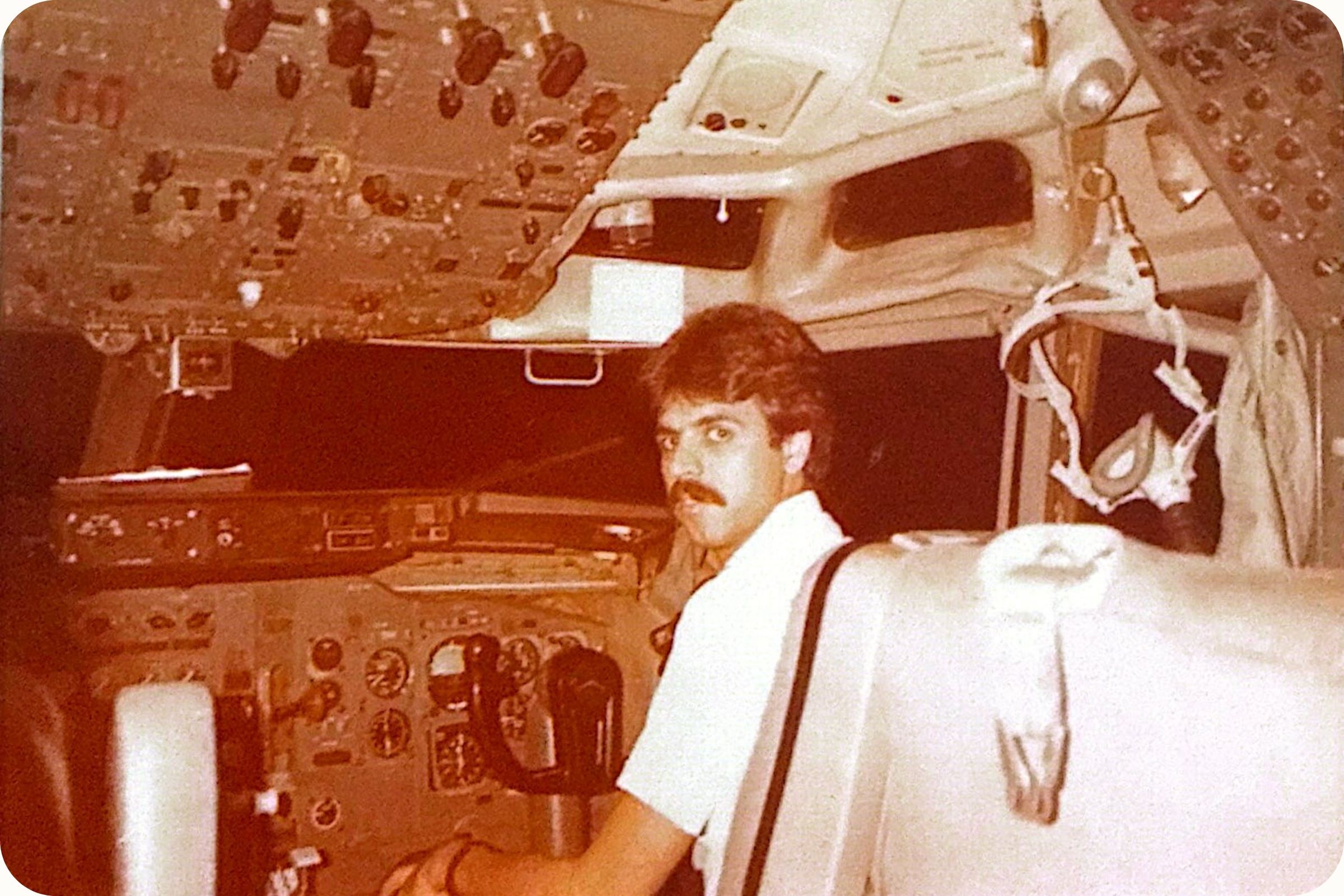
On a June evening, I was at the Heathrow Airport in London boarding a flight for Bogotá. I was travelling to be at a wedding I had come close to not attending. At the boarding gate next to mine, passengers lined up for an EVA Air flight to Taipei. I watched strangers queue for a plane like the ones my father, Captain Hamid Reza Alimardani, used to captain. He had flown that route for years. I had flown it once when he was captaining it, and I still remembered the small jolt of pride in seeing him walk up to the gate in uniform. My father, the captain.
We lost him six years ago. When the EVA Air crew came through to board, I caught myself scanning their faces, searching for him. I was flying into his absence. The airport, the office of his entire working life, reminded me that there was no leaving this grief behind, only different directions within the same departure.
I had spent the morning crying. Not over the Taipei gate. Not yet. I broke down at a boarding gate in Oslo after reading of the death of Marjane Satrapi, the graphic novelist and filmmaker, who wrote, drew, and filmed Persepolis, her extraordinary memoir of a girlhood in Iran before and after the 1979 revolution. She was 56. Her husband had died a little over a year earlier. Her family described the cause of her death as: “she died of sadness.”
I read the words “died of sadness” and something in me came undone. I cried the way you cannot stop. I cried the way you frighten the people around you. I cried until I thought I would not be able to board the first of my three flights to the wedding in Colombia. I cried because I knew the wedding would remind me of my grief, my loss, and everything else Satrapi had taught me to name as a girl, when I first discovered her graphic novel.
I did not know Marjane Satrapi. But I had come of age inside her work, the way many of us did, the Iranian girls and boys whose childhoods, lives, and families were defined by a revolution and the politics of a country we would spend most of our lives away from. She took the private grief of one Iranian life and transformed it into something the whole world could hold. In a frame in Persepolis, the protagonist Marji describes goodbyes as “a little like dying.” I must have read it as a teenager and thought it was a clever, sad line. I did not know then how literal this metaphor would become.
The pilot who flew through fire
My father didn’t come from money. He was the first in his family in Tehran to get a college education. He dreamed of medical school in his early 20s. When Iran Air offered him a fully funded path to train as a pilot in the United States, he accepted. Iran Air was among the finest airlines in the world in the 1970s, when my father trained with it. Then came the revolution in the winter of 1979, and Ayatollah Ruhollah Khomeini transformed Iran into a theocratic Islamic Republic. Nine months after the revolution, the war between Iran and Iraq erupted in September 1980, lasting eight years and costing more than a million lives.
My father stayed in the cockpit, flying passenger and cargo routes through a country at war because he was needed and because there was nothing else to do for a man who could only fly. The airports he flew in and out of were targets. Iraqi bombers had hit Tehran’s Mehrabad Airport on the first day of the war; the skies over Iran were no safer, and civilian planes risked being mistaken for military targets and fired upon. My father barely spoke of those dangers and difficulties, the way men of his generation often did. He hid it well.
He did tell me stories that made me understand life in Iran after the revolution and during the war. In 1983, my mother was heavily pregnant with my older sister. My parents had stepped out for an errand. A group of pasdars—the Persian word for members of the Islamic Revolutionary Guards Corps—stopped them in the street. The pasdars often stopped and questioned young couples on the suspicion of their being together outside of marriage. My parents had been stopped and questioned before. My mother was visibly pregnant, and still a pasdar pressed the barrel of his gun to her belly. My father, who had been flying under fire without complaint, lost it. “How dare you? She is my wife,” he shouted. “She is carrying my child.”
My mother spoke of the fear she felt more than he ever did. She would tell me how she sheltered with my older sister when the air raid sirens went off, and how she listened for the jets overhead. In those moments, what frightened her most was not her own safety but the knowledge that her husband was up there somewhere, flying in the same sky swarming with fighter planes dropping their bombs on Tehran.
My father did make sure I grew up knowing these things: the stops in the street, the nights sheltering from bombs, and the family and friends swept up in the massacres of political prisoners in the late 1980s. He hated flying for an Iran Air that now belonged to the people who had terrorized and murdered so many Iranians he had loved. Yet he kept flying, because he had no other trade, and because for years he was doing the slow work of getting us out, to either Canada or the United States.
On July 3, 1988, Captain Mohsen Rezaian, a colleague of my father’s, was at the controls of Iran Air Flight 655, traveling from Bandar Abbas, Iran, to Dubai, when the American warship, the USS Vincennes, reportedly mistaking the aircraft for a threat, fired a missile that struck the plane. Two hundred and ninety people fell into the Gulf, including him. Captain Rezaian had trained in Florida before the revolution, as my father had, and shared his sense of disillusionment that Iran could no longer offer a safe or prosperous future for their families. He was already emigrating to America; my father was waiting to move his family to Canada. My father continued flying Iran Air for close to a year after Flight 655. There was no alternative for a man whose life was defined by flight.
When a path to Canadian citizenship opened up for us in 1989, my father moved our family to Toronto, right before I was born. And then, because he could not find work as a pilot in Canada, he went to find it wherever it would have him. Belgium. Taiwan. The far gates. He spent the back half of his life leaving, again and again, to support our new lives outside of Iran, sending money from cities we could not picture, a father assembled mostly out of absences and homecomings. Six years ago, only a year into his retirement, cancer took him during what he thought was his break from leaving.
Ways of our fathers
I had been leaving and arriving in airports ever since without quite noticing, changing three flights on a recent Thursday between a work trip and the wedding in Colombia, when I came to realize—as I watched strangers boarding a flight to Taipei that my father used to pilot—that I had inherited his ways.
I was waiting for the flight to Bogotá, the flight I had almost not wanted to take. I had been reluctant to attend the wedding. The groom was a boy I had known since we were children. His father was my father’s close friend, and their friendship had remained a source of solace for us across the geographies that their work had scattered us across. The wedding was in Colombia, half a world from anywhere I knew or came from.
An Iranian friend of mine, who had been to Colombia, insisted that I had to see a museum of memory, built to hold the memory of the dead claimed by violence and conflicts. She had come out of it hoping that Iran could have something like it one day. Her wish sat with me, and so the first thing I did on landing in the country was visit that museum of memory. Colombia could build a house for its dead because its violence and conflict had reached the point where the country could bear to openly mourn them. Iran cannot, because the people who made so many thousands of our dead are still the people in charge, still adding to the count.
Our grief has nowhere to be housed. It has had to live elsewhere: in books like Satrapi’s, in the videos people film at the risk of their lives, in the work some of us have made our profession. Satrapi did it with a pen, taking one Iranian childhood and making it something the rest of us could grieve inside.
My work is about technology and human rights, shaping the tools for the people most at risk, including the ones documenting abuses so the record survives. It had never struck me that this was a kind of memory-keeping, that I had been doing it for years without a name.
Within two days of my friend telling me about the museum in Colombia, I found an answer to that wish at the very wedding I had wanted to avoid. The groom’s father, a pilot like my father, stood to speak, and amid all that joy, he spoke the names of the dead aloud. Captain Hamid Reza Alimardani. My father. Captain Davoud Zeinali. Another one of their friends, also gone, recruited a lifetime ago by Iran Air into a brotherhood that lasted the rest of their lives.
The groom’s father would not let the celebration paper over the absence, and he did so in the one place where you are meant to be only happy. I was sitting with the daughters of Captain Zeinali, that other lost friend. Our mothers were close by. When he spoke the names of our beloved departed, we teared up, all of us at once, the daughters and the mothers together. Then he crossed the floor and cried with the women whose husbands he had outlived.
I understood then what I had been looking for in the museum. The men flew together and some of them did not come home. The women remained and kept the memory. And here it was in one room: the brotherhood holding on past death, the grief being handed down to the daughters who would carry it next. The museum that Iran cannot build was being built around me—assembled from people, carried in exile—because it cannot exist at home. It is real, it is portable, and the reason it must be portable is the same reason there is so much to remember.
I had dreaded the wedding for the grief I knew it would stir. Yet I told myself that if I flew all that way, stood in the room with his friends and let it break, something would resolve. Then the wedding ended. Everyone scattered to their own flights. I was left with the thing nobody warns you about: the emptiness afterwards, the flatness, the discovery that no event could bring him back. It had only gathered his absence in one place for a weekend and then released it again. I flew home carrying the same absence, but only heavier, somewhere out over the Atlantic without him, and understood that no occasion ever closes the gap. It only moves you to the next gate.
We are a people who are always leaving. My father left for a living. My family left in search of a better life. Satrapi left as a girl and left the world on Jun. 4. Iran Air Flight 655 took off in July 1988 and never landed. Death is only the last departure. There is one defense against a life made of departures, and it is to say out loud what you are losing, so that it cannot leave you completely.
Satrapi said it in ink. The groom’s father said it in a speech. I am saying it here. Naming is the only departure that runs the other way: it brings them back instead of carrying them off. I was sixteen when I read in Satrapi’s Persepolis that a goodbye was a little like dying, and thought that was the whole of it. It is only half. The other half is that saying a name aloud is a kind of arrival.
I do not have a country to keep my father in. I have my words. A gate, a ghost route, a speech, a row of weeping daughters. Grief spoken into the open is the closest thing to a homeland that exile leaves you. So I am speaking it. My father was a pilot. He left Iran carrying the hope of one day being buried there. He flew the Taipei route and never made it back. He is gone, and this is the closest I can bring him home.
I used to say that I wouldn’t want to date someone who lives with their parents or with roommates. But with the current cost-of-living crisis, who can blame them?
Actor Callum Turner echoed this sentiment when he was asked whether it’s a red flag for someone with a full-time job to live with their parents. “In this economy? That’s fine!” he said. Monica Barbaro, his co-star in the film One Night Only, added that every millennial had to go back home after college to live with their parents.
The only people I know who can afford to live by themselves are people who inherited money or property. I remember dating a guy in my early 20s who lived with his parents. We spent time at my flat or booked an Airbnb or a hotel, which was exhausting and annoying. When we broke up, I said, “Never again!” But with the current economy, I now hesitate to rule out a dating match just because he lives at home or with three flatmates.
In major cities like New York or London, the cost of living turns dating into a class issue. More than a quarter of Londoners live in poverty. Meanwhile, financial pressures are equally apparent across the Atlantic. Half of working-age New Yorkers are struggling to cover their basic needs. These challenges inevitably impact when, who, and how we date.
For instance, on social media, women are being advised not to go on coffee dates because they are low-effort. And while I understand the desire to feel like the person you are on a date with is invested in your connection, I fear the cost-of-living crisis can cause us to conflate cost with effort. On one hand, I agree that men who ask me out on a coffee date may be pursuing doing coffee dates with multiple women in the same week because it’s affordable, which automatically doesn’t make me feel special. On the other hand, it’s a quick way to gauge compatibility and invest accordingly, which is understandable.
The average date costs Americans $189, according to the BMO Real Financial Progress Index for 2026. Nearly three in four men, 71%, said they expect to pay for everything on a date early on in a relationship. Among women, 52% said they expect to split the bill. Despite this majority, when actor Robert Pattinson recently said that he agrees that you should always split the check on a date, there was outrage in the comments section. People declared that it was a huge red flag, especially coming from a millionnaire.
Psychotherapist Lisa Chen, who specializes in relationships, believes that the cost-of-living crisis has changed how people think about commitment. “Especially with my Gen Z clients, I’m seeing how economic uncertainty contributes to a declining interest in seeking committed relationships, especially when traditional milestones like renting a place together or owning a home isn’t realistic,” Chen says.
Many of Chen’s clients have become interested in keeping relationships fluid, undefined, and flexible while they try to find jobs and build financial security. Rather than dating in a traditional sense, she said, her clients are often “seeking companionship through situationships and friendships. It’s not that they’re not interested in pursuing conventional long-term relationships; they’re just pushing it out.”
According to a survey by Intuit, 51% of Americans are going on fewer dates due to today’s economy, and Gen Z is hit the hardest. Chen tells me that traditional milestones like living independently, homeownership, or financial stability are not on the table. “Most of my clients, especially recent graduates, are trying to find employment in a difficult market,” she says, adding that the rise of AI has made it even harder for Gen Z, as their entry-level jobs have been disproportionately impacted by the technology.
These shifting expectations came into sharper focus for me in an unexpected conversation with a stranger. A woman I met at the airport last week said that she worries about her grown sons because a lot is expected out of men nowadays in terms of dating. I assured her that I wouldn’t expect anything out of a man that I am not already doing for myself.
I live with a flatmate, so I would never reject a man if he lived with a flatmate. But am I allowed to see it as a red flag if he is living at home with parents? Similarly, I wouldn’t be angry if someone asked me out for coffee. But am I allowed to feel unimpressed, especially when I take myself out on solo dinner dates regularly?
In the modern dating landscape, the true differentiator is ambition, which is a reasonable thing to consider while determining whether this is a good match for you, and remains a reliable marker of compatibility, says dating coach Mila Smith. “Living with parents to save money for a deposit is one thing,” she explains. “Living with parents and spending all your money on hobbies, clothes, or gaming is a different story.”
Surprisingly, credit scores are also now part of how people evaluate potential partners. According to a survey by the dating app Hily, 1 in 5 daters wouldn’t date someone with a score below 580, and 31% say an excellent credit score makes someone more attractive. Another Hily survey found that 44% of Millennials and 37% of Gen Z believe being frugal is sexy.
Perhaps that’s the real shift that the cost of living crisis is demanding from us. Dating standards can exist, but they do need to be updated for an economy in which traditional markers of adulthood have become unattainable. Living alone or picking up every dinner bill are no longer reliable proxies for ambition.
I am not saying we should ignore financial responsibility. It’s still reasonable to want a partner who is working towards a future. But there is a meaningful difference between someone who is making pragmatic decisions in an impossible economy, and someone who lacks direction altogether.
Maybe it’s time to question whether all those dating red flags were actually always about class. In a time where economic uncertainty defines nearly every aspect of adult life, the prize might be finding someone whose values and resilience can help you weather the economic winds together.
The Office of Professional Responsibility has opened more than 100 cases over what ICE officials call “incidents of doxing and threats” against ICE employees.
Imelda Preciado, of Garden Grove, center, joins other supporters of the SAVE Act as Tea Party Patriots Action launches a nationwide, three-week bus tour to rally support for the voting bill in Garden Grove, CA, on Monday, August 18, 2025. | Jeff Gritchen/MediaNews Group/Orange County Register via Getty
President Donald Trump has been on a single-minded, months-long quest to try and get one particular bill — the SAVE America Act — through Congress.
It’s a bill that would transform voting registration and ballot-casting across the country by creating strict nationwide requirements to prove citizenship when registering, to show photo ID when voting, and to include photocopies of ID for voting by mail.
And Trump’s obsession with getting it passed has swallowed up practically everything the GOP-controlled Congress has tried to do this year.
He’s said he won’t sign other bills — a bipartisan housing bill, or the Foreign Intelligence Surveillance Act reauthorization — until SAVE America gets passed. He’s heaped pressure on GOP Senate leaders to eliminate the chamber’s filibuster, so SAVE America could advance with a simple majority (rather than needing 60 votes, since Republicans only have 53). He’s tried to slip it into this year’s “budget reconciliation” bill, which can’t be filibustered; when the Senate parliamentarian ruled he couldn’t, he demanded her firing.
Some Republicans claim that the bill is merely a simple, commonsense effort to close loopholes in the voter system that bad actors could take advantage of — to ensure that only citizens are actually voting and that the people showing up to vote are who they say they are.
But the intensity of its support on the MAGA right goes well beyond that: The bill’s strongest supporters — including the president and the world’s richest man, Elon Musk — are those who advance the false conspiracy theory that Democrats rig elections through unauthorized immigrants illegally voting, bogus mail ballots, and other malfeasance. They claim they’re so desperate to pass it to stop this outrageous electoral theft.
Election experts point out there’s no real evidence that non-citizen voting is a serious problem. “All the evidence is that very few non-citizens get on the rolls, almost all those cases are accidental — and even among the people who get on the rolls, tiny percentages of them vote,” says Charles Stewart III, director of the MIT Election Data and Science Lab.
Progressives argue that, in practice, these strict requirements would make it much harder for many citizens to register, vote, and have their votes counted. Indeed, they say, that’s probably Trump’s true goal: to suppress Democrats’ voters and make it easier for the GOP to win — or to outright steal elections like he tried to do in 2020. Michael Waldman, the president of the Brennan Center for Justice, has said the bill would be “Trump’s power grab in legislative garb.”
“It’s about voter suppression: putting Trump’s DHS in charge of who stays on the rolls, purging eligible voters, and blocking millions from registering,” Senate Minority Leader Chuck Schumer said in March, adding, “That’s not democracy, that’s election rigging.”
What would the SAVE America Act actually do if passed? Would it fulfill liberals’ worst fears — and Trump’s heart’s desire? Or would things not change as much as either side expects?
What’s in the SAVE America Act
There have been various versions of the bill since it was first introduced in 2024. (It was initially called just the SAVE Act, which stands for Safeguard American Voter Eligibility Act. This year, Trump decided to rebrand it as the SAVE America act, even though that makes little sense with the acronym.)
But the core has remained consistent: strict new requirements for proving citizenship when registering to vote and proving identity when voting (including by mail). These would entail:
Proof of citizenship for voter registration (or for updating registration): Currently, most states do not require proof of citizenship for registration, so this would be a major change. Proving citizenship is not as easy as showing a driver’s license. Instead, it can be done by presenting a passport. Alternatively, a voter could show either a birth certificate or naturalization papers in addition to a government-issued photo ID (like a driver’s license).
Strict photo ID requirements to vote in person: States vary on whether they require voters to show ID at all and on which sorts of IDs are accepted. The bill’s requirements would be stricter than those of most states; it would notably exclude student IDs from state universities (which some states currently accept). An earlier version of the bill would have required proof of citizenship for voting (not just registration), but this was dropped in the House-passed version.
Mail voters would have to provide photo ID or identifying information: Typically, states with widespread mail voting send ballots to voters’ addresses and accept returned ballots with a signed affidavit. The House-passed bill says that the voter should submit a photocopy of their ID, as well — or, if they can’t obtain one, they can sign an affidavit and provide the last four digits of their Social Security number. Trump has repeatedly said he wants the bill to go further and ban almost all mail voting (except for special exceptions such as military service).
The bill would also require states — and empower the federal government, specifically the Department of Homeland Security — to try and purge any non-citizens from the voter rolls. Basically, states would have to run every registered name through DHS, so DHS can flag purported non-citizens for removal (though voters would then have a chance to contest this decision). It also would impose criminal penalties on state election officials who register someone lacking documentary proof of citizenship.
On top of all that, Trump wants to jazz the bill up by playing his culture war hits: banning trans women from women’s sports and banning gender reassignment surgery for minors. (He calls this the “full version” of the bill.) But these were not included in the version of the bill that passed the House earlier in February.
Since its House passage, the bill has been stuck in the Senate for months, held up by the perennial problem for a narrow Senate majority: the filibuster. The GOP’s 53 senators aren’t close to the 60 necessary to advance the bill, and several of them are refusing to support a “nuclear option” rules change that would ram it through anyway. So, despite Trump jawboning and threatening Senate Republicans for months, the bill hasn’t moved forward.
Why does Trump want this bill so badly — and what would its impact actually be?
For years, Trump has claimed that elections he or his party loses were somehow rigged or stolen. Even in his first presidential victory, where he won the Electoral College, he maintained that he should have won the popular vote, as well, and only failed to do so because of millions of unauthorized immigrants voting illegally. And he justified his attempt to stay in power after losing in 2020 with various false claims that Democrats stole the election for Joe Biden. There has long been a debate about whether Trump truly believes this, was opportunistically lying, or was adopting beliefs convenient to him.
But the claim that Democrats and “illegals” regularly rig elections in cities and blue states had been common on the right long before Trump entered politics. Indeed, the GOP’s push for state voter ID laws — and the Democrats’ argument that such laws are, in fact, partisan plots meant to disenfranchise young and nonwhite voters who’d be less likely to have such IDs — goes back decades.
In an earlier era of American history, rigging and ballot-stuffing by party machines was known to happen. But in recent decades, there’s been no evidence of large-scale rigging of the sort that Republicans allege (though there have been certain cases of organized fraud in local races and in a rural North Carolina congressional race in 2018).
Many Democrats and advocacy groups fear instead that the bill would be a disaster for voting rights — that its strict requirements would, in practice, inevitably lead to many legitimate voters being wrongly blocked from voting. There are darker fears, too, about the centralization of authority to review voter rolls with Trump’s DHS and whether all this would be a prelude to Trump trying to steal another election.
Partisans and their allied advocates have long hyped up the effects of voter ID laws as being great for Republicans and horrible for Democrats (and widespread mail-in voting as having the reverse partisan impact). But Republicans have frequently managed to implement voter ID requirements at the state level, and nonpartisan experts and studies haveoften found much less dramatic partisan impacts in practice from that and from different vote-by-mail rules. Voters, campaigns, and parties can adjust to new rules.
Polls consistently show that voter ID requirements are overwhelmingly popular, and Democrats’ reluctance to support it does put them on the wrong side of public opinion. Indeed, considering that — and considering the Trump-era re-sorting of the parties’ coalitions, in which upscale, educated voters more likely to have an ID handy have moved toward Democrats — some in the party have quietly questioned whether these bills would really hurt them so much.
Still, the SAVE America Act would be voter ID on steroids, beyond what has been implemented in states. The Bipartisan Policy Center estimates that more than 20 million eligible voters lack easy access to a passport or a birth certificate. However, those people wouldn’t all be disenfranchised overnight, since the proof-of-citizen requirements are for new registrants or for those updating registrations (due to, say, moving or a name change).
Stewart, the director of the MIT election lab, said that evidence from Arizona — which now requires citizenship proof for state and local elections — suggests young people newly registering have the toughest time. So, if the SAVE America Act were implemented he said, “there’s a good chance that a nontrivial number of 18 to 22 year olds would be cut out of the upcoming election.”
At the very least, there’d certainly be a chaotic adjustment period, as many of the bill’s requirements would go into effect immediately, without any funding to help states implement them.
And, of course, there are very valid reasons to distrust what the Trump administration might get up to if they gain more power over voter rolls, given their prosecutions of political enemies, the involvement of the Office of the Director of National Intelligence in investigating Georgia ballots and, of course, Trump’s conduct in 2020.
For now, the bill remains stuck in the Senate. But the issue isn’t going away. Trump has been increasingly frustrated with Majority Leader John Thune’s inability to get the bill through, and a right-wing challenger could use the issue to contest Thune’s leadership after the midterms.
And whether the bill ever passes or not, the false claims of large-scale non-citizen voting — and elections being rigged against the GOP — are central to the party’s mythology in the age of MAGA. The SAVE America Act will remain as the bill that Trump and the right claim could have stopped all that — if only it had been passed.
The Chinese military test-fired a missile from a nuclear submarine into the Pacific Ocean on Monday, state media reported, drawing criticism from U.S. allies in the region concerned about Beijing’s intensifying military activity.
Another surge of heat spread across western Europe at the weekend, with Spain, Portugal and France already sweltering and southern parts of the UK joining them on Monday.
Temperatures are once again forecast to climb to 10-15C above average, with highs approaching 40C (104F) in the hottest parts of France and Spain, while the UK is expected to reach the low- to mid-30s celsius.
Another surge of heat spread across western Europe at the weekend, with Spain, Portugal and France already sweltering and southern parts of the UK joining them on Monday.
Temperatures are once again forecast to climb to 10-15C above average, with highs approaching 40C (104F) in the hottest parts of France and Spain, while the UK is expected to reach the low- to mid-30s celsius.
После рабочих встреч часто остаются записи. В моем случае это записи Яндекс Телемоста.
Запись есть, но пользоваться ей не всегда удобно. Если нужно что‑то вспомнить, приходится открывать видео, перематывать, искать нужный кусок, переслушивать. Если нужно передать встречу другому человеку, одного видео обычно мало.
У меня часто бывает такой сценарий: нужно передать программисту контекст по задаче. Можно скинуть запись встречи и написать: «посмотри, пожалуйста». Но человеку придется самому смотреть видео, искать важные места, понимать, где обсуждение, где решение, где задача.
Мне хотелось получить более удобный вариант: вместе с записью отправлять текстовый итог встречи.
Идея была простая: загрузить видео встречи и получить транскрипт, протокол и DOCX, который можно отправить дальше.
Первую рабочую версию получилось собрать через Codex примерно за 30 минут.
Бренд IO by Red Square выпускает различную периферию по доступным ценам. Беспроводная мышь Ergo Pro продолжает эту традицию и остаётся в категории доступных решений, хотя её стоимость приближается к верхней границе данного сегмента. Если коротко о данной мышке, то основной упор сделан на эргономичную форму корпуса, однако и внутренние характеристики не остались без внимания: начинка разработана с прицелом как на игровые сценарии, так и на повседневную работу, обеспечивая высокую точность и эффективный расход заряда аккумулятора. А более детально ознакомиться с данной моделью предлагаю в данном обзоре.
<a href='https://news.sky.com/story/world-cup-live-england-germany-klopp-pubs-latest-13535760?postid=12006150#liveblog-body'>UEFA wades into Trump lobbying red card row saying FIFA 'crossed a red line'</a>
Привет, Хабр! Меня зовут Захар Кондауров. Сегодня я хочу поделиться опытом разработки легковесной real-time модели шумоподавления и дереверберации, над которой я работал в рамках проектов Инженерно-математической школы НИУ ВШЭ и VK под руководством Ивана Бескровного, руководителя команды звуковых технологий VK Видео.
Большинство исследований в speech enhancement часто ограничиваются только шумоподавлением, хотя современные архитектуры потенциально позволяют решать более продвинутые задачи, например, задачу совместного шумоподавления и дереверберации. Это обусловлено тем, что бенчмарков, ориентированных на шумоподавление значительно больше, чем на другие искажения аудиосигнала, как и моделей для сравнения. Кроме того, далеко не все решения обучены на full-band аудио с частотой дискретизации 48 кГц, только на 16 кГц аудио. Такое ограничение сильно снижает диапазон частот в аудиосигнале.
Модель, которая решает одновременно задачи подавления шума и реверберации для full-band аудио, позволит устройствам с ограниченным количеством ресурсов обрабатывать речевой сигнал локально, уменьшая нагрузку на серверы и задержку ответа системы. Зачастую задачи шумоподавления и дереверберации решаются последовательно разными нейронными сетями. Модель, которая будет способна решить обе задачи одновременно, позволит уменьшить количество используемой памяти и время обработки сигнала.
180km to go. Big crash at the front of the bunch. Bruno Armirail (Visma-Lease a Bike) goes down heavily, along with Vacek and three Netcompany Ineos riders. It appears to have been caused by a rider trying to squeeze past the Frenchman on the inside. He seems to have banged his knee, this could hinder one of Jonas Vingegaard’s helpers.
Seixas super domestique Matthew Riccitello (Decathlon CMA CGM Team) is back at the doctor’s car too.
По меньшей мере 14 человек погибли в Киеве из-за массированной атаки в ночь на понедельник. Удар был нанесен ракетами и дронами, ни одну из баллистических ракет сбить не удалось на фоне дефицита противоракет Patriot. В результате одного из попаданий частично обрушилась жилая девятиэтажка. Минобороны России заявило, что целью удара по столице Украины и Киевской области были военные предприятия. Предыдущая массированная атака на Киев 2 июля унесла жизни 31 человека.
За последние два месяца некоторые изменения к лучшему действительно произошли, но до сих пор непонятно, воспользуются ли Киев и Будапешт окном возможностей для того, чтобы начать сотрудничество с чистого листа, и, более того, хотят ли они этого на самом деле.
Премьер-министр Австралии Энтони Албаниз принес «безоговорочные» извинения за высказывания о поп-звезде Кайли Миноуг, сделанные им в подкасте Bush Deep, гостем которого он стал на прошлой неделе.
The overnight attacks on Kyiv killed at least 19 people as Russia stepped up a new offensive. Ukraine's president said NATO must do more to help his country intercept incoming missiles.
A study based on 47 million galaxies found that the cosmic web retains patterns on enormous scales, which could force a reevaluation of a pillar of cosmology.
Публикуем перевод третьей статьи из серии (первая часть, вторая), посвящённой информационным технологиям в авиаперевозках. Сегодня поговорим о режиме командной строки системы Amadeus, работа в которой опирается на язык, созданный для телетайпов. Этот язык до сих пор обеспечивает огромный процент бронирований билетов во всём мире — как тех, что выполняются различными агентствами, так и тех, что делаются посредством GDS.