RSS Feeds
Airbnb's new rules limit cleaning chores for guests
Diving into Musk's order to restrict Ukraine's access to SpaceX satellites
Teacher who survived Oregon school shooting recounts playing dead
Trump's political groups spend nearly $277 million in late midterm blitz on behalf of GOP candidates
Offenders who refuse to attend sentencing will face new penalties
Introducing the 2026 L’Oréal-UNESCO For Women in Science US Awardees

On October 22, Vox is co-hosting a panel and reception honoring the L’Oréal-UNESCO For Women in Science 2026 US program, our second year celebrating the awardees.
The program, part of the global L’Oréal-UNESCO For Women in Science US initiative, recognizes five women postdoctoral scientists whose research ranges from bioengineering to astronomy. Meet them below:
Dr. Danielle Stevens: Innate Immunity, Computational Biology — University of California, Berkeley
Using artificial intelligence to speed up the engineering of disease-resistant crops by targeting plant immune receptors, with the goal of cutting global pesticide use and protecting our food supply.
Dr. Anna Romanov: Bioengineering: Immunology — Massachusetts Institute of Technology
Integrating bioengineering, synthetic biology, and immunology to build molecular technologies that reveal how B-cells evolve, then applying those insights to the development of vaccines and biologic therapies.
Dr. Katherine Lagerstrom: Ecology and Evolutionary Biology — Princeton University
Studying how human-driven change — pollution, antibiotics, captivity, and human contact — reshapes animal microbiomes and the way microbes evolve, including the spread of antibiotic resistance in the gut microbiome.
Dr. Clarissa Do Ó: Astronomy & Planetary Sciences — California Institute of Technology (Caltech)
Building the tools and technologies used to photograph planets beyond our solar system, laying the groundwork for finding new Earth-like planets rotating around Sun-like stars to allow deeper understanding of where our own planet fits in the universe.
Dr. Tana Pottorf: Neuroimmunology — The Ohio State University
Investigating the role of immune cells (macrophages) after spinal cord injury, aiming to develop therapies that preserve their helpful effects while curbing chronic inflammation and improving recovery.
At the event, Vox Media Creative will premiere five short documentaries exploring these scientists’ groundbreaking work.
Applications for the 2027 L’Oréal-UNESCO For Women in Science US program are now open.
Flaw in PHP computer language leads to shutdown of websites around world
Precautionary takedowns come as experts say bad actors could exploit vulnerability in language used by 70% of sites
Websites around the globe have gone dark after a serious vulnerability was found in a computer language used to build much of the world wide web.
Belgian, Dutch, Finnish, French and German sites were among those that governments took down temporarily as they scrambled to patch the critical weakness in PHP, a language used by almost 70% of websites.
Continue reading...Orangutans prefer food associated with sounds of laughter, study suggests
Apes in study more likely to choose treats linked to sound of peers having fun, suggesting emotions influence learning
Orangutans base their food choices on whether others appear to be having a good time, research suggests.
Scientists studying captive orangutans have found that when the great apes heard the sound of their peers laughing before they searched a bowl for a tasty treat, they valued the reward more highly.
Continue reading...Paris Saint-Germain sparkle on the pitch while the city of light burns around them | Barney Ronay
PSG, pet project of the state of Qatar, expresses the dualism of the city, a place of deprivation where the centre is perfect
PASSION!
GOOOOAL!
Continue reading...These 39+ best Advent calendars on Amazon will ship fast
Meta says Muse has over 10M users, with shopping a top activity
Rice strikes to earn Arsenal draw at Bayern
Headless‑браузер без браузера: 5 408 байт
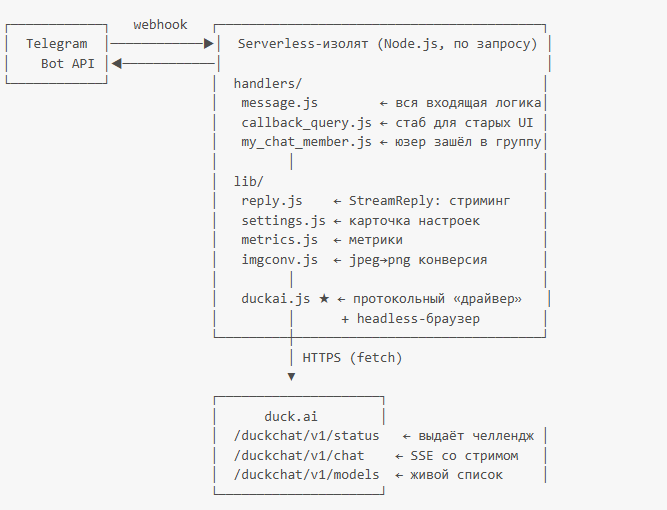
Или история о том, как 5408 байт обфусцированного JavaScript, прилетающих в HTTP-заголовке, превращаются в свободный доступ к GPT, Claude, Mistral и генерации картинок если построить браузерный манекен на чистом JS.
Читать далее'We Now Deserve to Lose': Ramaswamy Ad Deepens GOP Panic in Ohio
The fierce and bipartisan backlash to gubernatorial candidate Vivek Ramaswamy's decision to feature his opponent's estranged mother in an ad left Republicans in Ohio and Washington reeling on Wednesday, as both Ramaswamy and Vice President J.D. Vance doubled down on the divisive strategy.
Publicly, Republicans were mounting a defense, led by Vance, who is from Ohio and was campaigning in Cincinnati on Wednesday, treating the ad as a game-changing October surprise. On Thursday, President Trump joined in, saying in a social media post that Ramaswamy should keep the ad running and "let everyone listen to the mother of a defective, dishonest, and incapable Candidate, explain how the daughter is a DISASTER who, uncontrollably, lies, cheats, and steals!"
But privately, old-guard Republicans were baffled that Ramaswamy would dare to deploy Democratic nominee Amy Acton’s own mother, who has not spoken to her daughter since 1978 when she defended Acton’s stepfather who was indicted for raping Acton as a child. Some predicted the ad was likely to draw more empathy and interest in Acton from voters, and turn them away from Ramaswamy.
“We’ve lost the plot,” says one Republican strategist. “We had a real good chance and then we do this two weeks out.”
Adds a second: “We now deserve to lose this race.”
The addition of this ad so close to Election Day roiled races in Ohio up and down the ballot. “I would not have run that ad,” Republican Sen. Jon Husted, running in a tight and expensive race for re-election against Sherrod Brown in Ohio, told The Associated Press on Wednesday. Other players in the state's Republican circles say the ad has all the pieces of a misfire, especially among women.
Recent polls have shown Acton leading but not running away with the race. A Marist University poll released this week showed her up seven points. But Ohio is a state where President Donald Trump won three times, never with fewer than eight points to spare. If elected, Acton would be the first Democrat to become Governor since 2007.
Ramaswamy’s campaign said it was putting $4 million into making sure the ad gets seen, with a goal of targeting persuadable voters still undecided between the billionaire entrepreneur and Acton, the former state health chief who steered Ohio through the pandemic. But the risk of it backfiring is incredibly high with no time to recover.
Ramaswamy’s campaign includes several operatives who previously worked for Vance, who sidestepped questions about the ad’s message on Wednesday as he urged Republicans to not allow such hard-nosed messaging to distract them from the stakes of the election. “I’m a little bit disgusted when I see Republicans across the country who are whining more about that advertisement than they are about what the congressional Democrats and other Democrats want to do to the United States of America,” he told reporters. “So I would say to Ohio Republicans: do you actually think that Amy Acton is unfit to serve as Governor of the state of Ohio? I do.”
By Wednesday afternoon, it was clear Vance might be in a decided minority. “I don’t have to agree with Amy Acton’s politics to believe that exploiting someone’s childhood trauma is wrong,” wrote Republican Lydia Mihalik, a member of Ohio Gov. Mike DeWine’s Cabinet. On Thursday morning, DeWine himself joined in the pile on, telling reporters at the Statehouse in Columbus that the ad was “deeply, deeply troubling" and urging Ramaswamy's campaign to take it down, The Associated Press reported.
Mike Murphy, a strategist who was in Sen. John McCain’s inner circle when he ran for President in 2000 and headed Gov. Jeb Bush’s super PAC in 2016, wrote a brutal assessment of the ad on social media, saying it “is looking more and more like political suicide.”
And former South Carolina Gov. Nikki Haley, who ran against Ramaswamy in the 2020 presidential primaries and was a frequent critic of him, was even more direct. “He’s a bad guy,” she said. “It’s a shame he continues to get away with it.”
In an editorial endorsement of Acton published Wednesday, The Columbus Dispatch roundly condemned the video: “It should go without saying that sexual violence against children should not be politicized or taken as lightly as Ramaswamy appears to take it.”
For its part, Acton’s campaign began an ad of its own calling out Ramaswamy’s effort to make her childhood a campaign issue after a half century in the past.
"I received a lot of abuse, but Amy always got the worst of it,” Acton’s brother, Phil Stearns, says in a new 30-second ad released Wednesday. “She continued to receive that abuse because she knew she had to protect me from that, and if she hadn't done that, who knows where I would have ended up.”
"She was 11- and 12-years-old, and to think that that's somehow a talking point—shame on Vivek,” Stearns continues. “The contempt he has for Amy is the contempt he has for Ohio. He's not fit to lead."
Trump will speak at South Carolina midterm rally for Sen. Darline Graham as early voting begins
Supreme Court rebuffs Trump admin restrictions on medical care for trans inmates
'What a goal, what a moment' - Rice snatches late equaliser against Bayern
Man Utd humbled by four-goal Como to pile pressure on Carrick
Ahead of Midterms, Elena Kagan Says the Supreme Court Is Undermining Voting Rights
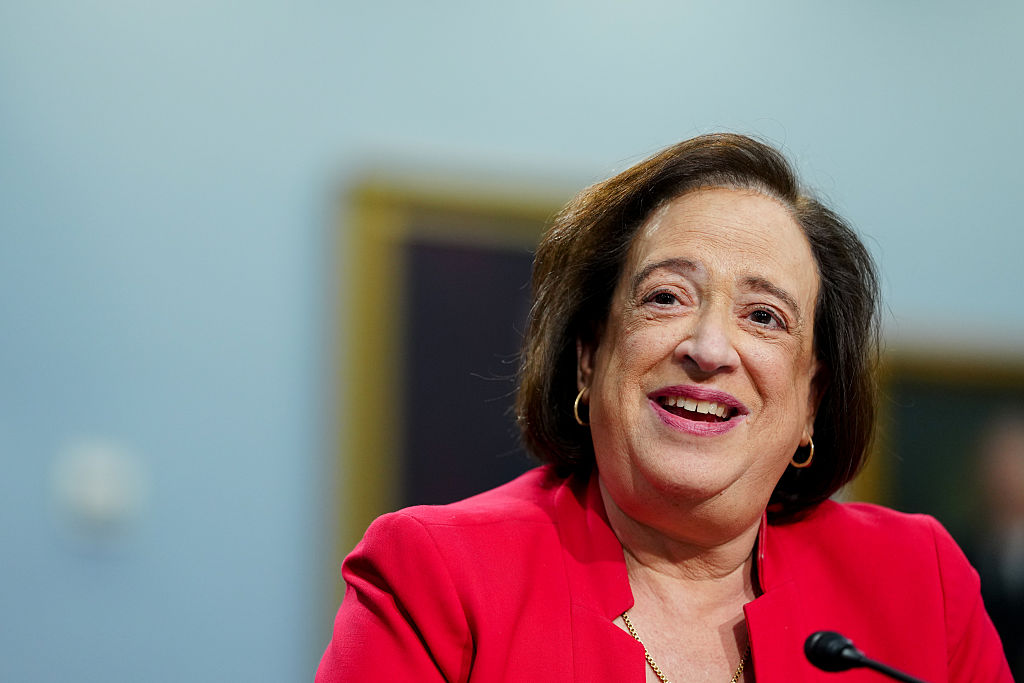
Liberal Justice Elena Kagan has accused the Supreme Court’s conservative majority of undermining democracy and creating a more polarized electorate through a series of key rulings that have affected the nature of elections ahead of the midterms.
“The court has kind of blinded itself to the very deleterious effect of their rulings on how the political system works,” Kagan said while speaking to students and faculty at Catholic University’s law school in Washington, D.C., on Tuesday.
She went on to say that the conservative justices have “created a democracy that does not work as well as it should.”
Kagan—who was nominated to the bench in 2010 by President Barack Obama—referenced specific rulings that have had a large impact on electoral maps, campaign finance, and executive authority. Experts tell TIME that these rulings have affected the midterm elections and could, in turn, change the fate of Congress.
Read More: Midterm Ad Spending Has Surpassed $10B. Where Is the Money Coming From?
“It's no exaggeration to say that the form of our elections and democracy owes a great deal to the decisions of the Supreme Court, sometimes overruling the will of Congress,” says Rick Hasen, a professor at the University of California, Los Angeles law school and the director of its Safeguarding Democracy Project.
In fact, he believes Kagan’s remarks do not go far enough in their criticism.
“You're going to hear more voices calling for the Supreme Court to be changed, either by adding more justices, putting in term limits, or doing other things,” he says.
The outcome of the midterm elections might have some influence on these issues going forward, though there are limits to what Congress can accomplish regardless of who controls the majority in the years ahead.
How Supreme Court rulings may affect the 2026 midterms
Kagan’s comments outline how the high court’s rulings have impacted this year’s elections.
She pointed to Louisiana v. Callais, which concerned whether Louisiana had to draw a second congressional district where Black voters made up a majority—giving them a greater chance to elect their preferred candidate. In April, the Supreme Court struck down that map and made it harder to challenge maps that weaken minority voters’ influence. Kagan called the ruling an “evisceration” of the 1965 Voting Rights Act.
Following the decision, many Republican-led states proposed redrawn voting maps that favored their candidates and weakened Black voters’ electoral influence.
Read More: Supreme Court Ruling Weakens Major Provision of Voting Rights Act
Hasen says that Americans are already facing the fallout. He pointed to Louisiana and Alabama, each of which eliminated a district where Black voters could elect their candidates of choice.
“We'll see much more of that in the next few election cycles,” Hasen predicts, calling the decision “the worst election law decision in 100 years at the Supreme Court.”
Kagan also mentioned a 2019 decision in Rucho v. Common Cause that prevents federal courts from blocking electoral maps on the grounds that they unfairly favor one party. States including Texas, North Carolina, Ohio, and Florida have since adopted new congressional maps that could help Republicans win additional House seats in November.
This gerrymandering, Kagan said, strips people of “their rights to voting equality” and has resulted in “driving people away from the center, toward the wings, toward the extremes.” The outcome, she said, is contributing toward what’s already a “too-polarized country.”
She added that these redrawn maps are “very destructive to our democracy.”
How campaign finance rules may come into play ahead of Election Day
In her speech, Kagan also highlighted the role that money increasingly plays in politics.
“The people of America look around this political system and think that all this money chasing all these political candidates is a nightmare, and they’re right,” Kagan said.
A 6-3 ruling split along ideological lines from June in National Republican Senatorial Committee v. FEC removed limits on how much political parties can spend in coordination with their candidates, including on television advertisements.
Her comments come amid what is projected to be the most expensive election cycle in history.
Billionaires have poured hundreds of millions into super political action committees (super PACs) for campaign ads—chiefly supporting Republican candidates in tight Senate races.
How the court has expanded presidential powers
Supreme Court rulings have also influenced the scope of presidential power.
Kagan also criticized the court’s decision in Trump v. Slaughter. In June, justices struck down protections against firing Federal Trade Commission commissioners without cause, expanding presidential control over independent agencies.
“The danger is it allows the president to ride roughshod over all the institutions of government,” Kagan said.
Aziz Huq, a professor at the University of Chicago law school and a co-author of How to Save a Constitutional Democracy, tells TIME that “the misuse or the use of prosecutorial discretion at the direction of the president against political foes … flows from the court’s ruling” in Slaughter.
Furthermore, Huq says, it expands “the scope of presidential directive authority over subordinates.”
Huq pointed to the Trump Administration’s investigation into Somali-born Democratic Rep. Ilhan Omar of Minnesota as an example of how greater presidential control over executive officials can be used against political opponents.
What Congress can do to check the Supreme Court
Even if Democrats regain control of Congress in November, Trump could veto legislation seeking to counteract the court’s decisions. Overriding him would require two-thirds support in both chambers.
As a result, Hasen says it could take until 2029 “at the earliest,” when a new president enters the White House, for there to be a counteractive response to the high court’s conservative majority.
There are measures Congress and states can take in the meantime, he continues, saying that Congress has the ability to enact a nationwide law that would restrict partisan gerrymandering of House maps.
Chief Justice John Roberts acknowledges that authority in his ruling in Rucho.
“As noted, the Framers gave Congress the power to do something about partisan gerrymandering in the Elections Clause,” Roberts wrote, referring to the 55 delegates who in 1787 met to draft the U.S. Constitution. “That avenue … remains open.”
When it comes to Callais, Hasen says lawmakers could attempt to amend the Voting Rights Act, and restore protections narrowed by the ruling, by forcing the Supreme Court “to decide some of the constitutional questions that they ducked” during the original case.
But any new legislation could face a legal challenge, leaving the Supreme Court to decide whether it can stand.
Those hoping to challenge the highest court’s composition or jurisdiction may go about that in a few ways, such as by petitioning for term limits. Proposals include limiting justices’ active service through legislation—an approach whose constitutionality is disputed—or through a constitutional amendment. Another route is to limit which cases the court can hear.
Complicating matters, Huq says, is that legislative reforms could ultimately come before the Supreme Court, whose methods of interpreting the law leave the justices largely unconstrained in reaching their preferred outcomes.
“Almost all of these proposals are going to fail because the court will strike them down or find ways to undermine them,” Huq says. “We're at a very difficult and perilous point.”
Lindsay Clancy murder trial: Judge denies request to question holdout juror
Poll: Voters want Congress to be a check on Trump, trust Democrats more on issues
A new poll shows record support for Democratic congressional candidates ahead of the midterms, as voters feel the party is better attuned to handling their top issues.
(Image credit: Andrew Harnik)

‘It’s the President’s Fault’: The White House Blame Game Starts Early Ahead of the Midterms
Сделал FB2 Reader online

Для своих нужд сделал online читалку формата fb2.
Ссылка на читалку тут: FB2 Reader online
Может быть плохо искал до этого, но десктопная читалка из тех что нашел меня не устраивала. Нельзя поменять размер шрифта, криво сделано удаление, нет экспорта.
Все эти ошибки я исправил. Причем ничего устанавливать не нужно, все работает из браузера. Так же я добавил экспорт в PDF, docx, markdown.
Читать далееOrangutans prefer food associated with sounds of laughter, study suggests
Apes in study more likely to choose treats linked to sound of peers having fun, suggesting emotions influence learning
Orangutans base their food choices on whether others appear to be having a good time, research suggests.
Scientists studying captive orangutans have found that when the great apes heard the sound of their peers laughing before they searched a bowl for a tasty treat, they valued the reward more highly.
Continue reading...The highs and lows of GB's fourth-placed finish at Worlds
Europe's next great coach? How Fabregas led Como into Champions League
Voters sound off before Kansas Senate debate between Roger Marshall and Adam Hamilton
Meta Earnings Show Increased A.I. Spending, Even as Cash Pressures Grow
Year-old AI lab Flapping Airplanes raises $1B at a $6B valuation
'Mindset shift' needed within government on No10 North, says deputy
Pope Leo's tests show he needs no further treatment for lung cancer, his doctors say
Paz, Fabregas and Como teach Man Utd a lesson
Opinion | Putin Plays Hostage Geopolitics
Teenage boy guilty of trying to murder girl, 15, in school
Macron accuses foreign leaders of exploiting French riots
DOJ asks Supreme Court to allow border wall construction in Big Bend region
AI is advancing rapidly. Who's keeping it in check?
Trump Isn’t Even Good at TV Anymore
How France became ungovernable at home yet unstoppable in Brussels
Hepatitis B vaccine recommendation changes could leave millions vulnerable: Study
WATCH LIVE: Gov. Scott, challenger Janoo face off in Vermont governor debate
Huge crowds watch attempt to rescue shark stranded in South Korean canal
[Перевод] Что нового в Swift: сентябрь 2 026
Добро пожаловать в «Что нового в Swift» — кураторский дайджест релизов, видео и обсуждений в проекте Swift и сообществе. Веб-фреймворк Vapor недавно отметил десятилетие и отпраздновал это Vapor Week! Мы пригласили одного из авторов Vapor стать гостевым автором этого выпуска: Привет, я Тим из основной команды Vapor! 10 лет назад, в сентябре, был выпущен Vapor 1.0, и за эти годы Vapor превратился в комплексный фреймворк для создания бэкендов и API на Swift. К годовщине мы выпустили первую бету Vapor 5 — следующую мажорную версию Vapor, которая представляет собой полную переработку, устраняющую 6 лет технического долга, добавляющую полную поддержку структурированной конкурентности и (наконец-то!) прощающуюся с EventLoopFutures. С самого начала цели Vapor не изменились: выразительный, простой в использовании и мощный фреймворк для создания серверных приложений на Swift. С Vapor 5 мы можем использовать новый Swift HTTP Server для обработки фактической HTTP-части и сосредоточиться на том, чтобы быть отличным веб-фреймворком, используя новейшие возможности Swift там, где это имеет смысл. Удивительно видеть круг людей, использующих Vapor, от независимых разработчиков до крупных компаний. Полную историю, включая обновлённую, локализованную и более доступную документацию, можно найти в Vapor Week. Если вам интересен серверный Swift, попробуйте бету Vapor 5 и расскажите нам, что вы думаете! А теперь к другим новостям о Swift:
Читать далееMacron accuses foreign leaders of exploiting French riots
Tesla starts Optimus robot production in California as profit falls 43%
Хватит мерить возраст Вселенной по радиусу своего зрения. Разбор главного геоцентрического обмана
Геометрия пузыря: почему 13,8 млрд лет — это предел обзора, а не возраст Вселенной
Последние данные космического телескопа «Джеймс Уэбб» (JWST) создали серьезную проблему для стандартной космологической модели. На самых дальних рубежах наблюдения обнаружены массивные, полностью сформированные галактики и сверхмассивные черные дыры. Согласно принятому таймлайну, у материи было всего около 300–500 миллионов лет после Большого взрыва, чтобы собраться в эти структуры. По законам ядерной физики и гидродинамики это невозможно: газ просто не успел бы остыть и сжаться под действием гравитации за такой короткий срок.
Чтобы спасти текущую дату возраста Вселенной (13,8 млрд лет), исследователям приходится усложнять модели, допуская, что в раннем космосе физические константы или скорость зажигания звезд были принципиально другими.
Однако противоречие исчезает, если проанализировать саму геометрию того, как мы измеряем космос в трехмерном пространстве.
Трехмерный парадокс «начала времен»
В популярной культуре расширение Вселенной часто иллюстрируют двухмерным графиком-воронкой, где из одной нижней точки (Большого взрыва) вверх расходится ось времени, а в стороны — ось пространства. Это создает иллюзию, что мы движемся в определенном направлении от момента творения.
Если развернуть эту модель в честное трехмерное пространство и построить три физические оси координат (X, Y, Z) прямо из точки нахождения наблюдателя на Земле, мы получим следующий результат:
Читать далее