Democrats have swept key US midterm races, flipping long-held Republican seats and securing a majority in Congress as voters rebuked Donald Trump’s policies at the ballot box.
Abdul El-Sayed, the doctor and progressive insurgent, has made history in winning the closely watched US Senate race in Michigan, defeating the Republican Mike Rogers to become the country’s first Muslim senator.
El-Sayed’s victory adds to a decisive Democratic majority in the Senate after the party wrested control of the upper chamber on Tuesday with shock victories in Texas, Kansas and South Carolina.
Democrats’ capture of Congress raise expectations of tougher regulation of AI sector; US stock futures fall but later pare losses
Chris Beauchamp, chief market analyst at the investing and trading platform IG, says:
Overnight markets had pointed towards steep losses for futures, but the picture is looking rosier as markets seem to look towards the future with relish.
A divided US government has often been the best outcome for markets, and we are staring that squarely in the face today. Gold and silver are up, while volatility has reversed course too. All eyes are on the White House now, but Trump’s apparent acceptance of the results at least suggests a nasty litigation battle (or worse) is off the cards.
Midterms rattle Trump, send dollar lower and bullion higher: The heavy Republican defeat is a stark reminder that even a president who dominates the political conversation is not immune to voter discontent.
The scale of the losses will inevitably raise questions about Trump’s ability to push through his agenda over the next two years, and markets are already reacting. The dollar is under pressure as investors reassess the political outlook, while gold and silver are benefiting as safe haven plays.
Democrats are making sweeping gains as American voters swung heavily against Republicans in elections for the Senate, House of Representatives and state governors.
Progressive favorite Abdul El-Sayed has defeated Republican Mike Rogers in a bitter campaign for Michigan’s open Senate seat, giving the Democratic Party’s left wing a breakthrough victory in one of the nation’s most important swing states.
Dr. Abdul El-Sayed, a progressive Democrat with a background in public health, has defeated former Representative Mike Rogers in Michigan’s open Senate race on Tuesday, according to The Associated Press, making him the first Muslim elected to the United States Senate.
His victory keeps the seat in Democratic hands, denying Republicans one of their best opportunities to blunt the Democratic wave that has defined this year’s midterm elections. The retirement of Senator Gary Peters, a Democrat, at the end of the current Congress had set up one of the country’s most competitive Senate contests in Michigan, a perennial battleground that President Trump carried by two percentage points in 2024.
The election of El-Sayed, 42, the son of Egyptian immigrants who was born and raised in suburban Detroit, represents a milestone in American politics and a potentially consequential shift within the Democratic Party. An outspoken critic of Israel who has championed an ambitious progressive agenda, he joins a growing contingent of left-wing Democrats who have prevailed in elections this year. But unlike other prominent progressive victories in reliably Democratic districts, El-Sayed’s came in a closely divided statewide race where both parties have spent years competing for the support of working-class voters, suburban moderates, and an increasingly diverse electorate.
His win also offers Democrats a striking counterpoint to the argument, advanced by some of the party’s more moderate figures, that progressive candidates are too politically vulnerable to compete in battleground states. El-Sayed, who rejects the socialist label, prevailed despite a bruising campaign that exposed deep divisions among Democrats over Israel, drew millions of dollars in spending from pro-Israel groups, and culminated in an extraordinary rupture with his former primary opponent, Representative Haley Stevens, who endorsed Rogers just two days before the election.
The campaign had turned strikingly ugly in its closing weeks, with Trump and other prominent Republicans invoking Islamophobic stereotypes to portray El-Sayed as a threat to American security. He faced considerable heat for campaigning with Hasan Piker, the incendiary anti-Israel streamer who said that “America deserved 9/11” and that the U.S. was responsible for more terror than Al Qaeda. Some Jewish voters accused El-Sayed of trafficking in antisemitic rhetoric through criticism of Israel and his suggestion that American military assistance to the country had come at the expense of domestic priorities. (El-Sayed has rejected allegations of antisemitism, arguing that his criticism of the Israeli government should not be conflated with hostility to Jewish people). The accusations and counteraccusations reverberated across Michigan’s large Muslim and Jewish communities, turning an election already fraught with national implications into an unusually personal and painful contest.
At a rally in Michigan nine days before the election, Trump baselessly described El-Sayed as a member of the Muslim Brotherhood—an Islamist political movement—and warned that his election would bring terrorists into the country. “If Abdul and the Democrats win, they will open the floodgates and invite hordes of jihadis to our shores, creating a nightmare of violence and terror until you cannot even have a Christmas,” Trump told thousands of supporters. The President also repeatedly called El-Sayed by his middle name—Mohamed, which critics described as a dog whistle—and told supporters that he wanted El-Sayed to go through a metal detector to enter the Capitol. The night before the election, Trump wrote on Truth Social: “Abdul El-Sayed Hates Jews and Hates Blacks. Don’t feel bad, he also Hates Whites.” The rhetoric underscored the extent to which El-Sayed had become a national target for Republicans this cycle.
Rogers, 63, a former chairman of the House Intelligence Committee, also raised baseless allegations about El-Sayed’s family ties to the Muslim Brotherhood. El-Sayed has publicly disavowed the movement and denied allegations that he or his family has ties with it. When Dave Portnoy, the founder of Barstool Sports, called El-Sayed a “terrorist,” Rogers responded on social media that Portnoy was “exactly right.”
For El-Sayed, the attacks recalled doubts he had encountered long before entering politics. In an interview with TIME in May, El-Sayed recounted a conversation with former President Bill Clinton after delivering a student commencement address at the University of Michigan in 2007. Clinton, who had also spoken at the ceremony, suggested that the young graduate might consider running for public office one day. El-Sayed remembered laughing at the idea. “I don’t know if you saw my name,” he recalled telling Clinton. “It’s not going to work out for me.”
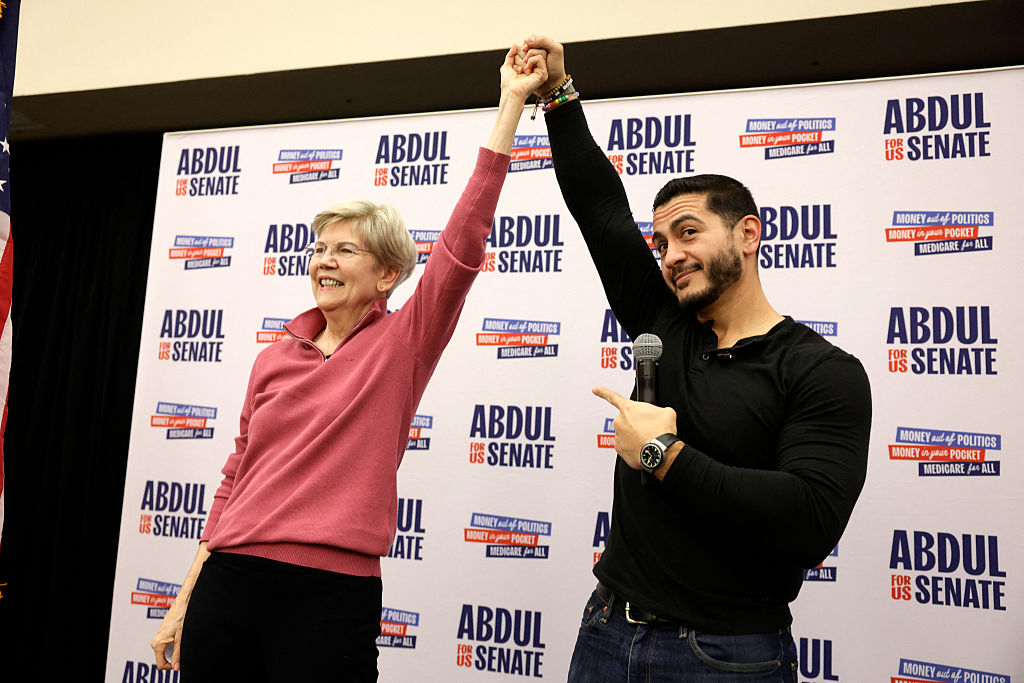
Sen. Elizabeth Warren joins Michigan Democratic Senate candidate Abdul El-Sayed at a campaign rally at Eastern Michigan University in Ypsilanti, Mich., on Nov. 2, 2026. Jeff Kowalsky—AFP/Getty Images
Nearly two decades later, El-Sayed has made history in a state where the political influence of Muslim Americans has grown considerably. His path to the Senate was hardly conventional. A graduate of the University of Michigan and a Rhodes Scholar at the University of Oxford, El-Sayed earned his medical degree from Columbia University but did not practice medicine. Instead, he became an assistant professor of epidemiology at Columbia before taking leadership positions in public health in Detroit and Wayne County. In 2018, he mounted an unsuccessful campaign for governor of Michigan, drawing comparisons to former President Barack Obama with his charismatic public speaking.
El-Sayed sought to make his election for Senate a referendum on Trump, whose approval rating had fallen sharply in Michigan since his narrow victory there two years earlier. A New York Times/Siena University poll conducted in September found that just 34% of likely voters approved of the President’s performance. “Michigan knows Trump is on the ballot on Nov. 3,” El-Sayed said in the closing days of the campaign, arguing that voters would reject Rogers as a loyal supporter of the President.
Rogers had sought to establish some distance from the Trump Administration on issues that have proved unpopular in Michigan, including tariffs on Canadian goods and the ongoing war with Iran. In one campaign advertisement, the Republican declared that “Canada is not our enemy,” a notable departure from the President’s confrontational approach toward the neighboring country, whose economy is closely intertwined with Michigan’s automobile industry.
But Rogers struggled to escape the broader political environment confronting Republicans. His defeat suggested that the backlash against Trump had extended into a state that had helped return him to the White House, even as the President devoted considerable attention to the Senate contest.
A progressive platform and divisions over Israel
El-Sayed campaigned on an expansive progressive platform that included Medicare for All, higher taxes on the wealthy, and a challenge to the influence of corporate money in American politics. His campaign cast the rising cost of living and the power of wealthy donors as interconnected problems, arguing that the political establishment had become more responsive to powerful financial interests than to the economic concerns of ordinary Americans. He will also arrive in Washington as one of the Senate’s most outspoken critics of Israel.
The Detroit suburbs are home to some of the country’s most established Muslim and Jewish communities, whose members have long played important roles in Democratic politics. Those communities have experienced the past several years very differently, particularly since the Hamas-led attack on Israel on Oct. 7, 2023, and Israel’s subsequent war in Gaza. In 2024, Arab and Muslim activists in Michigan helped organize the “Uncommitted” movement, encouraging Democratic primary voters to withhold their support from President Joe Biden in protest of his Administration’s backing of Israel. The campaign exposed tensions within the Democratic coalition that continued into the general election, when Trump carried Michigan. Two years later, El-Sayed’s candidacy gave many of those same voters a chance to elect a senator who shared their opposition to American support for Israel’s military operations.
El-Sayed has described the war in Gaza as a genocide and argued that American assistance to Israel should instead be directed toward domestic needs, including schools and health care. His positions placed him at odds with much of the Democratic establishment and made him a principal target of the American Israel Public Affairs Committee (AIPAC), the influential pro-Israel lobbying organization that spent tens of millions of dollars opposing him during the Democratic primary and continued its efforts in the general election.
El-Sayed told TIME in May that Israel has evolved into a kind of moral Rorschach test for American politicians. “If you can’t call it what it is,” he said, “which is a genocide, then how are you going to stand up to Donald Trump? How are you going to stand up to pharma CEOs?”
The same campaign that energized Muslim voters also unsettled many Jewish Democrats, some of whom believed El-Sayed’s rhetoric had contributed to an increasingly hostile atmosphere for their community. Those concerns were especially acute after a violent attack in March at Temple Israel, a synagogue in West Bloomfield, where a man drove a truck into the building, narrowly missing classrooms occupied by young children. El-Sayed condemned the attack but sparked outrage when he suggested in a social media video that “hurt people hurt people,” referring to the attacker’s loss of relatives in an Israeli airstrike in Lebanon. He later apologized for the comments, but the episode remained a source of anger among Jewish voters who believed his remarks had appeared to rationalize an act of antisemitic violence.
A Democratic rift over Israel
Lingering tensions complicated El-Sayed’s efforts to consolidate Democratic support after his narrow primary victory over Stevens, a more moderate Democrat who had received substantial backing from pro-Israel donors and party establishment figures. The two appeared together at a unity breakfast shortly after the August primary, but their relationship deteriorated over the following months. Stevens accused El-Sayed of failing to adequately confront antisemitism among his supporters and demanded that he condemn an advertisement produced by an allied political action committee that linked American support for Israel to rising grocery prices. El-Sayed eventually denounced the advertisement, but he also accused Stevens of trying to reopen their primary fight
As the dispute intensified, he publicly made clear that he did not want her joining him at a planned church appearance in Detroit on the final Sunday before the election. The next morning, Stevens stunned Democrats by arriving at the church alongside Rogers and announcing that she would vote for the Republican. “I’m here with the person who I am voting for for United States Senate and that is Mike Rogers,” she told reporters after the service.
The endorsement was an extraordinary act of defection by a sitting Democratic congresswoman, particularly in a race that both parties regarded as potentially decisive to control of the Senate.
El-Sayed sought to minimize the controversy, telling reporters that “none of this matters.” But the episode revealed the difficulty he faced in bringing together a coalition whose members held profoundly different views about Israel and the direction of the Democratic Party.
His election now raises questions about how the Democratic Party will accommodate a growing progressive faction whose positions on foreign policy, economic inequality, and the influence of wealthy donors increasingly challenge those of its traditional leadership.
For a Democratic Party still debating how to rebuild its coalition and confront Trump, El-Sayed’s victory is likely to become a touchstone in the argument over what kind of party Democrats want to become.
Abdul El-Sayed, the doctor and progressive insurgent, has made history in winning the closely watched US Senate race in Michigan, defeating the Republican Mike Rogers to become the country’s first Muslim senator.
El-Sayed’s victory adds to a decisive Democratic majority in the Senate after the party wrested control of the upper chamber on Tuesday with shock victories in Texas, Kansas and South Carolina.
CBS News projects that Democrats will take back both chambers of Congress following sweeping victories in the 2026 midterm elections. CBS News' Jessi Mitchell anchors continuing coverage of Election Day.
Мы делаем AI-менеджера маркетплейсов. Это нейросеть, которая работает в кабинетах Wildberries, Ozon и Яндекс Маркета так же, как работал бы нанятый менеджер. Раньше мы писали здесь, как он устроен внутри, и эти статьи были для разработчиков. Эта статья для тех, кто продаёт.
Разберём, какую часть работы менеджера маркетплейсов уже сейчас можно отдать нейросети, как это выглядит в чате и где она ошибается. Скриншоты сняты на демо-магазине мебели: товары и цифры в нём выдуманные, а ответы менеджера настоящие, их писала модель.
Куда уходит день менеджера маркетплейсов
Если убрать стратегию и переговоры, работа менеджера маркетплейсов состоит из повторяющихся проверок:
что заказали и что выкупили;
какой товар скоро закончится, сколько везти и на какой склад;
какие цены поставить и в какие акции идти;
на какие отзывы и вопросы ещё не ответили;
сколько съела реклама и что она принесла;
что поправить в карточках, чтобы они поднялись в выдаче;
какой отчёт собрать к понедельнику.
Каждая проверка занимает немного времени, но их много, и площадок обычно больше одной. Деньги теряются как раз в промежутках между проверками: товар закончился в пятницу, а заметили его в понедельник; ставка выросла, и реклама ушла в минус; отзыв на одну звезду неделю висит без ответа в карточке, которую открывают каждый день.
Эту часть работы мы и отдали нейросети.
Чем ИИ-менеджер отличается от сервиса аналитики и чат-бота
Селлеры уже пользуются двумя видами инструментов. Сервисы аналитики показывают графики и таблицы, а выводы делать и правки вносить приходится самому. Чат-боты отвечают по сценарию и кабинета не видят.
ИИ-менеджер подключается к кабинету продавца по API. Он видит заказы, остатки, цены, отзывы и рекламу, сам считает, что сделать, и вносит правку в кабинет. Задачи ему ставят обычными фразами в чате. Выбирать отчёт в меню или искать нужный фильтр не нужно: достаточно написать «что срочного», «посчитай поставку» или «ответь на отзывы».
Подключение занимает несколько минут:
Wildberries — токен из раздела «Доступ к API» в кабинете продавца. Для рекламы и биддера лучше выпустить отдельный токен с категорией «Продвижение»: с основным площадка разрешает менять ставки всего пару раз в час.
Ozon — Client-Id и Api-Key из настроек Seller API. Для рекламы нужны ещё ключи Ozon Performance.
Яндекс Маркет — Api-Key из кабинета продавца, кампанию менеджер находит сам.
Если у вас несколько кабинетов на одной площадке, подключите их все и переключайтесь между ними прямо в чате.
Что можно поручить уже сейчас
Утренняя проверка
Каждое утро менеджер сам смотрит все подключённые кабинеты и пишет в чат только срочное:
товар закончится в ближайшие пять дней;
отзыв на одну или две звезды остался без ответа;
у ключа площадки заканчивается срок.
Об одном и том же он напоминает не чаще раза в три дня, иначе уведомления быстро превращаются в шум. Раз в неделю на почту приходит сводка с цифрами, советами и таблицей Excel во вло
Among the sweeping victories by Democrats on Tuesday were wins in several congressional districts that Republicans had redrawn explicitly to boost their party ahead of the midterms.
El-Sayed's campaign tested how an antiestablishment candidate on the left would fare in a perennial Midwest battleground. With the win, he'll become the first Muslim American to serve in the Senate.
Democrat Abdul El-Sayed defeated former GOP Rep. Mike Rogers in Michigan, CBS News projects, after one of the most contentious contests of the midterm elections.
CBS News projects that Democratic State Rep. James Talarico has flipped a Texas Senate seat, defeating Republican Ken Paxton. Talarico delivered his victory speech on Wednesday after winning the first Texas Senate seat since 1988.
Rep. Elise Stefanik and former Sen. Joe Manchin share their final thoughts after Democrats came away with control of the House and Senate in the 2026 midterm elections.
In today’s newsletter: A thumping night for the Democrats has seen the party take control of Congress, altering the course of Trump’s second presidency
Good morning. While you were sleeping, a political earthquake hit the United States and it’s still climbing up the Richter scale. Voting in Alaska and Hawaii wrapped up only hours ago, but early midterm results streaming in from across the US are making history for the Democrats, as they cash in on Trump’s plummeting popularity.
Democrats have taken control of the Senateand the House of Representatives, and the scale of their successes are far larger, and the speed at which they’ve materialised far quicker, than had been expected. Some of the most hotly contested races of the night have already been called, with Democrats flipping seats in Texas, Ohio and Kansas.
EU trade deal | Andy Burnham is preparing to announce billions of pounds of trade deals with the EU covering everything from youth visas to pet passports under his vision of a much closer relationship with the bloc.
UK news | A “well-known individual” has failed in his bid to stop two media organisations from publishing allegations of inappropriate sexual activities, the high court has ruled.
UK politics | Reform UK’s leader on Hampshire county council has been charged with 12 counts of rape and one of distributing indecent images of a child.
UK news | King Charles has said that deepening his understanding of the horrors of slavery has made him more determined to address the wrongs of the past, as Caribbean leaders and campaigners intensified demands for an apology and reparations from Britain.
Climate crisis | Countries can start to break their dependence on fossil fuels now without needing to wait for new technologies or economic changes, Brazil’s government has said ahead of a global climate summit.
Yothu Yindi’s Treaty, Midnight Oil’s Beds Are Burning and Helen Reddy’s I Am Woman are among the first songs to be honoured on new list that will grow every year
Warning: Aboriginal and Torres Strait Islander readers are advised that this article contains images and names of Indigenous Australians who have died
Midnight Oil’s Beds Are Burning, Yothu Yindi’s Treaty and Helen Reddy’s I Am Woman are among the first 10 Australian songs to be inducted into the National Songbook – a new digital archive that celebrates and preserves songs that have shaped Australia’s national cultural identity.
Launched on Wednesday night at the National Film and Sound Archive (NFSA) in Canberra, the songbook is a joint initiative between NFSA and the music rights organisation Apra Amcos. The first 10 songs were selected by a panel of 11 music experts including broadcasters Richard Kingsmill and Zan Rowe, composer Cornel Wilczek and musician Mo’Ju.
CBS News projects that Democrat Gina Hinojosa has beaten Republican incumbent Greg Abbott in the Texas gubernatorial race. She spoke to her supporters on Wednesday.
Daniel P Lewis stars in his own script as an isolated man beset by trauma as a helpline counsellor Walters tries to heal his pain
While working for a helpline one night, counsellor Grace (a terrific Hannah Walters) gets a call from Walter (Daniel P Lewis, also the film’s screenwriter), an isolated working-class man beset by trauma and loneliness who is contemplating killing himself. Grace quickly ascertains that Walter is in profound emotional distress, and although he keeps hanging up on her when her probing questions become too painful, he also keeps calling back until he feels safe enough to speak about the root causes of his anguish and accept help. However, other factors threaten to destabilise Walter’s fragile recovery as the violence that’s always been a part of his life erupts once again.
Even if you didn’t read up on any of the background to this intimate, microscale drama, you’d be likely to suss while watching that it’s a labour of love for some of the cast and crew, perhaps born of a desire to show people in pain that there is help out there for them. That manifest sincerity and altruistic intent is so strongly palpable here that it somewhat wards off negative criticism, but it has to be admitted that the film does have its weaknesses. For a start, confining the action to Grace and Walter’s conversations and then observing how he reacts increasingly self-destructively after each talk means we follow a repetitive cycle of confession-reaction rinse-and-repeat. Lewis’s performance is dialled up to the max from the start, so it doesn’t have anywhere to go over the long haul. Added to which, the film keeps cutting away to somewhat strident flashbacks to explain what happened to him, instead of letting the revelations emerge through speech.
Dashing cowboys, a transgender storm chaser and a fetching mullet are among the subjects of these acclaimed photographs for the Winston Taylor Photo Portrait Prize 2026
Twenty years on from her husband’s murder, an extraordinary woman reflects on love and resilience
Among the many images of violence that might be used to define Putin’s chilly reign, one stands out. The photo of the Russian dissident Alexander Litvinenko – gaze defiant, lying in intensive care – taken in November 2006. Litvinenko had met with visitors from Moscow: they poisoned his tea with radioactive polonium. A public inquiry concluded that Putin had “probably” approved the hit, sending two clownish assassins to carry it out.
The London deathbed picture featured in newspapers across the world. It was a powerful symbol of what post-millennial Russia had become: a cruel and vindictive place, ruled by a paranoid KGB tsar. Litvinenko was its ill-fated prophet. He was the target, he told British detectives, of a vengeful mafia state. If unchecked, Putin would start a war in which millions would die, he warned presciently.
The South African artist Remofiloe Nomandla Mayisela questions the role she was expected to fulfil in her playful self-portraits
MilkMaid is part of my photographic series Lipservice, which stars Mrs Martha May, a contemporary makoti (a colloquial South African term for a wife). Mrs May is always dolled up, poised, ready to serve. Here she stands before a wall of long-life milk, face painted in the patches of a dairy cow, a crate balanced on her head. Rubber gloves, a frilled apron over shweshwe (coloured fabric). Milkmaid and milk, server and served, in one body.
The idea grows from the old line: the way to a man’s heart is through his stomach. In Lipservice the kitchen is a stage with food the script women are handed. Milk felt like the most intimate ingredient, the first thing a woman gives and the easiest to package and sell back. The carton reads like a job description: long life, full cream, UHT process. Made to last on a shelf. Stacked in repetition, the cartons speak to how women are consumed: branded, endlessly replaceable.
The margin in Mississippi's Senate race between Democrat Scott Colom and Republican Cindy Hyde-Smith is separated by less than 30 ballots with 97% of the votes counted.
В этой рецензии в блоге SSP SOFT разберем книгу Павла Рудницкого «SRE. Новый подход к управлению инфраструктурой» (БХВ-Петербург, 2026, 176 страниц). Автор объясняет, как оценить надежность сервиса в метриках, посчитать бюджет ошибок и проанализировать аварию. Студентам, стажерам и младшим разработчикам (джунам) книга дает понимание терминов, на котором инженеры эксплуатации говорят с разработчиками и бизнесом, а заодно поможет с ответами на некоторые вопросы на собеседованиях.
I grew up with spinal conditions that solidified my sense of being ‘weak and weird’. By my late 30s, I was feeling burnt out. But an invitation from a colleague set me on an unexpected and exhilarating new path
In 2023, I was in the Alps trekking the 80-mile Tour du Mont Blanc when there came a moment I was no longer trekking, exactly. I was on my hands and knees. Frozen. And then I started to cry. Others were casually bopping past me, up and over like water around a stone. But I was stuck. Why can’t I move? I thought.
I was not always fit enough to trek 80 miles in the Alps. As a child, I was the one who always got picked last in gym class. I would have picked me last too: by any measure, I was the most physically awkward kid in my year group. Other students bullied me and I was ashamed of my body. I felt weird, weak and sad.
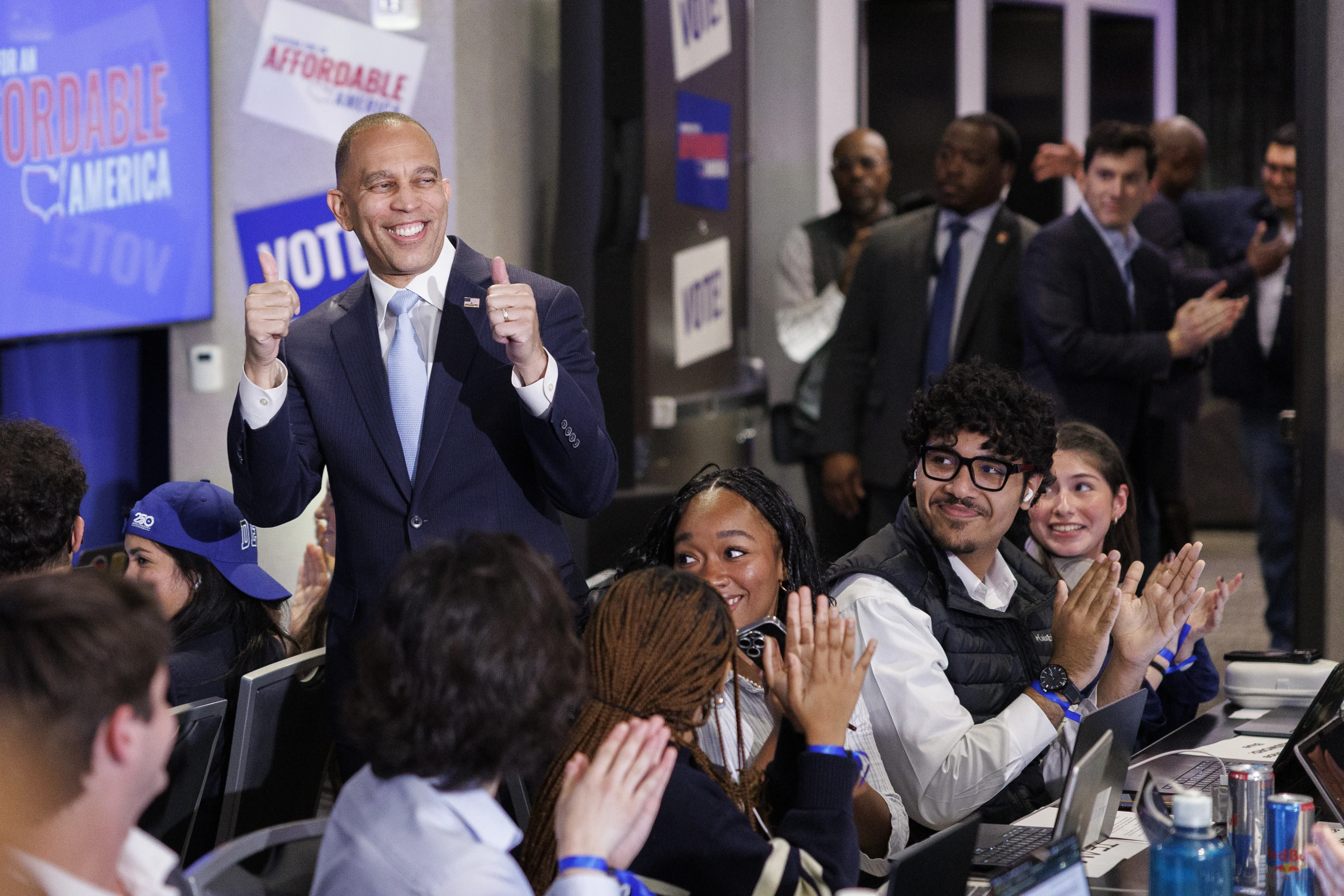
Jeffries, who addressed supporters after House control was called for Democrats, argued voters have sent Congress a message to end extremism and "corruption."
Texas Democratic Senate candidate State Rep. James Talarico greets supporters outside Whataburger on October 23, 2026 in Austin, Texas. Talarico won big Tuesday night. | Sergio Flores/Getty Images
On May 3, 2016 — the night Donald Trump effectively clinched the Republican Party’s presidential nomination for the first time — then-Sen. Lindsey Graham tweeted, “If we nominate Trump, we will get destroyed…….and we will deserve it.”
Graham was scarcely alone in voicing such sentiments. Texas Sen. Ted Cruz, former Gov. Jeb Bush, and most political analysts said much the same thing. After all, how could nominating an unpopular, profane, and authoritarian reality star — with more expertise in stiffing contractors than formulating policies — lead a major political party to anything but ruin?
On Tuesday night, the reckoning that Graham had prophesied finally arrived, just a decade behind schedule.
As of this writing, the Democratic Party appears all but certain to win nine of the cycle’s top 10 Senate battleground states, including perennial bastions of Republicanism like Kansas, Texas, and South Carolina. And Democrats are favored to prevail in the 10th battleground (Alaska), while winning at least 255 House seats. Then there’s an 11th race almost no one saw coming (Mississippi) that is heading down to the wire. The party’s share of the national congressional vote isn’t entirely clear. But many analysts expect it to be the largest that either party has won since the 1970s.
Among the many Republicans felled by this “blue tsunami” was Graham’s own sister, Darline, whom Trump handpicked as the GOP’s nominee in South Carolina after Lindsey died earlier this year.
From one angle, these results are astonishing. We have not seen a wave this large in half a century. And every previous post-2016 election cast doubt on whether such a Democratic rout was even possible. After all, Democrats won a national landslide in the 2018 midterms, but nevertheless failed to gain Senate control, as red-state electorates still proved largely unwilling to back Democratic candidates.
Conventional wisdom held that the nationalization of elections — and polarization of voters — had brought an end to the era when idiosyncratic Democratic candidates could compete in overwhelmingly Republican states.
No longer. Tuesday’s results look like precisely what many expected in early 2016, before Trump proved himself more politically formidable than most of his critics had imagined.
All of which raises the question: Why now? Why did Trump manage to provoke an epochal rebuke from American voters in 2026, but not in preceding elections?
It’s partly “the economy, stupid”
The most plausible answer is, to quote the legendary Democratic consultant James Carville, “the economy, stupid.”
As 2016 made clear, the American electorate didn’t consider Trump’s illiberalism or inexperience as disqualifying as mainstream elites did. And some believed that the business executive would be well-suited to manage the economy, or at least, bring about a measure of welcome economic change.
For much of his first term, Trump appeared to validate this impression, presiding over low inflation and full employment. In December 2019, a CNN poll found voters more satisfied with the US economy than they’d been in nearly two decades. (Of course, 2020 would bring economic upheaval, but many Americans didn’t consider Trump culpable for the pandemic.)
Trump’s apparent economic efficacy put a floor beneath his approval and the GOP’s electoral performances during term one. And it made him a somewhat more credible anti-inflation candidate in 2024.
The whole “authoritarian nightmare” thing also mattered
Although the economic context is likely the biggest single driver of the GOP’s belated reckoning, it is not sufficient to explain it. The 2026 economy isn’t great. But it also isn’t a total disaster. America’s inflation rate is a bit under 4 percent; in November 2022, when Joe Biden suffered a much smaller midterm rebuke, it was over 7 percent. Our nation’s unemployment rate, meanwhile, sits at 4.2 percent; in November 2010, it was nearly 10 percent, yet the GOP won a smaller share of the national vote than Democrats apparently did Tuesday night.
To explain the scale of the GOP’s drubbing then, we can’t rely on material factors alone.
It is true that Trump has been an illiberal demagogue from the moment he launched his candidacy in 2015. And of course, he incited an insurrectionary riot on Capitol Hill in 2021 without squandering his political viability.
Nevertheless, the cruel and authoritarian character of Trump’s political project was more naked over the past two years than ever before. The first Trump administration did not tweet out white nationalist slogans from federal agency accounts on a regular basis. More critically, it did not ramp up interior immigration enforcement to the degree that the second Trump White House has.
The indiscriminate nature of ICE enforcement over the past two years alienated many Latino voters, who had warmed to Trump in 2024. A recent NBC News/Telemundo poll found that 65 percent of Latino voters disapproved of ICE, while nearly a quarter said they personally knew someone who was detained or deported over the past two years. On Tuesday night, Latino counties swung massively against Republicans.
It is still unclear whether the GOP will pay a lasting price for its Faustian bargain with Trump. In early 2016 — before he himself became a Trump toady — Lindsey Graham predicted that a Trump nomination would not only cost the Republicans the 2016 election but “destroy the party for decades to come.”
There is little chance that the GOP will be politically irrelevant for a generation. But precisely how it will wriggle out of the corner that Trump has led it into remains to be seen. The party plainly needs to distinguish its brand from the president’s. Yet its remaining elected officials are overwhelmingly from deeply pro-Trump jurisdictions. And unlike George W. Bush after 2008, Trump is unlikely to quietly abide his party disowning him.
Whatever the future brings, Republicans will not soon forget a loss of this magnitude. Tuesday’s results are unlikely to cure the GOP of its taste for illiberal demagogy. But the next GOP leader may hesitate before launching new trade (or actual) wars, winking at neo-Nazis, or letting federal agents execute American citizens.
The political costs of Trumpism were, in fact, exceptionally high. It just took 10 years for the bill to come due.
Включаете VPN — и внезапно перестают нормально работать некоторые сайты. Отключаете его — банковские приложения, интернет-магазины и государственные сервисы снова открываются, зато теряется доступ к другим ресурсам.
Если VPN один, проблему иногда решает пара исключений. А что, если на компьютере одновременно используются обычное интернет-подключение, личный VPN и корпоративный VPN? И все они необходимы, причём менять привычные программы совершенно не хочется?
Я попробовал разобраться, какие решения существуют для Windows, Linux и macOS. В обзор вошли массовые VPN-сервисы, mihomo, sing-box, Xray, графические оболочки, прокси-менеджеры, корпоративные VPN, системные маршрутизаторы, собственные серверы и OpenWrt.
Сравнивать будем не скорость, анонимность или количество серверов, а то, как именно программы управляют трафиком, какие сетевые подключения используют и сколько знаний требуют от пользователя.
Материал большой, поэтому ниже есть содержание с переходами к разделам.
The longtime Democratic leader told reporters in Washington that "Americans voted for change" and that there had been a "generational remake of the Senate map."
Clark Laidlaw, head coach at Super Rugby champions Hurricanes, has made a huge impact in New Zealand and would "welcome a conversation" about taking on the top job in Scotland.
Democrats should take the right lessons from their great night – but will they?
Trump has been a disaster for our country. His economic plans are incoherent, the Iran war is making inflation worse, and his complicity with Israel’s crimes in Gaza and other acts of lawlessness, from the extrajudicial killings in the Caribbean to the kidnapping of Maduro, have been combined with a continuing coarsening of American culture.
Bhaskar Sunkara is the president of the Nation, the founding editor Jacobin, and the author of The Socialist Manifesto: The Case for Radical Politics in An Era of Extreme Inequalities
Donald Trump has been dealt a devastating blow to his authority with a succession of crushing defeats in the midterm elections, in which his Republican party was stripped of control of the Senate and the House as his handpicked “Maga” candidates were swept away by a blue tsunami.
The president spent weeks before the election pleading with the American people to pretend he was on the ballot. He may now rue that tactic: the American people took him at his word, and delivered him a bloody nose of historic proportions, flinging his presidency into lame duck status.