RSS Feeds

Maine Democrats Pick Graham Platner, Scandals and All, to Take On Susan Collins
Published: 2026-06-10 01:38:24 | Created: 2026-07-31 01:12:59

Four years ago, Democrats were falling over themselves in delight. Republicans in Georgia knowingly nominated Herschel Walker, a political newcomer with mental health issues, accusations of domestic violence and stalking, and a no-exceptions opposition to abortion rights despite his alleged history of partners availing themselves of them.

Well, karma shows no grace.

Maine Democrats on Tuesday nominated their own version of Walker in Graham Platner, an oyster farmer with a thick and messy oppo file that includes Nazi imagery, sexting with women other than his wife, and allegations of domestic abuse. The 41-year-old harbormaster and combat veteran coasted to the nomination against five-term Sen. Susan Collins, age 73, in an election cycle in which Platner’s fiery spirit matches the mood and Collins’ cautious brand very much doesn’t.

But, boy, if this isn’t a potential self-own, I don’t know what is. 

In my conversations around Washington, the mood among Democrats is something close to a hostage situation. In a crucial race, they feel handcuffed to an untested candidate, one who they wish would step aside for the good of the party. The mood is different in Maine, where my colleague Julia Terruso found Democrats far more unfazed by the latest Platner revelations, including accusations from an ex-girlfriend that he was physically threatening.

In claiming the nomination Tuesday evening, Platner struck a tone of defiance about his skeptics. He said pundits, reporters, and Democrats in the the political establishment “keep looking for that one story, that one headline, that one moment in my life that they can define the campaign by.” Instead, he said they missed the bigger message he brought to the trail, one of second chances. “It is my job to earn your trust, faith, and support,” Platner said. It may prove a heavy lift.

Nevertheless, Platner is now the nominee, which means Maine is about to engage in an expensive experiment to answer several thorny questions: What are voters willing to overlook? How much weight does incumbency carry? Will voters fed up with Donald Trump give Susan Collins points for having held him at arms length, or punish her for so often backing his agenda?

When I was on the ground in Georgia heading into that early-summer primary in 2022, I spoke to voters all over the state expressing reservations about Walker. So, too, did party bosses, who saw the incumbent, Democrat Raphael Warnock, as beatable. Primary Day brought with it dread for Republicans. And it’s all happening again, neatly flipped

Maine Democrats had another option—sort of. Gov. Janet Mills suspended her campaign in April as she struggled to match Platner’s shine. Yet the term-limited Governor remained on the ballot. In recent days, she low-key reminded her supporters that she was still eligible to take the nomination if offered, but no one really took her up on that fact—in no small measure because the 78-year-old Mills would have been the oldest first-term Senator in history.

Barring Platner bowing out in time—which seems unlikely—Democrats are hunkering down, desperately hoping there aren’t more Platner revelations left to come out before Election Day. 

Republicans, meanwhile, are whispering that Democrats' fears of unused Platner oppo are well-founded. They’re also hinting that, when it comes to Platner, there's more than one shoe left to drop.

show more
The curious, never-ending crackdown on Hong Kong’s booksellers
Published: 2026-07-30 13:02:21 | Created: 2026-07-31 01:12:59
A case of national-security theatre
show more
Icac hears of friendship breakdown between Reformers members – as it happened
Feed: World news | The Guardian (https://www.theguardian.com/world/rss)
Published: 2026-07-31 07:53:29 | Created: 2026-07-31 01:12:59

This blog is now closed

eSafety commissioner says court action against Telegram ‘very significant’

Julie Inman Grant, the eSafety commissioner, spoke to the ABC this morning after yesterday’s court action against Telegram over its alleged failure to detect and remove pro-terror material from its platform.

The scars are still very raw around Bondi. … These are platforms – and they may be doing more content moderation and we would encourage that – but not to the degree that Australian law requires them to.

This is just upping the ante and it’s much more serious. And if they don’t comply when the court finds, or if the court finds against them, then they’ll be in contempt.

Continue reading...
show more
Sali Hughes on beauty: the new crop of fig perfumes make perfect scents
Published: 2026-07-29 09:00:29 | Created: 2026-07-31 01:12:59

Fragrances with superior tones are cutting through the sugary, cheaper efforts that have been pervasive recently

After a lengthy sabbatical, I’m ready to let fig fragrances back into my life. There were years when I couldn’t get enough of lush, green Philosykos by Diptyque – a bona fide masterpiece and the greatest of all fig scents. Then a million sugary, inferior dupes sullied the whole category, cynically transporting it from the fruit groves of Turkey to the air freshener aisle at Halfords. With familiarity, grew contempt. But a new crop of figs is emerging to restore reputation and none are attempting to pass off as Diptyque.

Tom Ford’s recent Figue Erotique (£188 for 30ml), takes fig at various stages of its life cycle (sharp, nutty, green and unripe; rich, juicy, warm and sun-drenched; and finally sugary, creamy and ready to burst) and isolates each in its own accord. Bigger and bolder than most figs, with a sultry, musky sexiness that reads almost as humid, it may not be your most worn in a heatwave (reach for Chloé’s vivid, sparkling fig, Plage du Figuier (£115 for 50ml) then) but do give it a sniff when next you’re next at the shops – it’s a glorious scent for all seasons.

Continue reading...
show more
It’s Frighteningly Easy to Jailbreak Some Frontier AI Models
Published: 2026-07-29 18:30:00 | Created: 2026-07-31 01:12:59
I watched a new tool try to get around the model safeguards of four major frontier companies. You might be surprised by how they performed.
show more
US bans humanoid robots from China, citing ‘unacceptable risks’
Feed: World news | The Guardian (https://www.theguardian.com/world/rss)
Published: 2026-07-28 23:24:15 | Created: 2026-07-31 01:12:59

Move comes as the Trump administration has increasingly sought to keep Chinese technology out of the US

The Federal Communications Commission announced a ban on humanoid robots from China on Tuesday, saying that the technology poses “unacceptable risks” to the country’s national security. The move comes as the Trump administration has increasingly sought to keep Chinese technology out of the US.

The FCC defines the banned robots as “advanced robotic devices”, which include humanoids and animal-like quadrupeds.

Continue reading...
show more
The restaurant business is changing beyond recognition
Published: 2026-07-30 13:02:21 | Created: 2026-07-31 01:12:59
Blame technology, inflation and customers’ shifting habits
show more
Worth $5m? Visitors react to renovated Washington horse statues
Published: 2026-07-29 22:23:08 | Created: 2026-07-31 01:12:59
The Trump Administration has regilded the Arts of War statues near the Lincoln Memorial with 23.75-karat gold.
show more
‘Race against time’: Japan earthquake death toll rises as rescue teams search for missing
Feed: World news | The Guardian (https://www.theguardian.com/world/rss)
Published: 2026-07-29 02:40:23 | Created: 2026-07-31 01:12:59

Military mobilises thousands of personnel after quake on southern Kyushu island that registered a maximum 7 on the Japanese shindo intensity scale

At least 13 people were killed when a 6.8 magnitude earthquake struck southern Japan on Tuesday, injuring hundreds and knocking out power and water to tens of thousands.

“There are people who are still waiting to be rescued, and it’s a race against time,” the prime minister, Sanae Takaichi, said on Wednesday. “We will go all out to find and rescue as many people as we can.”

Continue reading...
show more
Braiding used to be low maintenance and budget-friendly. What happened?
Published: 2026-07-29 12:00:32 | Created: 2026-07-31 01:12:59

Every time I get my hair done, I find myself confronted with rising costs, and dizzyingly long maintenance regimes

This week, I tried to book in for some knotless braids at the last minute. I knew I was going to be writing about how the simple pleasure of getting a head of box braids is starting to feel increasingly complicated, and thought that it would be good to get some pictures of the process. Then, I found myself getting wound up as the subject of this newsletter began to play out on a sort of meta-level.

When I decided to get my hair done for this piece, I knew that booking a next-day braiding slot would prove to be a kafkaesque task. My usual place asks that you schedule around a month in advance. My second option says that we’d need a “private room” to bring a photographer, bumping the bill up to £600. While trying to write an immersive report on the difficulties that come with getting braids, I suddenly realise that I am living the report.

Continue reading...
show more
Singapore fines French teen $465 for viral straw-licking stunt
Published: 2026-07-30 02:54:54 | Created: 2026-07-31 01:12:59
The 19-year-old was "truly sorry" for causing trouble, his lawyers said.
show more
‘The shaking was terrifying’: stories of survival and loss emerge after Japan earthquake
Feed: World news | The Guardian (https://www.theguardian.com/world/rss)
Published: 2026-07-29 09:08:57 | Created: 2026-07-31 01:12:59

Rescuers pulling people from the wreckage in southern Japan in a haunting repeat of disaster that struck 10 years ago

“There was a voice coming from the collapsed house, and I could see a hand,” Tomohide Nagata, a volunteer firefighter, told the Kumamoto Nichinichi Shimbun. “One of our senior members crawled in and pulled him out. He was bleeding from the head, but I’m so glad he survived.”

Nagata had heard a noise coming from one completely flattened home in the rural town of Hikawa, close to the epicentre of Tuesday’s 6.8-magnitude earthquake in southern Japan. The town was one of the areas hardest hit, with numerous older houses collapsing. Terrified of the ongoing aftershocks, many residents spent Tuesday night in their cars outside Hikawa’s town hall, where staff distributed food and drinks.

Continue reading...
show more
The battle for Hugo Boss
Published: 2026-07-30 13:02:21 | Created: 2026-07-31 01:12:59
A British retail magnate tries to go upmarket
show more
Australia takes Telegram to court over alleged failure to remove 'pro-terror' material
Published: 2026-07-30 03:03:12 | Created: 2026-07-31 01:12:59
Telegram told the BBC it rejects the allegations and will contest them in court.
show more
Rescue teams face ‘race against time’ in search for trapped survivors as death toll in Japan rises to at least 13 – as it happened
Feed: World news | The Guardian (https://www.theguardian.com/world/rss)
Published: 2026-07-29 14:27:33 | Created: 2026-07-31 01:12:59

Emergency workers are continuing their search for survivors in southern Japan after yesterday’s powerful earthquake

An aerial view of a collapsed section of a bridge in the city of Yatsushiro after an earthquake with a preliminary magnitude of 7.1 struck Japan’s southern Kumamoto prefecture:

Japan’s Mainichi Shimbun newspaper has been speaking to people at the Nippon Paper Industries factory in Yatsushiro, where a chimney collapsed on to the site.

“I never imagined something like this would happen,” said a 33-year-old man who worked at the factory. “I never thought that the chimney could collapse. I’m worried about the people inside.”

He was off duty and at home when the earthquake struck, and was unharmed. The names of those rescued and those trapped have not yet been released. “Someone I know might be affected,” he said.

Continue reading...
show more
The Five Republican Senators Who Voted Against the Bipartisan Housing Affordability Bill
Published: 2026-06-23 23:13:47 | Created: 2026-07-31 01:12:59
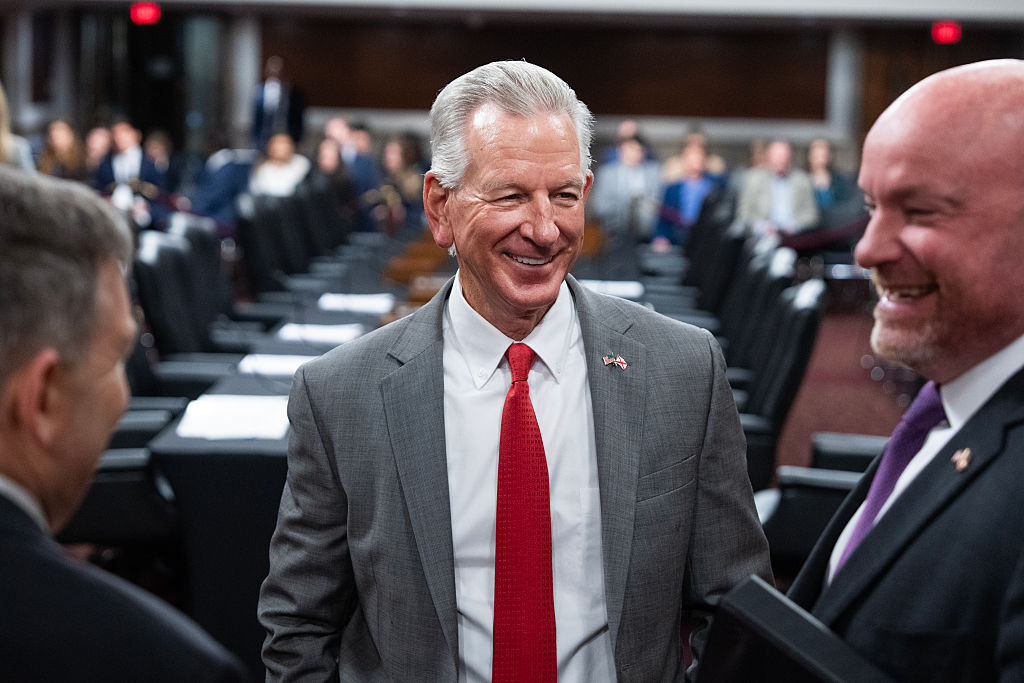
Sen. Tommy Tuberville, R-Ala., talks with aides on June 9, 2026. —Tom Williams—CQ-Roll Call, Inc./Getty Images

In a rare display of bipartisanship, the Senate overwhelmingly voted to pass a sweeping housing bill on Monday—with only five lawmakers voting against the legislation. Ten other Senators did not vote.

All five of the lawmakers who voted against the 21st Century ROAD to Housing Act are Republicans: Sens. Ron Johnson of Wisconsin, Mike Lee of Utah, Rand Paul of Kentucky, Rick Scott of Florida, and Tommy Tuberville of Alabama. 

The bill seeks to increase the U.S. housing supply by easing regulations and encouraging building, lower housing costs, restrict the presence of institutional investors in the single-family housing market, and give more control over housing to local jurisdictions, among a host of other provisions. 

Read More: What to Know About the Landmark Housing Bill Congress Is Poised to Pass

The legislation now heads to the House, where it is similarly expected to pass with broad support from both sides of the aisle, and could reach President Donald Trump’s desk as soon as this week. 

Here’s what each of the five Senators who voted against the bill have said about it.

Tommy Tuberville

Tuberville said in a written statement to TIME that he’slooking for ways to bring down housing costs for American families. But giving the federal government more control over housing is not the answer.”

“We have seen time and time again that writing a blank check to blue cities means that federal tax dollars will end up in the hands of illegals instead of going to the American citizens it was intended to help,” Tuberville said. “This bill also expands the already bloated Department of Housing and Urban Development, which is the opposite of what we need to be doing. We should be focused on getting government out of the way and allowing the free market to drive down costs through competition and a booming economy.”

Tuberville also voted against an earlier Senate version of the bill in March. At the time, a spokesperson for the Senator told the Alabama Daily News that “like President Trump,” Tuberville “thinks the Save America Act is our No. 1 priority and doesn’t think we should be wasting our time on anything else.”  

Trump that month vowed not to sign any legislation until Congress passed the Safeguard American Voter Eligibility (SAVE America) Act, a bill that would impose stricter voter identification requirements. Months later, the President is continuing to press congressional Republicans to push the legislation through.

The White House has, however, expressed support for the final version of the housing bill.  

Mike Lee

In a statement following his nay vote, Lee contended that the legislation fails to adequately address the housing affordability issue

“Americans need more affordable housing. Unfortunately, this bill doesn’t do enough to provide it, instead increasing the federal government’s long-running and failed involvement in the U.S. housing market,” Lee said. 

The Utah Senator further critiqued the bill for only temporarily banning the Federal Reserve from issuing a central bank digital currency, a form of U.S. currency issued by the government, rather than prohibiting it from doing so permanently. Lee earlier this year reintroduced legislation seeking to implement a permanent ban; at the time, his office contended in a press release that the Fed creating such a currency would restrict financial institutions’ ability to offer loans and that “the Federal Reserve would have knowledge of every transaction involving” the currency.

In his statement on his opposition to the housing bill, Lee also argued that the legislation “does not do nearly enough to safeguard housing programs for American citizens only.” He went on to detail several measures he believes need to be taken “to truly improve housing affordability,” among them continuing “mass deportations” of undocumented immigrants who he claimed are “placing a significant burden on housing availability and affordability for American citizens.”

Rick Scott

Scott highlighted an amendment he offered to the housing bill that he said was not entertained in a post on X ahead of the final Senate vote on the measure.

“If we’re passing the ROAD to Housing Act, I think it’s only fair to make sure it actually works,” the Florida Senator said.

“I offered an Amendment to make sure Congress gets an annual report on how this bill directly impacts housing affordability for middle income homeowners. But, I never got the chance to bring it up. This should have been a no-brainer. It proves that what we’re doing HELPS the American people.”

Last week, Scott wrote on X that “home prices are going through the roof in America and Congress is playing around with solutions that will only make things worse — not better,” in response to another post sharing Zillow’s recent finding that “starter homes” cost at least $1 million in 242 cities. “Point me to the section of the ‘ROAD to Housing’ bill that actually makes housing more affordable for middle class families,” Scott said at the time.

In another post last week, Scott said that “Homes now cost FIVE TIMES more than a family’s median income. The REAL reason? Congress. Congress just spends, spends, and spends with no end in sight and Americans are left with higher interest rates and rampant inflation.”

Ron Johnson

Johnson’s office did not immediately respond to a request for comment on his vote against the housing bill.

The Wisconsin Senator also voted against the Senate version of the legislation in March. A spokesperson for Johnson told the outlet The Center Square at the time that “he voted against the bill for several reasons – many of them laid out” in a column from The Wall Street Journal editorial board that opined that the bill would result in the creation of less housing due to the restrictions it would place on large, institutional investors buying single-family homes. The final version of the bill also includes such restrictions.

“The Senator does not like the government imposing itself into the marketplace and artificially reducing the demand, the number of buyers, and the price homeowners can obtain when they sell their homes,” the spokesperson said. 

Rand Paul 

Paul’s office also did not immediately respond to a request for comment on his nay vote. 

The Kentucky Senator, too, was among those who voted against the Senate version of the bill in March, and made comments about his opposition to the legislation at the time.

In a March post on X, Paul called the bill the “Path Toward the Destruction of Property Rights Act,” and expressed his opposition to the limits it would put on institutional investors—at length.

Among other criticisms of the restrictions, he wrote that “Since there are two sides to every transaction, the provision also acts as a prohibition on property owners from selling their property to the highest bidder“ and “Since many of the houses owned by institutional investors are rented, banning this class of investors may decrease the number of rental houses thus raising rents.”

Paul also cited data showing that institutional investors’ share of the single-family home market is extremely low––something housing experts have previously highlighted to TIME. 

“With such a miniscule amount of the housing stock owned by large investors, the proposed ban could well have little to no effect on housing affordability or rent,” Paul wrote. 

show more
Which of Dyson’s 2026 Vacuum Models Is the Best?
Published: 2026-07-29 19:08:24 | Created: 2026-07-31 01:12:59
Curious if you should get Dyson’s new 2026 stick vacuums or stick to the older ones? I tested five models, old and new, to find out for you.
show more
Veteran Ugandan opposition leader collapses in court and in ICU, his wife says
Published: 2026-07-30 09:34:00 | Created: 2026-07-31 01:12:59
The 70 year old has been in detention since November 2024 and faces treason charges, which he denies.
show more
Forget Airbus and Boeing. Embraer is soaring
Published: 2026-07-30 13:02:21 | Created: 2026-07-31 01:12:59
Its boss has ambitious plans for the future
show more
Jess Cartner-Morley on fashion: the secret to summer layering? Sheer bravery
Published: 2026-07-29 13:00:33 | Created: 2026-07-31 01:12:59

Adding layers doesn’t have to leave you a hot mess – think sheer scarves and crochet with flashes of colour to elevate your look

Perhaps I shouldn’t admit this, but I’m in two minds about summer dressing. Part of me believes summer is about joy, sunshine and good times, and clothes should embrace all of that. This woman loves Pucci and owns not one but two silver kaftans. The other part of me believes summer should be uncomplicated, laid-back and earthy. This woman never checks in luggage and has worn the same black beach cover-up for so many years it’s too threadbare to cover anything much.

The thing is, either approach looks absurd if taken to extremes. Candy swirls, cherry prints and strawberry bag charms are delightful, but pile them too high and you look like a walking knickerbocker glory. And while white linen shirts and simple black sandals are chic, you risk looking a bit like you’re on a meditation retreat where the dress code is “wealthy disciple”. Know what I mean?

Continue reading...
show more
Trump considering AI controls after OpenAI hacking incidents
Published: 2026-07-30 07:23:11 | Created: 2026-07-31 01:12:59
It marks a change of tone for his administration, which has taken a more hands-off approach to the technology.
show more
Save Up to $100 on Apple’s Newest AirPods (2026)
Published: 2026-07-29 20:44:10 | Created: 2026-07-31 01:12:59
Save up to $100 on Apple’s latest AirPods models before prices go back up.
show more
The delights of deadlines
Published: 2026-07-30 13:02:21 | Created: 2026-07-31 01:12:59
A friend to procrastinators, an enemy to prattlers, a necessity for managers
show more
It Looks Like Nothing Can Dent MAGA’s Support for ICE
Published: 2026-07-29 21:00:00 | Created: 2026-07-31 01:12:59
Despite weeks of renewed press coverage and controversy around ICE, Donald Trump’s supporters appear to be standing by the agency no matter what.
show more
Rachel Roddy’s chicken with sweet and sour lemon and tarragon sauce – recipe
Published: 2026-07-30 05:00:54 | Created: 2026-07-31 01:12:59

If it’s good enough for Prince Ottavio Gonzaga and Anna del Conte, then dare you pass up the opportunity to try this wonderfully sweet and sour way with chicken?

While I look at my copies of Jane Grigson’s Fruit Book, Anna del Conte’s Amaretto, Apple Cake and Artichokes, and Francis Bissell’s The Scented Kitchen at home, they seem different from when they are pulled from the shelves in my parent’s kitchen in Dorset. Also, on the first morning of any stay, looking at these three with a cup of tea before anyone else is up has become a habit that may be superstitious.

On the second day, I made a recipe from the inimitable Anna, who also lives in Dorset and is now 100. For her recipe of chicken breasts in a 17th-century sweet and sour sauce, Anna was inspired by Bartolomeo Stefani, chef to Prince Ottavio Gonzaga (one of the numerous members of The House of Gonzaga who ruled Mantua from 1328 to 1708) and author of the 1662 manual, L’arte di Ben Cucinare (The Art of Fine Cooking). Anna notes that Stefani was a chef of great inventiveness, and one of the first to move away from the heavily spiced recipes of the Middle Ages towards a style of cooking with a lighter touch, flavoured with herbs, citrus and flowers. And this recipe is a good example of his approach to ingredients: poached chicken (originally capon) served in thick slices with a sweet-and-sour sauce of wine, sugar, vinegar, olive oil and lemon. Once assembled, the dish is left to sit in order for the chicken slices to soak up the sauce’s flavours, and then served at room temperature. It is a lovely dish for a hot day (or evening).

Continue reading...
show more
Oil prices remain highly flammable
Published: 2026-07-30 13:02:21 | Created: 2026-07-31 01:12:59
As tensions flare in the Gulf, triple digits could return in a flash
show more
FIFA Draws Fury Over Plan to Sell Stakes in World Cup
Published: 2026-07-29 10:30:00 | Created: 2026-07-31 01:12:59
FIFA President Gianni Infantino and U.S. President Donald Trump in conversation after the award ceremony during the FIFA World Cup 2026 Final match between Spain and Argentina at New York New Jersey Stadium in East Rutherford, N.J., on July 19, 2026. —Alex Pantling—FIFA/Getty Images

FIFA is considering selling a minority stake in the World Cup’s commercial rights, a plan that critics say would turn soccer’s biggest tournament into an investment asset and threaten to upend the sport.

FIFA said Tuesday that it will create a $20 billion subsidiary to house its commercial and event operations and offer external investors the opportunity to buy shares of up to 20% of the subsidiary. FIFA claims that offering minority interests to private investors would allow it to raise up to $4.2 billion that can be used to fund soccer development programs worldwide. FIFA says it would retain sole control of the enterprise and “exclusive authority” over its competitions, governance, and all regulatory and sporting decisions.

“Football is the world’s most popular sport and an extraordinary engine of human and social development,” FIFA President Gianni Infantino said in a statement. “Parts of the game have turned that popularity into remarkable commercial value—and we celebrate that success and want it to continue, because it lifts the whole game.”

But the move has faced backlash from soccer officials, fans, and political leaders, who say it would overly commercialize the sport. Critics also fear that it could deepen FIFA’s already-controversial ties with U.S. President Donald Trump through potential investors linked to his family. The proposal comes on the heels of the 2026 men’s World Cup, which was co-hosted by the U.S. and brought in a record $12 billion in revenue for the organization.

“The soul and governance of football are not assets to trade—especially with zero transparency as to who gains financially,” European soccer body UEFA said in a statement. The organization is reportedly planning to hold an emergency meeting this week to discuss plans to oppose the proposal, including a potential World Cup boycott.

“The close relationship between the FIFA President and the US President  has reached a financial dimension that is deeply damaging football,” posted Infantino’s predecessor, former FIFA president Sepp Blatter, who was dogged by accusations of corruption and financial mismanagement during his tenure but has since become a vocal critic of his successor. “No one has the right to sell our game.”

Plan to bring in private investors

The commercial subsidiary, “FIFA Forward Enterprise” (FFE), would consolidate FIFA’s commercial rights, including broadcast, sponsorship, ticketing and licensing, with the operational delivery of FIFA tournaments. The enterprise would raise capital from investors and significantly increase funding for FIFA’s 211 member associations, according to FIFA’s announcement. Revenue generated through FFE would also help finance increased development funding for its member associations, FIFA said. FFE has an initial implied equity valuation of $20 billion, estimated by J.P. Morgan.

The existing FIFA Forward program is budgeted to provide $8 million in development funds to each member association during the 2027-30 World Cup cycle. Under the proposal, the program would increase funding to $20 million each during the upcoming cycle, and to $22 million and $24 million each for the following four-year cycles through 2038.

Each member association would also be able to access an optional $20 million in one-off, immediate funding for special development projects through a new “FIFA Fast Forward Program.” The funding could go toward infrastructure, coaching, national teams, competitions, grassroots football, and the women’s game. That means, if the proposal is approved, member associations that opt into the voluntary program could get up to a total $40 million in funding for the upcoming cycle.

In its proposal to member associations, FIFA argued that the World Cup has been under-monetized compared to other sporting competitions, and that FFE would allow FIFA to separate its commercial operations from governance of the sport. FFE would remain a FIFA-controlled entity.

FFE would be managed by a dedicated team and board of directors, none of whom have been appointed yet, according to FIFA’s website. “The proposal does not establish a future role or compensation package for any specific individual,” FIFA said.

Bloomberg reported that the idea for FFE first arose last year during private discussions between Infantino and Joshua Kushner, the brother of Trump’s son-in-law Jared Kushner. J.P. Morgan was reportedly brought in early this year to develop a way for FIFA to monetize its media rights and pitch it to potential investors.

Thrive Eternal, a company launched by Kushner, is expected to lead the investor group for FFE. Thrive is a permanent capital investment firm created earlier this year to buy and hold minority stakes in sports teams and other iconic brands.

Kushner does not have political ties to the Trump Administration. His most recent political donation was to the Obama Foundation, according to public records.

Investors in FFE would not have a seat on FIFA’s Council or be able to vote in FIFA’s congress. The Guardian also reported that investors would not receive dividends from the scheme. Instead, they would potentially realise a return if they sell their stake in future, the organization said.

“Outside investors will have only a minority stake in FFE and will not play any operational role,” FIFA said in its announcement. “Equally, they ​are investing in a subsidiary of FIFA, and not in FIFA itself. For FIFA, nothing changes.”

TIME has reached out to FIFA for comment. Thrive Capital, a venture capital firm founded by Kushner, said it did not have a comment to provide at this time.

Soccer confederations, lawmakers criticize proposal

The outline of the proposed project was shared with FIFA’s member associations in Manhattan on July 18, FIFA told the Associated Press. The final decision on the proposal will require majority support from FIFA’s member associations and approval by the FIFA council.

FIFA began the official consultation process on Tuesday, and member associations will have until Sept. 19 to decide on the proposal. FFE is “part of a democratic process, a consultation process,” Infantino said on Wednesday. “Above all, it is an opportunity but not an obligation.”

“If, and only if, it is approved by the majority of our 211 member associations and the FIFA council, it would be a FIFA-owned and controlled subsidiary,” he added.

If the proposal is approved, FFE would begin operating next year, according to FIFA.

But several of FIFA’s confederations have criticized the fact that the proposal was announced publicly before the consultation process was launched.

Some critics have also argued that the proposed financial benefit through the voluntary program to member associations creates an incentive for them to accept the broader proposal.

“Today we have learned of FIFA’s deadline to associations to support their proposals or have the one-off payout offer withdrawn. This says everything you need to know about this plan,” UEFA, which represents 55 FIFA member associations, said in a Wednesday statement. FIFA said that member associations will not receive ownership stakes in FFE and that the proposed funding is not an equity allocation.

UEFA was not the only soccer body to express concern about the proposal. The European soccer confederation said that it has had “discussions with many stakeholders across the game” and that there is “significant and growing opposition to FIFA’s scheme.”

CONCACAF, the confederation that governs soccer in North America, Central America, and the Caribbean and that represents 35 of FIFA’s member associations, said it was “deeply concerned by the lack of due process,” including the fact that plans had been announced “before any discussion with the relevant governance bodies and stakeholders has taken place.”

The Football Association, England’s national football governing body, also said it was “deeply concerned about the lack of process and governance to get to this point, and the apparent substance and principles involved.” FA Chair Debbie Hewitt is one of FIFA’s eight vice-presidents.

The Asian Football Confederation also expressed concern about the proposal and said it was not consulted on it. The body, which represents 46 FIFA member associations, said it “is disappointed that a matter of such significance entered the public domain” before it was discussed “through the appropriate and established governance channels.”

It’s also not the first time that FIFA has faced backlash over a proposed commercial deal. In 2018, Infantino pursued a $25 billion deal with a consortium led by Japanese firm SoftBank that would finance an expanded Club World Cup and a new global Nations League. But the commercial package ultimately failed due to opposition. UEFA had raised concerns about transparency and said that the new competitions would threaten European tournaments.

Other sports organizations have also created separate commercial entities, including UEFA which has a joint venture with European Football Clubs to sell commercial rights to certain competitions.

 “Establishing subsidiaries is nothing new for FIFA,” the organization said on its website.

The proposal comes as relations between UEFA and FIFA have strained. UEFA President Aleksander Čeferin skipped the World Cup final after disputes with FIFA over disciplinary procedures and match operations. UEFA said FIFA had “crossed a red line” when FIFA suspended the implementation of an automatic one-match ban for U.S. forward Folarin Balogun, who had received a red card, after Trump’s reported intervention.

Infantino, who is up for reelection as head of FIFA next year, has faced criticism from UEFA over his close ties to Trump and what critics say is a lack of transparency in FIFA’s decision-making. Infantino was scrutinized after accompanying Trump on a Gulf tour instead of attending the start of the FIFA Congress in 2025, prompting a UEFA-led walkout.

Ahead of this year’s World Cup, some European soccer officials and politicians called for fans to boycott the U.S. games, citing both Infantino’s friendship with Trump and the Trump Administration’s immigration and foreign policies. Infantino was also criticized for presenting Trump with a newly-created FIFA Peace Prize, and for opening a FIFA office in New York’s Trump Tower, a property owned by the Trump Organization.

“FIFA, Donald Trump’s favorite corrupt racketeering enterprise in world sports, is now going directly into business with the Trump family!” the House Judiciary Democrats posted on X. “Apparently the fake Peace Prize and giant lease with Trump Tower weren’t enough—now Infantino performs a kickback hat trick by pursuing a multibillion-dollar deal with Jared Kushner’s brother to sell ownership stakes in the World Cup to private investors.”

The Democratic committee members said the proposal was an example of “more oligarch corruption” after FIFA’s use of dynamic pricing helped push World Cup ticket prices to unprecedented levels. Earlier this week, the group of lawmakers called on Infantino to sit for an interview about “deceptive” ticket practices and alleged corruption between him and Trump. 

Andy Burnham, who became British Prime Minister earlier this month after Keir Starmer resigned, also criticized the proposal.

“Let me say this very directly. Football does not belong to investors. It belongs to the people who fill the stands and who stand on the touchline week in, week out, rain or shine,” Burnham posted on X. “The World Cup is not a product. It is the greatest competition in world sport, and it was never anyone’s to sell. Dress the deal up however you like. Once you have sold a piece of it, you have sold out.

“Football belongs to the fans. It always has, and it always will.”
show more
How to spot AI writing
Published: 2026-07-30 13:02:21 | Created: 2026-07-31 01:12:59
Large language models like long words and em-dashes—or do they?
show more
Death toll in Japan earthquake rises to 30 as aftershock and heat hamper rescue efforts
Feed: World news | The Guardian (https://www.theguardian.com/world/rss)
Published: 2026-07-30 06:49:55 | Created: 2026-07-31 01:12:59

Soldiers and emergency teams search damaged shopping centre, paper mill and homes for survivors

The death toll from the powerful earthquake that hit Japan on Tuesday has risen to 30, as the search for survivors trapped in a badly damaged shopping centre, paper mill and collapsed homes across the south-west of the country continues.

The 6.8-magnitude quake, which struck Kumamoto prefecture on the island of Kyushu, injured at least 62 people, according to the prefectural government.

Continue reading...
show more
Cooking on holiday – without taking half your kitchen with you
Published: 2026-07-30 11:40:12 | Created: 2026-07-31 01:12:59

Making a meal anywhere but home can feel unnerving, but all you need is some forward planning and an essentials list

Sign up here for our weekly food newsletter, Feast

Greetings from my parents’ kitchen in north Norfolk where, despite its familiarity, cooking takes on a less predictable dimension. By some measures their kitchen is well equipped – three toast racks, countless skewers, a three-egg poaching pan, many beer tankards, and a very noisy battery-operated pepper mill – but I’ll admit to missing my knives, my lemon juicer, and my salad spinner (my mother insists that one of the latter will never “clutter up” her cupboards, to which my riposte is, “An egg poaching pan?”). And that’s before all the ingredients that don’t make it into the hurried pre-holiday essentials shop, the indispensability of which only dawns on me in their absence – the rice wine vinegar, the maple syrup, the capers, the tahini.

All this is to say that cooking anywhere but your own kitchen can feel like a paradigm shift and demands a different approach. This could mean intricate planning or, in my case, it invariably sends me running to my archive of tried-and-tested recipes, will work regardless of what shops are nearby or what equipment is in the kitchen. These have seen me through summers in various kitchens that are not my own, from this very one in Norfolk to a scattering of Airbnbs in Europe. They require little more than a knife, a couple of pans, a wooden spoon and a heat source. A box grater and a whisk are handy, too. And, as your drinks columnist, it would be disingenuous to pretend that a decent corkscrew isn’t utterly vital. (For a sound list of real kitchen essentials, which don’t include three toast racks and a battery-operated pepper mill, I have always loved referring back to Laurie Colwin’s Low-Tech Person’s Batterie de Cuisine in her book of essays, Home Cooking.)

Continue reading...
show more
Corporate America Is Getting Anxiety All Wrong
Published: 2026-07-30 10:00:04 | Created: 2026-07-31 01:12:59
—kutaytanir—Getty Images

Most companies treat anxiety as a problem to solve. When employees feel stressed, they are offered meditation apps, mental-health days, and employee-assistance programs. These can be valuable resources. But they carry an underlying message: Anxiety is an obstacle to performance, and the goal is to make it disappear.

I saw this mindset clearly during a recent consultation with the CEO of a midsize company. I asked what comes to mind when an employee says they are experiencing anxiety. Her discomfort was immediate, as though merely hearing the word “anxiety” activated her own.

She then named three concerns: the employee might need accommodations, benefits costs may rise, and the company could face legal exposure. Her managers, she explained, were trained not to ask too many questions about anxiety. Instead, they were supposed to document the interaction, direct employees toward support, and avoid saying anything that could create additional risk.

That may be prudent from a legal perspective, but it also reveals a problem. Corporate America is getting anxiety all wrong.

I don’t fault the C-suite for thinking this way. For much of my career as a clinical psychologist, I made a similar mistake. I was trained to regard all anxiety as a symptom to reduce, manage, or eliminate.

In reality, the word “anxiety” is used to describe two very different experiences.

On the one hand, clinical anxiety is persistent, excessive, and disruptive. In professional nomenclature, these conditions are known as anxiety disorders. They interfere with work, sleep, relationships, and everyday functioning. Clinical anxiety typically requires professional treatment, workplace accommodations, or other meaningful support.

On the other hand, most anxiety is not a disorder at all. It is an ordinary and healthy human emotion involving apprehension we feel when an important matter is uncertain. The emotion of anxiety shows up before difficult conversations, major presentations, high-stakes decisions, and periods of change. Yes, it tends to be uncomfortable, but discomfort is not the same as a dysfunction or disorder. Fundamentally, anxiety is simply evidence that we care about what happens next.

We readily distinguish between depression, a clinical disorder, and sadness, which is a normal human emotion. Yet when it comes to anxiety, that nuance often disappears. We use the same word for everything from fleeting nerves to debilitating psychiatric conditions.

When companies pathologize ordinary anxiety, a self-reinforcing cycle develops. Employees become reluctant to admit they feel anxious because they fear being seen as unwell, unable to cope, or a professional liability. Managers, worried about saying the wrong thing, avoid honest conversations about emotions altogether. Leaders lose access to important information, psychological safety erodes, productivity suffers, and tensions tend to rise for all parties.

Companies have long treated emotional wellness and performance as separate agendas: one soft, the other serious. That is a false divide. When people know how to use anxious feelings well, they become both healthier and more productive.

Corporate America needs a different approach. Instead of trying to eliminate anxiety, business leaders and managers should help employees to use it constructively. 

Here are four steps that can help.

First, identify anxiety as information. When anxiety occurs, resist the instinct to dismiss it or make it disappear. Get curious. What specifically feels concerning? Is there a risk being overlooked? What does anxiety suggest is at stake?

The emotion of anxiety is not always accurate, but it is often informative. It can sharpen attention, improve preparation, and expose blind spots. The most anxious person in a meeting is often voicing questions everyone else is avoiding.

Second, employees and leaders alike should feel freer to share their anxiety with others. Of course, work should not become group therapy, and thoughtful disclosure is not the same as oversharing. But work colleagues should be able to acknowledge pressure in a grounded, professional way.

When appropriate, managers should respond to anxiety with validation: “I’m concerned about this, too. Here is what we know, what we don’t know, and how I think we should proceed.” That kind of honesty does not weaken authority or credibility. It builds trust, invites candor, and allows anxiety to move from a private burden to shared experience.

Third, embrace anxiety instead of avoiding it. Many of the best employees are anxious. I’m not talking about clinical impairment or paralysis due to fear. I mean team members who care enough to worry about quality, consequences, deadlines, and the people affected by their work. Managers should view anxiety as evidence of investment, not inadequacy.

Human Resources teams should treat healthy anxiety as a positive criterion in hiring and promotion. Constructive anxiety often signals foresight, conscientiousness, and genuine commitment when outcomes are uncertain. Those are qualities companies claim to value, but tend to overlook when they favor polished confidence over thoughtful concern.

Finally, let go of the illusion of control. This is the most important step in the age of AI. Jobs will change. Industries will be disrupted. Employees and leaders alike will have to make decisions without complete information.

Leaders who pretend to know exactly what will happen may look confident at first, but this quickly becomes hubris. A healthier response is to acknowledge uncertainty, identify what can be controlled, and accept what cannot. Letting go is not resignation. It is doing our best without pretending that effort guarantees the outcome.

In a recent keynote for business managers and executives, I asked audience members to raise their hands if they had felt any anxiety during the previous two weeks. Nearly every hand went up. “Thank God,” I said, and the room burst out laughing.

The joke landed because the alternative was alarming. In this era of uncertainty, a room full of business leaders who felt no anxiety would not be a picture of perfect mental health or corporate excellence. It would have signaled disengagement, denial, or even worse, emotional numbness.

Anxiety means you are human. It means you care. And it means you are living and working in a world no one can fully predict or control.

The future of work will not belong to the people who feel no anxiety. It will belong to the people who know how to use it.

show more
Shots fired near US consulate in Canada for second time in four months
Feed: World news | The Guardian (https://www.theguardian.com/world/rss)
Published: 2026-07-27 16:20:56 | Created: 2026-07-31 01:12:59

No one was injured and no suspects have been identified in connection to shooting near Toronto compound, police say

Shots were fired near the US consulate in Toronto early on Monday but no one was injured in the second shooting near the diplomatic compound in four months.

“Officers heard a firearm being discharged in the area,” and “a white sedan was seen fleeing the scene”, Toronto police said on X.

Continue reading...
show more
Why catarratto is the Quincy Jones of white wine grapes
Published: 2026-07-30 12:00:13 | Created: 2026-07-31 01:12:59

It is often the key secret ingredient in a lot of white wines, but the unsung hero of Sicily’s vineyards is taking its place in the sun

Depending on where you buy and drink wine, catarratto will be very familiar or very obscure. There was a time in the 2010s when I’d have put good money on it being the house white in half of Hackney’s restaurants, and if you’ve ever picked up a sub-£15 natural white wine at an independent bottle shop, catarratto will probably have featured. If, however, you buy wine from bigger retailers and have a taste for fruity, sun-soaked whites, chances are you’ve been drinking catarratto without even knowing it.

This is bonkers, given its prevalence. Catarratto is Sicily’s most widely planted white grape, accounting for roughly a third of the island’s vineyards; and, after sangiovese, it’s the second most planted grape in all of Italy. For decades, though, it was either destined for bulk wine, disappearing into tanks of anonymous, juicy table wines, or for use as a component of better-known Sicilian denominations such as fortified marsala or Etna bianco, where it plays a supporting role to other indigenous Sicilian grapes, such as grillo or carricante, respectively. It has about it a bit of a Quincy Jones quality: integral to the success of others before being recognised in its own right. Which it now really is, as modern producers make more complex catarrattos that really express their terroirs, be that volcanic, maritime or the rolling hills around Alcamo in the Sicilian north-west.

Continue reading...
show more
Tempo Promo Codes: Get up to 60% Off Healthy Meals
Published: 2026-08-31 17:18:20 | Created: 2026-07-31 01:12:59
Upgrade your meal prep with these Tempo discount codes and offers. Save on high-protein, ready-to-heat meals delivered to your door.
show more
The terrifying threat of a genetically engineered plague
Published: 2026-07-30 13:02:21 | Created: 2026-07-31 01:12:59
Annie Jacobsen imagines the repercussions of a leak from a Russian laboratory
show more
Flavour fusion in London's buzziest bakeries – video
Published: 2026-07-30 10:54:54 | Created: 2026-07-31 01:12:59

Restaurant critic and award-winning author Jimi Famurewa visits the best London bakeries where family food traditions  meet contemporary British baking. First stop: Panadera in Soho, for a Filipino-inspired leche flan Danish. Then it’s south-east London and Bunhead, where the owner folds together the flavours of her Palestinian and British heritage into a chocolate, date and smoked salt bun. Finally, Farha in east London, a Middle Eastern-inspired cafe selling out of its banana brûlée.

Episode 1 of Feed with Jimi Famurewa — sampling the UK’s tastiest food trends

Continue reading...
show more
Thousands evacuated in Crete as wildfires threaten tourist resorts
Published: 2026-07-30 16:04:53 | Created: 2026-07-31 01:12:59
Strong winds have fanned the flames in the Rethymno region as wildfires continue to ravage the Greek island.
show more
Nicaraguan leader proposes extending presidential term by another year
Published: 2026-07-30 10:34:07 | Created: 2026-07-31 01:12:59
It is not the first time the constitution has been amended to allow Daniel Ortega, 80, to stay in power for longer.
show more
Как работает Би-би-си
Published: 2023-03-09 12:40:17 | Created: 2026-07-31 01:12:59
Задача Би-би-си - каждый день создавать контент мирового класса; контент, который информирует, просвещает и развлекает миллионы людей в Великобритании и по всему миру.
show more
Pinochet-era soldier jailed for killing folk singer Víctor Jara 53 years ago
Feed: World news | The Guardian (https://www.theguardian.com/world/rss)
Published: 2026-07-27 16:27:44 | Created: 2026-07-31 01:12:59

Nelson Haase Mazzei was sentenced for murdering Jara in 2023, but fled from authorities in Chile

More than 50 years after the murder of the Chilean folk singer Víctor Jara, the last man wanted in connection with his death has been tracked down and brought to justice.

Nelson Haase Mazzei, a retired colonel, fled from authorities in 2023 after he and six other retired soldiers were sentenced in absentia for murdering Jara and another man.

Continue reading...
show more
‘I had a really crippling break’: how author Michael Thomas lost 20 years to mania, depression and more
Published: 2026-07-30 09:00:10 | Created: 2026-07-31 01:12:59

In 2006 the novel Man Gone Down made Thomas famous and won him a €100,000 prize. He expected to produce a follow-up within a year – but life had other plans

It should be some kind of happy ending when, after years of poverty and graft, an aspiring writer publishes their debut novel and it is greeted with acclaim and awards – but that’s not how it happened for Michael Thomas. His 2006 novel Man Gone Down seemed to augur the arrival of a powerful new literary voice, the beginning of a brilliant career. He featured on the cover of the New York Times Book Review, he won the €100,000 Dublin literary award – one of the most generous prizes in the book world – and he was promoted to assistant professor at Hunter College, New York, where he taught creative writing. But a follow-up would not arrive until now, 20 years later. Thomas’s new memoir, The Broken King, goes some way to explaining what happened in between. It also confirms his formidable talent.

The Broken King is an extraordinary read – deeply personal and intimate, but also expansive and free-ranging, taking in everything from TS Eliot (the title comes from Eliot’s poem Little Gidding) to James Baldwin, Brazilian football and the Rolling Stones. Thomas’s story runs through what he describes as a “perfect storm of conditions”: poverty, parental abandonment, racism, alcoholism, sexual violence, self-sabotage and mental illness. It would be tempting to classify it as some kind of misery memoir, but it is neither bleak nor generic – Thomas is simply too good a writer for that. Reviews in the US have been glowing: “Thomas has rendered beautifully an excruciating existence from which it is impossible to turn away,” raved the author Thomas Chatterton Williams in the New York Times.

Continue reading...
show more
Cyanide in tomato pesticide killed 15 elephants, Kenyan officials suspect
Published: 2026-07-30 12:14:00 | Created: 2026-07-31 01:12:59
Foul play is ruled out in the record number of elephant deaths for decades in this area of southern Kenya.
show more
You be the judge: should my brother stop hogging the living room while staying in my flat?
Published: 2026-07-30 07:00:55 | Created: 2026-07-31 01:12:59

Daniella doesn’t want to go to bed early. Seamus says she shouldn’t offer the sofabed if she doesn’t want guests. Who has room for improvement?

Find out how to get a disagreement settled or become a juror

It’s not that I don’t want him here, but he needs to understand that I am giving up my space to host him

Continue reading...
show more
Javier Milei accuses US Democrats of financing ‘anti-Argentina campaign’ at World Cup
Feed: World news | The Guardian (https://www.theguardian.com/world/rss)
Published: 2026-07-28 10:21:46 | Created: 2026-07-31 01:12:59

President also blames Brazil and Mexico and says online critics ‘do not want the ideas of freedom to succeed’

More than a week has passed since Ferran Torres scored the extra-time goal that gave Spain its second World Cup, but – at least for Argentina’s president – the tournament is not over.

Javier Milei has claimed that a coordinated “anti-Argentina campaign” was behind criticism of the country’s team, accusations of racism among its fans and conspiracy theories alleging that Lionel Messi’s side was secretly being favoured by Fifa.

Continue reading...
show more
‘We have to become warriors’: the fight to save the world’s only women’s sculpture park
Published: 2026-07-30 10:13:26 | Created: 2026-07-31 01:12:59

With most monuments in London made by men, Claire Mander envisaged the Artist’s Garden as a way to redress the balance. Now, she says, it could be turned into a generic space for VIP events and cocktails

Ten years ago, when Claire Mander was studying for an art history MA at the Courtauld Institute in London, she stumbled upon the neglected roof terrace of nearby Temple underground station. She found herself strangely drawn to the overgrown expanse with its stunning views of the Thames and the London Eye.

“It was dirty, abandoned and a magnet for antisocial behaviour,” recalls Mander, now director and curator of theColab, an arts charity and incubator specialising in large-scale outdoor sculptures. She researched the history of the abandoned space, which was built as part of the Victoria Embankment in 1870. Before that, the ground beneath the site housed a 17th-century sculpture garden created by the Countess of Arundel.

Continue reading...
show more
I Got a Free Meal From a Private Chef—Who Filmed It All to Train Robots
Published: 2026-07-30 09:00:00 | Created: 2026-07-31 01:12:59
A German startup sent a camera-wearing chef to my apartment. In exchange for a free lunch, I let them record every chop and stir to train future humanoids.
show more
‘They played noughts and crosses on the PM’s huge forehead!’ An Indian standup picks his favourite gen Z protest memes
Published: 2026-07-30 07:00:58 | Created: 2026-07-31 01:12:59

They turned the news into a Funny or Die video. They cooked up a romcom between PM Modi and Giorgia Meloni. And they fought the police with Lana del Rey memes. Our writer observes the Cockroach party’s bold new strategy

I’ve spent 16 years doing standup in India, 10 of them under prime minister Narendra Modi’s government. I’ve learned – especially at corporate events, private shows and turns at various associations, universities and business schools among the English-speaking urban elite – that people are most thrilled when politics doesn’t come up, as if it doesn’t exist. I’m often told: “Anuvab, you can joke about anything – just don’t mention any specific names, places, incidents or events.”

You might read that and think I live in some humourless, semi-monarchic stasis. That isn’t true either. Many comedians and influencers joke about the government. Some get into trouble and some don’t, the overall assessment being that it is not worth the risk. In India, whatever is true, the opposite is often true as well.

Continue reading...
show more
A racist massacre. A white-supremacist coup. A century of lies
Published: 2026-07-30 13:02:21 | Created: 2026-07-31 01:12:59
A new book tells the story of an atrocity in North Carolina in 1898 and its long aftermath
show more
AI Scammers Are Better at Building Trust Than Humans
Published: 2026-07-30 09:30:00 | Created: 2026-07-31 01:12:59
Researchers pitted a person against a Claude agent and found that, after a week of texting, the AI chatbot was more effective at creating “exploitable trust” with others.
show more
Why Iran Cannot Fight a Forever War
Published: 2026-07-30 11:00:00 | Created: 2026-07-31 01:12:59
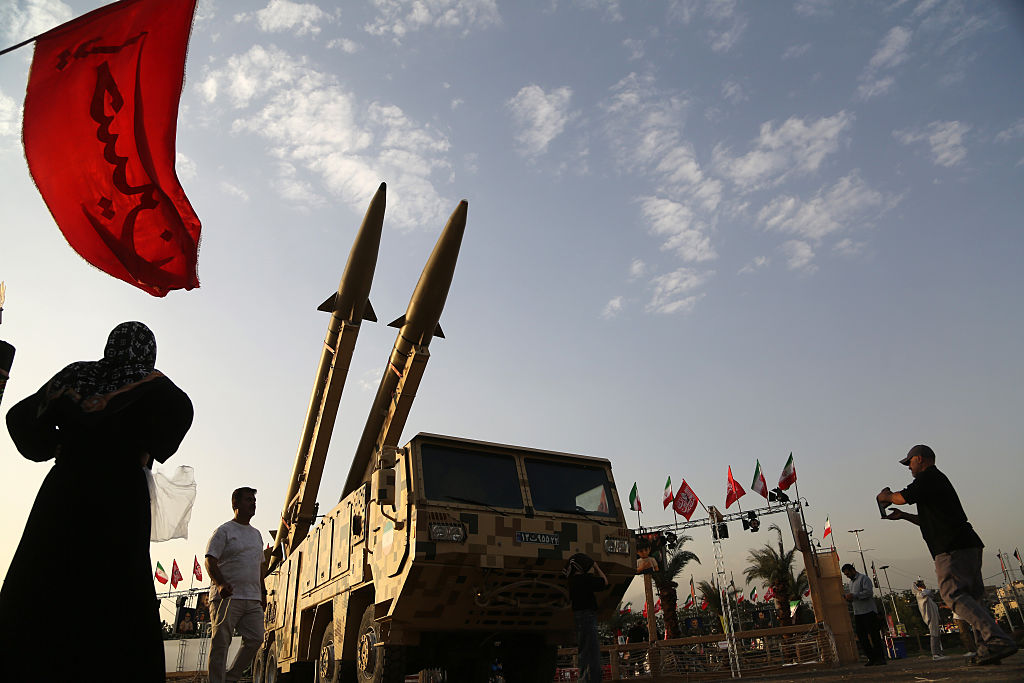
Iran displays Zolfaghar and Qadr missiles alongside a model of a mini submarine at Azadi Square in Tehran, Iran on July 24, 2026. —Fatemeh Bahrami-Anadolu via Getty Images

The United States and Iran are again at war. The renewed conflict is not about Iran's nuclear program or regime change, but over the Strait of Hormuz through which a fifth of the world's oil must pass.

For two weeks, American missiles have struck Iran. In turn, Iran has retaliated against American allies: Kuwait, Bahrain, and Jordan. Four U.S. soldiers have been killed and 142 wounded; at least 53 Iranians have been killed and 592 injured since July 6. Iran’s Islamic Revolutionary Guards Corps (IRGC) claimed to have destroyed an oil tanker in the Strait of Hormuz. Traffic in the strait has slowed to a trickle and oil prices have jumped again.

The ceasefire and the initial agreement signed on Jun. 17 lasted barely three weeks, undone by rival readings of a deliberately vague text. Washington wanted free navigation in Hormuz restored; Tehran insisted that it was the master of the strait. When traffic resumed, ships and tankers avoided the mined central route of the strait and hugged its southern coast close to Oman under American protection or sailed along the northern coast of Hormuz close to Iran, where it levied a “toll” for safe passage.

On July 7, the IRGC fired on ships defying routes designated by Iran; American airstrikes followed. Three days later, on July 10, President Donald Trump notified Congress that the war between the U.S. and Iran had resumed. Iran formally suspended the agreement, citing strikes, sanctions and Israel's operations in Lebanon.

The costs are mounting. For decades, maritime traffic from Saudi Arabia, whose eastern border sits on the Persian Gulf, has passed through Hormuz to reach the Arabian Sea and the Indian Ocean. Since the closure of Hormuz, the Kingdom has been moving roughly four million barrels a day—around four times its pre-war volume—through the port of Yanbu on the Red Sea, along its western border.

But the Red Sea has a chokepoint of its own: the Strait of Bab al-Mandab, at its southern end, off the coast of Yemen, which connects it to the Gulf of Aden and the broader Arabian Sea. On July 20, the Houthis, Iran’s allies in Yemen, declared a maritime embargo on Saudi Arabia at Bab al-Mandab, invoking “an eye for an eye.” They have already struck two Saudi tankers in the Red Sea. With the chokepoints of Hormuz and Bab al-Mandab now contested simultaneously, the Gulf's energy systems face an unprecedented strain.

American strikes have targeted Iran’s southern coastline and the approaches to Hormuz, with inland strikes largely reserved for the missile bases that allow Iran to reach the U.S. bases across the region. Its intensity is lower than the 40-day military campaign that preceded it, and it is an open-ended campaign: a war of attrition fought over a waterway. This is, for now, a bilateral contest, with Washington keeping Israel outside the frame for as long as Iran refrains from striking Israeli territory directly.

American objectives have contracted to reopening the Strait of Hormuz. Having survived the war and denied the U.S. and Israel their stated aims, Iran now regards the outcome as a victory and is working to shape and cement its terms. 

Why Iran thinks it has won

Iran has managed to impose significant human and material costs. The war has already cost the U.S. more than $37.5 billion, 18 U.S. service members have been killed and 624 have been injured. Wartime learning, intelligence and technological cooperation with Russia and China, and better access to satellite imagery have markedly improved Iran’s missile and drone strike accuracy. And Iran has been able to rattle the global energy markets by closing the Strait of Hormuz, weaponizing a chokepoint that offers continuous leverage over the global economy.

Iranian strategists are aiming for something more ambitious: raising the cost of hosting American forces until the U.S. thins out its regional military presence. The U.S. has indeed moved some military assets away from the Persian Gulf toward Jordan and Israel. American radars, bases and surveillance systems across the Arab states also function as early-warning systems for Israel. Iran’s concentrated attacks on those systems in March and April likely improved its ability to attack Israel with its long-range missiles.

Tehran seems to hope that a combination of its control of Hormuz and the coercive power of its drones and missiles would make the Gulf states reluctant to host U.S. forces and facilitate military operations against Iran. That instead, the Gulf states would seek security arrangements with the Islamic Republic.

Iran is also tailoring its approach to different Gulf countries: it has no appetite for a direct war with Saudi Arabia, so the Houthis in Yemen carry the Saudi file. The Houthis imposed their embargo on the Bab al-Mandab Strait on July 20, days after Iranian officials signaled that the strait would close if American strikes on Iran’s infrastructure continued. The Houthis had their own reasons to move, especially Riyadh’s siege of Yemeni ports and a military strike on Sanaa airport. But either way, Tehran gained a second strategic chokepoint.

Intense Iranian attacks on Kuwait are the lesson intended for every Gulf state hosting U.S. forces. Kuwait facilitated American strikes on Iran from its territory, and Iranian drones have answered by striking the power and desalination plants that Kuwait depends on for roughly 90% of its drinking water. The strikes on Kuwait are also aimed at degrading a potential staging ground for a potential U.S. ground operation in southern Iran.

What this strategy lacks is a clear account of how Iran would convert wartime leverage into a durable political settlement. Tehran has shown how it can disrupt global energy supplies and impose costs on the U.S. and its allies, but it is not clear how it can remain in a permanent state of confrontation with America and the Gulf states.

Iran, America, and the limits of force

The first challenge Iran faces is the asymmetry of pain thresholds. American credibility is on the line, but Iranian territory is being hit hard. Year-on-year inflation in Iran reached an astonishing 88.6% by late June. In southern provinces, which are facing the brunt of the renewed conflict, inflation has crossed 101% in Hormozgan, 99% in Khuzestan, and 96.5% in Bushehr. Iran’s energy ministry has asked the citizens to ration electricity in extreme heat as American strikes strain the electricity grid. The Islamic Republic crushed a nationwide uprising in January, has an economy in free fall, and is fighting a war with America. Its most dangerous front may prove to be the domestic one.

Iran’s coercion of the Gulf states may produce the very coalition it fears. Attacks on Kuwaiti power and desalination plants are pushing Kuwait, Saudi Arabia, and the United Arab Emirates toward closer security cooperation with each other, with Washington, and eventually, with Israel. Given the disparity in economic resources between Iran on one side of the Persian Gulf, and Saudi Arabia, the United Arab Emirates, and Qatar on the other side, a counterbalancing bloc would hold the stronger hand over time.

The biggest challenge Iran faces: Israel’s secretive nuclear powers. Iran has been trying to destroy the U.S. surveillance and radar systems in the Gulf that serve as early warning systems for Israel. If Iran continues succeeding in degrading those early warning systems, Israel would have to confront its missiles with less warning and thinner interception depth. A more vulnerable Israel could lean harder on its nuclear deterrent. Iran’s success could turn out to be extremely dangerous.

Washington’s options are no better. Trump has promised to destroy “one bridge or power plant” for every ship Iran fires on. A war on infrastructure would amount to war crimes by Washington, and it would not change Tehran’s calculations. Iran would retaliate against Gulf infrastructure, and the destruction would spread across states that are party to none of this.

Airstrikes on Iran’s most sensitive nuclear facilities would also yield little. Trump has threatened to “very heavily” hit the area around Pickaxe Mountain, a fortified underground site near Natanz, one of Iran's primary nuclear enrichment facilities. Such an attack would produce symbolic effects and trigger Iranian retaliation against energy and other critical infrastructure in the Gulf.

With the International Atomic Energy Agency locked out of Iran since June 2025 and the fate of nearly 400 kilograms of highly enriched uranium unverified, fresh air strikes on nuclear facilities in Iran would make it even harder to determine what nuclear material and capabilities remain, where they are located, and how quickly the program could be rebuilt. Subsequently, greater ambiguity around Iran’s nuclear capabilities would make any settlement harder to negotiate and verify.

That leaves ground operations. On July 15, Trump reportedly convened a meeting to weigh seizing Kharg Island, through which some 90% of Iran’s crude exports pass, and other territory along the strait. U.S. officials told the Wall Street Journal that Trump remained reluctant to commit ground forces. The threat of a ground invasion is only a threat as long as it stays a threat. Kharg and other such Iranian islands are hard to take and harder to hold. Their occupation would sharply reduce Iran’s oil revenue, but it would not necessarily compel Tehran to reopen the Strait of Hormuz or accept American terms. Iran could respond by intensifying attacks on Gulf energy infrastructure and shipping, while presenting the seizure of its territory as proof that the war had become one of national defense.

Neither Iran nor America has a credible military path to a durable settlement that ends the fighting, restores freedom of navigation through the Strait of Hormuz, and prevents another rapid return to war. Iran’s problem is the long-term cost of its current strategy; Washington’s problem is the diminishing returns on each additional night of bombing.

The choice Tehran and Washington have to make

The way out runs through the initial agreement. Its basic bargain remains workable: Iran would restore freedom of navigation through the Strait of Hormuz and halt attacks on U.S. forces, while Washington would lift its naval blockade of Iran, end its air campaign and suspend the punitive measures imposed after the agreement collapsed.

Pakistani and Qatari mediators are still working. What sank the previous deal was ambiguity: obligations without sequencing, commitments without monitoring, and no mechanism for containing an incident at sea before it became a campaign. Any new agreement will have to specify who verifies what, in what order, and what happens when a ship is hit.

Iran faces a larger decision. It cannot strike American assets in Gulf states indefinitely while expecting those states to put up with the attacks. Tehran must choose between a region organized around coexistence and one it hopes to dominate. Bids for hegemony summon their own opposition: the counter-coalition Iran could provoke, backed by Washington and Israel, would leave it more encircled than the war that began in February ever did. That is the calculation Tehran has yet to make, and the one on which everything else now depends.

show more
Page 597 of 1019 (50938 total items)