RSS Feeds
Bold, brash and divisive: inside the Barstool Sports empire
How Delcy Rodríguez Went From Maduro Loyalist to Trump Proxy
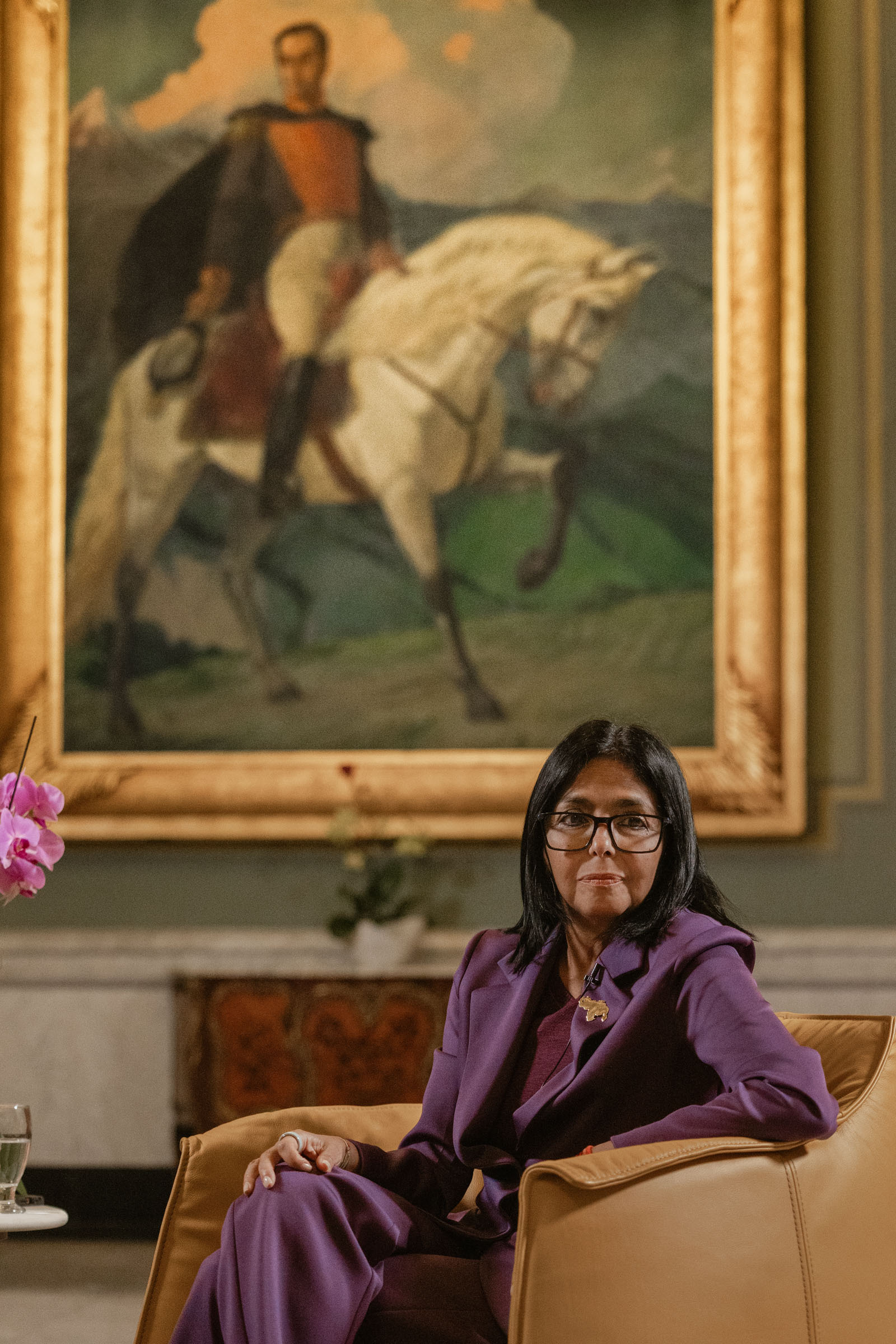
Delcy Rodríguez, the acting president of Venezuela, conducts the nation’s business out of the Miraflores Palace, a 19th century neoclassical mansion in the heart of Caracas. Gilded portraits of Simón Bolívar and Hugo Chávez gaze down on the ornate halls. Birds chirp in the manicured gardens. An unusually tight security detail shadows Rodríguez’s every step. The caution is understandable: Not long ago, the U.S. sent a Delta Force unit into her predecessor’s residence on a nearby military base to seize the man she had served for years.
Which may help explain Rodríguez’s careful manner. She speaks regularly with President Donald Trump and Secretary of State Marco Rubio, and her English is nearly flawless. Yet when she sits down with TIME for a rare interview with an American media outlet, she summons a translator. I suggest it would be easier to speak in English.
“When I do interviews, I like to do them in Spanish,” she says.
“I’m not sure that’s best for this one,” I say.
“It is best for me,” she replies with a faint smile.
It’s easy to understand her strategy. Speaking through an interpreter slows the conversation and gives Rodríguez greater control over the words that ultimately reach the page. It is the instinct of a disciplined operator who has spent decades in one of the world’s most unforgiving political systems—and who is now navigating an extraordinary diplomatic moment.
A socialist stalwart who rose through Chávez’s inner circle before serving for years as Nicolás Maduro’s second-in-command, Rodríguez, 57, was among the most recognizable faces of a movement largely defined for decades by its hostility toward the U.S. Today, she is the steward of a remarkable rapprochement with Washington. In exchange for U.S. support, she has allowed Trump and Rubio to turn Venezuela into a de facto vassal state, giving them an unprecedented degree of influence over her country.
In an hour-long interview, Rodríguez insists she is not surrendering Venezuelan sovereignty but opening the country’s economy in the best interests of its people. “I’m starting out by acting in good faith and trusting that these relationships can develop in good faith,” she tells me. “My current and future strategy has always been to ensure peace and tranquility in the country—tranquility and social and economic well-being.”
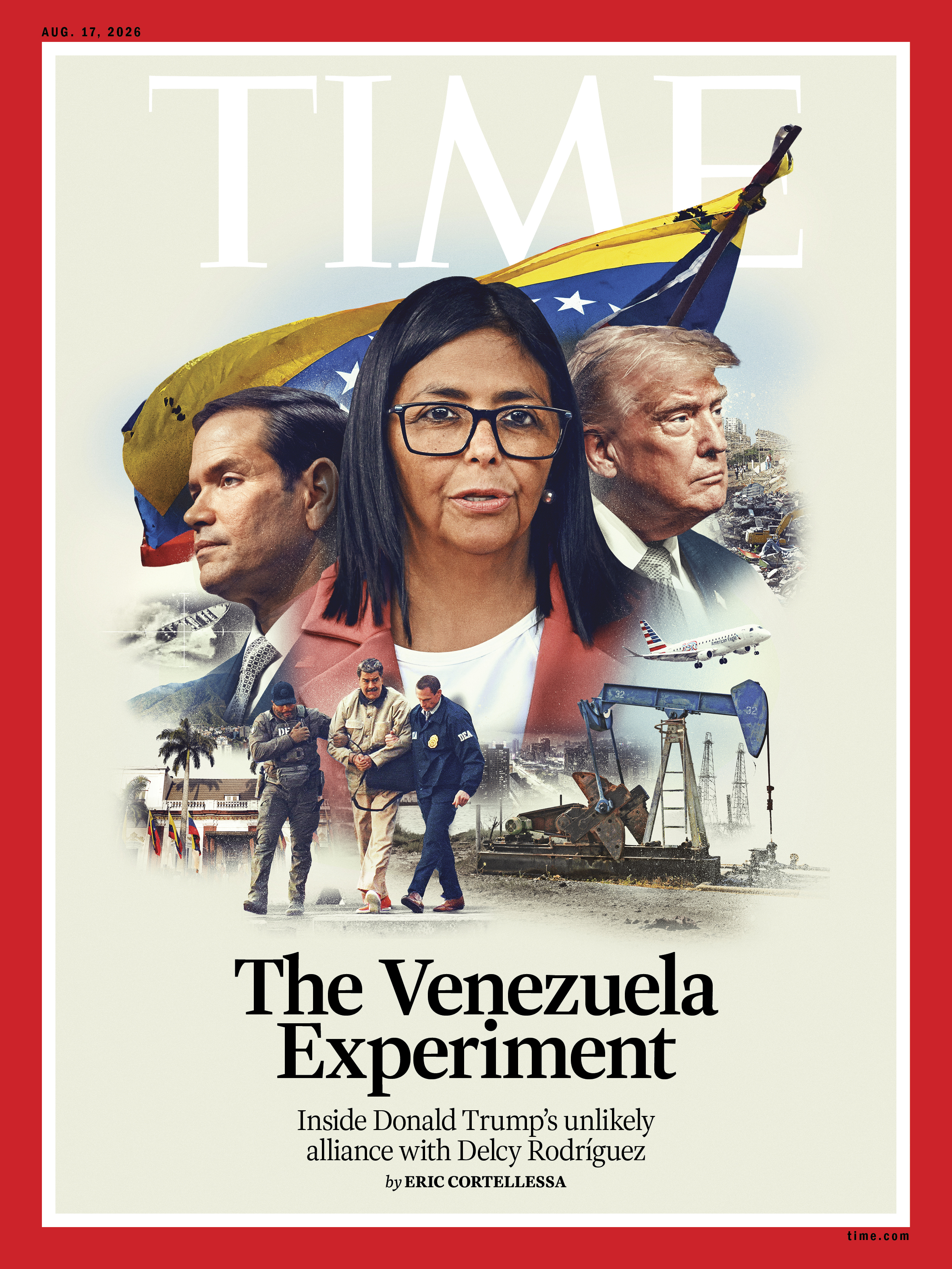
Click here to buy your copy of this issue
The nation Rodríguez now governs is not the same country that existed before the raid that captured Maduro. Before his fall, Venezuela was in stark decline: riddled with corruption, teetering on economic collapse, and ruled by an authoritarian who the U.S. and independent international observers say stole his 2024 election. Hyperinflation had wiped out citizens’ savings. Oil production, the lifeblood of the economy, had plummeted after years of graft, underinvestment, and sanctions. Nearly 8 million Venezuelans had fled, fueling the largest migration crisis in the history of the western hemisphere. Rolling blackouts, water scarcity, crumbling hospitals, and shortages of food and medicine had become routine. Once among Latin America’s wealthiest nations, Venezuela had devolved into one of its poorest.
Since Rodríguez’s ascension in January, signs of recovery have begun to emerge. Construction cranes have reappeared over parts of Caracas. Store shelves are fuller. Dormant oil fields are stirring back to life. American companies—including ExxonMobil, ConocoPhillips, Halliburton, and GE Vernova—have returned or begun negotiating new investments. Commercial flights between the U.S. and Venezuela have resumed for the first time since 2019. The dollar circulates openly. Foreign executives, diplomats, and investors are filling hotels—the lobby of the JW Marriott is now a gathering place for oil executives, while at the more exclusive Cayena Caracas, impeccably dressed financiers and government officials mingle amid polished marble and soft jazz, discussing exploration rights, infrastructure contracts, and Venezuela’s future.
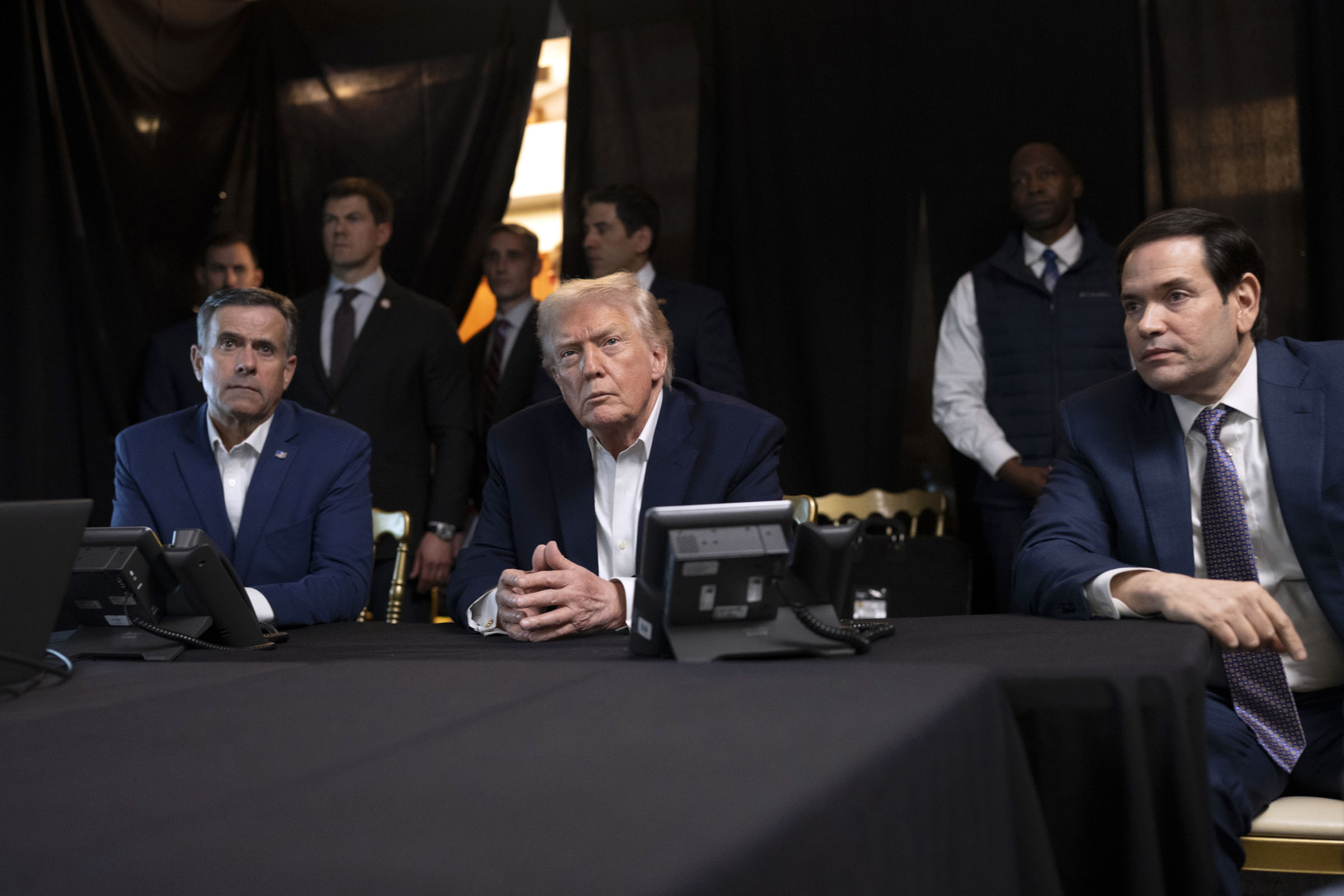
All this has come at a price. Under an arrangement overseen by Rubio, the U.S. has become deeply involved in Venezuelan state affairs. In an arrangement described to TIME by three senior U.S. and Venezuelan officials, the U.S. Secretary of State supervises the framework governing Venezuela’s oil revenues and public finances, effectively administering a joint fund that gives Washington influence over everything from how the country’s export earnings are allocated to the reopening of the energy sector to preferential treatment for American companies. Rubio and Rodríguez are in near daily contact through phone calls and WhatsApp messages, officials say. Rodríguez consults him on domestic appointments, including her selection of a Defense Minister, according to three officials familiar with the arrangement. “Basically, you have what they call the Rodrígato operating,” says James Story, a former U.S. ambassador to Venezuela under Presidents Trump and Biden, describing an arrangement in which Rodríguez’s government remains in power while carrying out Washington’s strategic priorities. “They are doing everything that we ask them to do.”
Washington and Caracas now cooperate on intelligence and counternarcotics operations too. In June, the partnership resulted in the killing of Niño Guerrero, the leader of the transnational criminal organization Tren de Aragua, at his compound in Venezuela’s Bolívar state. Rodríguez says Venezuela supplied the intelligence that located Guerrero and deployed forces on the ground, enabling the U.S. airstrike. “The important thing is that there are opportunities for joint cooperation,” she tells me. “Against drug trafficking, for example, and against transnational organized crime. That is very important to us.” Thousands of political detainees have been released under an amnesty framework encouraged by the U.S., while negotiators continue hammering out dozens of additional economic agreements.
Venezuela has become a case study of Trump’s ability to reshape the world in pursuit of his own priorities, unbound by the diplomatic conventions that restrained his predecessors. He launched an extralegal campaign of force and coercion, beginning with strikes on suspected drug-smuggling boats and culminating in the capture of a sitting head of state, who was brought to the U.S. to face drug and weapons charges. Maduro is now in a federal jail in New York City, replaced by a subservient successor the Trump Administration believed would comply with American interests while preserving stability in Caracas.
Small and slender, dressed in tailored suits and oversize glasses, Rodríguez projects the demeanor of a technocrat rather than a firebrand. Cooperation with the U.S. has allowed her to consolidate power during a period of tremendous upheaval. The bargain is as brazen as it is fragile, and the leverage runs both ways. Over two decades, Rodríguez established herself as one of Chavismo’s indispensable figures. There is no guarantee another leader could sustain such an arrangement—or would choose to align Venezuela with Washington rather than Beijing or Moscow.
For Rodríguez, the role requires a delicate balancing act. Few Venezuelans mourn Maduro’s departure after years of oppression and economic collapse. But relief at his ouster has not translated into enthusiasm for his successor. To many, she is more sellout than savior. But her future rests less on public affection than on her ability to satisfy Trump’s demands, and to convince citizens that becoming a client state of a despised foreign power is in the national interest.
When a major earthquake struck Caracas in June, killing more than 5,000 people and causing an estimated $6.7 billion in damages, the new relationship with Washington produced dividends. The State Department assembled a $300 million reconstruction package, and the U.S. Southern Command provided military support for the relief effort. An aide to Rodríguez points to moments like that as proof that the bargain can be a boon, even as Venezuelans criticized her for taking too long to address the catastrophe publicly, waiting eight days before holding a press conference.
Whether the arrangement will ultimately improve the lives of ordinary Venezuelans or merely enrich a privileged elite remains unclear. Rodríguez has taken few steps to institute democratic reforms. “Millions of Venezuelans that want to come back are only going to do it if they are certain that their rights will be respected,” says María Corina Machado, the opposition leader who won the 2025 Nobel Peace Prize for promoting democratic rights in Venezuela and now lives in exile. To Machado, who was barred from running in Venezuela’s most recent elections, Rodríguez has capitulated to Washington in pursuit of power and self-preservation. “She’s willing to give away anything she’s asked for—anything,” Machado says. “That’s the way those that have committed crimes reason.”
Rodríguez rejects the criticism. “I try to ensure that another country’s domestic policy does not affect Venezuela,” Rodríguez tells me. “I hope that Venezuela does not become a pawn in any other country’s political agenda.”

As we sit in a room of polished marble and gold leaf, Rodríguez recounts the chain of events that propelled her to power with the soft, measured cadence of someone accustomed to exercising authority without raising her voice. On Jan. 2, she recalls, she met with Maduro to discuss Venezuela’s economic plans and the ongoing naval blockade the U.S. had imposed since December. Afterward, she flew to Margarita Island, the Caribbean resort off Venezuela’s northern coast, where her brother and nephews were vacationing. She arrived around 11 p.m., only a few hours before the frantic phone calls began.
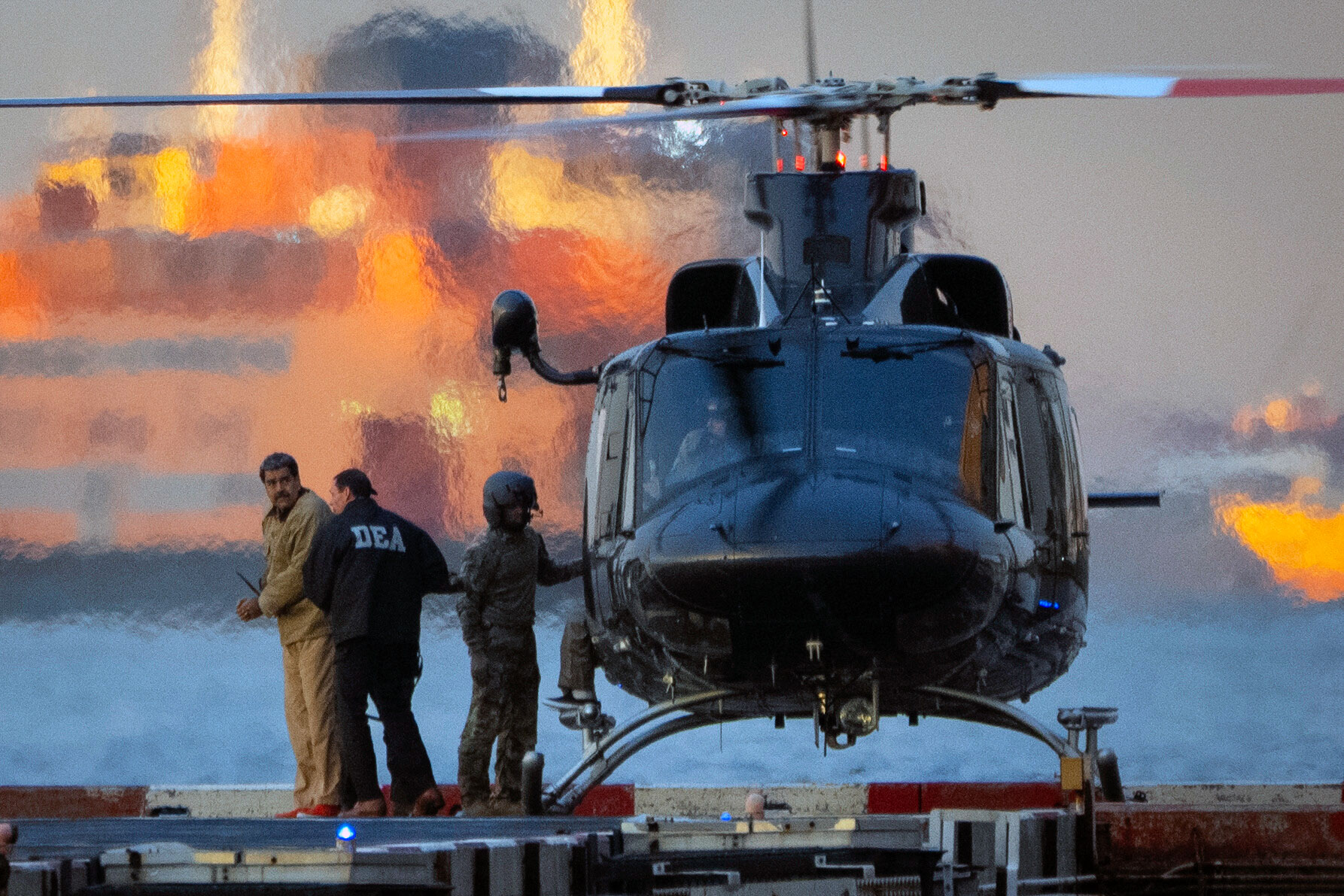
In the early hours of the morning, U.S. military units infiltrated Maduro’s compound inside the Fort Tiuna military complex as he slept. They found him in his pajamas, arrested him, and whisked him and his wife out of the country. “We went through a moment of great anguish when we thought they had killed the President and the First Lady,” Rodríguez tells me. “Then we learned they were taking him to the United States. That changed the situation completely.”
One of Rodríguez’s first calls was to an unlikely figure: Sheik Tamim bin Hamad Al Thani, the Emir of Qatar, with whom she had cultivated a relationship. “‘Now the responsibility rests on your shoulders,’” Rodríguez recalls him saying. “‘You have a responsibility to preserve Venezuela.’”
According to Rodríguez and U.S. officials, Qatari officials helped arrange a conference call between her and Rubio on the afternoon of Jan. 3. “Is Maduro alive?” she asked. Rubio assured her he was; to prove it, U.S. officials sent photographs of him in a jumpsuit aboard a helicopter en route to New York. The Secretary of State then delivered an ultimatum: meet U.S. demands or face continued military pressure. Rodríguez agreed. An aide says she saw no viable alternative. “If I’m completely honest,” Rodríguez tells me, “we never thought the capital of the country would be attacked, much less imagined what happened to the President and the First Lady.”
She spoke to Trump for the first time the following morning. “We discussed how diplomatic relations between Venezuela and the United States could be established and what areas of common interest might be identified,” Rodríguez says. Trump wanted access to Venezuela’s vast oil reserves, seeing them as a way to increase global supply, lower energy prices, and strengthen the U.S. economy ahead of the midterm elections. But he delegated the logistics to Rubio, the son of Cuban immigrants, for whom uprooting leftist regimes in Latin America is a long-standing priority. As Secretary of State, he suddenly had an opportunity to pursue that ambition.
Under the agreement, the U.S. would receive the proceeds from most Venezuelan oil exports and then disburse the money back through Venezuela’s banking system. The structure, one senior U.S. official explains, would function like an escrow account: Washington would release funds only as Caracas met agreed-upon conditions. By controlling the flow of revenue, the U.S. would gain leverage over how the money was spent while limiting corruption and the influence of rival foreign powers. In return, Rodríguez would remain President, buoyed by an influx of American investment and the economic benefits of renewed integration. The Trump Administration saw it as a straightforward trade-off: political stability in exchange for economic oversight, energy access, and the strategic realignment of one of the world’s most resource-rich countries.
One morning a few weeks later, Rodríguez received an unexpected call from Rubio. “I’m putting you on the line with someone who wants to say hello,” Rubio told her. It was Trump. According to Rodríguez, the President told her he was pleased with her cooperation following the Maduro extraction. As a reward, he said, the U.S. would restore commercial flights to Venezuela. By April, American Airlines resumed service between Miami and Caracas. In May, United Airlines launched flights from Houston.
Trump’s fixation on Venezuela had grown since his return to office. He dispatched Rubio to El Salvador to broker an unprecedented agreement with President Nayib Bukele. As part of Trump’s mass-deportation campaign, the U.S. transferred hundreds of detained Venezuelan migrants to El Salvador’s notorious CECOT prison, drawing fierce criticism from human-rights groups and immigration advocates. Trump justified the move by saying the migrants were members of Tren de Aragua, the Venezuelan gang he portrayed as the embodiment of the border crisis.
The situation intensified when intelligence reports allegedly indicated vessels departing Venezuela were transporting drugs toward the U.S., Administration officials say. Rubio and Defense Secretary Pete Hegseth pressed Trump to respond with a campaign of military strikes against the alleged drug-smuggling boats, according to two senior White House officials. Trump authorized the strikes, hoping military pressure would compel Maduro to dismantle trafficking networks, crack down on criminal gangs, and open Venezuela’s vast oil sector to American investment. When Maduro was captured, U.S. boat strikes had killed more than 100 people over the course of 10 months, according to Just Security; as of June 21, the number of deaths has more than doubled, with 215 killed in 66 strikes. Many legal experts argue that the strikes on suspected Venezuelan drug-trafficking vessels violated both international law and the limits of presidential war powers under the U.S. Constitution. “One state is only really supposed to use force against another state when that other state has committed an armed attack against it or threatened imminent armed attack against it,” says Scott Anderson, a former State Department official and national-security law expert at the Brookings Institution.
But while Trump saw a chance to secure access to Venezuela’s oil reserves, Rubio saw an opportunity to remake the balance of power in the western hemisphere. Deputy White House Chief of Staff Stephen Miller soon joined the effort. Increasingly eager to expand his portfolio beyond immigration into national security, he viewed Venezuela as the point where those issues converged. Miller argued limited military pressure would never change Maduro’s calculus, a senior White House official tells TIME. He pushed for a more aggressive approach. (Miller declined to comment for this story.)
As Rubio, Miller, and their advisers continued briefing the President on the boat strikes, they emphasized Venezuela’s growing importance as a platform for American adversaries, including Cuba, Russia, and China, which had deepened their foothold through oil, military and intelligence cooperation, and economic support. “The type of influence that existed in that country is incompatible with U.S. interests,” a State Department official says. Senior U.S. officials were determined to change Maduro’s behavior—or remove him from power. “Our objective was simple: persuade Maduro to sever those relationships,” the State Department official adds. “He was unwilling to do that.”
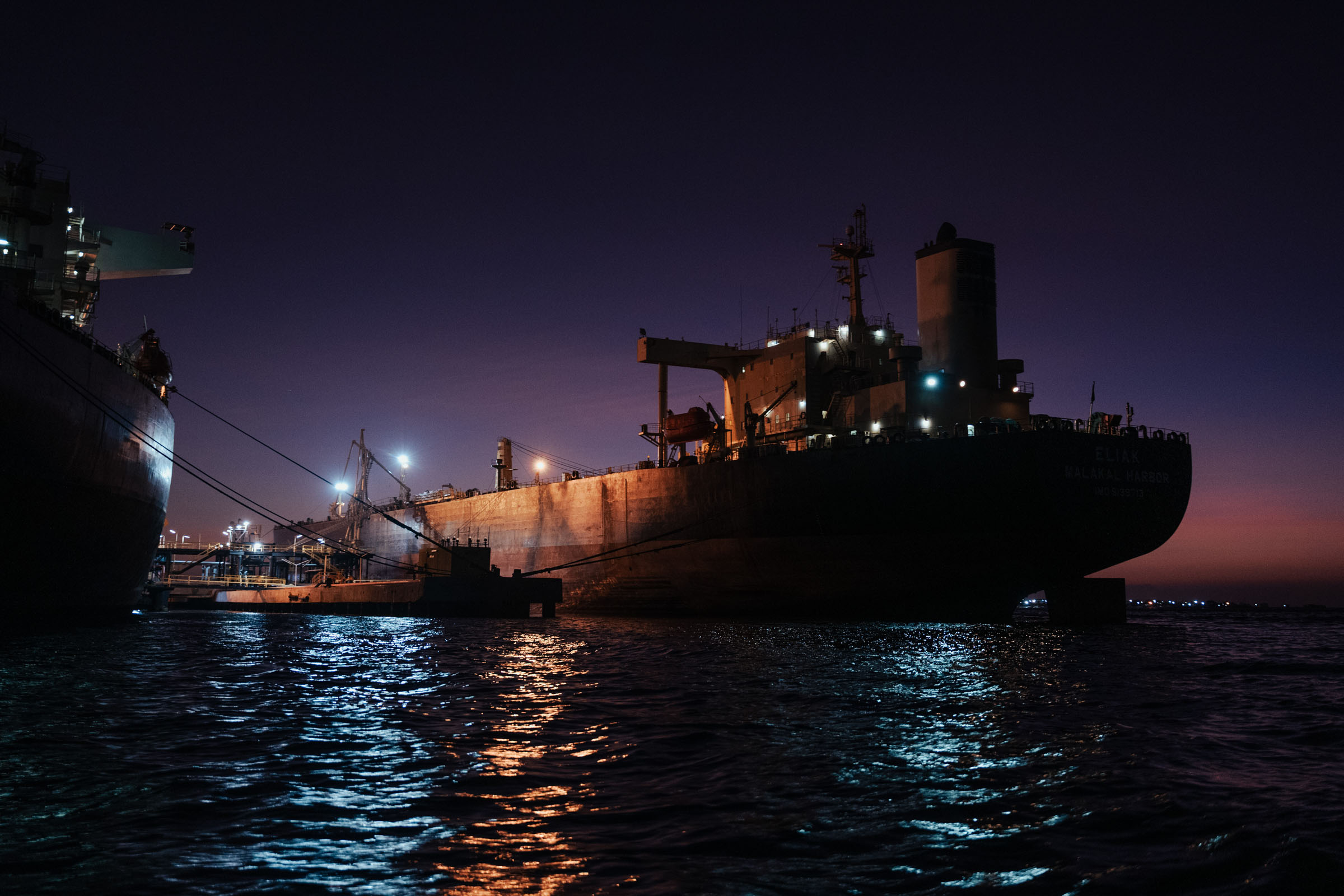
According to the State Department official, the Administration persuaded Turkey to offer Maduro safe harbor if he agreed to leave Venezuela peacefully. He refused. “The inflection point was in December, when we sent him an offer via the Turks, and the offer basically was, if you leave the country permanently to Turkey or some other acceptable place, we’ll leave you alone, but you’ve got to leave the country,” another State Department official says. “He basically ignored it. He had multiple off-ramps where he could have left and lived happily ever after somewhere else, giving us the opportunity to work with someone else inside the government to make those changes. Instead, he posted silly videos of himself dancing and singing.”
That “someone else,” Rubio believed, was Delcy Rodríguez.
Rodríguez was born into one of Venezuela’s most politically committed left-wing families. Her father, Jorge Antonio Rodríguez, was a student leader of the Revolutionary Left Movement. He was arrested, tortured, and killed by government security forces in 1976, when she was just 7 years old. His death became a defining event in her life. Alongside her older brother, Jorge Rodríguez—who heads the National Assembly—she was raised in the ideology of the Venezuelan left. Trained as a lawyer, she followed in her father’s footsteps, rising through Chávez’s government before becoming one of Maduro’s closest confidants. She served as Venezuela’s Foreign Minister, in role in which she became one of the regime’s most combative international defenders, denouncing U.S. sanctions while strengthening ties with Russia, China, Iran, and Cuba. In 2018, Maduro elevated her to the vice presidency.
But international diplomats viewed Rodríguez as a technocrat rather than an ideological hard-liner. “She was seen as a more pragmatic figure,” says Christopher Hernandez-Roy, a Latin America expert at the Center for Strategic and International Studies. “They picked her with a gun to her head, but she seemed to understand the country’s economics, and she had long been deeply involved in its oil sector. That’s obviously one of the Administration’s highest priorities—the recovery of Venezuela’s oil industry.” Rodríguez had long advocated for greater economic openness. She had also been responsible for attracting foreign investment and rebuilding relationships with international energy companies. According to multiple officials, Rubio concluded that Rodríguez was a realist with a grip on the levers of government, and who would be willing to meet Washington’s demands.
Rodríguez argues the relationship has already reaped benefits for the country. During the Maduro years, Chevron had been the only major U.S. oil company to maintain a significant presence. Now it may be joined by ExxonMobil, ConocoPhillips, and Halliburton. U.S. Interior Secretary Doug Burgum and Energy Secretary Chris Wright are negotiating more than 30 agreements that would give American firms a foothold in Venezuela’s energy sector. “The most important thing is that companies from the United States are returning and arriving,” Rodríguez says.
The shift reflects the carrot Trump has dangled: renewed access to American capital and global markets. The bet is that economic integration can induce geo-political alignment after decades of Chavista rule. It’s not yet clear, though, how much of this influx of capital has reached ordinary Venezuelans. Reliable polling remains scarce under the country’s authoritarian system. Venezuelans celebrated Maduro’s removal in large numbers, but many remain wary of Rodríguez, viewing her as someone who abandoned the cause to which she had devoted her political career. “The Venezuelan people don’t miss Maduro, right?” an aide to Rubio tells TIME. “They fully recognize that he was a bad actor and a destabilizing influence. The oil was tremendously valuable to the people of Venezuela. It was stolen by very corrupt elites and used to pay off massive debts to China, Cuba, and others. No more.”
To some Venezuelans, however, Rodríguez is a new face for the same regime. She spent years helping administer a government accused by international investigators of widespread human-rights abuses, including arbitrary detention, torture, and extrajudicial killings. “She was part of a regime that systematically violated human rights,” says Diego Area, an expert on Venezuelan politics at the Atlantic Council. “She comes from normalizing practices that are considered crimes against humanity.”
For all the changes under way in Venezuela, the biggest one—a transition to genuine democracy—still appears distant. Rubio sees it as part of his mission to rid Latin America of its remaining socialist autocracies and lay the groundwork for Venezuela to one day hold a legitimate election and complete a democratic transition, according to a State Department official. At his behest, Rodríguez’s government enacted an amnesty law in February covering political violence from Chávez’s rise in 1999 through the present. (The law includes those accused of participating in the 2002 coup attempt against Chávez and individuals implicated in violent unrest in 2014 and 2017.) Venezuelan authorities say roughly 9,000 detainees have been released since the passage of the amnesty law. Rodríguez says she is prepared to have the process independently reviewed. During our interview, she says she has asked the U.N. Human Rights Office to audit the releases, arguing that outside scrutiny will confirm the government’s compliance with its commitments.
But there are few signs that Venezuela is moving quickly toward free and fair elections. “Trump’s not focused on democracy building,” says Story, the former ambassador to Caracas. “If anything goes bad, it increases instability and further erodes the chance of companies coming in and making investments. That’s the fear.”
Rodríguez expresses little urgency either. “Venezuela will hold elections when it is ready,” she tells me. “There are extremist groups that called for military aggression against Venezuela, and the Venezuelan people—especially those who experienced the attack firsthand—feel a great deal of fear,” she says, referring to the country’s competing power centers and the persistent risk of political violence.
But when will that moment come? What conditions must exist before Venezuela holds open elections? “I feel that moment will come when all of the country’s political actors reach an understanding and we can tell the nation that we, as politicians, are ready,” she says, skirting the question. Rodríguez says she would welcome international election observers, provided they respected Venezuela’s sovereignty.
When I ask whether she intends to run for President herself, she pauses. “I don’t know,” she says.
Then I ask the question that hangs over every discussion of Venezuela’s future: Would Rodríguez allow Machado to return and compete? Rodríguez sidesteps it. “We have to move on to a new political era,” she says.
“So the answer is no?”
“My answer isn’t no,” she replies. “My answer is that there will be a political moment when coexistence and peaceful coexistence will be possible.”
The answer doesn’t mollify Machado. “I understand the U.S. government decided to start with the process of stability, but in order to make that sustainable, you certainly need legitimacy,” she says. “They fear an election because they fear the people, they fear popular sovereignty. They know what the Venezuelan people desperately desired.” Rodríguez’s halting response to the tragic earthquake, Machado adds, “exposed the true nature of the regime: its lack of humanity, its display of infinite corruption and incompetence.”
For Rodríguez, everything comes back to survival. “She needs to follow the guidance of the U.S. government, which at some point will include renewing democratic institutions and rules,” says Area. “She will do it not because of her democratic commitment, but as a means to achieve her political objectives.”
That would be not simply surviving politically, but creating conditions under which she—and perhaps Chavismo itself—can survive after power. She wants guarantees that she—a woman whose father was killed by the state—can remain in Venezuela without fearing imprisonment or retribution from a future government. “That’s what survival means for her,” Area says. “To make it so the system will be stable and able to govern itself, which will potentially include her being able to participate in the new Venezuela. It’s about survival.”
For now, Rodriguez is keen on reintegrating the nation into global markets: diversifying the economy, attracting long-term foreign investment, and ensuring that Venezuela’s prosperity no longer depends on a single commodity. The day before our interview, executives from General Electric sat across from Rodríguez discussing ways to modernize Venezuela’s aging electrical grid.
(General Electric did not respond to a request for comment.)
Whether these ambitions survive Trump’s presidency remains uncertain. Current U.S. foreign policy is animated by the application of leverage, economic incentives, coercion, and transactional dealmaking to draw former adversaries into America’s orbit. Venezuela’s future will depend not only on Rodríguez’s ability to manage the relationship with her current counterparts, but also on whether Trump’s successor embraces the strategy or chooses another path.
As our interview comes to an end, we wander through the sunlit gardens of the palace. I tell Rodríguez I’m flying home the next day, connecting through Miami on one of the newly restored commercial routes. She smiles. Pretty soon, she says, I can skip the layover. “Maybe next time,” she says, “fly from Washington to Caracas.” —With reporting by Leslie Dickstein
Чем обернется «война городов и танкеров» между Москвой и Киевом?
LinkedIn Won’t Be Expanding Its Data Centers in the Next Year
Past fires suggest effects of Europe and North America wildfires may linger for years
Three years after Maui wildfires many still struggle with ‘biological, emotional and social consequences’, study says
A spate of ferocious wildfires across North America and Europe, worsened by the climate crisis, has incinerated homes and forests and forced thousands of people to flee. Previous fires suggest the effects of these blazes may linger for years to come.
The current fires and their plumes of smoke can appear to be a temporary, if immediate, crisis. Nearly 1,000 fires have sprung into life in the boreal forests of Canada, causing the evacuation of towns and toxic smoke to waft into major Canadian and US cities, prompting threats of retribution from Donald Trump, who bizarrely accused Canada of “poisoning” his country’s air.
Continue reading...Economic, data, commodities and markets
No content available
Danube's record low levels force shutdown of Hungary's only nuclear plant
Lam Wing-kee, the bookseller who would not admit defeat
France and Spain are suffering their biggest wildfires on record
Paul McCartney becomes first-time nominee for Mercury prize, up against Olivia Dean, Dave and more
Big names including Raye and Suede face off against smaller artists such as Knats and Nia Archives for prestigious album award
A formidable array of chart-topping A-listers feature in a competitive shortlist for the 2026 Mercury prize, the prestigious award that honours the best album of the year by a British or Irish artist.
Despite the prize’s history stretching back to 1992, Paul McCartney gets his first ever nomination this year, for his album The Boys of Dungeon Lane, a hugely affecting look back at his Liverpool childhood and his burgeoning friendships with his Beatles bandmates.
Continue reading...Why economists love burgers
Freudian trip: how psychoanalysis and skydiving are helping Aurora orchestra open up Mahler’s First
When Mahler premiered his first symphony, it left audiences baffled. For their latest Prom, Aurora are bringing it to life – with the help of Sigmund Freud
In 2014, Aurora Orchestra did something that had never been done at the Proms before. We played Mozart’s 40th symphony – that has been done, many times – but from memory.
It was terrifying. Orchestral musicians usually start getting out their instruments 10 minutes before they go on stage, but people started warming up nearly an hour before – endless repetitions of fragments of music as players tested what they thought they might forget. We didn’t know if we would get on stage and freeze or fall off. Thankfully, we did neither and fear turned into excitement. Our bassoonist Amy Harman described the feeling as “like skydiving without a parachute. But in a good way.”
Continue reading...Our estimated death toll for this year’s wildfires
Canadians spent $3.3bn less on travel to US in 2025 after Trump’s return to office
Data shows Canadians have replaced US vacations with other international trips in apparent rebuke to Trump
Canadians spent $3.3bn less on travel to the US in 2025 than in the previous year, as Donald Trump’s hostile policies towards his northern neighbour continue to incur an economic cost, new government data shows.
The research also indicates that Canadians are not bucking travel overall and instead have replaced US vacations with other international destinations, in a rebuke to Trump’s tariff regime and the president’s continued musings on annexing Canada.
Continue reading...Война в Украине: хроника событий с 29 июня по 28 июля 2026 года
The great PlayStation blackout – will kids actually have to leave their bedrooms this summer?
Gamers are angry that Sony will be deleting TV shows and films from their libraries as well as getting rid of physical games. Will a boycott make a difference?
Name: PlayStation blackout.
Age: Forthcoming.
Continue reading...At least five members of same family killed in Russian missile attack, Zelensky says
OpenAI’s Hacking Debacle Comes Down to Human Error
Read the Full Transcript of TIME’s Interview With Venezuelan President Delcy Rodríguez
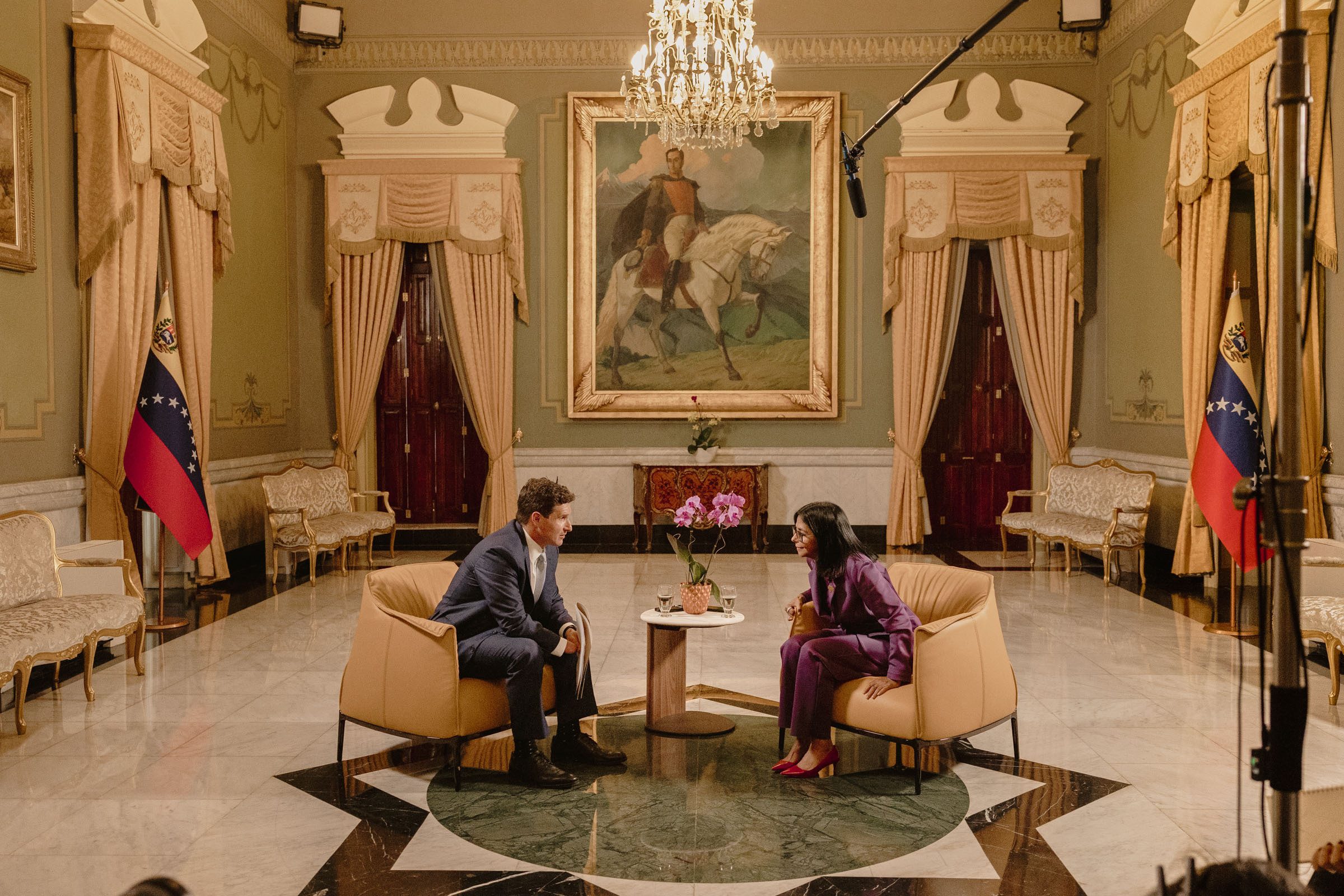
Acting Venezuelan President Delcy Rodríguez sat down with TIME for an interview at Miraflores Palace in Caracas on June 16.
Rodríguez discussed the U.S. raid that captured her predecessor, Nicolás Maduro; her relationship with President Donald Trump and Secretary of State Marco Rubio; Venezuela's economic future; and the prospects for a socialist autocracy to transition toward democracy.
Below is the transcript of Rodriguez’s interview with TIME Senior Political Correspondent Eric Cortellessa, lightly edited for clarity:
TIME: We're in a transitional moment, perhaps a transformational moment. How would you describe your vision for Venezuela, post-Maduro?
Rodríguez: I prefer not to label political moments. January 3 marked a turning point for Venezuela. Personally, I felt it was a time of great change. The first thing to change was the political landscape. We needed to seek a new Venezuela, to correct the mistakes of the past so we could move forward into the future. I believe that is the main focus: to drive economic transformation to address the most pressing needs of the Venezuelan people. So all this political and economic change, which seeks to meet socioeconomic needs, is paving the way for a new political era in the country. My daily work leads me to believe that there is a bright future for Venezuela. We’ve accomplished a great deal in just a few months. The reform of laws, legislative changes, and changes in the criminal justice system, and for me, the flagship moment—the program for democratic coexistence and peace—seeks to build a different kind of society. It aims to steer Venezuelan society away from hatred and intolerance and toward a time of understanding and coexistence rooted in diversity. That’s how I see the present and the future.
We’ll get into a lot of the points you just raised. Where were you the day of the Maduro raid, January 3, 2026?
I was meeting with him until 8 p.m. Then I left for Margarita Island, where my brother and my nephews were. I arrived at Margarita at 11 p.m. The attack took place at 2 a.m., but I was worried because my oldest niece and my mom were in Caracas.
How did you find out about it? What was your reaction?
My first reaction was that I was keeping a close eye on the radars, and before the attack happened, I saw many planes and called the person in charge of one of the posts of the vice president. If I’m completely honest, we never thought the capital of the country would be attacked, much less imagined what happened to the president and the first lady at that moment.
What do you say to people who suggest that you might have known in advance about the attack?
No. There’s absolutely no way to say that because I’m telling the truth.
When and how did you learn that you would be Venezuela's interim president? Take me into that moment where you realize you're going to take over?
First, I have to say that we went through a moment of great anguish when we thought they had killed the president and the first lady. And then there came a moment when we learned that they were taking him to the United States—that changed the situation completely. At that time, I spoke with a leader from another country and he told me ‘Now the responsibility rests on your shoulders, and you have a responsibility to preserve Venezuela.’
Who was that leader?
The Emir of Qatar.
Wow, interesting. Did he reach out to you? How did that conversation happen?
No, I sent him a message because I was worried about the situation.
And he was in touch with the Trump administration?
As I understand it, yes, his prime minister held talks with the government of the United States.
Do you consider Maduro to be the legitimate president of Venezuela today, even in absence or do you think it's time for the country to move on?
I am the acting president because I was the executive vice president under President Nicolás Maduro.
Do you still consider him the legitimate president though?
The thing is, I’ll repeat the answer I gave you. It’s within the constitutional framework of a legitimate president who had an executive vice president, and in a situation like the one that arose, which is identical, it falls to me to assume the role of acting president.
I understand. You spent decades as one of Maduro's closest allies. What do you say to those who say, who believe, that your government represents not a break from the Maduro government, but its continuation? What do you say to those Venezuelans?
Look. Sai Baba. Do you know who Sai Baba is? You know who Sai Baba is?
I don't.
He is a religious figure. He says that holy acts are known more by the hands that act than by the lips that pray. I believe it’s clear that there’s a different Venezuela. There’s a change that’s evident regardless of whether I say it, you say it, or anyone else says it. There are new laws, there’s a program for peaceful coexistence, there have been significant releases, and there’s an amnesty law. I believe there is a process of transformation underway. Venezuelan society itself is different from what we experienced in the past, and I say that this should be recognized by its actions. This is different than we have in the past.
What in your view was Maduro's greatest mistake?
We should have been more open geopolitically. As I said in my first actions as acting president, we are moving toward a new relationship with the United States, and I believe that Venezuela’s international relations should be more open and diversified. I also understand that there was a lot of pressure on Venezuela. So I think that was a mistake.
Interesting. So the mistake was that he left Venezuela too internationally isolated? And that's part of what you're correcting, it seems like, with these relationships forged with other nations?
I am working in good faith and with trust. We must build trust in international relations.
Last question on Maduro. Tell me about your final conversation with him? What was it like? What did you talk about? And have you been able — we'll have a quick follow up.
My last meeting with him took place, and I’ve said so publicly, we discussed the economic plan for the year 2026, taking into account that Venezuela was under a naval blockade. During the month of December and part of January, Venezuela was unable to sell a single barrel of oil. So we were working hard with the economic team, and that was what I presented to him.
Have you been able to have any communication with him since he's been in American federal prison?
Very little communication.
But you have spoken? You have had communication?
No. I’ve received some messages.
He sends emails or letters or—how?
No, no, just with the lawyers.
And have they told you anything of importance? What have they shared?
He sees what is happening in Venezuela as very positive.
How many people are currently imprisoned for political reasons in Venezuela? There's a recent report that says it’s down to 389. Is that true?
On the subject of—quote ‘political prisoners’ unquote, it’s a topic with far too many different versions. We passed an amnesty law to address political violence from 1999 to the present. For example, in 2002, there was a coup against President Chávez. In 2014 and 2017, there were very violent protests; people were burned alive, motorcyclists had their throats slit, health centers were set on fire, schools were set on fire. Before the amnesty law, nearly 900 people were released, and with the amnesty law, nearly 9,000 people were released—more than 400 of them with full freedom, while the rest were subject to court-ordered reporting requirements. In parallel with the amnesty law, there has also been a process of granting relief to those who cannot benefit from the law, and there are more than 500 such people.
Just so I understand, more than 500 people have been released since the amnesty law?
No, roughly 9,000 under the Amnesty Law; of those 9,400, some were granted full freedom—physical freedom—while the rest were individuals subject to court appearance requirements. However, in addition to the amnesty law, there are more than 500 people who benefited from the law but were not eligible for its provisions.
Would you allow an international body to audit those cases?
Definitely. I asked the Human Rights Commission about it.
And would you commit to releasing all political prisoners, not the ones who committed violence you described, but people who are in prison because of their political beliefs or positions?
The fact is, no one is imprisoned for their political beliefs—for example, those who used a drone to [try to] assassinate the president. The drone incident is a well-known, widely reported public fact. That is not a political belief—attempting to assassinate a head of state or planting a bomb in a public square. In other countries, this is considered terrorism and cannot be regarded as a political belief.
When will Venezuela hold elections?
Venezuela will hold elections when it is ready to do so. And if you think about what I said earlier, after January 3, we had to change our policy. Why? Because there are extremist groups that called for military aggression against Venezuela, and the Venezuelan people—especially those who experienced the attack first hand—felt a great deal of fear. The mothers who feared for the children, the children who were simply afraid. And that’s when I realized we had to change our political approach—that we had been mistaken in our policies—and that’s why the program for democratic coexistence and peace is, for me, fundamental. Because it must lead us to a different political reality where extremists don’t believe that violence is the path to political power, and where we, as a government, recognize that we have political opponents and that those differences will be resolved at the ballot box.
You spoke about this but I just want to clarify. What exactly has to happen for those elections to be held? You have to eliminate the threat that you were just describing? What is the criteria for—now we are ready? What has to happen for Venezuela to be ready?
I feel that moment will come when all of the country’s political actors reach an understanding and we can tell the nation that we, as politicians, are ready. I always say Venezuela as a country is much greater than the differences among politicians. I would ask young people what they think of politicians, and I hope that the people of Venezuela—the citizens—truly believe that politics is what can help them overcome many challenges in their daily lives.
What do you say to those who worry that this is sort of a recipe for endless procrastination?
I’ll say it again for you. January 3 marks the beginning of a new political era, and we’re all shaping that era together. For example, the Coexistence Program has already held meetings with more than 30 economic, political, and social sectors across the country. It doesn’t depend on any one person. In this case, it doesn’t depend on any one woman. I hope we can build it together.
When that day comes, would you allow international organizations, the EU, the United States, to monitor the elections?
The Venezuelan electoral process must, first and foremost, be a national process. Venezuela has a tradition of having international observers in its electoral process, but that international observation must be respectful of the country. It should not involve groups that come to make decisions on behalf of the country.
So the answer is yes, but with the caveat that they have to respect your national control and sovereignty over the election. Will you run?
I don’t know.
Let's talk for a moment about María Corina Machado. Will you allow her to return to the country?
Look, I believe that Venezuela belongs to all Venezuelan men and women, and there will come a time, and I dream of that time, when Venezuela will not have a single sanction in place, a time when we can all come together. Extremism has cost the country dearly. From a congressman who proclaimed himself president of Venezuela and spoke of Venezuela’s assets as if they were the King of England, to those who called for sanctions and this invasion. We have to move onto a new political era.
So it sounds like the answer is no.
No. My question isn’t—my answer isn’t no. My answer was that there will be a political moment when coexistence and peaceful coexistence will be possible. And that this political moment will not involve economic sanctions against Venezuela.
Would she be allowed to run for president?
I believe, and I’ll say it again, that the situation in Venezuela goes far beyond who participates in an election. The most important thing isn’t who participates. The most important thing is the groundwork we’re laying for this new political approach.
Let's move onto the economy. Exciting topic. Venezuela's oil sector has been opened to private investment for the first time after years of state control. Would you say the model of state control over the Venezuelan economy is effectively over?
The economic blockade has led Venezuela to adopt innovative mechanisms for private-sector participation. We have incorporated new business models, but our constitution provides for private property and private participation in investments. The legal reforms have been aimed at increasing the return on investment and also providing greater legal certainty. We have just signed a new agreement with Repsol to expand its presence in Venezuela, and I’m going to share some data with you that will be useful for us. According to the International Energy Agency, 80% of the world’s oil wells are in decline, and 90% of global investment is directed toward halting that decline. But here’s the most important fact: Venezuela has 303 [billion] barrels of oil reserves. But of those 303 [billion, many] are green fields, which means that Venezuela represents one of the most significant opportunities for the world’s future energy. That is why my proposal to President Trump and the U.S. government was to develop a long-term energy agenda.
Well we're going to certainly get to that in just a moment. But tell me in a story, you become interim president, all of a sudden now there's all this opportunity, potential, for oil investment, how did that begin? How did you get started on having these kinds of agreements and driving in this kind of foreign investment?
I was also set to become the minister of hydrocarbons, and I had all these ideas in mind to attract more investment to the country. It was pointless to have those reserves if we couldn’t guarantee benefits for the people of Venezuela, and that’s why we were able to pass the reform of hydrocarbons law so quickly, as those investments that are about to start flowing into the country will translate into income for workers in healthcare, education, and public services. I am very hopeful that everything we are signing, which has been quite a lot, will have a positive impact and bring great benefits to the country.
Beyond oil, what is your strategy for rebuilding an economy that saw millions of Venezuelans emigrate? And then to that point, what would you say to the Venezuelan engineer or doctor living in Miami, about why they should come back?
Look, I’d like them to come back today. I set up a registry so that young professionals and entrepreneurs who want to join this economic initiative can sign up there. More than 56,000 young Venezuelans have registered in just one month, and right now the system is routing those who want to start a business to the “Emprender Juntos” program. We’re collecting data on professionals to make it available to the companies we’ve partnered with. We’re working toward Venezuela in 5, 10, 20 years. Venezuelan migration was an economic migration. Venezuela has always welcomed immigrants, nearly six million Colombians arrived in Venezuela, and Venezuela has always been welcoming and has incorporated and integrated Spaniards, Italians, Portuguese, Ecuadorians, and Colombians. I want those migrants to return to Venezuela, which is why I was telling you that this country belongs to all Venezuelan men and women. I was a migrant for 10 years, but the country always calls you back.
Can Venezuela diversify beyond oil or will it always remain an energy state?
Venezuela has an economy with great potential due to its diversity—not only in the area of hydrocarbons such as oil, but also natural gas, which will allow us to develop the petrochemical industry, which will have a major impact on the national economy. But we also have mining operations with some of the largest reserves of gold and diamonds. We have iron reserves sufficient for 350 years, and we have aluminum. In other words, Venezuela possesses a very significant diversity of minerals. We also have water for agriculture, millions of hectares available for food production, and a tourism sector that we would like to develop. Venezuela boasts a diverse range of landscapes, including deserts, plains, snow, beaches, mountains, forests.
Of course a big mark of progress where you got commercial flights to and from the U.S. Made life easier for me, certainly.
Trading, too. Retail. The United States is a key driver of digital retail commerce.
I want to talk about the U.S.-Venezuela relationship and work that you're doing with the Trump administration. Can you explain—let's just start with oil and then branch out—how the U.S. is managing Venezuela's oil reserves? What exactly is the agreement that was reached after you took over for Maduro?
The most important thing is that companies from the United States are returning and arriving. The first hydrocarbon operation in Venezuela took place 114 years ago. It was the New York and Bermúdex Company, an American business. We’re not doing anything out of the ordinary. Chevron has been in Venezuela for over a century. What’s happening here is that companies that were here in the past are returning, but also new companies are arriving. Halliburton, for example, has returned.
Haliburton came back. Can you give me two or three of the new ones?
Oof. There’s a lot. Haliburton is a good company. It’s significant that companies that attended the meeting with Trump are here. But there are also companies that came with Secretary Burgum and Secretary Wright. We are currently negotiating 30 agreements.
Is this done with the government's cooperation?
We are always in communication and dialogue.
Well it's not just energy, oil, and trade. It’s also security. Recently, the U.S. and Venezuela participated in a joint operation to kill a leader of the Tren de Aragua gang. Can you just tell me: How did that come about?
It was not a joint. It was a combined … Well, it was a joint operation. What are we combining? Intelligence information, and on the ground, we have our security forces. The important thing is that there are opportunities for joint cooperation—joint cooperation against drug trafficking, for example, against transnational organized crime. That is very important to us, so I believe, and as we said, we congratulate the officials who participated in this operation.
So you supplied intelligence to the United States that helped them locate—
And vice versa.
And vice versa. Your forces were on the ground but the United States authorized an airstrike.
Yes
Obviously, Tren de Aragua is a big preoccupation of President Trump’s. Should we be expecting more of this kind of cooperation?
Look, we have, I repeat, anti-narcotics cooperation with European countries, such as France. We’ve also spoken with Colombia.
Will you and the Trump administration continue to target more of Tren de Aragua together?
Yes… it’s also transnational, but again, that’s nothing out of the ordinary. It’s just part of judicial, police, and security cooperation with other countries. Mexico and the United States have cooperation agreements.
I'm not saying it's unusual. I'm saying it's a factor in terms of bringing people back to Venezuela, getting tourism, because obviously security is a concern for many people. Another Latin American leader who has driven down crime and opened up their economy, President Bukele in El Salvador. Are you considering adopting any of the tactics he has to reign in gangs and violence?
As for what has been done in El Salvador, I’d rather not comment on other countries. I’ll just say that I wish things were different in Venezuela.
How often do you speak with Secretary Rubio? My understanding is that you both talk a lot. What are those conversations like?
As many times as necessary.
Why do you think he took such an interest in Venezuela?
Well, we’re talking about a country that is a major player in the hemisphere. And what I see is that Secretary Rubio is interested not only in Venezuela, but also in the rest of the countries in our continent. He serves as secretary of state and is responsible for international affairs, that is the world. I was foreign minister and [unintelligible].
Tell me about the first time you spoke with President Trump?
I think it was January 4, but I don’t remember.
What did he say to you? Tell me about that conversation?
He was very kind and very respectful, for which I am grateful, and from the very beginning, during my first conversation with President [Trump], I asked that our relationship be based on mutual respect.
What did he say?
He responded respectfully. We discussed how diplomatic relations between Venezuela and the United States could be established and what areas of common interest might be identified.
And what were they? What was the path of establishing diplomatic relations?
Look, I think we’ve moved quickly because just a few days later—I think 12 days later—the first Chargé d'Affaires arrived for two hours, and then Barrett arrived, who I think has been here for five weeks and has been very active as well. Just like the former Chargé d'Affaires, and our diplomatic staff who went to the United States and are currently here.
Yeah well the United States' relationship with Venezuela right now was unimaginable a year ago. What changed?
I’m starting out by acting in good faith and trusting that these relationships can develop in good faith; and on the side, there’s a very full cooperation agenda that needs to be addressed.
Do you and President Trump have a personal rapport, relationship now? and what has surprised you the most about him in private?
I’ll say it again. He was straightforward when we spoke. Let me give you an example. One morning, Secretary Rubio called me and said ‘I’m going to put you on the line with someone who wants to say hello.’ It was President Trump, calling to tell me that he was going to approve commercial flights to Venezuela. So everything was very specific and focused on our agenda for work and cooperation.
I want to get into your legacy. But are you worried if a Democrat wins the next election and reverses Trump's Venezuela policy, what happens to your strategy for the country's future?
Look, my current and future strategy has always been to ensure peace and tranquility in the country—tranquility and social and economic wellbeing. I try to ensure that another country’s domestic policy does not affect Venezuela, and I hope that Venezuela does not become a pawn in any other country’s political agenda.
If Hugo Chavez were alive today, do you think he would recognize the Venezuela that you're building?
Yes, absolutely. He maintained relations with the United States—for example, the country’s largest oil exports went to the United States—and there was cooperation on security matters. So Chávez always—and this is enshrined in the constitution—promoted the coexistence of the public and private sectors, and most importantly, the program of social protection and social and economic support for the people.
And so when you look back over all broadly with the Chavez era, do you feel pride, regret? Both? How do you look back?
I think Chávez left a very important legacy during the Fourth Republic, large segments of the population–espeically the poorest—were excluded from the country’s political and social life. And I believe that is the legacy Chávez left Venezuela through the Democratic Coexistence” program. I have said that today everyone can sit at the table—on the republican side, that is–so now it’s up to us to bring everyone together.
So what from the Maduro-Chavez era do you want to keep and what do you want to get rid of?
Look at the social protection programs. They show that the Venezuelan government is looking out for those who need it most, that there’s room for all of us here, and that just as the economic sectors are supported, so too are the most vulnerable. Let me give you an example. No one could explain how, in an economy that contracted as severely as Venezuela’s, such immense efforts were made to guarantee food for the most vulnerable—for 4 million families truly impacted by the economic blockade. In 2020, during COVID, Venezuela had no access to its financial resources, yet we administered 70 million doses of free vaccines to the population. I believe in a country where the president or government officials do not consider themselves the owners of the country. I believe in a Venezuela for everyone, regardless of who is here.
Final question because I know you have to go. What is the single hardest decision you've made since taking office? And what does success look like for your presidency five years from now?
I think the cooperation that we’re receiving has made me very happy to sign agreements with the company IMPSA, and General Electric makes me very happy to negotiate with them because you can’t imagine the relief the people will feel when their electricity service is up and running, regardless of the political dynamics. The people of Venezuela will feel the impact of what’s being done. This makes me happy.
Thank you. I appreciate your time.
Thank you.
Don’t Get Too Attached to Jimothy
‘Spider-Man: Brand New Day’ Is a Superhero Movie for Yearners
200 человек в день. Что мы знаем о потерях России в Украине к концу июля?
4 Best Budget Smartwatch Models for Less Than $250 (2026)
7 Best Shower Filters of 2026 Are WIRED-Tested and -Approved
Назад в 2022-й? Чем может обернуться новая остановка работы черноморских портов Украины
Война в Украине: хроника событий с 28 июля по 28 августа
Silent Hill Townfall: the series is coming to Scotland, but what fresh horrors will it bring?
An amnesiac loner arrives in a remote town for who knows what reason … this may sound familiar but this time we’re on a remote Scottish island and surprises lie in wait
A man washes up at the harbour of a small coastal village, his memories vague, an eerie sea fog rolling in all around him. As beginnings go, this couldn’t be more Silent Hill – an amnesiac loner drawn to a remote town for who knows what reason. But this time, we’re not in the Pacific Northwest of the original games or the Japan of last year’s excellent Silent Hill f. We’re on an island off the northern coast of Scotland, and it’s 1996. Lead character Simon Ordell knows this place, but isn’t sure how – and why does he have an IV cannula stuck in his hand?
Announced back in 2022, Townfall is the work of Glasgow-based studio Screen Burn, previously responsible for tense horror adventure titles Stories Untold and Observation. Like Silent Hill f, it moves the setting far out of Silent Hill itself: St Amelia is a fishing town, inspired by St Monans and dozens of other seafront towns the team visited and extensively photographed.
Continue reading...Missile that left crater deep inside Poland was probably Russian - Polish PM
Best Vacuum Cleaners (2026): Cordless Vacuums, Robot Vacuums, Dysons
Kenya investigating unexpected deaths of 15 elephants in national park
Potential toxic substance detected in several of 15 elephants found dead in Kenya’s Amboseli national park
Officials are investigating the deaths of 15 elephants over the past month in Kenya’s Amboseli national park.
The Kenya Wildlife Service (KWS) said 10 of the elephants showed signs of partial paralysis before dying within two days.
Continue reading...The Surprising Perimenopause Condition That Can Freeze Your Shoulder
When Liz Gumbinner first noticed a twinge in her right shoulder, she assumed she’d pulled a muscle. It was during the pandemic, when many exercise studios were closed, and Gumbinner, a writer who teaches advertising at Boston University, had been doing a lot of yoga and dance at home.
But the pain, mild at first, gradually became excruciating, shooting down her arm whenever she extended it. “We're talking worse than labor contractions,” she says.
Pretty soon, Gumbinner couldn’t zip up a dress, turn off a light switch on the wall, or even hold hands with her boyfriend. The only way she could sleep was flat on her back with her arms at her sides. “That's when I realized it wasn't a pulled muscle,” she says.
A few months later, she was diagnosed with adhesive capulitis, colloquially known as “frozen shoulder,” a condition in which the shoulder capsule—a fibrous sheath which surrounds the joint—becomes thick and inflamed. It usually develops in three phases: the freezing stage, which can last several months and cause severe pain; the frozen stage, during which the shoulder becomes stiffer and difficult to use, often for up to a year; and the thawing stage, when mobility finally begins to improve.
In most cases, frozen shoulder is not caused by an external injury or trauma, says Dr. Jocelyn Wittstein, a sports medicine specialist and associate professor of orthopedic surgery at Duke University. Instead, patients often experience a sudden, spontaneous onset of pain, “and they’re kind of wondering, ‘What could I have possibly done to my shoulder?’” she says.
Women in mid-life are most at risk
Frozen shoulder affects around 2-5% of the population, and occurs more frequently in women, predominantly those from ages 40 to 60. It’s also more common in people with endocrine disorders, like diabetes and thyroid disease.
During perimenopause and menopause, the loss of estrogen—which plays a key role in protecting musculoskeletal tissue—can lead to inflammation and loss of elasticity throughout the body. This hormonal shift can also cause metabolic changes, making women more susceptible to thyroid disease and diabetes.
“There's likely a combination of things going on,” says Wittstein. “There's withdrawal of estrogen and the effect on the joint lining, but there's also probably some endocrine changes happening.”
Gumbinner, who hit perimenopause during the pandemic, had never heard of frozen shoulder before. “Here we are, with yet another ailment that impacts middle-aged women that gets no attention,” she says.
Women who are being treated for breast cancer are also “a special at-risk population for frozen shoulder,” Wittstein says. Many take a kind of hormone therapy called aromatase inhibitors, which drastically decreases estrogen and can cause joint and muscle pain.
Early diagnosis can be crucial
The earlier you catch frozen shoulder, the easier it can be to resolve, Wittstein says. “If you get into where you have really significant loss of motion, not just the early loss of motion, it takes longer to get better,” she explains.
The problem is that if you’re unfamiliar with the condition, you might mistake it for something else.
“We call it ‘the great mimicker,’ because it can look like everything,” says Dr. Stephanie Wong, an orthopedic surgeon and sports medicine specialist at UCSF. “It looks like a rotator cuff tear, it looks like biceps tendonitis.”
That’s why it’s important to get evaluated by an orthopedic surgeon or shoulder specialist as soon as possible. “It’s a very straightforward diagnosis for us,” Wong says. The giveaway, she explains, is that not only will the patient be unable to move their arm during a physical exam, but another person won’t be able to either. “So when I try to raise your arm up, your arm is literally frozen,” she says.
An X-ray or MRI can be helpful in ruling out other conditions, Wong says, but “it’s really a clinical diagnosis.”
New treatment may be on the horizon
The standard of care for frozen shoulder is physical therapy and anti-inflammatory injections into the joint; the majority of people get better with these interventions, Wong says, though “it can just take a really long time.” Most people recover within one to three years, and requiring surgery is rare, she adds: “We reserve that for the very stubborn cases.”
Though there isn’t yet enough definitive research to demonstrate that hormone therapy (HT) can help prevent or treat frozen shoulder, the clinical benefits are promising, says Wittstein, who is currently exploring the link; she recently presented new data on more than 10,000 women at the American Orthopedic Society for Sports Medicine suggesting that HT is associated with a reduced risk of developing frozen shoulder.
At UCSF, the orthopedic and ob-gyn departments are also investigating whether HT reduces the course of frozen shoulder, which Wong hopes will give women another treatment option. “It’s just so disappointing to have things be chalked up to perimenopause or menopause, and you have to suffer through it,” she says.
It’s important, Wittstein says, to recognize that some women, including many breast cancer survivors, may not be able to use HT. “There’s this huge group of women who take a double hit,” she says. “They get early menopause from chemotherapy or they get aromatase inhibitor-associated musculoskeletal syndrome, and then they can't use this medication.”
What to do (and not do)
Physical therapy for frozen shoulder focuses mainly on stretching and manual therapy, which may differ depending on what stage you’re in, and can often cause discomfort. That’s why it’s important to do it under the guidance of an experienced physical therapist, says Dr. Ariana Lott, an orthopedic surgeon at NYU Langone who specializes in sports medicine.
“It’s really hard for patients to do these kinds of movements by themselves,” she says, because “it hurts.”
In terms of regular exercise and activity, “I hate to restrict people,” Wong says. “I always say, unless I think it’s really going to do you harm, do whatever’s in your realm of comfort. So if you want to do some light weights, totally fine. If you don’t feel up to that, also totally fine.”
The one thing she cautions patients against doing is immobilizing their shoulder by wearing a sling. “Generally, we worry about that making it more stiff,” she explains.
Lott reassures her patients that they didn’t cause their frozen shoulder, which she says they can find freeing. “A lot of people place blame, like, ‘Oh, it’s because I did this or I didn’t do this,’” she says. “And it's like, ‘No, actually this is nothing that you did. And we can fix it. It's going to be a long process, but you can't blame yourself, too.’”
For Gumbinner, that process is still ongoing. After her original right-side pain finally resolved, it resurfaced again in 2024, this time on the left. Multiple steroid shots, along with heating pads and ibuprofen, have provided stretches of reprieve, but almost two years later, she’s still dealing with it.
“I can work around it, but it’s not ideal,” she says. “I just want to be able to slip on a dress again without a whole gymnastics routine.”
США приостановили войну с Ираном — действительно ли у Трампа заканчивается оружие?
A quarter of young Africans believe USAID cuts could be positive, survey finds
Losing funds should force leaders to confront their own challenges, they said, while many voiced concerns over increasing foreign influence
A quarter of young Africans believe aid cuts by the US could have a positive impact, saying that losing foreign money will force leaders to confront and solve their own challenges, according to a new survey.
In Ghana and Nigeria, almost half (41% and 40% respectively) of young people aged 18 to 24 were optimistic, with Liberia not far behind (37%). A further one in 10 (11%) young people were uncertain about the impact, according to the African Youth Survey, which interviewed almost 5,000 people across 16 of the continent’s 54 recognised countries.
Continue reading...Fifty-three days and counting: 93-year-old leader’s record absence fuels health speculation
Cameroon’s Paul Biya has not made a statement or been seen since leaving for ‘brief private stay’ at Swiss hotel on 7 June
A record 53-day absence by the world’s oldest head of state has renewed speculation in his native Cameroon about whether he is dead or alive, even though discussing his health is illegal in the country.
Paul Biya has not been seen in public since 7 June, when the 93-year-old left for Switzerland for what officials described as a “brief private stay” alongside his wife, Chantal.
Continue reading...Fifteen elephant deaths in Kenya may be due to cyanide poisoning
Analysis of samples collected from carcasses found traces of toxic chemical compound, says Kenya Wildlife Service
The recent deaths of 15 elephants near a park in southern Kenya were likely caused by the animals ingesting pesticides used on tomato farms, the Kenya Wildlife Service (KWS) has said.
Erustus Kanga, the agency’s director general, told Citizen TV that analysis of samples collected from the carcasses had found traces of cyanide, a chemical compound used in farming as a predator control poison and a pest fumigant, which has also been used by poachers.
Continue reading...US government map of Africa mislabels every country at global conference
State department ‘takes full responsibility’ for erroneous, widely shared chart displayed at Aids conference in Brazil
A US government map of Africa mislabeled every country during a state department presentation at a global conference in Brazil this week, causing a stir among attenders who took screenshots and posted them online.
Reuters viewed a video of the presentation given at the Aids 2026 conference in Rio de Janeiro, which shows the errant map displayed halfway during a presentation about the state department’s new health agreements.
Continue reading...Why limited war with the US may suit Iran better than peace
After 40 years, Aliens is still shaping the way video games are made
James Cameron’s high-octane film sequel is a blueprint for modern action space slashers
• Don’t get Pushing Buttons delivered to your inbox? Sign up here
It is difficult to believe that James Cameron’s Aliens was released into cinemas 40 years ago. The seminal space shooter took the original Alien – a tense slasher film with a tiny cast and one monster – and transformed it into an intergalactic war movie crammed with wry one-liners, massive guns and an actual boss battle finale. As a 14-year-old, I stood in line at the Tatton Gatley cinema, unsure if I’d be allowed in – I came out three hours later a changed person, my head filled with esoteric military slang and a deep fear of beeping motion detectors. For days afterwards, I slept with my duvet covering my mouth so that no facehuggers could get me. (I was a highly impressionable teenager.)
It’s little wonder that the film has had such a profound effect on video game design. Take the colonial marines, for example. Although the concept of the space soldier had been around in sci-fi novels since the 1930s, most notably in the works of EE “Doc” Smith and Robert Heinlein (the Starship Troopers), Hicks, Hudson, Vasquez and co, were the perfect 80s rendition, combining the witty banter of contemporary buddy cop flicks with awesome weaponry and hi-tech gadgets. Their influence is easy to spot in Doom, where the nameless marine fights ceaseless waves of hellish monsters using a mix of futuristic rifles and good old shotguns. It’s there too in the Halo series, the Spartan soldiers sporting the same armour and mega weapons, cruising about in very similar highly militarised starships and fighting recognisable hive-mind space beasts. Gears of War, Killzone and Marathon all borrow from the same set of costumes and deadly accessories.
Continue reading...В Белом доме прошла встреча президентов США и Украины. Что о ней известно
DOGE Veterans Are Landing Big Jobs at Prediction Markets
Anthropic says Claude AI hacked three organisations during cyber tests
Can Studying Daily Life Help Us Envision the Future?

The morning begins before anyone is fully awake. One parent is packing lunches while the other is answering a work message from the kitchen counter. A child cannot find a shoe. The school app says the bus is delayed. A phone buzzes with a reminder about a prescription refill for an aging parent, followed by another message from the care aide asking whether anyone can confirm the afternoon appointment. The day has barely started, and the family is already negotiating between school, work, care, money, time, and the small emergencies that do not look serious enough to be called emergencies.
Nothing about the scene looks unusual. That is part of the problem. It looks like modern family life: busy, stretched, familiar, and manageable because someone keeps managing it. The parents move through the day like runners in a relay race that never quite ends. School drop-off gives way to meetings. Meetings give way to eldercare calls. Eldercare calls collide with a sick-child pickup, dinner, laundry, bills, homework, and the quiet work of getting everyone ready to do it again tomorrow. No single moment breaks the family. Each demand is ordinary enough to explain away. Together, they begin to take up the room that a future would need.
Late that night, after the house finally settles, one parent opens a drawer and sees an old baby photo. For a moment, the noise of the day gives way to something softer. There had been conversations about another child. There had been a name they liked, a space they imagined making, a version of the family that still lived somewhere in the mind. Then the phone lights up again. A calendar alert. A payment reminder. A message about tomorrow’s schedule. The parent closes the drawer, opens a pregnancy-planning app, looks at it for a few seconds, and closes that too.
The family did not stop wanting a child. Daily life ran out of room.
These are the kinds of moments that shape the future. They do not always arrive as an announcement or a breakthrough. They often arrive as a shrinking of room around ordinary choices. A family still appears to function, but the effort required to function has changed. Work still happens, care still happens, school still happens, bills still get paid, and dinner still finds its way to the table. Yet underneath that visible continuity, the old arrangement is carrying more than it was built to carry. The future does not first appear as a grand prediction. It appears as pressure inside the day.
We often talk about the future as if it sits somewhere ahead of us, waiting to arrive. But many futures begin earlier than that. They begin when familiar systems keep their shape while losing some of their fit, when people absorb more complexity than the official story admits, and when choices that once felt open become harder to hold, not because people lack desire, discipline, imagination, or responsibility, but because the conditions around those choices have changed.
For years, I have been troubled by a gap in the way we talk about the future. We can describe possible worlds with confidence. We can imagine new technologies, new institutions, new markets, new risks, and new ways of living. We can tell powerful stories that help people see beyond the immediate problem in front of them. Those stories matter. They stretch imagination and widen attention. But they often leave unanswered the question that matters most: how does a possible future actually form, and where can people still act before it hardens?
I know that gap from the front of the room. For more than 16 years, my writing has been a thinking laboratory for these questions, and for much of that time I have spoken with executives, boards, students, and communities about the forces reshaping the world around us. The stories often landed. People would tell me a talk helped them see the world differently or made the future feel closer. But I watched too many audiences leave inspired and still uncertain, sensing that change was coming without seeing what was already under pressure, where that pressure was moving, or where their own choices still mattered.
The future does not usually arrive as a finished condition. It forms in the middle, between the strain people can already feel and the larger consequences that have not yet become obvious. That middle is where workarounds become expectations, where private effort becomes part of how systems keep functioning, and where old rules keep operating even after the world around them has changed. It matters because action still has room there. Once pressure hardens into price, policy, habit, infrastructure, or culture, the choices narrow.
The family at the kitchen counter is one way to see that middle. Their story is not simply about household stress. It shows how the old logic of family life is being asked to carry more than it once did. Work, care, money, time, aging, and the desire to build a future are not separate pressures inside that home. They arrive together, and the family has to make one life out of them. The private decision is real, but the pressure around it is systemic.
This is what makes the current moment so difficult to read. Transitions do not move neatly through the categories we use to manage the world; pressure crosses them, changing role as it goes, and by the time the official language catches up, people may already have been living with the change for years.
The next transition is forming through that movement. It is not an artificial intelligence story alone, or a climate story alone, or a demographic story alone. Each of those matters, but none explains the whole moment by itself. What matters most is how these forces begin to interact, and how much load they place on systems built around older assumptions. When enough pressure moves at once, the operating and organizing logic of an age begins to lose its fit.
Every age has such a logic. Most people do not experience it as a theory. They experience it as the background of life: how work is organized, how families are supported, how knowledge is trusted, how institutions make decisions, how risk is absorbed, and how people are expected to build a life. For a long time, that background can feel natural. Then the world changes around it, and what once made life manageable begins to show its limits.
That is how an age gives way. Not all at once, and not because everything collapses. The old structures often remain visible. The question is not whether they still exist. The question is whether they still carry the world they are being asked to support. When they do not, people feel the mismatch first as effort. They spend more time navigating, proving, coordinating, adapting, waiting, caring, and explaining. The system appears to hold because people keep holding it.
Adapted with permission from Inside the Next Transition: Seeing Systemic Change Before Pathways Harden by Frank Diana.
Razer Huntsman V3 HE Review: Jumping on the Bandwagon
Halo: Campaign Evolved review – they don’t make ‘em like this any more
PC, Xbox, PlayStation 5; Halo Studios/Xbox Game Studios
Halo’s modernised introduction to all that was great about the 00s’ first-person shooter is also a welcome return trip for those of us who were there at the time
This 25th-anniversary remake of Xbox’s most iconic shooter comes loaded with symbolism. It arrives at a time when Xbox’s whole gaming division (and indeed the games business as a whole) is in turmoil. It’s been made by Halo Studios, an outfit that has arguably never quite recaptured the magic conjured by Halo: Combat Evolved’s original developer Bungie, a studio now owned by rival Sony. It has been polished and prettified using Unreal Engine 5, making it look and feel more modern at the expense of visual uniqueness: Halo now looks similar to hundreds of other games made with those same tools, where Bungie’s 2001 original, made with a bespoke engine, still looks austerely distinctive. I never wanted to become this person, but: perhaps things were better in the old days?
I had my misgivings after the opening level, in which freshly defrosted supersoldier Master Chief fends off an alien attack on a disintegrating spaceship. Originally this was a masterclass in explosive action: you wake up, you look around (once a clever way to determine whether you needed to invert the controls), and you get right into it, firing gaming’s best pistol at chittering alien grunts who scatter from your bullets. Now it’s wrapped in needlessly expanded cutscenes and explanations. Where Halo Studios has made changes to Combat Evolved’s pacing, it really feels noticeable.
Halo: Campaign Evolved is out now
Continue reading...Uefa to boycott World Cups if Fifa plans approved
США и Иран снова обменялись ударами; к налетам на иракские группировки присоединилась Саудовская Аравия
Gemini Robotics 2 Brings Google's AI Into the Physical World
Ian McDonald obituary
Trinidad-born author and poet whose novel The Humming-Bird Tree is a classic of Caribbean literature
Ian McDonald, who has died aged 93, wrote only one novel, but it is considered a classic of Caribbean literature. The Humming-Bird Tree (1969), set in Trinidad in the late 1940s, tells the story of Alan, a young white boy, as he falls into friendship with his family’s yard-boy, Kaiser, who is of Indian extraction, and in love with Kaiser’s younger sister, Jaillin, who is also employed by Alan’s wealthy parents.
While Alan and Jaillin skirt around each other, trying to come to terms with the confusing feelings of their mutual attraction and the disapproval of Alan’s mother and father, wider emotional turmoil is at play in Trinidad, where the masses are beginning to throw off the yoke of British rule.
Continue reading...Франция высылает бывшую главу филиала RT Ксению Федорову
Putin The Puppeteer: How Russia Benefits From Trump’s War in Iran
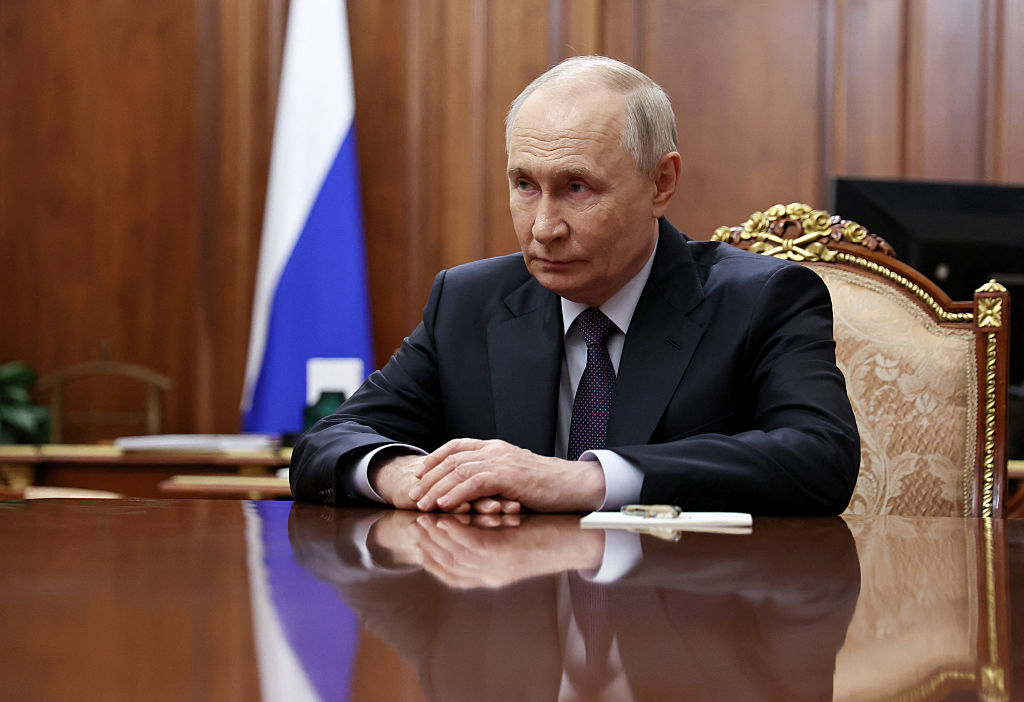
Regrettably, the effects of U.S. President Donald Trump’s war in Iran, with oil prices rising and Trump’s lifting of Russian oil sanctions, have been massively helpful to Russian President Vladimir Putin. In fact, the war provided the exact lifeline that Putin needed to rescue him from economic catastrophe.
Now, Putin is providing assistance to Iran in the form of munitions, money, and intelligence, effectively prolonging the war. Reciprocally, Iran is helping Putin prolong his invasion of Ukraine.
Puppeteers like Putin manipulate their characters’ movements by pulling several strings at once, not just one. Accordingly, Putin appears to have his hands on quite a few strings, with U.S. intelligence reports confirming this linkage of Russia to the Mideast. For months, multiple U.S. intelligence agencies have documented Russian intelligence assistance to Iran against America.
Just last week, when asked about Ukrainian President Volodymyr Zelensky’s warnings that Russia is apparently passing satellite images of American bases to Iran to strengthen their missile attacks, Trump said, “We’ll find out if that’s true. I’ll ask Putin about it.” Experts agree it’s true; but the question is whether Trump is ready to confront Putin about it. Perhaps that’s why he decided to give Ukraine a license to produce Patriot interceptors, and endorsed the Russian sanctions bill.
Putin’s assistance to Iran comes as he is reaping windfalls from higher oil prices. Until these higher prices bailed him out, Putin had been overseeing a seeming Russian economic collapse, as we documented extensively before with the Russian economy imploding in plain sight. Foreign direct investment in Russia has fallen from $100 billion a year to close to zero, amidst the exodus of over 1,000 global businesses. Now, Putin is running enormous deficits, with few countries stepping up to fund that debt. Meanwhile, Russia’s domestic productivity is weak; between 700,000 and 1.5 million skilled tech workers have fled the country; and oligarchs have spirited out billions in assets amidst drastic capital outflows.
As a result, Putin was quickly running out of cash, and the value of Russia’s sovereign wealth fund and rainy day reserves was plummeting. Then, higher oil prices provided a fresh windfall for Putin to stave off collapse. Indeed, with Trump’s lifting of certain sanctions on Russian oil, some analysts now estimate that Russia is on pace to double its annual oil revenues.
While windfall profits are helping Russia stave off economic collapse, Putin keeps throwing the living room furniture into the furnace to fund the war effort, cannibalizing all productive sectors and relying on unsustainable, record deficit spending, all directed towards the war. This has fueled rampant consumer inflation across sectors amidst rising consumer unease and usurious 14% interest rates.
It is paradoxical, but not entirely surprising, that Putin is failing in his own bloody gambit for territorial expansion with hundreds of thousands of his own people killed and his own economy in tatters; yet he continues to hold sway over other leaders. No matter what Putin lacks, he extends this malevolent influence through manipulation befitting his background as a KGB operative, the puppeteer manipulating many strings at once, sparking diversionary fires and then pouring gas on the flames continually to distract from his own many problems.
It’s clear Russia is the single most important ally to Iran in their shared conspiracy against global peace and prosperity. According to many intelligence reports, in addition to passing on sensitive intelligence to Iran about U.S. military installations in the region, Russia is systematically upgrading Iran’s aging, pre-1979 military infrastructure as its single largest external source of weaponry. As of mid-2026, Moscow has completed production of advanced Su-35 fighter jets and helicopters for Tehran, augmented by deliveries of Yak-130 combat trainers, Mi-28 attack helicopters, and hundreds of long-range air-to-air and anti-radar missiles. Furthermore, in 2022, Moscow helped launch Iran's high-resolution Khayyam satellite, and Russian forces routinely transfer captured Western weaponry from the Ukrainian frontline—including Javelin and Stinger systems—directly to Iranian defense firms to be reverse-engineered and cloned for Tehran's proxy networks. Simultaneously, Russian telecommunications firms are supplying Iranian operators with advanced digital surveillance and cyber warfare technologies.
But all this is hardly a one-way street for Putin, as Russia has also benefitted from Iranian Shahed drone technology. These mass-produced, cheap drones are capable of wreaking disproportionate havoc on much costlier Western defense systems, and now Putin has been directly manufacturing these Shahed drones inside Russia using transferred Iranian manufacturing technology and blueprints. Similarly, Iran has also benefitted from easing sanctions and higher oil prices nearly as much as Putin, with oil windfalls providing up to $60 billion in annual sales—and that’s in addition to up to the $300 billion the White House agreed to in the most recent agreement with Iran.
As Russia and Iran deepen their unholy alliance, Putin’s invasion of Ukraine and the conflict in the Mideast cannot be viewed as separate and isolated problems. Rather, they are part of the same global conflict, which is increasingly fueled by the same supply chain—a supply chain that is similarly tied back to the diabolical evil of Putin as a cynical mastermind and puppeteer. Treating peace negotiations in the Mideast as separate from Putin’s invasion of Ukraine will only lead to more trouble to come.
We may be seeing a growing recognition of this as Trump advocated adding Iran to the Russian sanctions bill, and Ukraine hit an Iranian ship carrying military supplies to Russia in the Caspian Sea. But much more needs to be done to suffocate the supply chains that sustain Putin’s power, by re-enforcing existing sanctions and passing the new comprehensive sanctions bill proposed by the late Republican Senator Lindsey Graham alongside Democratic Senator Richard Blumenthal. It was encouraging to see this new set of sanctions ratified overwhelmingly with an 88 to 12 vote by the U.S. Senate yesterday with Zelensky smiling from above in the Senate Galley seats while colleagues celebrated the memory of their late colleague, Sen. Lindsey Graham. Now the House must act. The E.U. can likewise do much more irrespective of Trump, as we wrote previously, as the E.U. has been shamefully stepping up its purchases of Russian natural gas and oil.
All the evidence points in a single direction and toward a single unassailable truth: as President George W. Bush memorably warned in 2002, there is an “axis of evil”, and Vladimir Putin remains one of, if not its, most centrifugal hub, from which much anti-American mischief and malevolence spew.
Winston Churchill’s 1940 “Finest Hour” speech before the House of Commons rallied his nation’s resolve through his clear-eyed warning of Adolf Hitler’s ability to leverage the control of industry of the occupied lands he exploited.
Rather than consult Putin for his advice, it is time for Trump and his E.U. partners to reinstate sanctions and rally military defenses against the Russian puppetmaster Putin.