RSS Feeds
Bipartisan group of senators unveil Graham's Russia sanctions bill
Cricket: Today at the Test
Thousands flock to see brief and rare blooming of corpse flowers in California
‘Enchanted’ visitors queued for hours to see two of largest – and smelliest – plants flower in San Marino
Two corpse flowers have bloomed at a southern California research institution, where thousands of visitors had the rare chance to watch two of the world’s largest – and most odorous – plants flowering at the same time.
The two titan arums, named Odorysseus and Odora, attracted more than 7,000 people on Monday at the Huntington library, art museum and botanical gardens in San Marino, about 12 miles (19km) from downtown Los Angeles, after they bloomed over the weekend.
Continue reading...WATCH LIVE: Todd Blanche testifies in confirmation hearing for attorney general
OpenAI’s new flagship model deletes files on its own, people keep warning
ICE will suspend most vehicle stops in the wake of two deadly shootings
Tom Homan, a top White House immigration official, said the halt was a temporary pause, "not a policy change," and that immigration enforcement would continue.
"Miracle on the Hudson" pilot slams privatization proposal
Wildfires burn in parts of UK as fire chiefs warn of extreme pressure
Midnight social media curfew proposed for UK teens aged 16 and 17 - but they can opt out
Sullenberger: Boeing crashes "should never have happened"
New museum revisits actions of Capt. Chesley "Sully" Sullenberger after Hudson River rescue
Lindsey Graham’s Sister, Darline Graham, Is Sworn In to Finish His Senate Term
'Miracle on the Hudson' pilot Captain Sully reveals Alzheimer's diagnosis
House Passes Bill to Make Daylight Saving Time Permanent
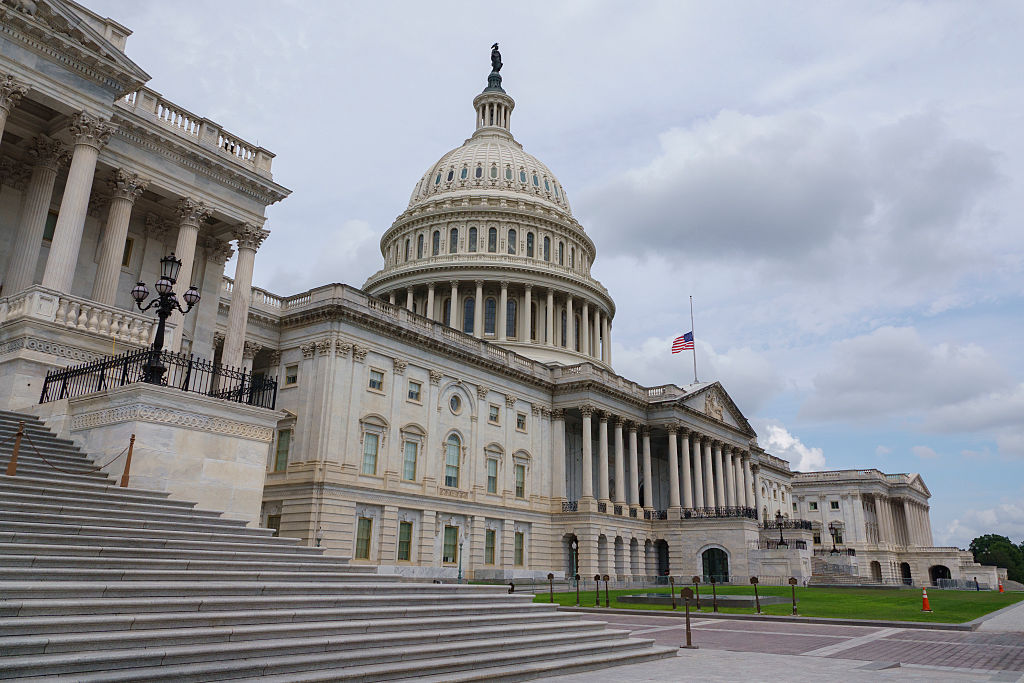
The House on Tuesday passed a bill that would make Daylight Saving Time permanent, advancing a yearslong effort to end the practice of changing the clocks twice a year.
The Sunshine Protection Act passed the lower chamber with strong bipartisan support in a 308-171 vote and will now head to the Senate. The upper chamber previously passed a similar measure in 2022, but the House didn’t take up the proposal at the time. President Donald Trump has also backed the idea of making Daylight Saving Time permanent, calling on Congress to “push hard for more daylight at the end of the day.”
Under federal law, states can currently opt to stay in Standard Time year-round, rather than jumping forward an hour each March for Daylight Saving Time and falling back again each November, like most of the country does. Hawaii and most of Arizona have already taken that option to stay in Standard Time permanently.
But states are not permitted to remain in Daylight Saving Time year-round, despite a number seeking to do so—and even though more Americans tend to favor the hour-forward setting.
The bill the House passed on Tuesday would change that. The legislation, if passed by the Senate and signed into law by Trump, would make permanent Daylight Saving Time the norm across the U.S., while also giving states the choice to opt out of it.
Daylight Saving Time, during which the sun appears to rise and set an hour later, is intended to better align the times when people are most active with the daylight. But it’s rife with controversy. Most countries don’t observe it, and though the majority of Americans support ending the cycle of changing the clocks twice a year, they’re a little more split on whether they’d like to stay in Daylight Saving Time or Standard Time: according to a recent survey, 43% of Americans said they would prefer permanent Daylight Saving Time, whereas 28% said they would prefer permanent Standard Time.
Read More: The States That Don’t Observe Daylight Saving Time—and the Ones Trying to Stay in It Permanently
Backers of the Sunshine Protection Act have argued that Americans are tired of changing their clocks twice a year, and that making Daylight Saving Time permanent would encourage people to go outdoors more, as well as reduce traffic accidents and instances of crime.
“I’ve advocated for this change for years because it’s clear that year-round daylight saving time is a popular, commonsense reform that will improve everyday life for millions of Americans,” Rep. Vern Buchanan, a Florida Republican who introduced the bill this year, said in a statement before the House voted on the measure. He has proposed a version of the measure regularly since 2018.
The U.S. has tried to make Daylight Saving Time permanent before—in 1974—but the move was not popular and ended up being repealed less than a year later. In the few months when the law was in effect, many people were getting up and traveling to their jobs or schools when it was still dark outside, since the sun seemed to be rising later in the morning.
Sleep experts have criticized the idea of making Daylight Saving Time permanent. While they support ending the biannual clock change, they advocate for making Standard Time permanent instead because, they argue, that would align best with people’s circadian rhythms and ultimately improve health and safety.
Many states are poised to jump at the chance to stay in Daylight Saving Time if the bill the House passed becomes law, however. Lawmakers in states including Alabama, Colorado, Delaware, Florida, Georgia, Louisiana, Mississippi, Oklahoma, Oregon, and Texas have passed legislation or resolutions in recent years in an effort to make Daylight Saving Time permanent, though they have so far not been able to adopt the change without congressional approval.
The 8 best UPF sun hats for blocking UV rays
La reacción de Mbappé tras quedar eliminado del Mundial 2026
Pedro Porro, rumbo a la final: “Es un sueño hecho realidad”
De la Fuente: “Enfrente tenían al mejor equipo del mundo”
'Makes no sense': Social media curfew for teens announced
Wife describes moment husband nearly sucked out of Ryanair plane
Watch: The clash between US and Iran for control of the Strait of Hormuz
UK 16- and 17-year-olds to be encouraged to follow midnight social media curfew
Midnight to 6am block on some apps is latest stage of Labour’s bid to protect young people from online harms
Sixteen and 17-year-olds are to be encouraged to observe a midnight social media curfew, in the latest stage of Labour’s bid “to protect the next generation” from online harms, including poor sleep caused by night-time scrolling.
From next spring, Britain’s oldest children will be urged to refrain from using certain apps with a midnight to 6am block being switched on by default. But the curfew will not be mandatory and can be overridden. The move is an extension of the under-16 social media ban announced last month, which included restrictions on platforms such as Snapchat, TikTok, YouTube, Instagram, Facebook and X.
Continue reading...Spain scores 2-0 win over France, advancing to World Cup final
Opinion | No Pain, No Gain in Iran Blockade
Miracle on the Hudson: When Sully met the passengers
Russia Sanctions Bill Championed by Graham Would Give Trump New Tariff Powers

A rare display of bipartisanship unfolded in the Senate on Tuesday as a dozen Republican and Democratic senators stood shoulder to shoulder to unveil sweeping legislation aimed at squeezing Russia's war economy, framing the bill as the defining legislative legacy of the late Senator Lindsey Graham.
One after another, lawmakers approached the podium to remember the South Carolina Republican, who died suddenly over the weekend, recalling his persistent push over more than a year to forge a bipartisan compromise that could win President Trump's support. Sen. Katie Britt, Republican of Alabama, said Graham had worked "tirelessly, relentlessly" to bring the measure together and believed it would become the most consequential legislation of his career. Sen. Roger Wicker, Republican of Mississippi, called it Graham's greatest achievement in the cause of preserving peace in Europe. Sen. Jeanne Shaheen of New Hampshire, the top Democrat on the Foreign Relations Committee, urged Congress to seize what she called a narrow window to pass the legislation.
The bill itself reflects months of negotiations among Senate Republicans and Democrats and the Trump Administration to strike a balance between punishing Moscow and preserving the President's flexibility as he seeks an end to the war in Ukraine. The sweeping measure would impose mandatory sanctions on President Vladimir Putin, senior Russian political and military leaders, oligarchs, state-owned enterprises and foreign companies supporting Russia's defense industrial base. It would also target Russia's financial sector, energy industry, and the "shadow fleet" of aging vessels Moscow uses to evade existing sanctions.
Its most novel provision would authorize Trump to impose tariffs of up to 100% on the five largest purchasers of Russian oil and natural gas—currently China, India, Slovakia, Hungary and Azerbaijan. Countries that buy less than 15% of Russia's natural gas exports and are demonstrably reducing those purchases would be exempted from the tariffs. The legislation would also allow penalties on those helping facilitate Russian energy sales.
If the bill passes, it would be the first time Congress has explicitly authorized the use of tariffs as a geopolitical weapon with the goal of punishing countries financing another nation's war effort. That aspect of the bill has raised concerns that Trump might seize the new authority as another lever in the trade war that has defined much of his second term.
"It's been referred to as a tariff bill," Sen. Richard Blumenthal, Democrat of Connecticut and Graham's chief Democratic partner on the legislation, said Tuesday. "But actually, it imposes full blocking sanctions on wide swaths of the Russian economy." The tariffs, he said, were "targeted, narrowly limited" and carefully crafted to avoid penalizing European allies supporting Ukraine.
Asked by TIME about concerns that Trump might use the bill's tariff powers to pressure countries on various other issues, Blumenthal said, “No more than he does now.” He stressed that he wasn’t concerned about giving Trump more tariff powers. “I mean, right now he is threatening to use tariffs illegally,” Blumenthal said. “He could do the same here, but this bill is very narrowly targeted, and the authority is confined to the five major purchases of oil and gas, with that 15% exemption, and then the evaders that are enabling trans-shipments and other kinds of avoidance.”
Since returning to office, the President has repeatedly relied on tariffs against allies and rivals, often invoking national security or emergency authorities to justify sweeping import taxes. The Supreme Court ruled earlier this year that Trump exceeded his authority under the International Emergency Economic Powers Act to impose sweeping global and reciprocal tariffs.
Blumenthal said he had spoken with Graham only hours before his death and had never heard him more jubilant than after learning the Trump Administration had agreed to support the legislation following what he described as painstaking negotiations. Britt said Graham also called her after speaking directly with Trump and was "overjoyed" that they had finally "landed the plane" on a proposal capable of winning broad bipartisan support.
Trump said earlier Tuesday the legislation had "a good chance" of advancing, but he also suggested expanding it to target Iran and Hezbollah. Blumenthal urged against reopening the carefully negotiated measure. "With all due respect to the President, he has approved this bill, and we should move forward with this bill rather than opening it," he said, emphasizing that the current version is the product of nearly two years of negotiations. However, he conceded: “If there are other bills that he wants to propose, we'll consider them.”
In recent months, Ukrainian forces have struck deep inside Russia while imposing mounting costs on Moscow's military. Shaheen warned that as long as the Kremlin could continue financing its war through oil and gas exports, it could sustain the conflict indefinitely.
Despite broad bipartisan backing, the measure's legislative path remains uncertain. Senate Majority Leader John Thune of South Dakota said Monday that passing the bill would be a fitting way to honor Graham but stopped short of committing to bringing it to the floor, saying leaders were still evaluating a path forward. The measure would also have to pass the House, which may have objections, particularly by the chamber’s Republicans if Trump continues to insist the bill should be expanded.
Opinion | EU and Big Radio Gun for Musical Artists
House passes bill to make daylight saving time permanent
WATCH: Senate Democrats block $1 trillion annual defense bill in protest over Iran war
House passes Trump-backed bill that would make daylight saving time permanent
WATCH: Trump says he's reversing course on Strait of Hormuz fees because Gulf states will invest in U.S.
Henderson & Quansah only England absentees for Argentina
Испания вышла в финал ЧМ-2026: в полуфинале испанцы обыграли французов 2:0
Iraq seizes mounds of gold and millions in cash in corruption crackdown
Топ-звезды, заклятые соперники. Чего ждать от полуфиналов чемпионата мира по футболу?
Spain reach World Cup final after Oyarzabal and Porro sink sorry France
Let this be a lesson for everyone foolish enough to cast Spain as underdogs. How they enjoyed dishing it out here, reducing France to passengers and surely guaranteeing nobody will make the same mistake twice. They will be favourites to win Sunday’s final, whether that turns out to be a rerun against England or a time-bending meeting of Lamine Yamal and Lionel Messi, and those minded to back against Luis de la Fuente’s side will need a mightily compelling reason.
France never came close to finding one. Kylian Mbappé had one last go in added time, shooting harmlessly over, and his forlorn expression upon glancing up to check the clock said more than enough. He knew the game was up but, in truth, that had barely been in question since midway through the first half. Spain smothered France but outplayed them too, picking their moments to penetrate and adding a beautifully worked goal from the rampaging Pedro Porro.
Continue reading...Spain advances to World Cup final with 2-0 win over France
Trump Administration Subpoenas Law Firms, Escalating Pressure Campaign
Man killed by semi after fleeing from immigration officials in Florida
Death of unidentified 28-year-old man marks third immigration enforcement-related death in one week
A person died during an encounter with federal immigration officials on Tuesday morning in Florida, a state highway patrol spokesperson confirmed, marking the third death in one week linked to immigration enforcement operations.
Officials with Homeland Security Investigations (HSI), which is a component of Immigration and Customs Enforcement (ICE), had an “encounter” with four men in a vehicle in the parking lot of a convenience store along a busy road in St Augustine, Florida, the highway patrol spokesperson said. As the four men fled from the agents, one of them ran into the busy road and was struck by a semi truck. The person died at the scene.
Continue reading...Spain reaches World Cup final with dominant 2-0 win over France
Lindsey Graham Made Trumpism in His Own Image
Lindsey Graham’s Choice
Cities are rethinking what happens after dark
When China’s open-source AI is a trap
Spain sparkles to shock France 2-0 and advance to the World Cup final

Spain is back in the men's World Cup final for the first time since 2010. That's also when Spain won its only World Cup title. France had hoped to reach the final for the third straight tournament.
(Image credit: Paul Ellis)

U.S. resumes naval blockade against Iran, launches new airstrikes
Ban on Horse-Drawn Carriages Is Backed by Key N.Y.C. Official
Shoebridge criticises Labor for delayed AI policy – as it happened
This blog is now closed
Get our breaking news email, free app or daily news podcast
Shorten shocked by testimony given to royal commission on antisemitism
Former Labor leader Bill Shorten, now the vice-chancellor of the University of Canberra, said he was shocked by the evidence given from the university sector during the latest round of hearings before the royal commission on antisemitism.
It describes an Australia … and Australian universities that I don’t recognise. But the fact is that these voices who are speaking up through the vehicle of the royal commission are revealing things, which mean that there’s no excuse to ignore them.
Once people are putting coverings over their faces so they can’t be identified, once they’re going to people’s individual offices, they’ve crossed a line. This is not a protest any more. It’s just bullying. It’s thuggery. It’s cowardice. It’s intimidation. And I don’t really care how righteous you think your cause is. You’ve got no right in this country to make someone else’s life so scary, so miserable, so fearful, just because you happen to have a view.
Continue reading...The ICE crackdown never ended

This story appeared in Today, Explained, a daily newsletter that helps you understand the most compelling news and stories of the day. Subscribe here.
Two fatalities, a surge in arrests, large protests in the streets — the past two weeks of US immigration news have given me flashbacks to January.
But this time, something’s different. Or at least appears to be different. This time, after Immigration and Customs Enforcement agents fatally shot two men during traffic stops…the agency ordered most traffic stops to temporarily cease.
The directive is a far cry from the denials and smears ICE lobbed last winter, after agents killed two American protesters in Minneapolis. At the time, administration officials went so far as to baselessly claim the victims were “domestic terrorists.”
The circumstances of these new shootings are different, though early reports from eyewitnesses have raised similar alarms. Yesterday, agents shot and killed a Colombian man — identified as 26-year-old Johan Sebastian Guerrero — after he exited a home they’d been surveilling. Guerrero was reportedly not the target of the surveillance.
Days earlier in Texas, ICE agents fatally shot another man, 52-year-old Lorenzo Salgado Araujo, as he drove three fellow construction workers to a Houston job site. DHS claimed Araujo tried to ram the officers’ vehicle. But the other men in Araujo’s van said the agents never even identified themselves as law enforcement.
How Trump remade ICE

The fatal shootings in Maine and Texas underscore an important reality: President Donald Trump’s mass deportation campaign might’ve faded from the headlines, but it never actually went away.
In March 2026, the most recent month with complete data, ICE arrested nearly 30,000 people, according to Syracuse University research. And just this month, ICE arrested 10,000 people in a single five-day sprint — more detentions than the agency booked per month for long stretches of the Biden administration.
The quiet persistence of the crackdown reflects Trump’s priorities: His desire to deport tens of thousands of undocumented immigrants hasn’t actually changed, even if the PR calculus has.
But it also speaks to a profound administrative shift: ICE is a fundamentally different agency than it was under prior administrations.
Consider ICE’s budget, for instance, which shot up eightfold between 2024 and 2025. ICE now receives more money than the Federal Bureau of Investigation, the Drug Enforcement Administration, and the Bureau of Alcohol, Tobacco, Firearms, and Explosives…combined.
For the first time in at least 20 years, ICE is also charged with entering communities to make proactive arrests, as opposed to merely picking up undocumented people detained on other charges by local or state police. That’s how we ended up with agents surveilling homes and making traffic stops in the first place.
One link for later
➨ If you’ve never read The Odyssey, there’s no time like the present. Christopher Nolan’s movie of the same name comes out this week and seems destined to be a gigantic hit. Also, Vox’s Constance Grady says, it’s “funny, gripping, and sexy.” That’s not exactly my recollection from 11th-grade English, but I’m willing to give another translation a read!
Before you go…
- Did you know…that the name of the popular cosmetic drug “Botox” comes from the Latin word for sausage? The bacteria that the drug is made from, Clostridium botulinum, was discovered in Germany in the early 1800s after it caused an outbreak of food poisoning in people who ate spoiled sausages.
- Today’s trivia: What’s the bizarre human nickname that San Franciscans give their heavy summer fog? (You can find this and other brain puzzles in Vox’s daily crossword. Look for the answer in tomorrow’s edition.)
- Yesterday’s trivia: Yesterday we asked you the name of the third US vice president. That would be Aaron Burr, sir — who is, of course, far more (in)famous for shooting Alexander Hamilton.