RSS Feeds
Scammers are using FaceTime to steal bank account passwords
Leeds agree £34.1m fee for defender Muharemovic
Trump Says the FBI Would Be ‘Wasting Their Time’ Investigating Lindsey Graham’s Death
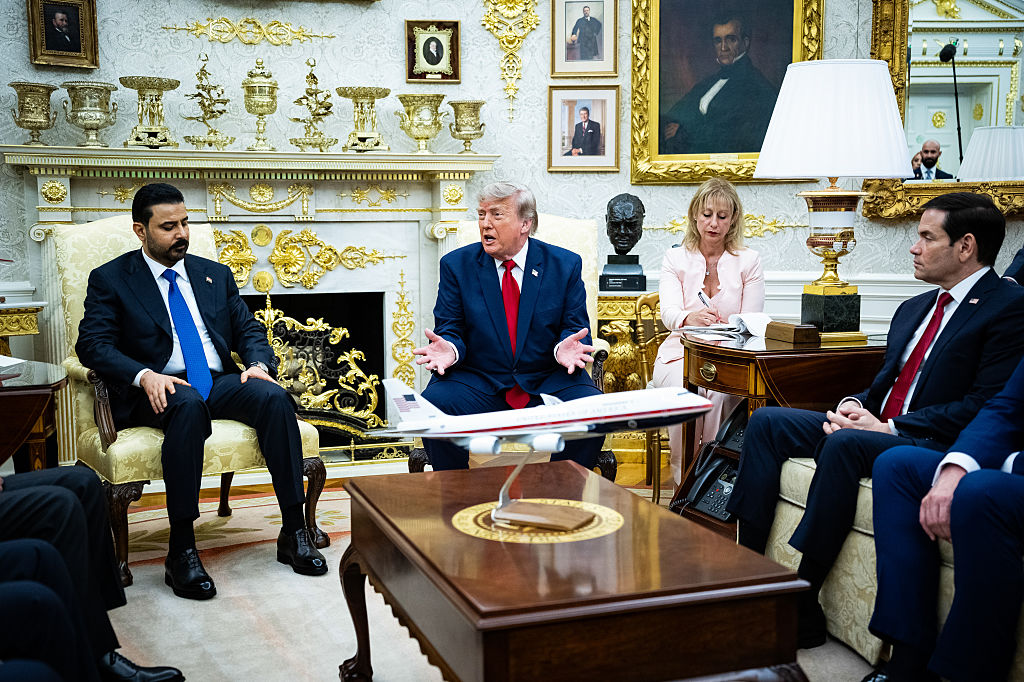
President Donald Trump on Tuesday stated that the Federal Bureau of Investigation (FBI) is “wasting their time” if it is investigating the death of Sen. Lindsey Graham, dismissing speculation surrounding the Senator’s sudden passing.
“I don’t see a lot of evil there. I know there’s all sorts of conspiracy theories going along, and I think the FBI is wasting their time if they’re doing that,” Trump said when asked in the Oval Office whether he was aware of the bureau looking into Graham’s death and if he had gotten any updates about a reported FBI search of the late lawmaker’s Washington, D.C., home.
In response to another question, Trump told reporters he didn’t know why the FBI had apparently searched Graham’s home on Monday, less than 48 hours after the Senator’s death.
Graham, 71, died on Saturday due to a heart condition known as an aortic dissection, a tear in the wall of the body’s largest artery, as a result of arteriosclerotic cardiovascular disease, according to preliminary findings from the Washington, D.C., medical examiner’s office.
The office said the cause and manner of Graham’s death would be formally recorded after toxicological and microscopic testing is completed.
Read More: What to Know About Aortic Dissection, the Condition That Killed Lindsey Graham
Trump, who said he had been briefed by White House physicians about Graham’s death, compared Graham to his father, saying that the Senator had a “very similar problem.” Graham’s father died of a heart attack at the age of 69.
“I wish he took better care of himself,” the President added of the late Senator. “I say you can solve that problem.”
FBI Director Kash Patel said in a statement on Sunday following Graham’s death that the agency was “assisting local authorities and has made every necessary resource available.” He did not provide further information about the nature of that assistance.
“Senator Lindsey Graham was a devoted public servant, a fierce defender of our nation, and a true patriot who dedicated his life to the people of South Carolina and the United States,” Patel wrote on X. “Our prayers are with his family, loved ones, colleagues, and all those who knew him during this devastating time.”
The following day, video footage shared by NBC News showed FBI personnel visiting Graham’s home in D.C.’s Capitol Hill neighborhood. Two law enforcement sources familiar with the matter told the outlet that federal agents were continuing to look into the Senator’s death out of an abundance of caution, but no evidence has come up since Saturday that indicated foul play was involved.
Trump also addressed speculation about Graham’s death during an appearance on Newsmax Monday night. “To answer the conspiracy theory, I’d love to say yes. But I think he had some problems,” the President said. He similarly referenced Graham’s father’s death in that instance, saying, “And his father died just about at the same age.”
Graham, once a critic of Trump and among his opponents in the 2016 Republican presidential primary, became one of his staunchest allies in Congress. The President remembered him in the wake of his passing as a “true American patriot” and “one of the greatest people and Senators I have ever known.”
South Carolina Gov. Henry McMaster on Monday appointed Darline Graham Nordone, Graham’s sister, to finish out her brother’s term. She was sworn into the role on Tuesday afternoon.
Read More: Who Is Darline Graham Nordone? Lindsey Graham's Sister Appointed to Serve Out His Senate Term
Nordone, who shared a close bond with Graham, called the appointment an “honor.”
“It is such a privilege to get to finish some of his important work, and I promise to work hard over the next several months to support the president and carry forward the efforts of my brother on behalf of the citizens of South Carolina and the United States,” she said at a press conference.
A special primary election will be held next month to select Graham’s replacement on the ballot in the November midterms, in which he was seeking a fifth term.
Global cooperation needed to tackle AI threats, says Bank of England governor
Andrew Bailey warns that US will not be able to achieve its ambitions alone
The Bank of England governor has called for international cooperation to tackle growing AI threats, warning that the US and Trump administration would not be able to achieve their ambitions alone.
Andrew Bailey’s comments come weeks after the US president, Donald Trump, temporarily banned foreigners from using Anthropic’s powerful Claude Mythos model.
Continue reading...Senate Democrats block advancement of defense bill to protest Trump’s hostilities with Iran
Chuck Schumer says Republicans are ‘ignoring the nation’s most urgent national security crisis’ amid US exchange of fire with Iran
Senate Democrats on Tuesday blocked the advancement of a must-pass defense bill in protest of Donald Trump’s resumption of hostilities with Iran.
The hold up of the National Defense Authorization Act (NDAA) comes amid the fiercest exchange in fire between the countries in weeks, which has amplified frustration among Democrats that the US remains involved in the conflict despite the passage last month of a war powers resolution intended to force a ceasefire.
Continue reading...Global cooperation needed to tackle AI threats, says Bank of England governor
Andrew Bailey warns that US will not be able to achieve its ambitions alone
The Bank of England governor has called for international cooperation to tackle growing AI threats, warning that the US and Trump administration would not be able to achieve their ambitions alone.
Andrew Bailey’s comments come weeks after the US president, Donald Trump, temporarily banned foreigners from using Anthropic’s powerful Claude Mythos model.
Continue reading...Henderson & Quansah only England absentees for Argentina
Starmer becomes first UK PM to receive top French honour
Ex-VP demands ICE probe after three deaths in space of a week
Hillsborough law symbolises new era as power passes from Starmer to Burnham
Bill marks a full-circle moment for the PM-in-waiting and encapsulates what he says his government will be about
Andy Burnham has always said he took his first steps out of Westminster in 2009, when he walked out to address furious Liverpool fans at the Kop on the 20th anniversary of the Hillsborough disaster.
They chanted “Justice for the 96” for a full two minutes before the then culture secretary was able to continue, demonstrating their anger that nobody in public office had been convicted of any offence over the tragedy.
Continue reading...How do young people feel about AI? 7 teens weigh in

What's it like to grow up and learn in the age of AI? NPR put that question to seven teenagers across the country.

What Is the Antiquities Act, and How Is the 120-Year-Old Law Being Tested by Trump?
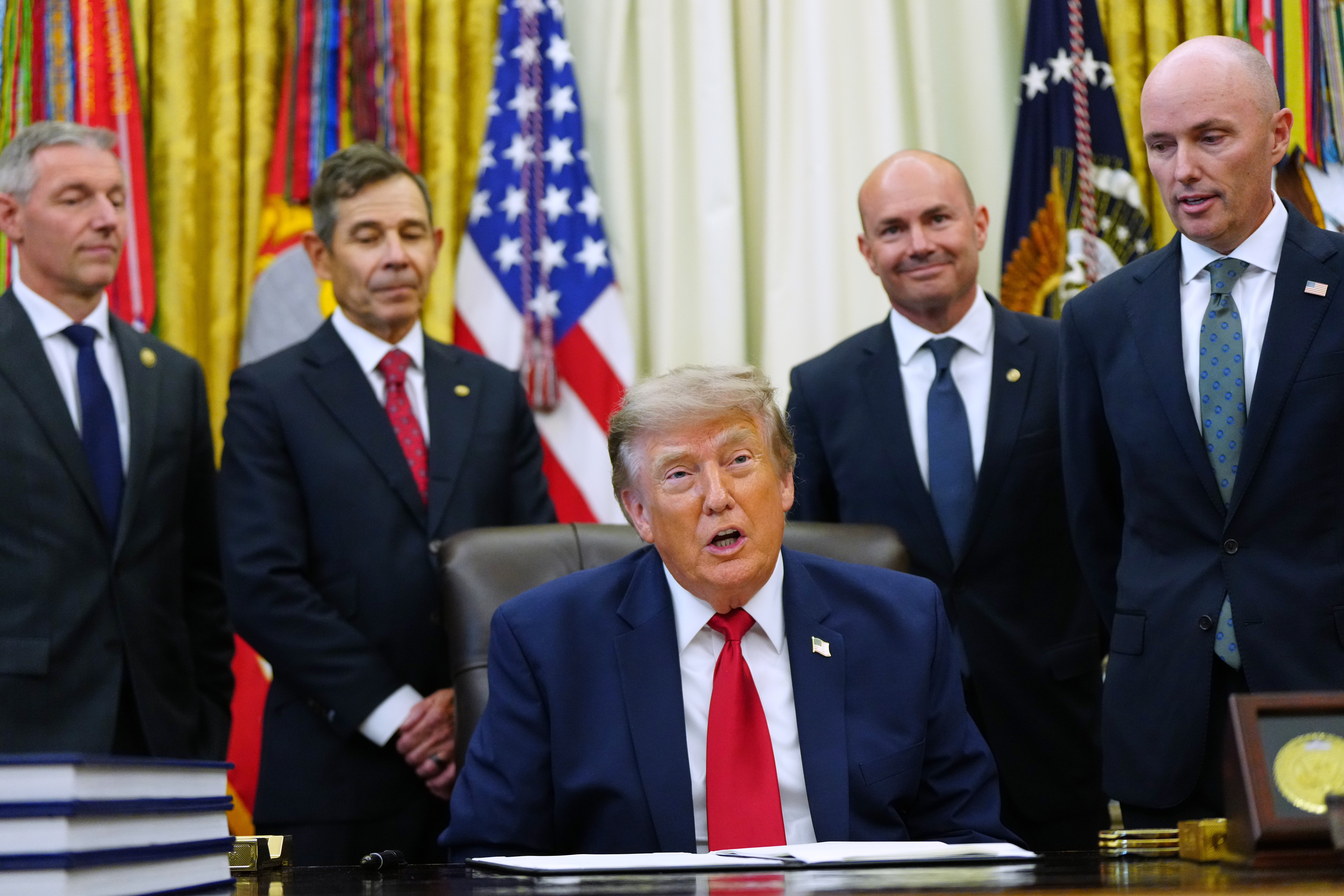
President Donald Trump signed two proclamations Monday, dramatically reducing the size of two national monuments in Utah and reviving a long-running legal dispute over the limits of presidential authority under the Antiquities Act of 1906.
The proclamations reduced by 90% the protected areas of Bears Ears and the Grand Staircase-Escalante.
Bears Ears is a pair of symmetrical buttes that dominate the horizon in southeast Utah. The monument spanned some 1.36 million acres before Trump reduced it to 131,100. The Grand Staircase-Escalante is a set of step-like sedimentary layers that connect to the rim of the Grand Canyon. Trump reduced the monument from some 1.87 million acres to 181,500.
Together, the two presidential proclamations could open up more than 3 million acres of formerly protected land—including sacred tribal sites—to exploration for oil, minerals, and gas, as well as motorist and non-motorist recreation.
Preservation advocates and tribal representatives have criticized the changes, while suggesting that greater cooperation between the federal government and tribal leadership is required.
The Bears Ears Inter-Tribal Coalition—which includes the Hopi Tribe, Navajo Nation, Ute Mountain Ute Tribe, Pueblo of Zuni, and Ute Indian Tribe—said that the sites contain “thousands of sacred cultural sites and important areas of spiritual significance.”
In a press release shared Tuesday, the coalition wrote, "Tribal Nations understand Bears Ears as an interconnected living cultural landscape, where the land itself—and the relationships among its cultural sites, waters, plants, animals, and sacred places—are what must be protected."
The coalition originally advocated for the designation of national monument status, which was granted by President Barack Obama in 2016. It then sued the Trump Administration in 2017 for attempting to resize the monument, though the case was suspended when President Joe Biden restored its original boundaries in 2021—and expanded the site by 12,000 additional acres.
The coalition has since said that the governments it represents, going forward, require “a meaningful voice in the development of a land management plan” for Bears Ears.
“President Trump’s outrageous attack on Grand Staircase-Escalante and Bears Ears national monument was taken at the urging of Utah politicians,” Scott Braden, the Executive Director for the Southern Utah Wilderness Alliance (SUWA), said in a statement. “These two landscapes deserve to be protected for current and future generations of Utahns and Americans, not opened to exploitation.”
The SUWA expressed plans to contest the proclamations in court.
The Wilderness Society also criticized the proclamations, accusing the administration of ignoring "the voices of Tribal Nations, local communities, and the millions of Americans who want these places protected for future generations,” according to a statement from its president, Tracy Stone-Manning, who was the Director of the Bureau of Land Management under Biden.
Read More: Spencer Cox, the Red-State Governor Not Afraid to Be 'Woke'
Utah politicians, however, expressed support for the measures, which returns the affected lands to their prior federal management status.
“For too long, presidents have weaponized monument designations to lock up millions of acres, close roads, restrict grazing, and cut rural communities off from lands their families have lived on and worked for generations,” Republican Sen. Mike Lee said in a statement on Monday.
Republican Governor Spencer Cox, who was present at the White House when the proclamations were signed, wrote on X that “the question has never been whether to protect Bears Ears and Grand Staircase-Escalante national monuments, but how to protect them best.”
He continued: “We deeply value these natural, cultural, and scientific treasures. The historic landmarks and other nationally significant resources remain under federal protection, while allowing agencies to direct limited resources toward caring for these specific sites rather than millions of surrounding acres.”
Trump’s proclamations challenge the limits of presidential authority when it comes to managing public lands, with implications that extend far beyond Utah. At the heart of the debate is the Antiquities Act of 1906.
What Is the Antiquities Act?
Unlike national parks, whose designations must be approved by Congress, national monuments are given that status by the sitting president under the Antiquities Act. It was signed into law by President Theodore Roosevelt in 1906.
The Congressional Research Service (CRS) said that the Antiquities Act has been used by 18 U.S. Presidents to establish 168 protected areas, including marine monuments. President Bill Clinton established Grand Staircase-Escalante in 1996, two decades before Obama established Bears Ears.
While presidents have frequently used the Act to enlarge existing monuments, Trump is the first President since John F. Kennedy to reduce the scale of a monument. Several earlier presidents—including William Howard Taft, Woodrow Wilson, Calvin Coolidge, Franklin Delano Roosevelt, Harry S. Truman, Dwight D. Eisenhower, and John F. Kennedy—also reduced monument boundaries. However, Trump's reductions are unprecedented in scale and may therefore face greater legal scrutiny.
The legal debate centers on the fact that while the Antiquities Act expressly authorizes presidents to establish national monuments, it does not explicitly address whether later presidents may shrink or abolish them.
“My position has long been that the president does not have that authority,” Mark Squillace, professor of law at the University of Colorado Law School, tells TIME. “If you read the statute, the Antiquities Act, it specifically gives the president the authority to reserve monuments that contain historic objects and of scientific interest, but it does not give the president the authority to modify or revoke monuments that have been declared by prior presidents.”
He says that it’s important to look at the exact wording included in the text, because there are contemporaneous laws that specifically give the president those kinds of authority—for example, the 1897 Organic Administration Act's amendment to the Forest Reserve Act, which expressly says the President may "revoke, modify, or suspend" national forest proclamations and "reduce the area or change the boundary lines."
“So the argument is simply that when Congress wants to give the president broader authority, it has specifically done so,” Squillace says.
The Act’s exact language has been carefully scrutinized over the years. Of particular note is the line that says national monuments must be limited to the “smallest area compatible with proper care and management of the objects to be protected.”
Read More: Unexplained Metal Monolith Discovered in Utah Wilderness
The Trump Administration alleges that both Clinton and Biden sought to protect a sweeping landscape that overly broadened the scope of the legislation as it is written.
“Where the President determines that the structures and objects identified by a prior monument proclamation no longer are, or never were, deserving of the Antiquities Act’s protections, the Antiquities Act permits the President to remove land from the monument and return it to its prior federally managed status,” Trump wrote in a proclamation on Monday.
He also wrote that the previously established Bears Ears National Monument “suffers from several flaws under Antiquities Act analysis” and that “generic” features “are not historic landmarks, historic or prehistoric structures, or other objects of historic or scientific interest.” The proclamation also argues that the Bears Ears region “contains several resources that are vital to energy and resource independence and, in turn, critical to national security.”
Similarly, a proclamation for the Grand Staircase-Escalante says that the region contains resources that are “essential to important sectors of the economy of the United States, including defense, manufacturing, and transportation.” It also says that most of the areas around the monument are “already adequately protected by Federal law and do not require a reservation of land under the Antiquities Act for protection.”
Historically, courts have upheld broad presidential authority to grant monument status under the Antiquities Act, but they have not definitively ruled on a President’s power to revoke or reduce that designation.
Were it to advance through the courts, however, Squillace believes that the text of the statute would stand on its own. “This particular Supreme Court has been very narrow in its interpretations about delegations of power, and has made clear that the authority to delegate power is limited by the specific text of the law,” he says.
In its assessment, the CRS said, “Given the recurring controversies over presidential monument proclamations, Congress continues to evaluate whether to abolish, limit, or retain the President's authority under the Antiquities Act.” It does not go into further detail about what those assessments would entail or provide a timeline.
However, “a few years ago Congress passed a law, which basically acknowledged the existence of the Grand Staircase Escalante National Monument,” Squillace says, explaining that it basically confirmed the existence of the monument as it stood at the time. “Utah's made hundreds of millions of dollars on the lands that they got in exchange for giving up lands within the Grand Staircase Escalante National Monument … so that's going to be a really tough one for the court to reverse.”
“But I certainly think that you're likely to see litigation sooner rather than later over these decisions,” he says.
The proclamations will go into effect in 60 days.
Senators introduce bipartisan plan to tackle Social Security insolvency
Cyclosporiasis infections are surging. Michigan officials say lettuce is a possible cause
Elon Musk likely broke the law by promising voters $1 million payouts, Wisconsin board says
Digne: de quedar fuera al sueño de la Final, la emotiva historia del crack galo | Vive el Mundial
España pone el primero y la hinchada hace vibrar todo Texas con el gol de Oyarzabal
Lindsey Graham’s Death Leaves Fate of Russia Sanctions Bill Uncertain
Senate Democrats Block Defense Bill Over War in Iran
In the aftermath of deadly shootings, ICE pauses most traffic stops

U.S. Immigration and Customs Enforcement will pause non-urgent vehicle stops after two deadly shootings in less than a week, Maine U.S. Sen. Angus King's office tells NPR.
(Image credit: Joseph Prezioso)

Bipartisan senators introduce legislation to avert looming Social Security shortfall
'If we die, we die together': Wife of man nearly sucked out of Ryanair plane speaks of ordeal
Review of MP security needed after Widdecombe death, Burnham says
Senate Democrats block must-pass defense policy bill over Iran war objections
Tornadoes in Maine? A Rare Forecast for Parts of U.S. and Canada
Texas Faces Potentially ‘Catastrophic’ Amounts of Rain
Justices pitch lawmakers on enhanced security in rare Hill appearance
An Elite N.Y.C. Public School Admitted 777 Students. Only 3 Were Black.
Cyclospora outbreak leaves consumers guessing which foods are safe
Balogun expected controversy after World Cup ban waived
¿Se puede comparar a Yamal con Mbappé? | Conexión Mundial
Mikel Oyarzabal anota de penal para España: Mbappé y Francia lo pierden 0-1
Apple opens its new Siri AI to everyone with the iOS 27 public beta
Anthropic’s newest ad is creeping people out
The founder of Hinge raised $18M to build a new AI dating service, Overtone
U.S. launches additional strikes on Iran ahead of restoring blockade, official says
Writer E Jean Carroll receives $5m in damages from Trump over sexual abuse and defamation case
Starmer becomes first UK PM to receive top French honour
WATCH: Trump says FBI is 'wasting their time' if agency is investigating Sen. Graham's death
Bipartisan senators introduce Russia sanctions and tariff bill Graham championed
England rue selection errors after Patel and Sundar lead India to comfortable win
All-rounders share century stand to secure victory
A recent ascent to No 1 in the men’s T20 international rankings saved one half of Brendon McCullum’s job as England head coach and yet half of that half – one-day international cricket – continues to be a struggle.
A six-wicket defeat by India in the series opener at Edgbaston was England’s 13th ODI loss since McCullum took charge of the white‑ball teams at the start of last year. Just six wins have come in this time – including three against lowly West Indies – and they have now slipped to eighth in the world overall.
Continue reading...‘We’re all going to die’: Scottie Scheffler keeps things in perspective before Open defence
World No 1 not interested in his legacy in the game
Scheffler missed first cut in 79 events at Scottish Open
Something about the Open Championship seems to bring out the philosopher in Scottie Scheffler. Last year the world’s best golfer questioned the meaning of life before claiming his fourth major title. This year, though, it was his legacy that was more on his mind.
Scheffler was in an ebullient mood, despite missing his first cut in 79 tournaments at the Scottish Open last week. So when talk turned to his comments at Portrush – when he famously asked ‘What is the point of it all?’ – he couldn’t help but smile when he found himself saying “at the end of the day I am going to live my life and it’s going to end” this time around.
Continue reading...Folarin Balogun: Ban reversal caused ‘a lot of outside noise, and that’s hard to avoid’
US striker’s red card was suspended after Trump calls
Fifa president accused of breaching neutrality rules
The United States striker Folarin Balogun has revealed he predicted Donald Trump’s involvement in overturning his World Cup suspension would “cause a lot of controversy”.
The Monaco forward was sent off with a red card in the United States’ round-of-32 meeting with Bosnia and Herzegovina, but Fifa’s disciplinary committee then suspended the one-match ban for a year, allowing Balogun to participate in the Americans’ last-16 loss to Belgium.
Continue reading...War, antics and vitriol – the England v Argentina rivalry is real but now it is only about football
Mexico 1986, France 1998, Japan 2002 … this is a match that transcends, with Argentina’s head coach Lionel Scaloni calling for the focus to be on football, not the Falklands
After confirmation that match 102, one of the World Cup semi-finals, would be England v Argentina, the 1982 Falklands/Malvinas conflict was mentioned at Lionel Scaloni’s press conference. “No, no, no,” the Argentina head coach tut-tutted emphatically. “This is just a football match. Let’s not look for other stuff. It’s a football game against a great team, with a great manager who I admire. But it’s a football match. End of.”
The Argentina midfielder Rodrigo De Paul concurred: “We understand it’s a football game that transcends; it brings back memories of what Diego did. We sing songs about our Malvinas heroes, mainly to remember them, but we have to understand that it’s a football match and that the Malvinas have to be discussed elsewhere. What happened was an atrocity and we always remember the fallen, but what we want is to win this match to get to the final.”
Continue reading...